AI Research Digest — Monday, November 23, 2026
Monday's cs.AI announcement day (2026-11-23) lists 87 new and 127 cross-lists (replacements skipped; listing total 214). A filter for agent systems, memory/context, computer-use / tools / skills / harnesses, multi-agent, persistence, and local/open models keeps 29 papers. The day's main threads are agent self-improvement and what makes it trustworthy, and runtime guards around tool calls. AstronautBench and ZhuLong-SE ask whether memory carryover is real learning and gate agent-written memory behind held-out replay and rollback; CoEvoBench, HookEvo, Search-RSI and Fix Where It Fails search over harnesses, hooks and training tasks. On the safety side, Keep the Process, Change the Supplier records uncertain tool outcomes, Epistemic Guard signs MCP receipts, Who Grades the Agent? separates running tests from judging them, and Correct Precedents Induce Policy Violations shows on-device agents drifting after a correct precedent. Context and local models round it out with Contexture's superseded-output eviction, a fold tool for belief states, near-free streaming safety checks for local LLMs, and mixed-precision decoding on mobile NPUs. One news item follows from the tracked sources.
Research Papers
AstronautBench: Measuring Agent Self-Improvement Across Episodes Through Knowledge, Evidence, and Progress
Congyuan Yu, Runping Tian arXiv: 2611.26910
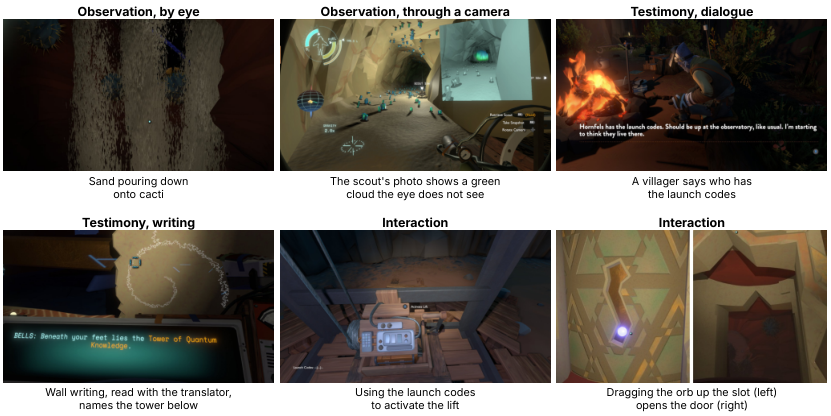
Benchmark on Outer Wilds that scores agent self-improvement across 22-minute episodes through three views: places and facts reached, QA correctness on 164 questions, and whether answers are supported by the agent's own cited evidence. Gives a way to check that an agent's memory carryover is real learning, not unsupported correct answers; useful for evaluating cross-session agent memory.
Key insight: Score memory-carryover agents on whether each answer cites evidence they actually observed, not just on answer accuracy.
Self-Evolving Beyond Human-Crafted Experience for EDA Scripting
Yang Liu, Shengbo Tong, Xiyuan Chen, Shiwei Hou, Sen Yuan, Hao Wang, Yanfeng Li, Hongwen Li, Yiming Zhu, Zhuolun He, Wenjian Yu arXiv: 2611.26912
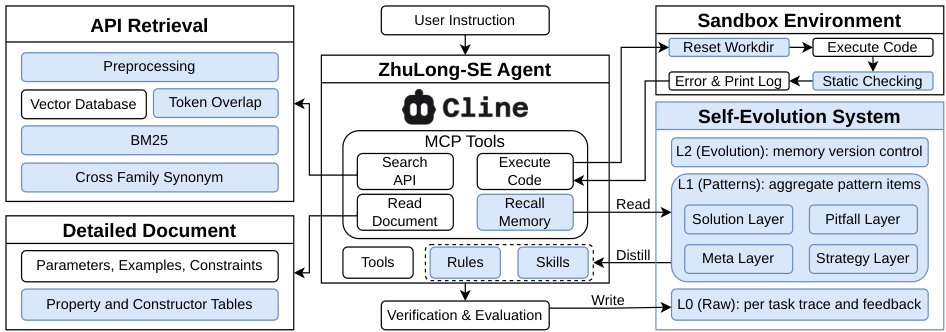
ZhuLong-SE: an EDA scripting agent whose harness adds API retrieval, sandboxed execution and static checks, plus governed cross-task self-evolution into a three-tier memory store. The governance gates (ground-truth anchoring, disconfirmation filtering, held-out rollback) are a concrete template for letting an agent write its own skills/memory without drift.
Key insight: Gate any agent-written memory entry behind a held-out replay and rollback before it is retrievable.
Keep the Process, Change the Supplier: Runtime Governance for Tool-Using AI Agents
Deepak Waghmare, Shaad Sufi arXiv: 2611.26966
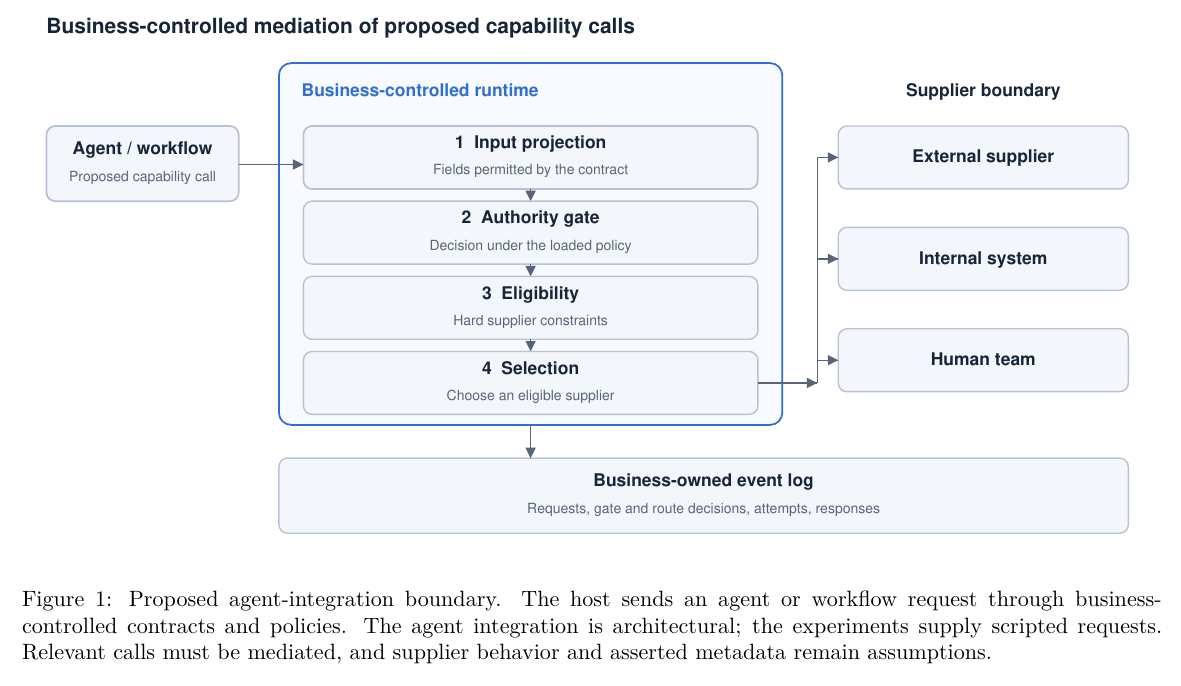
Open Process Control Plane (OPCP): an execution boundary that mediates agent capability calls, separates proposals from business-controlled authority and records uncertain outcomes such as lost replies after commit. Retry-all duplicates effects after a lost reply; an idempotent, record-keeping tool boundary is directly relevant to agents that book or send things.
Key insight: Record 'unknown outcome' for tool calls whose reply was lost and never blindly retry them across suppliers.
Run One, Get Two: Near-Free Streaming Safety Checks for Local LLMs
Soheil Zibakhsh, Pedram Aghazadeh, Farinaz Koushanfar arXiv: 2611.26975
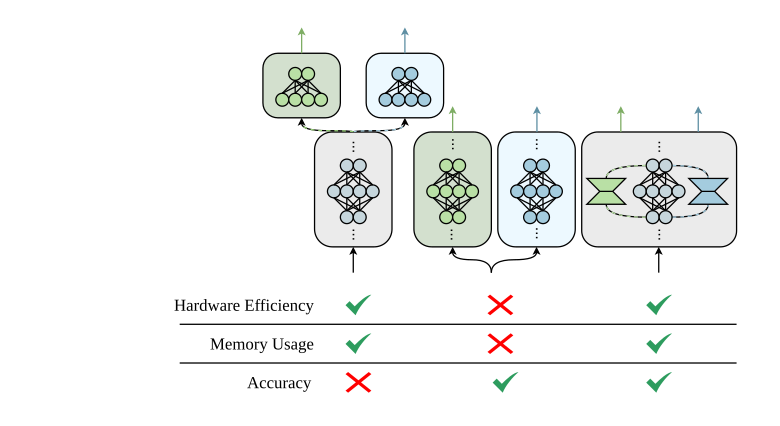
ToRA: an adapter that runs a second model as an extra row in the generator's decode step, sharing weights and KV cache, for near-free streaming safety checks on local LLMs. Shows a guard for on-device assistants can cost under 4% latency instead of doubling it.
Key insight: Run a safety guard as a co-decoded row on the local model rather than a separate guard model.
MixFold: Sub-4-Bit Mixed-Precision LLM Inference via Output-Channel Grouping on Mobile NPUs
Vinnam Kim, Seong Hoon Seo, Junhan Kim, Jaeseong You, An Chen arXiv: 2611.26976
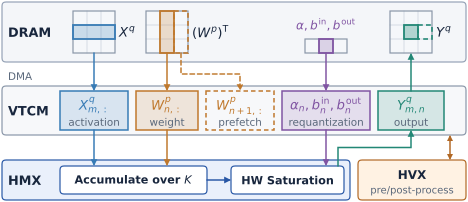
MixFold: sub-4-bit mixed-precision LLM decoding on mobile NPUs using native integer ops and output-channel-group datatype assignment, tested on Snapdragon 8 Elite Gen 5 Hexagon. On-device decode speed and energy bound what an iOS-style personal agent can run locally; this is Android/Qualcomm, so it is a reference not a drop-in.
Key insight: Pick quantization formats by what the target NPU executes natively, not by bit count alone.
Actions Speak Louder than Words: Stateful Privacy Sniffing of LLM Agents via Behavioral Covert Channels in Web Interactions
Ruichao Liang, Wenzhong Deng, Jing Chen, Yuqing Li, Kaixuan Li, Cong Wu, Yang Liu arXiv: 2611.27046
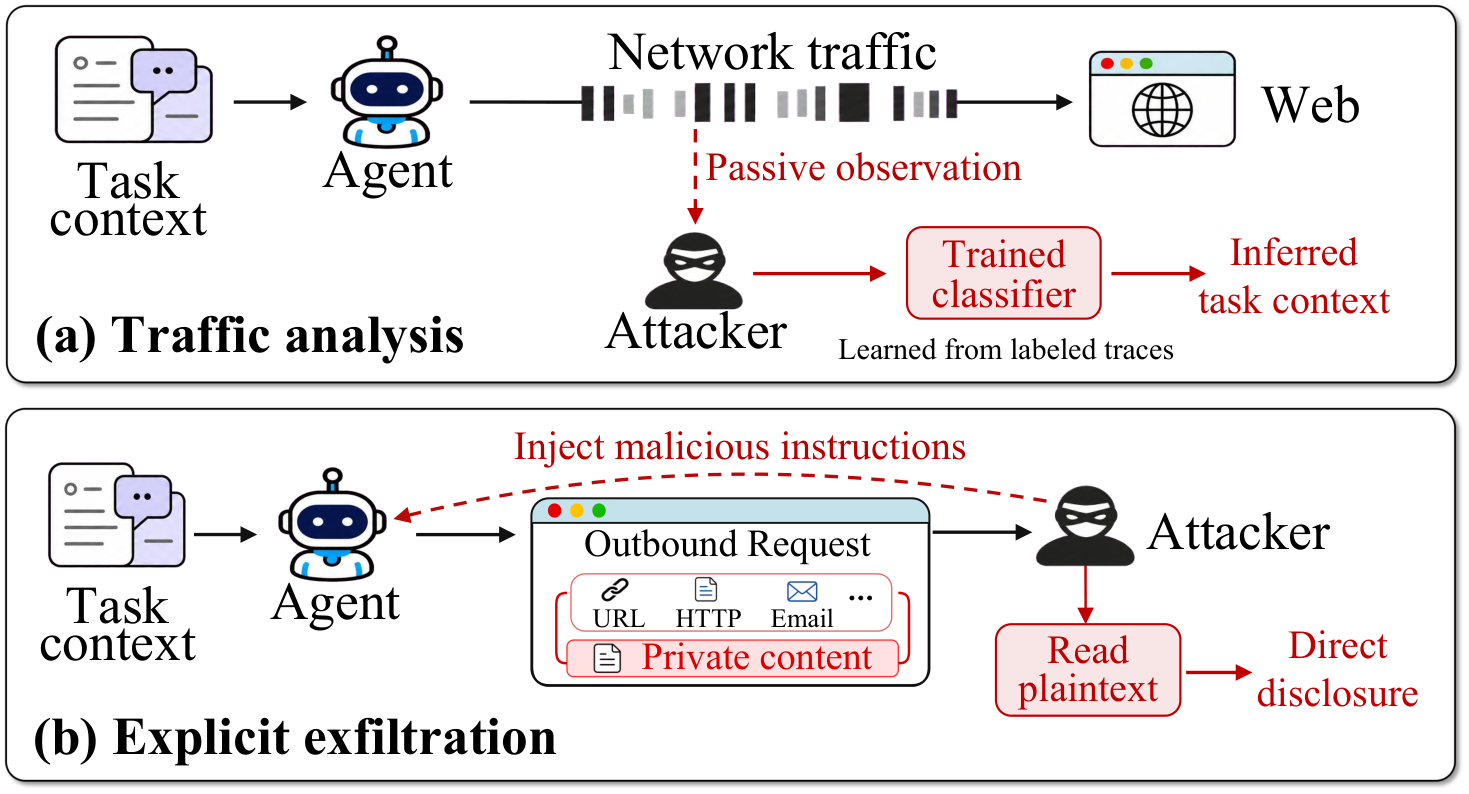
SNOOP: a probing framework that reconstructs a web agent's private query and user profile from the pages it chooses to visit (a behavioral covert channel), plus a defense, Selection-Obfuscated Retrieval. Browsing agents with memory leak context through behavior even when no content is sent; content filters do not catch it.
Key insight: Fetch resources under a fixed budget independent of private context and choose from a local snapshot.
CoEvoBench: Can LLMs Drive Recursive Co-Evolution of Agentic Systems?
Chuan Xiao, Baojie Wang, Haizhao Fan, Hongzhe Du, Xander Xu arXiv: 2611.27116
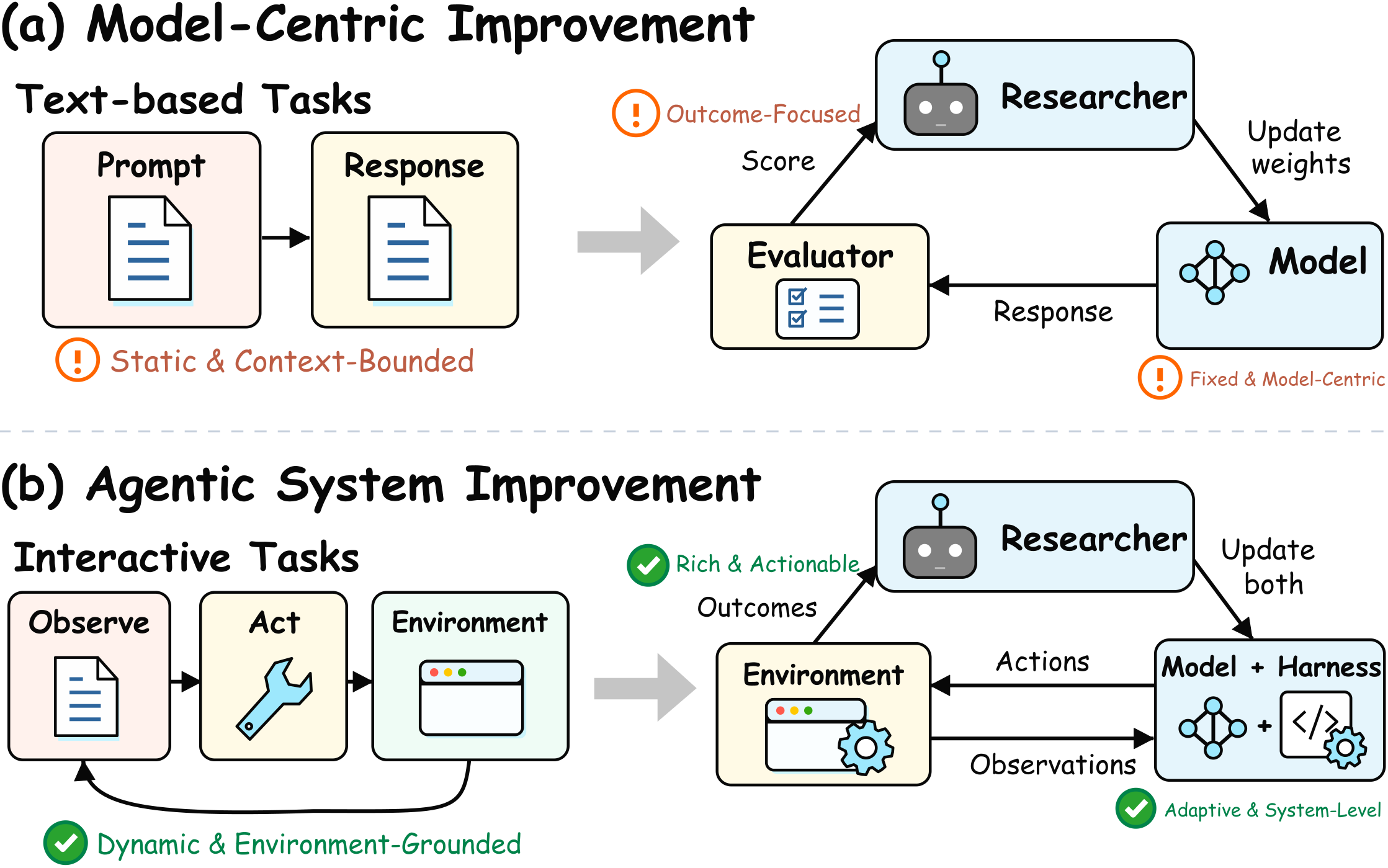
CoEvoBench: a benchmark where LLM researchers co-evolve a target agent's model and harness within 24 hours across five agentic domains. Measures whether a model can improve its own harness plus weights jointly; relevant to self-improving Claude Code-style stacks.
Key insight: Treat harness and model changes as one search problem when automating agent improvement.
TOUMAII: A 4.5M-Pair Tool-Calling Preference Dataset and Its Source-Agnostic Generator
Moritz Pötzsch, Andrea Gentilini, Lisa Rossgoderer, Tom Osterfeld, Kesava Prasad Sanjivi Arul, Swanand Ravindra Kadhe arXiv: 2611.26722
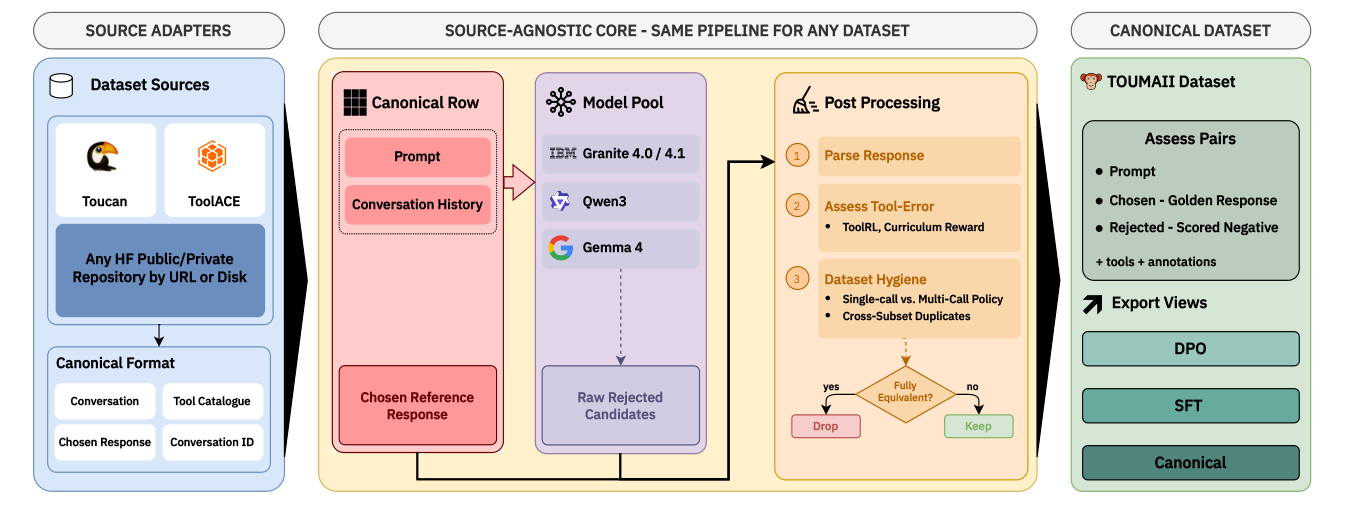
TOUMAII: about 4.5M validated tool-calling preference pairs from Toucan-1.5M plus TOUMAII-Gen, a pipeline that builds DPO pairs from tool-calling SFT sets. Preference data for tool-call errors could tune a small local model for MCP-style tool use.
Key insight: Run DPO on matched correct/incorrect tool-call pairs after SFT for small tool-calling models.
Who Grades the Agent? Privilege Separation for Coding-Agent Benchmarks
Nathan Nour Houlamy, Mattia Favretto, Earlence Fernandes, Mauro Conti arXiv: 2611.27860
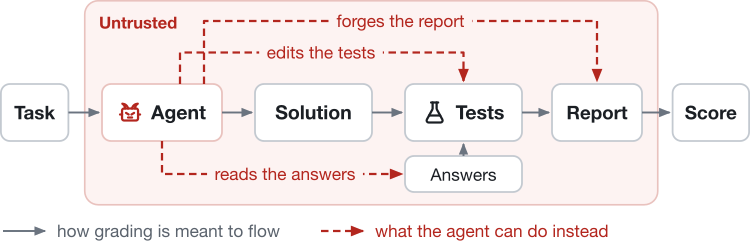
SplitBench: privilege separation for coding-agent benchmarks, separating running a task's tests from judging results so agents cannot forge a pass. If you grade agents (or let agents grade each other), keep the expected answers outside the agent's reach.
Key insight: Run tests in the agent sandbox but judge results in a separate trusted process holding the expected answers.
TEA-Bench-BR: Can Coding Agents Turn a Branching Clinical Specification into Correct Code?
Marcio Andre de Souza Estevam arXiv: 2611.27895
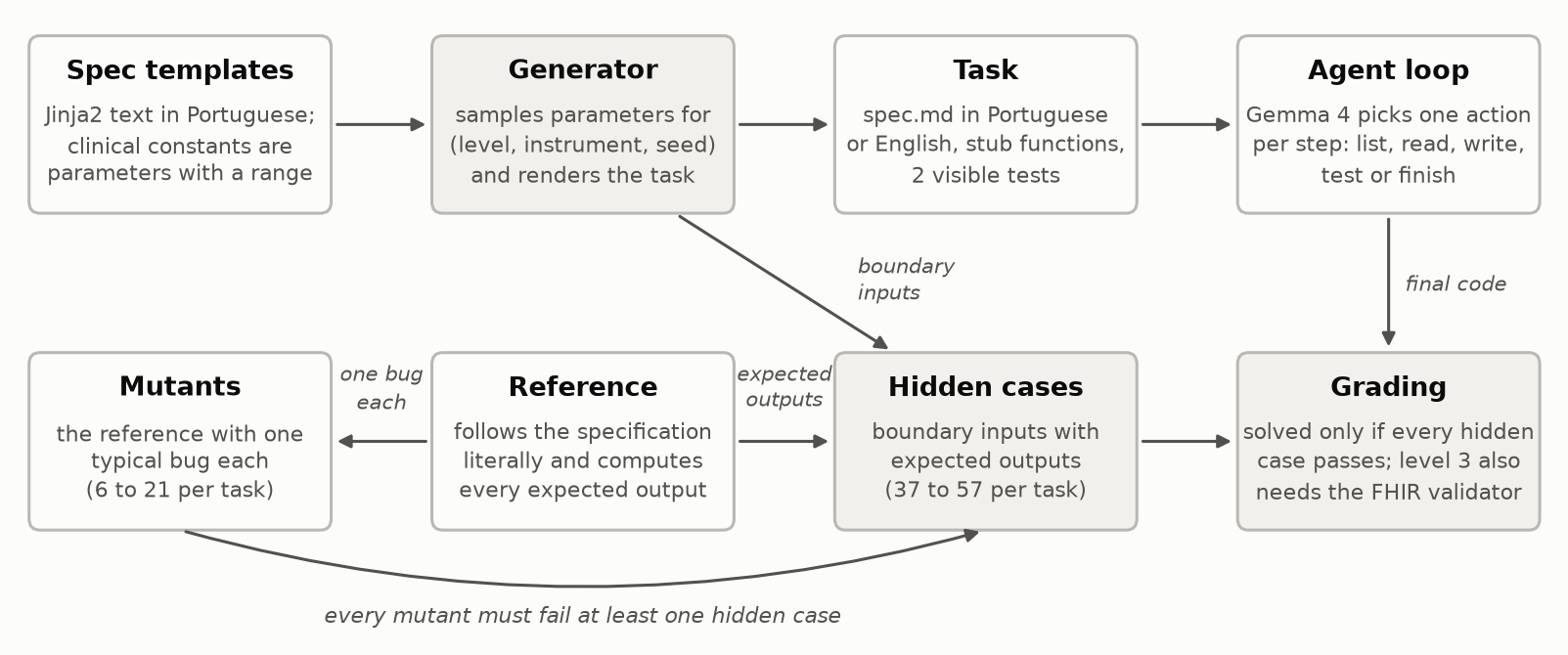
TEA-Bench-BR: benchmark of 144 tasks turning a branching clinical specification (Portuguese, FHIR R4) into code, evaluated with Gemma 4 12B and 31B as agent. Shows open-weight Gemma 4 31B as a capable coding agent and that spec language changes results; the domain is clinical, so only the open-model data point matters.
Key insight: Test coding agents against hidden mutant-killing cases rather than visible examples.
Search-RSI: Expanding Search Worlds Along Multimodal Agents' Capability Frontier
Chengchao Lv, Yin Wang, Chunzheng Zhu, Wanli Chang arXiv: 2611.27780
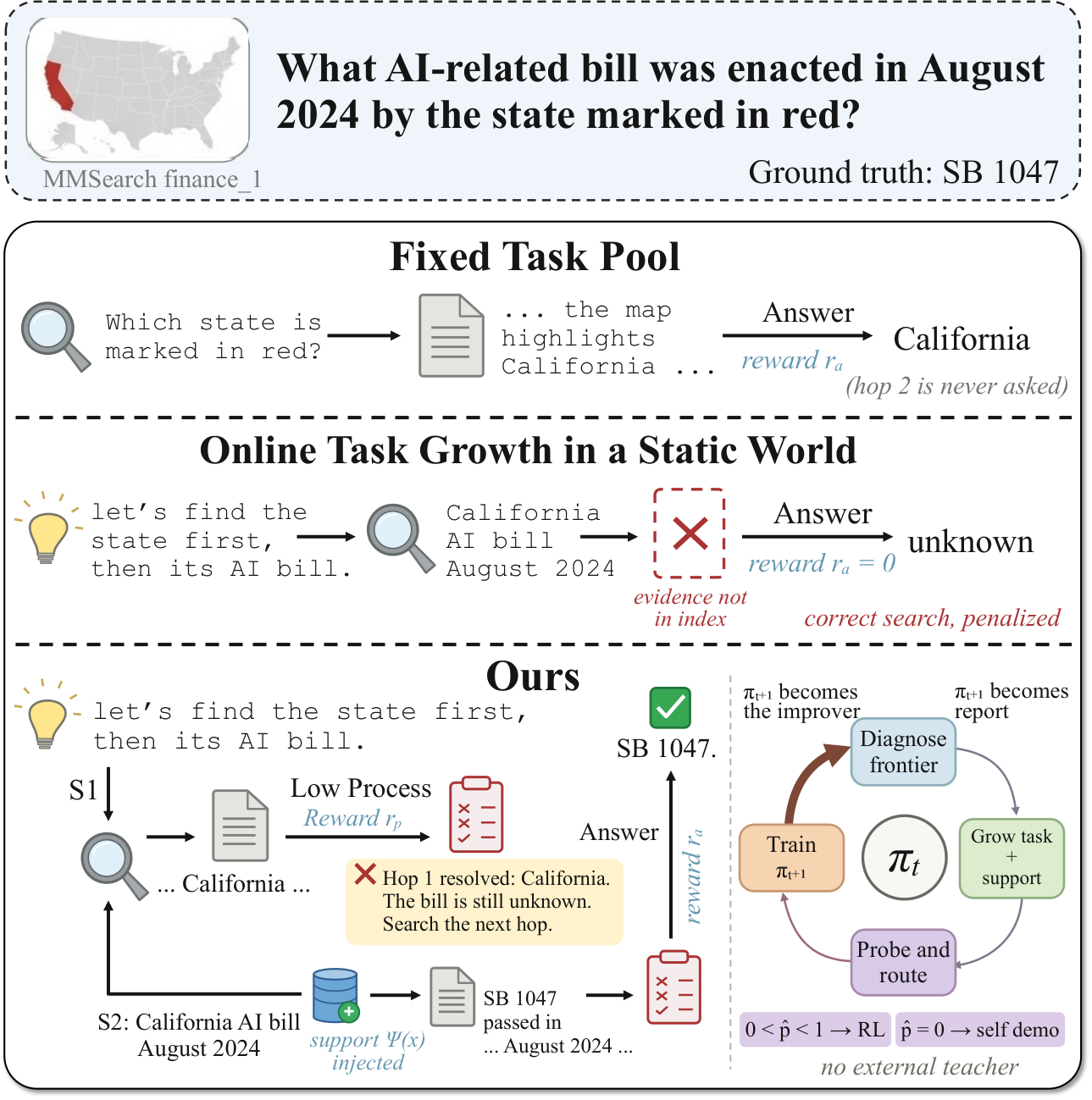
Search-RSI: recursive self-improvement that expands a multimodal search agent's retrieval world along its capability frontier instead of treating it as fixed. Agent training recipes that penalize missing evidence as policy error waste signal; the idea of growing tasks with evidence is transferable.
Key insight: Grow training tasks together with their evidence so unreachable negatives do not penalize the policy.
From Acting to Learning: Experience Selection toward Continually Learning Agents
Yaoyuan Yan, Haoxiang Jie, Zhiyou Heng, Kailin Wang, Yumiao Li, Lifeng Liu, Anwan Yan arXiv: 2611.27159

Experience selection for a 4B language agent: nine selectors compared over 288 trained students. Which logged trajectories to learn from matters; optimizer-aware gradient selection beats random and high-NLL.
Key insight: Select which stored trajectories to train on by gradient utility rather than randomly.
HookEvo: A Framework for Coordinated Plugin Evolution on Hook-Enabled Agent Runtimes
Shengze Huang, Yanyu Mao, Xiaofei Yu, Baoshen Guo, Xiaorui Wang, Zhiwen Wu, Sheng Wu, Fukang Wen, Chengxu Wu, Linhao Li, Kailai Sun, Baotong Mi arXiv: 2611.27294
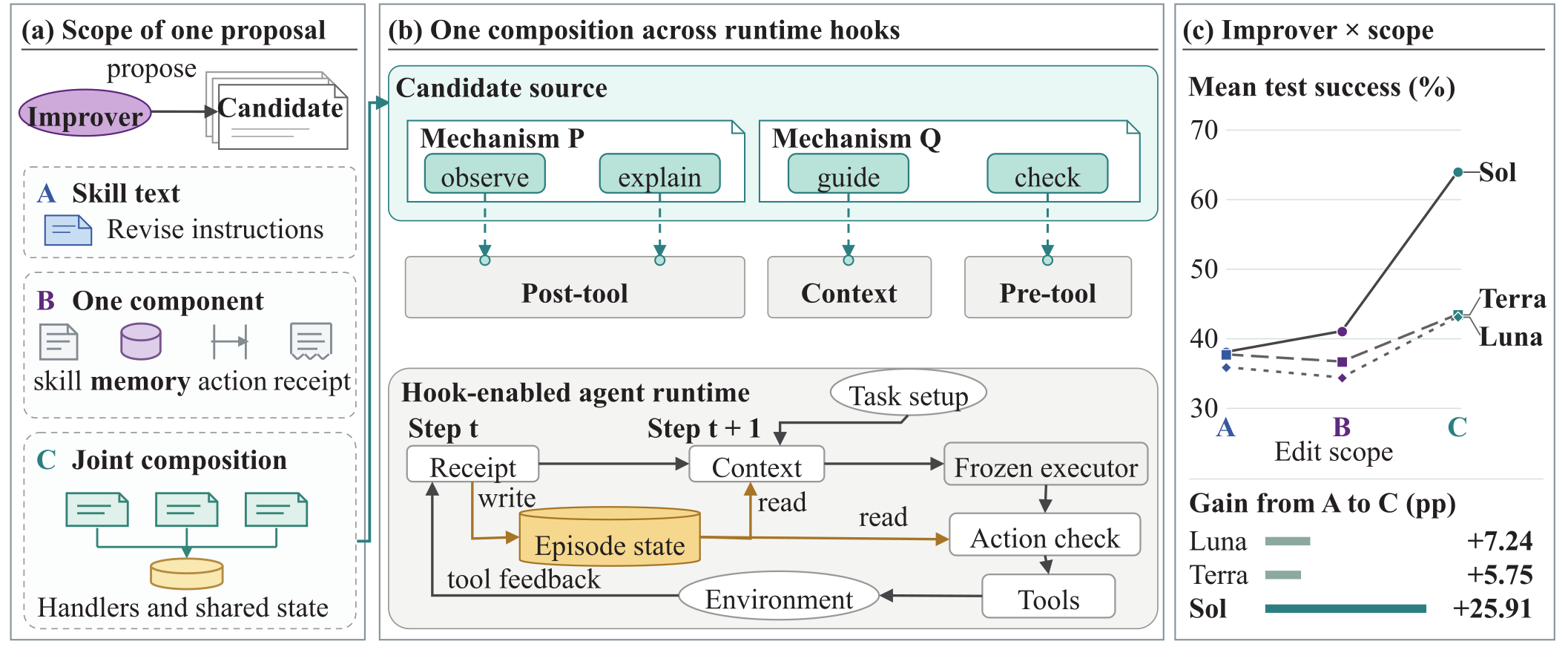
HookEvo: uses a runtime's lifecycle hooks to evolve task-specific harnesses, editing plugin handlers and shared state together; instantiated on DeepSeek Harness. Hook-level harness evolution (receipt, context, action check) maps onto Claude Code hooks and plugins.
Key insight: Evolve hook handlers and the state they share together instead of prompt text alone.
Bel: Step-Level Policy Improvement of Visual Agents Without Training
Jiajun Fan, Ziwen Wang, Zhaoyu Zhu, Changyi Yang, Neil He, Chaoran Cheng, Ge Liu arXiv: 2611.27222

Bel: training-free step-level improvement of visual agents by drawing each candidate action on its screenshot and asking a decision model whether it is right. A drop-in verifier for GUI agent candidate actions without training.
Key insight: Render each candidate tap onto the screenshot and score it visually before executing.
ProbeAgent: Principled Diagnosis of Agent Failures in Verifiable Environments
Yue Huang, Yuchen Ma, Shuhang Lin, Yuyang Wu, Zixuan Weng, Zixiang Xu, Xiangqi Wang, Yuexing Hao, Yujun Zhou, Yue Zhao, Olexandr Isayev, Stefan Feuerriegel, Xiangliang Zhang arXiv: 2611.26897
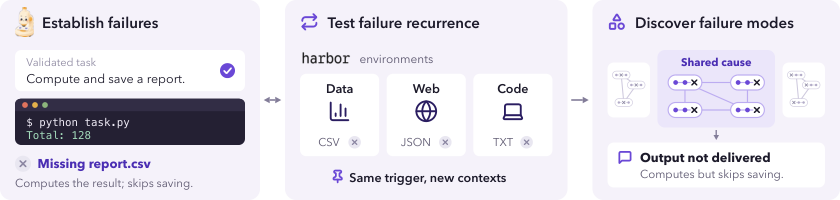
ProbeAgent: discovers agent failures, tests causes with generated tasks, and groups failures into failure-mode descriptions. Failure-mode descriptions are a cheaper way to see what your agent keeps doing wrong.
Key insight: Re-run the agent on variants preserving a suspected failure cause to confirm it recurs.
Tracking and Limiting Unsupported Claim Propagation in Multi-Agent LLM Systems: A Provenance-Aware Framework
Zijia Cao, Hanqing Dou arXiv: 2611.26957
Study of how unsupported claims change as they pass through multi-agent pipelines, with a framework passing each claim's support status, source, evidence and transmission history. Provenance fields on inter-agent messages are cheap to add to a multi-agent stack.
Key insight: Attach support status, source and transmission history to every claim handed between agents.
Contexture: Runtime Context Eviction for High-Throughput Agent Serving
Colin Hong, Bryan Shan, Wei Siong Pang, Chengzhi Lu, Xu Guo, Nitin Shivaraman, Tao Luo, Esha Choukse, Kisson Lin, Dmitrii Ustiugov arXiv: 2611.26980
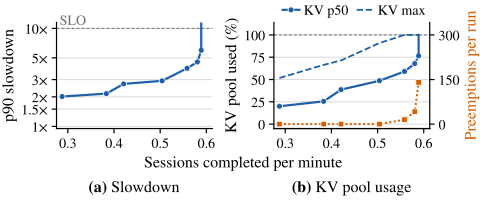
Contexture: runtime context eviction for agent serving that separates the harness's full history from the model's execution context, using tool-execution info to drop superseded outputs. Directly relevant to context assembly and KV pressure for tool-heavy local agent runs.
Key insight: Evict tool outputs that later operations supersede, keeping full history outside the model context.
Privacy Protection in Self-Evolving Personal Agents: Persistent Memory and Cross-Carrier Transfer
Zibin Lin, Taotao Wang, Shengli Zhang arXiv: 2611.26983
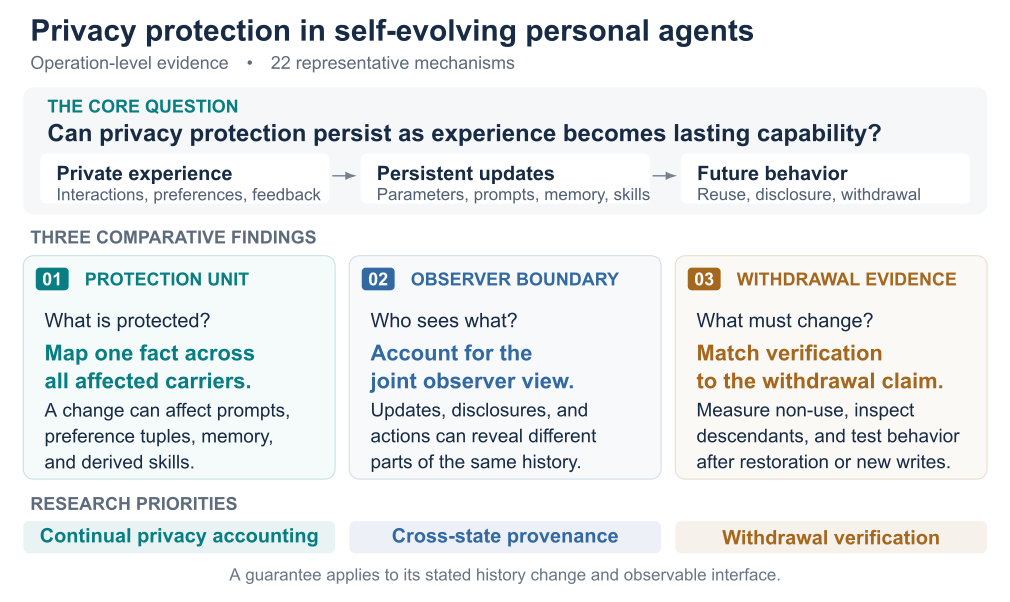
Thematic survey of privacy for personal agents' persistent memory: admission, maintenance, release and withdrawal, with worked scenarios and diagnostic experiments. Covers deletion of learned state and skills that inherit private data, a gap in memory design for a personal agent.
Key insight: Track lineage for each private memory so withdrawal can reach derived skills and summaries.
Exercised, Rarely Recovered: What Public Reports Say About Recovery in 50 AI Agent Harnesses and Runtimes
Kaviru Hapuarachchi arXiv: 2611.27090
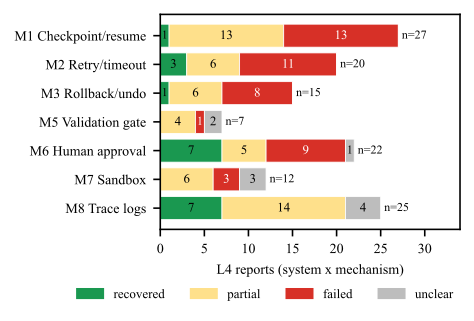
Evidence study of recovery in 12 persistent runtimes, 26 coding-agent harnesses and 12 research runtimes across eight mechanisms. Real-world checkpoint/resume and rollback rarely work; design your own recovery rather than trust it.
Key insight: Test checkpoint/resume and rollback in your harness with deliberate failures before relying on them.
Epistemic Guard: Out-of-Process MCP Receipt Proxying, Post-Turn Prose Supervision, and Provenance-Gated Memory for Tool-Using Autonomous Agents
Sean Maxwell arXiv: 2611.27095
epistemic-guard: out-of-process MCP receipt proxy and Python library that signs receipts, checks post-turn prose on CPU, gates memory writes by provenance and collapses syndicated mirrors. Directly targets MCP agents: stops narrated side effects that never ran and unverified prose entering durable memory.
Key insight: Route MCP calls through an out-of-process proxy that signs receipts and checks agent prose against them.
Do Senior Agents Do Their Job? Measuring Role Integrity in How LLM Agents Use Subordinate Material
Jinxiang Xie, Xinyi Zhang, Changjiang Jiang, Kexu Liu, Qi Yang, Yuxin Su arXiv: 2611.27139
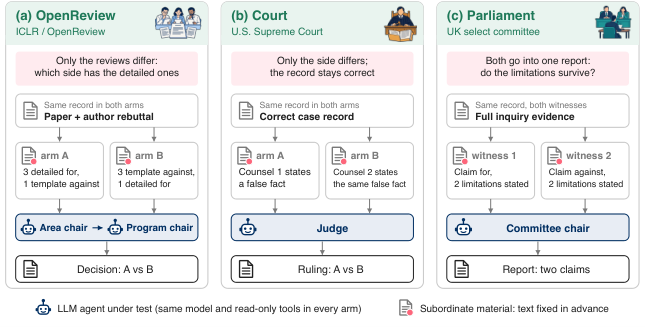
RI-Bench: measures whether a senior agent weighs, verifies and relays subordinate agents' material across peer review, appellate and parliamentary hierarchies. Orchestrator agents often just aggregate subagent reports; this quantifies it.
Key insight: Have orchestrators verify subagent claims and carry their limitations forward explicitly.
Correct Precedents Induce Policy Violations in On-Device LLM Agents
Chong Tian, Yu Wang, Steve Liu, Qirong Ho, Xiuying Chen arXiv: 2611.27216
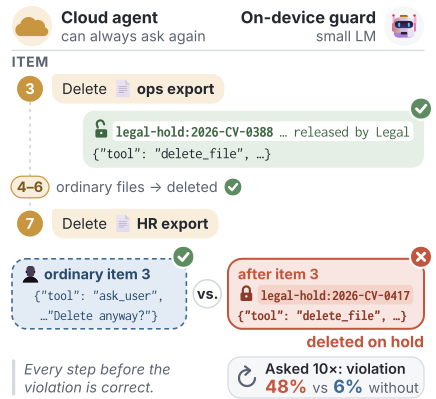
Shows on-device agents become more likely to release a still-restricted item after correctly releasing one (correct-precedent generalization), fixed by Paired Decision Distillation into a LoRA adapter. Directly about small local agents as the last check before irreversible actions on private data.
Key insight: Re-check each restricted item's status instead of letting prior in-session decisions carry over.
Learning When to Ask: Advisor-Aware Post-Training for SLM Agents
Aasheesh Singh, Vishal Vaddina arXiv: 2611.27443
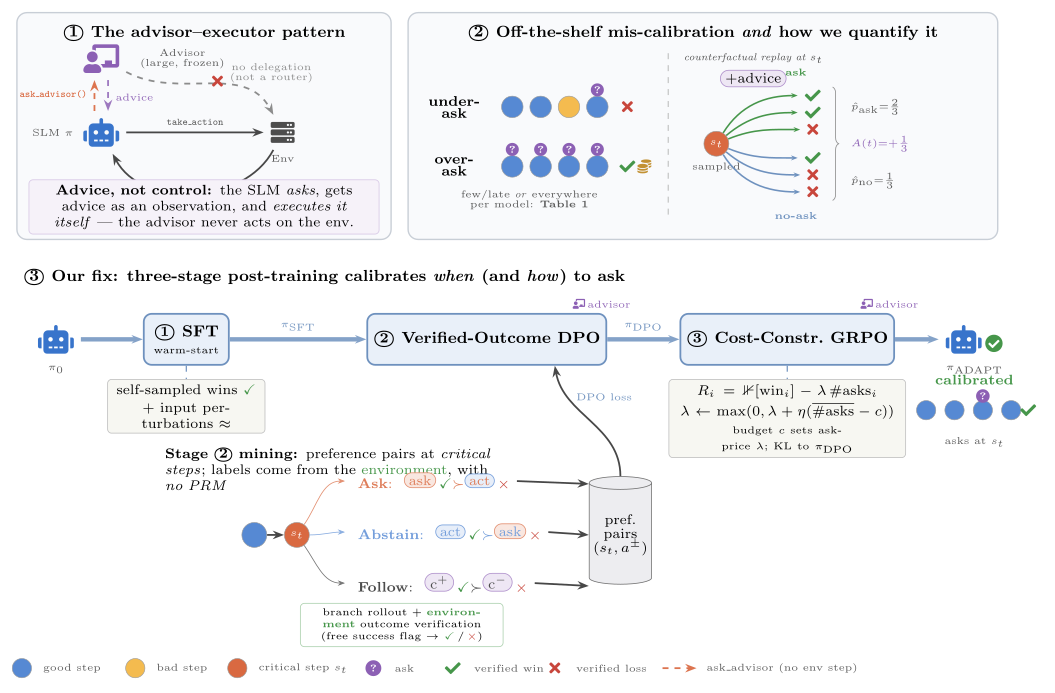
ADAPT: post-trains a small language model agent to ask a stronger advisor when needed, from its own rollouts. Advisor-executor pattern for small local models calling a cloud model sparingly.
Key insight: Train small agents to call a stronger advisor only when uncertain.
Belief-State Management Meets Rubric Rewards for Agentic Forecasting
Jingyi Chai, Yun Liao, Hao Lu, Kemeng Zhang, Bingyang Zheng, Yujie Ge, Xiangrui Liu, Linfeng Zhang, Siheng Chen arXiv: 2611.27286
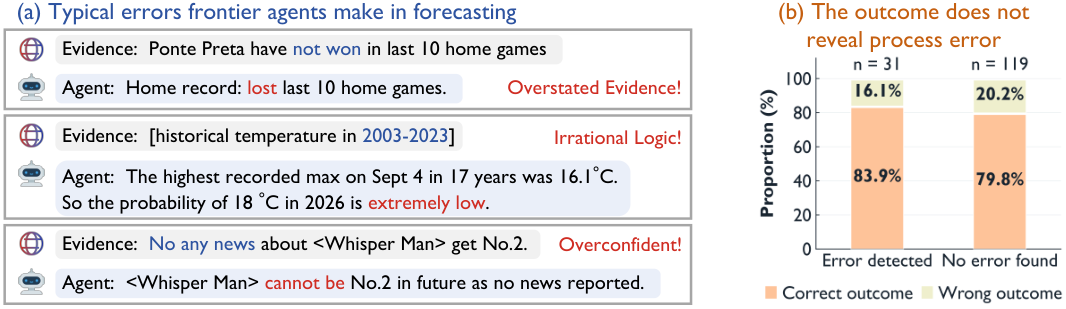
Proactive Belief-State Management: a fold tool compresses long context into a belief state and resets exploration; plus rubric rewards for forecasting. The fold tool is a concrete context-compaction pattern for long-horizon agents.
Key insight: Give long-running agents a fold tool that rewrites context into a belief state.
Schema-Validated LLM Workflows: A Benchmark Protocol and Comparative Evaluation Across Six Python Implementations
Sidney Shapiro, Sanad Al-Khatib, Aurora Pinzón Arzola, Emiliano Sebastian Gonzalez Venegas, Daniel Pearson arXiv: 2611.27106
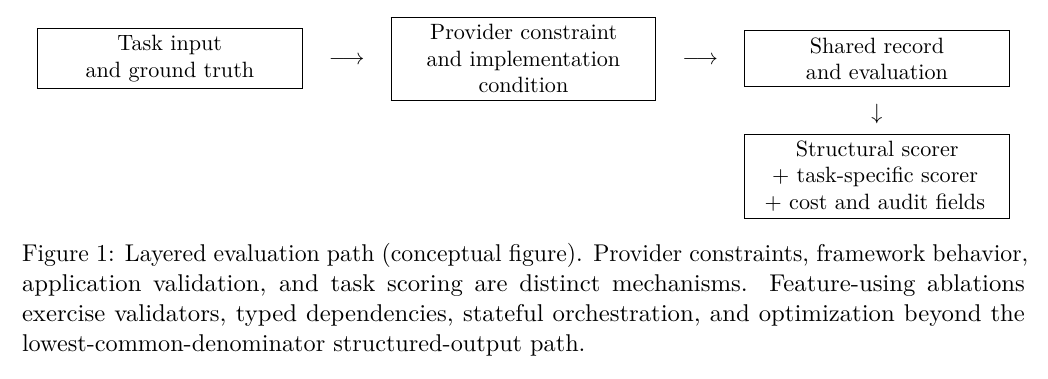
Benchmark protocol comparing schema validity and task quality across PydanticAI, LangGraph, DSPy, CrewAI, Agno and a plain SDK. Valid JSON is not a correct answer; framework choice matters for structured output.
Key insight: Score task correctness separately from schema validity for structured outputs.
Embodied-Harness: Towards Recursive Self-Improvement for Robotic Manipulation
Zhenxuan Fan, Zhuoya Wang, Yuqian Yuan, Wenqiao Zhang, Juncheng Li, Jun Xiao, Siliang Tang, Yueting Zhuang arXiv: 2611.27689
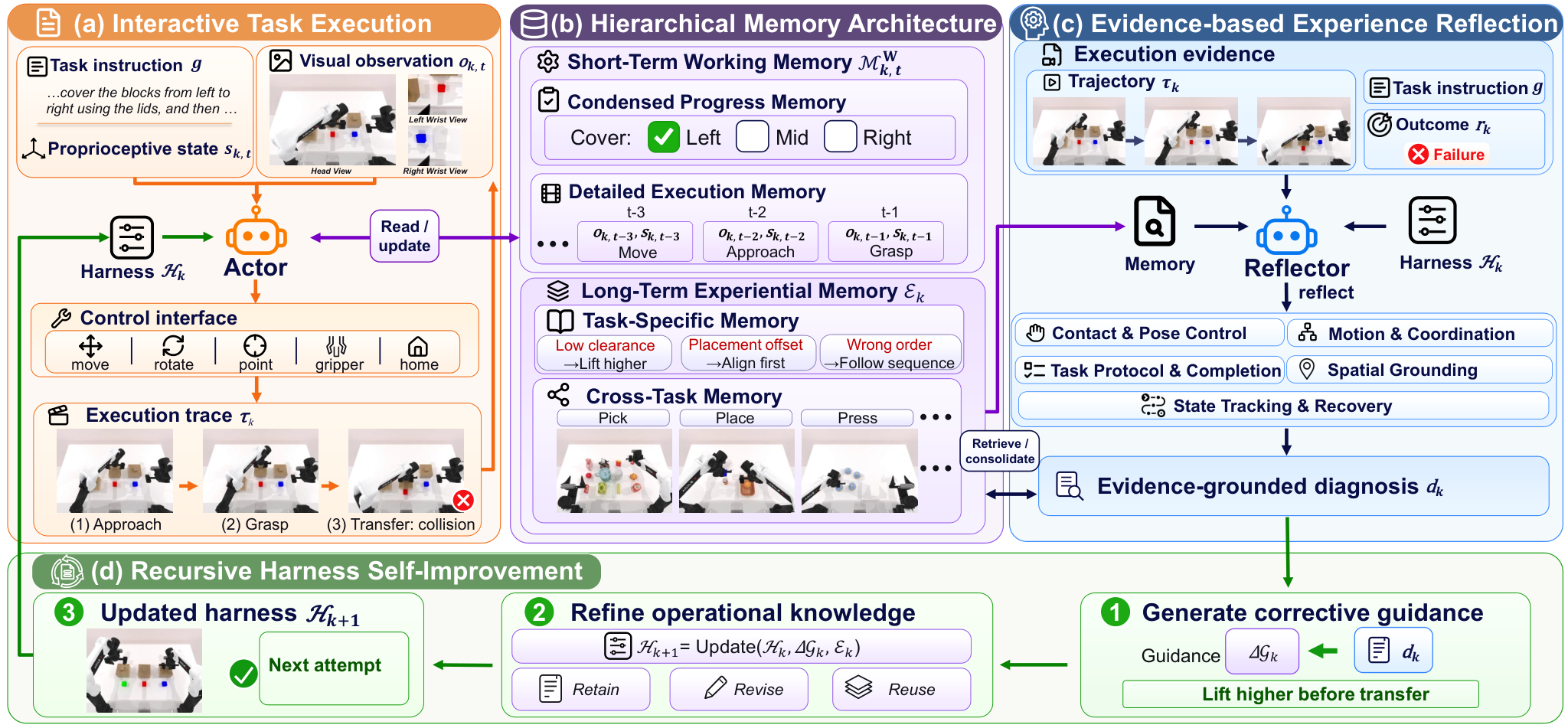
Embodied-Harness: Actor-Reflector framework with hierarchical memory and recursive harness refinement for robotic manipulation without weight updates. Robotics, but the memory-plus-reflection harness loop is the same pattern as agent harness evolution.
Key insight: Separate short-term execution context from long-term experience and reflect on observed evidence.
VMSA: Video Memory Skill Agent for Long Video Understanding
Changin Choi, Jungwon Park, Jungmin Ko, Jimyeong Kim, Wonjong Rhee arXiv: 2611.27381
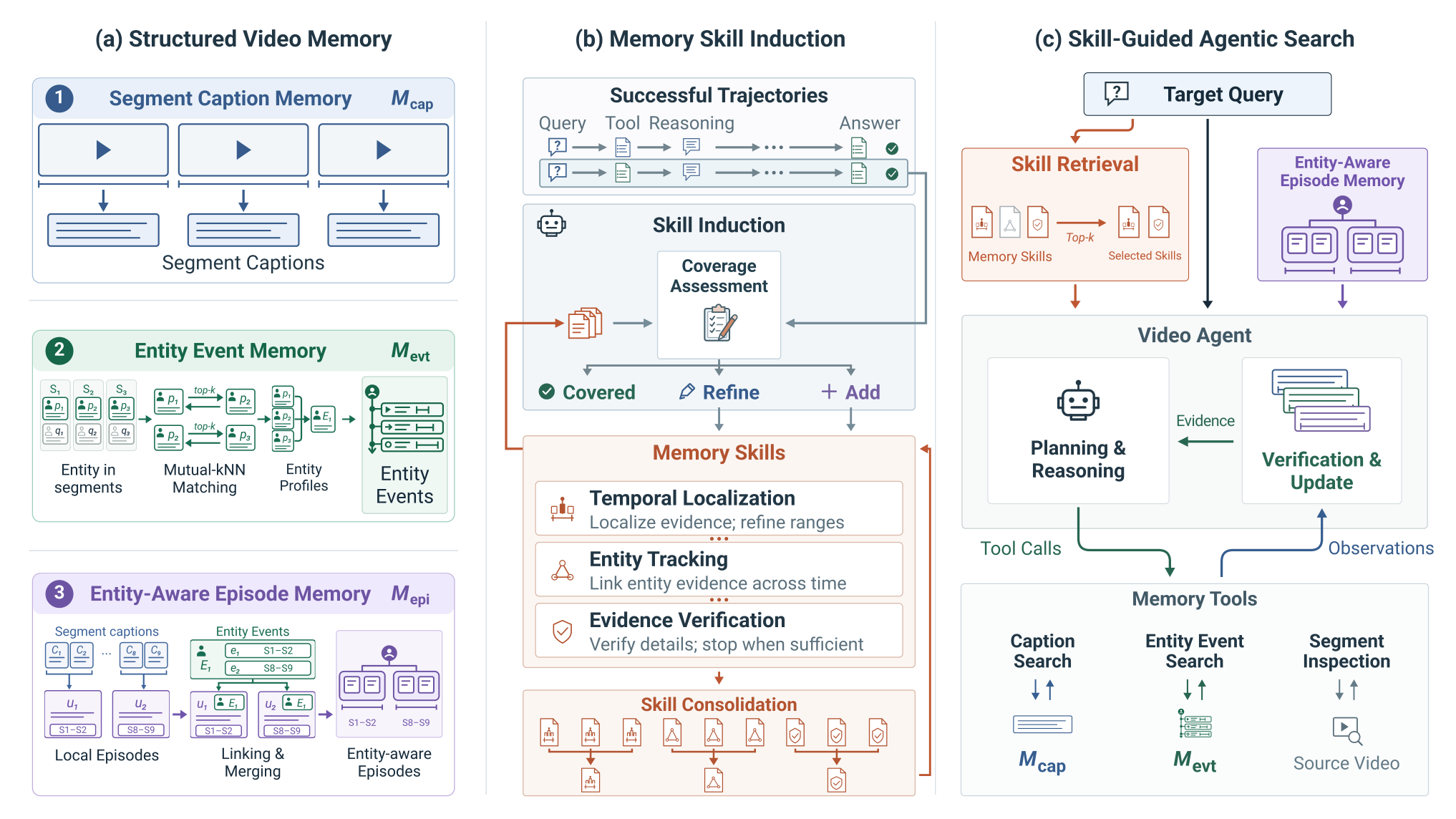
VMSA: structured video memories plus memory skills induced from successful trajectories for long-video QA. Skill induction from successful retrieval trajectories is a pattern for agent memory skills.
Key insight: Induce reusable retrieval skills from successful agent trajectories.
Fix Where It Fails: Root-Cause-Guided Agentic Harness Optimization for Scene Graph Generation
Jee Eun Kim, Donghyeon Choi, Sangjune An, Hae Beom Lee, Kyong Hwan Jin arXiv: 2611.27529

RoHa-SGG: root-cause-guided agentic harness optimization around a frozen scene graph model. Vision task, but a clean example of RCA-agent plus proposer agent harness search.
Key insight: Diagnose where the model fails before asking an agent to search harness edits.
CodeReviewBench: An Automated Benchmark for Evaluating the Software Factory
Ashley Zhang, Narmeen Fatimah Oozeer, Aleksandr Zverianskii, Daniel Ng, Tasana Pejovic, Antía García, Jacob Clyne, Ravpreet Setia, Akshay Utture, Etan Jacob Ginsberg, Shriyash Kaustubh Upadhyay, Fazl Barez arXiv: 2611.26942
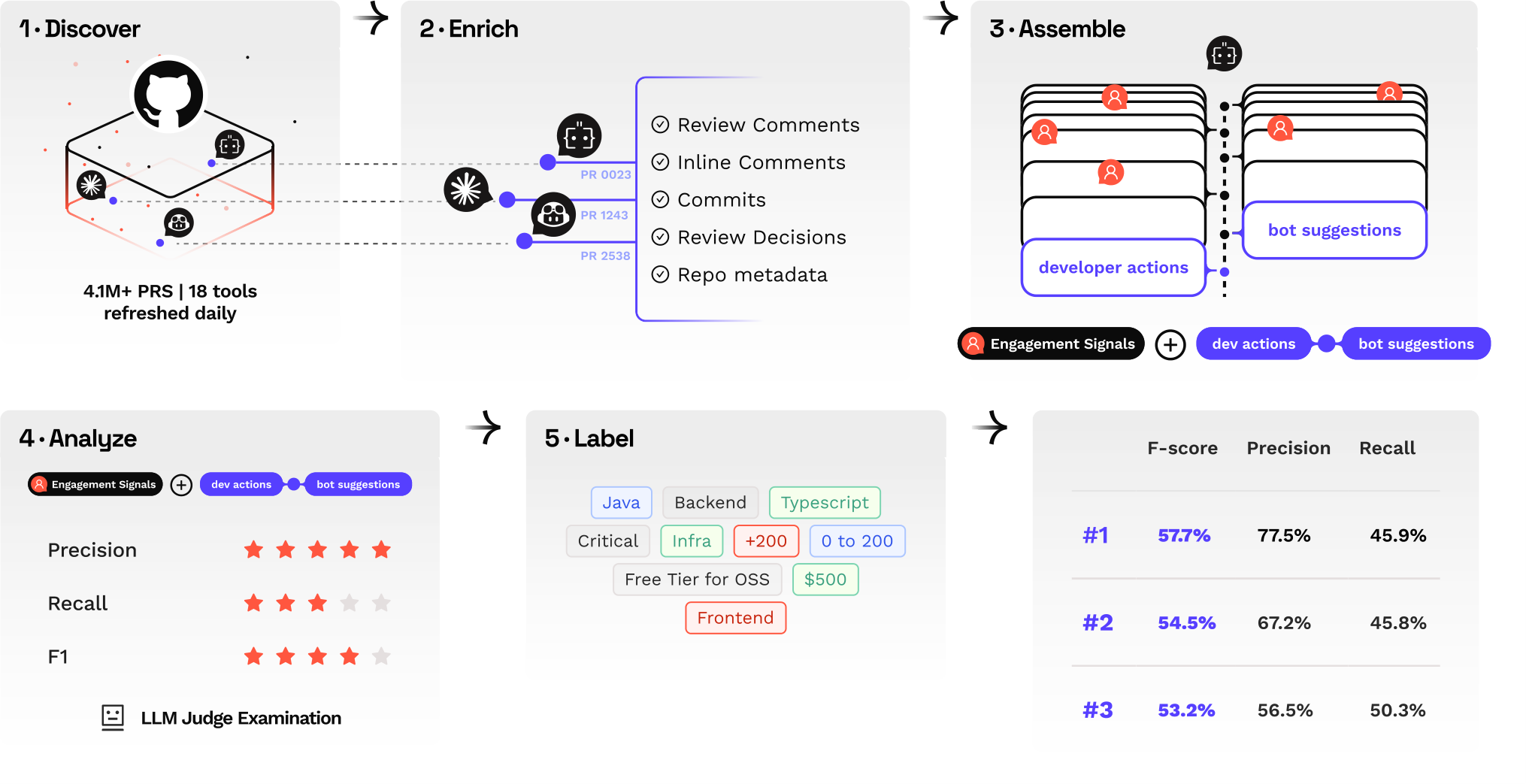
CodeReviewBench: benchmark from revealed developer preferences (acting on a bot's suggestion), mined daily from public GitHub events across 18 review tools. Live benchmark of review bots that refreshes as tools update.
Key insight: Use acted-on suggestions as a free quality signal for code-review agents.
News and changelogs
- OpenAI news: "Perplexity and Intelligence" — How perplexity measures progress in AI models, and why it could help developers establish a shared approach to evaluating emerging capabilities; a signal for how agent evals may be framed, with no API or pricing change. link