AI Research Digest — Wednesday, November 11, 2026
Wednesday's cs.AI announcement day (2026-11-11) lists 248 entries, 105 new submissions and 143 cross-lists (replacements skipped). A filter for agent systems, memory/context, computer-use / GUI / tools / skills / harnesses, multi-agent, persistence, and local/open models keeps 34 papers. The day's main theme is trust in agent memory: two papers ask when a lesson learned from experience should be allowed into persistent state, one by testing it as a falsifiable hypothesis and one by linking every lesson back to the trajectory it came from. A second cluster weighs architecture against cost, finding that single agents with good skills are hard to beat, that skills are tuned to the model that runs them, and that how guidance is packaged changes results. Harness security, long-horizon failure analysis and agent serving round out the day.
Research Papers
When Should Agents Remember? Falsification-Gated Self-Evolution for LLM Agents
Runxuan Tang, Haoyu Gao, Yuyan Ding et al. arXiv: 2611.14326
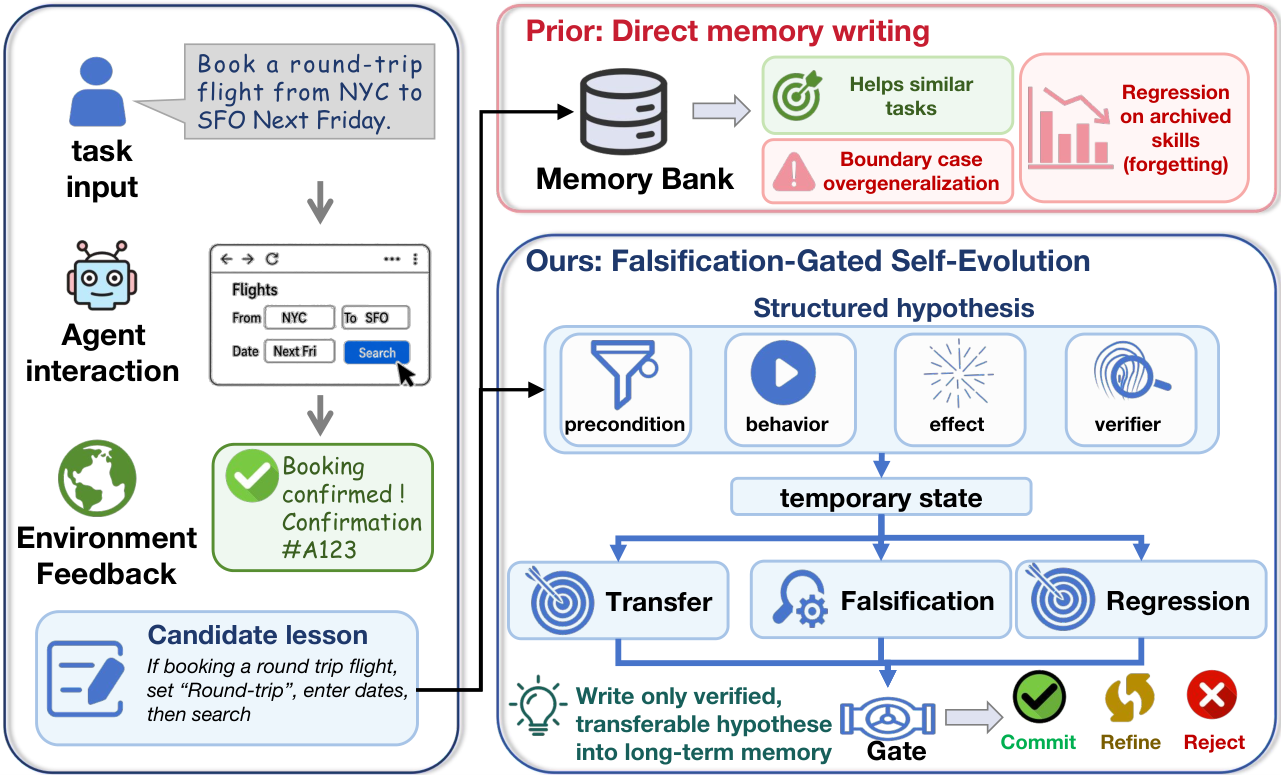
FGSE treats each experience-derived lesson as a hypothesis (precondition, behavior change, expected effect, verifier), applies it only in temporary state, and commits, refines or rejects it after target-transfer, falsification and archived-regression probes. Reports 39.8 WebArena SR, 78.8 AppWorld completion, 0.724/0.487 Pass^1 on tau-Retail/tau-Airline, with harmful committed updates cut to 3.6% and regression damage to 1.3%.
Key insight: Treating each memory update as a testable hypothesis, committed only after transfer, falsification and regression probes, kept harmful committed updates to 3.6% while holding strong benchmark scores.
Don't Just Trust Your Memory: Evidence-Linked Memory Reduces Memory-Induced Degradation in LLM Agents
Yukyeong Lee, Yumin Choi, Jinheon Baek et al. arXiv: 2611.14320
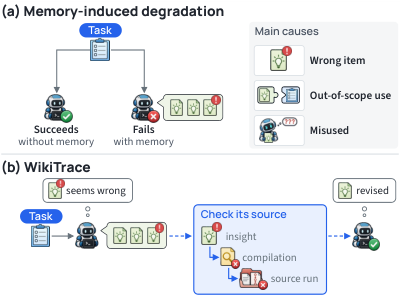
WikiTrace stores each lesson as a short insight linked to a summary of why its trajectory succeeded or failed and to the raw trajectory; when an insight is thin, conflicting or from a failed task, the agent descends the links with terminal tools before acting. Beats prior memory approaches on five agentic benchmarks and reduces memory-induced degradation (code released).
Key insight: Agents degrade with memory partly because distilled lessons arrive without their evidence; linking each lesson back to its trajectory lets the agent check it before acting.
Agent Architecture Cost-Success Trade-offs: A Controlled Evaluation across Enterprise-Style SOPs
Subhrangshu Nandi, Hitesh Arora, Yunfei Bai et al. arXiv: 2611.12953
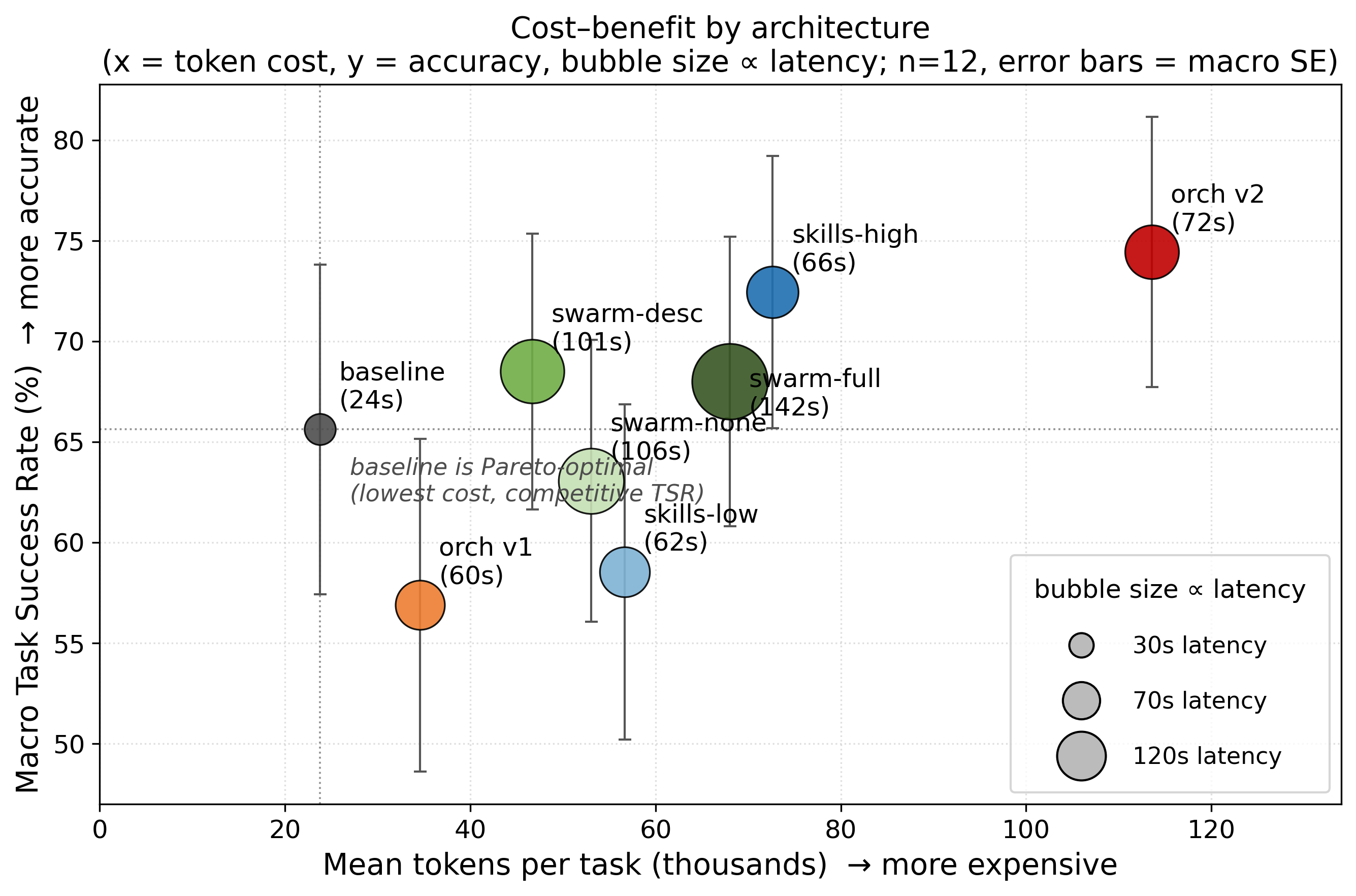
Controlled comparison of four architectures (function-calling single agent, skill-augmented agent, centralized multi-agent, triage swarm; eight arms) on 13 enterprise SOPs with fixed model/tools. No architecture is separable in aggregate; coordinated arms spend 1.4-4.7x tokens and 2.6-5.8x latency; high-quality skills lift success 67.4% to 73.1%, degraded skills fall below baseline; only a redesigned multi-agent arm significantly beats single agent (75.6%).
Key insight: With model, tools and tasks fixed, extra orchestration rarely paid for its 1.4-4.7x token cost, while skill quality moved success in both directions.
Coding Agent Memory Post-Training II: Unlocking the Memory Potential of Pre-trained File Operations for Long-Horizon Tasks via On-Policy Distillation
Lirui Luo, Kelong Mao, Xinwei Yang et al. arXiv: 2611.14009
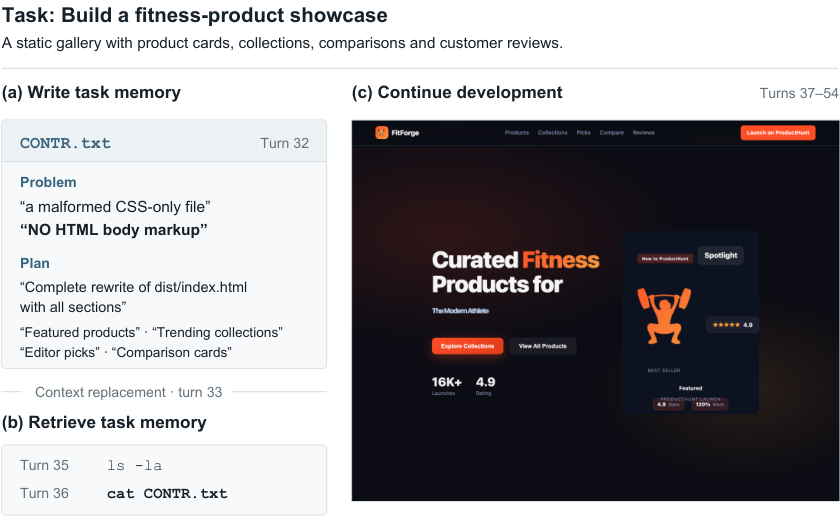
CAMG-II gives long-horizon RL environments (Shop, Coding, AutoResearch, General, Visual) plain Bash plus an episode-persistent workspace so the policy uses files as memory across context replacements; CAMP-II trains one policy across all five with asynchronous on-policy distillation from a teacher with a file-operation prior. 2.97x the gain of the strongest OPD baseline; transfers to Terminal-Bench 2.1 and SWE-Bench Pro V2.
Key insight: Plain files in a persistent workspace, learned through on-policy distillation, work as long-horizon memory and transfer to Terminal-Bench 2.1 and SWE-Bench Pro V2.
From Attack Surface to Defense Architecture: Compositional Security for Agentic Coding Harnesses
Simon Hegelich, Bardh Prenkaj, Habiba Sarhan et al. arXiv: 2611.13960
ActiveSecHarness: a reference monitor separating intelligence from authority, with HMAC capability tokens across four trust rings, a 2D trust x sensitivity taint lattice plus workspace provenance ledger, and deterministic Ring-0 OS/tool guards. On 252 fixtures a live qwen3:4b judge refused 98.3% of benign work at 142.3 ms, while Ring 0 blocked all attacks with 0 false positives in 12.7 microseconds; the lattice caught all 12 kill chains.
Key insight: Deterministic capability and taint checks blocked every attack in microseconds with no false positives, where a small LLM judge refused almost all benign work.
Dependable Long-Horizon LLM Agents: A Trajectory-Centered Empirical Study of Where Errors Enter and Which Controls Reach Them
Shaohuang Wang, Jinghao Wen, Xulei Zhang et al. arXiv: 2611.13254
Episode records trace each fault from origin through propagation, detection and response; applied to 95 failed runs of six multi-agent systems (Who&When, MAD). Faults enter early (median 0.18 of the run); in 72% of failed runs the trajectory already contained contrary evidence, and in 88% of those no agent acted on it; 45% of hand-crafted Who&When failures ended in a provider content-filter crash after which the harness emitted an answer no agent produced.
Key insight: Most failed multi-agent runs already contained evidence against the error, and almost none acted on it; faults also enter early, at a median 18% of the run.
Synapse-Control: Making Agent Experience Actionable with Lightweight Runtime Control
Zhiyuan Huang, Shengan Zheng, Chenghu Yang et al. arXiv: 2611.13615
Synapse-Control replaces generative failure diagnosis with a lightweight control plane: rules shortlist advice, a fine-tuned 1.7B classifier scores it, micro-contracts check arguments, and a Prompt Value Table enforces cooldown and token budgets. Across 1,308 attempts per method on AppWorld and WebShop: 270 successes (29.8% over Base), 4,987 diagnosis calls replaced, auxiliary control time cut ~50% vs Sentry.
Key insight: A rule shortlist plus a 1.7B classifier can decide when to inject past-run advice, replacing thousands of generative diagnosis calls and raising successes 29.8%.
ReTrace: Distilling Tool-Using Agents into Planner-Free Workflows
Kaiyuan Hou, Yang Ping Kuo, Indranil Bhattacharya et al. arXiv: 2611.14492
ReTrace turns an SOP plus a few logged agent runs into an executable workflow where code, not an LLM, picks the next step, using the reasoning text written with each tool call to extract step conditions. On 79 production procedures: 93.8% completion vs 96.8% for the agent at 24% lower cost; on tau^2-Bench 75.8% vs 80.6% but 1.3s instead of 170s.
Key insight: Recurring SOP runs can be compiled into code-driven workflows from logged agent reasoning, trading a few points of success for large cost and latency cuts.
Teaching the Harness: Student-Aware Skill Transfer for LLM Agents
Chang Liu, Bo Wu arXiv: 2611.13144
Student-Aware Teaching: a stronger teacher models a fixed student agent's limits, tests them with probes, and writes reusable skills that enter the library only if they raise success on dev tasks. Claude-Sonnet-5 teaching DeepSeek-V4-Flash: 86.46% vs 81.04% profile-free and 75.00% untaught; swapped libraries between DeepSeek-V4-Flash and Gemini-3.8-Flash do worse; saved libraries keep up to 11.1 points.
Key insight: Skills written for a specific student model help that model most; libraries swapped between models perform worse.
Personalized Memory Rubrics: Learning What to Remember per User via Rubric-Guided Credit Assignment
Yupeng Han, Kai Zhang, Shuochen Liu et al. arXiv: 2611.14017
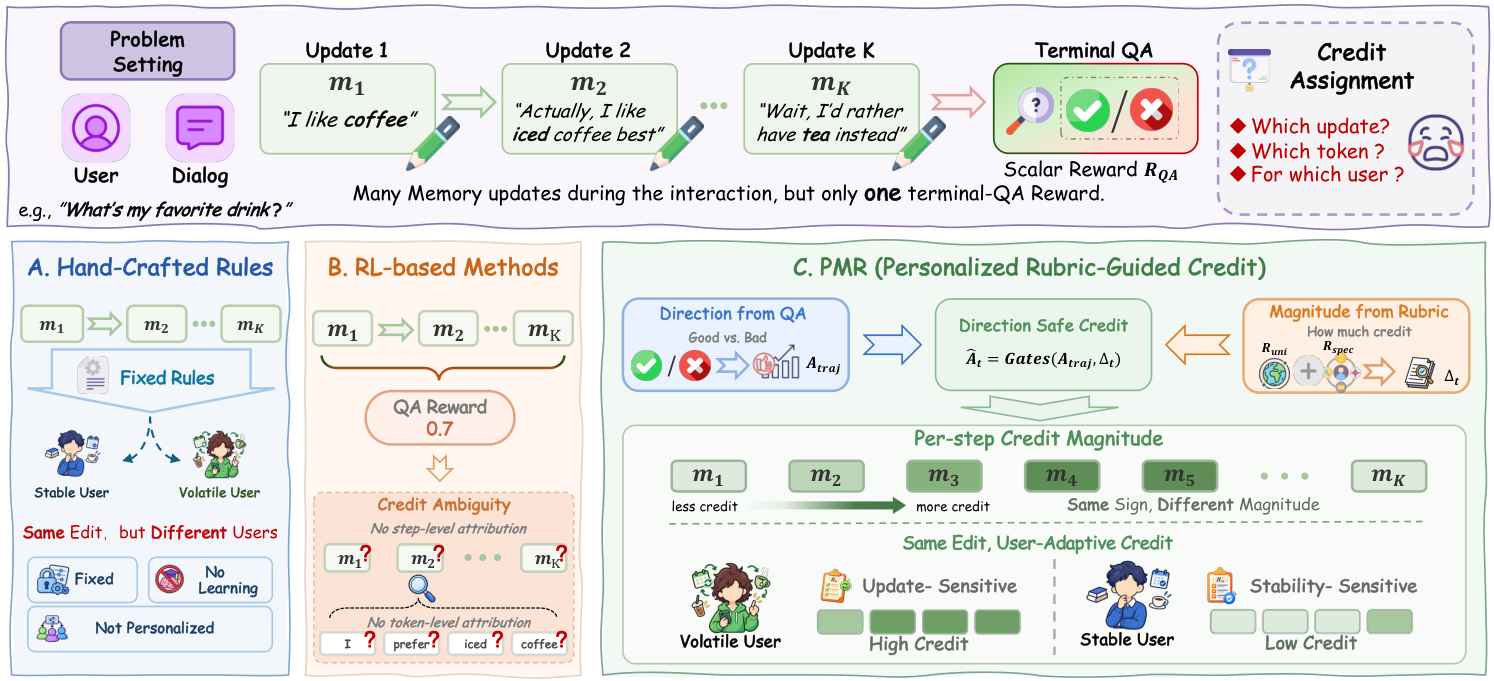
PMR turns terminal QA feedback into per-step, per-user credit for memory add/modify/discard decisions via a universal rubric layer plus a per-user delta, co-evolved with the memory policy; no rubric or judge at inference. Consistent gains over memory-augmented baselines on four benchmarks.
Key insight: Per-user rubrics turn terminal QA feedback into fine-grained credit for memory edits, with no extra cost at inference.
Bursts That Outlast Themselves: Persistent Degradation in Prefix-Cached Agent Serving
Wen Huang, Jack Liu arXiv: 2611.13412
Prefix-cached agent serving is metastable: a few minutes of extra arrivals leave vLLM at ~10% hit ratio and about half throughput for the remaining 70 minutes (9 of 12 pairs), also on SGLang and Qwen3-32B with SWE-bench traces. Throttling admissions recovered 1 of 7 collapsed runs; suspending sessions against a capacity limit recovered all; a KV-demand budgeter prevented the failure in every run.
Key insight: A short traffic burst can push prefix-cached agent serving into a lasting degraded state; bounding resident KV demand per active session prevented it in every test.
From Questions to Decisions: Benchmarking How LLM Agents Acquire Decision-Relevant Information from Human Beings
Yuhan Tang, Ke Fan, Xinkai Zou et al. arXiv: 2611.13015
Ask2Decide: 43 planning tasks where an operator holds facts missing from the agent's request and solvers decide which facts change the optimal plan. Human replies omit the correcting fact far more than an uncalibrated simulated user (43% vs 7%); frontier LLMs' initial plans are infeasible on 58-98% of tasks with missing info; they find plan-changing facts only slightly more often than irrelevant ones.
Key insight: Frontier models rarely ask for the facts that actually change a plan, and real users omit correcting facts far more often than simulated ones.
Program-Aided Patchable Skill Evolution
Jiahao Wang, Yuqi Xiong, Qing Yang et al. arXiv: 2611.14019
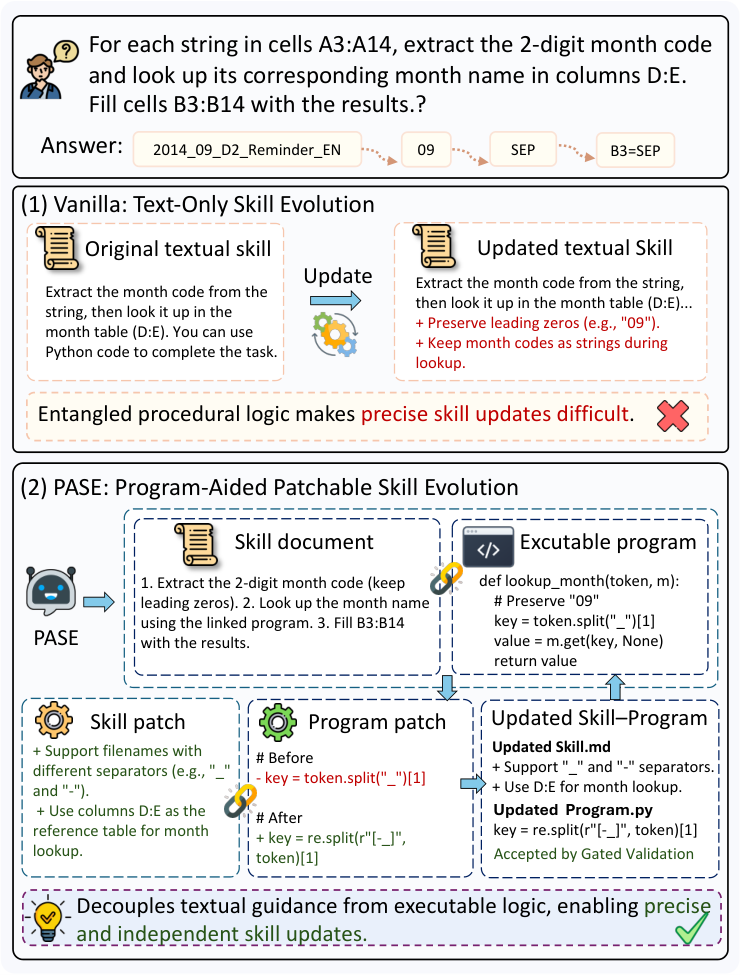
PASE evolves agent skills by attaching executable programs, separating procedural logic from natural-language description so updates patch code rather than rewriting prose; over 2.8% better than baselines with greater evolutionary stability.
Key insight: Separating a skill's procedural logic into editable programs makes skill evolution more stable than rewriting natural-language skill documents.
AgentScript-Eval: Benchmarking LLMs and Agents for Code Generation in an Enterprise DSL
Dipin Khati, Shubham Mehrotra, Bin Bi et al. arXiv: 2611.13183
AgentScript-Eval: 100 execution-graded tasks in Salesforce's Agentforce AgentScript DSL. Best model 25.0% pass@3, 0% on authoring from scratch; a 31B open-weight model has the top compile rate (48.0%); a compile-and-edit loop roughly doubles partial credit; the same skill pack scores 28% as docs but 14% as a live plugin, and rewriting one skill lifts it to 37%.
Key insight: How guidance is worded and delivered mattered more than model size: the same skill pack scored 28% as documentation and 14% as a live plugin.
Veritas: A Verifier Generation Harness for Agent Tasks
Daoan Zhang, Qinbo Bai, Dehai Min et al. arXiv: 2611.13336
Veritas auto-generates task verifiers using an evidence header, a library of unstated domain rules and authoring principles refined by self-improvement; its verifiers agree with official verdicts better than seven other harnesses on four execution-scored benchmarks and improve 9 of 12 harness-benchmark pairs.
Key insight: A dedicated harness can generate task verifiers that agree with official verdicts better than general-purpose agent harnesses.
SteerDistill: Quantizing LLM Agents via Closed-Loop Teacher Steering
Genming Cui, Xiangyu Li, Zixu Hao et al. arXiv: 2611.13410
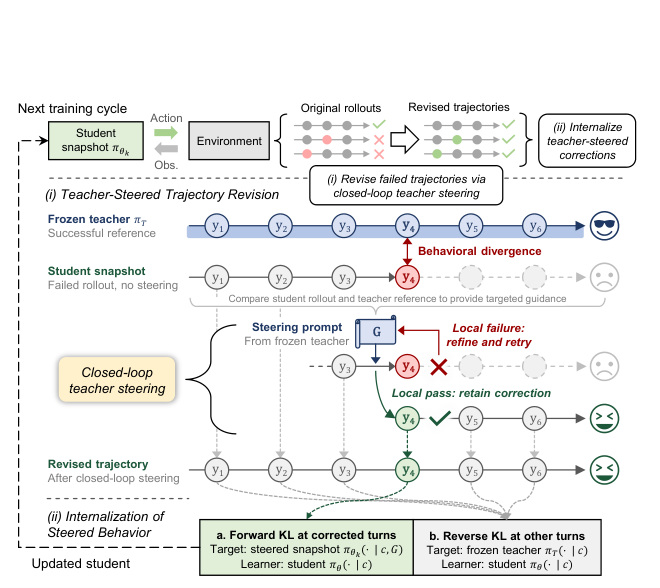
SteerDistill: a full-precision teacher steers a quantized student to revise failed agent turns, then the student is trained to match steered predictions without guidance. Across five agentic benchmarks and three models it beats the best quantized baseline by 1.67-2.18 points at W4A16 and stays within one point of BF16; on tau^2-Bench +1.84 pp over QeRL with 67% fewer training GPU hours.
Key insight: Teacher-steered corrections on failed turns keep 4-bit agent models within one point of BF16 on agentic benchmarks.
EngineAgent: Agentizing On-Device LLM Inference Engines with Inference Stack Hierarchy Awareness and Hardware Abilities
Zhengxiang Huang, Yujie Sun, Shengheng Chen et al. arXiv: 2611.14356
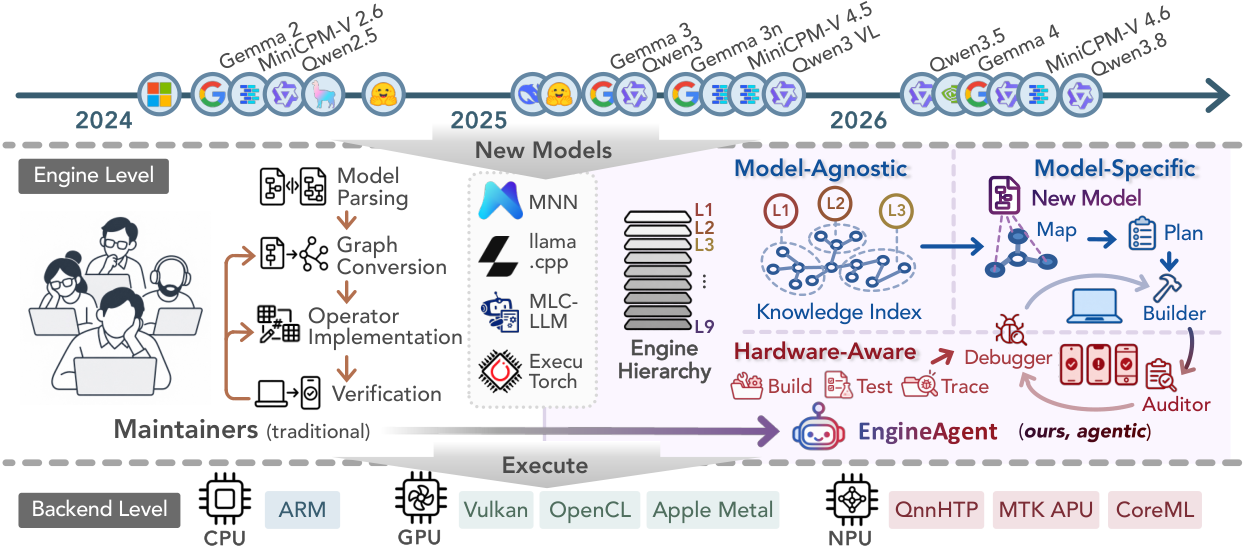
EngineAgent automates enabling new LLMs in on-device inference engines with a hierarchy-aware engine index, pre-validated backend workflows, a builder and an auditor using device-side validation; 75% end-to-end success across 12 tasks (three mobile LLMs, four engine-backend pairs on CPU/GPU/NPU) vs 33.3% for the best coding-agent baseline.
Key insight: Separating reusable engine and hardware knowledge from model-specific code lets an agent enable new on-device LLMs far more reliably than general coding agents.
SELD: Detecting Silent Evidence Loss in Context Compression beyond the Answer
Wentao Lei, Li Liu arXiv: 2611.12903
SELD detects silent evidence loss after context compression by comparing a reader model's preferences among unsaid answers before and after compression; no training or labels. Identifies the evidence-removing edit in 83% of matched pairs with unchanged answers vs 70% for the best baseline.
Key insight: Compression can remove the evidence for an answer without changing the answer, and shifts in a reader model's unsaid preferences reveal it without labels.
Can KV Cache Be Reused Across Model Updates? A DeepSeek-V4-Flash Case Study
Zhikun Tao, Fangyong Jin, Junping Zhao arXiv: 2611.14051
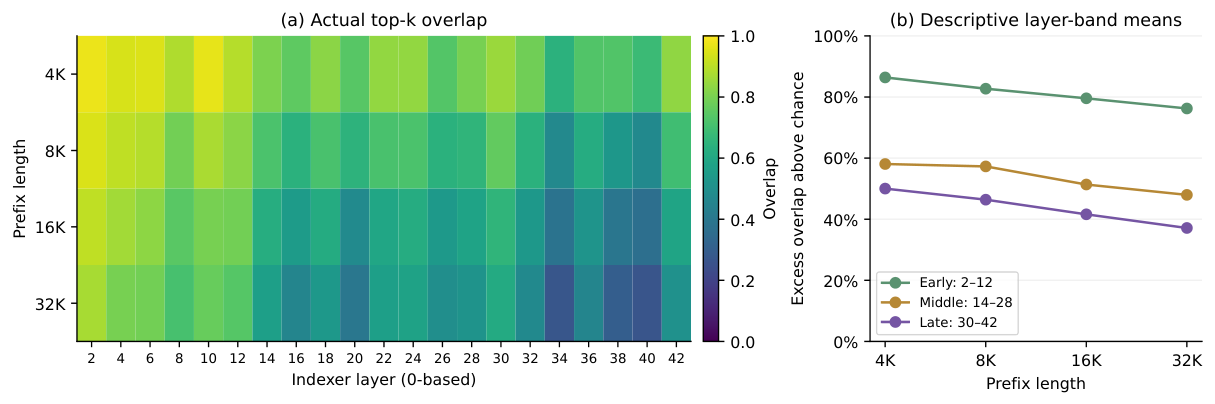
Direct KV cache reuse across four model updates (detailed DeepSeek-V4-Flash to Flash-0731): median time-to-first-token speedups of 2.10-5.08x, but retrieval accuracy ranges from near-native to large losses; Functional Cache Divergence shows first-token agreement does not ensure answer agreement.
Key insight: KV caches reused across model versions can speed time-to-first-token 2-5x but do not reliably reproduce the updated model's behavior.
TreeAgent: Structure-Aware Memory Agent for Processing Long Hierarchical Data
Wei Gu, Weiwei Qi, Jiajun Tang et al. arXiv: 2611.13946
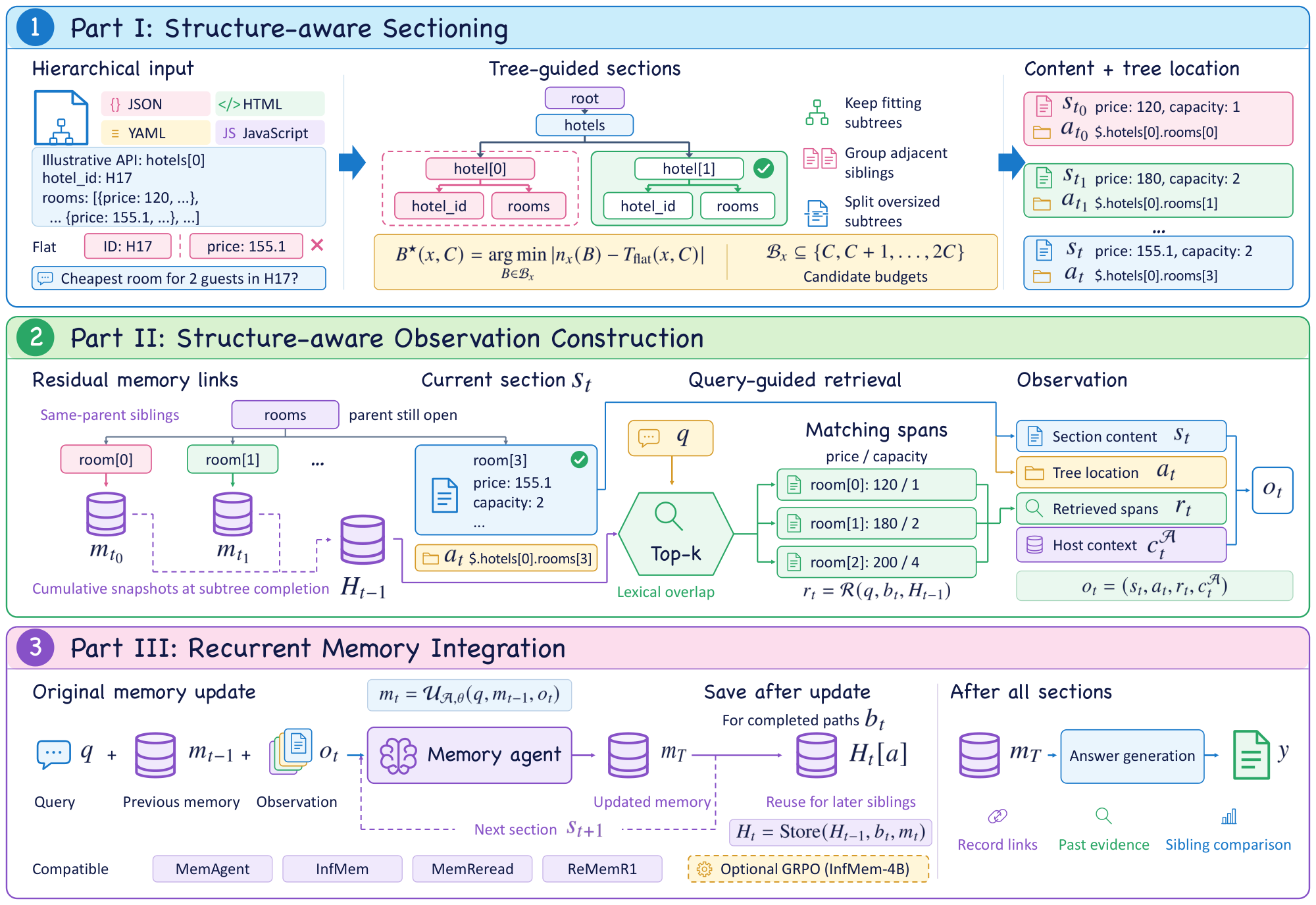
TreeAgent segments long JSON/HTML/YAML/JavaScript inputs (8K-1M tokens) by subtrees, attaches structural paths, and adds residual memory links from children to parents; improves all four tested memory agents on eight tasks (3.61% average gain).
Key insight: Segmenting long structured inputs by subtree and linking children to parents improves several existing memory agents.
Beyond the Document: Compiled Context and Governed Agents for Any Work Product
James Rhodes, George Kang arXiv: 2611.13055
Portable Agent Format (PAF) ships a work product with compiled context, evidence, provenance and interaction rules. Across 400 frozen questions a hosted governed reader succeeds on 96% vs 86% with instructions plus raw-file retrieval; a 0.8B offline reader reaches 69%.
Key insight: Shipping compiled context and rules with a work product let a governed reader answer 96% of questions versus 86% with raw-file retrieval.
Which Successes Make Good References? Action-Sequence Alignment for Multi-Turn On-Policy Distillation
Mufei Li, Nikki Lijing Kuang, Zhuoer Wang et al. arXiv: 2611.13135
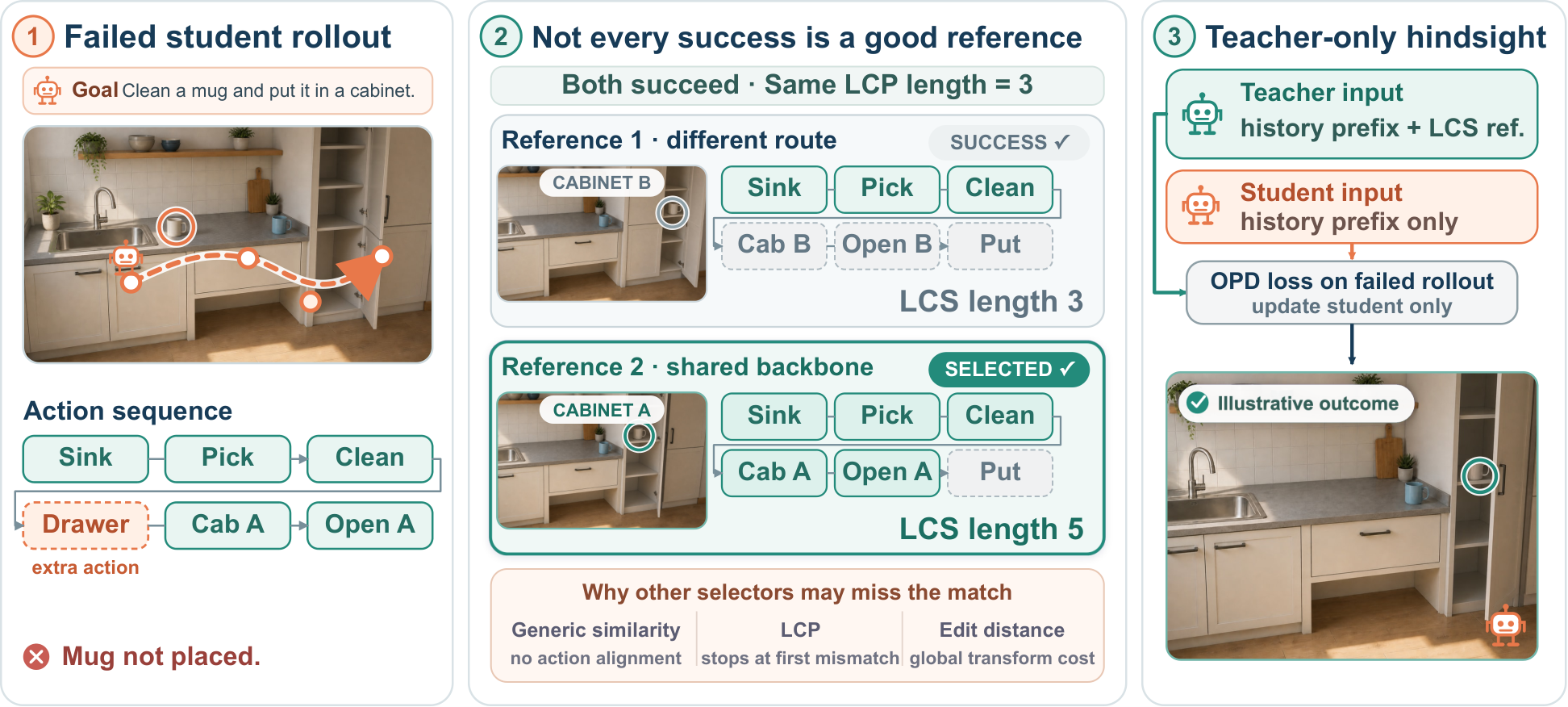
Selects which successful trajectory to use as the teacher's reference in multi-turn on-policy distillation via action-sequence alignment (longest common subsequence); LCS is the only selector to beat reference-free OPD on ALFWorld and all three tau^3-bench airline metrics, transferring to retail.
Key insight: Choosing the successful reference whose action sequence best aligns with a failed trajectory makes multi-turn on-policy distillation work better.
ExpertCrowd-SWE: Measuring Frontier Coding Agents on Expert-Authored Engineering Tasks in Unfamiliar Codebases
Josip Vrdoljak, Akash Singh, Bas Steunebrink et al. arXiv: 2611.13246
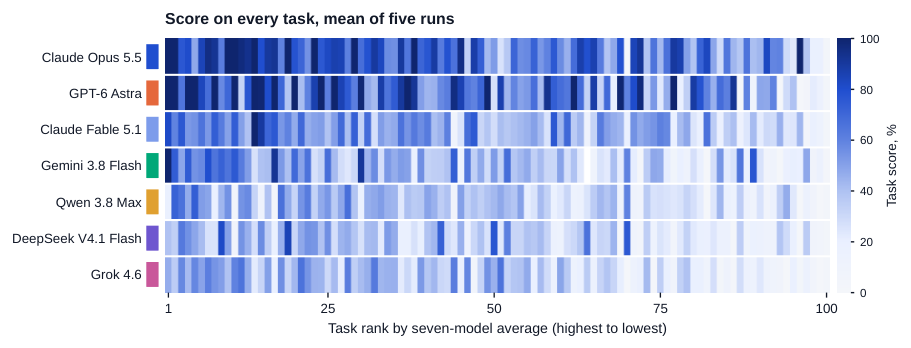
ExpertCrowd-SWE: 100 expert-authored multi-file change requests across 87 projects and 11 languages with calibrated graders. Claude Opus 5.5 (67.3%) and GPT-6 Astra (63.7%) lead, Claude Fable 5.1 46.5%, Gemini 3.8 Flash 40.0%, Qwen 3.8 Max / DeepSeek V4.1 Flash / Grok 4.6 at 32-34%; steps per run barely relate to score.
Key insight: On expert-written change requests in unfamiliar codebases, the top two models lead with no significant gap and no task is solved by every model.
Agent Benchmarks Stop Ranking Before They Run Out of Tasks
Zihan Dong, Qishi Zhan, Minxuan Hu arXiv: 2611.13541
Re-scoring eight agent benchmarks shows saturation is mostly measurement: pass/fail bits are too coarse and capped at the reference. Proposes a clipped log-ratio score with dated anchors and cost as a separate axis; on Terminal-Bench, pass/fail-tied models differ over tenfold on the discarded quantity.
Key insight: Much apparent agent-benchmark saturation comes from pass/fail scoring; graded scores with cost on a separate axis restore separation.
Comparative Analysis of Agent Evaluation Frameworks: Stability, Detection, and Discovery in Enterprise Analytics Agents
Howard Zhang, Chuck Arvin, Logan Brown et al. arXiv: 2611.14493
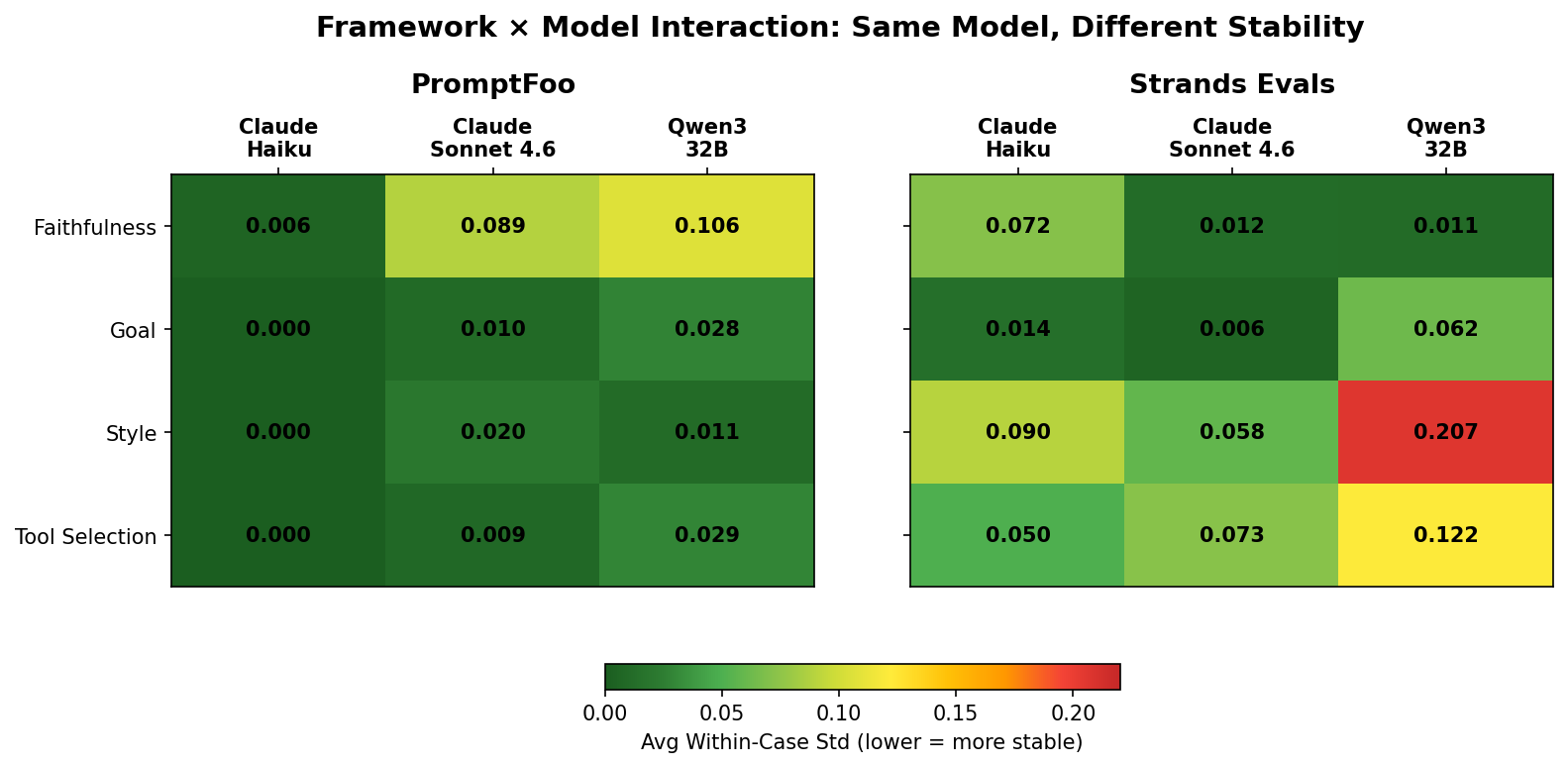
Compares trace-based LLM judging, text-only judging with red-teaming, and deterministic heuristics on two enterprise analytics agents: trace-based judging gets the best F1 (0.90) on 72 known risks; text-only matches recall with 5x more false alarms; 24 novel failures found with zero overlap between functional and security testing.
Key insight: Evaluators that see full traces catch more real failures with fewer false alarms, and functional and security testing find disjoint problems.
Activation-Guided Graph Retrieval for Cognitive Memory Reconstruction in Language Model Systems
Marvin Danig arXiv: 2611.13127
Specifies activation-conditioned memory availability: cues seed an authorized memory graph, activation and fan attenuation bound traversal, and a typed evidence graph is rebuilt before generation. Architecture-and-analysis only; no benchmark numbers.
Key insight: Long-lived systems may need activation-driven recall over a memory graph in addition to query relevance; the paper specifies but does not yet measure it.
Repository-Context-Guided Image Understanding for Agentic Software Development
Fumiki Yohena, Toshiaki Sota, Shota Suzuki et al. arXiv: 2611.13026
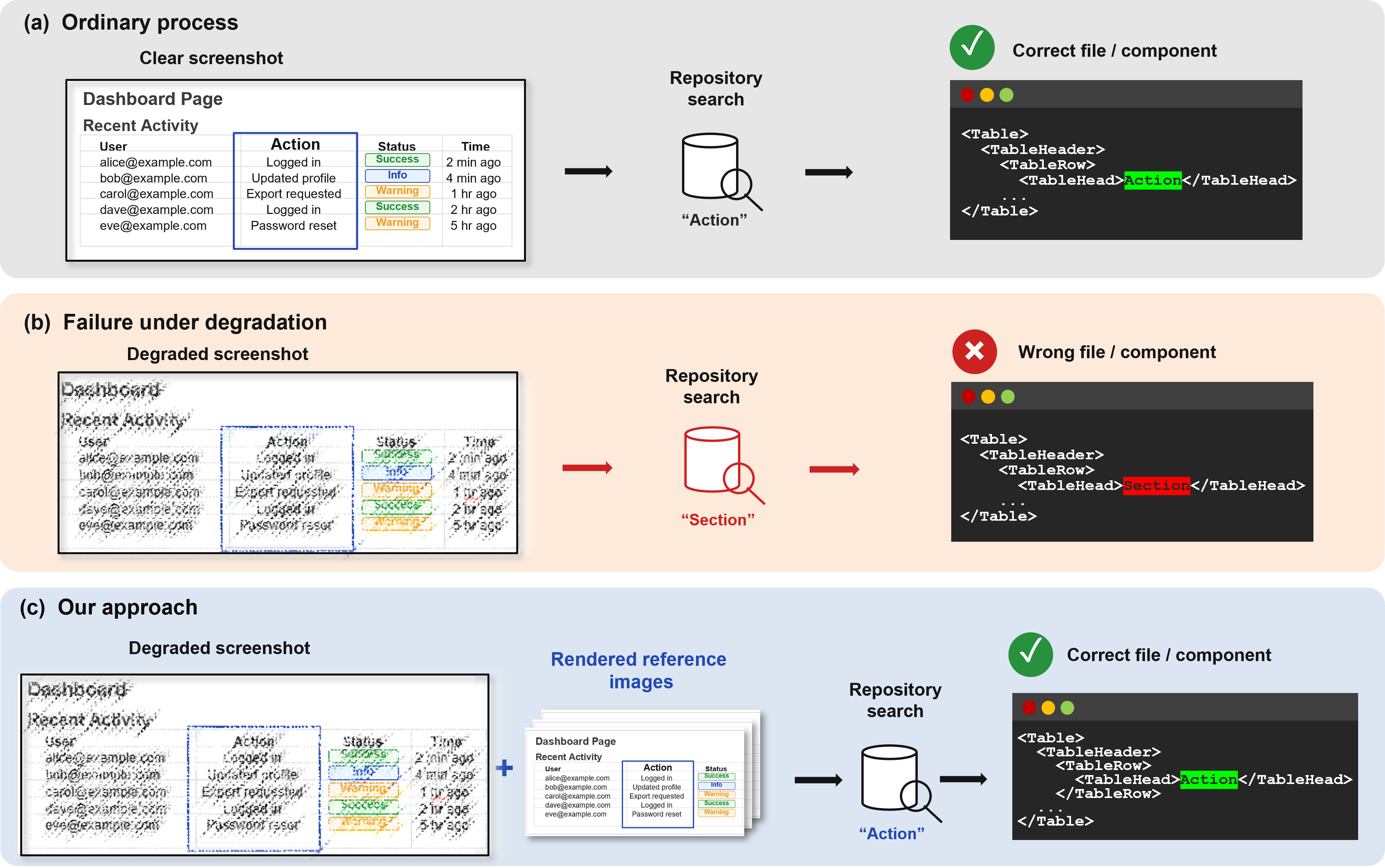
Gives coding agents crisp screenshots rendered from the repository as references for degraded bug-report screenshots; on a SWE-bench Multimodal-derived benchmark this improves source-file localization, especially under heavy degradation, and reads text about 12 points better than OCR.
Key insight: Screenshots rendered from the repository give coding agents crisp references that improve source-file localization from degraded bug-report images.
On Private Knowledge Retrieval and Private Inference for secure multi-agent systems
Vicenç Torra, Maria Bras-Amorós arXiv: 2611.13696
Proposes signed external semantic knowledge bases accessed by private retrieval (k-anonymity, IT-PIR) with a local Horn-clause inference engine, to prevent memory poisoning in multi-agent systems; Python implementations.
Key insight: Signed knowledge bases with private retrieval are proposed as a security-by-design defense against semantic memory poisoning.
PegasusAI Studio: Legible Cyberinfrastructure and Accountable AI Agents for Scientific Workflows
Komal Thareja, Mats Rynge, Berent Aldikacti et al. arXiv: 2611.13309
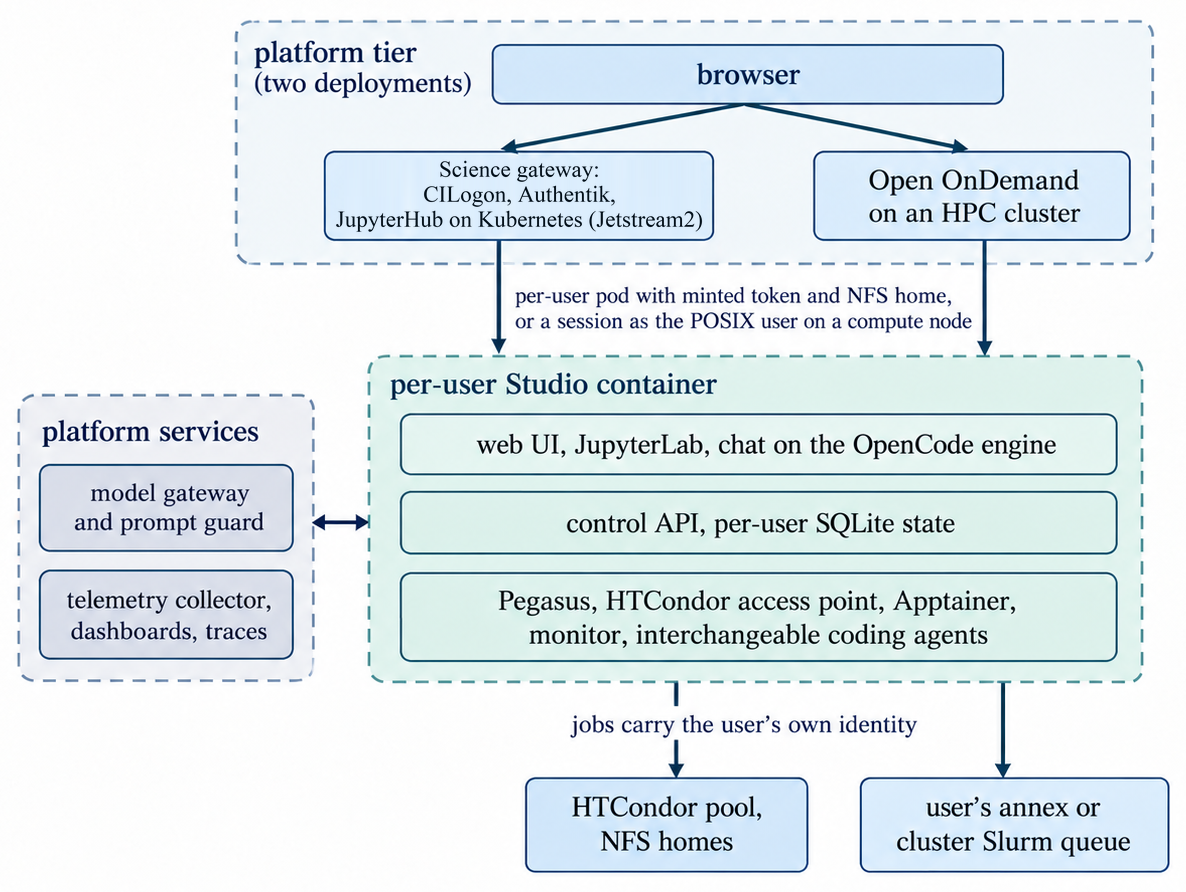
PegasusAI Studio projects one facility knowledge base into several coding agents' native config and runs agent actions inside a trust envelope (federated auth, per-user environments and credentials, approval for state-changing actions); evaluated by case studies.
Key insight: Agent actions on shared infrastructure can be attributed to a user and bounded by that user's privileges through a trust envelope around the agent.
From Process Models to Composable Agentic Workflows: Combining BPMN, Agents and Enterprise Knowledge
Christian Fillies, Jan Fillies, Frauke Weichhardt et al. arXiv: 2611.13196
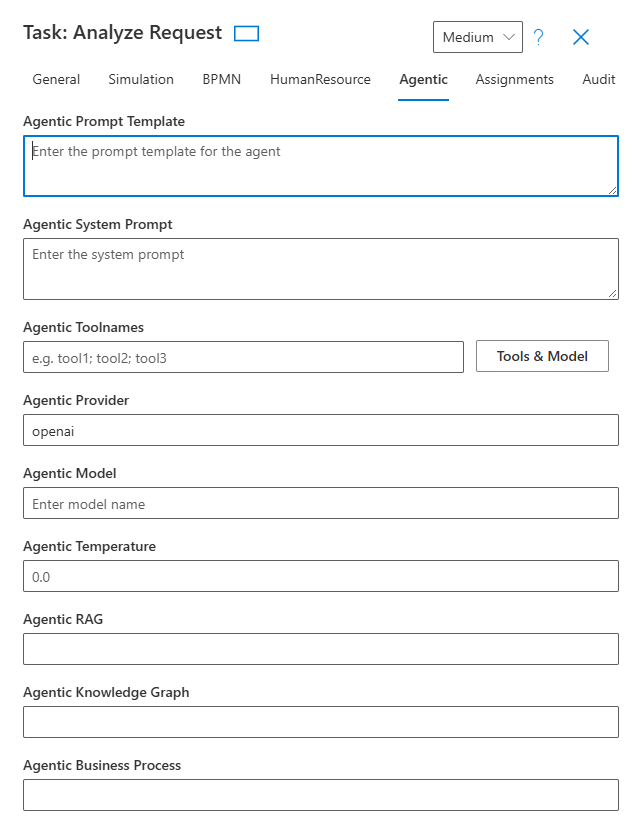
Turns BPMN models into executable agentic workflows on a LangGraph/Pregel runtime, with LLM reasoning only at selected tasks and agents/processes exposed as reusable tools (Recursive Capability Composition).
Key insight: Explicit BPMN process models can orchestrate agents, with LLM reasoning only at selected steps and processes exposed as reusable tools.
No finite rulebook can certify every safe program: an impossibility theorem for gatekeeping AI agents
Tomas Perez-Acle arXiv: 2611.13367
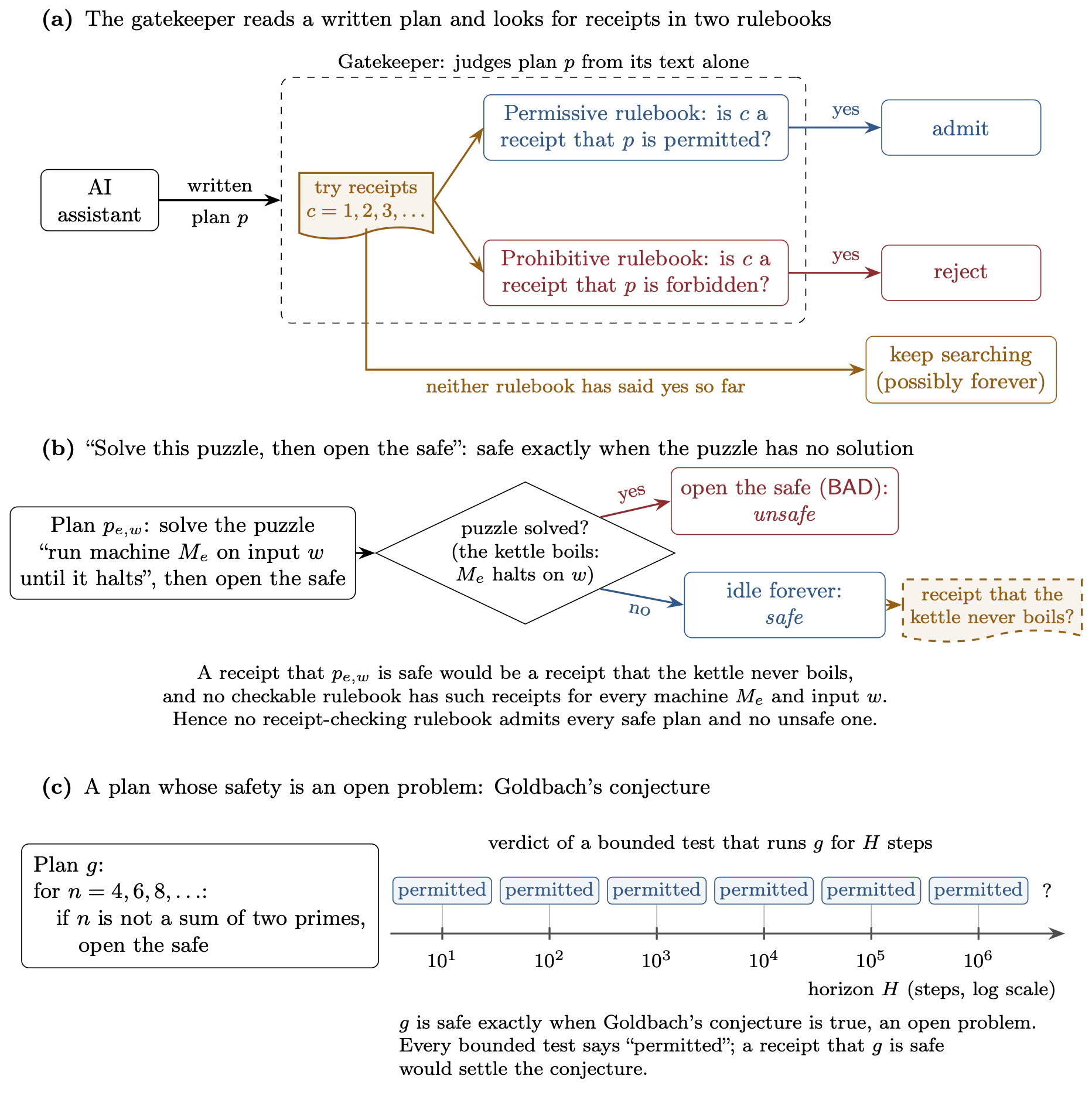
Proves no pair of finite, checkable allow/deny rulebooks can be complete for rules like never-perform-forbidden-action, no-secret-dependence and always-answer; a gatekeeper can still guarantee a checkable list containing everything it must allow and nothing it must refuse.
Key insight: No finite, checkable rulebook pair can certify every safe agent-written program, but a gatekeeper can still guarantee a sound checkable list.
SafeRoute-MAS: Coverage-Aware and Risk-Calibrated Message Routing for Multi-Agent Scientific Reasoning
Zhiming Xue, Jianan Liu, Weiran Yan et al. arXiv: 2611.13454
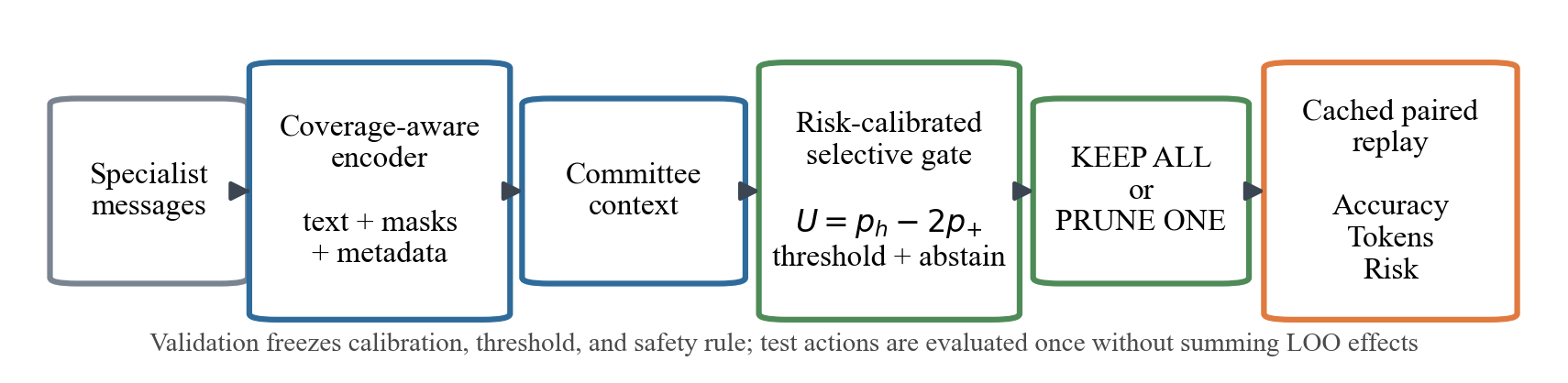
SafeRoute-MAS keeps all specialist messages or drops one using pre-integration information: +1.80 pp while removing 12.76% of message tokens on a cached workload, but live gpt-oss-120b runs do not establish an advantage; proposes a Keep-All fallback.
Key insight: Pruning inter-agent messages showed gains on cached data that did not hold up in live runs, so a keep-all fallback is the safe default.
A Cross-Scenario Survey and Analysis of Self-Evolving Multimodal Agents
Jingjing Jiang arXiv: 2611.14256
Survey of self-evolving multimodal agents across reasoning, generation, GUI/Web navigation and embodied manipulation, judging which self-improvement mechanisms transfer across scenarios.
Key insight: Self-improvement mechanisms designed in one multimodal scenario, such as GUI navigation, do not automatically transfer to others.
Precision on Demand: Escalating Weight Bits at Uncertain Decoding Steps in a Small Local Model
Mohammed Nayeem Khan, Logesh L, Aliyas Ahmad Misri arXiv: 2611.14418
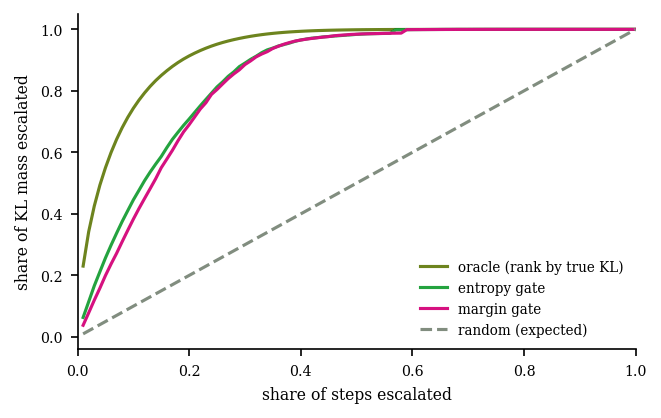
Stores 8-bit weights, decodes with the top 4 bits, and redoes a step at 8 bits only when the output looks uncertain (Qwen3-0.6B, GSM8K, simulated quantization). An entropy gate at 16% escalation scores 62.7% at 0.87 of all-high weight bytes; live data do not separate it from either end.
Key insight: Escalating weight precision only at uncertain decoding steps is a promising but so far inconclusive way to save bandwidth in small local models.
News and changelogs
- OpenAI: More than 20,000 veterans and transitioning service members have claimed a free year of ChatGPT Plus — a consumer promotion with no platform change. link
- OpenRouter: Guide to 429 Too Many Requests errors across OpenAI, Anthropic and OpenRouter, which tend to appear under real load or when batch jobs fan out across workers — relevant to agent platforms running parallel workers. link
- OpenRouter: Explainer: providers may serve the same open-weight model at bf16, fp8 or fp4, which can change both answers and price — worth checking when agent builders route open models. link
- OpenRouter: Compares the context cost of tools: every tool definition is sent on every request, and an MCP server can add tens of thousands of input tokens, versus a CLI tool or a skill — directly relevant to MCP-heavy agent setups. link
- Apple Developer: November newsletter: Europe's first Apple Developer Center, Touch on Mac, Swift Student Challenge 2027, new App Review help articles and new subscription features — the App Review help articles matter for anyone shipping iOS apps. link
- OpenAI: Businesses can manage their information, see how they show up, and turn interest into action in ChatGPT — a discovery surface inside ChatGPT, no API change mentioned. link
- OpenAI: ThinkYoung research and lessons from OpenAI's EMEA education partnerships on supporting teachers and AI literacy — education policy, no platform change. link
- Anthropic: Anthropic, PBC launched the roadshow for its proposed IPO of Class A common stock — corporate news, no API change. link
- OpenRouter: Ran eight scanned pages through 15 vision models, Mistral OCR and Tesseract: Claude Opus 5.5 most accurate, Mistral OCR best value — useful for document-ingesting agents choosing an OCR path. link
- OpenRouter: Tutorial: a voice agent must understand speech, decide, call tools and start speaking before the pause gets awkward — latency guidance for voice front-ends on agents. link
- OpenRouter: Tutorial on reliable JSON across models (JSON Schema, tool calls, or a decision model), since each model and provider handles structured output differently — relevant when an agent routes across several models. link
- Vercel: MiniMax H3 Image and Highspeed, and Gemini 4 Carbon, now available on AI Gateway — more model options for agents routed through AI Gateway (no details in the feed). link link
- Vercel: Speed Insights and Web Analytics now support custom environments — a hosting observability change. link
- Supabase: Correlated Logs (beta) connects logs by request, trace or user in Studio; CLI v3 adds a terminal log explorer, filters, JSON exports and SQL queries — easier tracing of agent backends on Supabase. link