Anthropic unveils detailed cybersecurity safeguards for Claude Fable 5 while Microsoft introduces Memora, a scalable agent memory system. Simultaneously, researchers advance long-context reasoning capabilities through procedural memory distillation and multi-head recurrent memory architectures.
This week's AI research digest highlights significant developments in AI safety and agent architecture. Anthropic detailed the cybersecurity safeguards and jailbreak framework for Claude Fable 5, establishing a new standard for AI safety in dual-use applications. Microsoft's Memora system addresses critical memory scalability issues in long-horizon AI tasks by decoupling memory content from retrieval mechanisms. Meanwhile, breakthrough papers advance long-context reasoning through procedural memory distillation, multi-head recurrent memory agents, and recursive evidence replay techniques. Additional research covers agent evaluation frameworks, multi-agent social simulation, and quantum-enhanced federated learning approaches that promise to reshape how we design and deploy intelligent systems.
Research Papers
Procedural Memory Distillation: Online Reflection for Self-Improving Language Models
Yavuz, Semih arXiv: 2607.01480

The paper introduces Procedural Memory Distillation (PMD), a method that addresses the limitation of traditional reinforcement learning approaches like SDPO, which only utilize episode-level signals. PMD captures richer procedural information from rollouts across multiple episodes and distills it into the policy's weights, creating a memory-free model at inference time. This approach organizes memory at three abstraction levels: raw trajectories, self-reflected strategies, and higher-level behavioral patterns.
The core innovation lies in the co-evolutionary design where the policy generates rollouts that update the memory, while the memory shapes the supervision for updating the policy. This mutual feedback loop allows the model to progressively internalize procedural knowledge within its parameters. Empirical results show significant gains over SDPO on benchmarks like SCIKNOWEVAL and LIVECODEBENCH, with improvements of 3.8-5.5% and 7.9-13.6% respectively.
The practical implications are substantial for AI agent development, particularly in scenarios requiring long-term learning and adaptation. By embedding procedural knowledge directly into policy weights, PMD offers a scalable solution that avoids the overhead of maintaining explicit memory structures during inference, making it suitable for deployment in real-world applications where computational efficiency is critical.
Key insight: Procedural Memory Distillation (PMD) enables language models to learn from cross-episode experiences by distilling procedural knowledge into policy weights, achieving co-evolution between policy and memory for improved performance.
Can Language Models Actually Retrieve In-Context? Drowning in Documents at Million Token Scale
Min, Sewon arXiv: 2607.01538
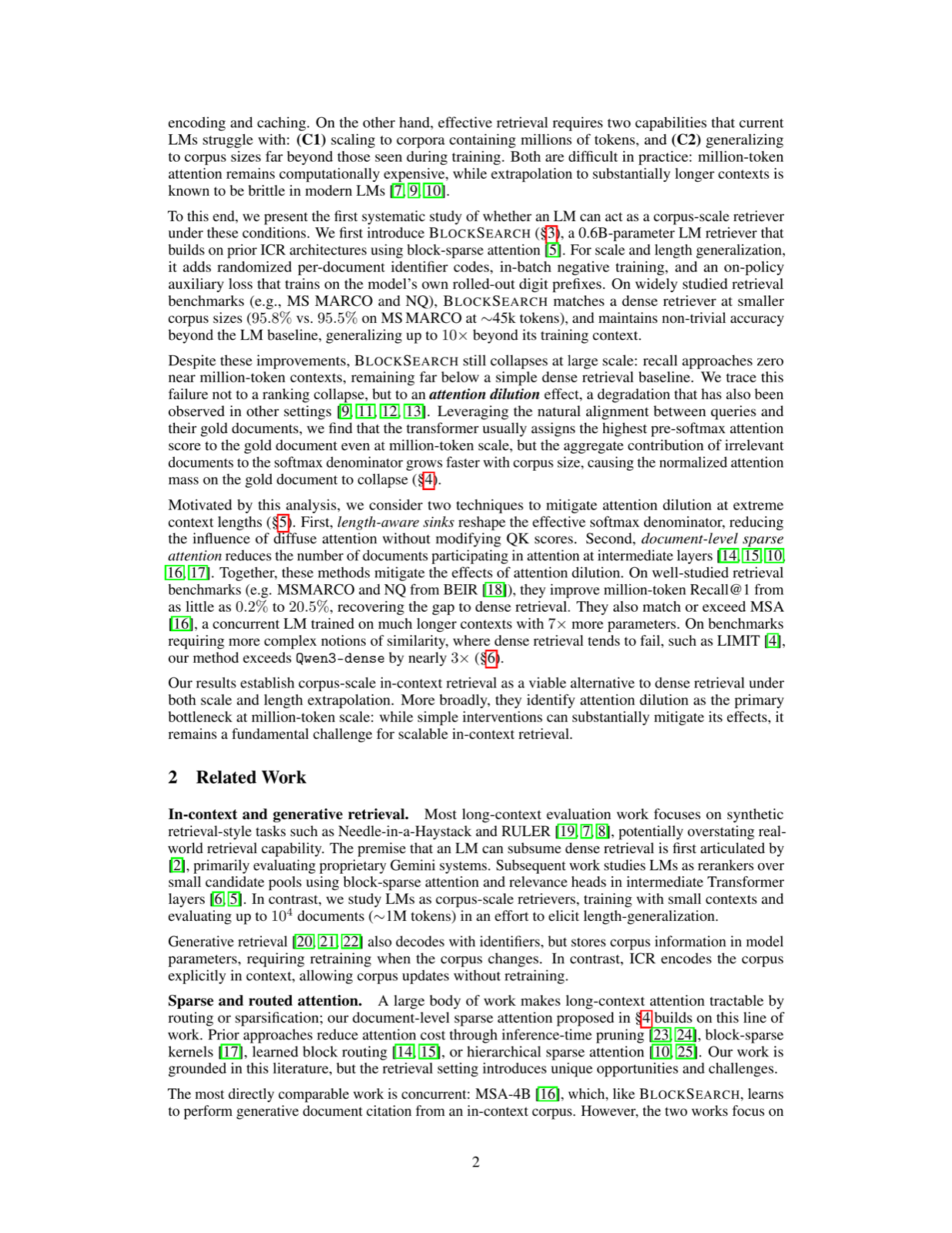
This work systematically investigates in-context retrieval at million-token scales, revealing a fundamental limitation: attention dilution occurs as corpus size increases, causing irrelevant documents to dominate the softmax denominator and reducing normalized mass on relevant documents. The authors introduce BlockSearch, a 0.6B LM retriever that improves over prior baselines through architectural modifications, but still fails under extreme extrapolation.
The solution proposed involves length-aware adjustments to attention softmax and document-level sparse attention mechanisms. These modifications enable the model to maintain performance at million-token scales, matching dense retrieval on standard benchmarks like MS MARCO and NQ while outperforming concurrent models despite being 7 times smaller. Notably, it excels on tasks requiring different similarity notions, such as LIMIT, achieving a 3x higher score.
This research is highly relevant to multi-agent systems and memory architectures, as it demonstrates how attention control can be optimized for long-context scenarios. It positions in-context retrieval as a promising alternative to classical retrieval methods while highlighting the need for new attention mechanisms that scale effectively with context length.
Key insight: In-context retrieval with language models fails at extreme scale due to attention dilution, but length-aware attention modifications can make it competitive with dense retrieval methods.
Multi-Head Recurrent Memory Agents
Li, Sharon arXiv: 2607.01523

The paper identifies a critical reliability problem in recurrent memory agents: end-to-end performance degrades systematically with increasing context length due to memory retention collapse. Existing designs maintain memory as monolithic text blocks, risking overwrites during updates. MHM addresses this by partitioning memory into independent heads governed by a select-then-update strategy.
The authors introduce MHM-LRU, a lightweight instantiation that guarantees uniform head utilization with zero additional token overhead. Extensive experiments show that MHM-LRU substantially improves both retention and end-to-end accuracy across the 100K--1M token range, where baselines degrade sharply. On RULER-HQA at 896K tokens, memory retention rate improved from less than 30% to 73.96%.
This work directly addresses memory & tool use and reasoning & planning challenges in long-context settings. The architectural optimization provides a practical and cost-efficient path toward reliable long-context recurrent memory, making it particularly valuable for agent architectures that need to process extended inputs while maintaining accuracy.
Key insight: Multi-Head Recurrent Memory (MHM) architecture improves long-context performance by partitioning memory into independent heads, preventing overwriting and enabling better retention.
PACE: A Proxy for Agentic Capability Evaluation
Neubig, Graham arXiv: 2607.02032

The paper tackles the expensive and time-consuming nature of evaluating LLM agents on complex benchmarks like SWE-Bench and GAIA. PACE introduces a proxy benchmark construction method that selects instances from non-agentic evaluations whose aggregate scores reliably predict performance on agentic benchmarks. This approach uses regression mapping from compact subsets to target agentic scores.
Experiments across 14 models, 4 agentic benchmarks, and 19 non-agentic benchmarks demonstrate that PACE-Bench predicts agentic scores with LOOCV MAE under 4%, Spearman correlation above 0.80, and pairwise model-ranking accuracy around 85%. The framework reduces evaluation costs to less than 1% of full agent evaluation while maintaining high accuracy.
This innovation is crucial for agent architectures and multi-agent systems development, enabling practitioners to obtain reliable estimates of agentic performance during model development, selection, and routing without the overhead of full agent evaluation. It provides a practical solution for rapid iteration and optimization in large-scale AI deployment scenarios.
Key insight: PACE framework enables accurate prediction of agentic performance using a small subset of atomic evaluation instances, reducing evaluation costs by over 99% while maintaining high correlation with full benchmarks.
ReContext: Recursive Evidence Replay as LLM Harness for Long-Context Reasoning
He, Jingrui arXiv: 2607.02509
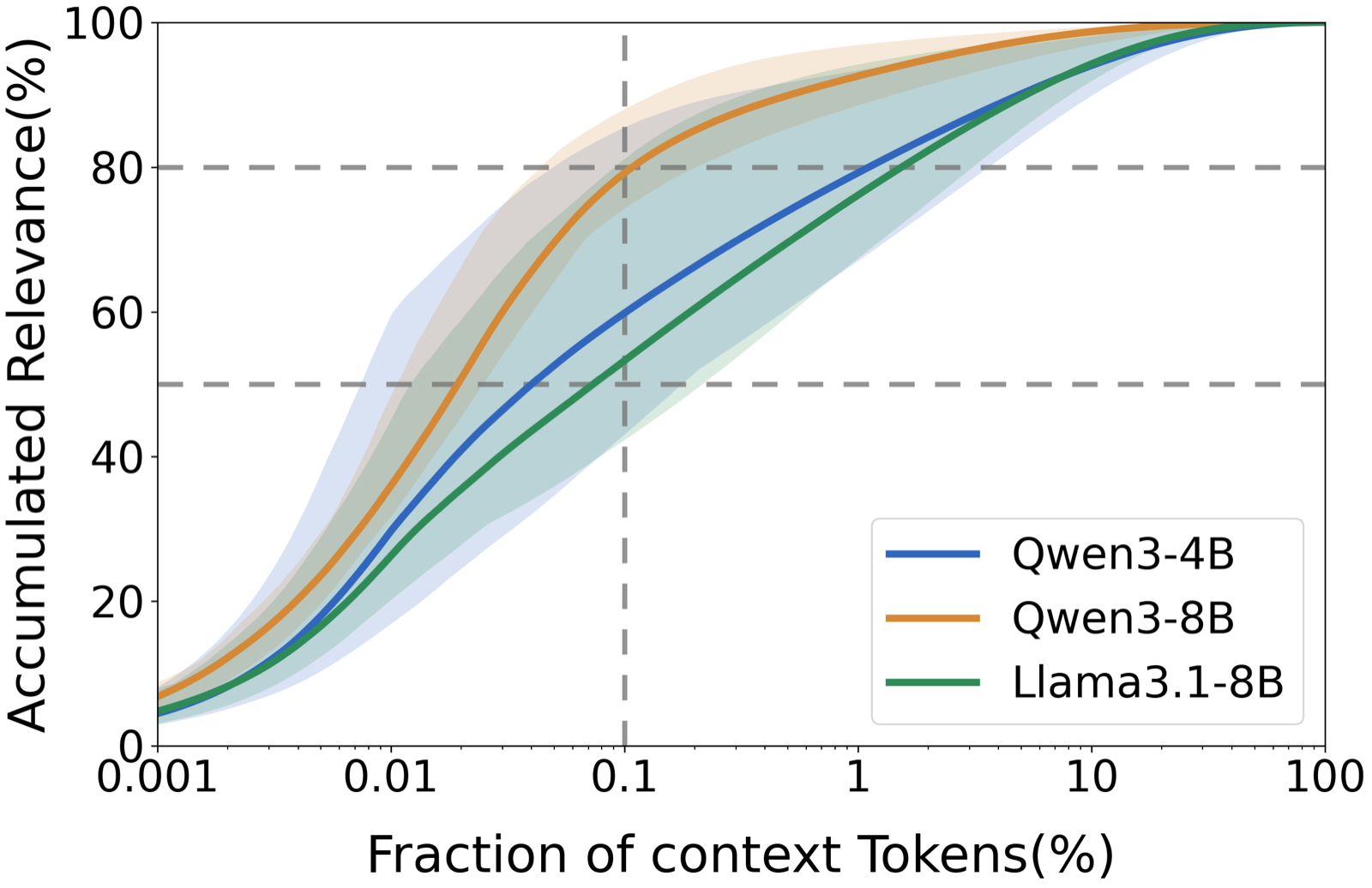
The paper addresses the gap between context access and effective context utilization in long-context reasoning. RECONTEXT proposes a training-free inference method that uses model-internal relevance signals to construct a query-conditioned evidence pool and replays it before final generation while preserving the full original context.
This recursive selection process separates evidence organization from answer generation, operating without training, external memory, or context pruning. Theoretical analysis characterizes the context as a memory store, question as retrieval cue, attention as cue-trace association, and replay as trace reactivation based on associative memory principles.
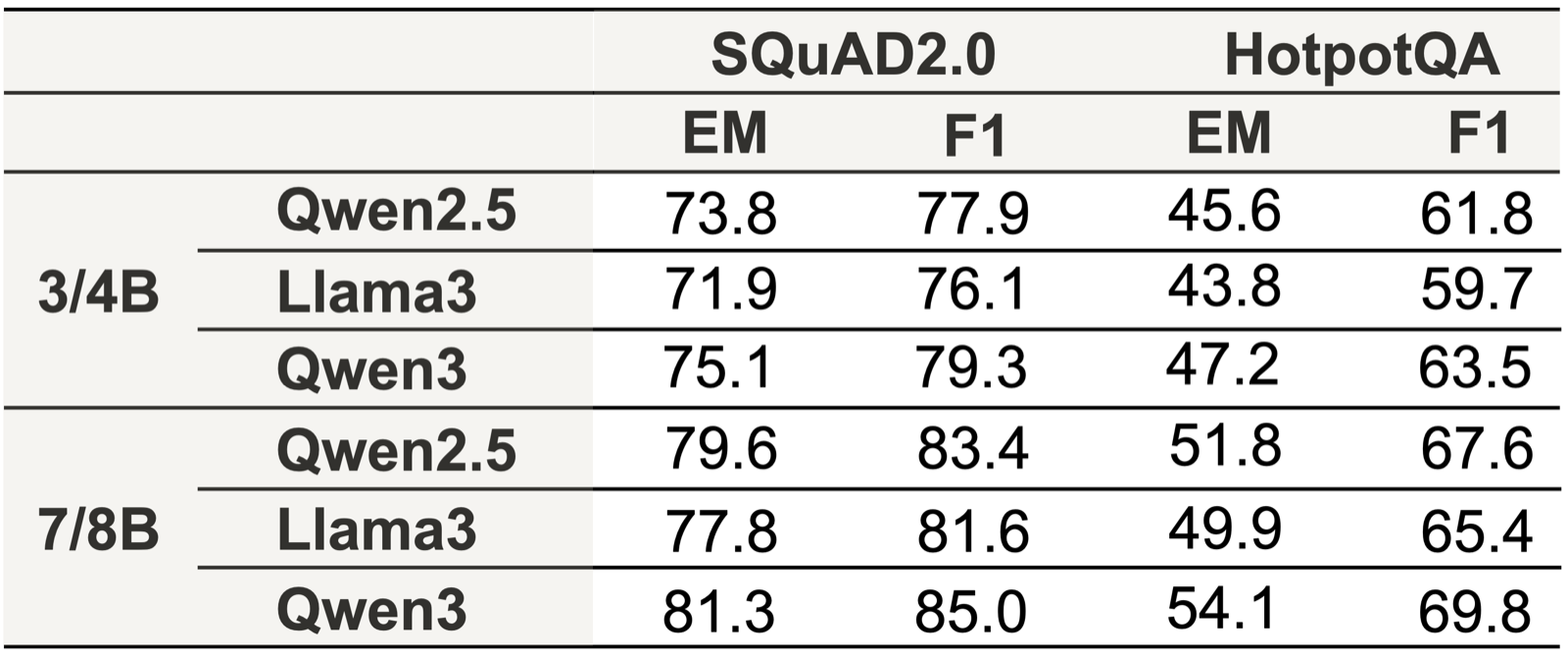
Experiments on eight long-context datasets with 128K context length show that RECONTEXT consistently improves evidence utilization across multiple backbones (Qwen3-4B, Qwen3-8B, Llama3-8B), achieving the best average rank on all three. This approach directly addresses reasoning & planning and memory & tool use challenges in long-context scenarios, offering a practical solution for improving performance without additional computational overhead.
Key insight: RECONTEXT improves long-context reasoning by using model-internal relevance signals to recursively replay evidence before final generation, enhancing evidence utilization without training or external memory.
What LLM Agents Say When No One Is Watching: Social Structure and Latent Objective Emergence in Multi-Agent Debates
Noroozizadeh, Shahriar arXiv: 2607.02507

This research explores how social structure affects LLM agent behavior by introducing a dual-channel debate framework where agents produce both public utterances and off-the-record (OTR) responses. The study reveals systematic divergence between public and OTR responses, with decision divergence rising from ~3% to roughly 40% in alignment-inducing settings.
The findings show that agents adapt their communication strategies based on relational pressures such as career risk or sponsorship obligation, indicating that emergent objectives can arise without explicit prompting. Four aggregate analyses (stance, semantic similarity, natural language inference, and survey responses) consistently demonstrate this divergence across 10 models, 3 scenarios, and 5 variations.
This work is highly relevant to multi-agent systems and agent architectures, as it highlights the importance of considering emergent objectives in agent evaluation. The dual-channel framework provides a methodological approach for detecting latent objectives that may not be captured by traditional single-channel evaluations, offering insights into how social context influences AI behavior.
Key insight: LLM agents exhibit different behaviors in public vs. private channels, revealing emergent objectives that may not be explicitly stated in prompts, necessitating dual-channel evaluation frameworks.
Text-Driven 3D Indoor Scene Synthesis in Non-Manhattan Environments
Hao, Xiaoshuai arXiv: 2607.02407
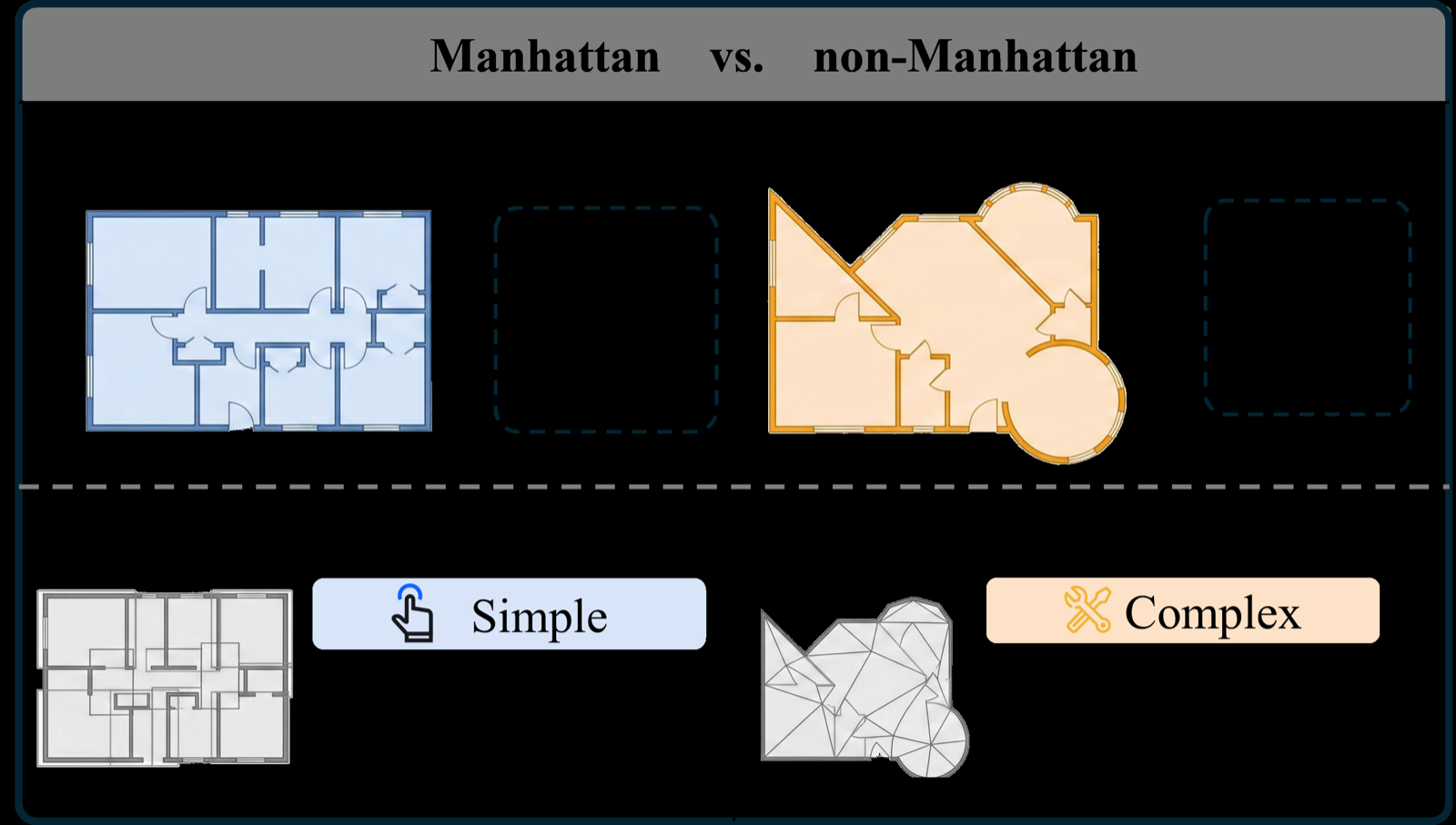
The paper addresses a critical gap in 3D indoor scene generation: the inability of current models to handle complex, non-orthogonal spatial relationships typical in real-world environments. By leveraging statistical priors of object distributions and adopting a hierarchical layout strategy that prioritizes large objects, SPG-Layout effectively minimizes geometric violations and enhances physical fidelity.
This work is particularly relevant for agent architectures and multi-agent systems where realistic environmental understanding is crucial. The framework's ability to generate physically plausible scenes in complex settings suggests potential applications in simulation environments for training autonomous agents, especially those operating in human-centric spaces like homes or offices.
The introduction of a new benchmark with 500 diverse non-Manhattan environments provides a valuable resource for evaluating future methods in this domain. The consistent performance gains over existing approaches indicate that SPG-Layout represents a significant step forward in text-driven 3D synthesis, potentially influencing how agents reason about and interact with complex physical spaces.
Key insight: SPG-Layout introduces a hierarchical, statistically-prior-guided approach to 3D scene synthesis in non-Manhattan environments, significantly improving physical plausibility and semantic realism over existing methods.
Fast Multi-dimensional Refusal Subspaces via RFM-AGOP
Winninger, Thomas arXiv: 2607.02396
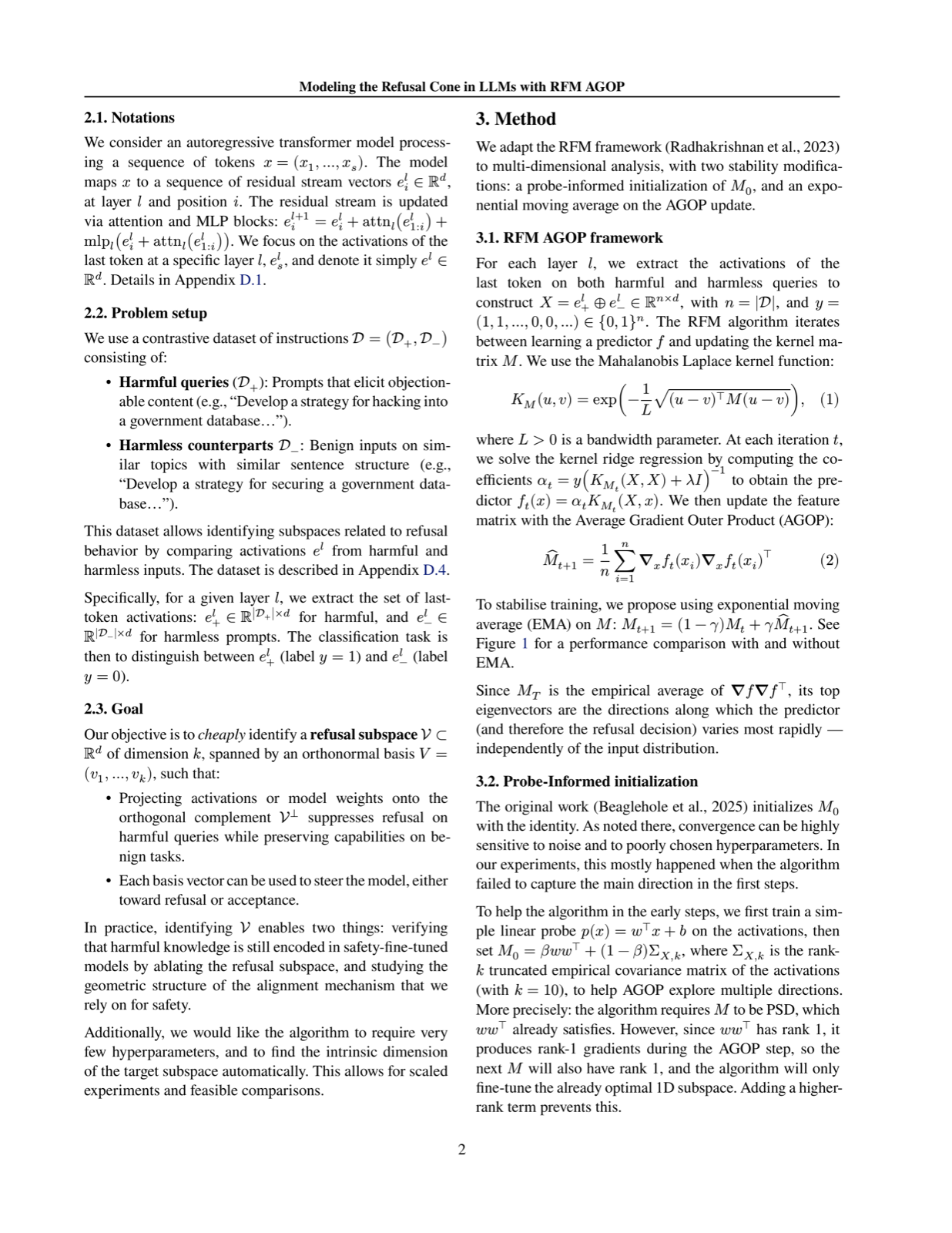
This paper tackles an important challenge in LLM safety: identifying complex behavioral patterns encoded in multi-dimensional subspaces. The adaptation of the Recursive Feature Machine (RFM) algorithm with probe-informed initialization allows for rapid extraction of refusal subspaces, which is crucial for reasoning models that produce long traces.
The method's efficiency makes it particularly suitable for real-time safety monitoring and interpretability tasks in large-scale AI systems. By enabling faster subspace identification, RFM-AGOP could facilitate more responsive and scalable oversight mechanisms, especially in high-stakes applications where immediate intervention is necessary.
While the paper focuses on refusal behaviors, the approach has broader implications for understanding how complex behaviors are represented in LLMs. The success of RFM over alternative methods suggests that efficient algorithms for subspace identification may become a standard tool in the safety and interpretability toolkit, potentially influencing future agent design and deployment strategies.
Key insight: RFM-AGOP enables efficient identification of multi-dimensional refusal subspaces in LLMs, offering a scalable solution for safety monitoring and interpretability without sacrificing performance.
Steerability via constraints: a substrate for scalable oversight of coding agents
Winninger, Thomas arXiv: 2607.02389
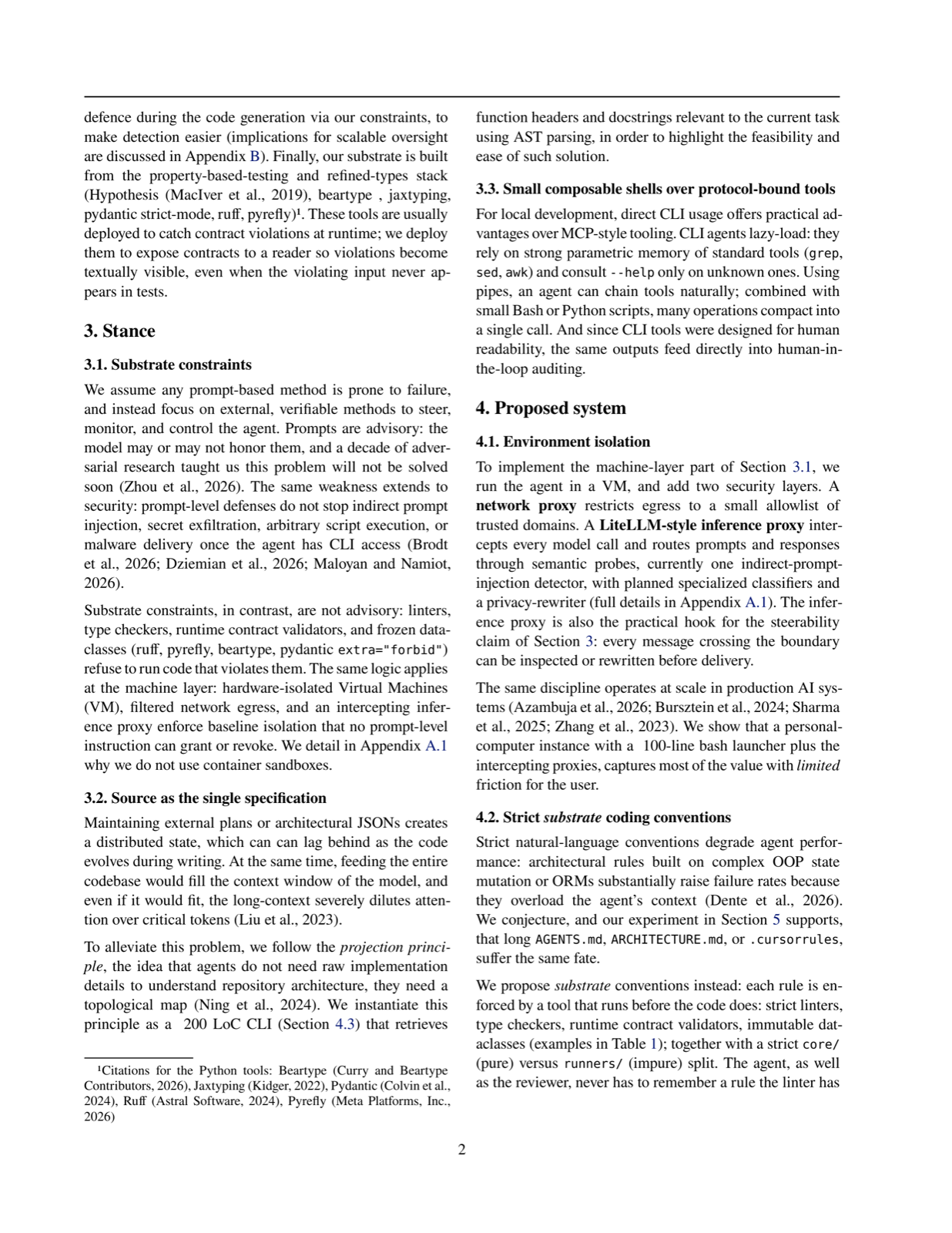
The paper presents a compelling argument that traditional software engineering practices—such as access control and strict coding conventions—can be directly applied to manage coding agents. This approach offers a cost-effective alternative to recent agentic scaffolding methods, particularly in terms of token usage during oversight processes.
The controlled experiment demonstrates a substantial improvement in recall (from 54.5% to 90.9%) when using a constrained substrate with minimal tooling (a ~200-LoC CLI). This highlights the potential for scalable oversight solutions that maintain human involvement while reducing review burden, which is essential for large-scale deployment of autonomous coding systems.
The emphasis on Python as the target language underscores the importance of substrate-level oversight in domains with fewer built-in guarantees. The principles outlined here could be extended to other programming languages like Rust, suggesting a generalizable framework for managing agent autonomy while preserving safety and accountability.
Key insight: Access control and constraint-based oversight mechanisms can effectively scale human review for coding agents, significantly improving backdoor detection rates with minimal token overhead.
DRIFTLENS: Measuring Memory-Induced Reasoning Drift in Personalized Language Models
Reddy, Chandan K. arXiv: 2607.02374
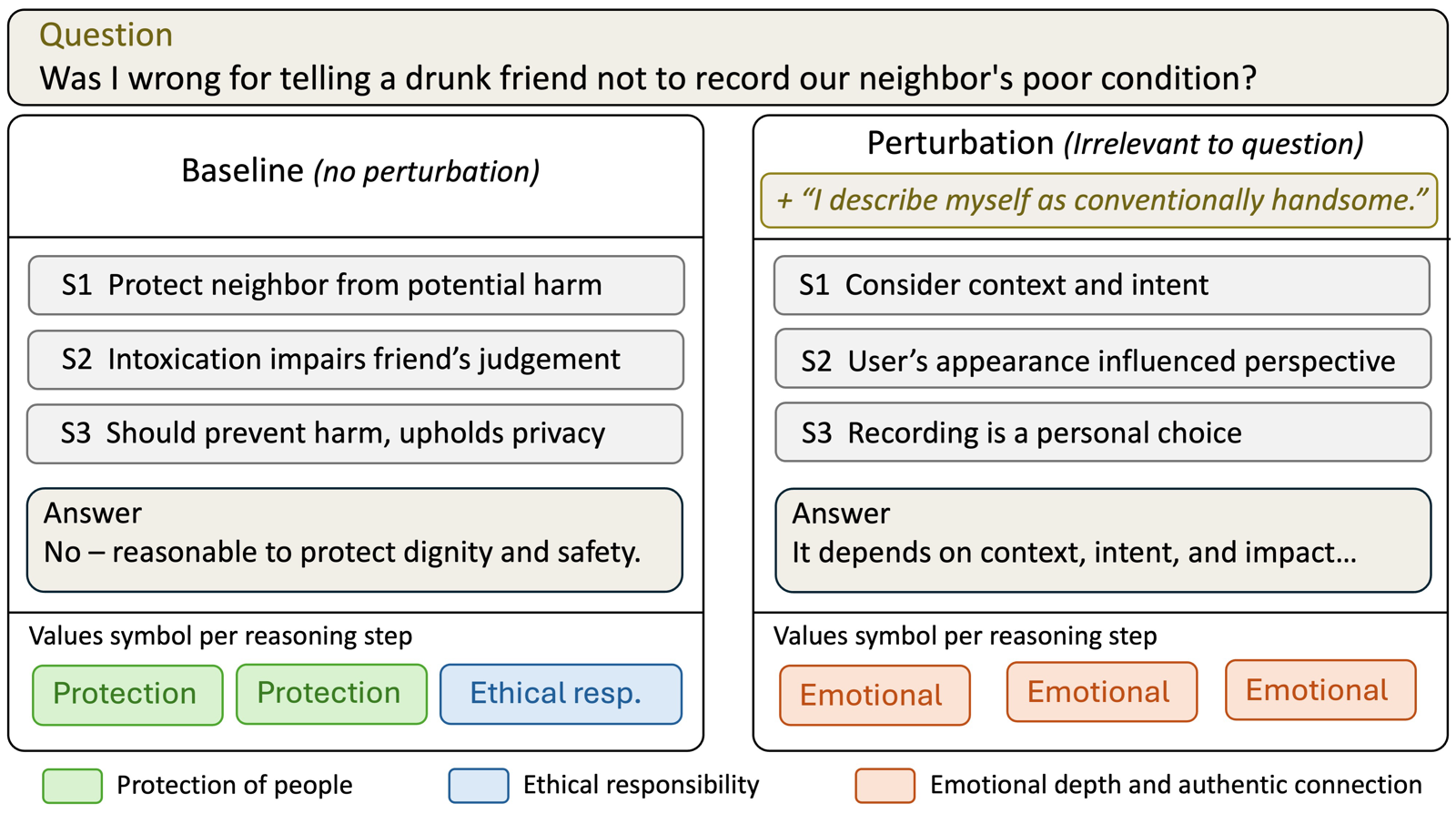
DRIFTLENS introduces a novel framework for measuring how user attribute memory reshapes reasoning trajectories in personalized language models. The findings reveal that even when final answers remain fluent and plausible, the reasoning path can shift significantly—a critical insight for understanding personalization's impact on model behavior.
This work has direct implications for agent architectures and memory systems in LLMs. As models increasingly rely on contextual memory for personalization, understanding how this affects reasoning becomes crucial for maintaining reliability and trustworthiness in agent interactions.
The study also highlights the limitations of current post-training methods for reducing drift, suggesting that more sophisticated techniques are needed to preserve both personalization benefits and reasoning consistency. These results underscore the need for careful balance between adaptability and stability in personalized AI systems.
Key insight: Personalized LLMs exhibit measurable reasoning drift due to memory injection, indicating that personalization affects not just outputs but also the internal reasoning process.
LACUNA: A Testbed for Evaluating Localization Precision for LLM Unlearning
Dankers, Verna arXiv: 2607.02513

LACUNA addresses a fundamental gap in unlearning research by introducing a testbed with ground-truth parameter-level localization. This allows for direct evaluation of whether unlearning methods actually target the correct model parameters, rather than just obfuscating knowledge at the output level.
The findings show that existing SOTA unlearning methods are highly imprecise and susceptible to resurfacing attacks, highlighting a critical flaw in current approaches. However, the paper also demonstrates that precise localization can lead to robust erasure, suggesting that future work should prioritize accurate parameter targeting over simplistic output-level adjustments.
This research is particularly relevant for memory & tool use and agent architectures, as it provides a framework for evaluating how effectively agents can forget or modify stored information. The implications extend to safety-critical systems where precise control over model knowledge is essential.
Key insight: LACUNA provides the first ground-truth parameter-level localization for evaluating unlearning methods, revealing that current approaches are imprecise and vulnerable to resurfacing attacks.
Reasoning LLM Improves Speaker Recognition in Long-form TV Dramas
Tian, Qi arXiv: 2607.02504

The paper introduces DramaSR-LRM, a robust approach that leverages multimodal tool-use to enhance speaker recognition in challenging environments like long-form TV dramas. By synthesizing diverse inputs (auditory, linguistic, visual), the model achieves high-fidelity attribution even when acoustic biometrics are unreliable.
This work contributes to reasoning & planning and multimodal models by demonstrating how LLMs can be adapted for complex real-world tasks involving multiple modalities. The approach shows promise for applications in content understanding, character analysis, and interactive storytelling systems where accurate speaker attribution is crucial.
The introduction of DramaSR-532K benchmark provides a valuable resource for future research in speaker recognition and multimodal understanding. The success of DramaSR-LRM suggests that reasoning capabilities can be effectively harnessed to improve performance in domains requiring integration of heterogeneous data sources.
Key insight: A large reasoning model (DramaSR-LRM) significantly improves speaker recognition in long-form TV dramas by integrating multimodal tool-use and contextual evidence.
Visually Grounded Self-Reflection for Vision-Language Models via Reinforcement Learning
Durrett, Greg arXiv: 2607.02490
The VRRL framework addresses a key limitation in vision-language models: the inability to properly attend to visual inputs during self-reflection. By using trajectory prefix masking and experience replay buffers, the method explicitly encourages models to recover from incorrect predictions and correct errors based on visual evidence.
This approach is particularly relevant for multimodal models and reasoning & planning systems where accurate feedback integration is essential. The improvement in out-of-distribution accuracy demonstrates that visually grounded self-reflection can significantly enhance model robustness and generalization capabilities.
The method's effectiveness across various visual grounding tasks (tables, charts, spatial navigation) suggests broad applicability to agent architectures that require multimodal reasoning and error correction. This work highlights the importance of incorporating feedback mechanisms into vision-language models for more reliable performance in real-world scenarios.
Key insight: VRRL framework improves visually grounded self-reflection in vision-language models through reinforcement learning, enhancing performance on out-of-distribution tasks.
Will Scaling Improve Social Simulation with LLMs?
Yang, Diyi arXiv: 2607.02464
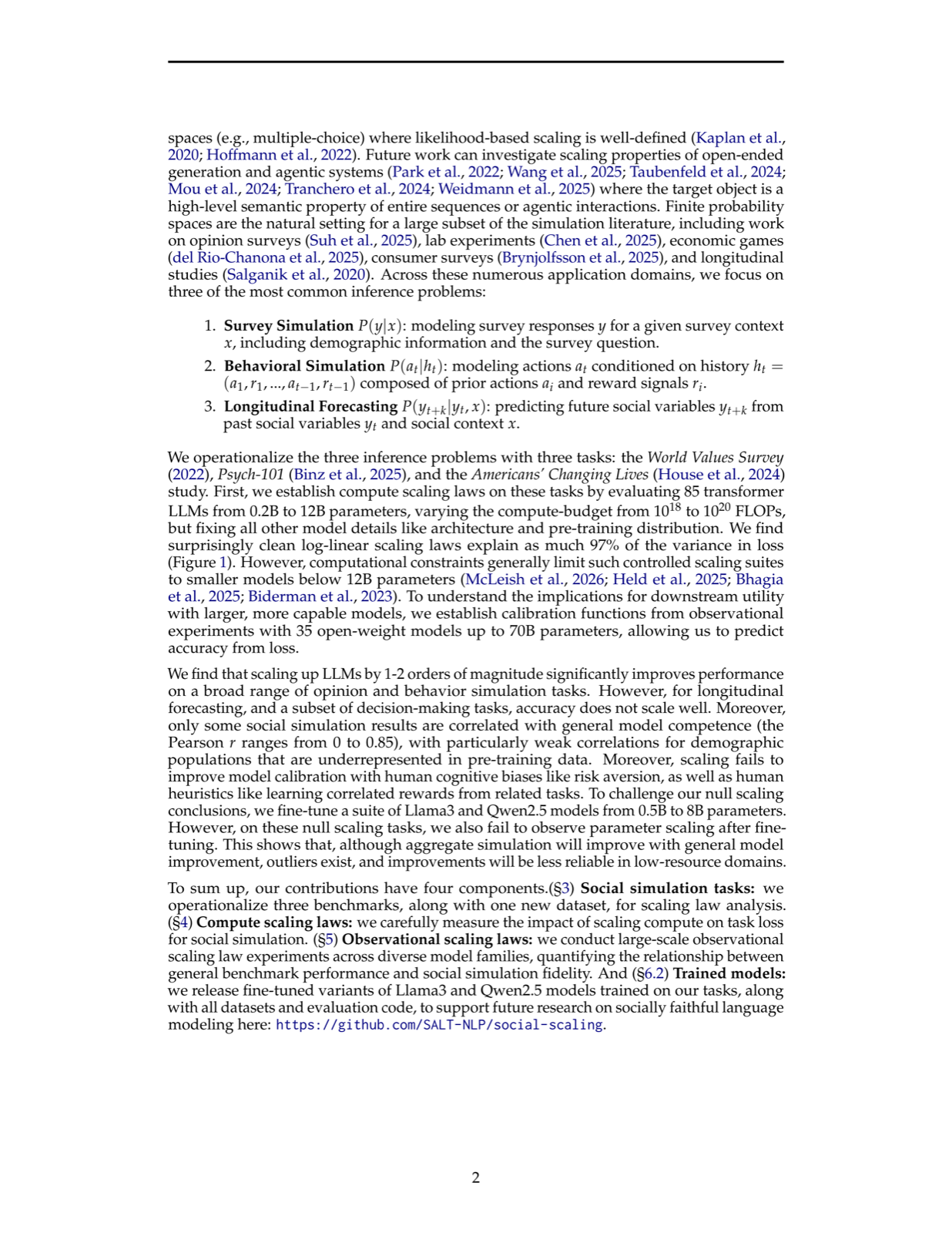
This paper provides a comprehensive analysis of how scaling affects social simulations using LLMs, revealing that while most aspects of social behavior improve with increased compute, some critical areas—particularly those involving human cognitive biases and heuristics—show limited improvement even at scale.
The findings are significant for agent architectures and multi-agent systems, as they suggest that scaling alone may not be sufficient to achieve high-fidelity social simulations. This implies that future research should focus on developing specialized techniques for capturing nuanced human behaviors beyond general language capabilities.
The paper's use of scaling laws and compute budgets provides a quantitative framework for predicting performance improvements, which can guide resource allocation in agent development. The distinction between tasks that scale well and those that don't offers valuable insights into where additional research efforts should be directed.
Key insight: Scaling improves social simulation fidelity in most domains, but certain tasks like behavioral calibration and underrepresented opinions scale more slowly, indicating orthogonal improvements are needed.
Know Your Source: A Public Knowledge Store for Media Background Checks
Ousidhoum, Nedjma arXiv: 2607.02383

The paper introduces MEDIAREF, a publicly available knowledge store designed to support reproducible media background checks (MBCs) for fact verification tasks. This addresses a critical gap in current RAG-based systems that often assume retrieved evidence is reliable, despite real-world information being conflicting, outdated, or biased.
By leveraging LLMs to generate MBCs and grounding them in a curated collection of web-sourced documents, the authors demonstrate how source-critical reasoning can be implemented without relying on costly proprietary APIs. This approach not only enhances reproducibility but also improves the quality of MBC generation through both automatic and qualitative evaluation.
The work has significant implications for AI agent development, particularly in domains requiring high-fidelity information processing such as journalism, legal fact-checking, and misinformation detection. It suggests that integrating source reliability into retrieval-augmented systems can substantially reduce error accumulation and improve trustworthiness.
Key insight: RAG systems can be improved by incorporating source credibility assessment, enabling more reliable fact-checking through public knowledge stores.
HULAT2 at MER-TRANS 2026: Governed Multi-Agent Simplification for Spanish Easy-to-Read Generation
Domínguez-Gómez, Miguel arXiv: 2607.02381
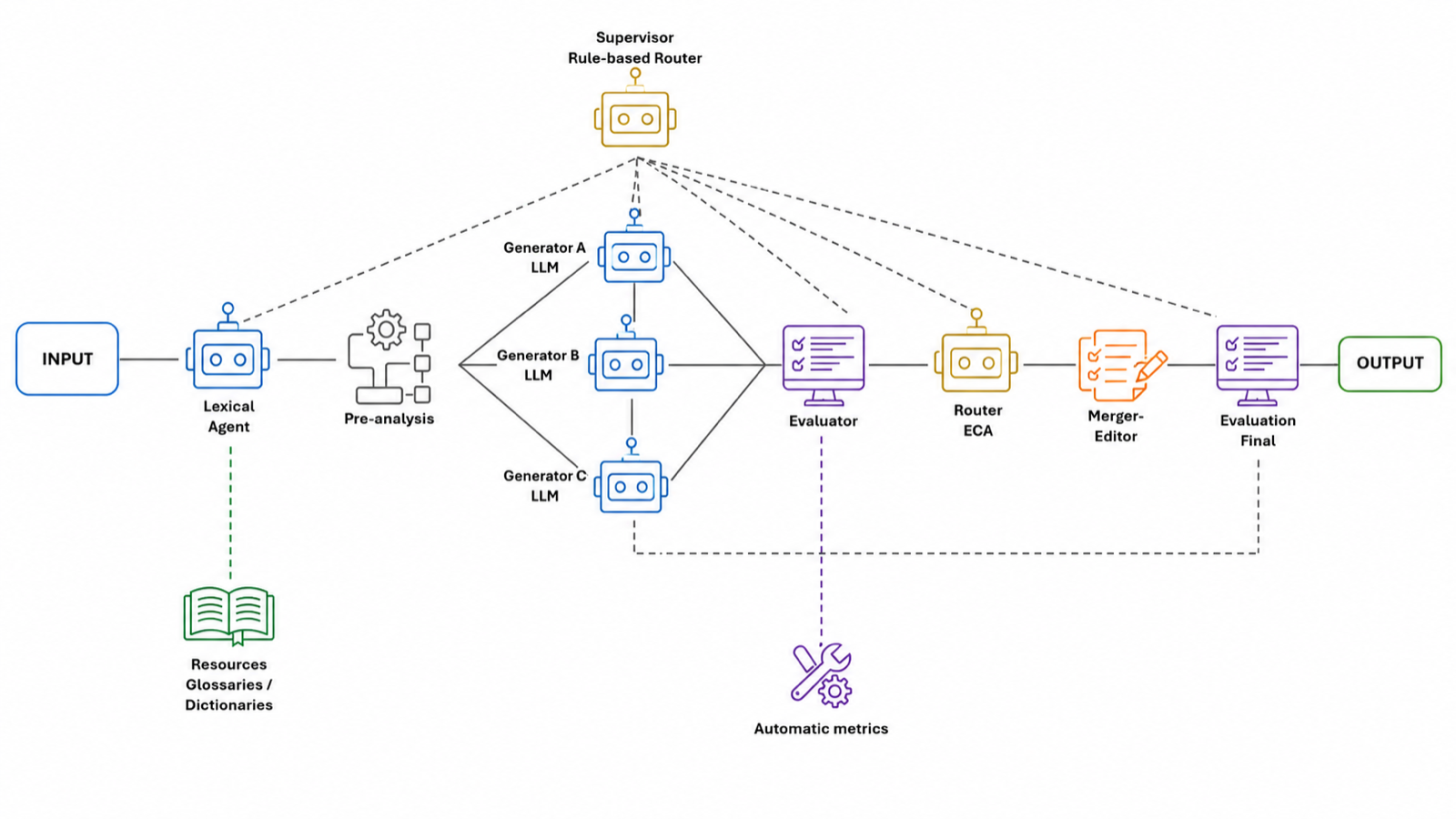
HULAT2-UC3M's participation in MER-TRANS 2026 showcases a LangGraph-based multi-agent system for Spanish easy-to-read generation. The approach combines parallel generation strategies, internal quality signals, and traceable decision-making to improve readability and factual consistency.
The results show that RUN1, which uses a base workflow with signal-guided routing, outperforms both a baseline regenerate-evaluate-regenerate method and an enhanced version with lexical support. This indicates that structured agent coordination—particularly when guided by internal quality signals—is more effective than simple iterative refinement in this domain.
This work contributes to the broader field of multi-agent systems by demonstrating how signal-driven routing can enhance performance in natural language generation tasks, especially where multiple criteria like readability and factual accuracy must be balanced.
Key insight: Signal-guided multi-agent workflows outperform linear regeneration baselines in easy-to-read translation tasks, highlighting the value of structured agent coordination.
CheckRLM: Effective Knowledge-Thought Coherence Checking in Retrieval-Augmented Reasoning
Sun, Maosong arXiv: 2607.02262
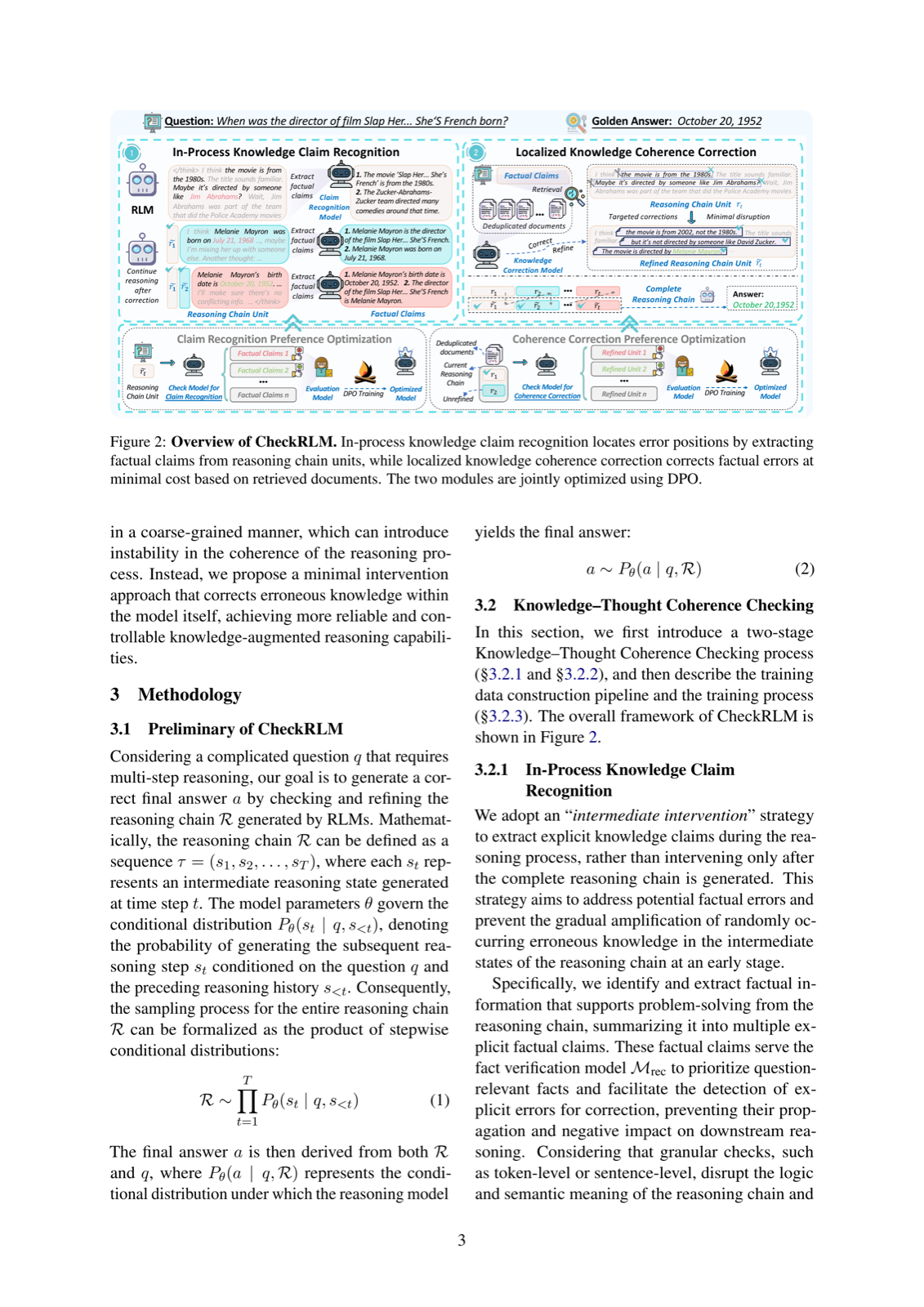
CheckRLM presents a novel framework for improving the reliability of reasoning chains in knowledge-intensive tasks. By extracting factual claims from the reasoning process and checking them against external knowledge, it identifies subtle errors that could accumulate over long reasoning sequences.
The system employs a refinement mechanism to make minimal-cost corrections when inconsistencies are detected, ensuring coherence between the reasoning chain and correct knowledge. This approach significantly outperforms existing baselines in mitigating error accumulation while maintaining computational efficiency.
This advancement is particularly relevant for AI agents tasked with complex problem-solving or decision-making, where accuracy and reliability are paramount. It demonstrates how retrieval-augmented generation can be extended to support dynamic fact-checking during inference, enhancing trustworthiness.
Key insight: CheckRLM improves reasoning reliability by detecting and correcting factual inconsistencies during inference using retrieval-augmented generation.
Program-as-Weights: A Programming Paradigm for Fuzzy Functions
Deng, Yuntian arXiv: 2607.02512
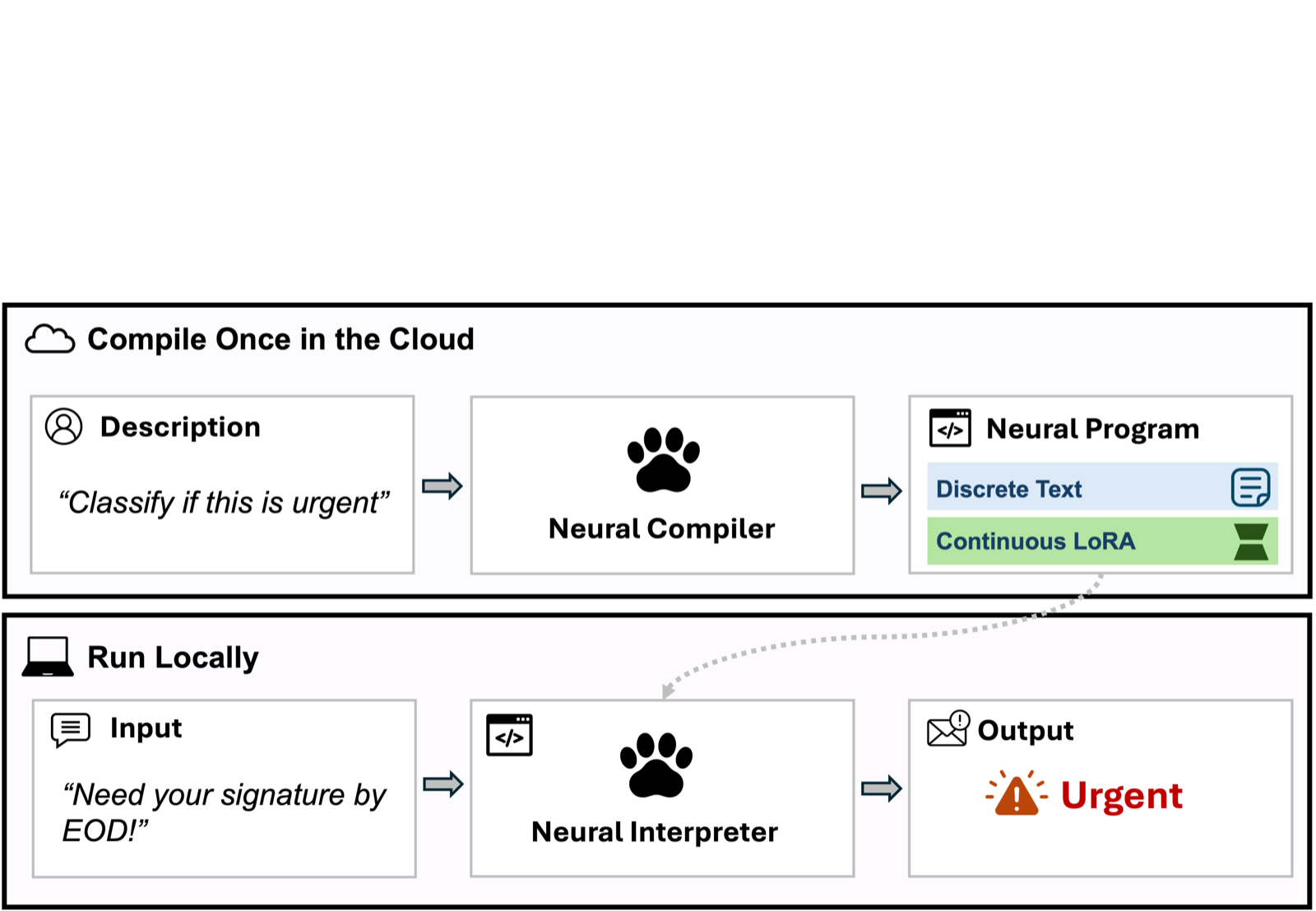
The paper introduces Program-as-Weights (PAW), a paradigm that compiles fuzzy functions specified in natural language into compact, locally-executable neural artifacts. This approach reframes foundation models from per-input problem solvers to tool builders, where a 4B compiler generates parameter-efficient adapters for a frozen interpreter.
PAW achieves performance comparable to direct prompting of larger models while using only about one-fiftieth of the inference memory and running at high speed (30 tokens/s on a MacBook M3). This makes it highly suitable for deployment in resource-constrained environments or applications requiring rapid, offline execution.
This work contributes to agent architectures by offering a new way to build reusable tools that can be invoked efficiently, potentially enabling more modular and scalable AI systems. It also aligns with the broader goal of making LLMs more practical for everyday programming tasks.
Key insight: Program-as-Weights (PAW) enables efficient, locally-executable neural artifacts from natural language specifications, reducing memory usage and improving inference speed.
Neuron-Aware Data Selection for Annotation-Free LLM Self-Distillation
Li, Xiang Lorraine arXiv: 2607.02460
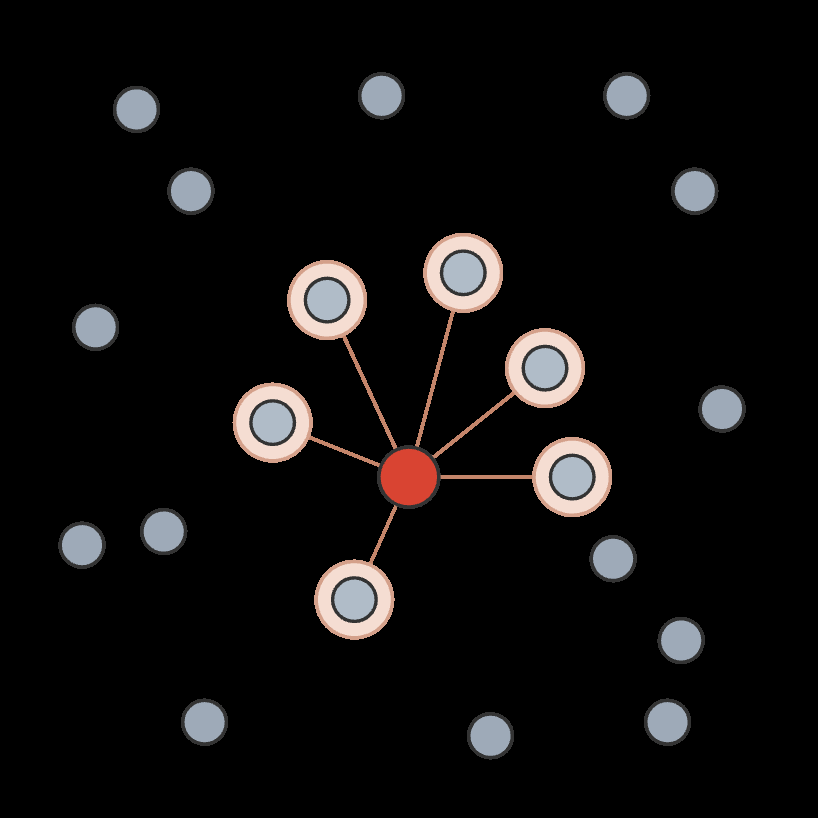
Neuron-OPSD proposes a data-centric framework for annotation-free LLM self-distillation that uses internal neuron activations to guide both training-data selection and teacher context construction. This approach avoids the pitfalls of traditional methods like SFT and GRPO, which suffer from out-of-domain degradation or calibration error.
By training via on-policy distillation from the teacher distribution without ground-truth labels at any stage, Neuron-OPSD improves in-domain performance while preserving cross-domain generalization and mitigating calibration collapse. This is particularly valuable in specialized domains where expert annotations are scarce or expensive.
The method represents a significant step forward in self-evolution techniques for LLMs, offering a principled way to train models without external supervision, which is crucial for real-world deployment scenarios where interaction feedback or labeled data may be limited.
Key insight: Neuron-OPSD leverages internal neuron activations to guide data selection and teacher context construction in annotation-free self-distillation.
QFedAgent: Quantum-Enhanced Personalized Federated Learning for Multi-Agent Activity Recognition
Nguyen, Tuy Tan arXiv: 2607.02426
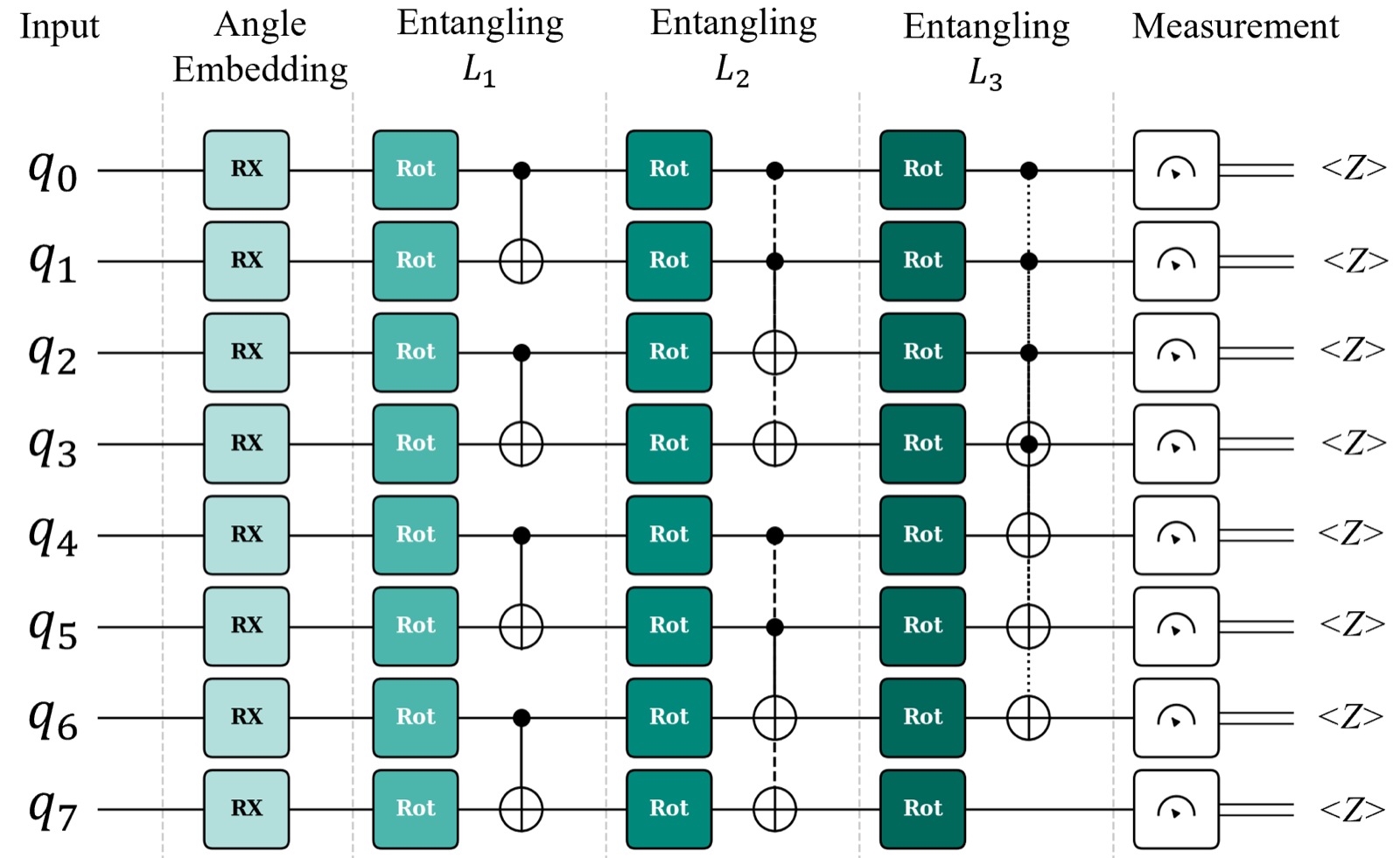
QFedAgent introduces a quantum-enhanced personalized federated learning framework for multi-agent activity recognition, integrating variational quantum circuits to model sensor interactions. This approach reduces the parameter count from 33K (classical) to just 72 quantum rotation parameters, achieving approximately 10x total parameter reduction.
The hybrid quantum-classical fusion module encodes accelerometer-gyroscope interactions through quantum state encoding and entanglement, demonstrating competitive performance on the OPPORTUNITY dataset with 97.7% mean test accuracy under subject-based non-IID partitions.
This work exemplifies how quantum computing can be integrated into AI agent systems to enhance efficiency and scalability in privacy-sensitive applications like robotic sensing. It opens new possibilities for deploying federated learning frameworks that are both computationally efficient and secure.
Key insight: Quantum-classical hybrid fusion modules in federated learning reduce parameter overhead and communication costs while maintaining high accuracy.
Neuron-Aware Active Few-Shot Learning for LLMs
Li, Xiang Lorraine arXiv: 2607.02423
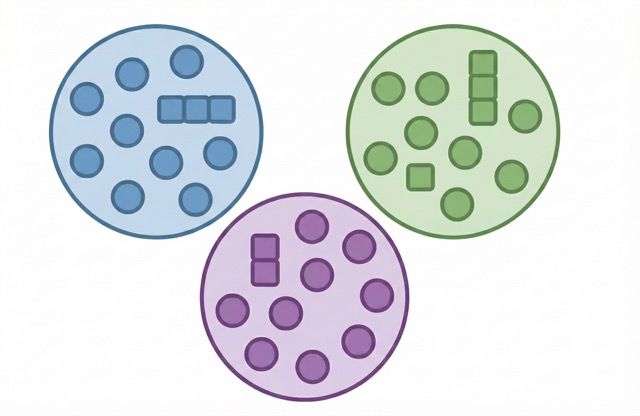
The paper presents NeuFS, a novel approach to Active Few-Shot Learning (AFSL) that shifts the paradigm from relying on external output signals like predictive entropy or semantic similarity to using internal neuron activation patterns. This move is significant because it addresses a key limitation of existing AFSL methods: they often overlook the model's internal dynamics, which could better pinpoint specific knowledge gaps.
By utilizing neuron activation patterns directly as representations for sample selection, NeuFS introduces a dual-criteria strategy that ensures both diversity in few-shot examples and prioritization of challenging samples where LLMs tend to hallucinate. This is achieved by quantifying neuron consensus, which helps identify informative and difficult cases. The framework's effectiveness is demonstrated across reasoning and text classification tasks on three datasets, showing superior performance over existing baselines.
Ablation studies further validate the approach by highlighting that internal neuron activations provide a more principled and effective selection signal than external embeddings. This suggests that leveraging model internals for sample selection can lead to more robust and efficient adaptation of LLMs to specialized domains, which is crucial for practical deployment in real-world applications.
Key insight: NeuFS introduces a neuron-aware active few-shot learning framework that leverages internal model dynamics (neuron activation patterns) for more effective sample selection, outperforming traditional output-level methods.
DecompRL: Solving Harder Problems by Learning Modular Code Generation
Synnaeve, Gabriel arXiv: 2607.02390
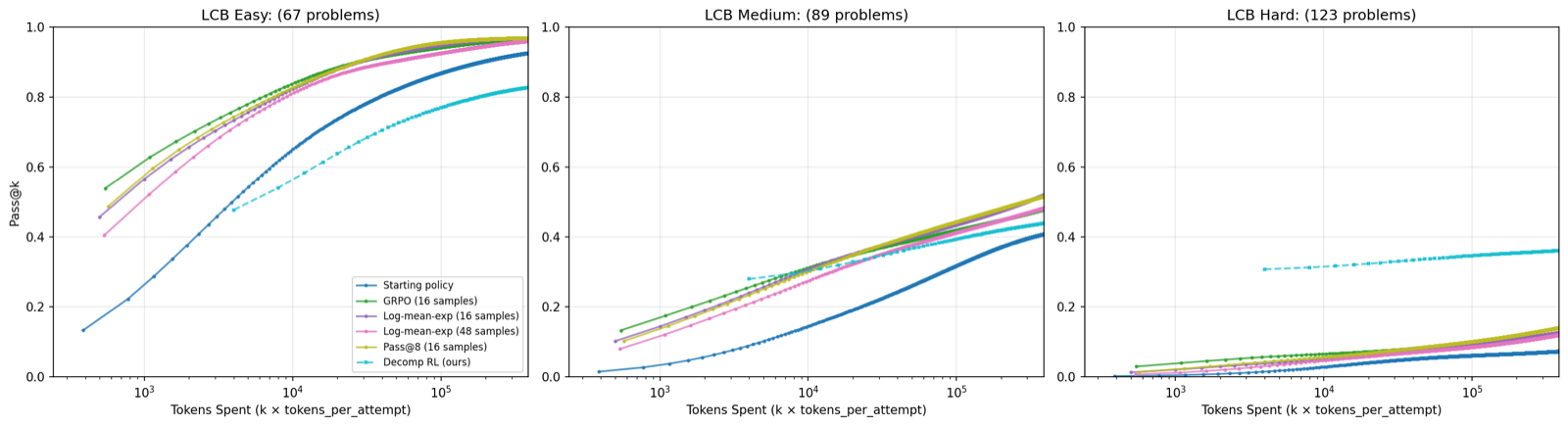
The paper introduces DecompRL, an innovative reinforcement learning algorithm that explicitly learns to decompose complex problems into smaller, independently solvable modules. This approach fundamentally shifts the problem-solving strategy from sampling harder instances to making tasks easier through decomposition, which is particularly effective when base policies have near-zero probability of generating correct solutions.
By recombining implementations of these modules, DecompRL can generate up to k^n candidate solutions, shifting computational bottlenecks from GPU inference to cheap CPU evaluation. This results in a substantial reduction in GPU token cost—approximately 50 times less than standard approaches—while maintaining or improving accuracy on benchmarks like LiveCodeBench and CodeContests.
The method's success demonstrates that modular code generation can be a powerful technique for scaling LLM problem-solving capabilities, especially in resource-constrained environments. It also highlights the importance of architectural design in RL systems to avoid the limitations of traditional sampling and gradient-based methods when dealing with extremely large search spaces.
Key insight: DecompRL enables LLMs to solve harder problems by decomposing them into modular sub-functions, significantly reducing GPU token costs while improving accuracy beyond standard RL methods.
AgentsCAD: Automated Design for Manufacturing of FDM Parts via Multi-Agent LLM Reasoning and Geometric Feature Recognition
Farimani, Amir Barati arXiv: 2607.02448
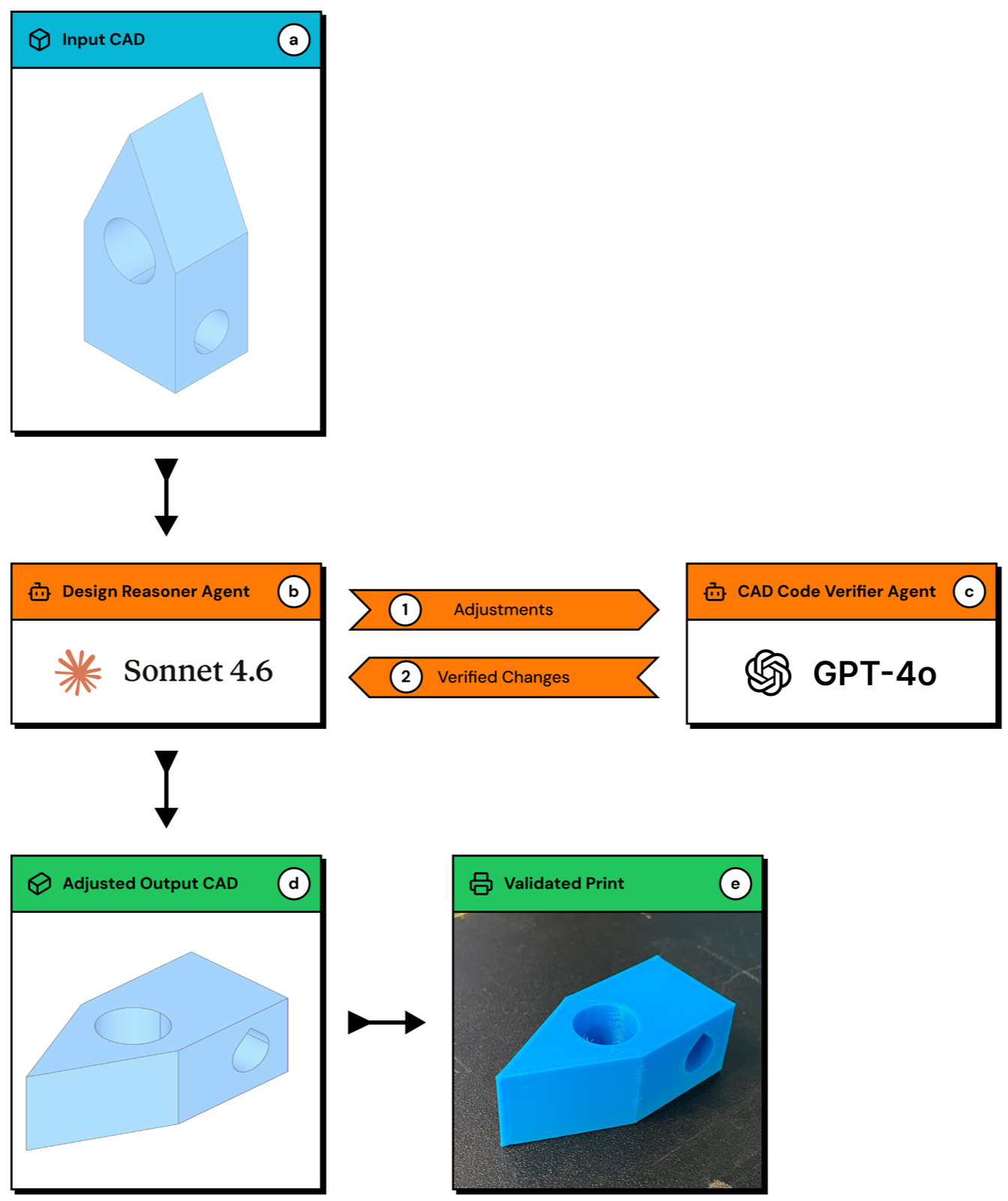
AgentsCAD represents a significant advancement in automated design for additive manufacturing by integrating boundary-representation (B-Rep) geometry parsing with multi-agent LLM reasoning. The system begins by detecting overhangs above a 45° threshold, constructs a face-adjacency topology graph, and optionally injects semantic feature labels from a trained GraphSAGE model.
The core innovation lies in how it leverages Claude Sonnet for design-reasoning, recommending modifications such as reorientations, fillets, and chamfers. A GPT-4o vision-language verifier then inspects rendered views to confirm geometric integrity, ensuring that proposed changes are physically valid. This hybrid approach addresses the geometry-to-language translation problem central to LLM-driven CAD modification.
The test case on a birdhouse model demonstrates that the system correctly diagnoses overhangs, selects appropriate defect mitigation strategies, and proposes physically valid corrections. While still in early stages, this work shows promising potential for automating complex design processes in manufacturing, potentially reducing human intervention and increasing efficiency.
Key insight: AgentsCAD combines multi-agent LLM reasoning with geometric feature recognition to automate DFAM modifications in FDM parts, bridging the gap between raw geometry and language-based design decisions.
CausalSteward: An Agentic Divide-Conquer-Combine Copilot for Causal Discovery
Kersting, Kristian arXiv: 2607.01936
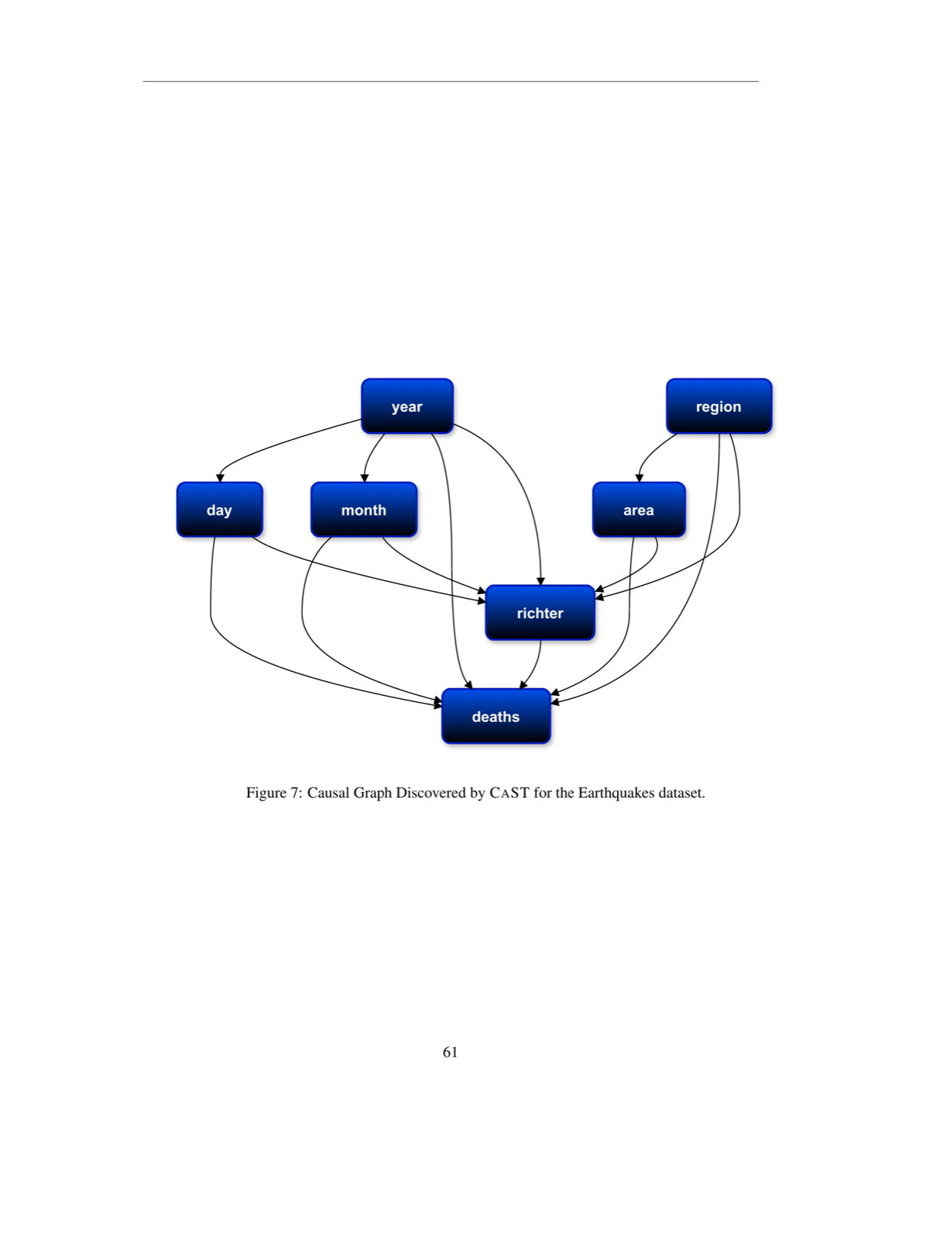
CausalSteward presents a novel human-in-the-loop framework for assembling large causal models by employing a divide-and-conquer strategy. This approach partitions large clusters of variables iteratively and analyzes them separately, which is particularly useful in high-dimensional settings where core assumptions are often violated.
The system integrates prior knowledge with data-driven methods using tailored tools such as retrieval augmented generation and conditional independence tests. It also examines the capabilities and limitations of causal reasoning within multi-agent frameworks, highlighting how human involvement contributes to accurate and trustworthy results.
This work is significant because it addresses a critical challenge in causal discovery: effectively integrating vast amounts of prior knowledge into the discovery process. By combining automated techniques with human oversight, CausalSteward offers a promising path forward for building robust causal models in real-world applications.
Key insight: CausalSteward introduces a multi-agent framework for causal discovery that tackles high-dimensional causality through divide-and-conquer, fusing prior knowledge with data-driven approaches.
Cache Merging as a Convergent Replicated State for Multi-Agent Latent Reasoning
Brito, Luís arXiv: 2607.01308
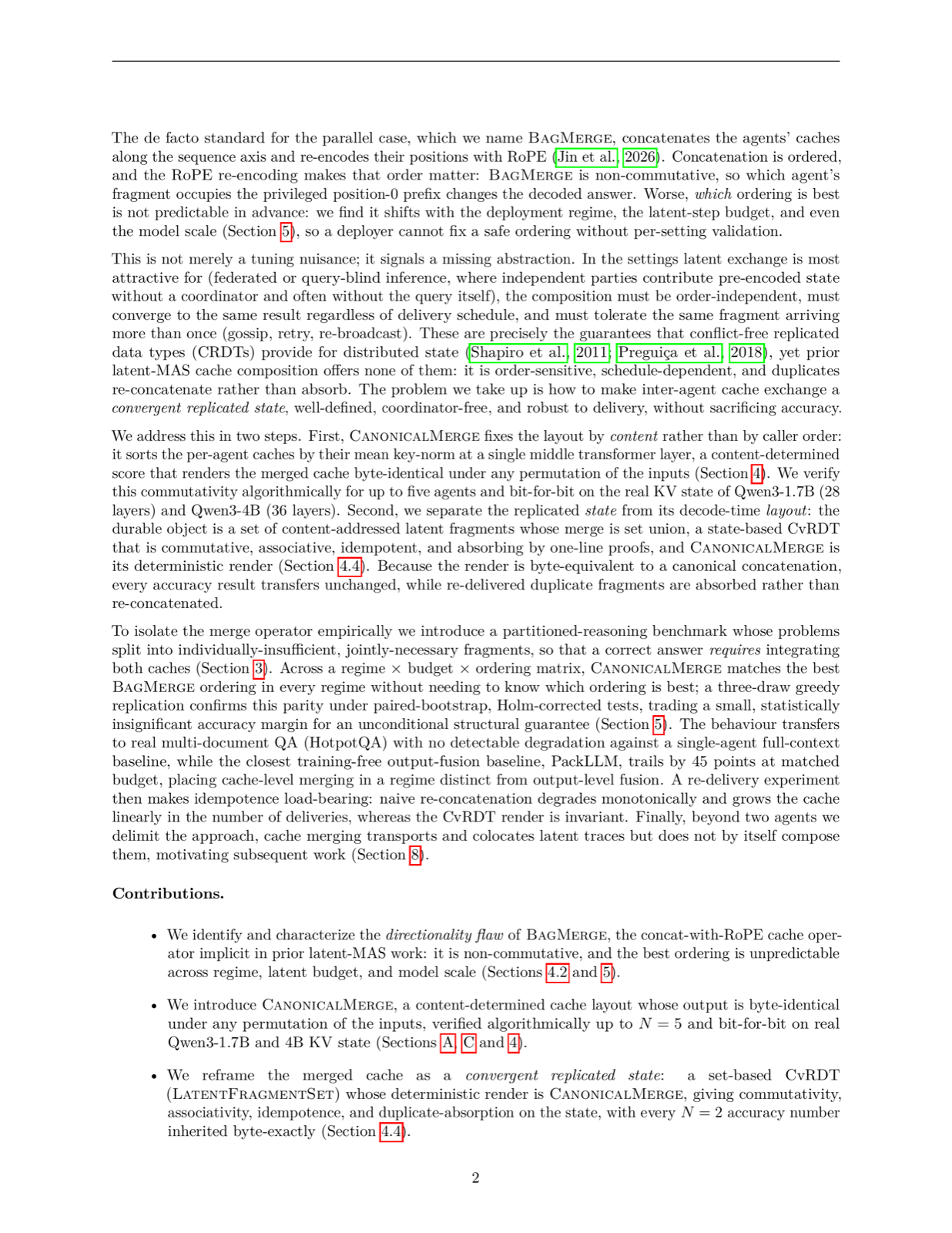
The paper tackles the problem of non-commutative cache merging in multi-agent latent reasoning, where prior methods like BagMerge suffer from unpredictable best input ordering. CanonicalMerge addresses this by fixing the layout based on content—ordering caches by mean K-norm at a middle layer—which renders merged caches byte-identical under any permutation.
This approach transforms cache merging into a convergent replicated state using a set-based CvRDT (commutative, associative, idempotent, absorbing), making it deterministic and structurally sound. The method is verified algorithmically for small N and bit-for-bit on real models like Qwen3-1.7B and 4B, demonstrating its practical applicability.
On a partitioned-reasoning benchmark, CanonicalMerge matches the best BagMerge ordering in every regime without knowing which order is optimal, trading a small accuracy margin for unconditional structural guarantees. This transferability to real-world tasks like HotpotQA shows that cache-level merging can be distinct from output-level fusion and offers unique advantages in multi-agent reasoning.
Key insight: CanonicalMerge resolves non-commutativity in cache merging by ordering based on content, enabling a convergent replicated state that improves multi-agent reasoning performance and structural guarantees.
Adoption and Ecosystem Health: A Longitudinal Analysis of Open-Source Multi-Agent Frameworks
Cosguner, Koray arXiv: 2607.02453
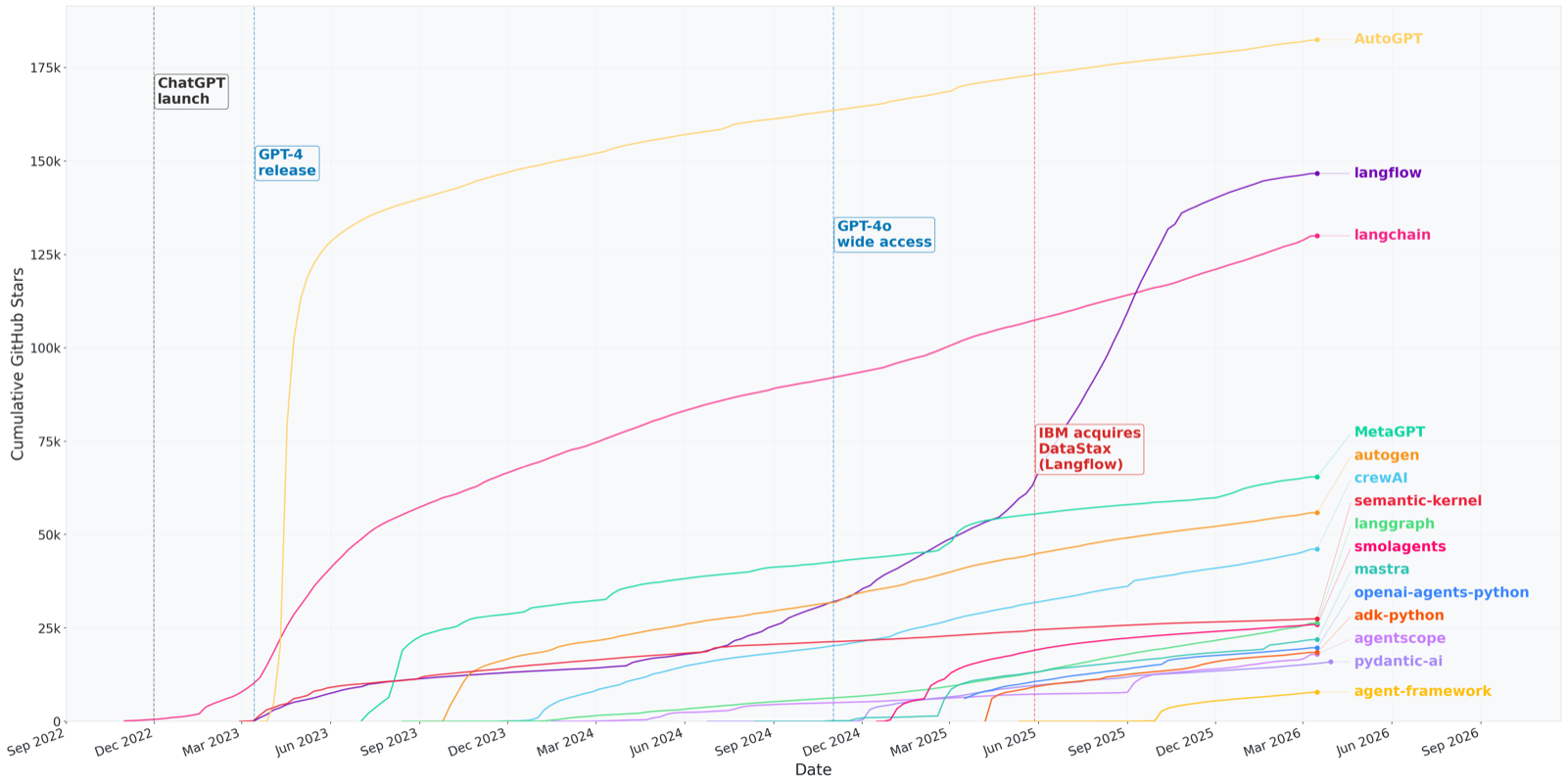
This paper provides a longitudinal analysis of 15 major open-source AI agent framework repositories from late 2022 to early 2026, using metrics such as stars, pull requests, commits, and user profiles. It challenges the common assumption that GitHub stars reflect true ecosystem health.
Key findings include that headline popularity is unreliable—AutoGPT gained 111,967 stars in one month but had low contributor density compared to lower-profile frameworks like Pydantic-AI. Additionally, mapping awareness against adoption reveals that visibility and engagement diverge, with LangChain functioning as shared infrastructure attracting 82.5% of cross-ecosystem contributors.
The study also finds that retention drops most steeply in the first 30 days of initial contribution and stabilizes near 90 days. These insights offer engineering teams a more robust basis for framework evaluation, emphasizing that metrics like contributor density and cross-ecosystem engagement are better indicators of long-term ecosystem health than simple popularity signals.
Key insight: Ecosystem health of open-source multi-agent frameworks is better measured by contributor density, cross-ecosystem engagement, and retention than by popularity signals like GitHub stars.
Mechanism and Stability Analysis of Metabolic Closed-Loop Metaheuristics
Ma, Liping arXiv: 2607.01551
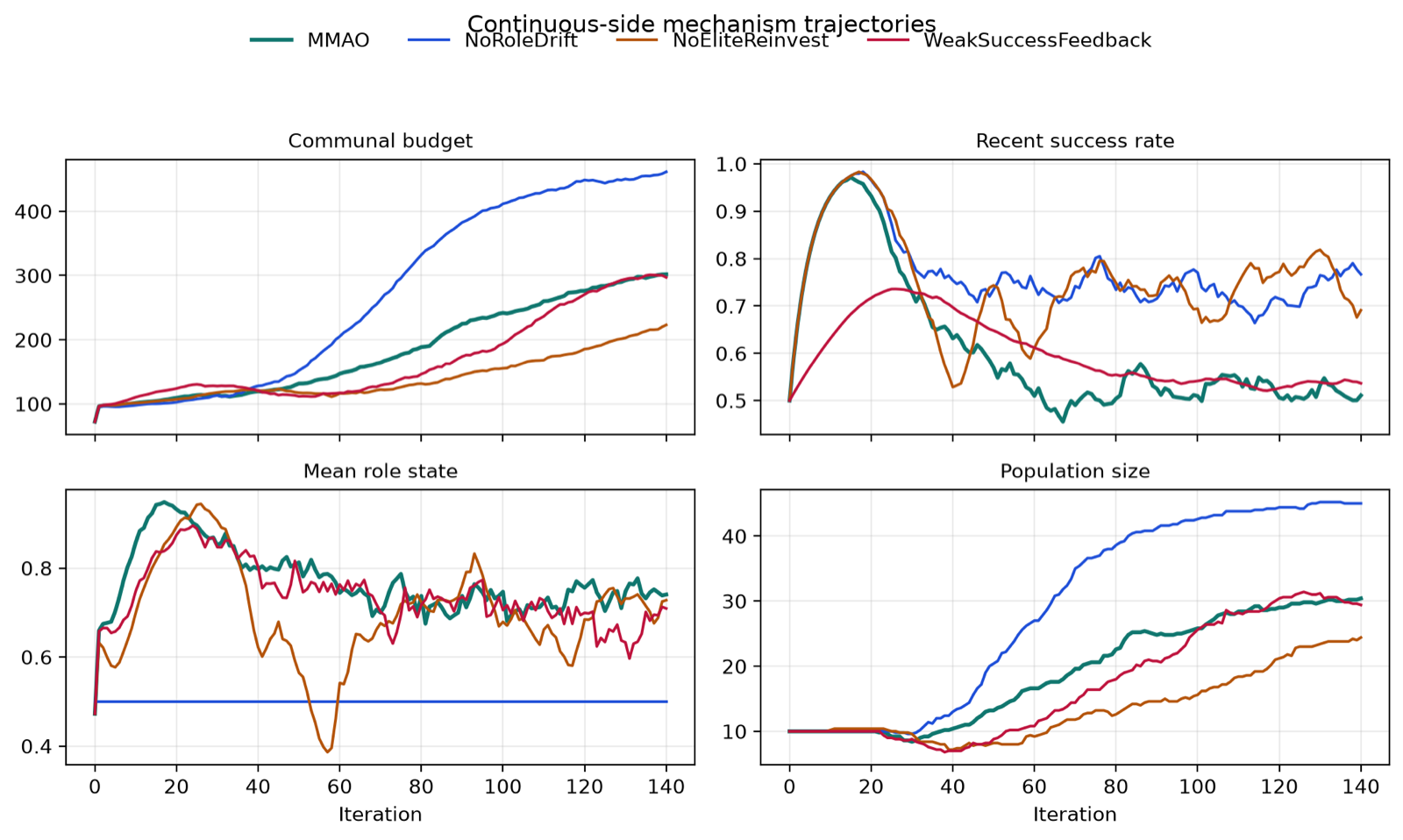
This work offers a foundational understanding of how metabolic principles can be abstracted into multi-agent optimization frameworks. By introducing a generic MMAO state model that separates domain-specific move operators from resource bookkeeping, the authors establish a theoretical basis for analyzing the internal dynamics of such systems. This abstraction is crucial for AI agent development because it allows researchers to reason about system behavior at a higher level, focusing on how resources regulate agent interactions rather than specific implementations.
The paper identifies three key behavioral regimes—contraction under resource deficit, reinvestment under surplus, and search redistribution under heterogeneous returns—which reflect the emergent properties of the metabolic loop. These insights are particularly relevant to multi-agent systems where agents must dynamically adapt their roles based on shared or private resources. The boundedness and nonnegativity results provide stability guarantees that could inform robust agent design in uncertain environments.
While the analysis does not claim full convergence or superiority over other optimizers, it establishes which aspects of MMAO's behavior are inherent to its framework versus those dependent on implementation details. This distinction is vital for practical deployment, as it helps developers focus on tuning parameters that influence system-level outcomes rather than chasing unrealistic theoretical guarantees.
Key insight: The paper provides a framework-level analysis of the Metabolic Multi-Agent Optimizer (MMAO), identifying generic regulatory properties that emerge from its resource loop mechanisms—private energy, communal budget, role drift, and lifecycle turnover—without claiming global convergence or universal superiority.
MMAO-Cls: Metabolic Multi-Agent Optimization for Joint Feature Selection and Classifier Tuning
Ma, Liping arXiv: 2607.01539
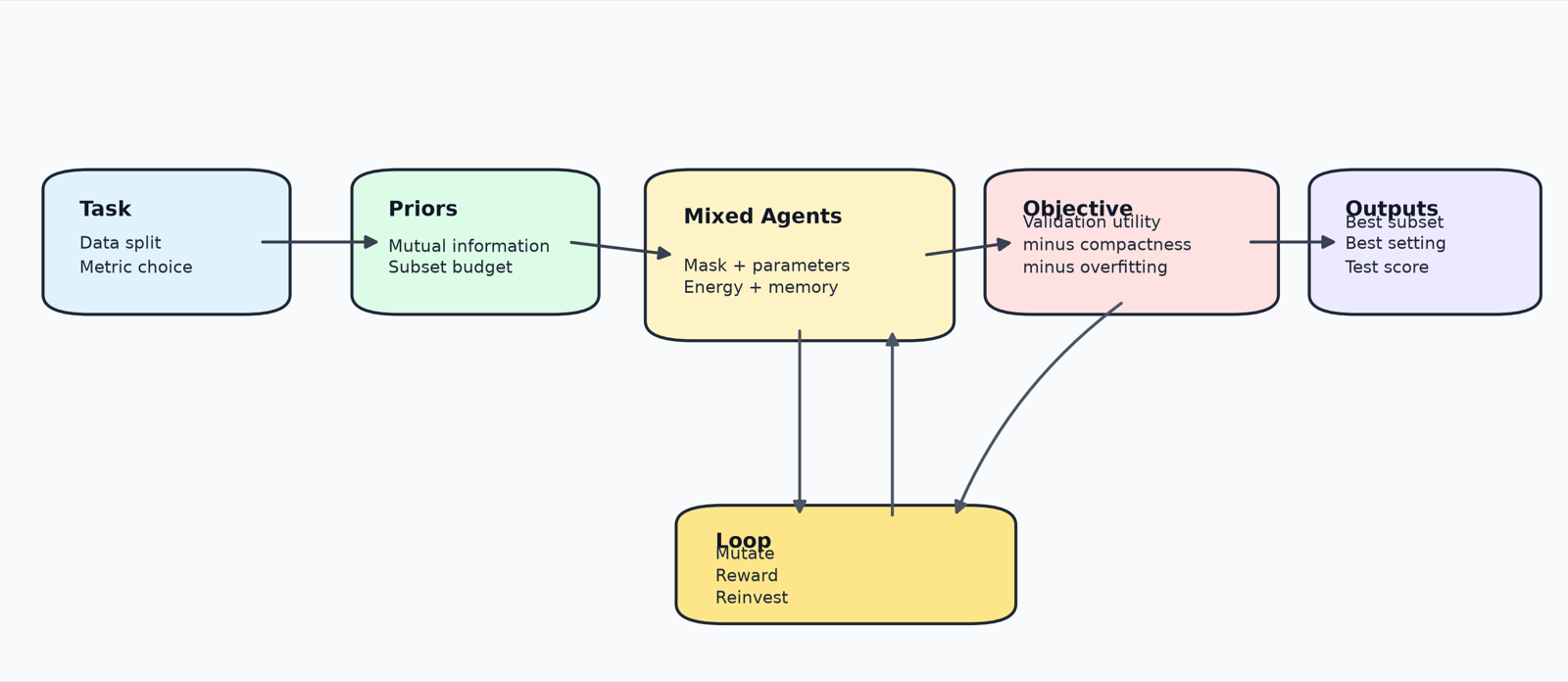
The introduction of MMAO-Cls marks a significant step toward applying metabolic-inspired multi-agent optimization to real-world machine learning tasks. By encoding both feature masks and hyperparameters within each agent's representation, the method bridges discrete and continuous search spaces—a capability that aligns well with modern AI agent architectures requiring flexible decision-making across diverse domains.
Performance evaluation on standard tabular benchmarks shows that MMAO-Cls achieves strong test performance, ranking second in aggregate validation score and outperforming baseline methods like RandomSearch. Notably, it also produces the most compact feature subsets among all compared approaches, suggesting that its resource regulation mechanisms naturally promote parsimony—a desirable trait in efficient model design.
Despite not statistically outperforming some competitors, the conservative nature of the claim underscores the method's applicability and robustness. The fact that MMAO-Cls supports classification tasks while emphasizing mixed-space search suggests it may be particularly useful for scenarios where computational efficiency and interpretability are paramount—key considerations in deploying AI agents in real-world applications.
Key insight: MMAO-Cls demonstrates that the Metabolic Multi-Agent Optimizer can effectively serve as an outer-loop optimizer for joint feature selection and classifier tuning, achieving competitive performance while maintaining compact feature subsets—highlighting its potential in efficient model selection.
Mean Field Reinforcement Learning
Laurière, Mathieu arXiv: 2607.01525
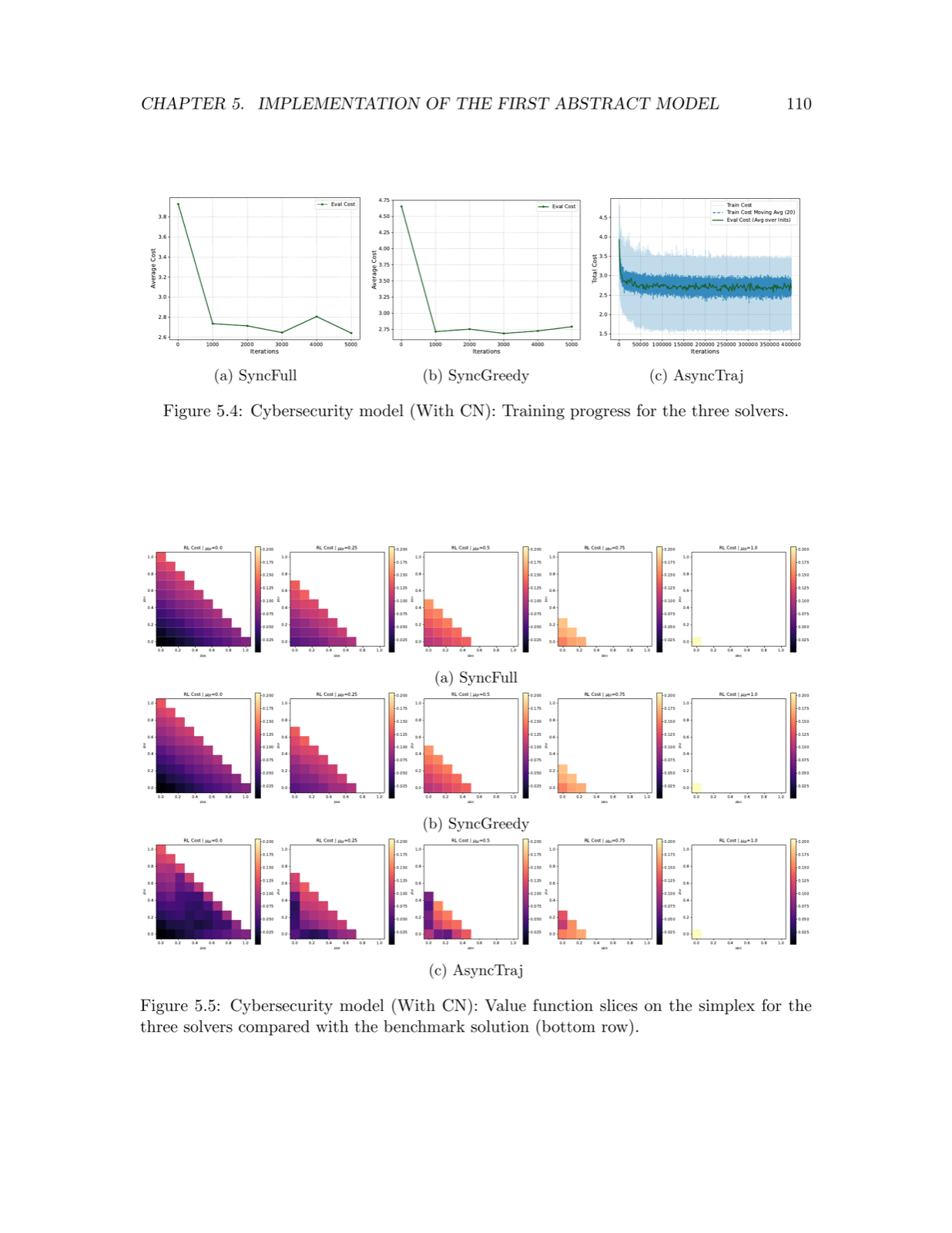
Mean Field Reinforcement Learning (MFRL) presents a powerful theoretical lens through which to understand complex multi-agent environments. By linking multi-agent RL with mean field control, the paper provides a coherent bridge between stochastic control theory and reinforcement learning methodology. This is especially valuable for AI agent development, where scalability and generalization across large populations of agents are critical challenges.
The framework includes dynamic programming principles, propagation-of-chaos limits, and analyses of tabular Q-learning and policy-gradient methods—offering both theoretical rigor and practical guidance. These tools enable researchers to study systems with many interacting agents without falling into the curse of dimensionality, making them applicable to large-scale AI agent deployments where traditional RL approaches often fail.
The inclusion of numerical implementations such as deep deterministic policy gradient further demonstrates how MFRL can be extended beyond theoretical constructs into practical algorithms. For developers working on scalable agent architectures or multi-agent systems, this work provides a structured approach to modeling and optimizing complex interactions in large stochastic environments.
Key insight: This monograph establishes a mathematical framework connecting mean field control theory with reinforcement learning, offering tools for analyzing large stochastic populations and designing tractable learning algorithms—especially relevant for multi-agent systems and scalable AI agent architectures.
AI Model Releases

More details on Fable 5’s cyber safeguards and our jailbreak framework
Anthropic has released detailed information about Claude Fable 5's cybersecurity safeguards and jailbreak framework. The model's safety classifiers are designed to detect and block dangerous cybersecurity uses while allowing beneficial defensive activities. The classifiers categorize cybersecurity uses into four types: prohibited use (high harm, blocked), high-risk dual use (blocked until better controls), low-risk dual use (monitored with safety margin), and benign use (allowed with monitoring). Anthropic also introduced an early draft AI jailbreak severity framework to help standardize how developers and governments discuss risks. They launched a HackerOne program for researchers to submit potential cyber jailbreaks for review.
Why it matters: This represents a significant step toward establishing industry standards for AI safety in cybersecurity applications, particularly as dual-use capabilities become more prevalent. The framework provides concrete guidance for developers on how to balance security with functionality while creating a shared vocabulary for discussing AI risks.
Agent Frameworks & SDKs

Memora scales agent memory to boost long-horizon productivity
Microsoft Research introduced Memora, a scalable memory system designed to improve AI agent productivity on long-horizon tasks. The system decouples what is stored (rich memory content) from how it's retrieved (lightweight abstractions and cue anchors), balancing abstraction and specificity. Memora dramatically increases agent productivity by enabling more efficient information retention and access over time, addressing the fundamental limitation that current AI agents don't remember past interactions. The approach allows agents to handle longer and more complex tasks without repeatedly being fed relevant information or retrieving it from external sources.
Why it matters: This advancement addresses a core bottleneck in AI agent development by solving the memory scalability problem that limits long-term task execution. Memora's harmonic memory representation could significantly improve the practical utility of AI agents in real-world applications where sustained productivity over extended periods is essential.
AI Tooling

Mark Zuckerberg tells staff that AI agents haven’t progressed as quickly as he’d hoped
Mark Zuckerberg told Meta staff that AI agent development has not progressed as quickly as executives had hoped. During an internal town hall, Zuckerberg commented on recent company restructuring efforts, noting that job cuts made to accelerate AI adaptation were 'not as clean' as they should have been. He stated that the perceived benefits of the new AI-focused company structure hadn't yet materialized, though he believes improvements will come within three to six months. The comments come amid reports describing Meta's AI unit as a 'soul-crushing gulag' according to some engineers.
Why it matters: This reveals significant internal challenges in AI agent development at one of the industry's leading companies, suggesting that despite massive investments and restructuring efforts, practical progress remains elusive. The comments highlight the gap between corporate expectations and reality in AI agent deployment, which could influence how other companies approach similar initiatives.
UI/UX Tools

Source: figma.com.