NVIDIA has released Nemotron 3.5 Content Safety, an advanced multimodal safety model designed for enterprise AI applications. Google Cloud has also announced significant enhancements to its Managed Service for Apache Spark, focusing on performance improvements and AI-powered optimizations. These developments reflect the growing emphasis on safety, efficiency, and scalability in AI infrastructure.
NVIDIA's Nemotron 3.5 Content Safety represents a major advancement in enterprise AI safety, offering customizable multimodal evaluation capabilities across 140 languages with auditable reasoning traces. The model integrates seamlessly into production pipelines and includes a publicly released safety dataset with multimodal examples. Meanwhile, Google Cloud's Managed Service for Apache Spark has been enhanced with the Lightning Engine for up to 4.9x performance improvements, smarter scaling policies that reduce resource waste by 30%, and Gemini-powered extensions for automated optimization. These updates position both solutions to address the increasing demands for secure, efficient, and intelligent data processing in enterprise environments. The developments underscore the industry's focus on making AI systems more reliable, scalable, and adaptable to complex workloads while maintaining strong safety standards.
Research Papers
Agent Memory: Characterization and System Implications of Stateful Long-Horizon Workloads
Tambe, Thierry arXiv: 2606.06448

The paper presents the first comprehensive systems characterization of agent memory, introducing a taxonomy and profiling harness that attributes costs to construction, retrieval, and generation phases. This work is crucial for understanding how different memory systems behave at scale, especially for long-horizon tasks where sustained reasoning over extended interaction histories is required.
By evaluating ten representative systems across benchmark suites, the authors uncover how design choices shift cost across write and read paths, offering practical recommendations for construction scheduling, capability floors, amortization, freshness-latency tradeoffs, and fleet-scale management. These insights are particularly valuable for developers aiming to optimize memory systems in real-world deployments.
The findings suggest that memory systems must be carefully designed not just for functionality but also for system-level efficiency. The paper's emphasis on cost attribution and design implications provides a framework for future research and development in agent memory architectures, aligning with the focus on memory & tool use and agent architectures.
Key insight: Agent memory systems need systematic characterization to understand their cost tradeoffs and design implications for long-horizon tasks.
Beyond Semantic Organization: Memory as Execution State Management for Long-Horizon Agents
Chen, Qi arXiv: 2606.06090

MAGE introduces a novel approach to memory management by treating it as an execution state manager, storing interactions in a hierarchical state tree. This design addresses the mismatch between semantic similarity-based retrieval and execution-state dependencies, which can fragment decision trajectories and hinder coherent state reconstruction.
The framework's four coupled operations—Grow, Compress, Maintain, and Revise—ensure that memory supports both state integrity and error isolation. Experimental results on MemoryArena show significant improvements in task success rate and reduced token consumption, demonstrating the effectiveness of this approach in managing long-horizon agent workloads.
This work directly addresses the need for better memory architectures in long-horizon tasks, aligning with the focus on memory & tool use and reasoning & planning. It provides a practical solution for managing complex agent states and improving robustness in multi-step decision-making scenarios.
Key insight: Memory should be managed as execution state rather than semantic content to improve long-horizon task performance and error isolation.
Memory is Reconstructed, Not Retrieved: Graph Memory for LLM Agents
Hooi, Bryan arXiv: 2606.06036
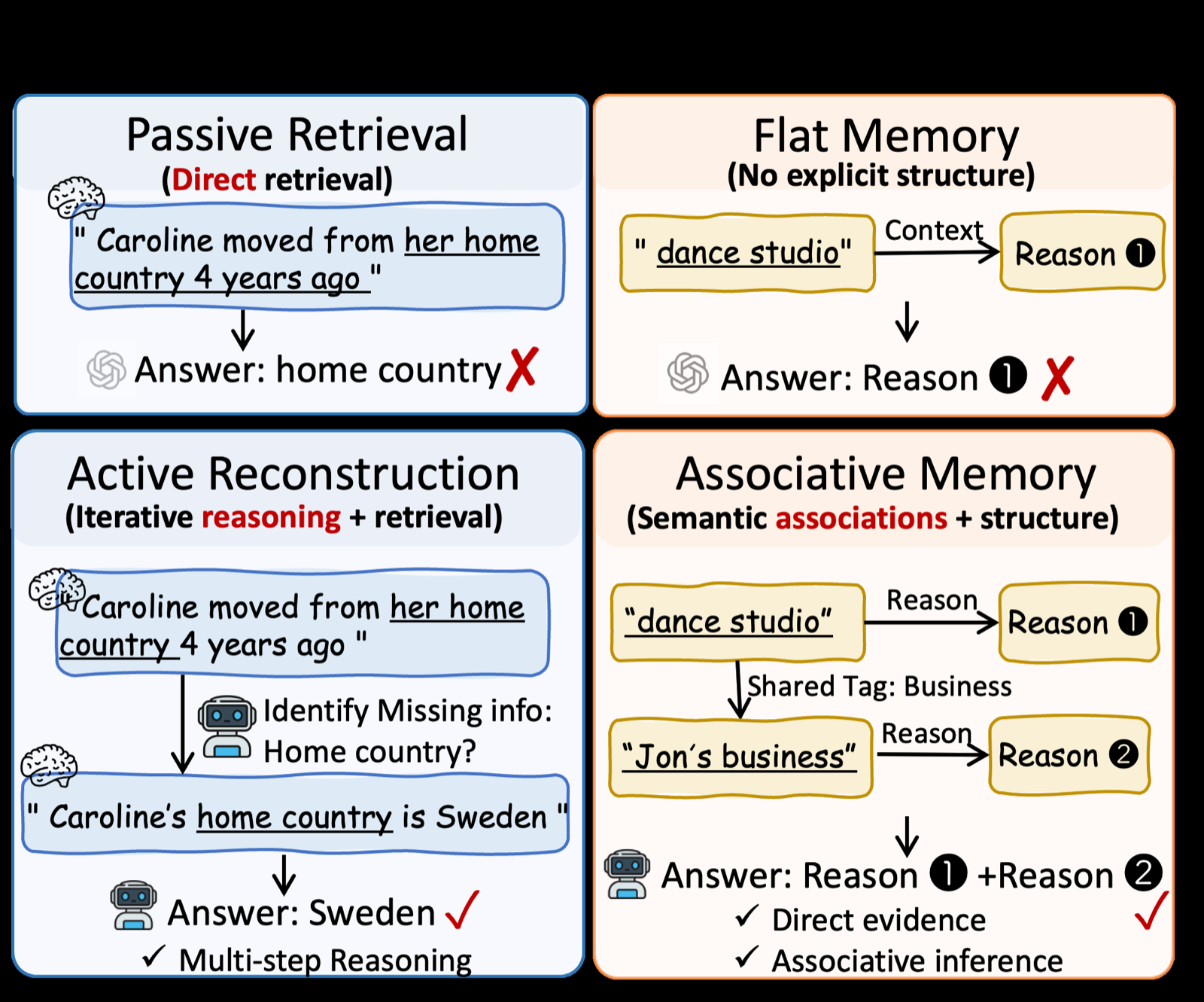
MRAgent proposes a framework that combines an associative memory graph with an active reconstruction mechanism, allowing LLM agents to dynamically adapt memory access based on intermediate evidence discovered during inference. This approach overcomes the limitations of static retrieve-then-reason pipelines.
The Cue-Tag-Content graph structure enables semantic bridges between fine-grained cues and memory contents, supporting iterative exploration and pruning of retrieval paths. This ensures memory retrieval adapts to the reasoning context while avoiding combinatorial explosion, leading to significant performance gains and reduced computational costs.
The paper's contribution is particularly relevant to the focus areas of memory & tool use and reasoning & planning. It offers a scalable solution for long-horizon reasoning tasks, where dynamic memory access is essential for maintaining coherence and efficiency in complex agent workflows.
Key insight: Associative memory graphs with active reconstruction mechanisms enable dynamic and efficient memory access for long-horizon reasoning.
Beyond Similarity: Trustworthy Memory Search for Personal AI Agents
Jia, Ruoxi arXiv: 2606.06054

The paper identifies a critical trustworthiness gap in existing memory pipelines, where semantic similarity drives memory retrieval, potentially exposing inappropriate or harmful content. This is especially problematic in personal AI agents where long-term memory can act as a durable control channel.
MemGate is introduced as a lightweight plug-in that applies a query-conditioned neural gate to candidate memory representations, transforming raw similarity search into task-conditioned memory admission. This approach mitigates vulnerabilities without requiring LLM modifications or memory-database rewriting.
This work is highly relevant to personalization and safety in AI agents, aligning with the focus on memory & tool use and agent architectures. It provides a practical solution for ensuring trustworthy memory access in personal AI systems, addressing both security and privacy concerns.
Key insight: Memory search must be controlled to prevent trustworthiness issues like cross-domain leakage and memory-induced jailbreaks.
LatentSkill: From In-Context Textual Skills to In-Weight Latent Skills for LLM Agents
Lin, Jianghao arXiv: 2606.06087
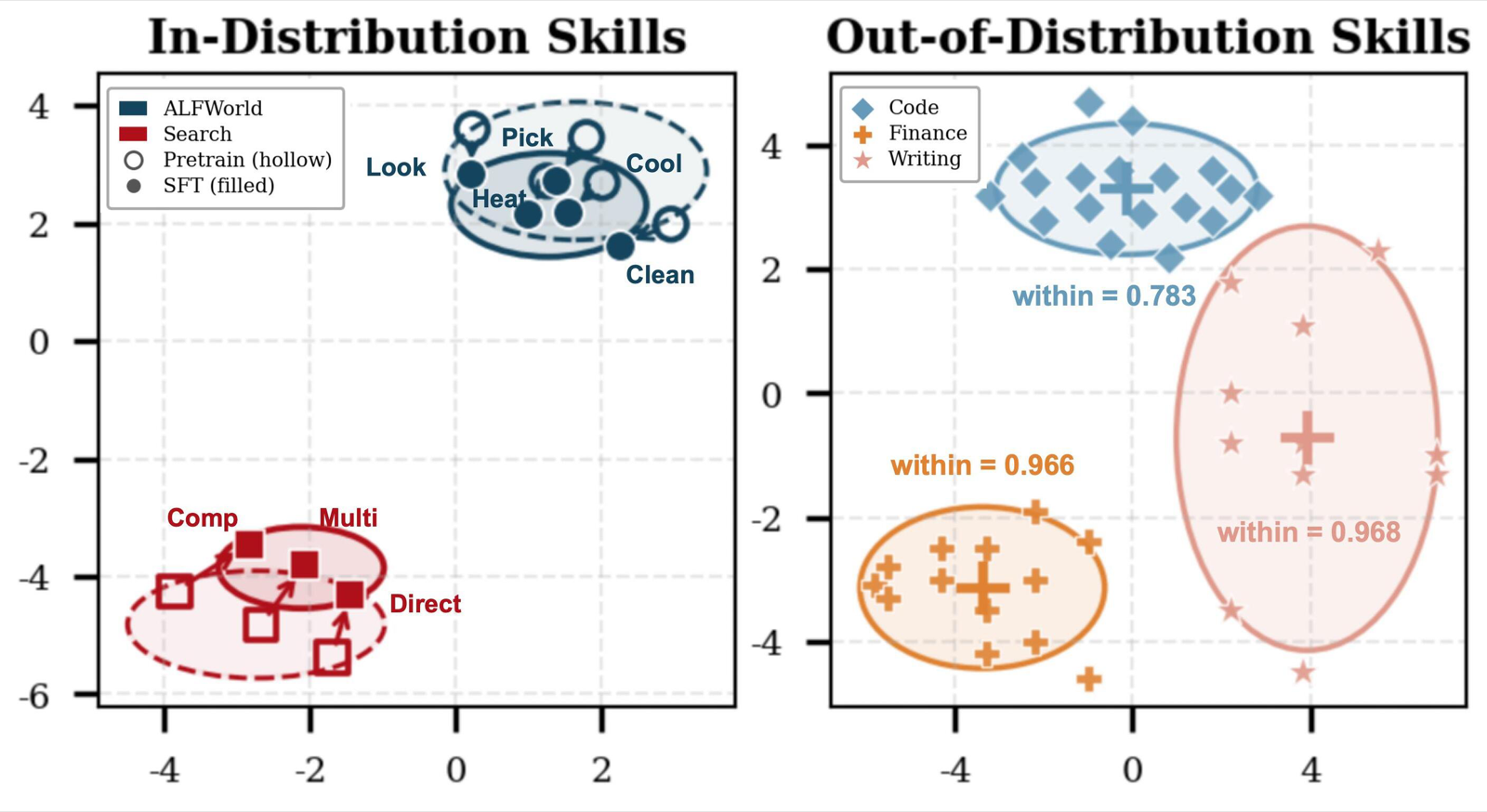
LatentSkill presents a framework that converts textual skills into plug-and-play LoRA adapters through a pretrained hypernetwork, storing skill knowledge in weight space rather than context space. This approach removes per-step skill tokens while preserving modular loading, scaling, and composition.
The framework demonstrates significant improvements in task performance while using substantially fewer prefill tokens, showing that weight-space skills provide an efficient, modular, and less exposed substrate for extending LLM agents. The structured semantic geometry formed by generated skill LoRAs allows for precise control and composition.
This work directly addresses the need for efficient and modular skill representation in LLM agents, aligning with the focus on memory & tool use and agent architectures. It offers a promising direction for reducing context overhead and improving scalability in agent systems.
Key insight: Converting textual skills into weight-space latent skills improves efficiency and modularity in LLM agents.
Retrospective Harness Optimization: Improving LLM Agents via Self-Preference over Trajectory Rollouts
Jia, Xiaohua arXiv: 2606.05922

Retrospective Harness Optimization (RHO) introduces a self-supervised method for optimizing agent harnesses using only past trajectories, addressing the challenge of acquiring ground-truth validation sets in practical deployment settings. This approach enables continual improvement of agent capabilities.
RHO selects a diverse coreset of challenging tasks from past trajectories, re-solves them in parallel, and uses self-validation and self-consistency to generate and select candidate harness updates. The method demonstrates significant improvements in task success rates, such as increasing the pass rate on SWE-Bench Pro from 59% to 78%.
This work is particularly relevant to agent architectures and reasoning & planning, as it provides a mechanism for agents to evolve and improve their own capabilities autonomously. It supports long-horizon optimization and adaptive learning in complex problem-solving scenarios.
Key insight: Self-supervised optimization using past trajectories can improve agent performance without external validation.
ToolChoiceConfusion: Causal Minimal Tool Filtering for Reliable LLM Agents
Iyer, Laxmipriya Ganesh arXiv: 2606.06284
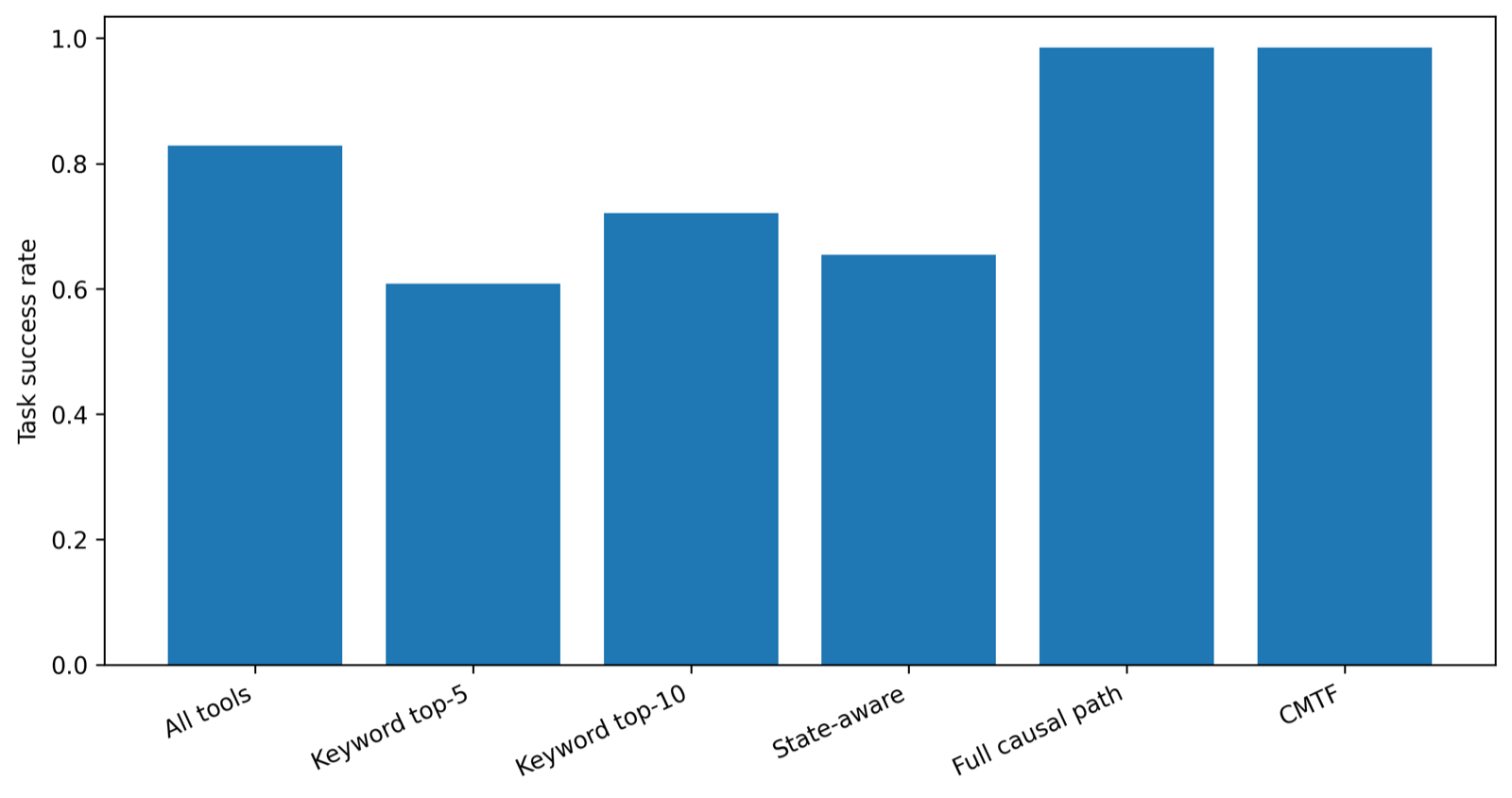
CMTF proposes a training-free method for tool selection based on causal sufficiency, exposing only the minimal next-step tool frontier needed to advance toward the user goal. This approach addresses the reliability and efficiency issues caused by larger tool menus.
The method significantly reduces visible tools from 100 to one per step and decreases token usage by about 90% relative to all-tools exposure, while maintaining aggregate success rates. This demonstrates the effectiveness of causal reasoning in tool selection for LLM agents.
This work directly contributes to the focus areas of memory & tool use and agent architectures. It provides a practical solution for improving tool-use reliability and efficiency in complex agent workflows, particularly in multi-step tasks where tool selection is critical.
Key insight: Causal minimal tool filtering reduces wrong-tool calls and token usage by exposing only necessary tools at each step.
MLEvolve: A Self-Evolving Framework for Automated Machine Learning Algorithm Discovery
Bai, Lei arXiv: 2606.06473

MLEvolve presents an LLM-based self-evolving multi-agent framework for end-to-end machine learning algorithm discovery, addressing limitations in existing MLE agents such as inter-branch information isolation and memoryless search. The framework extends tree search to Progressive MCGS, enabling cross-branch information flow and progressive search.
The introduction of Retrospective Memory, combining a cold-start domain knowledge base with a dynamic global memory, allows agents to evolve with accumulated experience. This approach supports stable long-horizon iteration through decoupling strategic planning from code generation with adaptive coding modes.
This work is highly relevant to agent architectures and reasoning & planning, particularly in the context of long-horizon tasks and automated algorithm discovery. It demonstrates the potential for LLM agents to autonomously evolve and optimize their own capabilities, contributing to the broader goal of self-improving AI systems.
Key insight: Self-evolving multi-agent frameworks can automate machine learning algorithm discovery with improved performance.
Vortex: Efficient and Programmable Sparse Attention Serving for AI Agents
Chen, Beidi arXiv: 2606.06453
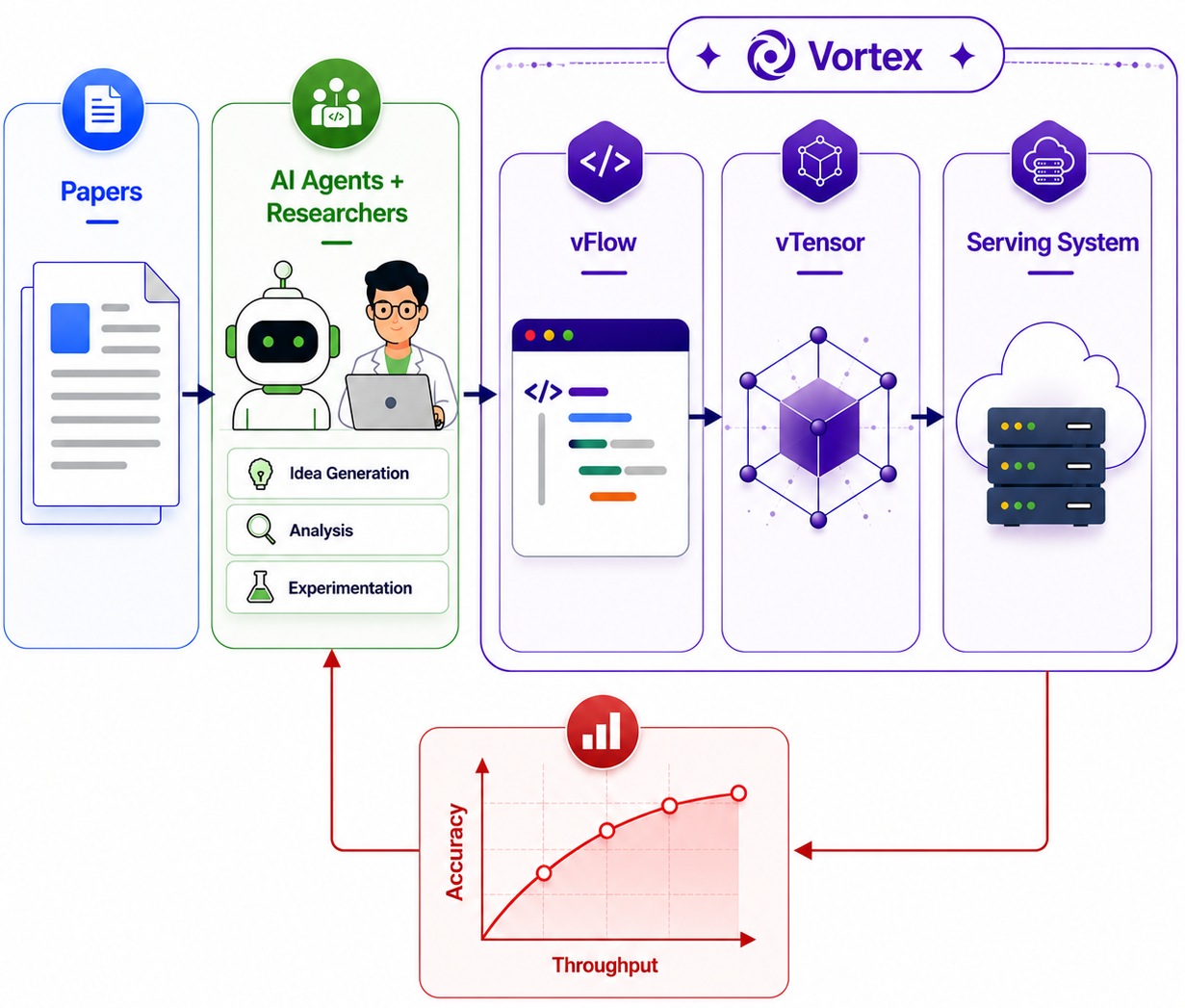
Vortex represents a significant advancement in sparse attention systems for large language models, addressing a critical bottleneck in long-context inference. By combining a Python-embedded frontend with a page-centric tensor abstraction, it allows researchers and AI agents to rapidly prototype, deploy, and evaluate sparse attention algorithms. This system translates theoretical efficiency gains into real-world throughput improvements, making it particularly valuable for AI agent development where computational efficiency is paramount.
The system's ability to achieve up to 3.46x higher throughput than full attention while maintaining accuracy demonstrates its practical utility. More impressively, it extends sparse attention to emerging architectures and very large models, reaching up to 4.7x higher throughput on MLA-based GLM-4.7-Flash and 1.37x on 229B-parameter MiniMax-M2.7 on NVIDIA B200 GPUs. These results suggest that Vortex not only accelerates the design cycle but also enables experimentation with previously infeasible model configurations.
This work directly supports the focus areas of agent architectures and LLM efficiency. By reducing the engineering burden of sparse attention deployment, Vortex empowers AI agents to explore more sophisticated attention mechanisms without sacrificing performance. The system's integration with modern LLM serving stacks makes it a practical solution for real-world applications, potentially enabling more capable and efficient AI agents in reasoning-heavy tasks.
Key insight: Vortex enables rapid prototyping and deployment of sparse attention algorithms for LLMs, achieving up to 4.7x higher throughput on large models while preserving accuracy, significantly accelerating AI agent development.
Unsupervised Skill Discovery for Agentic Data Analysis
Deng, Shumin arXiv: 2606.06416

DataCOPE introduces a novel framework for unsupervised skill discovery in data-analytic agents, tackling a fundamental challenge in inference-time skill augmentation. The approach leverages verifier signals derived from exploration trajectories to characterize relative quality among different analytical paths, enabling agents to discover reusable skills without expensive supervision. This is particularly relevant for multi-agent systems where agents must collaborate effectively on complex data analysis tasks.
The framework's instantiation with Adaptive Checklist Verifier for report-style analysis and Answer Agreement Verifier for reasoning-style analysis showcases its adaptability to different analytical formats. The significant performance improvements—9.71% on report-style and 32.30% on reasoning-style tasks—demonstrate that unsupervised skill discovery can substantially enhance agent capabilities, especially in domains where reliable supervision is scarce.
This work directly addresses memory & tool use and reasoning & planning in agent development. By enabling agents to autonomously discover and refine analytical skills, DataCOPE moves toward more autonomous and capable AI agents that can adapt their problem-solving strategies based on experience. The iterative coordination between agent, verifier, and skill manager creates a learning loop that could be extended to other domains requiring complex reasoning and planning.
Key insight: DataCOPE demonstrates unsupervised skill discovery for data-analytic agents, improving performance by 9.71% on report-style and 32.30% on reasoning-style tasks through verifier-guided iterative learning.
Humans' ALMANAC: A Human Collaboration Dataset of Action-Level Mental Model Annotations for Agent Collaboration
Yao, Bingsheng arXiv: 2606.06388
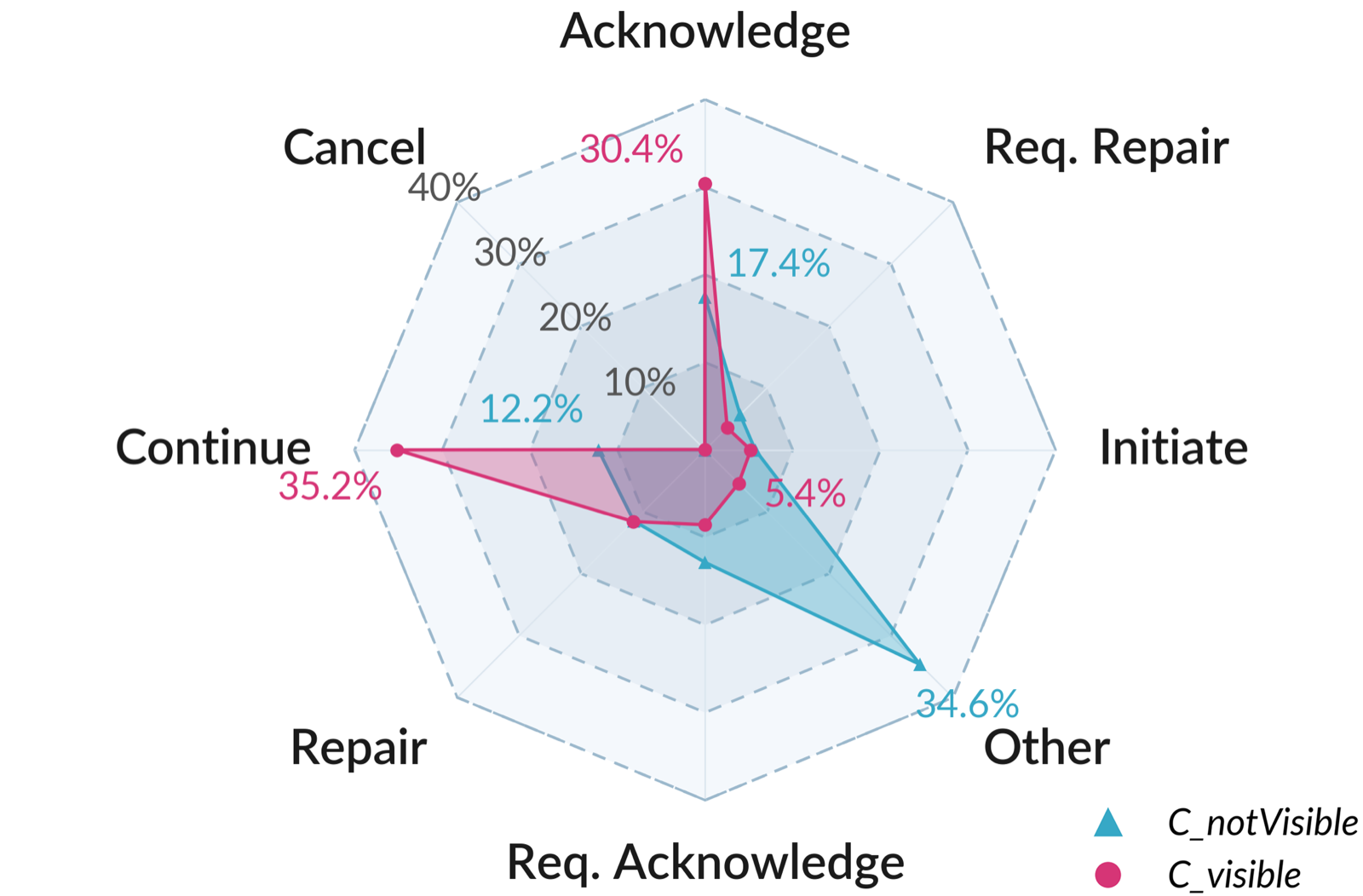
ALMANAC addresses a critical gap in multi-agent systems by providing authentic human collaboration data with action-level mental model annotations. This dataset, built from the Map Task, captures the dynamic nature of collaborative reasoning, including self-reasoning, perceived partner intent, and shared goals. The ability to annotate each collaboration action with these mental model components is crucial for developing agents that can effectively collaborate with humans.
The benchmarking of six LLMs on predicting human next-turn behavior and mental models demonstrates ALMANAC's utility in evaluating collaborative competence. This work directly supports multi-agent systems and agent architectures, particularly in scenarios where human-AI collaboration is essential. The dataset enables researchers to develop and test agents that can maintain and align mental models during collaborative processes, a capability that is increasingly important as AI agents become more integrated into human workflows.
The implications extend beyond simple collaboration to include reasoning & planning and memory & tool use. By providing a foundation for understanding how humans maintain mental models during complex tasks, ALMANAC enables the development of agents that can not only perform tasks but also understand and predict human intentions, leading to more effective and intuitive human-AI partnerships.
Key insight: ALMANAC provides the first large-scale dataset of action-level mental model annotations for human-agent collaboration, enabling evaluation of agents' ability to simulate human collaborative behaviors and infer underlying mental models.
Where Should Knowledge Enter? A Layered Framework for Knowledge Infusion in Multimodal Iterative Generative Mo
Sheth, Amit arXiv: 2606.06356
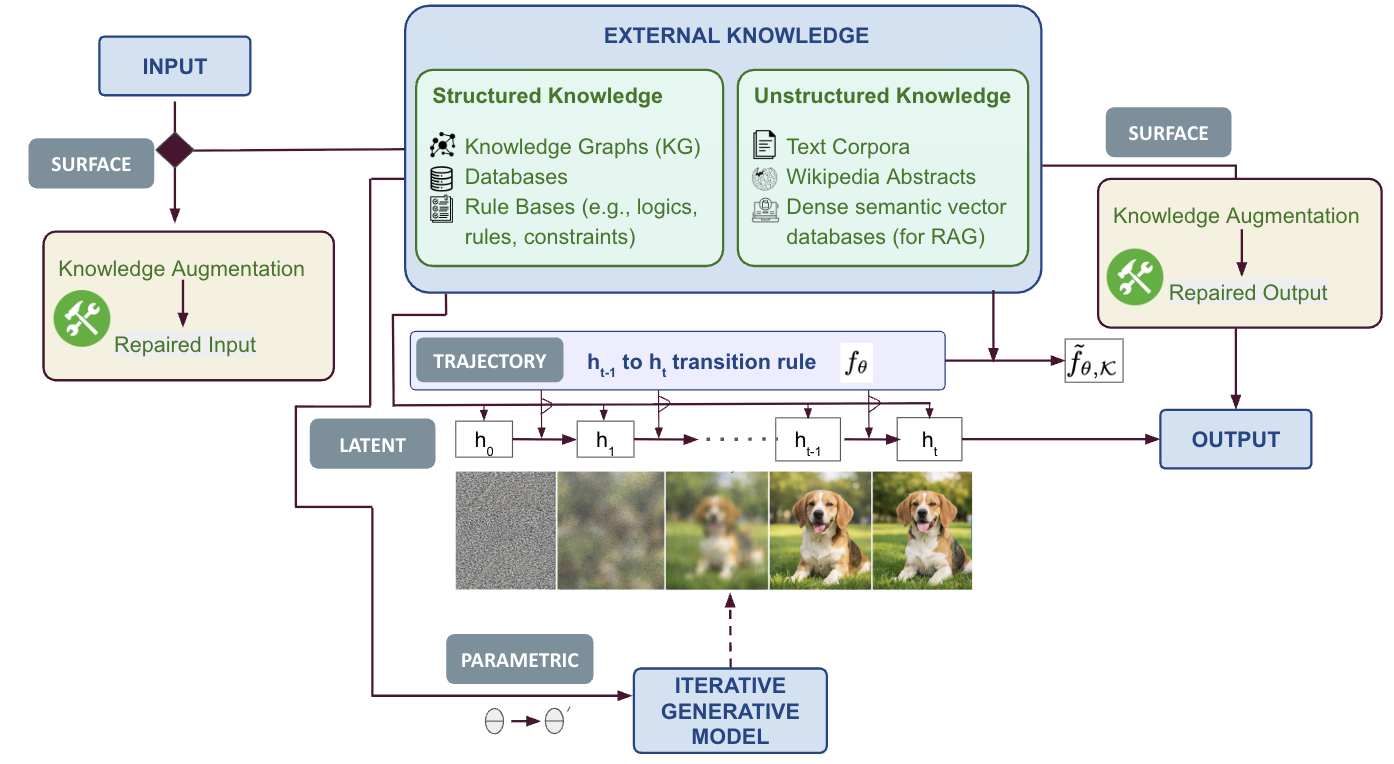
This work presents a systematic framework for knowledge infusion in multimodal iterative generative models, fundamentally rethinking how knowledge enters the generative process. By mapping knowledge intervention to four distinct layers—surface, trajectory, latent, and parametric—the authors provide a structured approach to addressing reliability issues in generative models. This framework is particularly relevant for safety-critical applications where structured knowledge must be respected during generation.
The demonstration that each additional layer addresses failure classes that prior layers cannot reach shows the complementarity of different knowledge infusion approaches. The 70.97% reduction in knowledge-violating outputs compared to vanilla generation highlights the practical impact of this layered approach. This work directly supports multimodal models and reasoning & planning, as it provides a principled method for incorporating domain-specific knowledge into generative processes while maintaining model fluency.
The framework's instantiation in diffusion models and mapping of representative methods to all four layers provides a clear path for implementation. This approach could be extended to other generative architectures and could significantly improve the reliability of multimodal models in applications where safety and accuracy are paramount, such as medical imaging or autonomous systems.
Key insight: A layered framework for knowledge infusion in multimodal generative models identifies four intervention layers (surface, trajectory, latent, parametric) that can be combined to reduce knowledge-violating outputs by 70.97% compared to vanilla generation.
Self-Augmenting Retrieval for Diffusion Language Models
Weinberger, Kilian Q. arXiv: 2606.06474
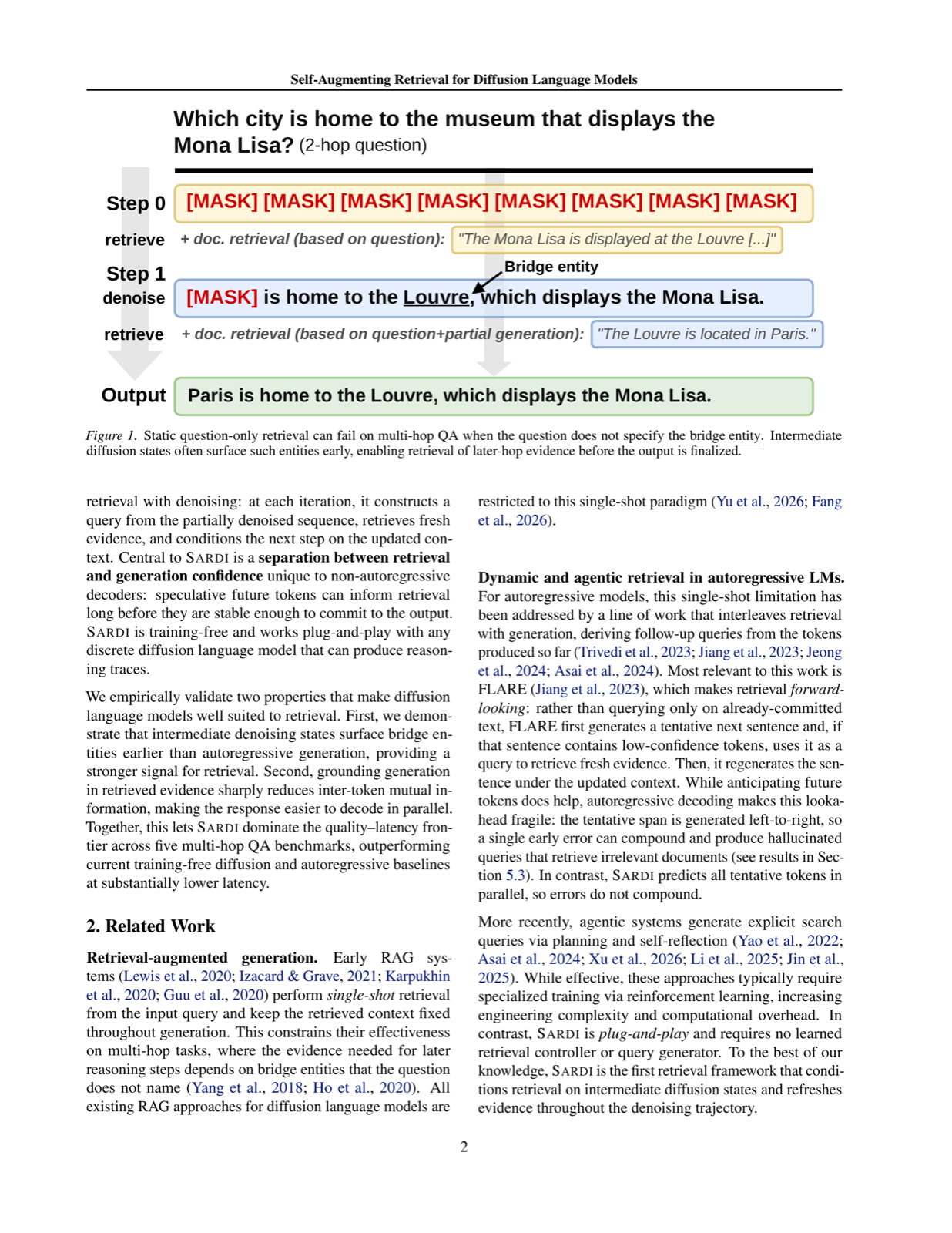
SARDI introduces a novel approach to retrieval-augmented generation by exploiting the discarded tokens during diffusion language model denoising as a lookahead signal. This insight transforms the typically discarded information into a valuable resource for guiding retrieval, enabling more efficient and effective reasoning. The approach is training-free, retriever-agnostic, and applicable to any reasoning-capable discrete diffusion language model, making it broadly applicable to current and future systems.
The demonstration of up to 8x higher throughput on multi-hop QA benchmarks while maintaining accuracy represents a significant efficiency gain. This is particularly important for reasoning & planning tasks where computational efficiency directly impacts the feasibility of complex problem-solving. The method's ability to use early-stage predictions to inform retrieval decisions shows how iterative generative models can be leveraged for more intelligent information access.
This work directly supports RAG and reasoning & planning, offering a new paradigm for integrating retrieval with generative models. By utilizing the inherent structure of diffusion models, SARDI provides a solution that improves both efficiency and effectiveness without requiring additional training or model modifications. This approach could be particularly valuable for long-context reasoning tasks where retrieval becomes increasingly important but computationally expensive.
Key insight: SARDI leverages discarded tokens during diffusion language model denoising as a lookahead signal for retrieval-augmented generation, achieving up to 8x higher throughput on multi-hop QA benchmarks without additional training.
You Only Index Once: Cross-Layer Sparse Attention with Shared Routing
Wei, Furu arXiv: 2606.06467
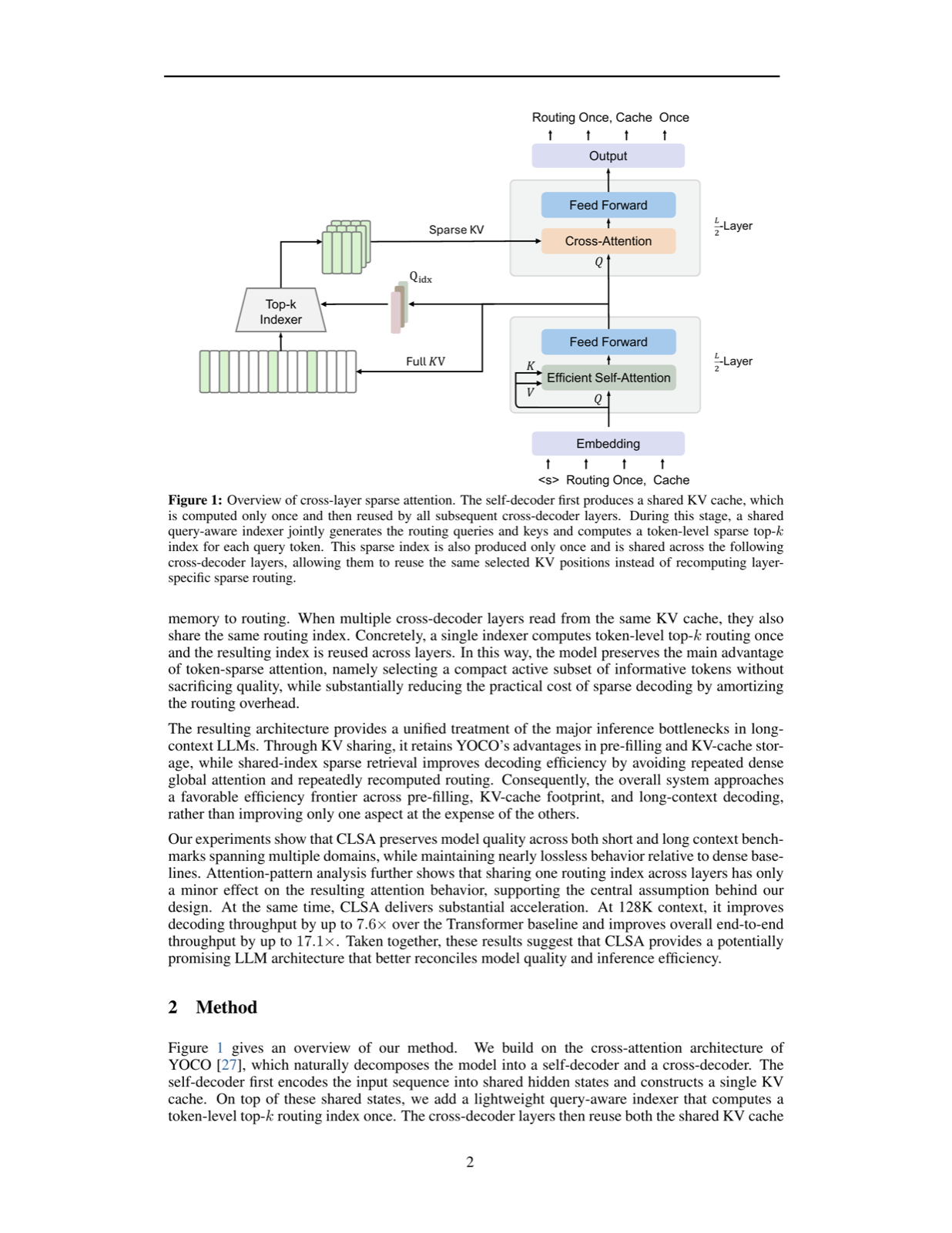
Cross-layer sparse attention (CLSA) addresses a fundamental challenge in long-context LLM inference by sharing routing indices across decoder layers, effectively solving the efficiency-quality trade-off that has plagued existing sparse attention methods. This approach builds upon KV-sharing architectures like YOCO, but extends the sharing concept to routing indices, dramatically reducing the computational overhead of top-k selection while preserving fine-grained selectivity.
The results demonstrate CLSA's effectiveness across both short-context and long-context benchmarks, achieving up to 7.6x decoding speedup and 17.1x overall throughput improvement at 128K context. These gains are particularly significant for reasoning-heavy tasks where models generate long intermediate chains of thought, as they directly address the computational bottlenecks that limit practical deployment of long-context models.
This work directly supports agent architectures and LLM efficiency, providing a complete architectural solution for long-context LLMs that advances both model quality and inference efficiency. The joint improvement across pre-filling, KV-cache storage, and long-context decoding suggests that CLSA addresses multiple bottlenecks simultaneously, making it a comprehensive solution for scalable AI agent deployment in complex reasoning scenarios.
Key insight: CLSA achieves up to 7.6x decoding speedup and 17.1x overall throughput improvement by sharing routing indices across cross-decoder layers, solving the efficiency-quality trade-off in long-context LLM inference.
Latent Reasoning with Normalizing Flows
Gu, Jiatao arXiv: 2606.06447

The paper introduces NF-CoT, a novel framework that leverages normalizing flows to enable latent reasoning within large language models. Unlike traditional chain-of-thought (CoT) methods that force intermediate computation into discrete, serial token streams, NF-CoT performs reasoning in compact continuous states before committing to text. This approach addresses a key limitation of existing latent reasoning methods: the loss of advantages inherent to autoregressive language models such as native left-to-right generation, probabilistic sampling, and compatibility with KV-cache decoding.
By modeling continuous thoughts with normalizing flows inside the LLM backbone, NF-CoT defines a tractable probability model over compact continuous thoughts distilled from explicit CoT. The design allows for exact likelihoods for latent thoughts, enables probabilistic left-to-right decoding with the original KV cache, and supports direct policy-gradient optimization in the latent reasoning space. This is particularly significant for AI agent development, as it allows for more efficient and flexible reasoning mechanisms that can be integrated into real-time systems without sacrificing performance or scalability.
Empirical results on code-generation benchmarks show that NF-CoT improves pass rates over explicit-CoT and prior latent-reasoning baselines while substantially reducing intermediate-reasoning cost. This demonstrates that the framework not only maintains the effectiveness of explicit reasoning but also enhances efficiency, making it a promising direction for building more capable and resource-conscious AI agents.
Key insight: Normalizing flows enable latent reasoning in LLMs while preserving autoregressive generation advantages like KV-cache compatibility and probabilistic sampling, offering a higher-bandwidth alternative to explicit chain-of-thought.
Reinforcement Learning Elicits Contextual Learning of Unseen Language Translation
Sennrich, Rico arXiv: 2606.06428
This paper presents a reinforcement learning (RL) approach to unseen language translation that focuses on training LLMs to utilize in-context linguistic knowledge rather than memorizing specific languages. The method uses a surface-level translation metric (chrF) as a reward to guide the model in extracting and applying relevant linguistic information from the provided context. This is a significant advancement in LLM efficiency and generalization, particularly for low-resource languages where traditional methods often overfit to specific examples.
The core insight is that for extremely low-resource languages, LLMs must learn to acquire the meta-skill of contextual learning rather than relying on memorization. The RL-trained models demonstrate effective translation on completely unseen languages, outperforming both in-context learning and supervised fine-tuning. This suggests that outcome-based RL can extend beyond conventional reasoning tasks to serve as a general recipe for language learning from context, which is crucial for building adaptable and scalable AI systems.
The implications for multi-agent systems and agent architectures are profound. If LLMs can be trained to learn contextual linguistic knowledge through RL, this opens up new possibilities for agents that can dynamically adapt to new domains or languages without extensive retraining. This aligns with the broader goal of creating more flexible and robust AI agents capable of handling diverse and unpredictable environments.
Key insight: Reinforcement learning can train LLMs to acquire contextual learning skills for unseen languages, enabling better zero-shot translation performance than in-context learning or supervised fine-tuning.
CollabSim: A CSCW-Grounded Methodology for Investigating Collaborative Competence of LLM Agents through Controlled Multi-Agent Experiments
Yao, Bingsheng arXiv: 2606.06399
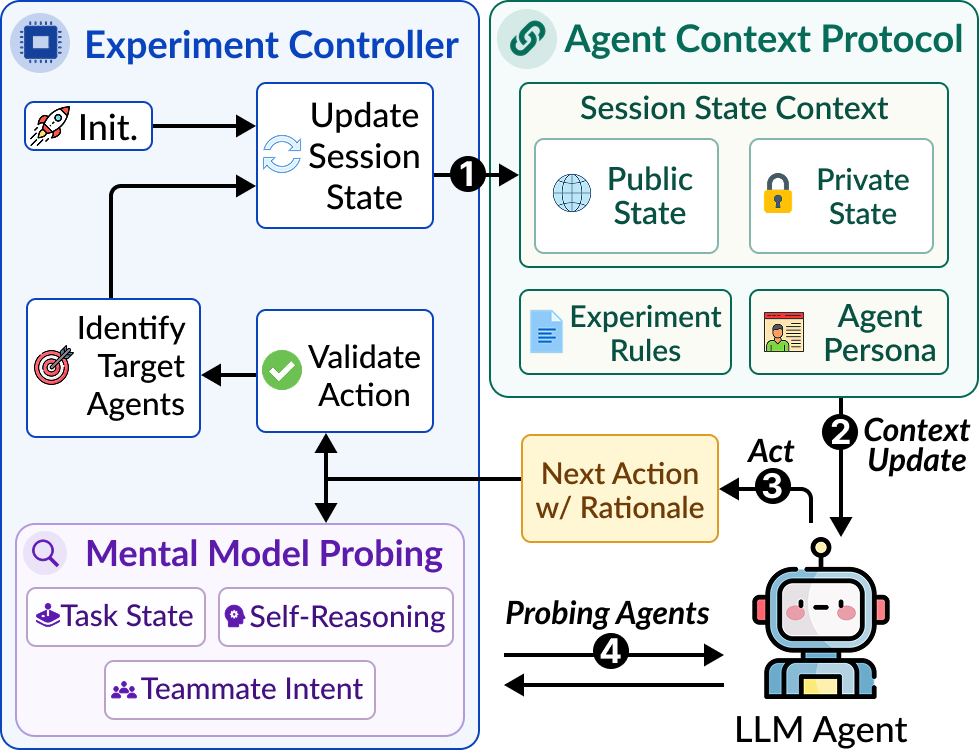
The paper introduces CollabSim, a simulation framework designed to investigate collaborative competence in multi-agent systems (MAS) built on large language models. Unlike existing evaluations that focus primarily on task outcomes or single-agent proficiency, CollabSim emphasizes the capacity of agents to establish common ground, maintain shared task understanding, and repair misalignment during interaction. This addresses a critical gap in current MAS research, where agents often fail not due to lack of individual task-solving ability, but due to insufficient collaborative competence.
By combining a theory-grounded definition of collaborative capabilities with controlled manipulation of interaction conditions and action-level probing of agents' internal states, CollabSim enables researchers to systematically analyze how different agent designs perform under various collaborative scenarios. The framework's configurability allows for separating model performance patterns and revealing task-dependent effects of agent design, which is essential for developing more effective multi-agent systems.
This work is particularly relevant to agent architectures and multi-agent systems, as it provides a structured approach to evaluating and improving the collaborative aspects of AI agents. It highlights the importance of designing agents not just to solve individual tasks, but to work effectively within teams, which is crucial for real-world applications where AI systems often need to coordinate with other agents or humans.
Key insight: CollabSim provides a theory-grounded methodology for evaluating collaborative competence in multi-agent systems, enabling systematic analysis of agents' ability to coordinate and maintain shared understanding.
EDIT: Evidence-Diagnosed Intervention Training for Rule-Faithful LLM Grading
He, Yulan arXiv: 2606.06350
EDIT (Evidence-Diagnosed Intervention Training) represents a significant advancement in training LLM graders to be more rule-faithful. The framework operates in two phases: first, it identifies problematic reasoning steps using internal model signals such as posterior belief over the final mark and input-grounding scores. Then, it revises only these local steps with help from a rubric checklist. This targeted approach addresses a key limitation of existing credit-assignment methods, which struggle to identify where grading reasoning goes wrong or how the model's belief about the final mark changes during reasoning.
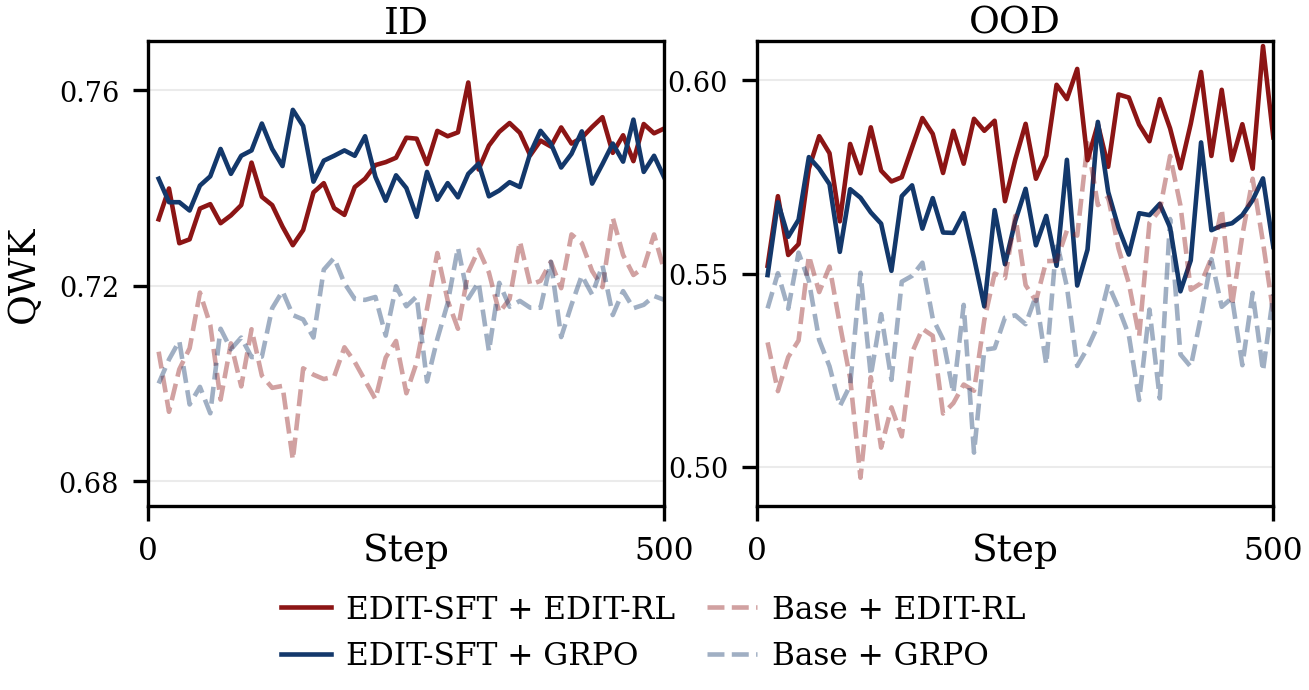
The second phase of EDIT uses belief-guided reward shaping in reinforcement learning to calibrate the grader, penalizing large harmful belief drifts while still allowing helpful exploration. This dual-phase approach ensures that the model not only produces accurate scores but also provides explanations grounded in the mark scheme and evidence from student answers. The framework's effectiveness is demonstrated across two real-world, multi-subject grading benchmarks, where it consistently outperforms strong baselines on both in-domain and out-of-domain splits.
For agent architectures and reasoning & planning, EDIT's methodology offers a new paradigm for training agents to be more transparent and accountable in their decision-making processes. By focusing on internal diagnostics and targeted interventions, it provides a path toward more interpretable and trustworthy AI systems, which is crucial for applications in education, legal reasoning, and other domains where accountability is paramount.
Key insight: EDIT framework improves rubric-faithful grading by using internal model signals to diagnose problematic reasoning steps and revise them with rubric guidance, outperforming existing supervised and reinforcement learning baselines.
RREDCoT: Segment-Level Reward Redistribution for Reasoning Models
Hochreiter, Sepp arXiv: 2606.06475
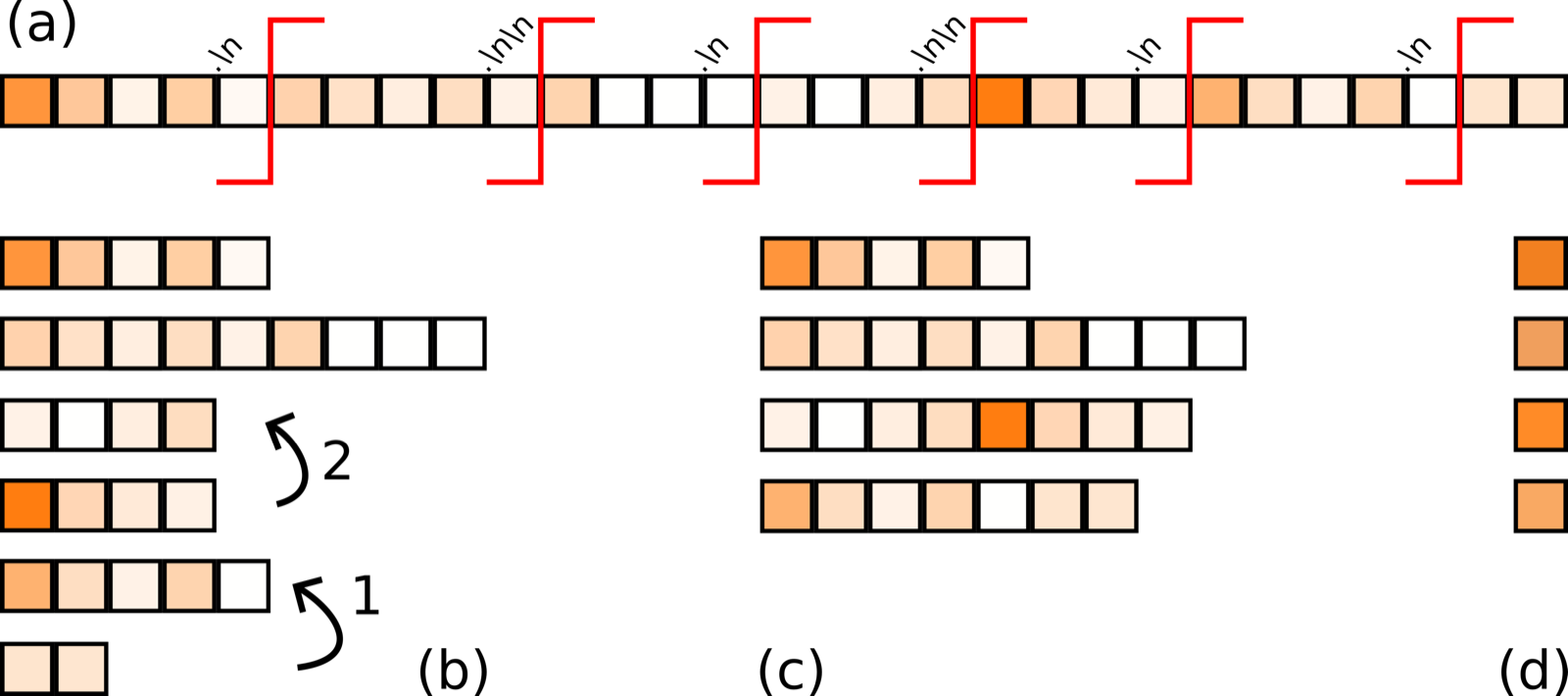
RREDCoT addresses a fundamental challenge in reinforcement learning for reasoning models: the delayed reward problem inherent in chain-of-thought (CoT) generation. Most existing methods rely on Group Relative Policy Optimization (GRPO) or its variants, which correspond to Monte Carlo methods in standard RL and suffer from high variance. RREDCoT introduces a novel approach that utilizes the model itself to approximate optimal reward redistribution without additional generation, significantly reducing computational overhead.
The method investigates several aspects relevant to reward redistribution, including segmentation of CoT traces and state value estimation. By avoiding the computational burden of Monte Carlo sampling, RREDCoT enables more efficient and scalable training of reasoning models. This is particularly important for agent architectures that rely on complex reasoning processes, as it allows for more effective fine-tuning without sacrificing performance or increasing training time.
This advancement has direct implications for reasoning & planning in AI agents. By improving the efficiency and accuracy of reward redistribution, RREDCoT enables more robust and reliable reasoning systems that can handle complex tasks requiring long sequences of logical steps. The ability to approximate optimal credit assignment without additional generation makes it a practical solution for real-world applications where computational resources are limited.
Key insight: RREDCoT improves reward redistribution in reasoning models by approximating optimal credit assignment using the model itself, reducing variance compared to Monte Carlo sampling while maintaining effectiveness.
PC Layer: Polynomial Weight Preconditioning for Improving LLM Pre-Training
Sun, Ruoyu arXiv: 2606.06470
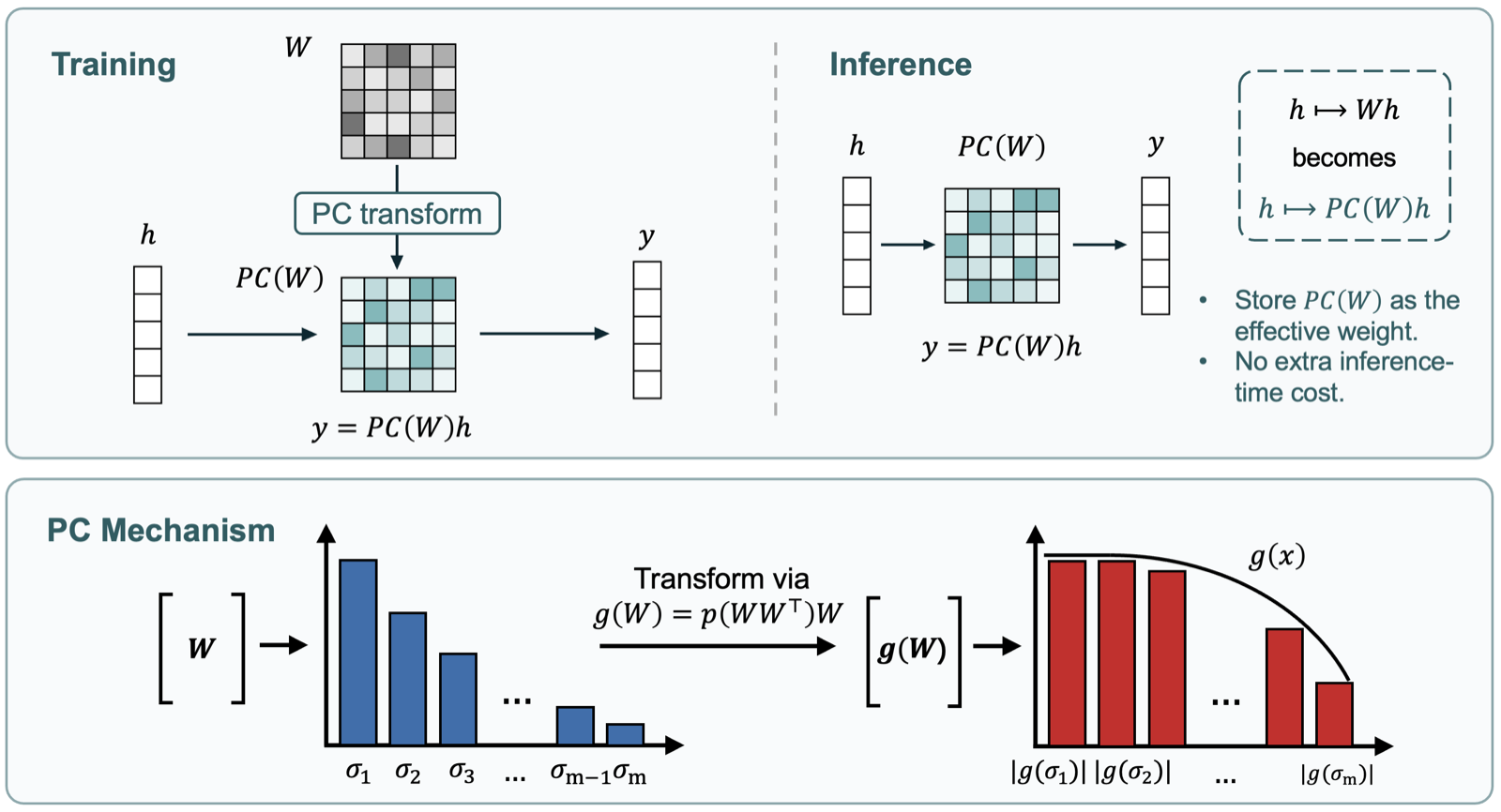
The paper introduces the PC Layer, a novel weight parameterization technique that uses polynomial preconditioning to stabilize training in large language models (LLMs). By reshaping the singular-value spectrum of weight matrices, the method ensures more uniform conditioning throughout training, which is crucial for maintaining stable gradient descent dynamics.
The theoretical justification provided shows that uniformly bounding each layer's singular values leads to geometric convergence of gradient descent to global minima, particularly in deep linear networks. This insight is significant for understanding how weight conditioning affects optimization in deep learning models.
Practical validation on Llama-1B pre-training demonstrates that the PC layer outperforms standard transformers with both AdamW and Muon optimizers, indicating its effectiveness across different optimization strategies. The ability to merge preconditioned weights back into the original architecture without inference overhead makes it a practical improvement for real-world deployment.
Key insight: Polynomial preconditioning of weights in LLMs stabilizes training and improves convergence by controlling the singular-value spectrum of weight matrices, enabling better optimization without inference overhead.
In-Context Multiple Instance Learning
Müller, Klaus-Robert arXiv: 2606.06458
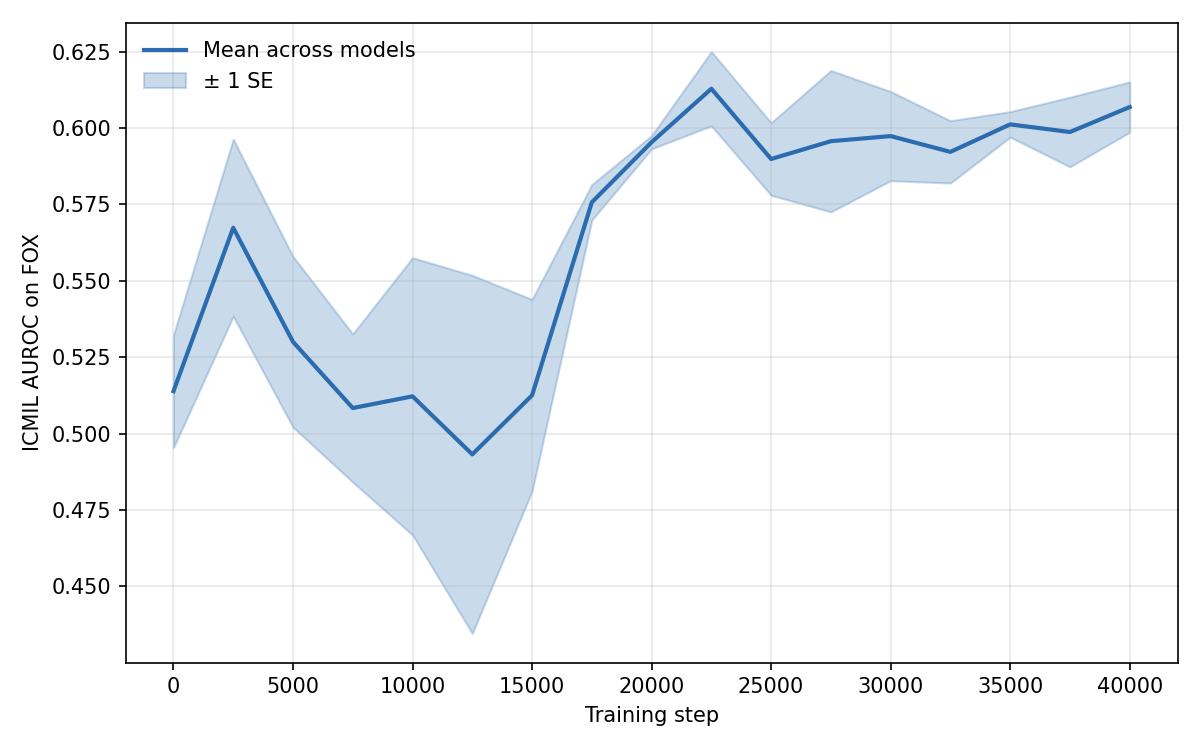
This work addresses the challenge of multiple instance learning (MIL) in low-label regimes, where traditional models either overfit or fail to adapt. The proposed approach pretrains an in-context learner with a Perceiver-style architecture on synthetic data, enabling it to solve new tasks from just a handful of labeled bags.
The key innovation lies in using synthetic data generators that capture complementary inductive biases, allowing a model pretrained on a mixture of these generators to inherit per-task strengths and achieve superior average performance across multiple MIL benchmarks.
At inference time, the method operates in a single forward pass without gradient updates, making it computationally efficient and suitable for real-time applications. This approach demonstrates how synthetic data can be leveraged to improve generalization in few-shot learning scenarios.
Key insight: In-context learning with Perceiver-style architectures enables effective multiple instance learning from few labeled examples, outperforming traditional supervised methods by leveraging synthetic data pretraining.
Double Preconditioning (DoPr): Optimization for Test-Time Performance, not Validation Loss
Simchowitz, Max arXiv: 2606.06418
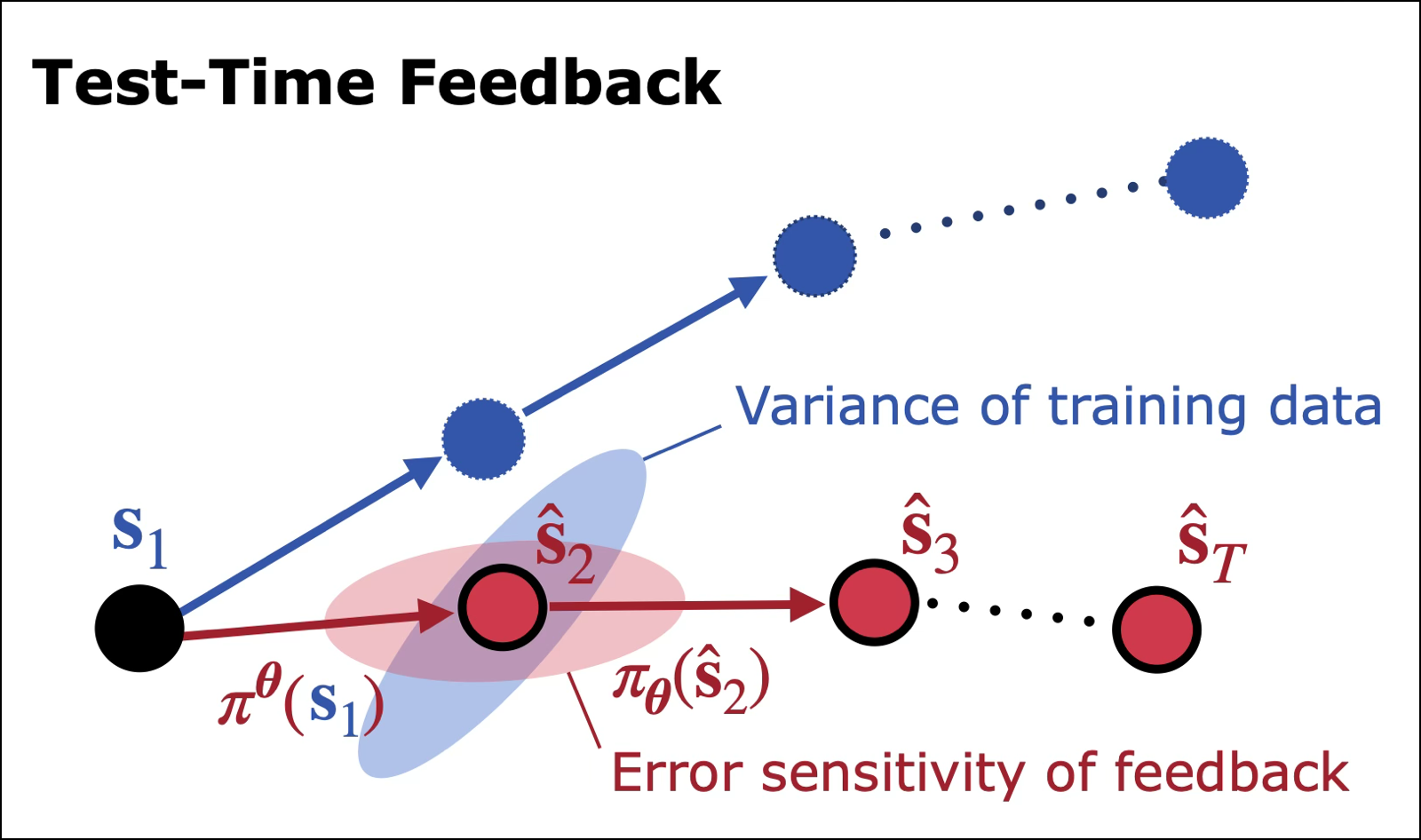
The paper identifies a critical issue in deep learning: the mismatch between training/validation loss and downstream performance in feedback-based tasks like autoregressive modeling and robot policy learning. This phenomenon, termed test-time feedback (TTF), leads to error accumulation over time.
Double preconditioning (DoPr) introduces a novel optimization paradigm that combines gradient-wise preconditioning (like Adam and Muon) with activation-wise preconditioning (like KFAC) to specifically target TTF challenges. The method shows consistent improvements in downstream performance without necessarily improving validation loss.
This work opens new questions about model evaluation, particularly in settings where one-step supervised objectives may not align with desired test-time outcomes. DoPr represents a promising direction for optimizing models specifically for their intended deployment scenarios rather than just for validation metrics.
Key insight: Double preconditioning (DoPr) improves test-time performance by combining gradient-wise and activation-wise preconditioning, addressing the mismatch between validation loss and downstream metrics in feedback-based tasks.
Proper Scoring Rules for Right-Censored Survival Data
Van Hoecke, Sofie arXiv: 2606.06393
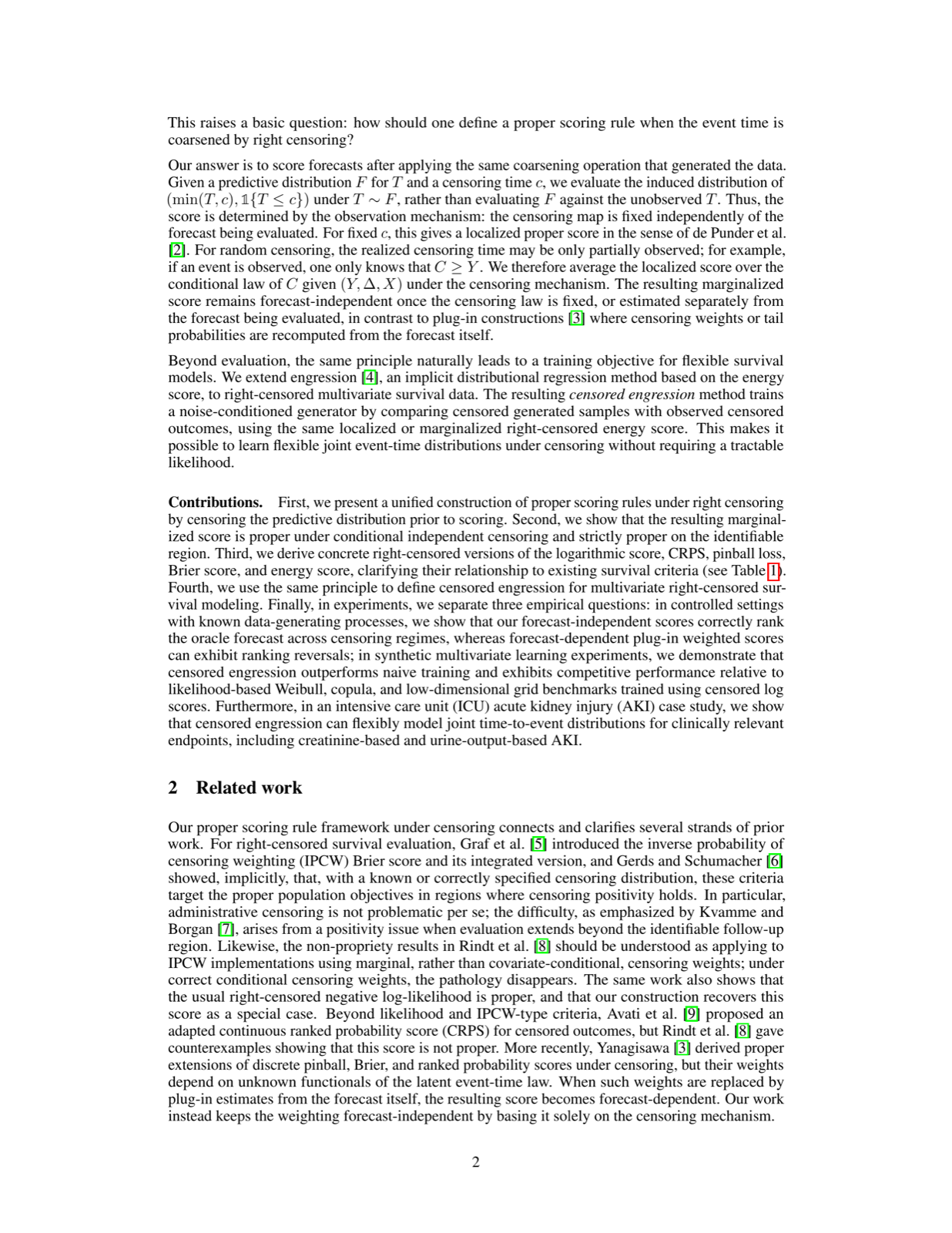
The paper presents a novel framework for proper scoring of right-censored survival outcomes by mapping predictive distributions through the censoring mechanism before applying standard scoring rules. This approach addresses a fundamental gap in evaluating probabilistic forecasts when event times are only partially observed.
The method yields localized scores for fixed censoring times and marginalized scores for random or partially observed censoring, recovering familiar criteria like likelihood and IPCW-type methods within a coherent framework. It also extends to CRPS, pinball loss, Brier score, and energy score for censored data.
Experimental results show that the proposed scores correctly rank oracle forecasts across various censoring regimes, while conventional plug-in weighted scores can exhibit ranking reversals. This framework provides a theoretically sound basis for training and evaluating survival models in settings with censoring, which is crucial for applications in healthcare and reliability engineering.
Key insight: A framework for proper scoring of right-censored survival data using a censoring mechanism mapping, enabling consistent evaluation and training of probabilistic forecasts in medical and engineering applications.
From Failed Trajectories to Reliable LLM Agents: Diagnosing and Repairing Harness Flaws
Wang, Qing arXiv: 2606.06324
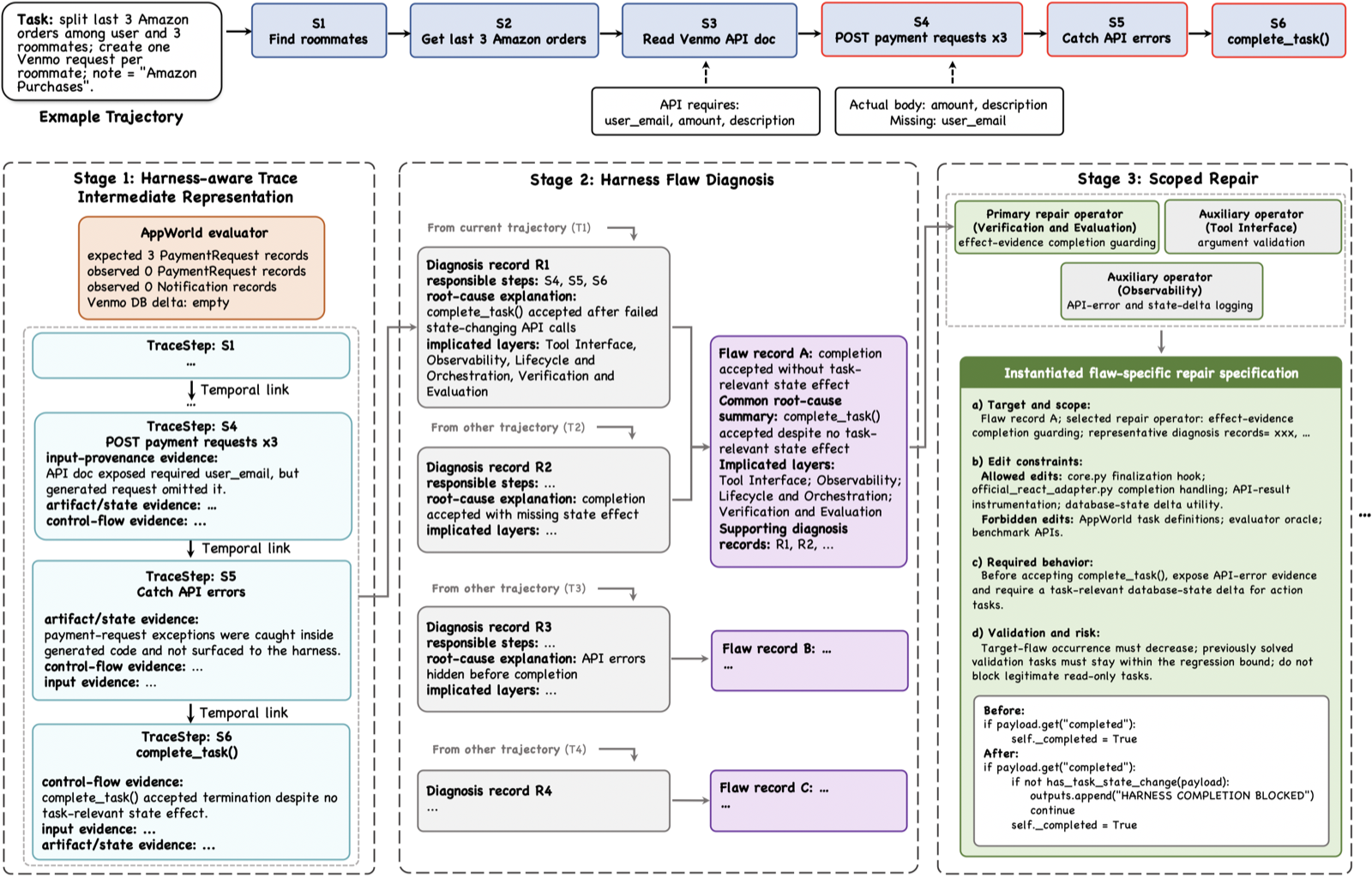
HarnessFix addresses a critical gap in LLM agent development: the lack of systematic diagnosis and repair of harness flaws that cause agent failures. The framework compiles execution traces and harness code into a Harness-aware Trace Intermediate Representation (HTIR) to normalize fragmented evidence and capture control-flow relations.
By attributing failures to specific trajectory steps and harness layers, HarnessFix enables targeted repairs rather than broad, indirect changes. It consolidates recurring diagnoses into actionable flaw records and maps them to scoped repair operators, making the repair process more precise and effective.
Evaluation on benchmarks like SWE-Bench Verified, Terminal-Bench 2.0 Verified, GAIA, and AppWorld shows that HarnessFix improves test performance by 15.2% to 50.0% over initial harnesses, outperforming both human-designed and self-evolution baselines. This demonstrates the practical value of trace-guided diagnosis in building more reliable LLM agents.
Key insight: HarnessFix enables trace-guided diagnosis and repair of agent harnesses by attributing failures to specific trajectory steps and harness layers, significantly improving agent reliability across multiple benchmarks.
Ahoy: LLMs Enacting Multiagent Interaction Protocols
Chopra, Amit K. arXiv: 2606.05390

Ahoy represents a significant advancement in multi-agent systems by enabling LLM agents to autonomously select and enact declarative protocols to achieve user goals, without requiring specialized training for each protocol. This approach addresses the challenge of implementing flexible, protocol-aware agents.
The system demonstrates that LLM agents can correctly and intelligently enact multiple protocols concurrently when appropriate, showcasing the potential for LLMs to serve as general-purpose protocol enactors rather than protocol-specific implementations.
This work brings together declarative protocols and LLMs, offering a promising path for improved knowledge engineering in multi-agent systems. By enabling protocol enactment without programming, Ahoy reduces the barrier to implementing complex multi-agent interactions and opens new possibilities for adaptive agent behavior.
Key insight: Ahoy enables LLM agents to dynamically select and enact declarative protocols without specialized training, bridging the gap between protocol formalization and intelligent agent implementation.
DAST: A VLM-LLM Framework for Cross-Interface Anomaly Detection in O-RAN
Costa-Perez, Xavier arXiv: 2606.06261
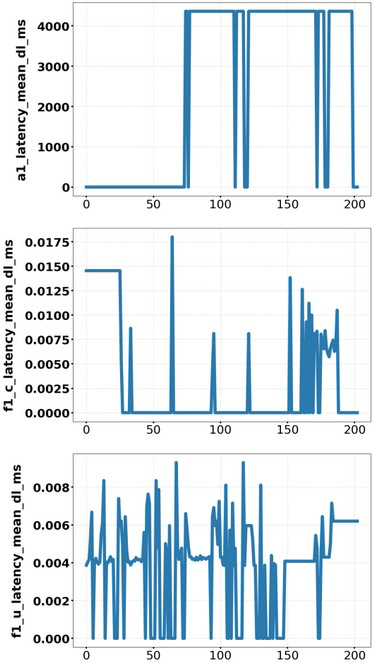
DAST introduces a novel multi-agent framework that combines vision-language models (VLMs) and large language models (LLMs) to tackle anomaly detection in O-RAN environments. This approach is particularly valuable in settings where traditional time-series methods fail due to scarce labeled data, evolving threats, and high-dimensional telemetry. The framework's three-stage pipeline—VLM → LLM → VLM—converts multivariate KPI streams into visual representations, evaluates textual descriptions against domain knowledge, and verifies anomalies through high-resolution heatmaps.
The system's ability to operate without prior training on specific anomalies makes it a strong candidate for real-world deployment in dynamic network environments. By integrating visual and textual reasoning, DAST not only detects anomalies but also provides operational impact ratings and decision rationale, enhancing interpretability and trustworthiness. This is especially important in security contexts where explainability is critical for human analysts to validate automated decisions.
Evaluation on real network traces shows DAST outperforms state-of-the-art TSAD baselines with an F1-Score of 0.910 and Accuracy of 0.843, demonstrating its effectiveness in practical applications. The framework's modular design and zero-shot capability make it adaptable to various O-RAN configurations and threat models, positioning it as a scalable solution for modern, open network infrastructures.
Key insight: A multi-agent VLM-LLM-VLM pipeline enables zero-shot cross-interface anomaly detection in O-RAN by leveraging visual and textual reasoning to identify and localize threats.
Merging model-based control with multi-agent reinforcement learning for multi-agent cooperative teaming strategies
Coogan, Samuel arXiv: 2606.06011
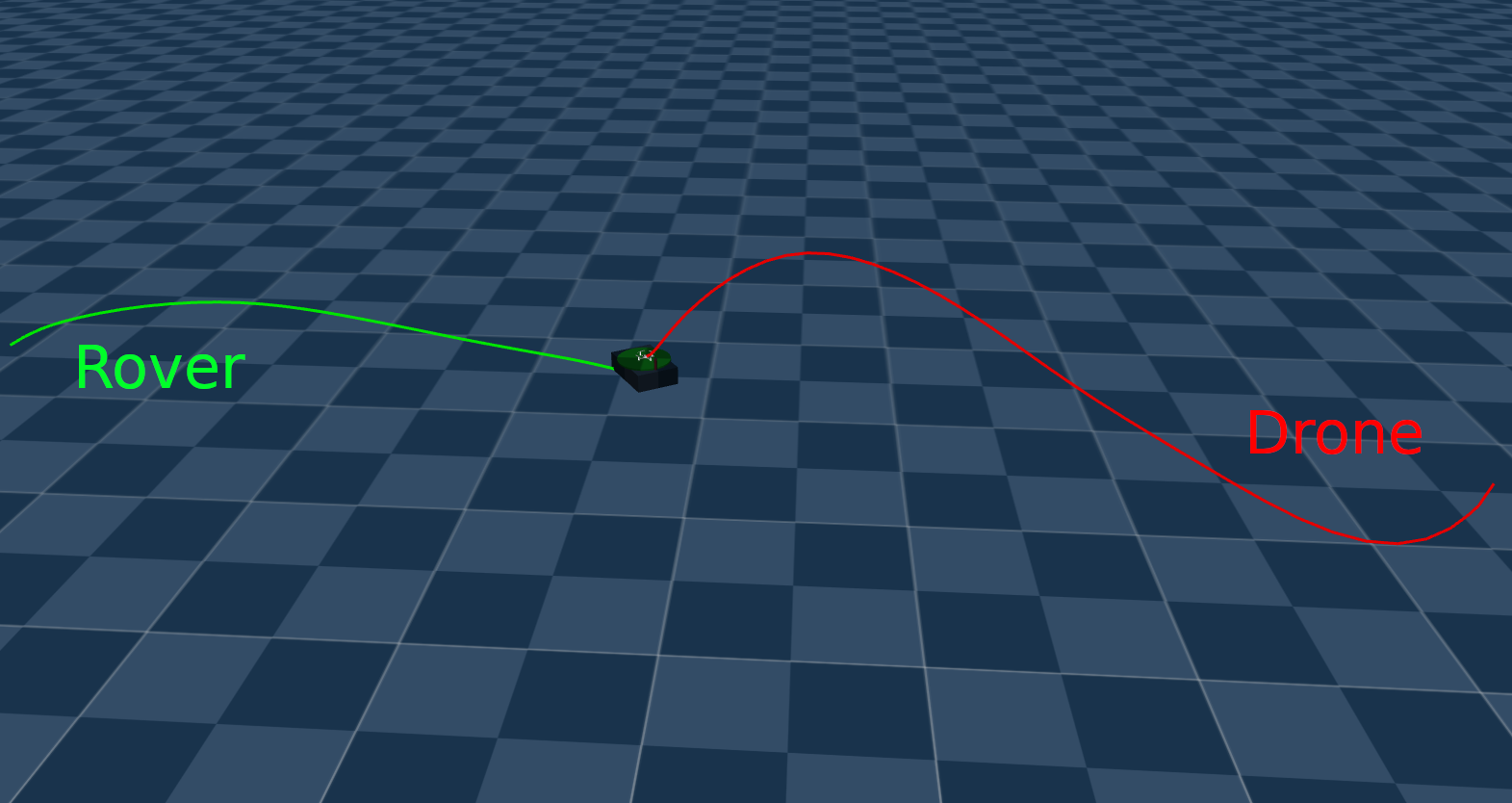
This work presents a hybrid approach that merges model-predictive control (MPC) with multi-agent reinforcement learning (MARL) to improve cooperative multi-agent strategies. The proposed MA-AC-MPC algorithm leverages the strengths of both paradigms: MARL for learning long-horizon cooperative policies and MPC for ensuring safe, dynamically feasible actions in short horizons. This combination is particularly effective in environments where safety and real-time responsiveness are critical, such as pursuit-evasion scenarios.
The framework was tested in both homogeneous and heterogeneous environments, demonstrating superior performance in hardware implementations. Specifically, the MA-AC-MPC approach achieved a 100% success rate in drone-omni-wheeled rover landing tasks, compared to 60% for a baseline MLP-based MARL approach. This highlights the importance of integrating control theory with learning-based methods to achieve robust, real-world performance in multi-agent systems.
The integration of model-based control with MARL opens new avenues for designing agents that can operate safely and effectively in complex, dynamic environments. The approach not only improves performance but also enhances the reliability of multi-agent systems by ensuring that actions are both optimal and feasible, making it a promising direction for applications in robotics, autonomous systems, and beyond.
Key insight: Integrating model-based control with multi-agent reinforcement learning (MARL) enables safe, dynamically feasible cooperative strategies in complex environments.
ZERO-APT: A Closed-Loop Adversarial Framework for LLM-Driven Automated Penetration Testing under Intelligent Defense
Zhu, Tiantian arXiv: 2606.05567
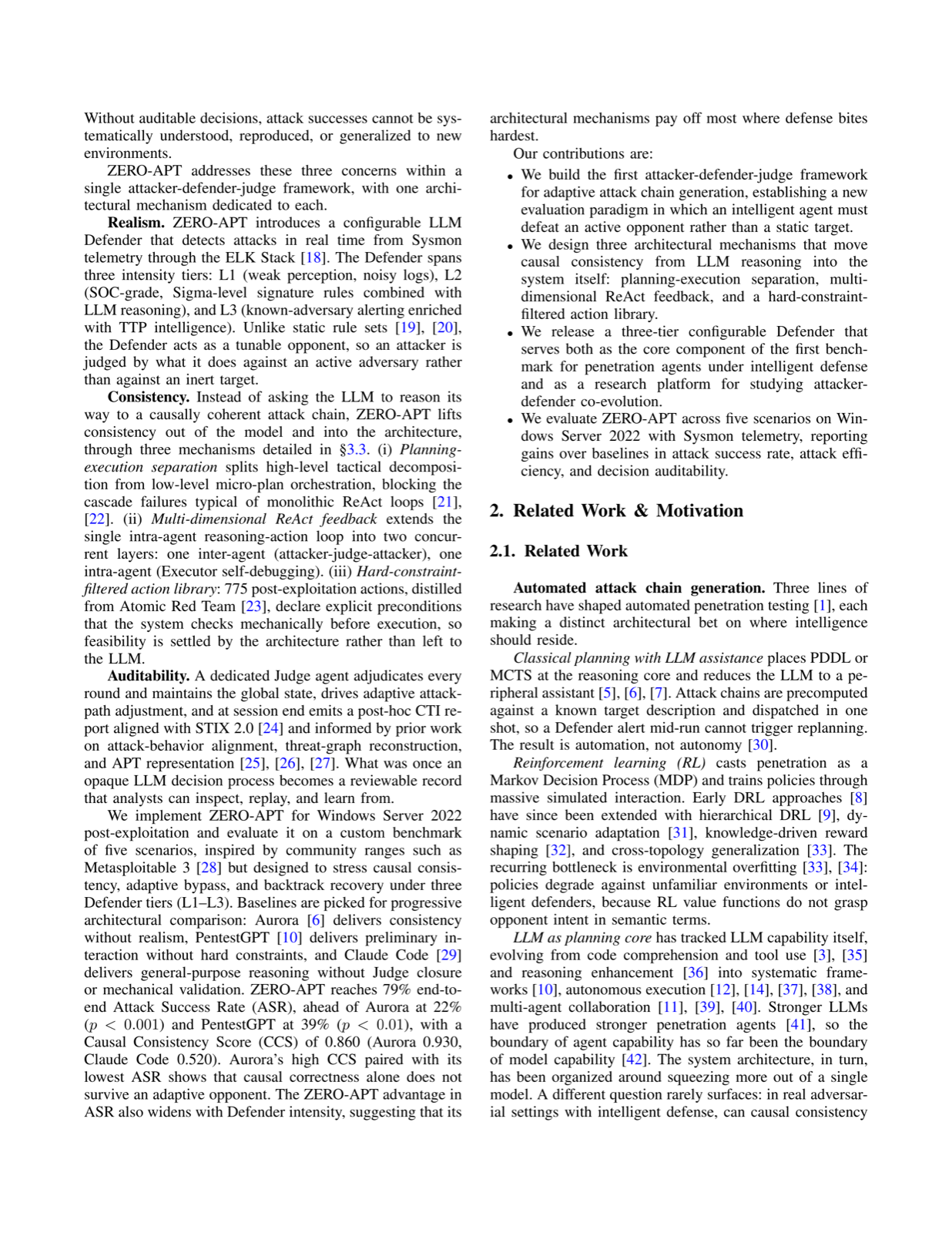
ZERO-APT introduces a turn-based adversarial framework for LLM-driven penetration testing that addresses key limitations in current approaches: static targets, unstable reasoning, and lack of auditability. By embedding a configurable LLM Defender that reacts to real-time telemetry, the framework simulates intelligent defense, making evaluations more realistic and challenging. This is a significant step forward from traditional benchmarks that use passive targets.
The framework incorporates mechanisms to ensure causal consistency in attack chains, including separation of planning from execution, multi-dimensional ReAct feedback, and a hard-constraint-filtered action library. These architectural features move consistency from unstable LLM reasoning to system-level enforcement, improving the reliability of multi-step attacks. Additionally, a dedicated Judge agent maintains global state and generates structured CTI reports, enhancing decision traceability and auditability.
Evaluation results show that ZERO-APT achieves a 79% attack success rate, outperforming existing tools like Aurora and PentestGPT, while maintaining a high causal consistency score of 0.860. The framework's ability to provide structured, post-hoc reports makes it valuable for security analysts seeking to understand and validate automated penetration testing decisions. This work sets a new standard for evaluating LLM agents in adversarial settings.
Key insight: A closed-loop attacker-defender-judge framework enhances realism, consistency, and auditability in LLM-driven penetration testing under intelligent defense.
SHIELDS: Automating OS Hardening with Iterative Multi-Agent Remediation
Wong, Lawrence arXiv: 2606.05476
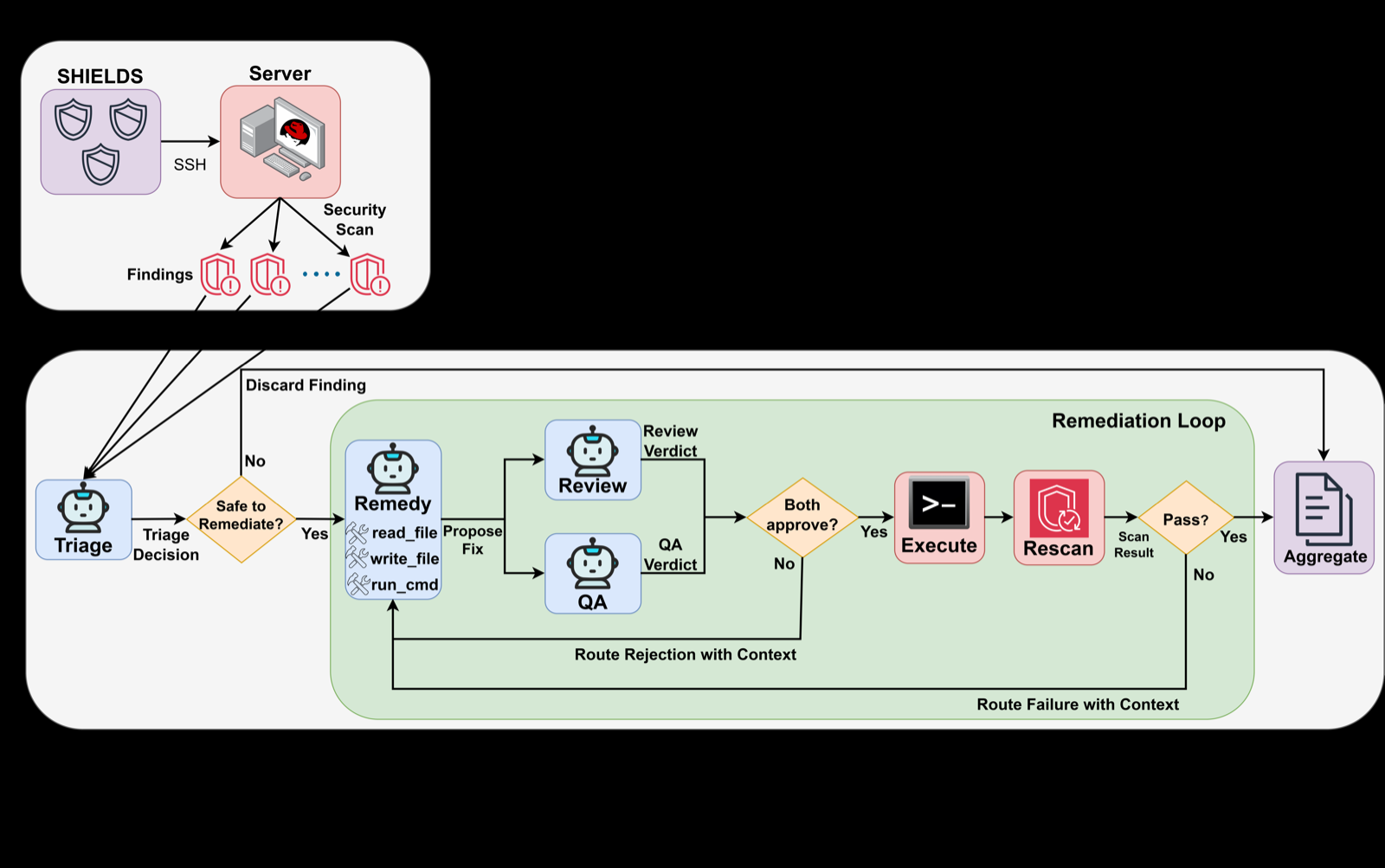
SHIELDS presents a multi-agent system that automates OS hardening by treating it as an iterative, feedback-driven process. Unlike traditional tools that rely on static remediations, SHIELDS continuously proposes fixes and refines them based on feedback from system execution and validation scans. This approach is particularly effective in reducing the burden of compliance with security standards like DISA STIGs, which are often tedious and error-prone when done manually.
The system was evaluated across multiple virtual machine configurations using six contemporary LLMs, achieving up to 73% remediation success. Notably, the results suggest that success in this domain depends more on effective tool use and information gathering than on model size, indicating that practical deployment is feasible even with limited compute resources. This finding is crucial for environments where local model use is preferred for privacy or performance reasons.
SHIELDS demonstrates the potential of LLM-based multi-agent systems in security compliance automation. By enabling dynamic, adaptive remediation, it reduces the need for manual intervention and provides a scalable solution for maintaining system security. The framework's modular design and focus on feedback loops make it adaptable to various security standards and environments, offering a practical path toward automated compliance.
Key insight: An iterative multi-agent system using LLMs for OS hardening improves remediation efficiency by dynamically proposing and refining fixes based on system feedback.
EMBER: Efficient Memory via Budgeted Evidence Retention for Long-Horizon Agents
Che, Tong arXiv: 2606.05894
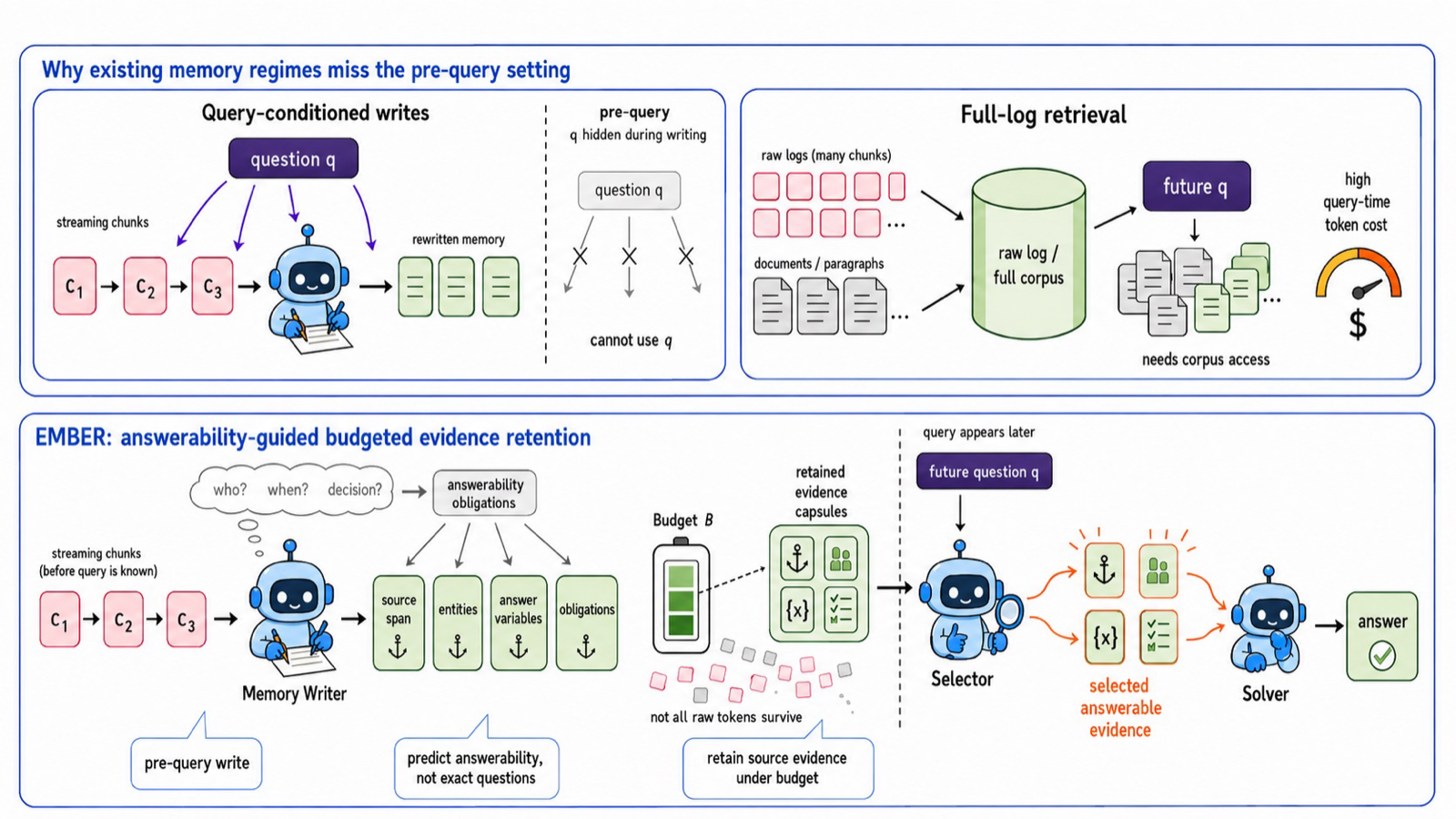
EMBER addresses the challenge of long-horizon agent memory by introducing a learned retention policy that operates under a fixed token budget. The system stores evidence capsules—verbatim source excerpts paired with retrieval keys and metadata—ensuring both grounding and read-time access. This approach allows agents to efficiently manage memory without rereading large portions of raw history, significantly reducing context costs.
The framework's performance on LongMemEval-RR shows that EMBER-14B achieves an F1 score of 0.3017 at the 8192-token retained-evidence point, outperforming non-EMBER baselines. This improvement is attributed to EMBER's ability to preserve relevant evidence within the budget, rather than relying on rereading larger histories. The system's design emphasizes the importance of evidence retention over raw memory size, offering a more efficient and scalable solution for long-horizon tasks.
EMBER's contribution lies in its practical approach to memory management for long-horizon agents, where retrieval efficiency and answer accuracy are paramount. By learning to retain evidence that is most likely to be useful, EMBER reduces the computational overhead of memory access and improves agent performance. This work is particularly relevant for applications involving extended reasoning, planning, or interaction with large knowledge bases, where memory efficiency is critical.
Key insight: EMBER's learned retention policy enables efficient long-horizon memory by pre-selecting and retaining evidence within a fixed token budget, improving retrieval and answer accuracy.
AI Model Releases
Nemotron 3.5 Content Safety: Customizable Multimodal Safety for Global Enterprise AI
NVIDIA has released Nemotron 3.5 Content Safety, an advanced multimodal safety model that evaluates user prompts, images, and assistant responses together in a single inference call. The model supports 12 languages plus zero-shot generalization across 140 languages, and introduces custom policy enforcement allowing enterprises to define their own safety rules. It also features a THINK mode that provides auditable reasoning traces for safety decisions. The model is designed to be integrated into production safety pipelines and includes a publicly released safety dataset with multimodal, multilingual examples and reasoning traces.
Why it matters: This advancement addresses the growing need for enterprise-grade AI safety solutions that can handle complex, multimodal interactions while allowing customization for specific industry requirements. The ability to provide auditable reasoning traces is particularly valuable for compliance and accountability in regulated sectors.

Mira Murati steps back into the spotlight, carefully
Firebase/GCP

Enhancements to Managed Service for Apache Spark clusters | Google Cloud Blog
Google Cloud has announced significant enhancements to its Managed Service for Apache Spark, focusing on making Spark faster, easier, and smarter. Key updates include the Lightning Engine native execution engine that delivers up to 4.9x performance improvements for Spark SQL queries, smarter scaling policies that reduce resource waste by up to 30%, and Gemini-powered extensions for automated optimization. The service now supports both serverless and managed cluster deployment modes, with managed clusters offering fine-grained infrastructure customization for persistent environments and long-running stateful processing.
Why it matters: These enhancements directly address the growing demand for efficient, scalable data processing solutions in the age of AI. The performance gains and AI-powered optimizations will help organizations process large-scale analytics and machine learning workloads more cost-effectively and with less operational overhead.