Researchers are advancing agent memory systems with new architectures that support cross-scenario generality and temporal order preservation. Multi-agent reasoning frameworks are being optimized for efficiency and effectiveness through streaming communication and compositional reasoning. Meanwhile, cybersecurity analysis reveals that AI is increasingly enabling sophisticated autonomous attacks that outpace traditional defense mechanisms.
This week's research highlights significant progress in agent memory systems, with papers introducing AutoMEM for cross-scenario generality, SegTreeMem for temporal order preservation, and PersonaTree for structured person understanding. Multi-agent systems are seeing improvements through streaming communication that reduces latency while enhancing effectiveness, and through compositional reasoning frameworks like R-APS that address error propagation and robustness evaluation. In cybersecurity, Anthropic's analysis of AI-enabled threats shows attackers are increasingly using AI for complex post-compromise techniques, particularly lateral movement and privilege escalation, which current MITRE ATT&CK frameworks struggle to capture. Additionally, Google's $85B AI funding round and the release of Gemma 4 12B demonstrate continued industry investment in open-source AI capabilities, while papers on agent architectures, reasoning systems, and memory management provide foundational advances for building more robust and reliable AI agents.
Research Papers
Exploring Cross-Scenario Generality of Agentic Memory Systems: Diagnostics and a Strong Baseline
Tang, Jiliang arXiv: 2606.04315
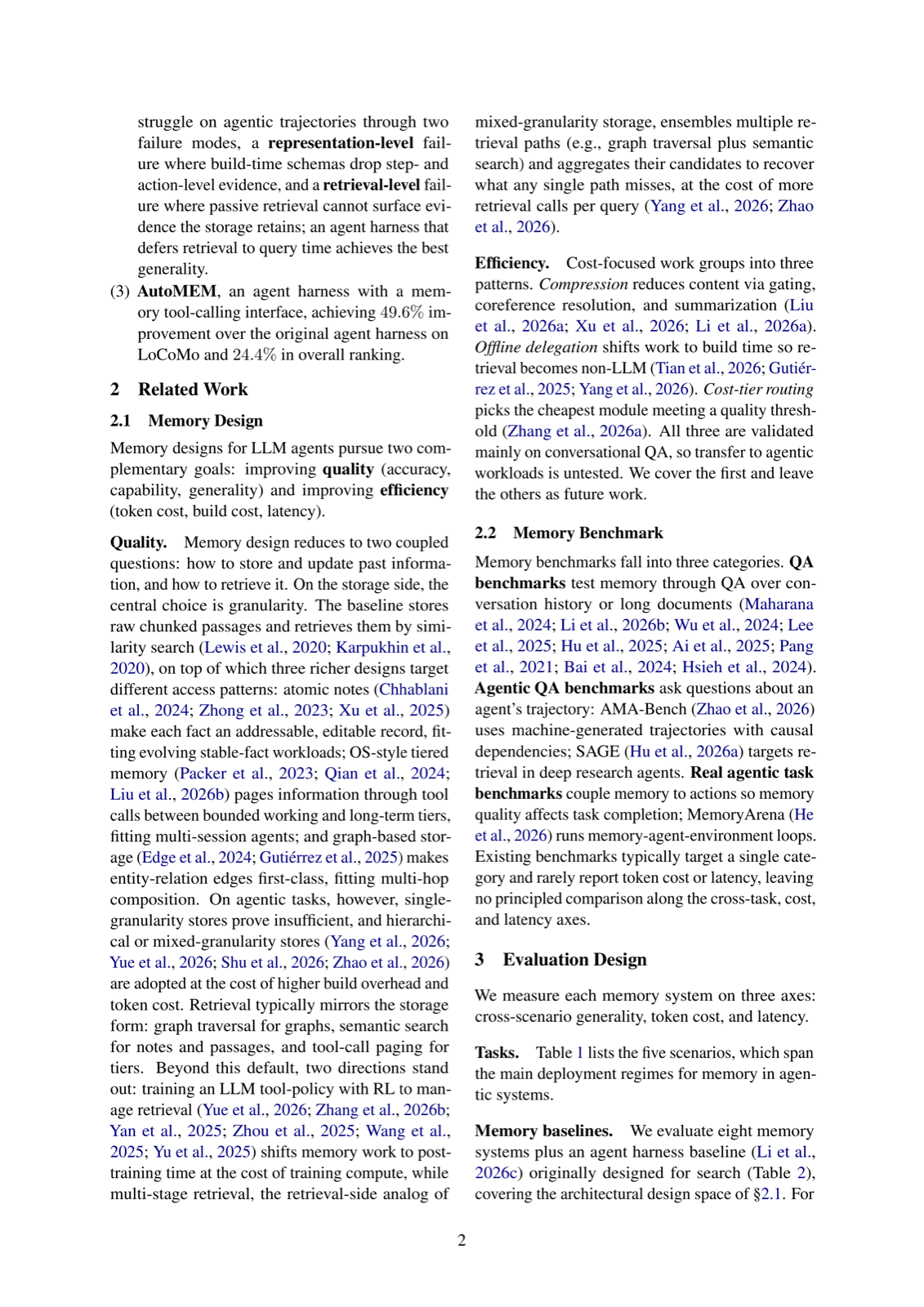
The paper challenges the status quo in memory systems for LLM agents by demonstrating that most existing designs are tuned to a single scenario, such as multi-session chat or a single trajectory format. This lack of generalization becomes a critical issue when agents encounter heterogeneous trajectories in real-world deployment. The authors revisit eight memory systems and evaluate them across five distinct scenarios, including single-turn QA, multi-session chat, and long-horizon tasks. Their findings reveal that performance is not just about the memory architecture itself but about how agents interact with it.
The key innovation lies in the introduction of AutoMEM, an agentic memory harness that allows agents to actively manage their own storage and retrieval. This approach contrasts sharply with traditional memory systems that treat storage as a passive component behind a fixed pipeline. By enabling agents to self-manage flat text-file storage through tool calls, AutoMEM achieves the best cross-scenario generality among evaluated systems. This suggests that the ability to dynamically control memory access and modification is crucial for robust agent performance.
The implications extend beyond just memory systems. The study underscores the importance of agent autonomy in managing information, which is essential for long-term interaction and adaptation. As agents evolve and encounter new contexts, the ability to adaptively manage their memory becomes a core competency. AutoMEM's success highlights a shift from static memory architectures to dynamic, agent-driven memory management, paving the way for more flexible and resilient AI systems.
Key insight: Cross-scenario generality in agentic memory systems hinges on giving agents active control over storage and retrieval rather than relying on passive, fixed pipelines. An agentic harness that self-manages flat text-file storage via tool calls achieves superior performance across diverse tasks.
Temporal Order Matters for Agentic Memory: Segment Trees for Long-Horizon Agents
Sanner, Scott arXiv: 2606.04555

This paper makes a compelling case for the importance of temporal order in agentic memory systems. While many existing memory systems organize information primarily by topical similarity, they often neglect the chronological sequence of events, which is crucial for long-horizon conversational agents. The authors introduce SegTreeMem, a memory architecture that represents conversation history as a temporally ordered Segment Tree over utterances, preserving chronological order while forming hierarchical segments.
SegTreeMem's online rightmost-frontier update rule ensures that new utterances are incrementally inserted while maintaining temporal consistency. For retrieval, the system propagates relevance scores through the tree, combining local semantic matching with hierarchical temporal context. This dual approach significantly improves answer quality across multiple benchmarks, demonstrating that temporal order is not just a nice-to-have but a key structural feature for effective memory systems.
The temporal-order permutation analysis further validates the importance of chronological preservation during memory construction. The results show that performance gains depend on maintaining temporal order, supporting the claim that temporal structure is fundamental to agentic memory. This insight has broad implications for designing memory systems that can handle complex, evolving interactions, particularly in domains where the sequence of events matters for understanding user intent and context.
Key insight: Temporal order is a critical structural element in agentic memory systems. Segment Tree Memory (SegTreeMem) improves performance by preserving chronological order while forming hierarchical memory segments, outperforming flat and graph-based baselines.
PersonaTree: Structured Lifecycle Memory for Person Understanding in LLM Agents
Qin, Zengchang arXiv: 2606.04780

PersonaTree represents a significant advancement in how LLM agents understand and maintain persistent user models. Unlike traditional memory systems that focus on information retention and retrieval, PersonaTree explicitly addresses the process of abstracting accumulated interaction evidence into stable person-level claims. This approach views person understanding as schema formation, where situated evidence is abstracted into reusable patterns.
The framework operates through a three-level persona tree structure, with explicit support paths from evidence to claims. It maintains the tree through conservative writing, confidence-guided consolidation, and query-conditioned path retrieval, ensuring that only the necessary evidence depth is returned for each query. This design not only improves efficiency but also enhances the accuracy of person understanding by focusing on relevant information.
Evaluation across six person understanding and persistent memory benchmarks shows that PersonaTree ranks first in 12 of 18 compact scores and reaches the top two in 16 settings. Ablation studies further demonstrate that hierarchy improves abstract person understanding on KnowMe, while support path retrieval enhances RealPref alignment under comparable context budgets. These results highlight the value of structured, lifecycle-aware memory systems in building more sophisticated and accurate user models.
Key insight: Structured lifecycle memory frameworks like PersonaTree enable explicit schema formation and abstract person understanding by maintaining a three-level persona tree with support paths from evidence to claims, outperforming existing methods in person understanding benchmarks.
Scaling Self-Evolving Agents via Parametric Memory
Peng, Yijie arXiv: 2606.04536

TMEM introduces a novel approach to memory-augmented LLM agents by enabling them to evolve their behavior through parametric memory. Unlike traditional systems that store past experiences exclusively in prompt space, TMEM allows agents to absorb distilled supervision into fast LoRA weights, genuinely altering their future behavior within a single episode. This is achieved through fast-weight rollout dynamics, where actions are sampled from a policy that includes both base parameters and learned updates.
The framework formalizes this as an agentic decision process with fast-weight rollout dynamics, making the extraction policy directly optimizable by reinforcement learning. Training the base model improves not only task actions but also the quality of the data used for online LoRA adaptation. This dual optimization approach ensures that the agent's learning process is both efficient and effective, as it leverages both the model's inherent capabilities and the information gained from experience.
Experiments across multiple benchmarks show that TMEM consistently outperforms summary-based and retrieval-based baselines across different model scales. The use of SVD-based initialization of the LoRA subspace accelerates online convergence, further enhancing the system's adaptability. This approach represents a significant step forward in creating agents that can truly learn from their experiences, rather than just recall them, paving the way for more autonomous and adaptive AI systems.
Key insight: Parametric memory frameworks like TMEM enable agents to not only store past experiences but also learn from them by absorbing distilled supervision into fast LoRA weights, allowing genuine behavior modification within a single episode.
Streaming Communication in Multi-Agent Reasoning
Chen, Ying-Cong arXiv: 2606.05158
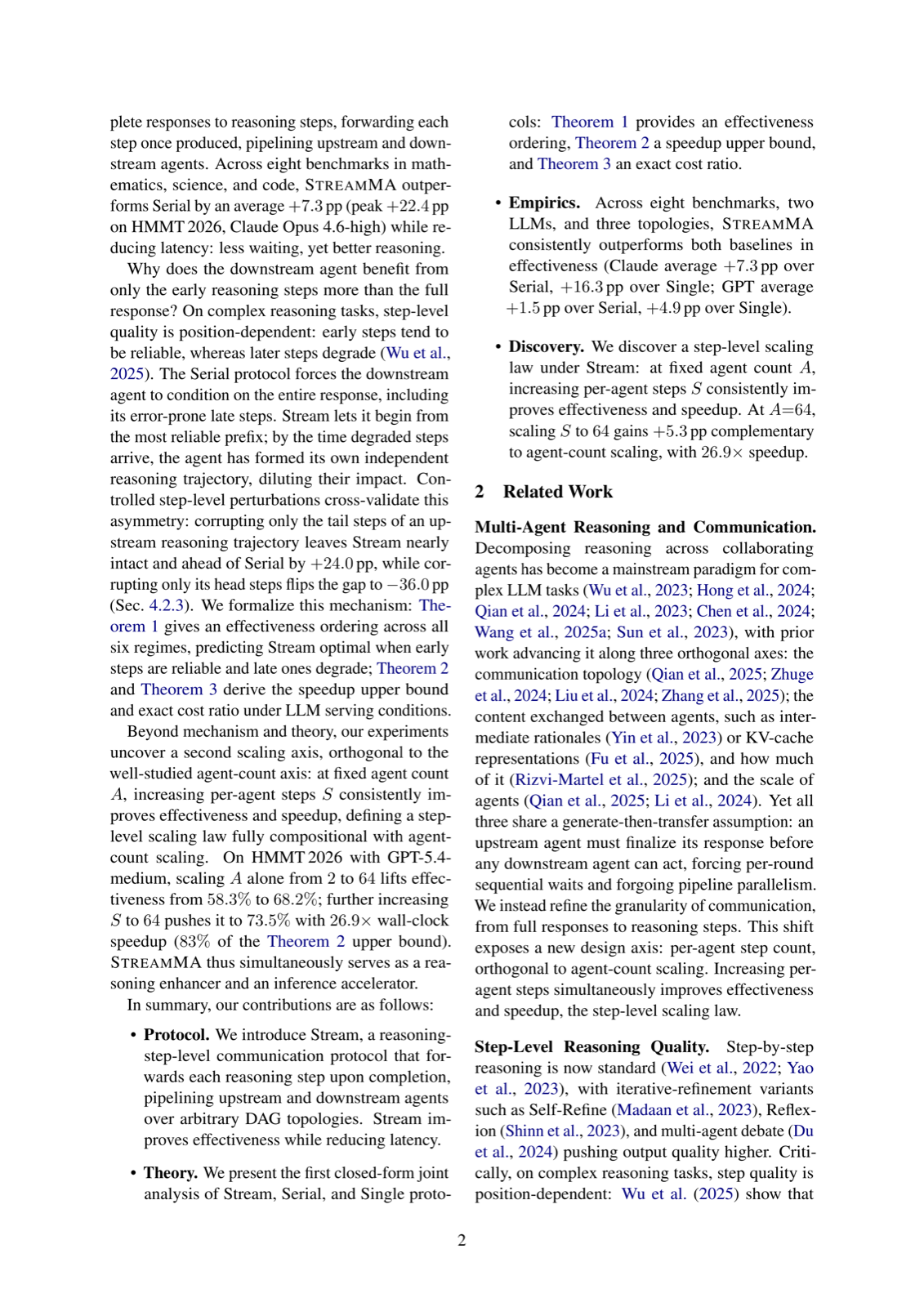
StreamMA addresses a fundamental bottleneck in multi-agent reasoning systems by introducing streaming communication that allows each reasoning step to be passed to downstream agents as soon as it is generated. This approach breaks the traditional 'generate-then-transfer' paradigm, which forces end-to-end latency to scale linearly with pipeline depth. By pipelining adjacent agents, StreamMA significantly reduces latency while improving effectiveness.
The paper's formal analysis provides a closed-form joint analysis of stream, serial, and single protocols, deriving effectiveness ordering, speedup upper bounds, and cost ratios. This theoretical foundation not only validates the practical benefits of streaming but also reveals a 'step-level scaling law'—increasing per-agent steps consistently improves both effectiveness and efficiency. This new scaling dimension is orthogonal to and composable with agent-count scaling, offering a fresh perspective on optimizing multi-agent systems.
Across eight reasoning benchmarks spanning mathematics, science, and code, StreamMA outperforms both baselines, demonstrating consistent improvements in both effectiveness and efficiency. The discovery of step-level scaling law suggests that future research should consider not just how many agents are involved but also how many steps each agent takes, opening new avenues for optimizing complex reasoning tasks through more granular control over the reasoning process.
Key insight: Streaming communication in multi-agent reasoning improves both latency and effectiveness by pipelining reasoning steps, allowing downstream agents to work with reliable early steps instead of error-prone late steps.
R-APS: Compositional Reasoning and In-Context Meta-Learning for Constrained Design via Reflective Adversarial Pareto Search
Freitas, André arXiv: 2606.04823
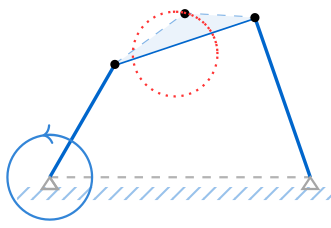
The paper presents R-APS, a method designed to tackle fundamental limitations in LLM-based agent reasoning by addressing three coupled structural failures: error propagation without localization, lack of robustness evaluation, and failure to invalidate accumulated knowledge. These issues are traced back to conflicting reasoning modes pulling the same context in incompatible directions. R-APS innovates by decomposing reasoning into distinct modes, each with its own context, and orchestrating interactions across three timescales: staged compositional reasoning with validation, sensitivity-guided counterfactual testing, and meta-inductive rule extraction with explicit invalidation.
The approach operates purely via structured protocol design on frozen LLMs, avoiding fine-tuning, which makes it highly practical for deployment. Evaluation on planar mechanism synthesis demonstrates significant improvements: 3.5x tighter robustness certificates, 46% faster iterations-to-first-admission, and 2.1x Chamfer-distance reduction over baseline methods. Notably, small 4B reasoning-specialized models prove competitive with general-purpose 70B backbones, suggesting that structured protocols can partially offset the need for larger models.
This work is particularly relevant to agent architectures and reasoning & planning, as it provides a framework for building more reliable, robust, and adaptive agents. The decomposition of reasoning modes and the use of validation critics and counterfactual testing offer a principled way to manage complexity in long-horizon tasks, while the meta-inductive rule extraction supports persistent learning and knowledge updating.
Key insight: R-APS introduces a novel reflective adversarial Pareto search framework that jointly addresses three structural failures in LLM agentic reasoning: error propagation, robustness evaluation, and persistent memory invalidation through reasoning-mode decomposition.
Beyond Objective Equivalence: Constraint Injection for LLM-Based Optimization Modeling on Vehicle Routing Problems
Mei, Yu arXiv: 2606.04816

The paper identifies a key limitation in current LLM optimization pipelines: reliance on objective-equivalence signals like differential testing and answer agreement, which can be fooled by models that pass tests while adding spurious constraints or omitting required ones. The authors propose constraint injection, a dual verification method using feasible and infeasible probes to detect over-constraint and under-constraint issues, respectively.
The approach is instantiated in VRPCoder, an 8B model that translates natural-language VRP scenarios into Gurobi scripts, combined with a benchmark suite covering 21 variants. The verifier is used both as a data synthesis filter and as a per-rollout reward in GRPO, leading to significant performance gains: 93% average Pass@1, outperforming state-of-the-art models like Gemini-3.1-Pro Preview and Claude-Sonnet-4.5 by substantial margins.
This work is highly relevant to multi-agent systems and reasoning & planning, particularly in operations research contexts. It demonstrates how structured verification techniques can improve the reliability of LLM-generated code, which is crucial for deploying agents in real-world optimization tasks where correctness is paramount.
Key insight: Constraint injection addresses a critical gap in LLM-based optimization modeling by exposing spurious constraints and silent omissions through feasible and infeasible probes, enabling more accurate translation of natural-language problems into executable code.
AIP: A Graph Representation for Learning and Governing Agent Skills
Webber, Jim arXiv: 2606.04781
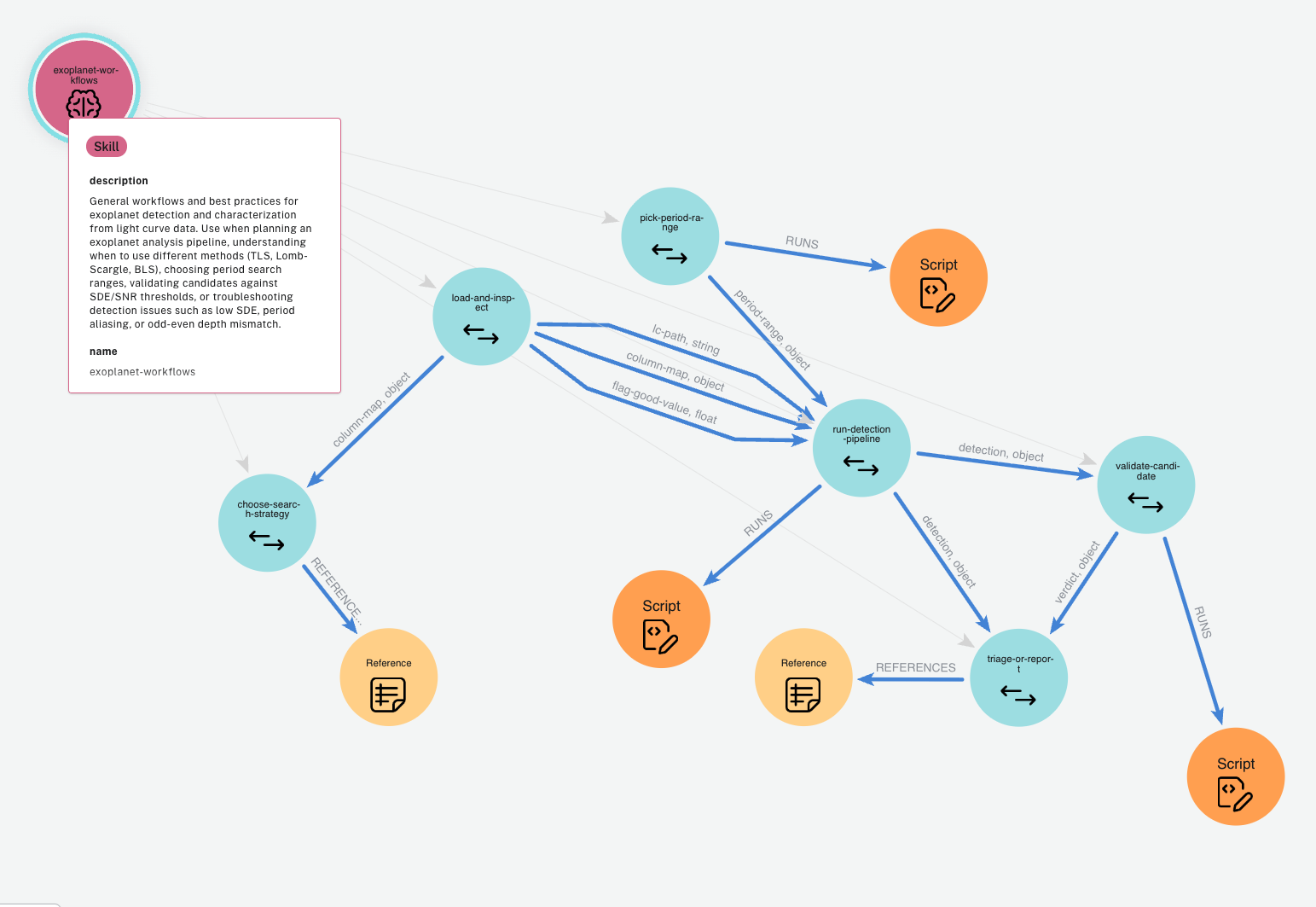
The paper introduces AIP, a graph-based representation for agent skills that addresses two major challenges: reduced reliability in implementation-heavy tasks and difficulty in skill creation and improvement due to fragile prose-based instructions. AIP models skills as directed execution graphs with discrete steps, deterministic scripts or descriptions, and typed input/output edges.
The authors demonstrate AIP's effectiveness by compiling human-written skills into this form, showing a statistically significant improvement in task rewards and pass rates on SkillsBench. The graph structure allows for precise failure diagnosis and repair, turning skill improvement into a measurable tuning loop rather than a prose rewrite. Additionally, the same structure supports corpus-level governance and skill introspection, and provides a natural action space for reinforcement learning over skills.
This work is highly relevant to agent architectures and memory & tool use, as it provides a concrete framework for structuring and managing agent capabilities. The ability to compile skills into executable graphs and then improve them through node-level adjustments represents a significant step toward more robust and maintainable agent systems.
Key insight: The Agent Instruction Protocol (AIP) models agent skills as directed execution graphs, enabling reliable implementation, precise diagnostics, and measurable skill improvement through schema-validated, functionally testable nodes.
Tree-Based Formalization of Multi-Agent Complementarity in Human-AI Interactions
Ferrario, Andrea arXiv: 2606.04779
The paper introduces a novel tree-based formalization of complementarity in multi-agent human-AI interactions, where an HAI protocol is represented by an ordered agent-role configuration and a rooted planar binary tree. Local binary composition rules are evaluated recursively to yield a tree-relative complementarity functional, providing a mathematical framework for understanding how agents' predictions compose into workflow-sensitive protocols.
Key findings include that selector-based HAIs cannot achieve complementarity, that complementarity in regression is equivalent to Euclidean distance minimization, and that for binary classification, no internal local composition can achieve complementarity under endpoint-monotone losses. These results clarify the conditions under which multi-agent systems can outperform individual members, offering theoretical insights into the design of effective collaborative AI systems.
This work is particularly relevant to multi-agent systems and reasoning & planning, as it provides a formal understanding of when and how agents can complement each other. The framework helps identify the limitations of current approaches and suggests directions for designing more effective multi-agent protocols, especially in domains where collaboration is crucial for performance.
Key insight: A tree-based formalization of complementarity in multi-agent HAI reveals that while complementarity is achievable in regression tasks, it is obstructed in classification under natural conditions on local aggregation and loss functions.
FALSIFYBENCH: Evaluating Inductive Reasoning in LLMs with Rule Discovery Games
Bernardi, Raffaella arXiv: 2606.04751
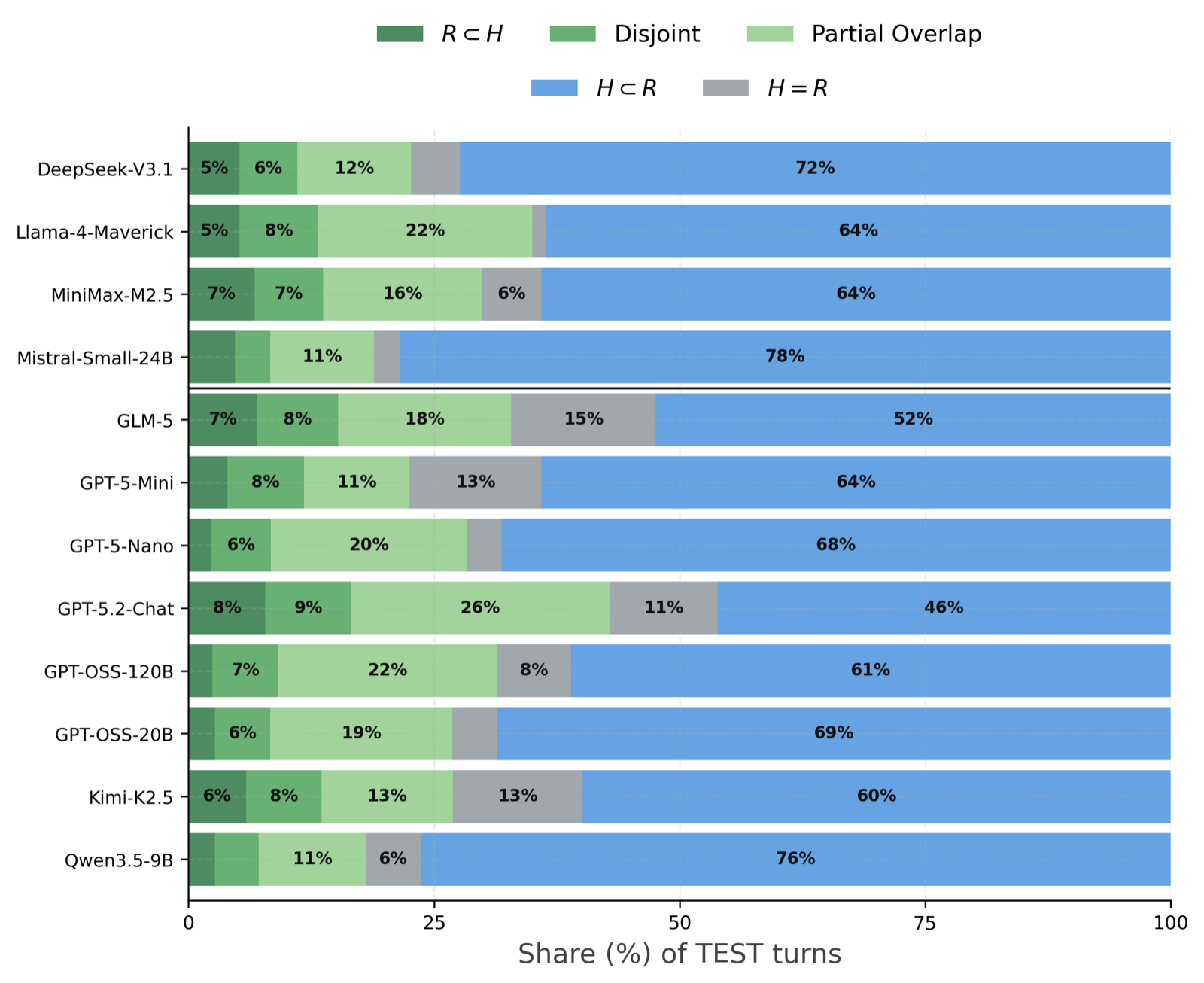
The paper introduces FALSIFYBENCH, an evaluation framework for hypothesis-driven reasoning inspired by the classic Wason 2-4-6 task, where agents must discover hidden semantic properties by proposing examples and receiving feedback. This task captures key elements of scientific reasoning: hypothesis generation, evidence gathering, and belief revision in response to confirming and disconfirming evidence.
Evaluation of 12 LLMs across model families and scales shows that reasoning models are generally stronger scientific reasoners than instruction-tuned models, although no model reaches optimal performance. The primary driver of success is the capacity for negative testing: models that actively seek to falsify their hypotheses consistently outperform those that primarily seek confirmation. Turn-level analysis reveals identifiable patterns in how models navigate the hypothesis space, offering insights into reasoning failures.
This work is highly relevant to reasoning & planning and multi-modal models, as it provides a rigorous evaluation method for inductive reasoning capabilities. The focus on falsification aligns with the need for robust, scientific reasoning in autonomous agents, particularly in domains requiring iterative hypothesis testing and adaptation.
Key insight: FALSIFYBENCH evaluates inductive reasoning in LLMs through rule discovery games inspired by the Wason 2-4-6 task, revealing that models capable of negative testing consistently outperform those focused on confirmation.
Evaluating Large Language Models in Dynamic Clinical Decision-Making with Standardized Patient Cases
Xie, Weidi arXiv: 2606.05112
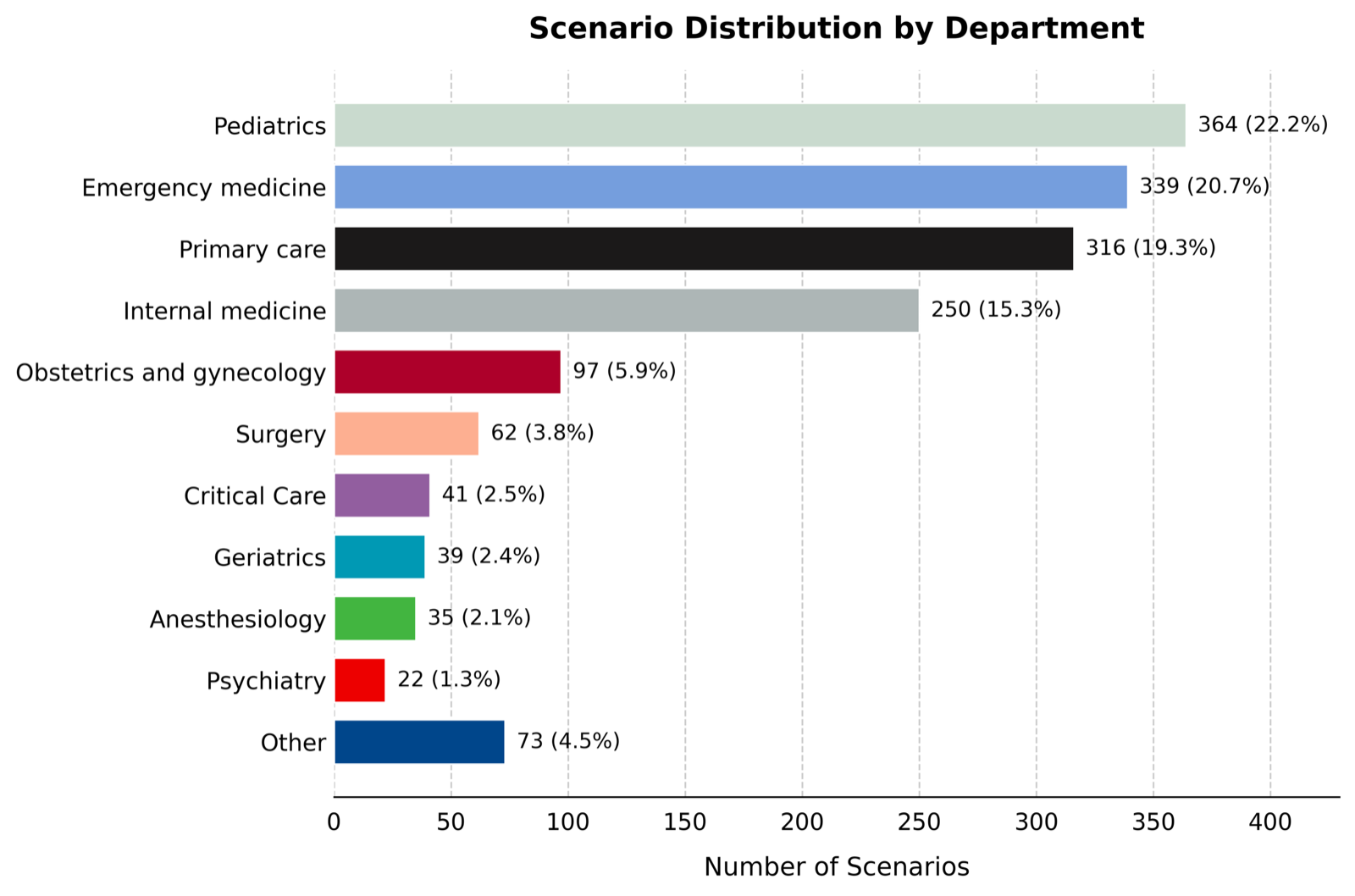
The paper introduces MedSP1000, an interactive benchmark for clinical-agent evaluation based on standardized patient cases. It converts peer-reviewed SP teaching cases into executable scenarios with defined scripts, clinical contexts, and human-validated rubrics. The benchmark enables closed-loop interaction between clinical agents and patient/environment controllers, with behavior scored against expert criteria throughout the encounter.
Evaluation of general-purpose and medically specialized LLMs shows that performance on static benchmarks does not reliably translate to such educational scenarios. The best-performing model, GPT-5.5, completes only 60.4% of expert-defined rubric items, while the strongest specialized model reaches 40.0%. Increasing test-time compute produces no measurable gain, indicating that current LLMs are not yet reliable enough for clinical practice.
This work is highly relevant to agent architectures and reasoning & planning, particularly in healthcare applications. It highlights the importance of dynamic, process-level evaluation for assessing agent capabilities in complex, real-world domains where reliability and adaptability are crucial. The benchmark provides a valuable resource for evaluating and improving clinical agents.
Key insight: MedSP1000 introduces a standardized patient case benchmark for evaluating LLMs in dynamic clinical decision-making, revealing that performance on static benchmarks does not reliably translate to real-world clinical scenarios.
Arithmetic Pedagogy for Language Models
Situngkir, Hokky arXiv: 2606.05106
The paper investigates whether human mathematics pedagogy can guide LLM training toward arithmetic reasoning. It builds on the GASING method, an Indonesian pedagogy that solves basic arithmetic through a left-to-right procedure aligned with token generation. Each operation is operationalized as a computational procedure serialized into natural-language Chain-of-Thought supervision.
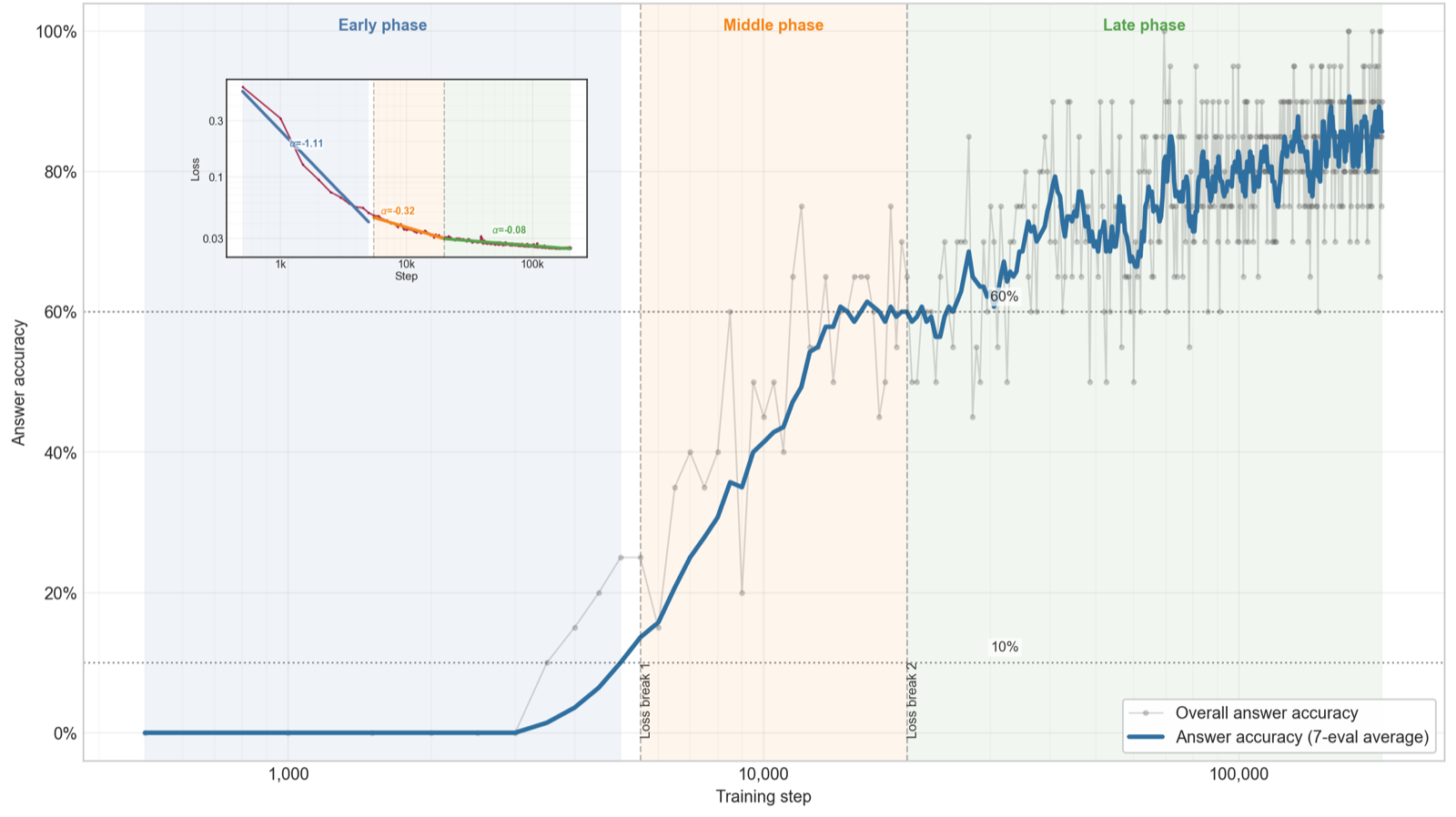
A small GPT-2 decoder (86M parameters) trained from scratch on this data achieves over 80% accuracy on held-out problems and competitive performance against substantially larger models. Mechanistic analyses reveal three learning phases: procedural pathway internalization, followed by associative 'mental-arithmetic' capacity that retrieves intermediate results without explicit computation.
This work is relevant to reasoning & planning and LLM efficiency, as it demonstrates that targeted, pedagogically grounded training can yield strong arithmetic capabilities at small scale. It suggests that the structure of training data and the alignment with natural cognitive processes can be more important than model size for specific tasks, offering insights into efficient training strategies.
Key insight: Arithmetic pedagogy, specifically the GASING method, can be used to train small language models to perform arithmetic reasoning with high accuracy, demonstrating that targeted pedagogical training can yield strong performance at small scale.
Fast & Faithful Function Vectors
Achtibat, Reduan arXiv: 2606.05079
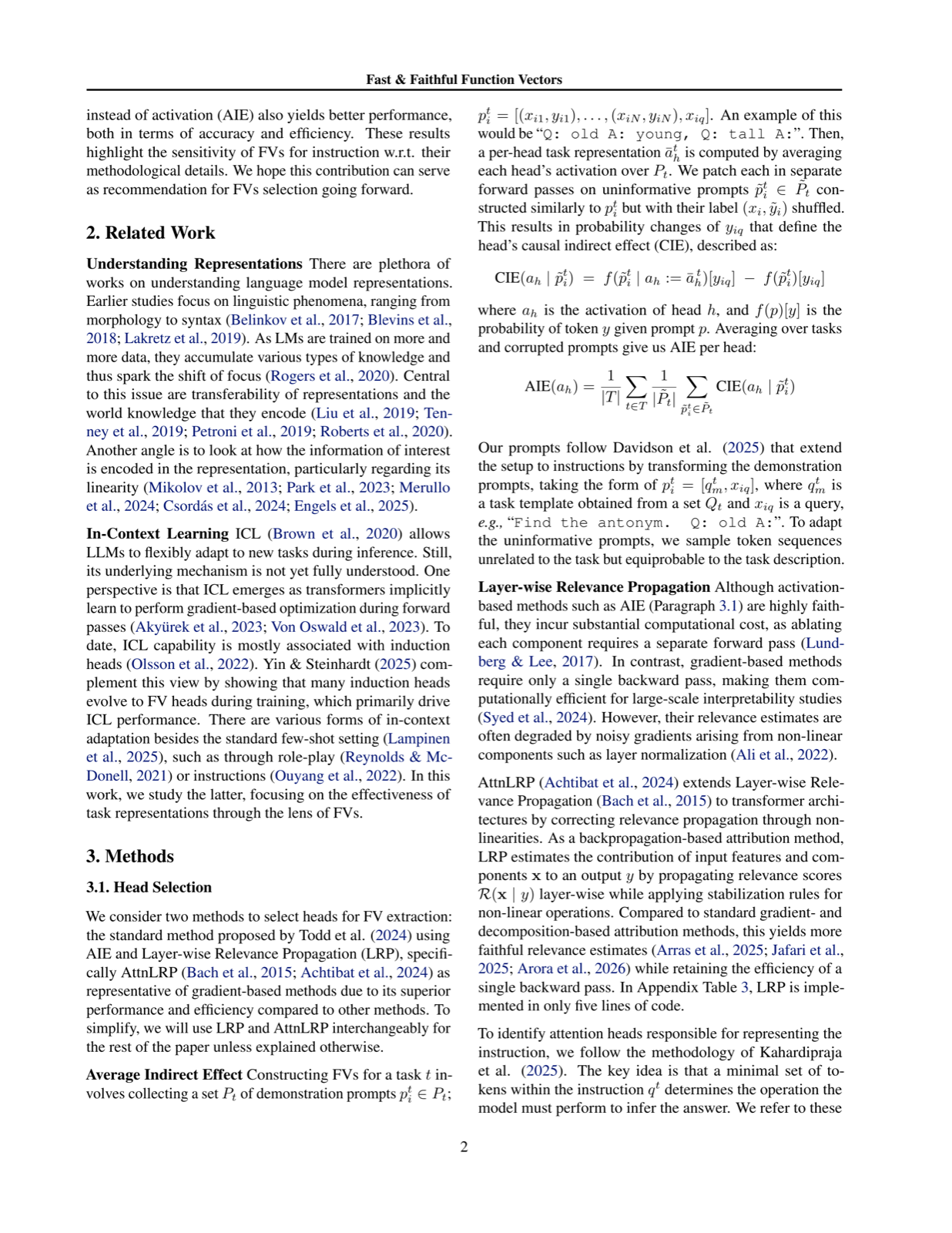
Function vectors (FVs) are task representations that emerge during in-context learning and can be used to steer Large Language Models (LLMs). However, the design choices in their formulation have not been thoroughly explored. This paper addresses this gap by studying how different FV definitions impact performance along two dimensions: attention head selection and steering.
The authors find that using gradient-based attributions with Layer-wise Relevance Propagation (LRP) for attention head selection significantly improves both efficiency and accuracy. This approach allows for more targeted and effective use of model resources, reducing computational overhead while maintaining or improving performance. Additionally, applying function vector steering in a distributed manner yields higher accuracy compared to simple aggregation methods.
These findings are particularly relevant for agent architectures and reasoning systems, where efficient and accurate task representation is crucial. The work suggests that by carefully designing how FVs are computed and applied, we can enhance the capabilities of LLMs in complex reasoning tasks without sacrificing performance or increasing computational costs.
Key insight: Function vectors can be made more efficient and accurate through gradient-based attention head selection using Layer-wise Relevance Propagation and distributed steering rather than simple aggregation.
Boosting Self-Consistency with Ranking
Moskvoretskii, Viktor arXiv: 2606.05054

Self-consistency is a technique that improves large language model performance by sampling multiple reasoning paths and selecting the most frequent answer. However, majority voting often fails to recover correct answers that are already present among the samples. This paper introduces Ranking-Improved Self-Consistency (RISC), which reformulates answer selection as a ranking problem.
RISC uses a lightweight LambdaRank model to score candidate answers based on five carefully designed features that capture answer frequency, semantic centrality, and reasoning-trace consistency. This approach allows for more nuanced evaluation of potential answers, leading to better accuracy-efficiency trade-offs across various benchmarks.
The method demonstrates significant gains over standard self-consistency and strong baselines, particularly on question answering benchmarks. This advancement is valuable for reasoning and planning systems, where accurate and efficient answer selection is critical. The ability to combine multiple informative signals for test-time answer selection highlights the importance of sophisticated decision-making mechanisms in AI agents.
Key insight: Ranking-based answer selection in self-consistency improves accuracy-efficiency trade-off by combining multiple informative signals rather than relying on majority voting.
Imbuing Large Language Models with Bidirectional Logic for Robust Chain Repair
Lukasiewicz, Thomas arXiv: 2606.05030
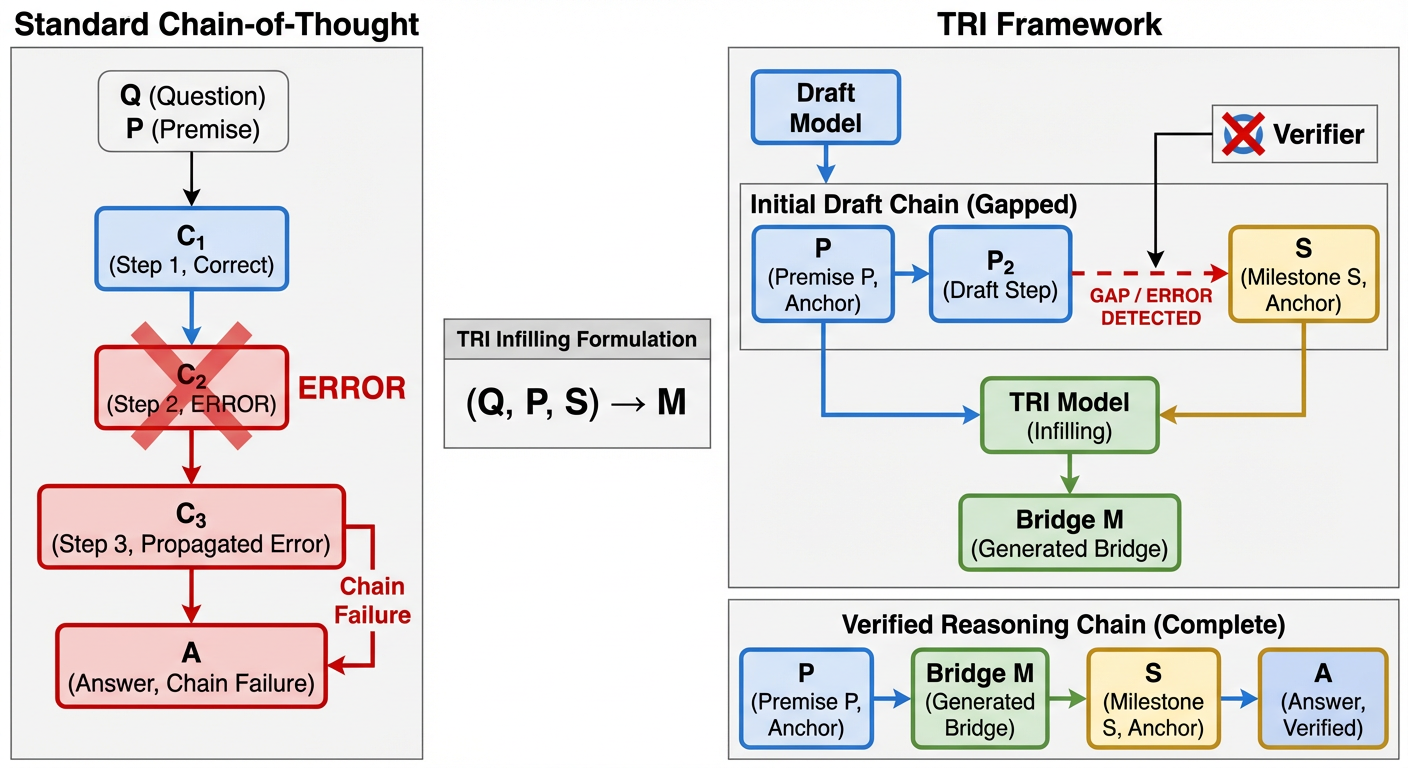
Autoregressive chain-of-thought (CoT) reasoning in LLMs is fundamentally forward-directed, making models susceptible to error snowballing. This paper introduces Teleological Reasoning Infilling (TRI), a framework that endows decoder-only transformers with native goal-conditioned bridging capability.
TRI reframes erroneous reasoning segments as fill-in-the-middle (FIM) tasks, enabling models to attend to both prefix premises and downstream milestones without structural modifications. The approach uses a Prefix-Suffix-Middle (PSM) sequence rearrangement with sentinel tokens, allowing the model to synthesize logical bridges that connect verified segments.
Comprehensive experiments show that TRI achieves state-of-the-art performance across all tasks while reducing per-problem token expenditure by 31.2%. This technique is particularly relevant for reasoning and planning systems, where robust error correction and chain repair are essential. The surgical repair module within a dual-system loop demonstrates how AI agents can maintain integrity while operating efficiently.
Key insight: Teleological Reasoning Infilling (TRI) enables bidirectional logic in autoregressive models by using a Prefix-Suffix-Middle sequence rearrangement to repair reasoning chains.
TaDA: Calibrated Probe Gating for Task-Domain LoRA Merging
Liu, Ming arXiv: 2606.05016
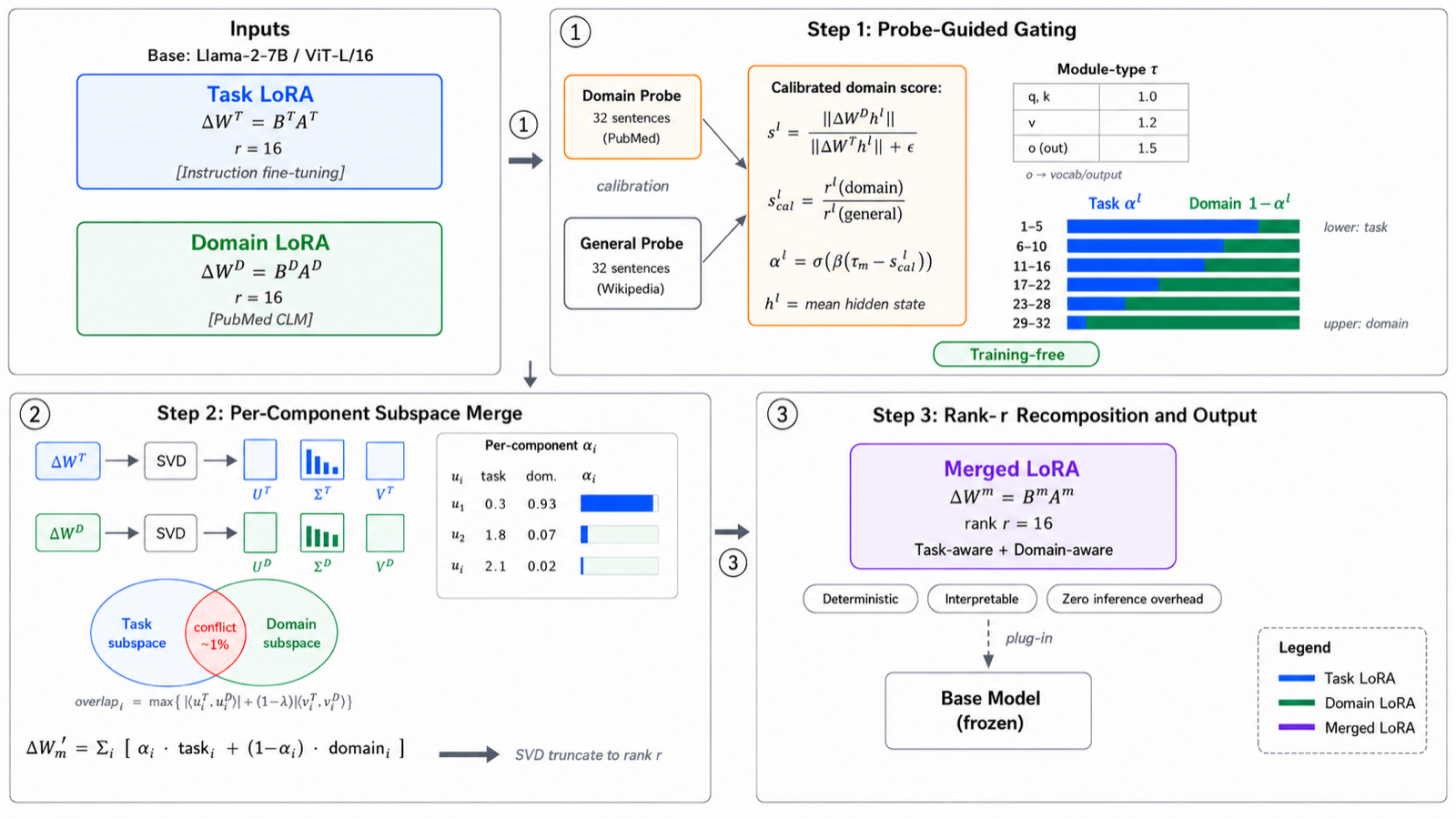
Combining task and domain LoRA adapters into a single unified model is a practical yet largely unexplored challenge. Existing methods treat both adapters as symmetric peers, applying uniform weights across all layers. This paper argues that task and domain adapters exhibit consistent depth-dependent asymmetry across transformer architectures.
The proposed TaDA algorithm addresses this by using calibrated probe-guided per-layer gating and per-component subspace-aware merging. The gating assigns individual weights per layer and projection type using a probe signal invariant to adapter weight magnitude, while the merging discards conflicting singular directions before combining components.
TaDA produces a standard rank-r LoRA adapter with zero inference overhead and achieves superior performance on both scientific QA and image classification benchmarks. This work is highly relevant for agent architectures and multi-agent systems, where efficient model merging and adaptation are crucial. The training-free approach makes it practical for real-world deployment scenarios.
Key insight: Task-domain LoRA merging (TaDA) improves performance by exploiting depth-dependent asymmetry between task and domain adapters through calibrated probe-guided gating.
Reinforcement Learning from Rich Feedback with Distributional DAgger
Rashidinejad, Paria arXiv: 2606.05152
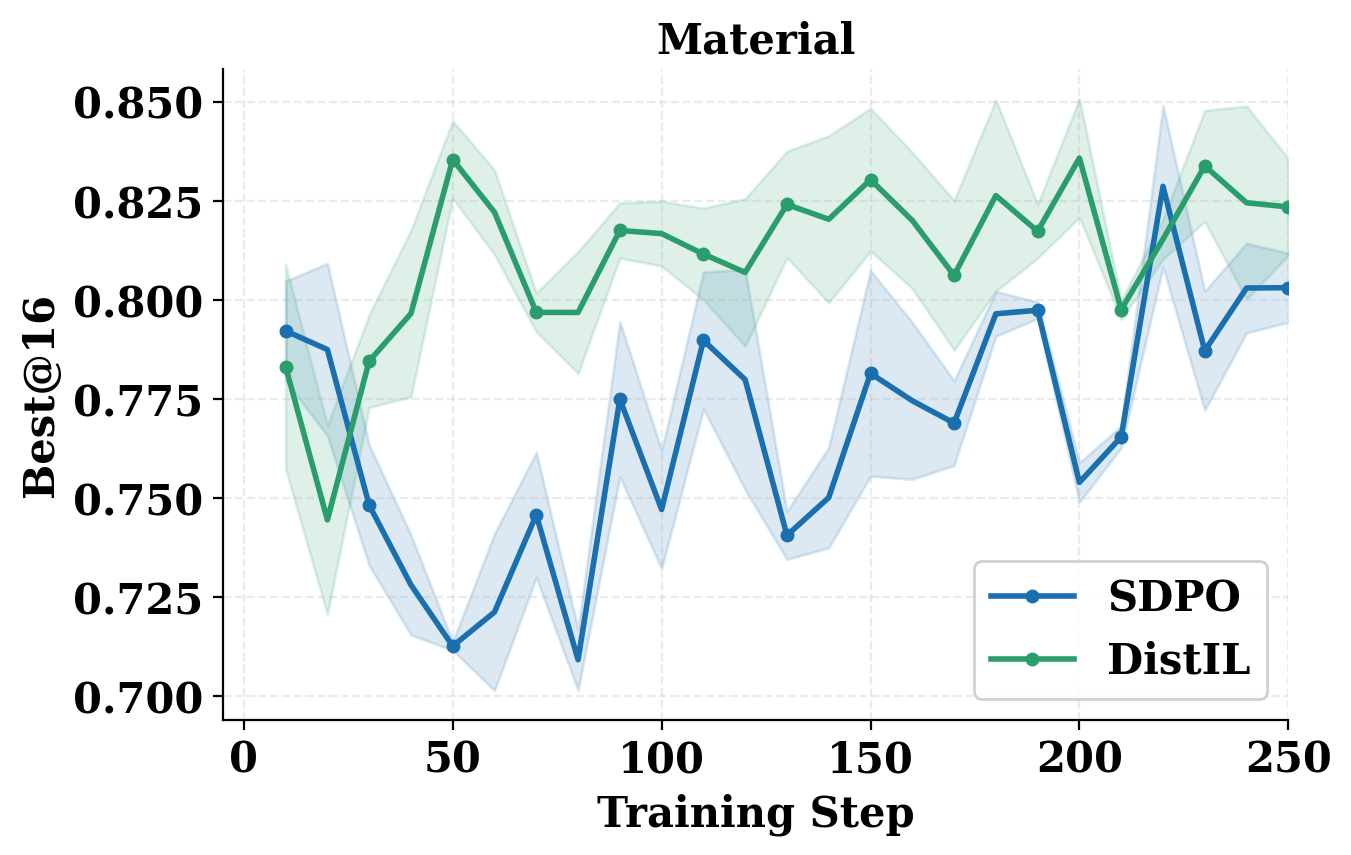
While reinforcement learning from verifiable rewards (RLVR) has dominated reasoning model development, it relies on narrow single-bit feedback. This paper explores how to leverage rich feedback including execution traces, tool outputs, and expert corrections through a distributional variant of DAgger.
The proposed approach uses a forward cross-entropy objective that admits a blackbox expert and enables sequence-level gradient propagation, allowing for rich credit assignment by propagating future expert-student disagreement back to earlier decisions. This method guarantees monotonic policy improvement and enjoys regret guarantees, unlike prior approaches based on reverse KL or Jensen-Shannon divergence.
Empirical results show that the approach, DistIL, outperforms RLVR and self-distillation baselines across scientific reasoning, coding, and mathematical problem-solving domains. This advancement is particularly valuable for agent architectures and reasoning systems that need to process complex, multi-modal feedback for improved decision-making and learning.
Key insight: Distributional DAgger improves reinforcement learning from rich feedback by using forward cross-entropy objective that enables monotonic policy improvement and better credit assignment.
Failed Reasoning Traces Tell You What Is Fixable (But Not by Reading Them)
Muller, Eilif B. arXiv: 2606.05145

When post-trained language models fail on reasoning problems, the common approach is to retry with more compute, discarding failed traces as mere artifacts. This paper argues that failed traces contain crucial signals about which failures are structurally resolvable versus those that are not.
The authors propose that three problem-level trajectory features derived from intervention structure can recover this recoverability information from failed rollout distributions, not their text. These features cluster failures into stable regimes and support a training-free routing rule that lifts rescue by 12.2% on the Steerable-Hard subset.
This work is highly relevant for agent architectures and reasoning systems, where understanding failure patterns and implementing adaptive interventions is essential. The ability to convert failed traces from discarded data into diagnostic objects supports test-time routing and post-training analysis without requiring additional training or weight-space access, making it practical for deployment scenarios.
Key insight: Failed reasoning traces encode recoverability structure that can be used for test-time routing and post-training analysis without requiring training-time or weight-space access.
Deep Embedded Multiplicative DMD for Algebra-Preserving Koopman Learning
Colbrook, Matthew J. arXiv: 2606.05131

Koopman theory transforms nonlinear dynamics into linear spectral problems, but practical implementation depends heavily on choosing expressive observables. This paper introduces Deep Embedded Multiplicative Dynamic Mode Decomposition (DeepMDMD), which combines deep learning with structure-preserving methods.
DeepMDMD learns a latent space and partition while enforcing the Koopman product rule as an exact algebraic constraint. Training alternates between exact multiplicative operator updates and differentiable latent-clustering steps that promote Koopman closure, resulting in finite transition maps on learned latent cells.
The method demonstrates superior performance across Hamiltonian, chaotic, and fluid examples, particularly in high-dimensional flows where state-space MDMD fails. This advancement is relevant for agent architectures and reasoning systems that need to model complex dynamics and predict future states, especially in environments with rich temporal dependencies.
Key insight: DeepMDMD learns latent coordinates while enforcing Koopman product rule as an exact algebraic constraint, enabling more compact and dynamically coherent dictionaries for nonlinear dynamics modeling.
Towards Efficient and Evidence-grounded Mobility Prediction with LLM-Driven Agent
Kobayashi, Hiroki arXiv: 2606.05130

The paper introduces AgentMob, a training-free LLM-driven agent framework for individual-level mobility prediction that formulates next-location prediction as adaptive evidence-controlled decision making. Unlike traditional methods that rely on static prompts or single-pass inference, AgentMob employs a dual-path approach: a fast path for routine cases based on historical regularity and an iterative tool-use mechanism for ambiguous cases. This mechanism leverages recent trajectories, historical behavior, stay-move likelihood, and geographical evidence to resolve uncertainty.
The framework's effectiveness is demonstrated across three mobility datasets, achieving state-of-the-art performance among training-free LLM-based methods. Notably, on the BW dataset, GPT-5.4 reaches 71.42% Acc@1, and on non-fast-path cases, the LLM controller improves Acc@1 from 30.65% to 48.62% over a statistical baseline. This significant improvement underscores the value of adaptive evidence gathering in resolving ambiguous predictions, which is a key advancement in agent architectures for decision-making under uncertainty.
AgentMob's approach aligns with the focus on memory and tool use in AI agents, as it dynamically integrates external information sources to enhance decision-making. The method's ability to operate without task-specific training while still achieving strong performance suggests a promising direction for scalable, general-purpose agents in complex domains like urban planning and transportation.
Key insight: LLM-driven agents can improve mobility prediction by dynamically gathering evidence for ambiguous cases, outperforming static prompt methods and statistical baselines.
Graph Set Transformer
Probst, Daniel arXiv: 2606.05116
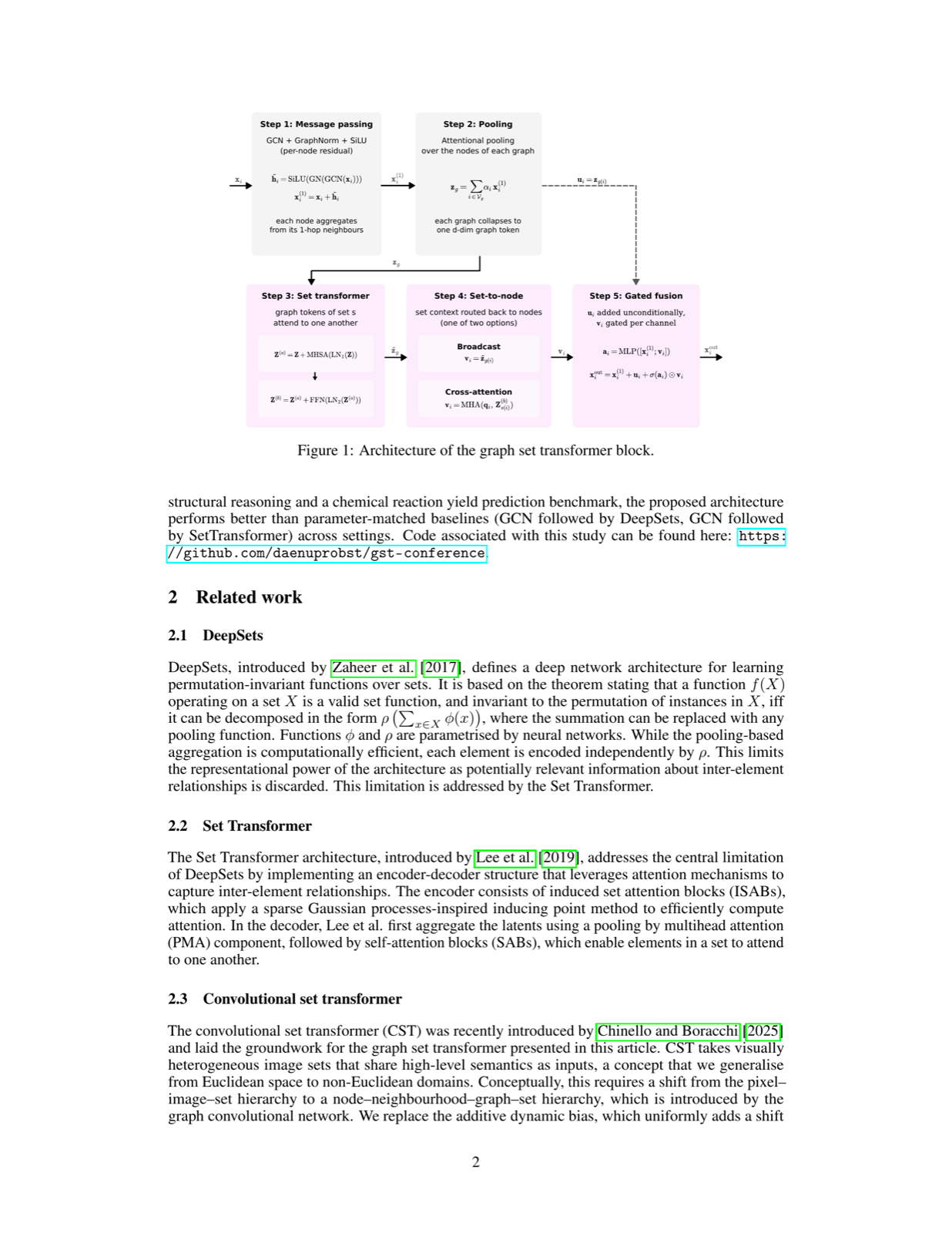
The Graph Set Transformer (GST) addresses a key bottleneck in existing graph neural network architectures by interleaving node-level feature propagation and cross-graph contextual modeling at every layer. This design eliminates the need for pre-encoded graph embeddings from separate GNNs, which creates a bottleneck in traditional approaches like DeepSets and SetTransformer. The gating mechanism used in GST fuses local and set-level information effectively, enabling more nuanced understanding of graph sets.
GST's performance is validated across synthetic and real-world benchmarks, including per-atom reaction-centre identification, reaction yield prediction, and image classification. Under matched parameter budgets, GST outperforms baseline models, with ablation studies confirming that the interleaving of local and set context contributes substantially to its advantage. This suggests that GST's architecture is particularly effective for tasks where both local structure and global context are crucial for accurate predictions.
This work is highly relevant to multi-agent systems and agent architectures, as it provides a new framework for modeling complex interactions within sets of entities. The ability to learn contextual representations that depend on both local and global information makes GST a valuable tool for designing agents that can reason about complex environments and relationships, especially in domains like molecular modeling or network analysis.
Key insight: The Graph Set Transformer (GST) enables efficient learning on sets of graphs by interleaving node-level feature propagation and cross-graph contextual modeling, outperforming existing architectures.
RePercENT: Scaling Disentangled Representation Learning Beyond Two Modalities
Thanou, Dorina arXiv: 2606.05109
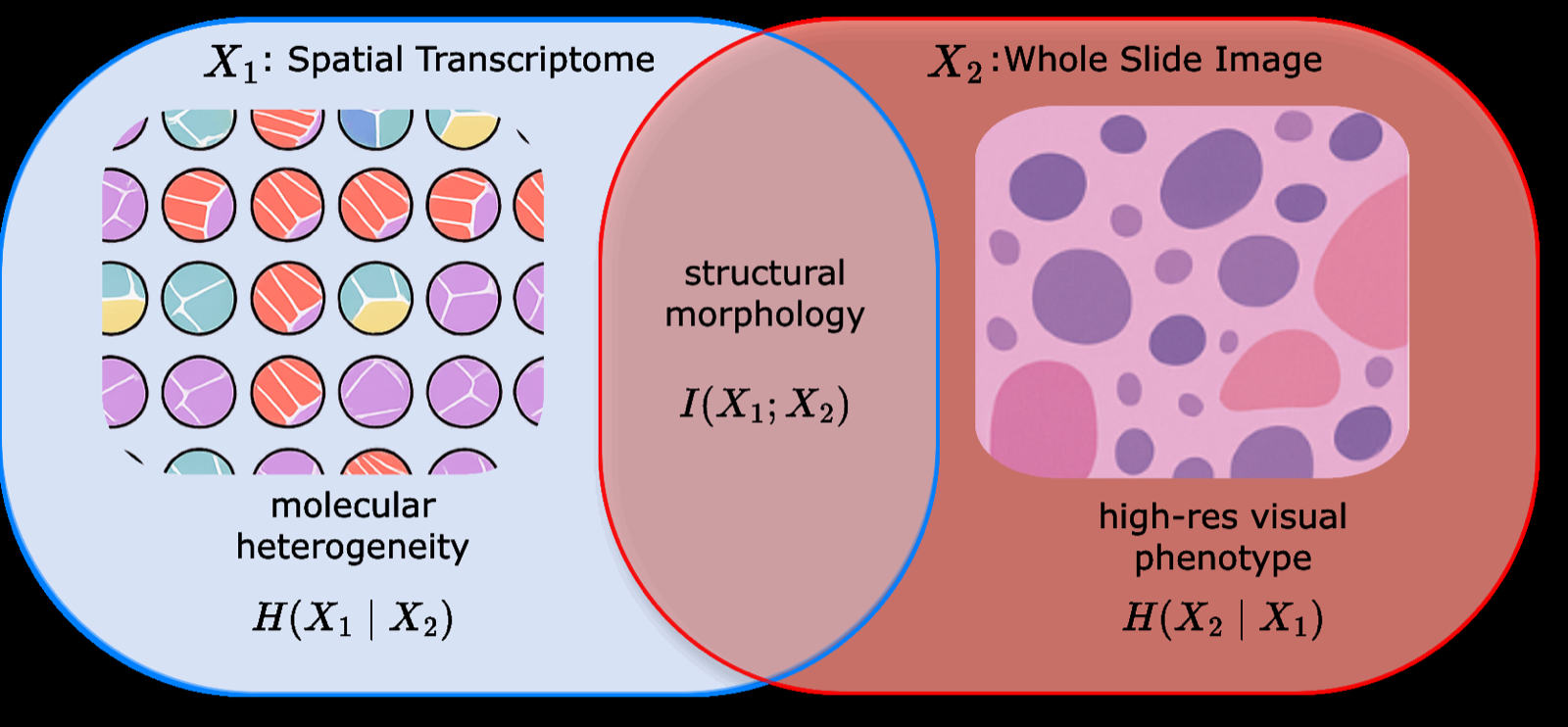
RePercENT presents a self-supervised framework for scalable pairwise disentanglement that overcomes the limitations of existing methods confined to two-modalities. By operating directly on pre-extracted embeddings, it eliminates the need for extensive joint pre-training while maintaining modality-specific information. This approach is particularly valuable in multimodal learning, where the goal is to identify shared and unique factors in observational data without sacrificing modality-specific details.
The framework introduces a joint optimization objective for deriving shared and unique components, along with formal theoretical guarantees that characterize the optimality of its solution. This provides a principled way to learn disentangled representations that are both theoretically sound and practically effective. The method's ability to work with pre-extracted embeddings also makes it compatible with various foundation models and backbones, enhancing its flexibility and applicability.
RePercENT's contribution is significant for multimodal models and agent architectures, as it enables more robust and scalable representation learning. By unlocking disentanglement beyond two modalities, it opens new possibilities for agents that can effectively integrate and reason across multiple data types, such as text, images, and sensor data, which is crucial for real-world applications.
Key insight: RePercENT enables scalable pairwise disentanglement beyond two modalities, allowing for better representation learning in multimodal settings without requiring joint pre-training.
Learning What Not to Impute: An Uncertainty-Aware Diffusion Framework for Meaningful Missingness
Xie, Liyan arXiv: 2606.05073
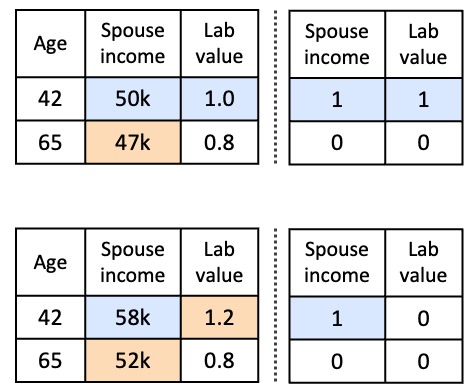
Diff-Joint addresses the challenge of distinguishing between meaningfully missing entries (which are semantically valid and should be preserved) and those that should be imputed (due to observation processes). By modeling tabular data together with a latent missingness mask, the framework alternates between conditional sampling and uncertainty-aware aggregation to iteratively refine both imputed values and missingness labels. This dual modeling approach is a significant advancement in handling missing data in real-world applications.
The method's effectiveness is demonstrated on synthetic and real-world datasets, showing that it can effectively identify meaningfully missing entries while achieving competitive imputation accuracy and improved downstream task performance. This capability is crucial for data-driven systems where preserving the integrity of missing data is as important as filling in gaps, particularly in domains like healthcare or finance where data quality directly impacts decision-making.
This work contributes to memory and tool use in AI agents by providing a framework for intelligent handling of incomplete information. The ability to reason about missingness and selectively impute data is a key capability for agents operating in environments with imperfect or incomplete data, making it relevant to agent architectures that must make decisions under uncertainty.
Key insight: Diff-Joint, a diffusion-based framework, jointly models data and missingness, enabling selective imputation that identifies meaningfully missing entries while maintaining competitive imputation accuracy.
Channel Fracture: Architectural Blind Spots in Scheduled Cross-Agent Memory Injection for Multi-Agent Orchestration Systems
Liu, Levent arXiv: 2606.04896
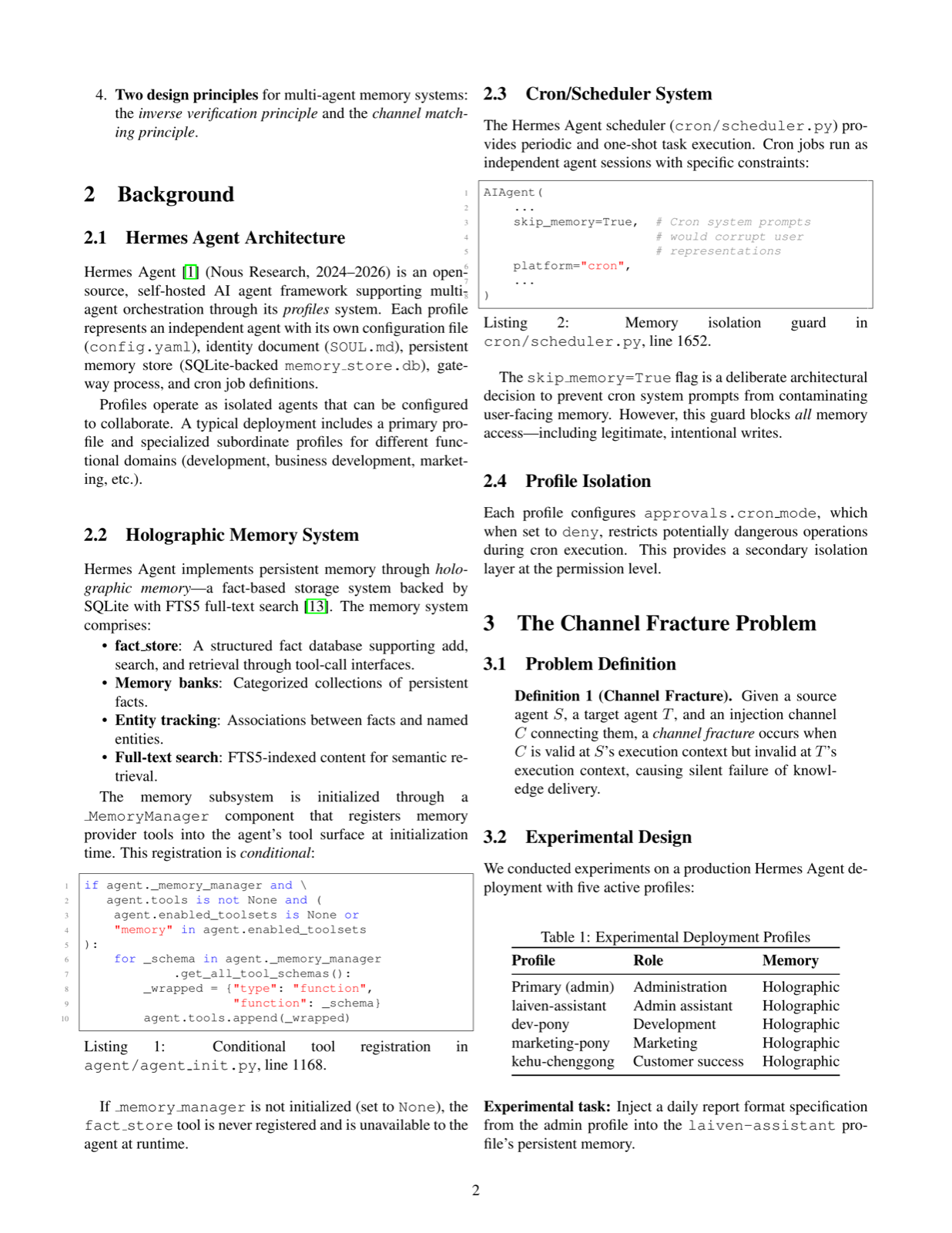
The paper identifies a systematic failure mode termed 'channel fracture' in multi-agent orchestration systems, where scheduled agents are silently unable to write to target agents' persistent memory due to hardcoded memory isolation guards. This issue arises from two architectural constraints: 'skip_memory=True' hardcoded at the scheduler layer and dynamic registration of memory tools contingent on _memory_manager initialization, which is bypassed in cron execution contexts.
The discovery of channel fracture highlights a critical blind spot in current multi-agent architectures, particularly in systems relying on persistent memory for context maintenance across sessions and tasks. The proposed CADVP (Cross-Agent Delivery Verification Protocol) v1.1 offers a 13-dimensional verification framework to prevent false-positive delivery assurance, emphasizing the need for robust architectural design in agent systems.
This work is highly relevant to agent architectures and multi-agent systems, as it exposes fundamental design flaws that can silently undermine system functionality. The findings underscore the importance of architectural considerations in ensuring reliable cross-agent communication and memory management, which are essential for complex, long-running agent interactions.
Key insight: Scheduled cross-agent memory injection fails due to hardcoded memory isolation guards, revealing architectural blind spots in multi-agent orchestration systems.
Organizational Control Layer: Governance Infrastructure at the Execution Boundary of LLM Agent Systems
Yu, Jiangbo arXiv: 2606.04306
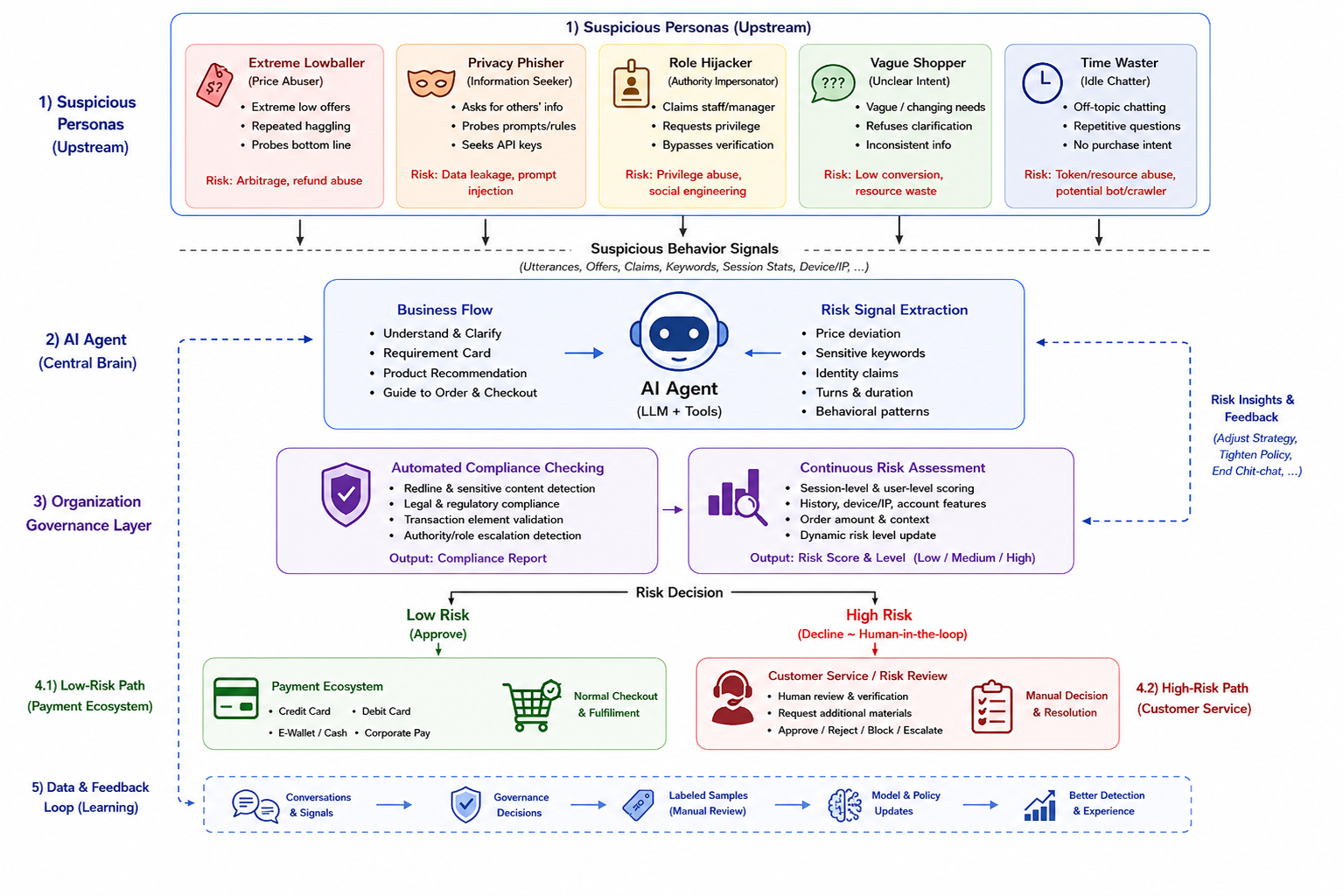
The Organizational Control Layer (OCL) introduces a model-agnostic governance infrastructure that intercepts generated actions before execution, separating proposal generation from environment-facing execution. This approach addresses the execution-boundary problem in LLM-based agents, where generated outputs may directly trigger state-changing actions. OCL operates through policy enforcement and escalation without modifying the underlying LLM generator, providing a clean separation of concerns.
Evaluation on adversarial buyer--seller negotiation environments shows that OCL reduces unsafe executions from 88% to near-zero while increasing valid success from 12% to 96%. This dramatic improvement demonstrates the effectiveness of explicit governance at the boundary between language generation and executable actions. The framework also reveals a safety--utility tradeoff, where strict governance improves compliance but can reduce flexibility in tightly constrained markets.
This work is crucial for agent architectures and multi-agent systems, particularly in deployment-grade applications where safety and reliability are paramount. The OCL framework provides a practical solution for ensuring that LLM agents operate within defined boundaries, making it a valuable contribution to the development of trustworthy AI systems that can be safely deployed in real-world scenarios.
Key insight: The Organizational Control Layer (OCL) provides governance infrastructure that intercepts generated actions before execution, significantly reducing unsafe executions while maintaining high success rates.
Exploring the Topology and Memory of Consensus: How LLM Agents Agree, Fragment, or Settle When Forming Conventions
Hilbert, Martin arXiv: 2606.04197
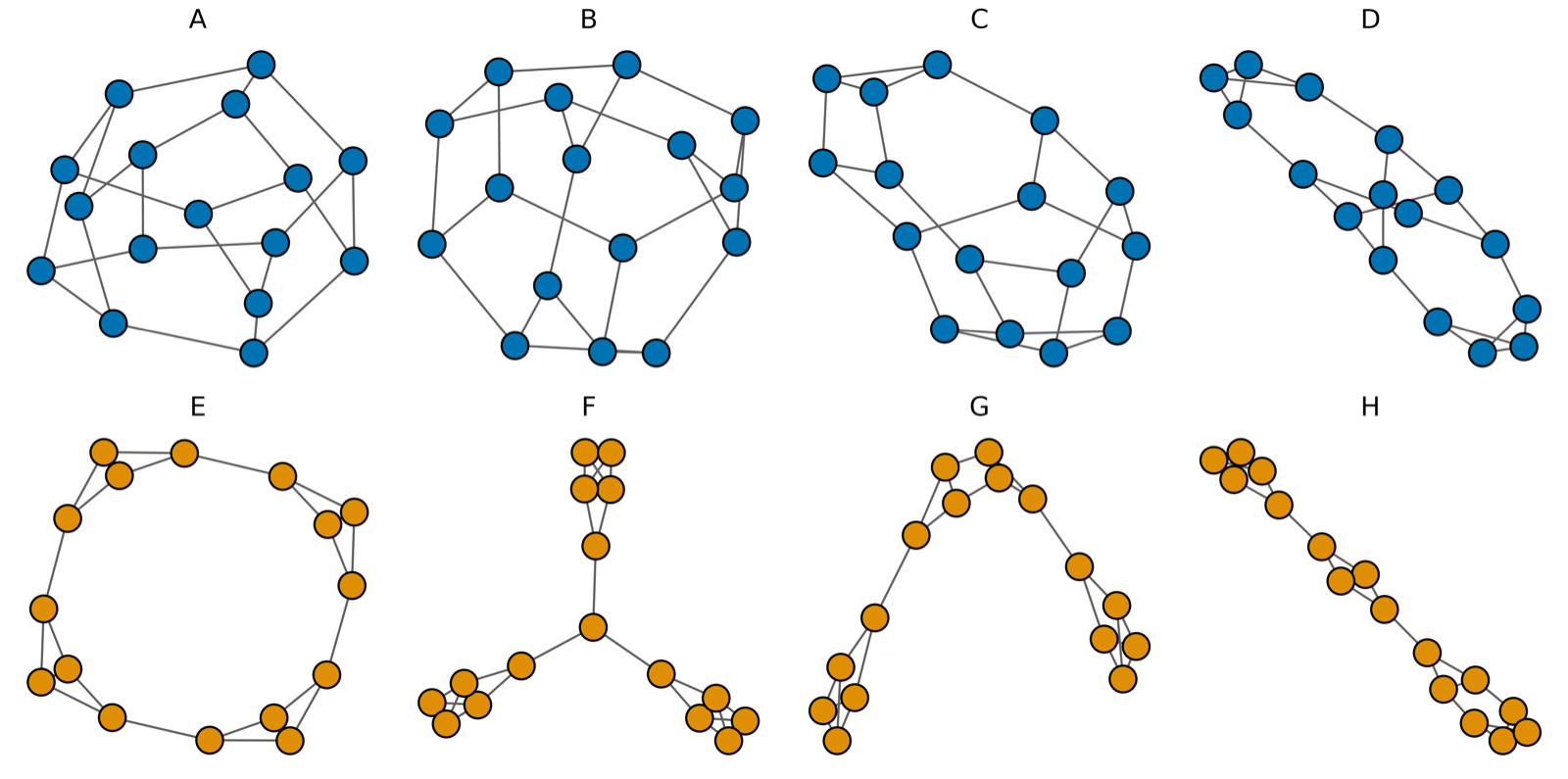
This paper explores how memory depth and communication topology interact to influence coordination among LLM agents in multi-agent systems. Through simulations of a networked Naming Game, it demonstrates that longer memory can slow the time to reach steady state in decentralized networks but accelerate it in centralized ones. This counterintuitive finding reveals that memory's effect on coordination depends critically on network structure.
The study further reveals that centralized networks consistently preserve more competing conventions than decentralized networks, but their settling speed depends sharply on memory. At the agent level, high-betweenness bridges suffer a brokerage penalty while agents in locally clustered neighborhoods achieve higher coordination success. These findings suggest that memory depth and communication topology should be co-designed rather than optimized in isolation, which has significant implications for agent architecture design.
This research contributes to multi-agent systems and reasoning & planning by highlighting the complex interplay between memory and network structure in achieving consensus. The practical implication is that agent designers must consider both memory and topology as coupled design parameters, which could lead to more effective and efficient multi-agent coordination strategies.
Key insight: Memory depth and communication topology interact in complex ways to affect coordination, with longer memory slowing convergence in decentralized networks but accelerating it in centralized ones.
Provably Auditable and Safe LLM Agents from Human-Authored Ontologies
Sterling, Aaron arXiv: 2606.04903
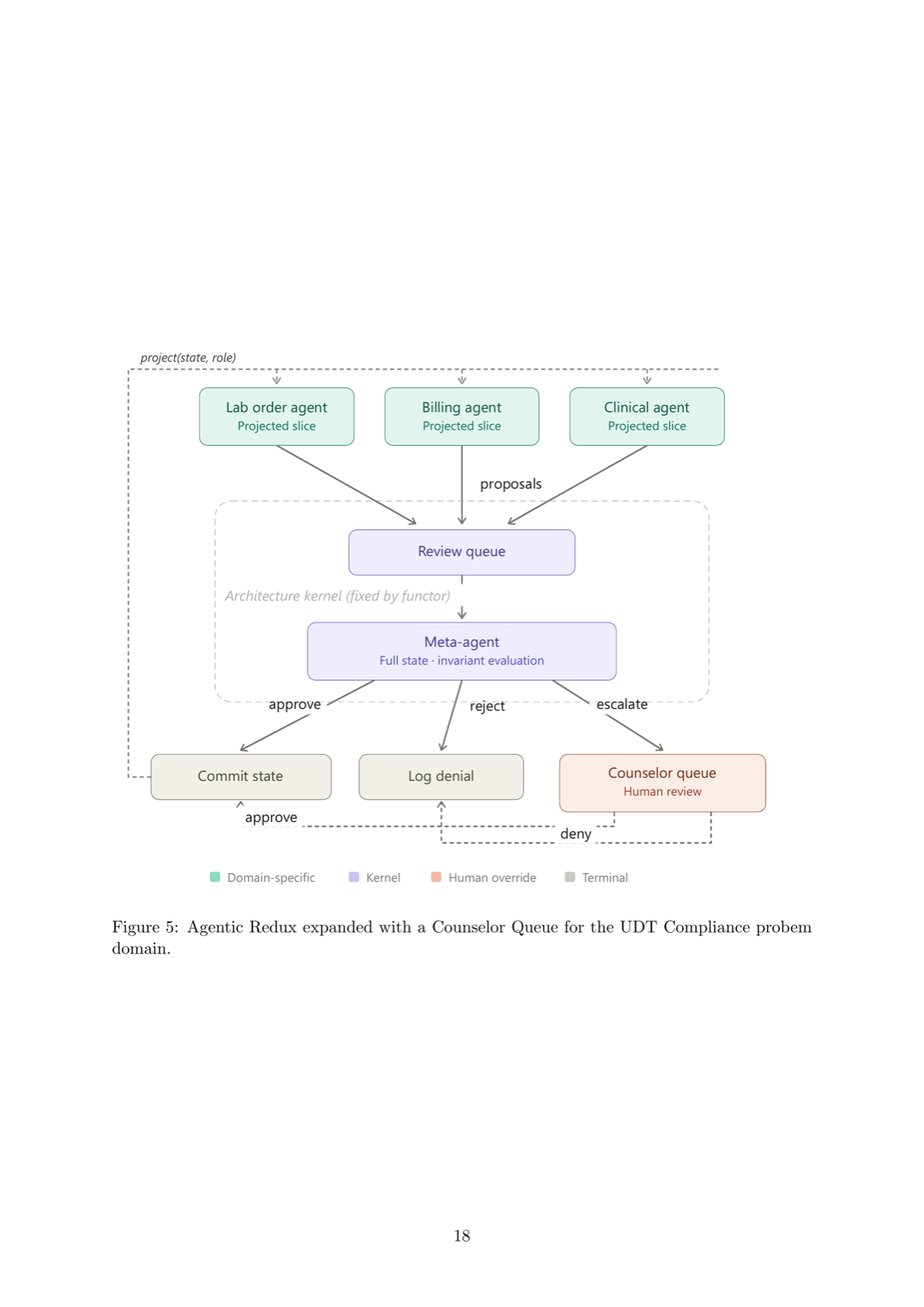
Agentic Redux introduces a provably correct LLM agent architecture that ensures linear auditability through the use of typed lambda calculus. The framework records all decisions in an append-only ledger, making executions semantically guaranteed to be correct within appropriate domains. This approach is particularly valuable for high-stakes applications where accountability and traceability are essential, such as healthcare billing compliance and security vulnerability disclosure.
The methodology of Ontology-First Agent Design involves human experts ontologizing problem domains with Basic Formal Ontology, followed by assigning LLMs to derive roles for agents and humans-in-the-loop. This hybrid approach combines formal reasoning with machine learning, creating a robust framework for agent development that is both theoretically sound and practically applicable.
This work is highly relevant to agent architectures and reasoning & planning, as it provides a formal foundation for building trustworthy AI systems. The ability to prove correctness and maintain audit trails is crucial for deployment-grade systems, especially in regulated domains where safety and compliance are paramount. Agentic Redux represents a significant step toward building reliable and auditable LLM agents.
Key insight: Agentic Redux provides a provably correct LLM agent architecture using typed lambda calculus, ensuring linear auditability and all decisions are recorded in an append-only ledger.
AgentJet: A Flexible Swarm Training Framework for Agentic Reinforcement Learning
Ding, Bolin arXiv: 2606.04484

AgentJet presents a distributed swarm training framework for LLM agent reinforcement learning that adopts a decoupled multi-node architecture. Unlike centralized frameworks, AgentJet separates model optimization on GPU clusters from agent execution on arbitrary devices, enabling capabilities such as heterogeneous multi-model reinforcement learning, multi-task cocktail training, and fault-tolerant execution.
The framework introduces a context tracking module with timeline merging that consolidates redundant context and achieves a 1.5-10x training speedup. This is particularly important for multi-model, multi-turn, and multi-agent settings where context management becomes a bottleneck. AgentJet also supports live code iteration, allowing agents to be edited during training by replacing swarm client nodes, which enhances flexibility and adaptability.
This work is highly relevant to agent architectures and multi-agent systems, as it provides a scalable and flexible framework for training complex agent teams. The swarm architecture enables efficient large-scale RL studies and supports autonomous research workflows, making it a valuable tool for advancing the field of agentic reinforcement learning and multi-agent coordination.
Key insight: AgentJet's distributed swarm architecture enables heterogeneous multi-model reinforcement learning, multi-task training, and fault-tolerant execution, making it suitable for large-scale agent training.
Token Budgets: An Empirical Catalog of 63 LLM-Agent Budget-Overrun Incidents, with an Affine-Typed Rust Mitigation as a Case Study
Khan, Sajjad arXiv: 2606.04056
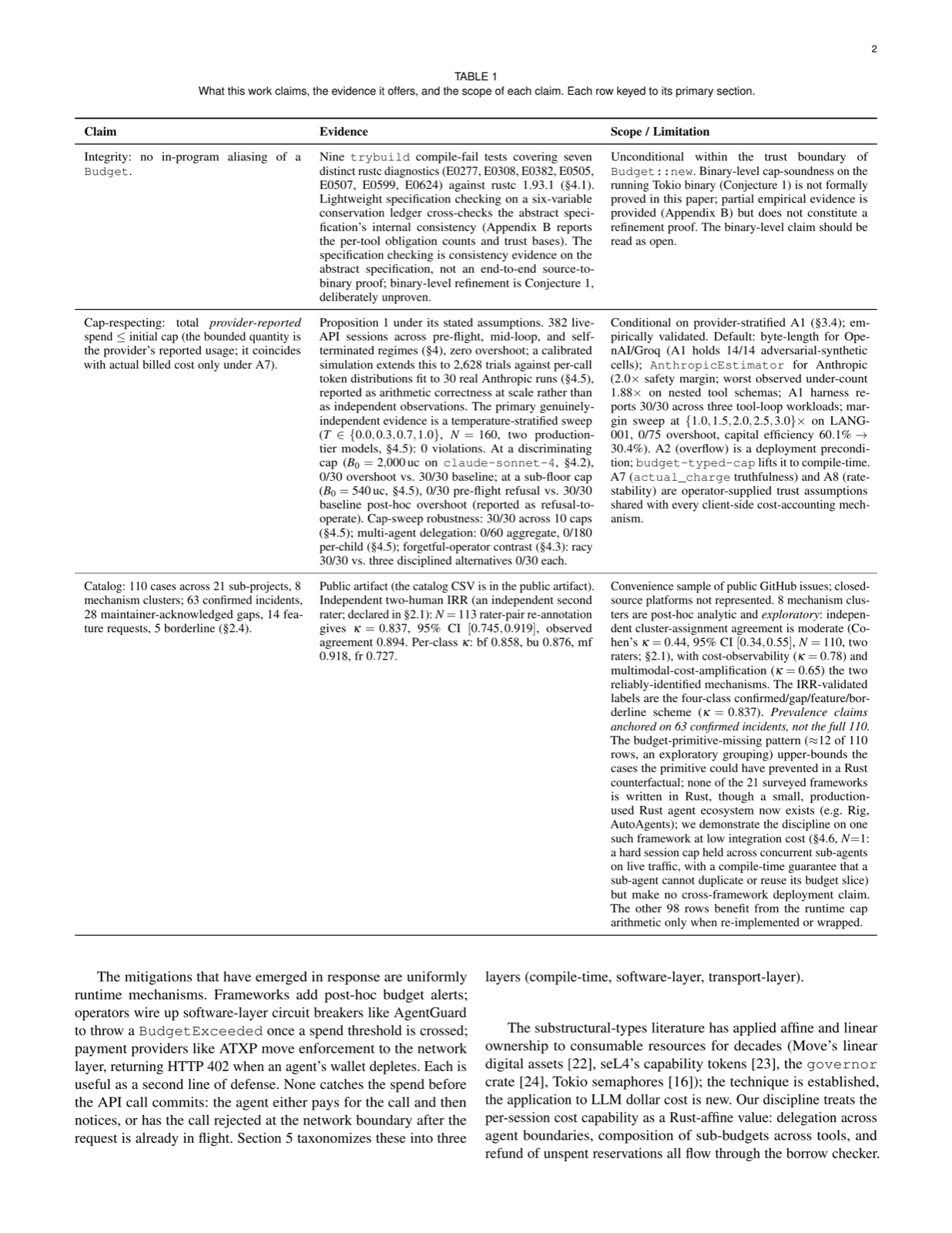
The paper presents a comprehensive empirical catalog of 63 LLM-agent budget overrun incidents, highlighting a critical operational vulnerability in current systems. These failures, occurring across 21 orchestration frameworks from 2023 to 2026, reveal that budget overruns are not anomalies but systemic issues. The authors identify an eight-cluster taxonomy of failure modes, with high inter-rater reliability (Cohen's kappa = 0.837), offering a structured understanding of how these errors manifest in practice.
The core contribution is the introduction of 'token budgets' — a Rust crate that enforces affine ownership semantics to prevent double-spending and misuse of budget resources. This approach leverages type safety to make certain errors compile-time failures rather than runtime hazards. The system is evaluated across multiple runtimes and providers, showing zero cap violations and zero false refusals, demonstrating both safety and operational parity with existing methods.
This work is highly relevant to agent architectures and multi-agent systems, particularly in the context of LLM efficiency and cost control. It addresses a key concern in deploying LLM agents at scale, where uncontrolled resource consumption can lead to significant financial losses. The solution also has implications for memory and tool use, as it directly impacts how agents manage and delegate computational resources, especially in complex, multi-agent workflows.
Key insight: LLM-agent systems are prone to costly budget overruns due to lack of type-system enforcement, and a Rust-based affine-typed solution demonstrates compile-time prevention of common failure patterns in multi-agent delegation.
AI Model Releases

What we learned mapping a year’s worth of AI-enabled cyber threats \ Anthropic
Anthropic analyzed 832 accounts banned for malicious cyber activity between March 2025 and March 2026, mapping them to the MITRE ATT&CK framework. The study found that AI is being used in more dangerous ways, particularly in later stages of cyber operations like lateral movement and privilege escalation rather than initial access. Threat actors are increasingly using AI to automate complex techniques, making traditional risk assessment methods less effective. The MITRE ATT&CK framework doesn't currently capture AI-enabled behaviors like autonomous agent orchestration, which is becoming more prevalent as AI models become more capable.
Why it matters: This research reveals that AI is transforming cyberattacks from simple automated tools into sophisticated autonomous agents, requiring new defensive strategies and security frameworks that can detect and respond to AI-enabled threats. The findings suggest that current cybersecurity methodologies may be inadequate against the next generation of AI-powered attacks.

Alphabet’s record-breaking $85B raise for Google’s AI business is a helluva good signal