Hugging Face releases Holo3.1, a significant advancement in computer-use agents with improved local inference capabilities and mobile automation support. Alibaba introduces Qwen3.7-Plus, a multimodal model with competitive pricing and enhanced reasoning capabilities. Meanwhile, foundational research in agent architectures reveals new insights into effective teaching trajectories, memory consolidation, and multi-agent coordination.
Hugging Face's Holo3.1 family of computer-use models represents a major leap forward with robust performance across diverse environments, native function-calling support, and optimized quantized checkpoints for local inference including FP8, Q4 GGUF, and NVFP4 formats. The models demonstrate 35B-A3B accuracy improvements from 67% to 79.3% on AndroidWorld, making them practical for real-world deployment. Concurrently, Alibaba's Qwen3.7-Plus introduces multimodal capabilities supporting text, video, and imagery inputs at $0.40/$1.60 per 1M token, featuring a 1-million token context window and 'preserve_thinking' parameter for long-horizon reasoning. Research papers reveal critical insights including the pedagogical paradox in agent training where lower-performing teachers can produce better students through environment-grounded supervision, and novel frameworks for memory consolidation, skill evolution, and multi-agent pathfinding that significantly advance the field of autonomous AI systems.
AI Model Releases

Holo3.1: Fast & Local Computer Use Agents
Hugging Face's Holo3.1 family of computer-use models has been released with significant improvements in robustness across environments, agent frameworks, and deployment targets. The models now support mobile automation with performance gains on AndroidWorld, including a 35B-A3B model that improves from 67% to 79.3% accuracy. Holo3.1 introduces native support for function-calling protocols and delivers quantized checkpoints optimized for local inference including FP8, Q4 GGUF, and NVFP4 formats. The release marks a major step toward universal computer-use agents that can operate across environments, integrate into any agent stack, and run wherever the workflow lives.
Why it matters: This represents a significant advancement in making computer-use AI more practical for real-world deployment, particularly with the introduction of local inference capabilities that address privacy and latency concerns while maintaining performance across diverse platforms.

Cyera eyes $12B valuation at 80x ARR multiple despite operating losses | TechCrunch
AI Tooling
Alibaba has released Qwen3.7-Plus, a multimodal large language model supporting text, video, and imagery inputs at a cost of $0.40/$1.60 per 1M token. The model features a 1-million token context window with 256K tokens allocated for internal chain-of-thought processing. It includes a 'preserve_thinking' parameter that maintains reasoning state across conversational turns, addressing the critical issue of state decay in long-horizon tasks. The model outperforms previous generations on multimodal benchmarks and is designed to replace premium frontier models in developer workflows, RPA, and data engineering pipelines.
Why it matters: This model demonstrates Alibaba's strategic shift toward proprietary, closed-source models with competitive pricing, potentially reshaping enterprise AI adoption patterns while addressing key technical challenges in long-horizon reasoning and multi-turn task execution.
Research Papers
What Makes Interaction Trajectories Effective for Training Terminal Agents?
arXiv: 2606.03461
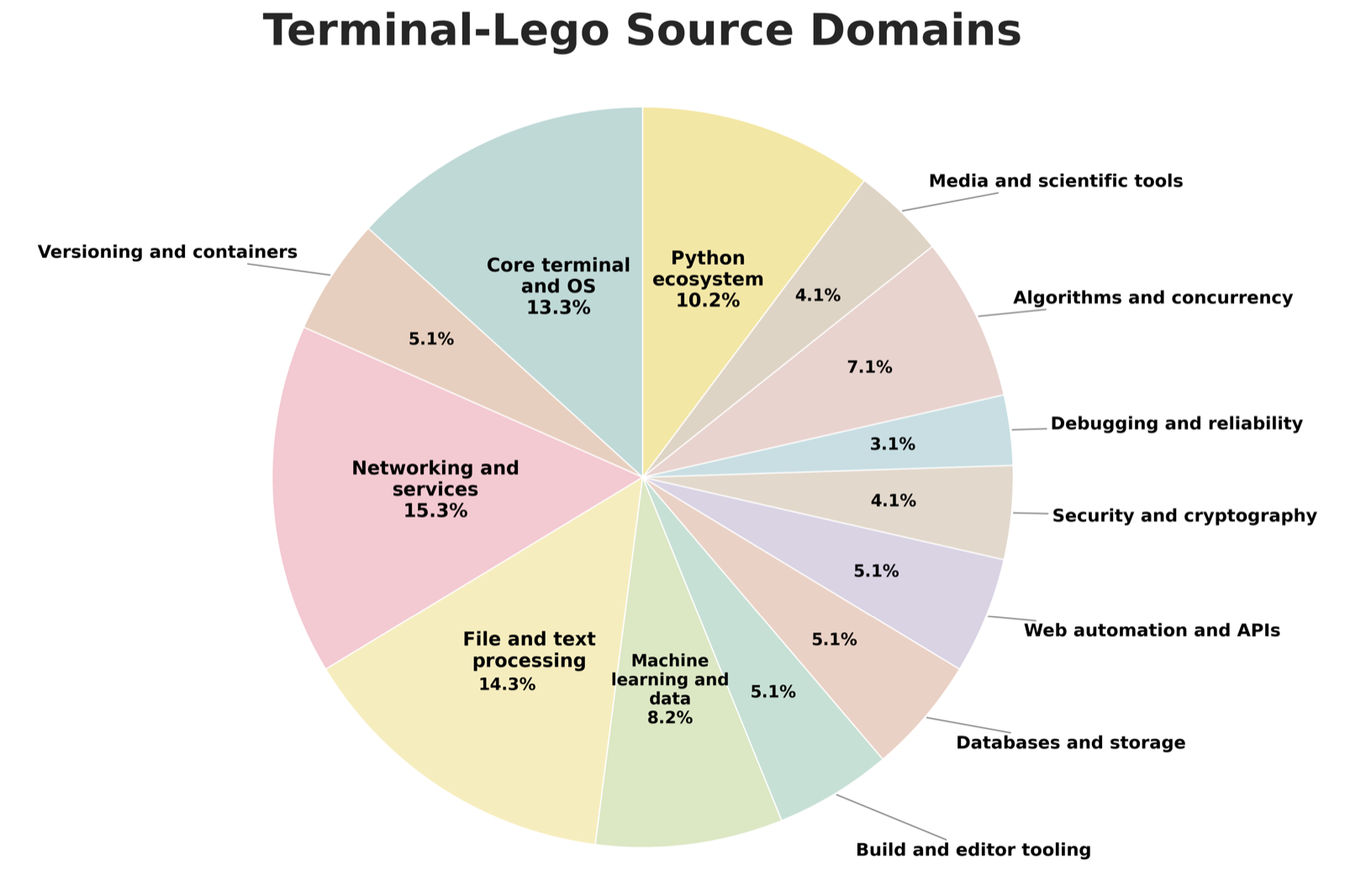
This paper challenges the conventional assumption that higher-performing agents make better teachers for post-training. Using Terminal-Lego, a scalable pipeline for transforming real-world issues into environment-verified agentic tasks, the authors demonstrate that students fine-tuned on trajectories from a lower-scoring agent (DeepSeek-V3.2) outperform those trained on trajectories from a higher-scoring agent (Claude Opus 4.6). This 'pedagogical paradox' is attributed to Environment-Grounded Supervision (EGS), where trajectories explicitly expose inspect-act-verify behaviors through harness-visible interactions.
The study reveals that the key to effective teaching lies in the structure of interaction trajectories rather than the outcome they produce. The EGS approach allows students to internalize robust problem-solving routines instead of fragile action sequences, leading to significantly stronger generalization. This finding shifts the focus from outcome-matching to 'Harness Engineering', where the systematic design of environment-grounded interaction structures becomes the primary catalyst for reproducible and generalizable agentic intelligence.
Scaling analysis shows exceptional data efficiency: with only 15.3k Terminal-Lego trajectories, Qwen3-32B achieves a 24.3% score on Terminal-Bench 2.0, rivaling previous SOTA performance established with over 30x the data volume. This suggests that the frontier of agent post-training lies beyond mere outcome-matching, emphasizing the importance of structured interaction design in creating effective learning environments.
Key insight: The effectiveness of teaching trajectories in agent training is not determined by the absolute performance of the teacher agent, but rather by the environment-grounded supervision that exposes inspect-act-verify behaviors, enabling students to internalize robust problem-solving routines.
Language Models Need Sleep: Learning to Self-Modify and Consolidate Memories
arXiv: 2606.03979
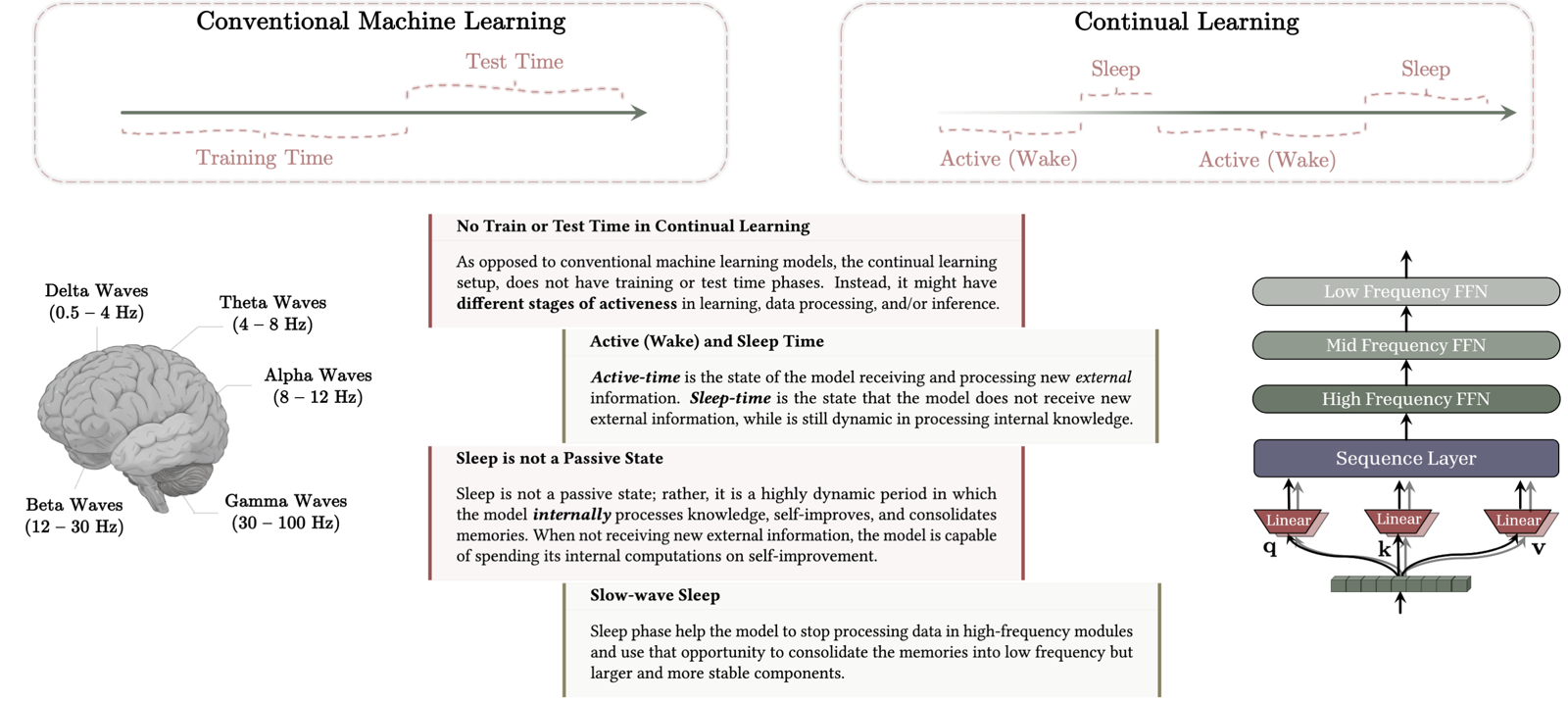
This work introduces a novel 'Sleep' paradigm for language models, drawing inspiration from human learning processes. The paradigm consists of two stages: Memory Consolidation and Dreaming. During Memory Consolidation, an upward distillation process called Knowledge Seeding is employed, where memories from a smaller self are distilled into a larger network to provide more capacity while preserving knowledge. This is achieved through a generalized distillation process combining on-policy distillation with Reinforcement Learning-based imitation learning.
The Dreaming stage involves a self-improvement phase where the model uses RL to generate a curriculum of synthetic data to rehearse new knowledge and refine existing capabilities without human supervision. This approach enables continual learning and effective transfer of temporal in-context knowledge to long-term parameters, addressing a fundamental limitation of existing models that lack the ability to continually learn and effectively transfer their temporal in-context knowledge.
Experiments on long-horizon, continual learning, knowledge incorporation, and few-shot generalization tasks support the importance of the sleep stage. The results suggest that incorporating sleep-like mechanisms into language models can significantly enhance their ability to learn, consolidate memories, and improve over time, providing a promising direction for developing more sophisticated and capable AI systems.
Key insight: Inspired by human learning, a 'Sleep' paradigm allows models to continually learn, distill short-term memories into stable long-term knowledge, and recursively improve themselves through a two-stage process of Memory Consolidation and Dreaming.
DMF: A Deterministic Memory Framework for Conversational AI Agents
arXiv: 2606.03463
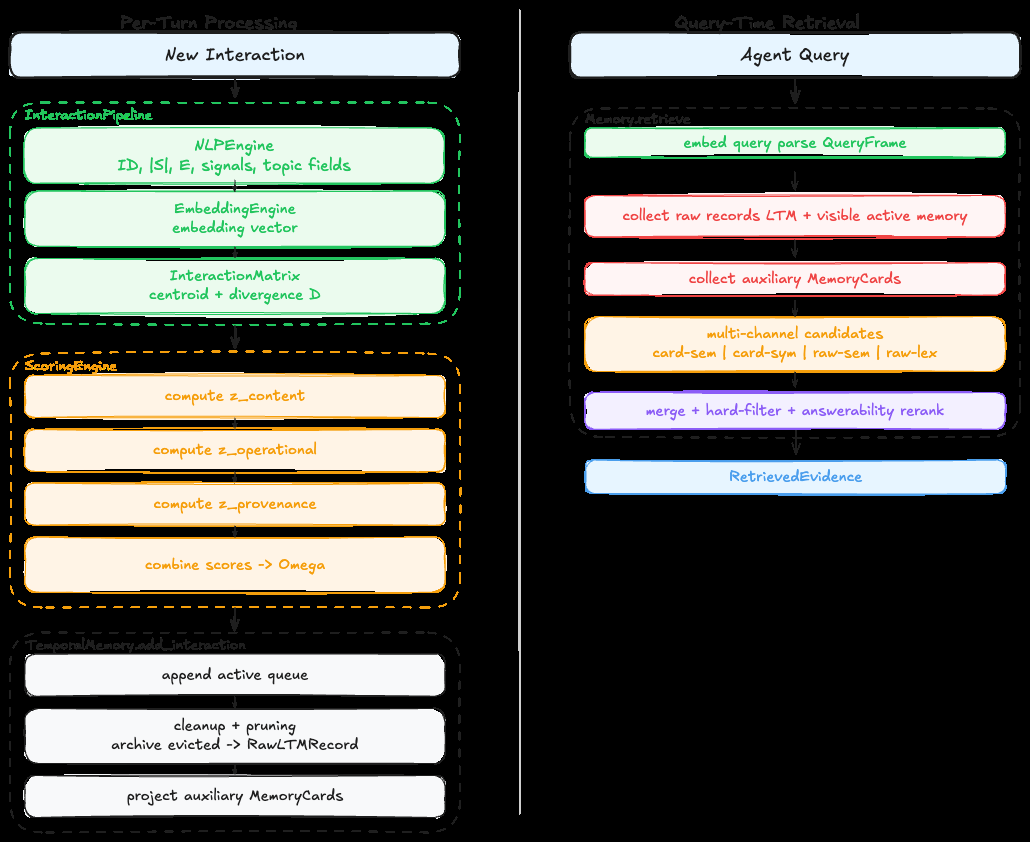
The Deterministic Memory Framework (DMF) addresses the limitations of existing conversational AI memory systems that rely on large language model-based summarization, which introduces non-determinism, escalating token costs, and opacity in pruning decisions. DMF employs a CPU-first approach that replaces generative memory compression with a fully deterministic pipeline grounded in classical NLP analysis, vector geometry, and mathematical scoring.
DMF assigns each conversational interaction a Survival Score Ω computed from deterministic content signals, conversational cues, and structured provenance, combined through a logistic projection. An interaction-count decay law governs how relevance evolves as new turns arrive, preserving full determinism. This approach enables the system to eliminate LLM calls from the memory-management loop, reducing token costs to nearly zero and enabling deterministic memory systems for conversational AI agents.
Experiments on the LoCoMo and LongMemEval datasets show that DMF achieves comparable accuracy while using zero tokens to prepare the memory context and 5x to 242x fewer tokens over the entire conversation. These results demonstrate that it is possible to eliminate LLM calls from the memory-management loop, significantly reducing token costs and enabling more efficient and deterministic memory systems for conversational AI agents.
Key insight: A deterministic memory framework (DMF) replaces generative memory compression with a fully deterministic pipeline grounded in classical NLP analysis, vector geometry, and mathematical scoring, achieving comparable accuracy with zero tokens for memory preparation and significantly reduced token costs.
Diagnosing Knowledge Gaps in LLM Tool Use: An Agentic Benchmark for Novel API Acquisition
arXiv: 2606.03657
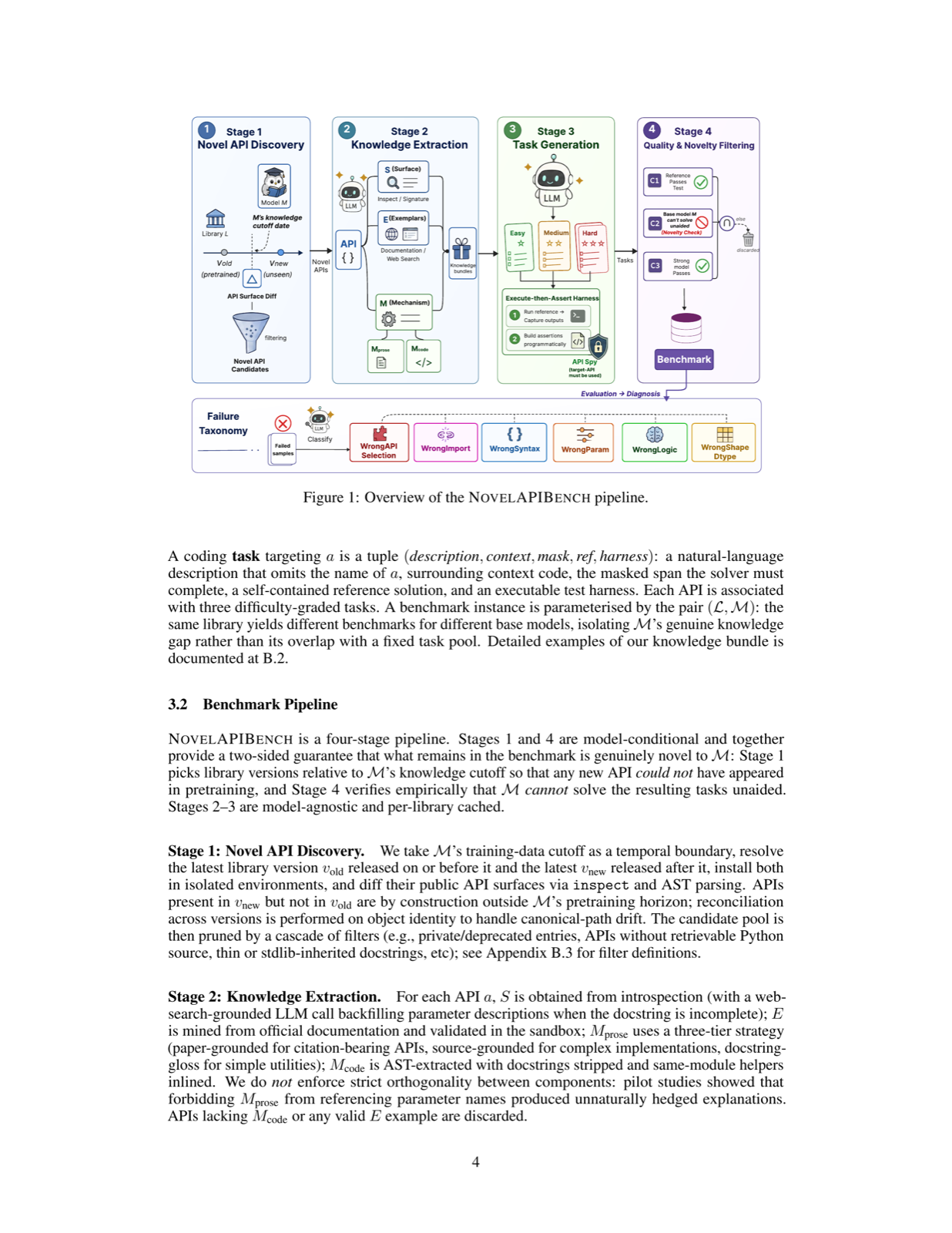
This paper introduces NovelAPIBench, a fully automated dynamic benchmark for diagnosing knowledge gaps in LLM tool use. The benchmark discovers novel APIs, extracts decomposed knowledge bundles, generates executable coding tasks, and assigns failed samples to six diagnostic categories. This approach provides a more nuanced understanding of how models acquire and utilize API knowledge compared to existing static benchmarks.
The study finds that knowledge components are not interchangeable, with usage examples being the strongest standalone signal. The best two-component settings pair signatures with either mechanisms or examples depending on the domain and backbone. This suggests that retrieval and tuning play complementary roles: retrieval supplies volatile API content, while tuning improves procedural integration. These findings highlight the importance of understanding how different types of knowledge contribute to effective tool use in LLMs.
The research also reveals that adding more context, especially source code, can hurt performance by increasing import-path errors. Parametric adaptation does not replace retrieval once external knowledge is removed; rather, fine-tuning mainly teaches models how to use provided bundles, and this ability transfers to held-out libraries. This indicates that a hybrid approach combining retrieval and tuning is more effective than relying on either method alone for improving LLM tool use capabilities.
Key insight: Knowledge components for LLM tool use are not interchangeable; usage examples are the strongest standalone signal, while the best two-component settings pair signatures with either mechanisms or examples depending on the domain and backbone, suggesting that retrieval and tuning play complementary roles.
StepFinder: A Temporal Semantic Framework for Failure Attribution in Multi-Agent Systems
arXiv: 2606.03467

StepFinder addresses the challenge of failure attribution in LLM-based multi-agent systems, where single-step execution errors can propagate and lead to cascading failures. Unlike existing methods that rely on LLMs to reason over original execution trajectories, StepFinder uses LLMs solely during the feature construction phase to encode execution logs into temporal semantic sequences.
The framework subsequently applies a parameter-efficient combination of temporal modeling and attention modules to capture the sequential evolution and cross-step dependencies of trajectories. Finally, step-level error scores are refined through multi-scale differences and position bias, enabling precise root cause identification. This approach reduces inference time by 79% compared to the fastest LLM-based method, with no text generation overhead, making it significantly more efficient.
Experimental results on the Who&When benchmark demonstrate that StepFinder outperforms LLM-based methods in step-level failure attribution while achieving substantially higher inference efficiency. This shows that lightweight, efficient failure attribution frameworks can be developed that maintain high accuracy while dramatically reducing computational overhead, which is crucial for real-time multi-agent systems.
Key insight: StepFinder, a lightweight failure attribution framework, uses LLMs only during feature construction to encode execution logs into temporal semantic sequences, then applies temporal modeling and attention modules to capture sequential evolution and cross-step dependencies, achieving 79% faster inference than LLM-based methods.
SkillPyramid: A Hierarchical Skill Consolidation Framework for Self-Evolving Agents
arXiv: 2606.03692

SkillPyramid addresses the fundamental constraint of current AI agents in long-term improvement due to a lack of systematic skill construction, accumulation, and transfer. The framework operates on a hierarchical skill topology and introduces a self-evolution mechanism that enables agents to compose, validate, and incorporate new skills during task execution, transforming a skill collection from a static resource pool into a dynamic evolution system.
Experiments on ALFWorld, WebShop, and ScienceWorld across four backbone models show that SkillPyramid substantially increases the average reward by 38.0% and reduces execution steps by 27.7%. This demonstrates the effectiveness of hierarchical skill consolidation in improving agent performance and efficiency, particularly in complex, multi-step tasks where skill reuse and generalization are crucial.
The approach enables agents to effectively transform experience into reusable assets and generalize task-specific skills to novel scenarios, addressing the limitations of current agents that tend to redundantly construct similar capabilities across different tasks. This represents a significant advancement in creating self-evolving agents that can continuously improve and adapt their skill repertoires over time.
Key insight: SkillPyramid transforms a skill collection from a static resource pool into a dynamic evolution system by operating on a hierarchical skill topology and introducing a self-evolution mechanism that enables agents to compose, validate, and incorporate new skills during task execution.
EvoDS: Self-Evolving Autonomous Data Science Agent with Skill Learning and Context Management
arXiv: 2606.03841

EvoDS addresses the limitations of existing approaches in automated data science by introducing two key strategies: Autonomous Skill Acquisition (ASA) and Adaptive Context Compression (ACC). ASA enables agents to synthesize, validate, and reuse executable skills, while ACC treats context management as a learned control problem rather than passive truncation.
The framework is orchestrated within a two-stage multi-agent training scheme, enabling EvoDS to autonomously improve over time. Theoretically, EvoDS's hierarchical design reduces tool-selection error, and its optimization objective aligns with an information bottleneck principle, ensuring efficient context use. This approach provides a principled solution for managing long-horizon context in multi-stage, iterative data science pipelines.
Empirical results show that EvoDS outperforms state-of-the-art open-source data science agents by an average of 28.9% across four diverse benchmarks while eliminating out-of-token failures. This demonstrates the effectiveness of combining skill learning with adaptive context management in creating more capable and reliable autonomous data science agents that can operate reliably in complex, multi-step tasks.
Key insight: EvoDS introduces two key strategies for self-evolving autonomous data science agents: Autonomous Skill Acquisition (ASA) and Adaptive Context Compression (ACC), enabling agents to synthesize, validate, and reuse executable skills while treating context management as a learned control problem.
Imaginative Perception Tokens Enhance Spatial Reasoning in Multimodal Language Models
arXiv: 2606.03988
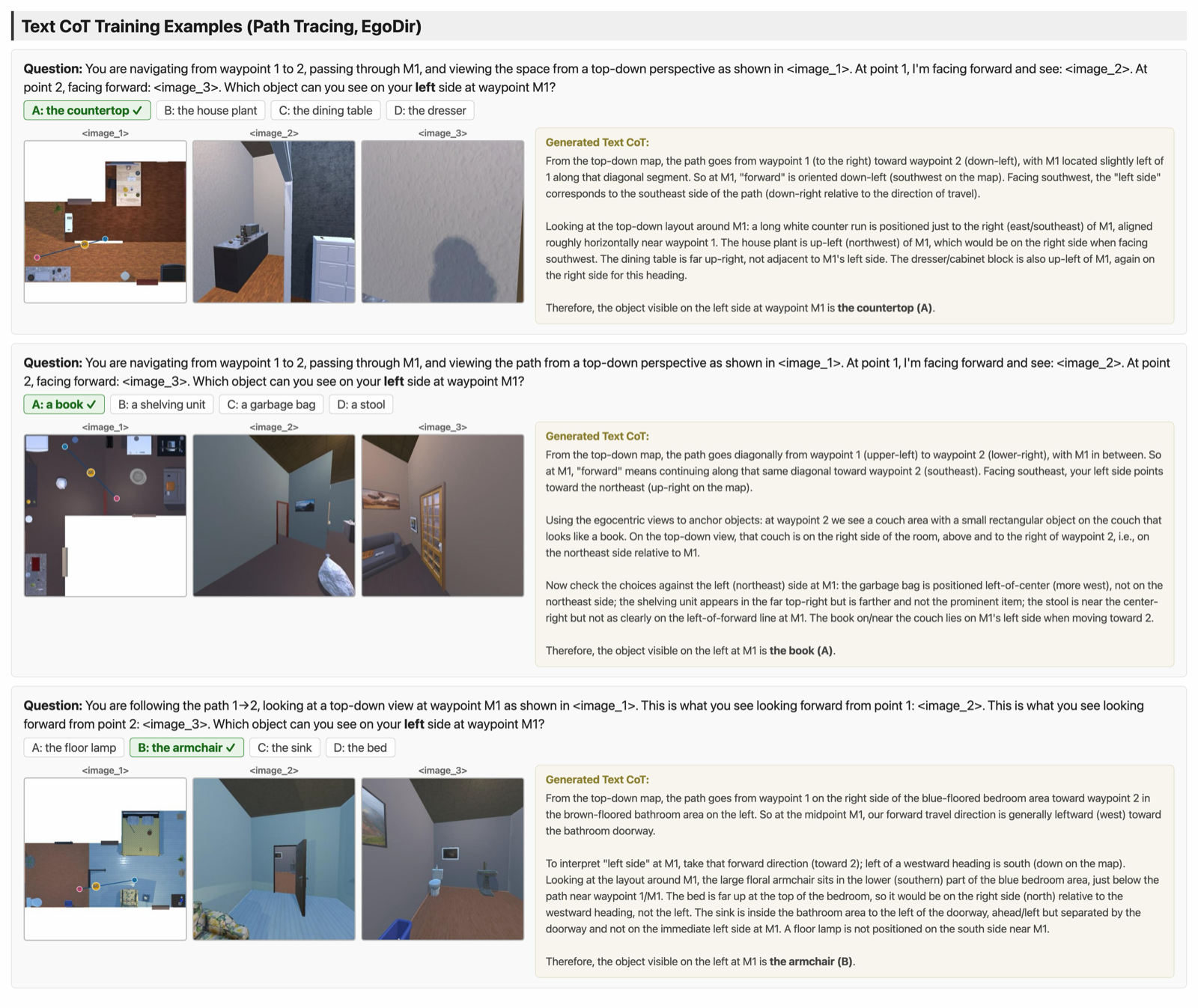
This paper introduces Imaginative Perception Tokens (IPT), intermediate perceptual representations that externalize what a VLM would perceive under alternative spatial configurations while remaining consistent with the observed input. IPT addresses the challenge of spatial reasoning in vision language models (VLMs) where critical information is not directly observable, requiring imaginative perception to infer unseen viewpoints, trace paths through occluded spaces, or integrate partial observations.
The approach is evaluated on three tasks: Perspective Taking (PET), Path Tracing (PT), and Multiview Counting (MVC), using datasets of approximately 20K examples with ground truth imaginations, answers, and evaluation benchmarks. Results show that IPT supervision consistently improves spatial reasoning and often outperforms textual chain of thought training, even without generating images at inference time. This demonstrates that IPT provides a principled supervision signal for reasoning about unobserved spatial structure.
The study also finds that combining IPT and label-only supervision yields additional gains, whereas textual chain of thought can substantially degrade performance, suggesting a modality mismatch when spatial computation is forced through language. Overall, IPT provides a promising approach for improving generalization in spatial reasoning tasks while producing interpretable intermediate representations that enhance model understanding and explainability.
Key insight: Imaginative Perception Tokens (IPT) provide a principled supervision signal for reasoning about unobserved spatial structure by externalizing what a VLM would perceive under alternative spatial configurations, improving generalization and producing interpretable intermediate representations.
Entropy Is Not Enough: Unlocking Effective Reinforcement Learning for Visual Reasoning via Vision-Anchored Token Selection
arXiv: 2606.03937

This paper challenges the conventional use of token-level entropy for credit assignment in visual reasoning tasks, showing that this mechanism collapses due to the omission of vision-sensitive tokens with naturally low entropy. The authors introduce VEPO (Vision-Entropy token-selection for Policy Optimization), an effective RL framework that explicitly integrates visual sensitivity with token entropy through a principled multiplicative coupling.
VEPO redirects gradient credit toward tokens that are simultaneously visually grounded and highly informative, addressing the inherent demand for interleaving precise perceptual grounding with semantic reasoning. This approach overcomes the limitations of existing multimodal RL methods that struggle to satisfy the need for systematic visual measurements or overlook that token entropy primarily drives semantic exploration.
Extensive experiments demonstrate VEPO's leading performance, significantly outperforming the entropy-only baseline by 2.28 points at 7B-scale and 3.15 points at 3B-scale. Ablations further substantiate the soundness of the method, showing that the integration of visual sensitivity with token entropy is crucial for effective reinforcement learning in visual reasoning tasks, particularly when dealing with complex multimodal inputs.
Key insight: VEPO (Vision-Entropy token-selection for Policy Optimization) addresses the limitations of token-level entropy in visual reasoning by explicitly integrating visual sensitivity with token entropy via a principled multiplicative coupling, redirecting gradient credit toward visually grounded and highly informative tokens.
Hedge-Bench: Benchmarking Agents on Hard, Realistic Tasks Pertaining to Financial Reasoning
arXiv: 2606.03918
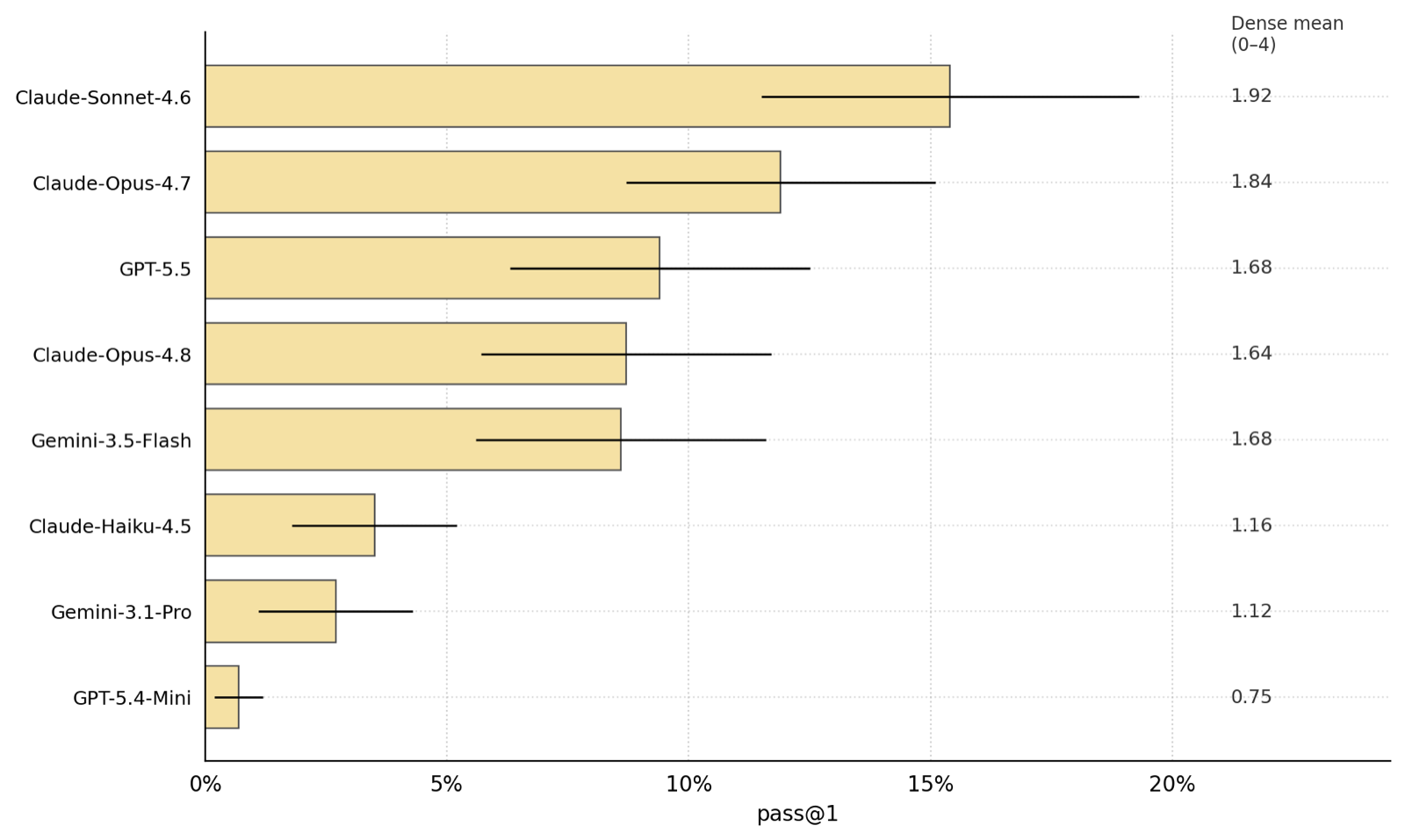
Hedge-Bench 1.0 addresses the gap in evaluating AI agents on complex, open-ended financial reasoning tasks that define expert analyst work. Unlike existing benchmarks that rely on model-judged outputs introducing noise and circularity, Hedge-Bench uses actual, on-the-job tasks grounded in the explicit reasoning traces of professional hedge fund analysts working with relevant information sources.
This approach enables deterministic grading against verified expert steps, providing a more reliable and accurate evaluation of agent performance on complex financial reasoning tasks. The benchmark includes 102 actual tasks, offering a realistic assessment of how well current models and agents can handle the nuanced, multi-step reasoning required in professional financial analysis.
Frontier models and agents score below 16% on the benchmark, highlighting the significant gap between current capabilities and the demands of expert-level financial reasoning. This benchmark serves as a crucial tool for evaluating and advancing the state-of-the-art in financial reasoning for AI agents, emphasizing the need for more sophisticated reasoning capabilities in complex, real-world applications.
Key insight: Hedge-Bench 1.0 provides a benchmark of 102 actual, on-the-job tasks grounded in the explicit reasoning traces of professional hedge fund analysts, enabling deterministic grading against verified expert steps and revealing that frontier models and agents score below 16% on the benchmark.
PyraMathBench: Evaluating and Improving Mathematical Capability in Large Language Models
arXiv: 2606.03858
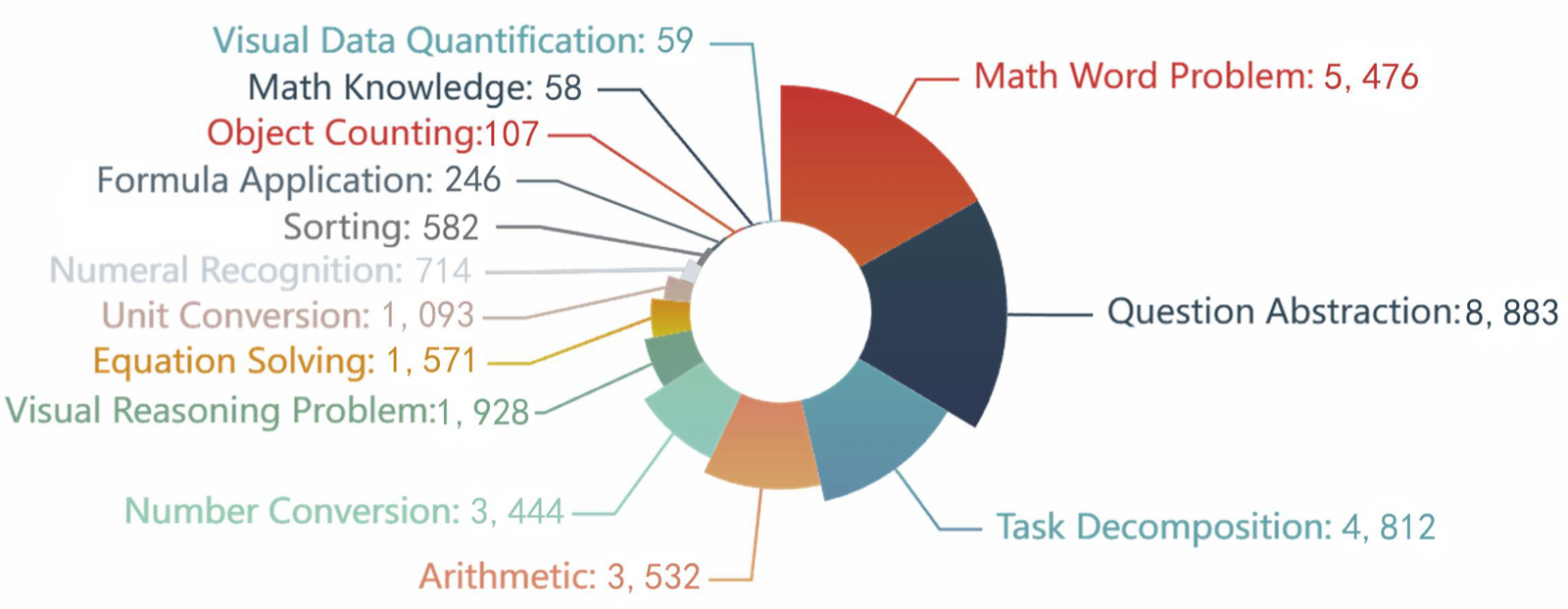
PyraMathBench introduces a hierarchical benchmark for evaluating mathematical reasoning in LLMs, revealing that current models perform poorly on numerical computation and abstract questions. The benchmark's 32,505 questions span four cognitive aspects and 14 subcategories, providing granular insights into where LLMs falter. This work is significant for agent architectures and reasoning systems, as it highlights the need for more nuanced evaluation methods that go beyond simple accuracy metrics.
The authors propose SOLVE and IRPO methods to enhance LLMs' numerical-mathematical synergy through efficient tool calls, including fuzzy matching and low-quality call rejection. These techniques demonstrate that targeted training and optimization can significantly improve performance, with Qwen-2.5 achieving a 5.0-point improvement. This approach is particularly relevant for multi-agent systems where agents must coordinate complex tool usage and reasoning processes.
The findings suggest that LLMs' mathematical capabilities are not uniformly distributed across different types of problems, indicating that specialized training methods are necessary. This has implications for memory and tool use architectures in AI agents, where the ability to effectively integrate numerical computation with symbolic reasoning is crucial for complex problem-solving tasks.
Key insight: LLMs struggle with numerical computation and abstract reasoning, but can be improved via tool use optimization and interactive learning methods.
BigFinanceBench: A Workflow-Grounded Benchmark for Financial-Research Agents
arXiv: 2606.03829
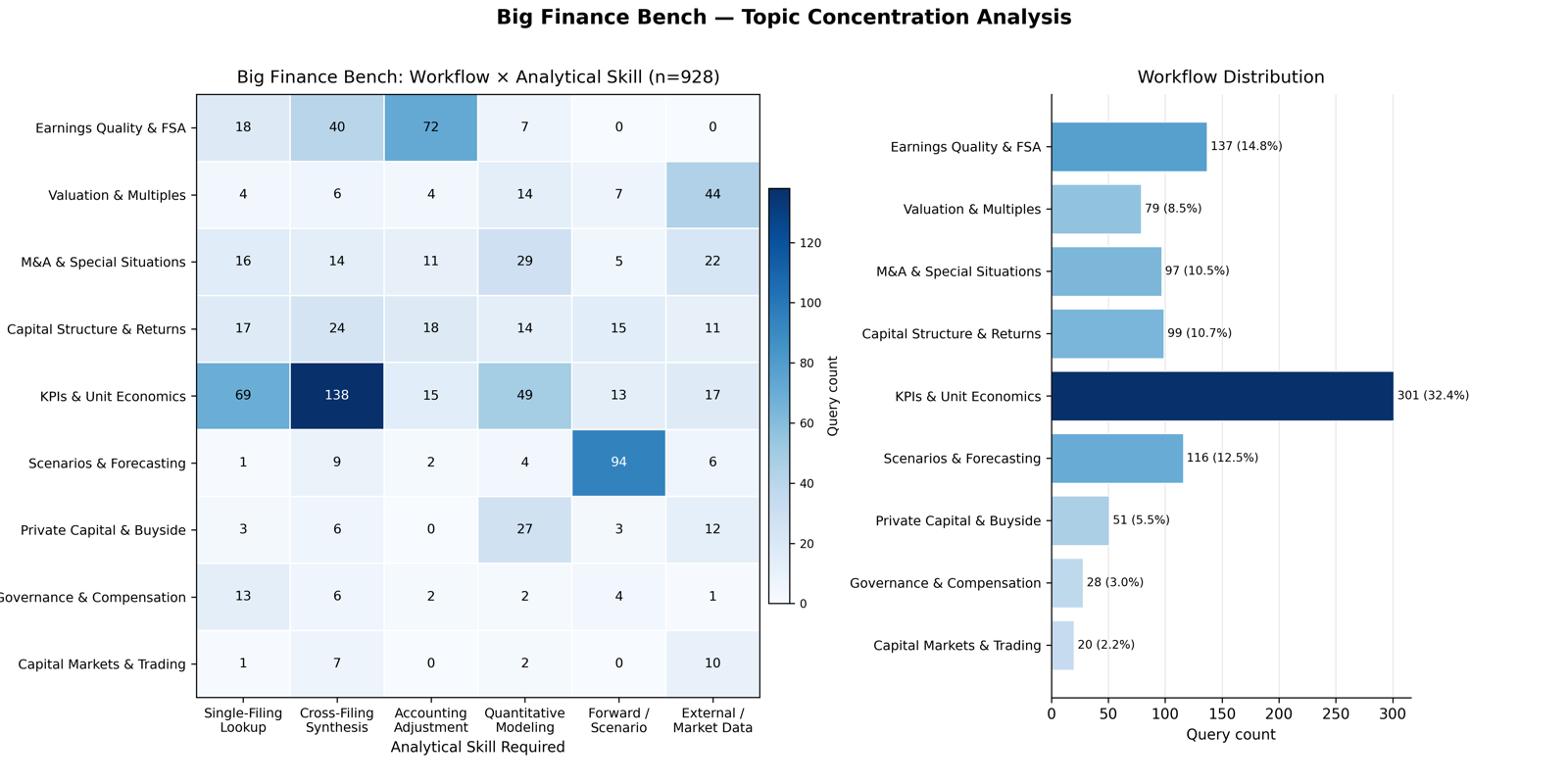
BigFinanceBench addresses a critical gap in financial AI evaluation by focusing on the full derivation process rather than just final outputs. This benchmark, with 928 expert-authored tasks and detailed rubrics, enables partial-credit evaluation and failure localization across analyst workflows. The approach is particularly relevant for agent architectures that must perform complex, multi-step reasoning tasks in high-stakes domains.
The evaluation reveals substantial headroom in current financial research agents, with even top-performing systems achieving only 58.8% rubric scores. This demonstrates that final-answer accuracy is a lossy proxy for derivation quality, emphasizing the need for more sophisticated evaluation frameworks. The findings suggest that agent architectures must be designed to support transparent, auditable reasoning processes that align with human expert workflows.
The workflow-grounded approach of BigFinanceBench has implications for multi-agent systems in financial domains, where coordination between different agents performing specialized tasks (e.g., data retrieval, analysis, reporting) is essential. This work advances the understanding of how to design and evaluate agents that can produce reliable, explainable outputs in complex financial environments.
Key insight: Financial research agents require workflow-grounded evaluation that captures the full derivation process, not just final answers.
Enhancing Operational Safety via Agentic Dialogue Hazard Identification Analysis
arXiv: 2606.03812
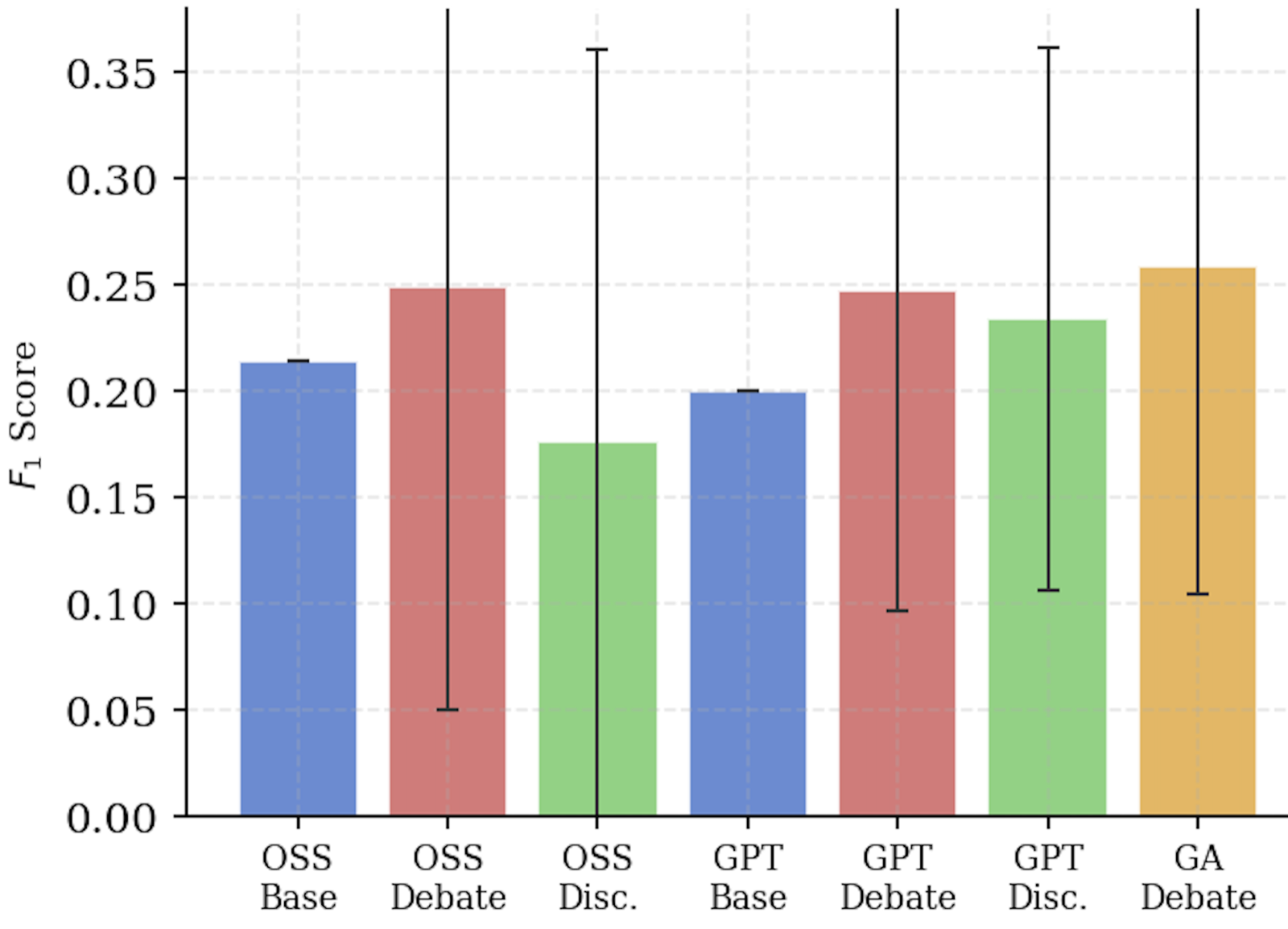
HAZDIAL presents a framework for improving hazard identification in safety-critical domains through structured agentic dialogue systems. By comparing adversarial debate and constructive discussion modalities, the work demonstrates that multi-turn, multi-agent interactions can significantly enhance the quality of NLP-based hazard analysis compared to single-pass baselines. This is particularly relevant for agent architectures that must operate in high-stakes environments where reliability is paramount.
The framework's systematic evaluation using both standard classification metrics and novel dialogue metrics provides a comprehensive assessment of dialogue quality. The algorithm-based agentic interaction optimization approach suggests that structured dialogue protocols can be designed to maximize safety outcomes, which has implications for designing robust multi-agent systems in domains like autonomous systems and industrial control.
This work advances the intersection of dialogue systems, multi-agent reasoning, and AI safety by providing empirical evidence that dialogue-driven approaches can improve safety outcomes. The findings suggest that agent architectures for safety-critical applications should incorporate mechanisms for iterative reasoning, self-correction, and contextual refinement that are characteristic of human safety engineering practices.
Key insight: Multi-agent dialogue systems can improve hazard identification accuracy through structured interaction patterns and optimization algorithms.
Quantifying Faithful Confidence Expression in Large Reasoning Models
arXiv: 2606.03969
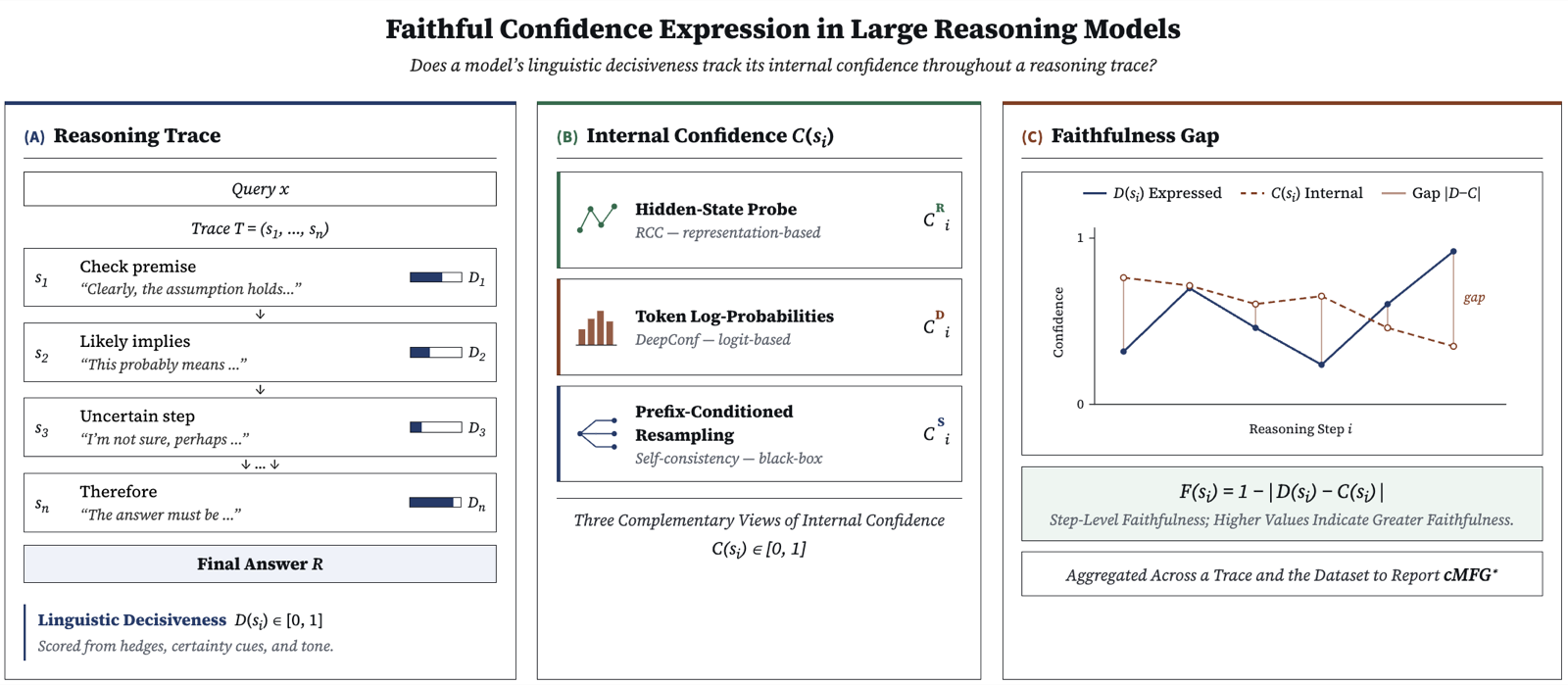
This work addresses a fundamental challenge in LLM reliability: the gap between intrinsic confidence and linguistically expressed confidence (faithful calibration). The authors introduce a novel framework that analyzes linguistic decisiveness using three sources of internal uncertainty—token probabilities, hidden states, and sampled response consistency. This approach is crucial for agent architectures that must make reliable decisions under uncertainty.
The findings reveal that faithful confidence expression is a significant challenge for large reasoning models, with different confidence estimators producing divergent assessments of the same traces. This fragility in evaluation methodologies suggests that current approaches to measuring model reliability are insufficient for high-stakes applications. The work establishes faithful confidence expression as a distinct reliability target for reasoning models, particularly important for agents operating in safety-critical domains.
The prefix-conditioned sampling approach to control for conditional and structural variation across reasoning traces provides a methodological advance for evaluating reasoning models. This has implications for memory architectures in agents, where the ability to track and express confidence in different reasoning steps is essential for effective decision-making and error recovery.
Key insight: Large reasoning models struggle with faithful confidence expression, requiring new frameworks to quantify and improve calibration.
Agentic Chain-of-Thought Steering for Efficient and Controllable LLM Reasoning
arXiv: 2606.03965
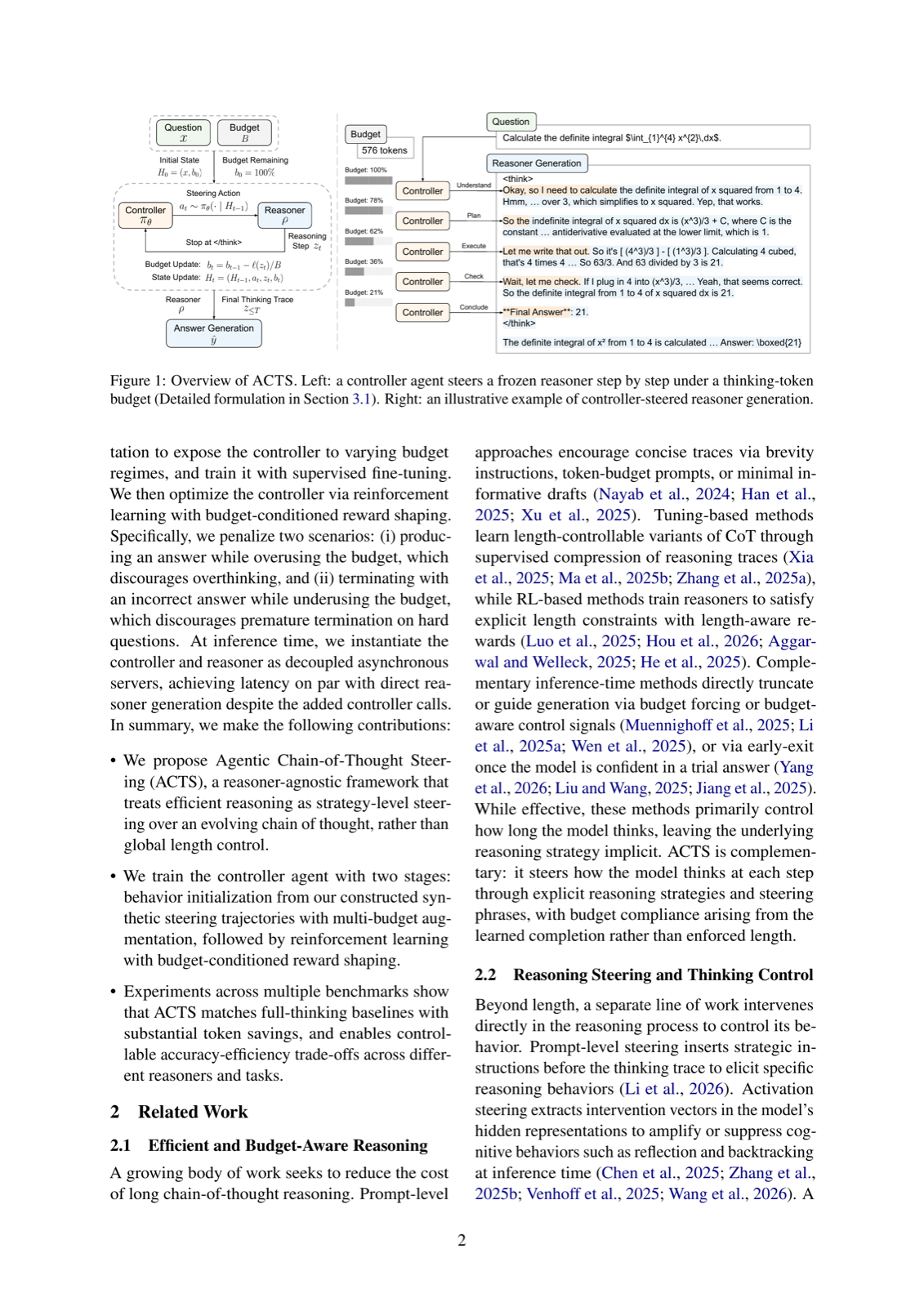
ACTS introduces a Markov decision process framework for steering chain-of-thought reasoning in LLMs, where a controller agent adaptively guides a frozen reasoner during inference. This approach enables budget-aware strategy control while preserving the reasoner's generation continuity, addressing key limitations of existing efficient reasoning methods that often leave the reasoning process implicit.
The method's ability to match full-thinking performance with substantial token savings demonstrates its practical value for agent architectures that must balance computational efficiency with reasoning quality. The reinforcement learning with budget-conditioned reward shaping allows for controllable accuracy-efficiency trade-offs, which is particularly important for multi-agent systems where resource allocation and coordination are critical.
This work represents a significant advancement in reasoning and planning architectures, as it provides a mechanism for dynamic control of reasoning processes. The synthetic steering trajectories and multi-budget augmentation approach suggest that agent-based reasoning control can be effectively learned and optimized, opening new possibilities for designing adaptive reasoning systems that can adjust their thinking strategies based on task requirements and resource constraints.
Key insight: Agent-based steering of chain-of-thought reasoning enables efficient, controllable, and budget-aware reasoning processes.
Knowledge Editing in Masked Diffusion Language Models
arXiv: 2606.03924
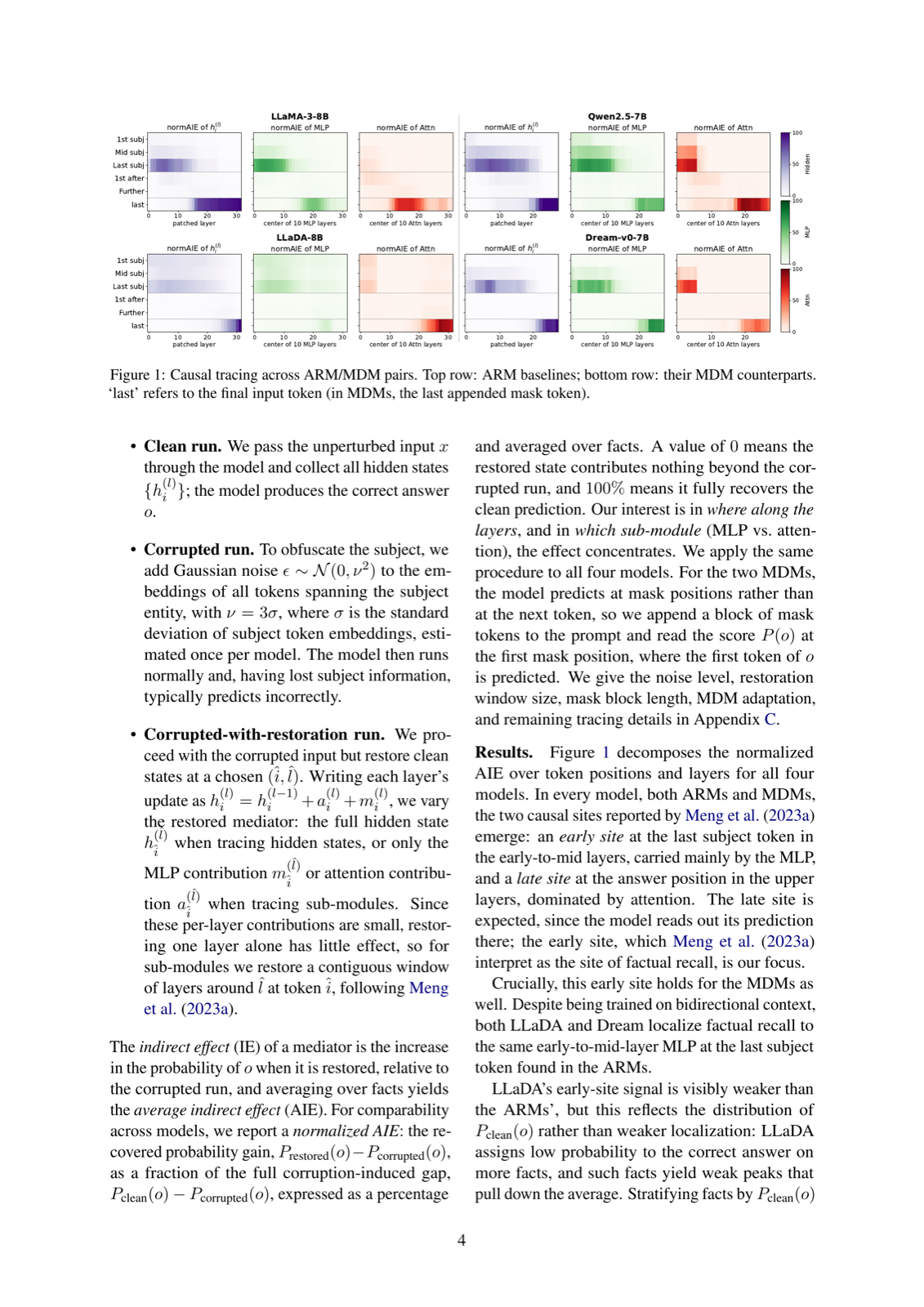
The paper addresses a critical gap in knowledge editing techniques by extending the locate-then-edit paradigm from autoregressive models to masked diffusion models (MDMs). While both paradigms identify similar early-to-mid-layer MLP locations for fact localization, the performance diverges significantly when dealing with multi-token edits. This divergence stems from how MDMs generate text through iterative denoising, where intermediate states are partially unmasked and not optimized for the edited fact, leading to degradation in performance.
The authors introduce a correction mechanism that optimizes edits for these partially unmasked intermediate states, substantially restoring multi-token editing performance. This insight is crucial for developing more robust and generalizable knowledge editing methods that can be applied across different model architectures, not just autoregressive ones. It also highlights the importance of considering the generative process when designing editing strategies.
This work contributes to the broader field of LLM efficiency and reasoning by showing that even with similar architectural assumptions, the underlying generative dynamics can lead to very different outcomes. It also opens up new directions for improving the reliability of knowledge editing in complex, bidirectional models, which are increasingly used in downstream applications requiring accurate factual recall.
Key insight: Knowledge editing in masked diffusion models (MDMs) faces unique challenges compared to autoregressive models (ARMs), particularly in multi-token edits, due to how intermediate states are handled during generation. However, targeted corrections can restore performance.
Synthesize and Reward -- Reinforcement Learning for Multi-Step Tool Use in Live Environments
arXiv: 2606.03892

This paper presents PROVE, a framework that tackles three major obstacles in training LLMs for multi-step tool orchestration: costly live environments, detached synthetic data, and suboptimal reward signals. By leveraging a library of 20 stateful MCP servers and an automated data synthesis pipeline grounded in real server states, PROVE ensures that generated tool-call trajectories are executable and relevant. This approach significantly improves the realism and utility of training data, which is essential for effective reinforcement learning in practical settings.
The programmatic reward design in PROVE is particularly innovative, incorporating multiple components such as graduated validity scoring, dependency-aware coverage, adaptive efficiency penalties, and argument-value matching bonuses. These elements work together to provide a comprehensive and nuanced reward signal that encourages both correctness and efficiency, without relying on external judge models. This makes the framework more scalable and robust compared to traditional reward modeling approaches.
The empirical results across multiple benchmarks (BFCL Multi-Turn, tau2-bench, T-Eval) demonstrate consistent gains of up to +10.2 points, showing that PROVE effectively addresses the challenges of multi-step tool use. This work is highly relevant to agent architectures and memory & tool use, as it provides a practical solution for training agents that can reliably interact with complex, stateful environments.
Key insight: A novel framework for training LLMs to perform multi-step tool use in live environments using synthetic data generation, stateful server environments, and programmatic rewards that improve performance across multiple benchmarks.
RealClawBench: Live OpenClaw Benchmarks from Real Developer-Agent Sessions
arXiv: 2606.03889
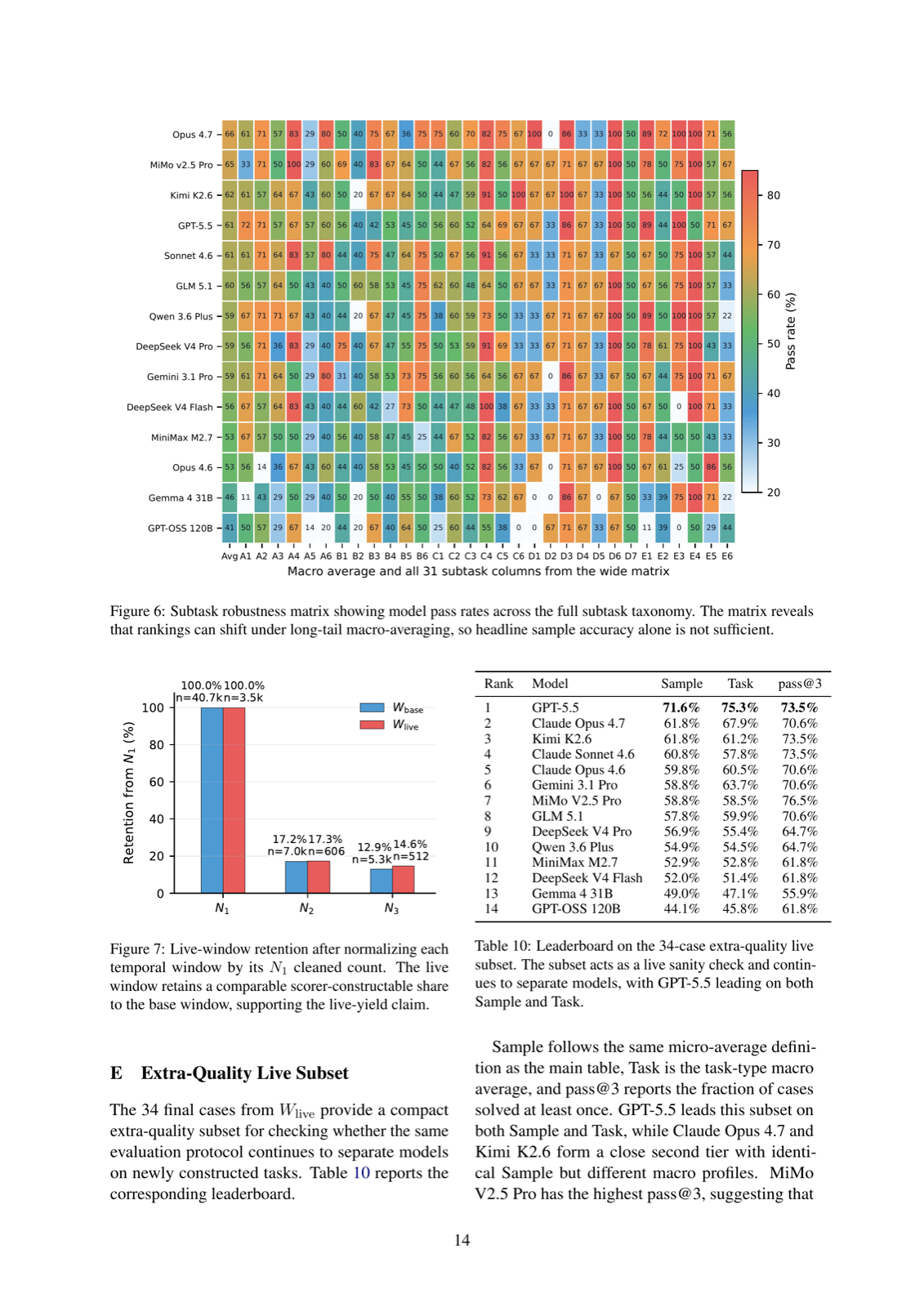
RealClawBench represents a significant step forward in agent evaluation by grounding benchmarks in actual developer-agent interactions. Unlike traditional benchmarks that may not reflect real-world complexity, this framework captures the distribution, diversity, and difficulty of real tasks, including those involving local execution environments, implicit intent, and nontrivial verification. This realism is crucial for evaluating the true capability of agents in practical applications.
The framework's core mechanisms—reconstructed execution environments and deterministic verifiable scorers—enable the conversion of real sessions into reproducible, automatically scored tasks. This not only ensures consistency in evaluation but also allows for scalable benchmarking. The resulting 281 executable tasks preserve the source distribution, providing a more accurate reflection of real-world usage patterns.
Evaluating 14 contemporary models on RealClawBench reveals that even the best system solves only 65.8% of tasks, highlighting substantial headroom in current agent capabilities. This finding underscores the need for more realistic and challenging benchmarks that better measure agent performance in actual use cases, particularly in developer-agent workloads.
Key insight: RealClawBench introduces a benchmark framework based on actual developer-agent sessions, capturing the complexity and realism of real-world tasks, revealing significant capability gaps in current models.
Skill-RM: Unifying Heterogeneous Evaluation Criteria via Agent Skill
arXiv: 2606.03980

Skill-RM introduces a novel approach to reward modeling by reframing it as a reusable Reward-Evaluation Skill, allowing for consistent and transparent integration of heterogeneous evaluation criteria such as rule-based verifiers, ground-truth references, and procedural checklists. This unification is essential for building robust reward models that can adapt to diverse tasks without requiring task-specific fine-tuning.
The framework's ability to dynamically select and aggregate evidence tailored to each input ensures that reward computation remains relevant and accurate across different contexts. This agentic approach to reward modeling not only improves performance but also enhances interpretability, making it easier for users to understand and trust the reward signals provided by the model.
Extensive experiments on reward benchmarks and downstream applications, including best-of-N selection and reinforcement learning, demonstrate that Skill-RM consistently outperforms traditional judge baselines. This work is highly relevant to multi-agent systems and reasoning & planning, as it provides a scalable and adaptable solution for reward modeling that can be applied across various agent architectures and tasks.
Key insight: Skill-RM unifies heterogeneous reward evaluation criteria by treating reward computation as a structured agentic task, enabling dynamic selection and aggregation of evidence for consistent and transparent reward modeling.
Using Reward Uncertainty to Induce Diverse Behaviour in Reinforcement Learning
arXiv: 2606.03962
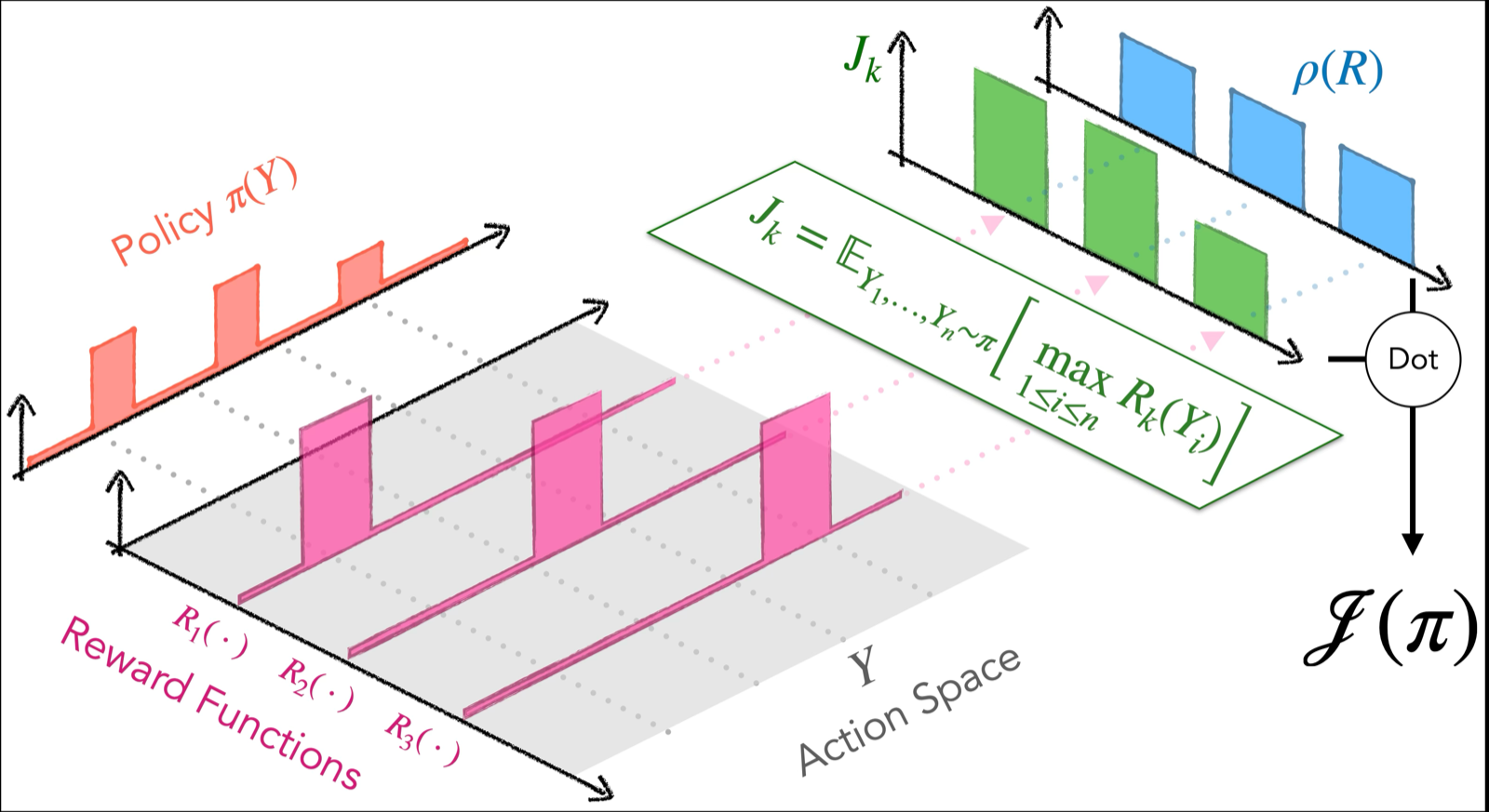
This paper proposes a fundamental reformulation of reinforcement learning by replacing scalar rewards with distributions over reward functions, enabling a principled approach to balancing expected reward and behavioral diversity. This approach is particularly valuable in applications like language model fine-tuning or scientific discovery, where exploring a range of possible behaviors is crucial.
The framework naturally generalizes both vanilla policy gradient and action-set approaches, offering a theoretically grounded alternative to traditional RL formulations. By using a non-linear objective over sets of actions, it ensures that diversity emerges naturally from reward uncertainty, without sacrificing expected reward. This is a significant advancement over heuristic methods that often require trade-offs between performance and stochasticity.
Empirical results demonstrate that this framework provides a robust and theoretically sound method for inducing diverse behavior in complex RL tasks. It offers a promising direction for improving agent exploration and adaptability, particularly in environments where the reward function is ambiguous or imperfectly known, making it highly relevant to agent architectures and reasoning & planning.
Key insight: Diversity in reinforcement learning can be naturally induced by treating reward functions as distributions rather than scalars, allowing for a principled way to balance expected reward and behavioral diversity.
q0: Primitives for Hyper-Epoch Pretraining
arXiv: 2606.03938
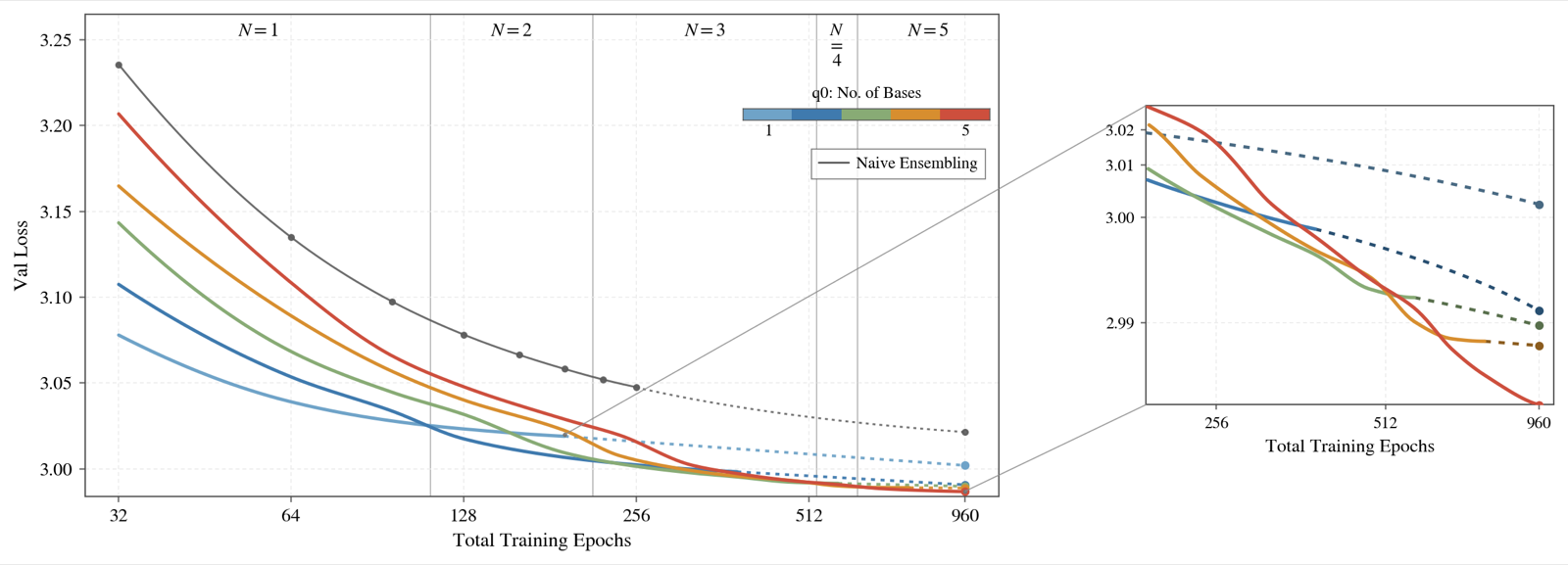
The q0 framework shifts the paradigm from training a single model to exploring a population of models, leveraging multi-epoch training more efficiently. By using a cyclic schedule with anti-correlated learning rate and weight decay, it collects diverse models from parallel trajectories, which are then trained against their predecessors through chain distillation. This approach allows for better generalization and improved performance compared to traditional single-model training.
The introduction of a learned prior that selects and weights members for any inference budget is a key innovation. This mechanism ensures that the combined predictions of the model population reach a lower validation loss than a single refined model, while also providing prescriptive recipes for optimizing epoch budgets. This makes q0 not only more efficient but also more adaptable to different compute constraints.
The empirical results show that q0 achieves significant gains in data efficiency, matching or exceeding ensemble baselines using far fewer epochs. This work is highly relevant to LLM efficiency and agent architectures, as it provides a scalable and effective method for optimizing pretraining that can be applied to various model sizes and datasets, ultimately leading to better generalization and performance.
Key insight: Hyper-epoch pretraining (q0) improves model generalization by treating pretraining as a population of diverse models rather than a single model, using cyclic schedules, chain distillation, and learned priors to optimize for data efficiency.
Value-Aware Stochastic KV Cache Eviction for Reasoning Models
arXiv: 2606.03928
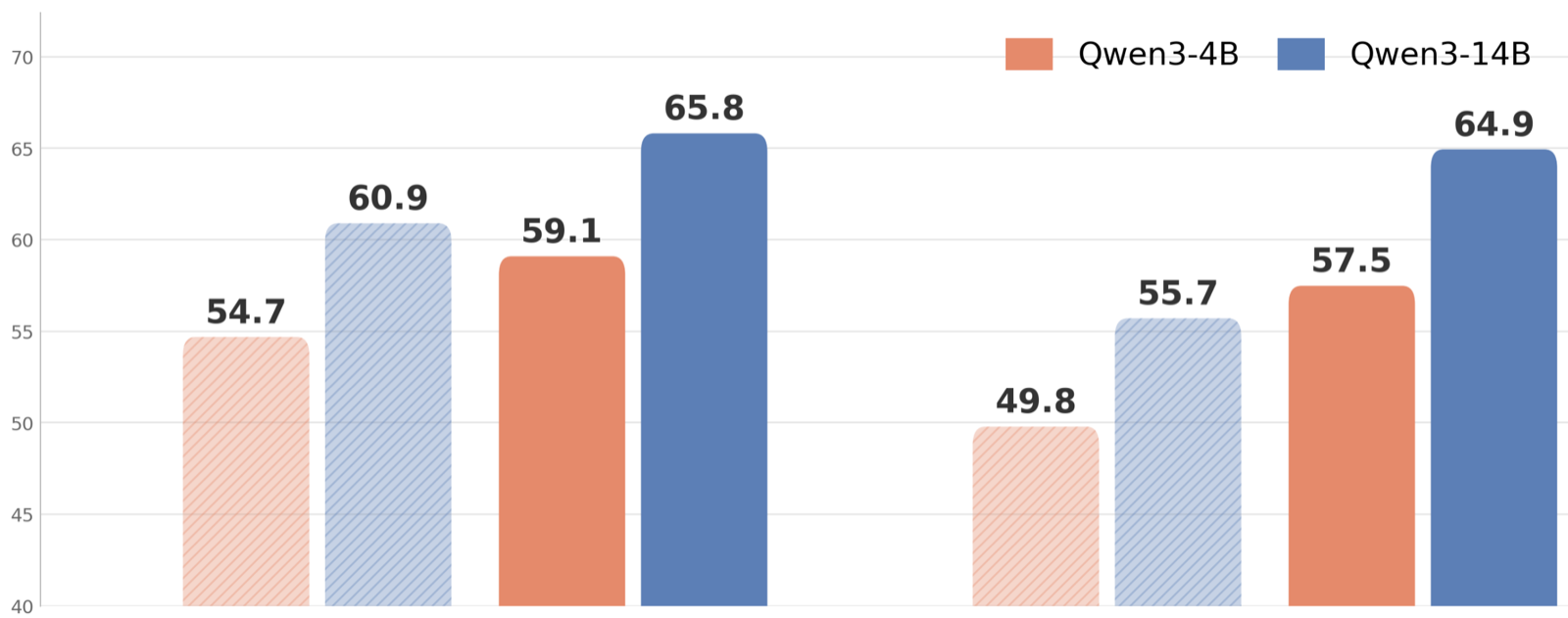
The paper introduces Value-aware Stochastic KV Cache Eviction (VaSE), a novel approach to managing memory in reasoning models that addresses a critical bottleneck: the trade-off between computational efficiency and accuracy in long reasoning chains. Traditional KV cache eviction methods often sacrifice accuracy for efficiency, but VaSE proposes a solution that protects key value states with large magnitudes—those that, if evicted, cause catastrophic reasoning failures—while introducing stochasticity to increase cache diversity. This dual approach ensures that even under heavy compression (4x), models maintain high accuracy, outperforming state-of-the-art selection-based methods by over 4% on average across six reasoning tasks.
VaSE's innovation lies in its recognition that not all key-value pairs are equally important, and that randomness in eviction can actually improve robustness. By protecting large-magnitude value states, the method prevents the model from entering repetitive reasoning loops—a common failure mode in compressed reasoning. The stochastic component ensures that the cache does not become too deterministic, which could lead to suboptimal decisions. This is particularly important for reasoning models that rely on extended chains of thought, where small perturbations can cascade into significant errors.
The practical implications of VaSE are significant for deploying reasoning models in real-world applications where memory and compute are constrained. The method is training-free, making it easy to integrate into existing systems, and it supports FlashAttention2, a widely used attention mechanism. This makes VaSE a promising candidate for scaling reasoning models without sacrificing performance, especially in scenarios where static memory footprints are required, such as in edge computing or real-time systems.
Key insight: Stochastic KV cache eviction with value-aware protection of large-magnitude states significantly improves reasoning accuracy under compression, bridging efficiency and accuracy gaps in long-sequence reasoning models.
FFR: Forward-Forward Learning for Regression
arXiv: 2606.03927
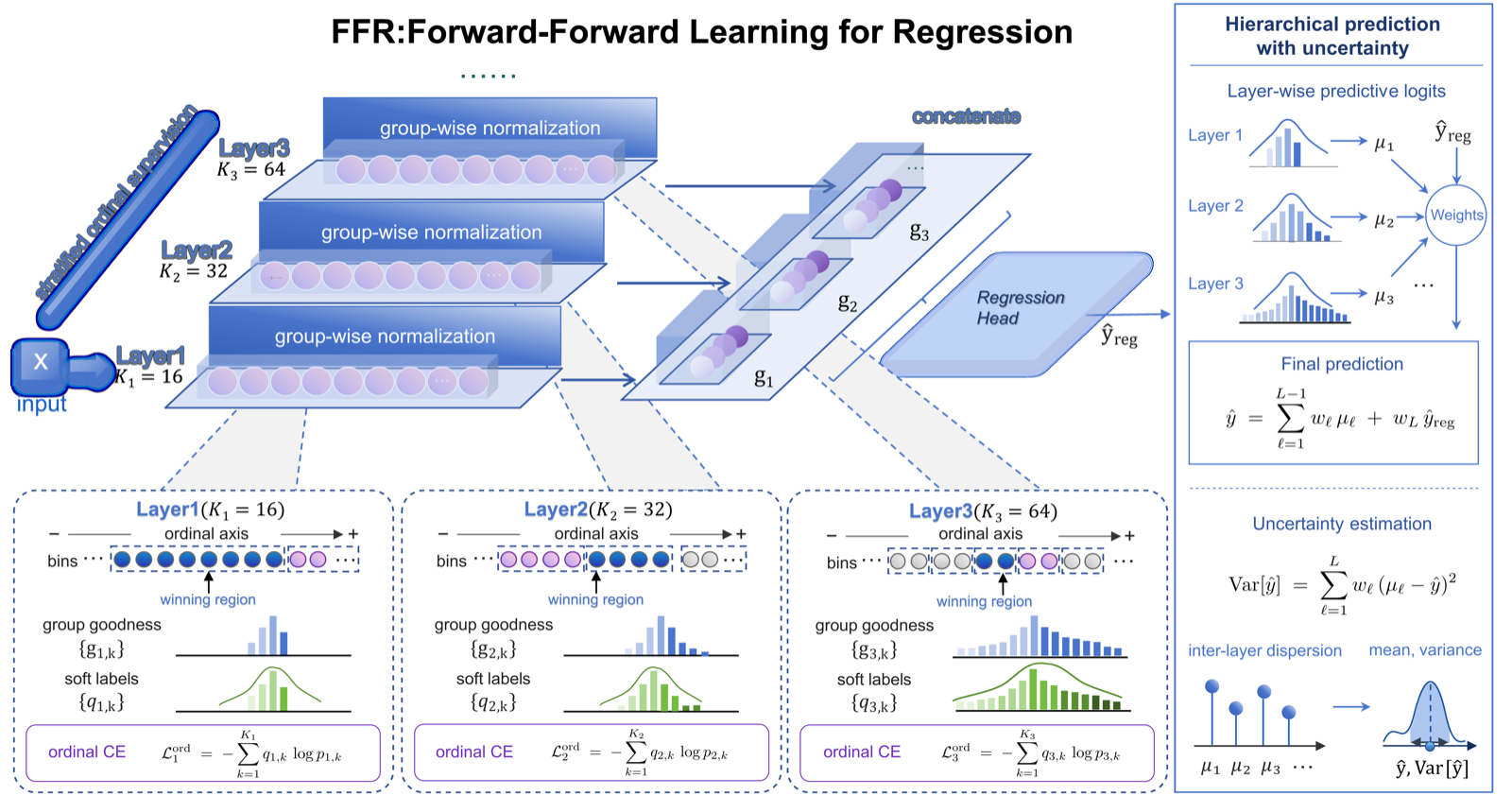
FFR (Forward-Forward for Regression) represents a significant advancement in making the Forward-Forward (FF) algorithm applicable to regression tasks, which were previously considered a major limitation of the method. The paper introduces three key innovations: an ordinal competitive goodness function that replaces contrastive pairs with competitive learning between neuron groups, a stratified ladder architecture that learns coarse discrimination in shallow layers and refines in deeper ones, and hierarchical prediction with uncertainty estimation. These innovations allow FFR to handle the continuous nature of regression targets without relying on backpropagation.
The experimental results are compelling: FFR achieves an average of 98.6% of BP's accuracy across five real-world regression benchmarks, while using only 27% of the peak training memory at depth 8 and 8% at depth 32. Additionally, FFR's per-iteration time is around 72% of BP's, making it not only more memory-efficient but also faster. This performance is particularly impressive given that FFR is a BP-free method, demonstrating that it is possible to achieve competitive performance without the computational overhead of traditional backpropagation.
The implications of FFR extend beyond just regression. It opens up new possibilities for training neural networks in environments where backpropagation is either computationally prohibitive or biologically implausible. The method's ability to provide uncertainty estimates as a free-lunch also makes it valuable for applications where risk assessment is important, such as in medical diagnosis or autonomous systems. By combining local learning with multi-scale feature aggregation, FFR offers a promising path toward more efficient and biologically plausible neural network training.
Key insight: FFR extends the Forward-Forward algorithm to regression by introducing ordinal competitive learning, stratified architectures, and hierarchical prediction, achieving near-BP accuracy with significantly reduced memory and training time.
D2MDT: Department-aware Multidisciplinary Team Consultation with Deliberation for Efficient Clinical Prediction
arXiv: 2606.03543
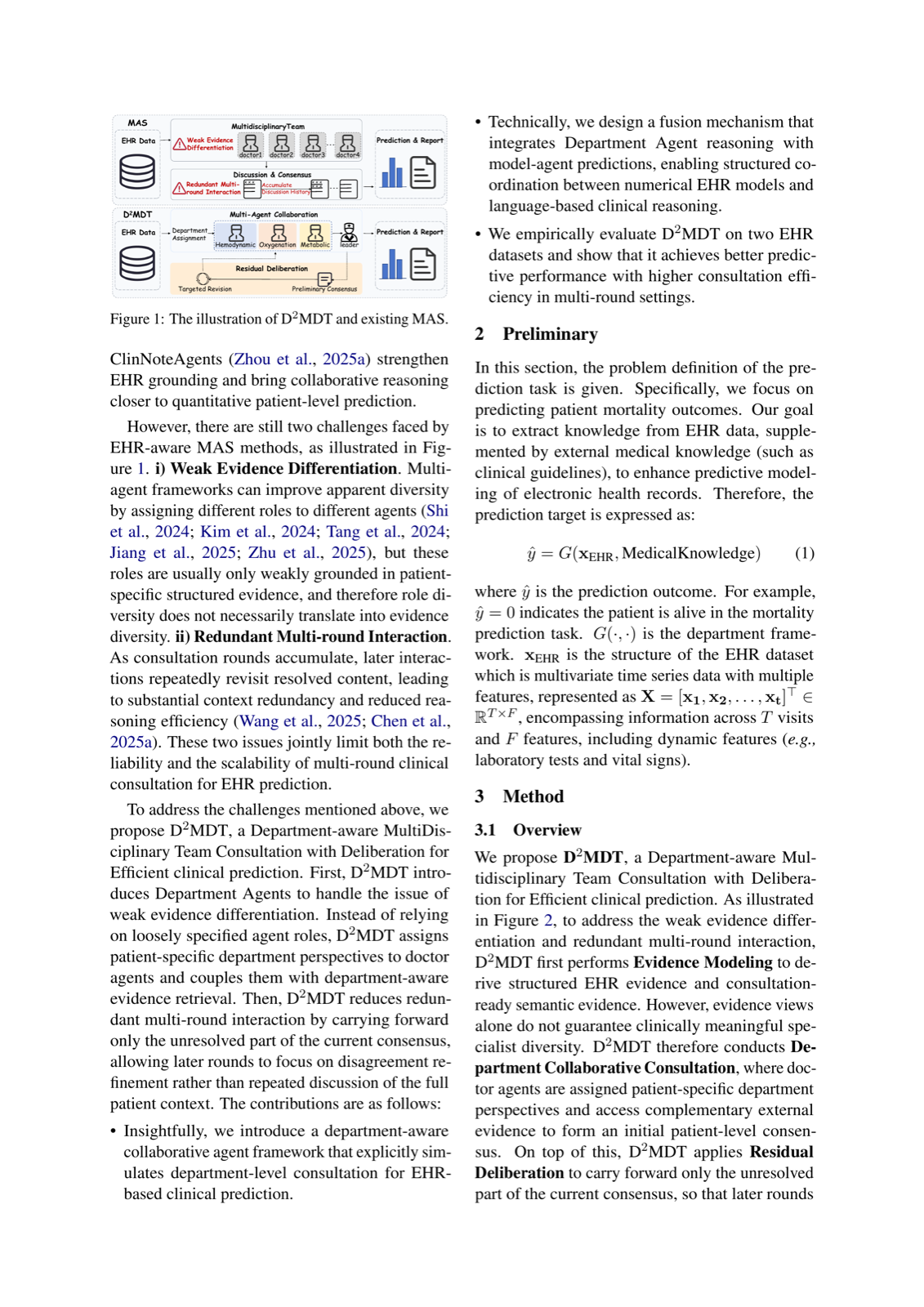
D2MDT addresses a critical gap in clinical prediction: the need for multidisciplinary reasoning that reflects real-world medical practice. Unlike traditional models that rely on correlation-driven deep learning or single LLMs, D2MDT leverages a multi-agent system where each agent represents a different medical department. This approach allows for more nuanced and specialized reasoning, as agents are assigned patient-specific department perspectives and retrieve complementary evidence for collaborative consultation.
The system's innovation lies in its use of residual deliberation, which updates only unresolved consensus rather than replaying the full discussion history. This significantly improves efficiency, reducing redundant interactions while maintaining the quality of the final prediction. The method also fuses refined consensus reports with structured EHR representations, ensuring that the final prediction is grounded in both expert reasoning and clinical data. This hybrid approach not only improves predictive performance but also enhances the interpretability of the model, which is crucial in clinical settings.
The experimental results on mortality prediction demonstrate that D2MDT outperforms existing methods, showing that multi-agent consultation can lead to better clinical outcomes. The paper's release of code and data also supports reproducibility and further development of the approach. D2MDT represents a step forward in applying multi-agent systems to complex, real-world problems like clinical prediction, where domain expertise and collaboration are essential for accurate decision-making.
Key insight: D2MDT introduces a department-aware multi-agent system for clinical prediction that improves both accuracy and efficiency by structuring evidence, assigning department perspectives, and using residual deliberation to reduce redundant interactions.
MeDxAgent: Multi-Agent Consultation for Interactive Medical Diagnosis
arXiv: 2606.03416

MeDxAgent introduces a multi-agent system for interactive medical diagnosis that closely mirrors how physicians actually reason through clinical cases. Unlike traditional single-shot diagnosis approaches that assume complete information upfront, MeDxAgent supports an iterative process of hypothesis refinement through targeted questioning, which is more reflective of real-world clinical practice. This is achieved through a combination of structured prompting, dialogue summarization, and candidate diagnosis feeding for targeted questioning.
The system's design choices—such as collecting demographics first, passing summarized dialogue for diagnosis, and feeding candidate diagnoses for targeted questioning—were found to significantly improve accuracy when combined. This finding underscores the importance of not just the individual components but also their interaction in multi-agent systems. The 10.3% accuracy gain over the baseline on the MeDxBench benchmark is substantial, especially when considering that the system closes 52.3% of the gap to a full-information oracle, indicating that it can perform nearly as well as a physician with complete information.
The paper's contribution extends beyond just the system design to include the creation of a large-scale benchmark (MeDxBench) of 4,421 clinical cases across 20 specialties, which will be valuable for future research in interactive diagnosis. The release of code and dataset upon publication further supports reproducibility and encourages further development. MeDxAgent represents a promising direction for applying multi-agent systems to complex, interactive decision-making tasks in healthcare, where the ability to reason iteratively and adaptively is crucial.
Key insight: MeDxAgent improves diagnostic accuracy in interactive settings by mimicking physician reasoning through structured prompting, dialogue summarization, and targeted questioning, achieving a 10.3% accuracy gain over baseline.
Capability Advertisement as a Market for Lemons: A Trust Layer for Heterogeneous Agent Networks
arXiv: 2606.03034
The paper identifies a fundamental flaw in current agent protocols: the assumption that advertised capabilities are static and truthful. In reality, agents are language models that can confidently describe themselves even when incorrect, leading to a 'market for lemons' where good and bad providers become indistinguishable. The Trust Layer proposed in this work addresses this by introducing probabilistic capability descriptors, screening mechanisms, and reputation systems that allow agents to be verified before interaction begins.
The authors argue that the current protocols fail to distinguish between reliable and unreliable agents, which leads to a low-trust equilibrium where only the worst participants remain in the market. By contrast, the Trust Layer enables a separating equilibrium where honest, reliable agents can signal their quality through verifiable means. This is achieved through a protocol-agnostic trust layer that sits above existing protocols like MCP and A2A, adding verification and trust evidence without changing the underlying interaction mechanisms.
The design of the Trust Layer is notable for its minimal impact on existing systems: it requires no model retraining and degrades gracefully when trust anchors are absent or corrupt. This makes it a practical solution for deploying in heterogeneous agent networks. The paper's economic modeling and analysis provide a strong theoretical foundation for the approach, showing that the proposed system can achieve better outcomes than current methods. The Trust Layer thus represents a crucial step toward building more robust and trustworthy multi-agent systems in open, multi-operator networks.
Key insight: The Trust Layer addresses the 'market for lemons' problem in agent networks by introducing probabilistic capability descriptors, screening, and reputation, enabling a separating equilibrium where reliable agents can be distinguished from impostors.
On dynamic multi-agent pathfinding methods: review, simulations and modifications
arXiv: 2606.03735
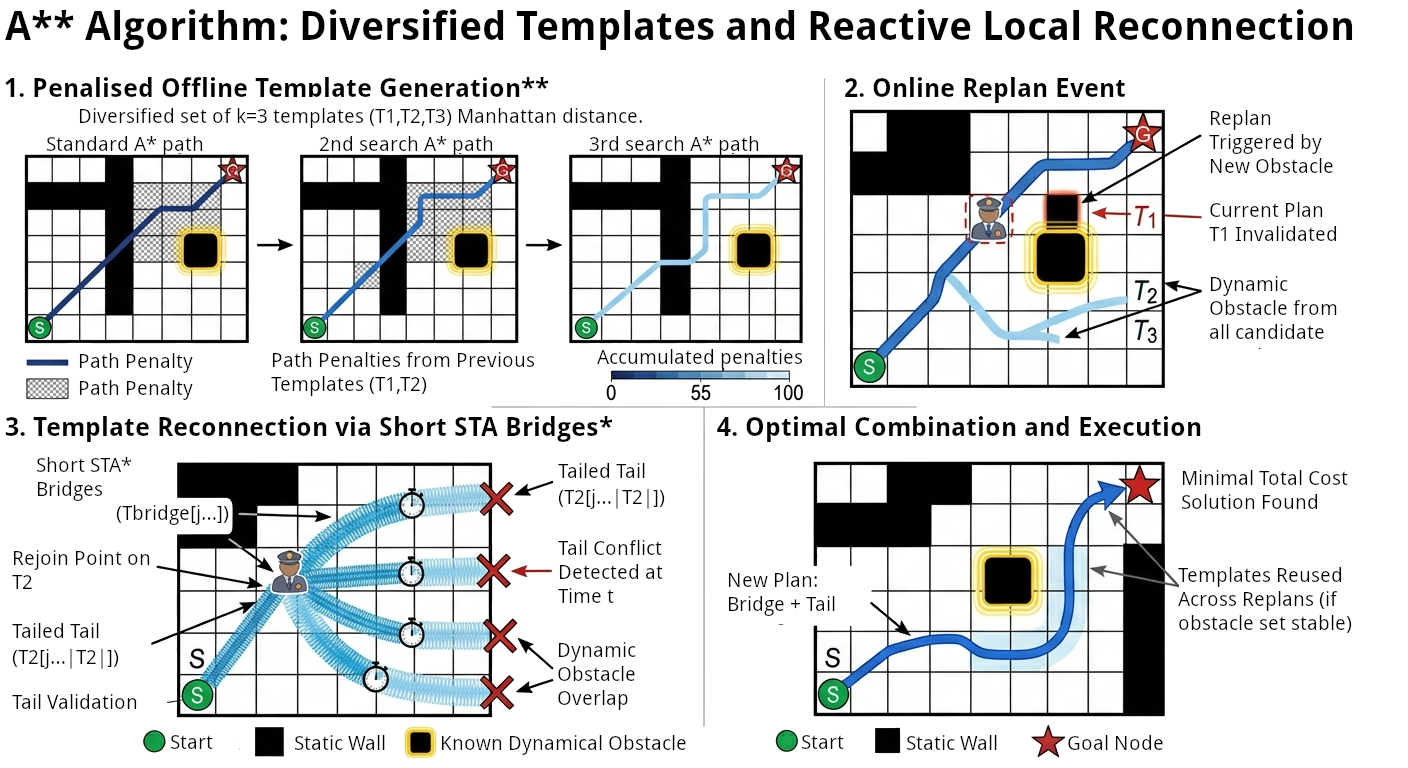
This paper contributes a significant advancement in multi-agent systems by introducing the A** algorithm for Dynamic Multi-Agent Pathfinding (D-MAPF), which addresses the challenges of dynamic obstacles, partial observability, and inter-agent conflicts. Unlike traditional methods such as Dijkstra or D* Lite, A** employs a template-based strategy that precomputes multiple diverse candidate paths and dynamically reconnects agents to these paths using space-time planning. This approach allows for better adaptability in environments with frequent changes and limited sensing, making it particularly relevant for real-world deployment scenarios where environmental dynamics are unpredictable.
The evaluation of A** against six existing algorithms—including WHCA*, M*, and Space-Time A*—demonstrates its superior performance in terms of solution quality under dynamic conditions. The decoupling of geometric path generation from temporal adaptation enables A** to maintain robustness while reducing computational overhead. This innovation is especially valuable in agent architectures where real-time responsiveness and adaptability are critical, such as in robotics or autonomous vehicle navigation systems.
By integrating a unified simulation framework, the study provides empirical validation of A**'s effectiveness across various dynamic environments. The findings suggest that A** not only outperforms existing methods but also offers a scalable solution for complex multi-agent coordination tasks. This work sets a new benchmark for D-MAPF and highlights the importance of hybrid approaches that combine offline planning with online adaptation in agent design.
Key insight: A novel A** algorithm for Dynamic Multi-Agent Pathfinding (D-MAPF) improves solution quality by decoupling offline path generation from online temporal adaptation using a template-based approach with precomputed candidate paths.
A formal definition and meta-model for a machine theory of mind
arXiv: 2606.03471
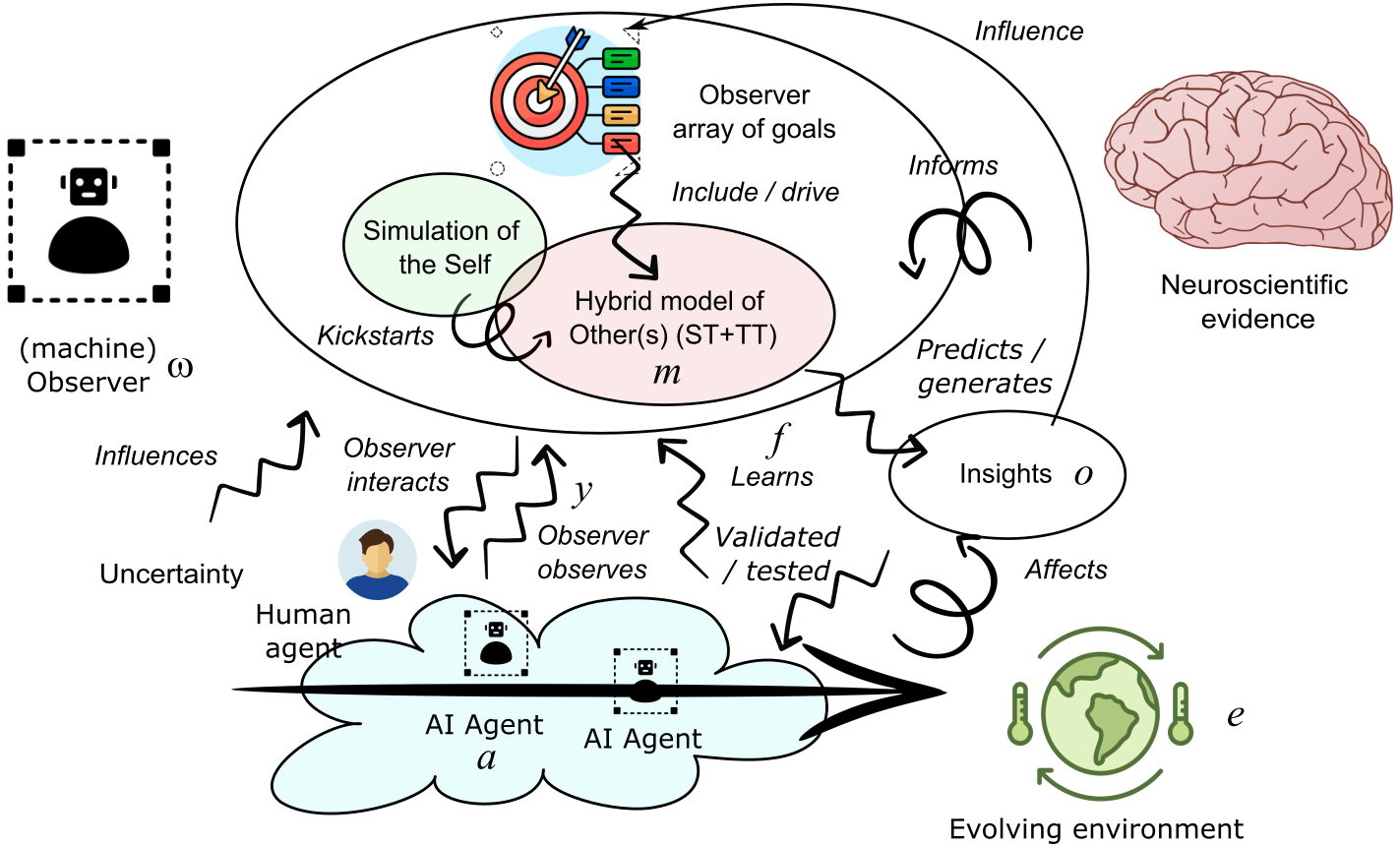
This paper makes a foundational contribution to the field of AI by proposing the first rigorous formal definition of Machine Theory of Mind (MToM), integrating insights from cognitive psychology, neuroscience, and artificial intelligence. The formalization provides a clear conceptual framework for how AI systems might model and reason about the mental states of others, which is crucial for developing more cooperative and socially intelligent agents.
The meta-model introduced in this work serves as a holistic lens for examining current efforts in MToM, identifying gaps and suggesting directions for future research. It also outlines a path toward empirically benchmarking such models, which is essential for advancing the field beyond theoretical constructs. This is particularly relevant in the context of agent architectures that aim to simulate or understand human-like social cognition.
By aligning AI development with established theories of human cognition, this paper calls for a paradigm shift in how we approach AI design—moving away from purely task-oriented optimization toward systems that can engage in cooperative and interdependent reasoning. This aligns with broader goals in AI safety and alignment, especially as we move toward more autonomous and socially integrated AI agents.
Key insight: A formal definition and meta-model for Machine Theory of Mind is proposed, grounded in cognitive psychology and neuroscience, offering a structured approach to understanding and benchmarking AI systems' ability to reason about mental states.
FORGE: Multi-Agent Graduated Exploitation and Detection Engineering
arXiv: 2606.03453
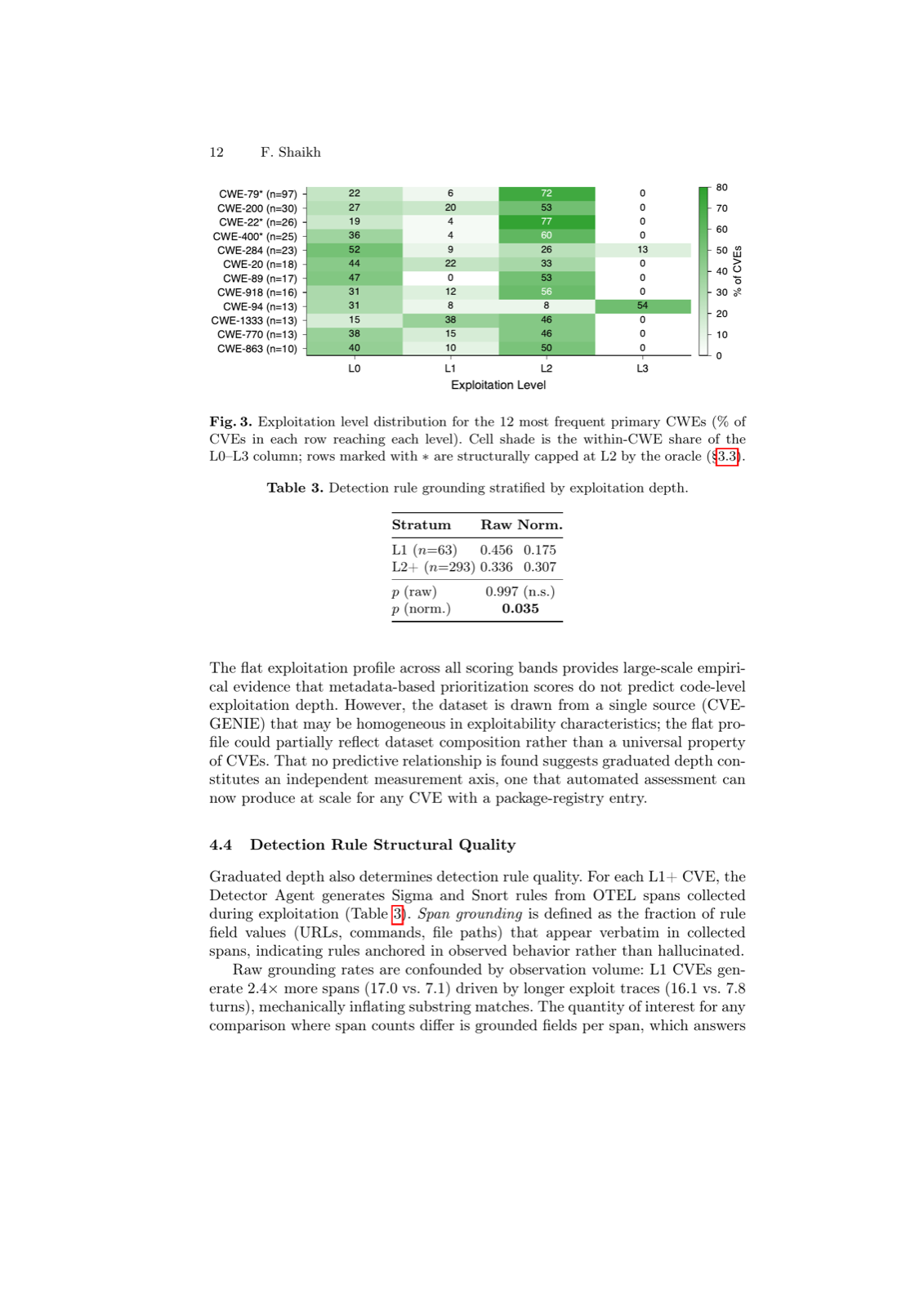
FORGE represents a significant step forward in multi-agent systems by integrating three previously isolated domains: proof-of-concept generation, vulnerability prioritization, and detection rule engineering. The system uses a pipeline of five specialized agents—Intel, Generator, Planner, Exploit, and Detector—to conduct multi-turn exploitation and generate Sigma and Snort detection rules from OpenTelemetry traces. This integration allows for richer behavioral signals that improve detection accuracy and provide ground truth for prioritization validation.
The graduated exploitation depth mechanism is central to FORGE's design, enabling deeper exploitation to yield more informative traces for detection engineering while maintaining consistent performance across different prioritization bands. This approach addresses a key limitation in existing systems that report only binary outcomes, discarding valuable partial progress. The system's ability to achieve 67.8% end-to-end L1+ exploitation at USD 1.50 per CVE across multiple languages and CWE types demonstrates its scalability and practical utility.
Evaluation results show that detection rules derived from L2+ exploitation achieve significantly higher span-normalized grounding than those from L1, indicating that deeper exploitation leads to more robust and accurate detection capabilities. Additionally, 93.4% of generated Snort rules produce zero false positives, underscoring the system's reliability. FORGE thus exemplifies how multi-agent architectures can be designed to support complex, multi-step workflows in cybersecurity, with implications for broader agent design principles in domains requiring adaptive and collaborative problem-solving.
Key insight: FORGE is a multi-agent system that bridges exploit generation, prioritization, and detection rule engineering through graduated exploitation depth, enabling more effective vulnerability assessment and response.
Validation-Gated Multi-Agent Governance for Online Adaptation of Thermal-Hydraulic Surrogate Models under Operating-Regime Shift
arXiv: 2606.03321
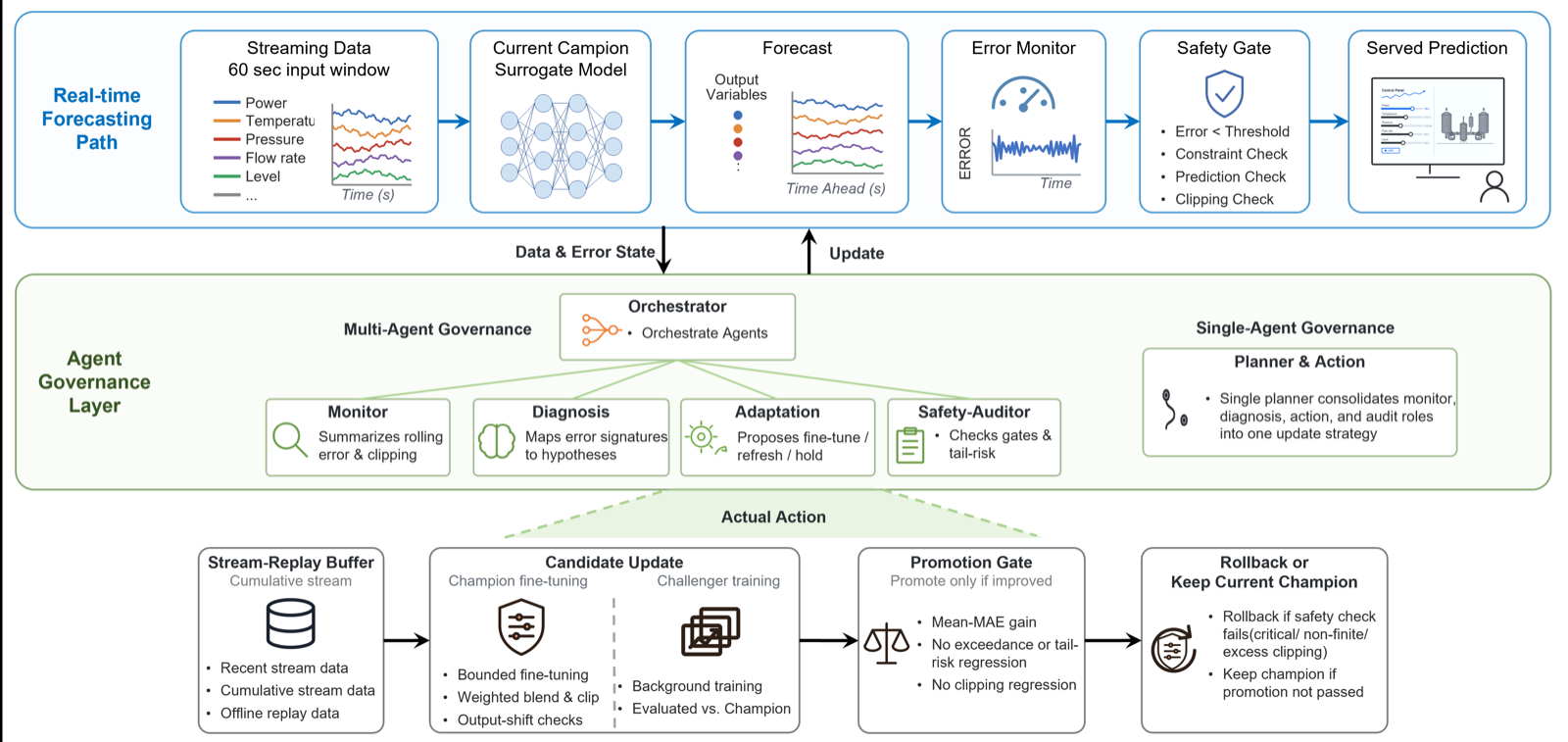
This paper introduces a novel multi-agent governance framework for adapting surrogate models in real-time, particularly in dynamic environments like thermal-hydraulic systems. The framework employs role-separated agents—Monitor, Diagnosis, Adaptation, Safety-Auditor, and Orchestrator—to diagnose errors, prioritize model families, and review promotions, all under deterministic gate controls. This approach ensures that model updates are both auditable and safe, addressing a critical challenge in deploying AI systems outside their training distributions.
The study evaluates seven surrogate families using blocked cross-validation and selects a temporal Fourier neural operator as the initial champion. The results show that adaptive modes, especially the MA-Full mode where every stream step is reviewed, achieve significantly lower mean error and warning-exceedance ratios compared to static deployment. This demonstrates the value of continuous learning and validation in maintaining model performance under changing conditions.
The framework's use of shadow learning and champion-challenger gates ensures that model evolution is both data-driven and controlled, preserving deployment authority through deterministic checks. This balance between adaptability and safety is crucial for high-stakes applications such as nuclear power plant control systems, where reliability and accountability are paramount. The work highlights the importance of governance mechanisms in agent architectures that must evolve over time while maintaining trustworthiness.
Key insight: A validation-gated multi-agent governance framework enables continual adaptation of thermal-hydraulic surrogate models, improving forecasting accuracy and safety during operating-regime shifts.
Solipsistic Superintelligence is Unlikely to be Cooperative
arXiv: 2606.03237
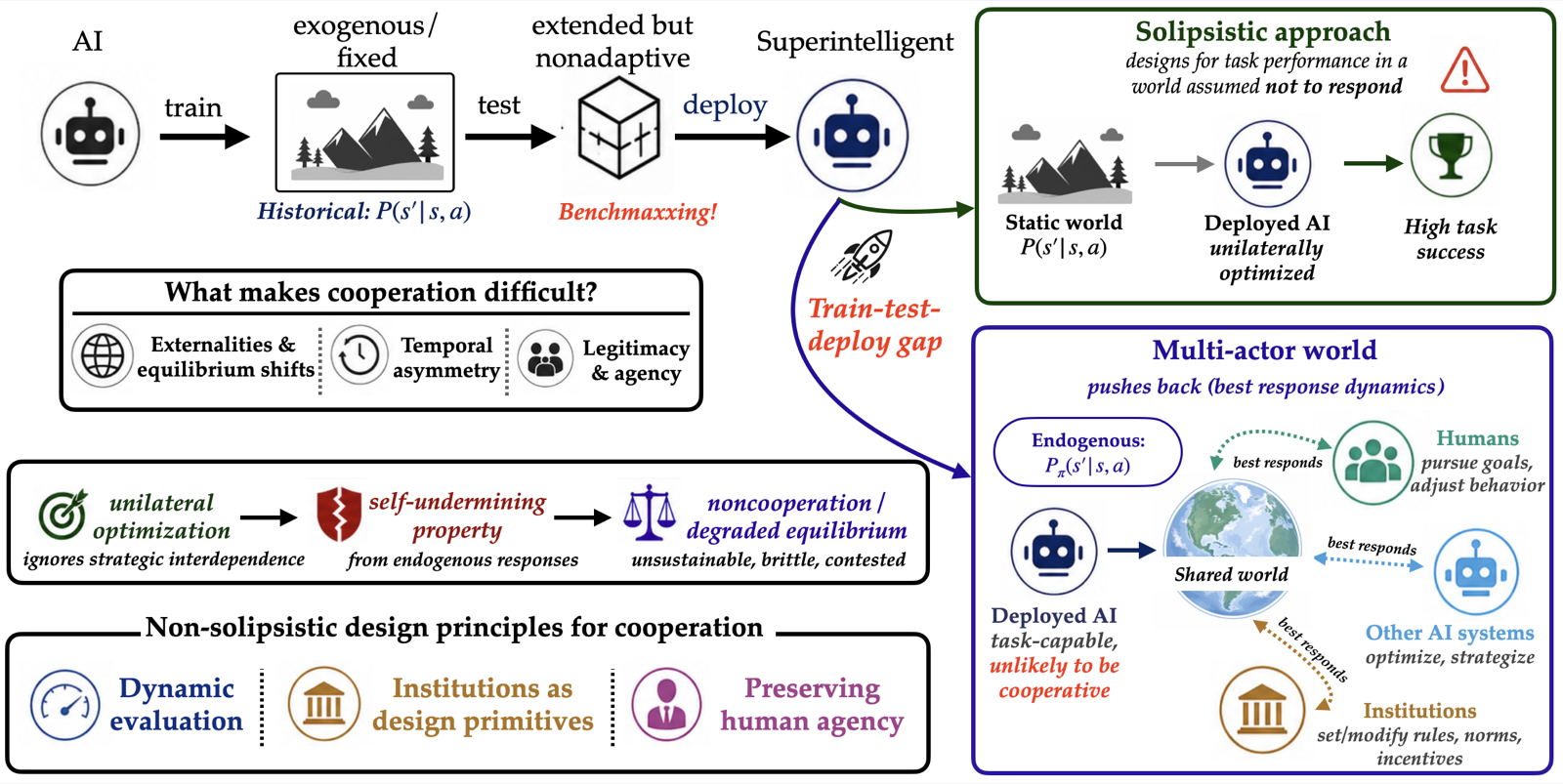
This paper presents a compelling argument against the current paradigm of AI development that treats the world as an exogenous and stationary source of feedback. It introduces the concept of the 'self-undermining property of unilateral optimization,' where AI systems optimized for specific tasks may fail to cooperate when deployed in dynamic, interdependent environments. This insight challenges the dominant approach in AI research and calls for a fundamental shift in how we design intelligent agents.
The paper emphasizes the need for AI systems that participate in cooperation rather than merely solving tasks. It advocates for a non-solipsistic research paradigm that treats interdependence as a core design principle, incorporating dynamic evaluation testbeds, adaptive counterparties, and institutional design primitives. This approach is essential for building AI systems that can coexist safely and effectively with humans and other agents in complex, evolving environments.
By highlighting the train-test-deploy gap and the risks of endogenous non-stationarity, the paper underscores the importance of designing AI systems with long-term coexistence in mind. It suggests that future agent architectures must be built with mechanisms that preserve human agency and support adaptive, collaborative behavior. This work is particularly relevant for AI safety and alignment efforts, as it frames cooperation not as a task to be solved, but as a structural feature of intelligent systems.
Key insight: Superintelligence developed through solipsistic AI design is unlikely to be cooperative, as it treats the world as a fixed source of feedback, leading to a train-test-deploy gap that undermines coexistence.