Hugging Face relaunches PapersWithCode with enhanced features for AI research discovery, while Mistral AI introduces specialized solutions for public sector organizations. Meanwhile, Cursor updates its Composer tool and GitHub Copilot faces backlash over new token-based billing.
This week's AI research digest highlights significant developments in open-source AI platforms and tooling. Hugging Face's PapersWithCode relaunch brings improved dataset and model hosting capabilities, making it easier for researchers to find and evaluate machine learning work. Mistral AI expands into the public sector with secure, compliant AI solutions designed for government use. In developer tooling, Cursor Composer 2.5 introduces enhanced AI coding features, while GitHub Copilot's shift to token-based billing has sparked controversy among developers. Additionally, new research papers examine critical issues in LLM evaluation, German language pronoun fidelity, fairness in federated learning, and AI scientist evaluation capabilities.
AI Model Releases
Relaunching PapersWithCode with new features
Hugging Face has relaunched PapersWithCode with new features aimed at improving the discovery and evaluation of machine learning research. The updated platform now includes enhanced dataset and model hosting capabilities, along with improved tools for benchmarking and comparing AI models. The launch comes as part of Hugging Face's broader strategy to consolidate its position as a central hub for open-source AI research and development. The new features are designed to streamline the process of finding relevant papers, datasets, and models for researchers and developers.
Why it matters: This relaunch represents a significant step toward democratizing access to AI research and tools, potentially accelerating innovation by making it easier for developers and researchers to find and build upon existing work. It also signals Hugging Face's continued commitment to open-source AI development.

Frontier AI for public institutions | Mistral AI
Mistral AI has launched specialized AI solutions for public institutions, focusing on secure and compliant AI deployment in government and public sector environments. The platform offers tailored models and tools designed to meet the unique requirements of public sector organizations, including data privacy and security standards. The initiative includes new frameworks for AI governance and compliance, along with specialized training for public sector AI use cases. This move positions Mistral AI as a provider of enterprise-grade AI solutions for government agencies and public institutions.
Why it matters: This development signals the growing importance of secure, compliant AI solutions for public sector organizations. It reflects the increasing demand for AI tools that can operate within strict regulatory environments while maintaining performance and usability.
AI Tooling

Introducing Composer 2.5 · Cursor
Cursor has released Composer 2.5, introducing enhanced AI-powered coding capabilities and improved agent workflows. The update includes better integration with existing development environments, expanded support for multiple programming languages, and new features for collaborative AI coding. The release also introduces improved prompt engineering tools and enhanced debugging capabilities for AI agents. The new version aims to streamline the development process by reducing the friction between human developers and AI coding assistants.
Why it matters: This update demonstrates the ongoing evolution of AI coding tools toward more seamless integration with developer workflows. It reflects the industry's move toward more sophisticated AI agents that can work alongside developers rather than replace them.
'What a joke': Github Copilot's new token-based billing spurs consternation among devs | TechCrunch
GitHub Copilot's new token-based billing system has sparked significant backlash from developers, who are criticizing the model's complexity and cost structure. The platform now charges users based on token usage rather than subscription tiers, leading to unpredictable costs for developers. Many developers have expressed frustration with the change, particularly as it affects their ability to budget for AI-assisted coding tools. The controversy has led to widespread discussion in developer communities about the fairness and transparency of AI tool pricing models.
Why it matters: This controversy highlights the growing tension between AI tool providers and developers over pricing models and cost predictability. It reflects broader concerns about the accessibility and affordability of AI tools for individual developers and small teams.
Research Papers
Resolution Diagnostics for Paired LLM Evaluation
arXiv: 2605.30315
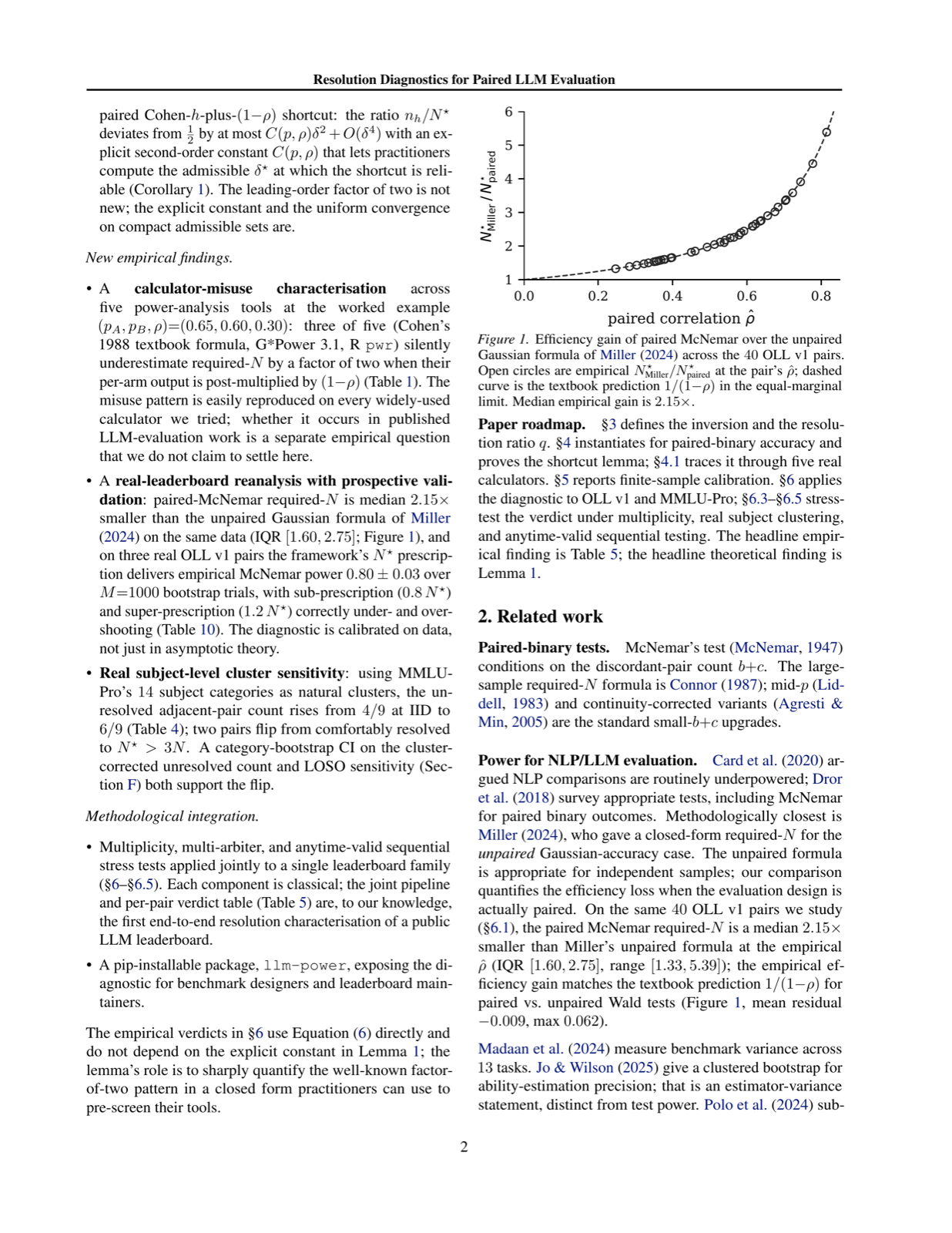
The paper addresses a critical issue in LLM evaluation: the reliability of pairwise comparisons used in public leaderboards. It demonstrates that many comparisons do not meet standard statistical thresholds for resolution, even under ideal conditions. This is particularly concerning because such comparisons form the backbone of LLM ranking systems.
The authors frame the problem as a hypothesis-testing issue and introduce a diagnostic metric, the resolution ratio q = N/N*, to assess whether a comparison is statistically sound. They show that the commonly used unpaired Cohen-h-plus-(1-rho) shortcut significantly underestimates the required sample size, often by a factor of two, especially in close comparisons. This discrepancy is silently inherited by popular statistical tools, leading to false confidence in results.
The findings imply that current LLM evaluation practices may be fundamentally flawed, undermining the validity of leaderboard rankings. The paper's emphasis on the need for proper statistical inference in LLM evaluation is crucial for ensuring that progress in AI agent development is accurately measured and interpreted.
Key insight: Paired LLM evaluation often fails to achieve statistical resolution due to incorrect assumptions in sample size calculations, leading to unreliable comparisons in leaderboard rankings.
GRUFF: LLM Pronoun Fidelity, Reasoning, and Biases in German
arXiv: 2605.30214

This paper introduces GRUFF, a large-scale dataset for evaluating pronoun fidelity in German, a language with complex grammatical gender systems. It provides a unique lens into how LLMs handle referential reasoning and gender agreement, particularly in contrast to English.
The study reveals that while LLMs perform well with masculine and feminine entities, they struggle with neopronouns like xier and en, indicating a lack of robustness in handling inclusive language. Additionally, encoder-only models show greater resilience to distractors, suggesting that architectural differences play a role in referential accuracy.
The research contributes to understanding how linguistic structure affects LLM behavior and highlights the importance of gender-inclusive language in AI development. It also underscores the need for more nuanced benchmarks that reflect real-world language complexity, especially in multilingual and culturally diverse contexts.
Key insight: LLMs show varying levels of pronoun fidelity and gender bias in German, with performance influenced by grammatical gender systems and model architecture.
Fairness-Aware Federated Learning with Trajectory Shapley Value
arXiv: 2605.30336
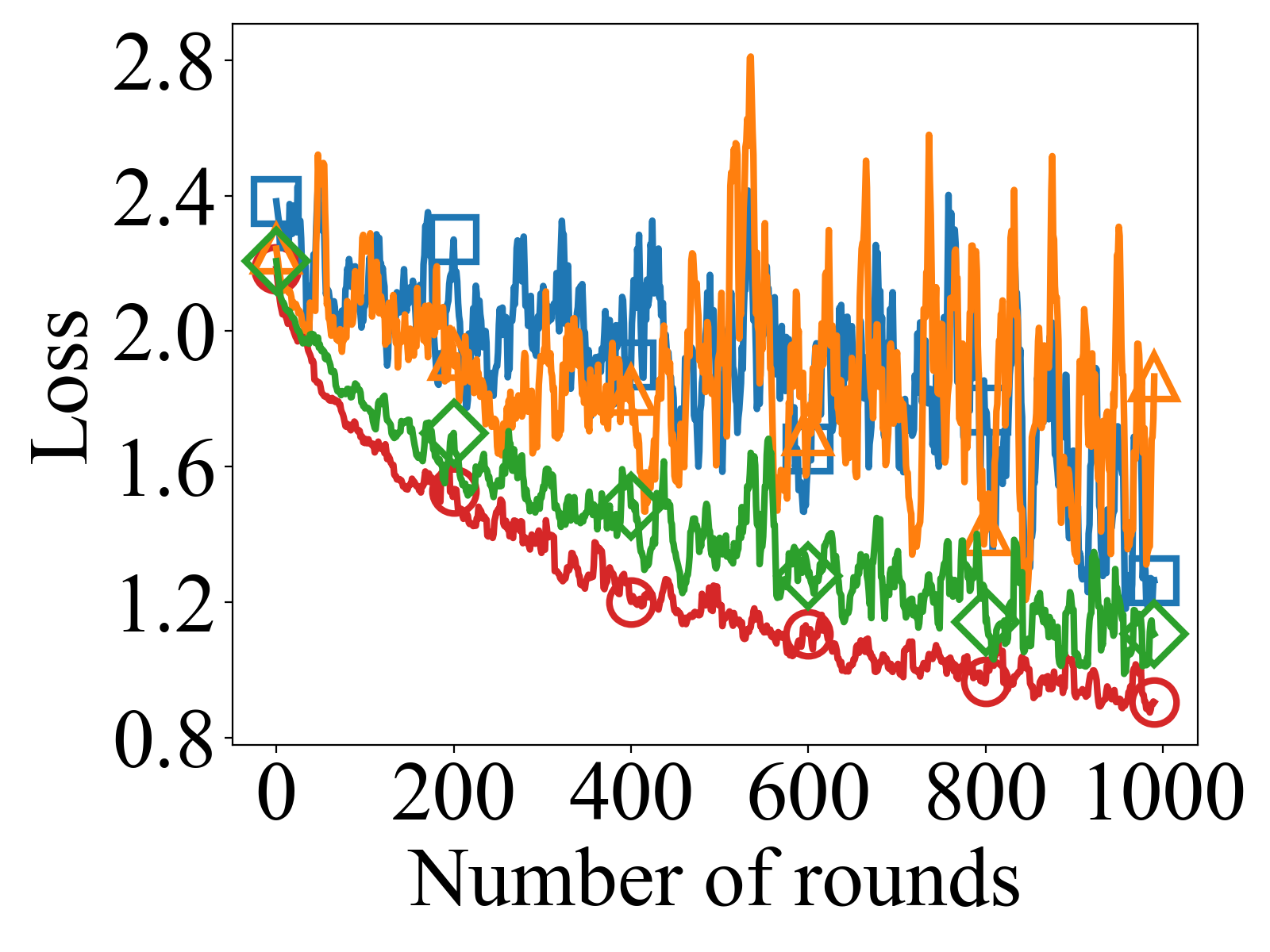
The paper proposes a novel approach to fairness in federated learning by introducing the Trajectory Shapley Value (TSV), a method for evaluating client contributions to the global model's optimization trajectory. This approach addresses the limitations of fixed-weight aggregation schemes that fail to account for time-varying client contributions.
FedTSV, the resulting adaptive aggregation method, dynamically adjusts client weights based on their impact on the model's trajectory, leading to improved convergence, robustness, and equitable contribution assessments. This is particularly important in heterogeneous and adversarial environments where client behavior can vary significantly.
The method's ability to provide principled fairness-aware optimization makes it a valuable contribution to multi-agent systems and distributed AI, where ensuring equitable participation and stable learning outcomes is essential for scalable and reliable deployment.
Key insight: Fairness-aware federated learning can be improved by using a dynamic contribution metric, Trajectory Shapley Value, to adaptively weight client updates.
SoundnessBench: Can Your AI Scientist Really Tell Good Research Ideas from Bad Ones?
arXiv: 2605.30329

SoundnessBench presents a benchmark for evaluating LLMs' ability to judge the methodological viability of research ideas, a crucial capability for autonomous AI research agents. The benchmark is constructed from real ICLR submissions and labeled with reviewer soundness scores, offering a realistic test of LLMs' scientific rigor assessment.
The paper reveals a significant optimism bias in LLMs: they tend to rate low-soundness proposals as sound, especially under standard prompting. Even aggressive prompting shifts errors to false negatives, indicating that LLMs are not yet reliable for automated scientific evaluation. This limitation is not explained by contamination or surface features, suggesting a deeper issue in how LLMs reason about research quality.
This work highlights a fundamental bottleneck in AI research automation: the inability of LLMs to serve as effective gatekeepers for scientific ideas. It underscores the need for more sophisticated reasoning and evaluation capabilities in AI agents, particularly in domains requiring deep domain knowledge and critical judgment.
Key insight: Current LLMs struggle to reliably evaluate the soundness of research proposals, showing a pervasive optimism bias that undermines their utility as first-gate evaluators.