Researchers and companies are advancing AI capabilities through open-source robotics platforms, custom model training solutions, and the evolution of AI agents. These developments are reshaping how AI is developed, deployed, and integrated into various applications from software development to educational tools.
Hugging Face and LeRobot team release the LeRobot Humanoid, an open-source, low-cost, 3D-printed humanoid robot designed for robot learning research, lowering barriers to entry for robotics development. Mistral AI introduces Forge, a solution for training custom domain-specific language models that enables organizations to create specialized AI systems tailored to their industries. Cursor's blog outlines the 'third era' of AI software development, where AI agents can autonomously perform complex tasks, moving beyond simple assistance to full-fledged collaboration with developers. Google Cloud's guide on integrating Gemini Enterprise with A2UI enables developers to build more intelligent user interfaces using AI capabilities, while Firebase's AI Logic simplifies building conversational assistants for mobile apps. In academic research, new papers explore natural language access to scientific knowledge graphs, persona conditioning in brand recommendations, triadic LLM-teacher-student collaboration in education, and modularizing educational AI for responsible deployment.
AI Model Releases
LeRobot Humanoid: An Open, Low-Cost, 3D-Printed Humanoid for Robot Learning
Hugging Face and the LeRobot team release the LeRobot Humanoid, an open-source, low-cost, 3D-printed humanoid robot designed for robot learning research. The platform supports open collaboration in robotics, allowing researchers and developers to experiment with AI-driven robot behaviors. The humanoid features modular components and is compatible with various AI frameworks, making it accessible for academic and hobbyist use. It includes pre-trained models for motion control and interaction tasks.
Why it matters: This open-source initiative lowers the barrier to entry for robotics research and development, promoting innovation in AI-driven robotics and enabling broader participation in the field beyond traditional academic or corporate settings.

Custom model training. Domain-specific language models. | Mistral
Mistral AI introduces Forge, a new solution for training custom domain-specific language models. Forge provides tools for aligning, training, and evaluating models tailored to specific industries or use cases. The platform supports fine-tuning of large language models with proprietary data, enabling organizations to create specialized AI systems that better understand their domain. Forge integrates with Mistral's existing infrastructure, offering scalable compute resources for model development.
Why it matters: Forge addresses the growing demand for domain-specific AI models, allowing organizations to build more accurate and relevant AI systems for specialized tasks, which is crucial for enterprise adoption of AI technologies.
AI Tooling

The third era of AI software development · Cursor
Cursor's blog post outlines the 'third era' of AI software development, characterized by AI agents that can autonomously perform complex tasks. The post discusses how developers are now building AI-powered tools that can write, debug, and refactor code without human intervention. This evolution moves beyond simple AI assistance to full-fledged AI agents that can collaborate with developers in real-time, enhancing productivity and reducing development time.
Why it matters: This shift toward autonomous AI agents in development tools signals a fundamental change in how software is built, potentially transforming the role of developers and accelerating the pace of innovation in software engineering.
Firebase/GCP

Guide to Gemini Enterprise and A2UI integration | Google Cloud Blog
Google Cloud publishes a guide on integrating Gemini Enterprise with A2UI (AI for User Interfaces), enabling developers to build more intelligent UIs using Google's AI capabilities. The integration allows for dynamic UI generation, adaptive interfaces, and intelligent user interactions. The guide covers implementation strategies, best practices, and performance optimization techniques for deploying AI-enhanced UIs in enterprise applications.
Why it matters: This integration represents a move toward more intelligent, adaptive user interfaces powered by enterprise-grade AI, which could redefine how developers approach UI/UX design and user interaction in complex applications.
Building a cooking assistant with Firebase AI Logic
Firebase Developer Relations Engineer Marina Coelho demonstrates how to build a cooking assistant using Firebase AI Logic, a new feature designed to simplify AI integration into mobile apps. The tutorial walks through creating a conversational assistant that can provide recipe suggestions, cooking tips, and step-by-step guidance. Firebase AI Logic leverages Firebase's backend services to manage AI workflows, making it easier for developers to deploy AI-powered features without deep expertise in machine learning.
Why it matters: This showcases Firebase's growing focus on democratizing AI development, enabling more developers to integrate conversational AI into applications without extensive ML knowledge, which could accelerate adoption across mobile and web platforms.
Research Papers
mcp-proto-okn: Natural-language access to open scientific knowledge graphs through the Model Context Protocol
arXiv: 2605.30283
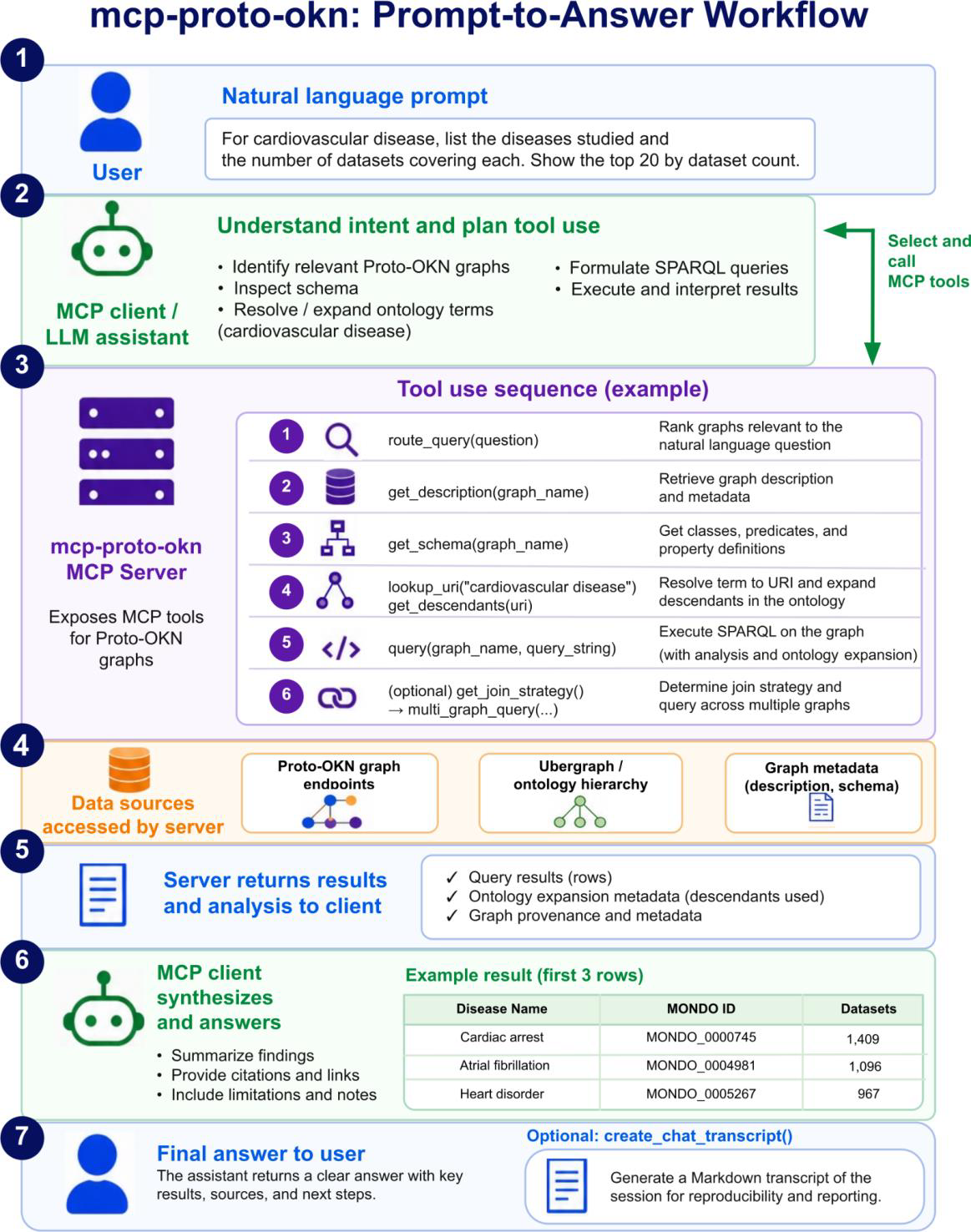
The mcp-proto-okn system represents a significant advancement in making scientific knowledge graphs accessible through natural language interfaces. By leveraging the Model Context Protocol, it allows AI assistants to perform complex graph routing, schema inspection, and SPARQL execution without needing specialized knowledge of underlying graph structures. This approach lowers the barrier for biomedical and scientific users to engage in cross-domain knowledge graph analysis, which is particularly valuable given the increasing complexity and volume of scientific data.
The implementation using FastMCP framework demonstrates how modular, protocol-based systems can be built to integrate diverse data sources and query mechanisms. The system's ability to provide transcript generation and support multi-graph querying suggests it could serve as a foundational tool for research collaboration, where different scientific domains need to share and integrate their knowledge bases. This is especially relevant for AI agent development, where agents must be able to access and reason over heterogeneous data sources.
This work contributes to the broader field of agent architectures by showing how natural language interfaces can be integrated into scientific workflows. It highlights the importance of tool use and memory systems that can dynamically access and manipulate structured data, which is essential for agents operating in scientific domains where data is often represented in complex, interconnected knowledge graphs.
Key insight: Natural language access to scientific knowledge graphs via the Model Context Protocol enables cross-domain biomedical analysis without requiring deep technical expertise in graph querying or ontology expansion.
Persona Conditioning of Brand Recommendations in Retrieval-Augmented Commercial Chat: A Prominence-Stratified Cross-Provider Audit
arXiv: 2605.30207
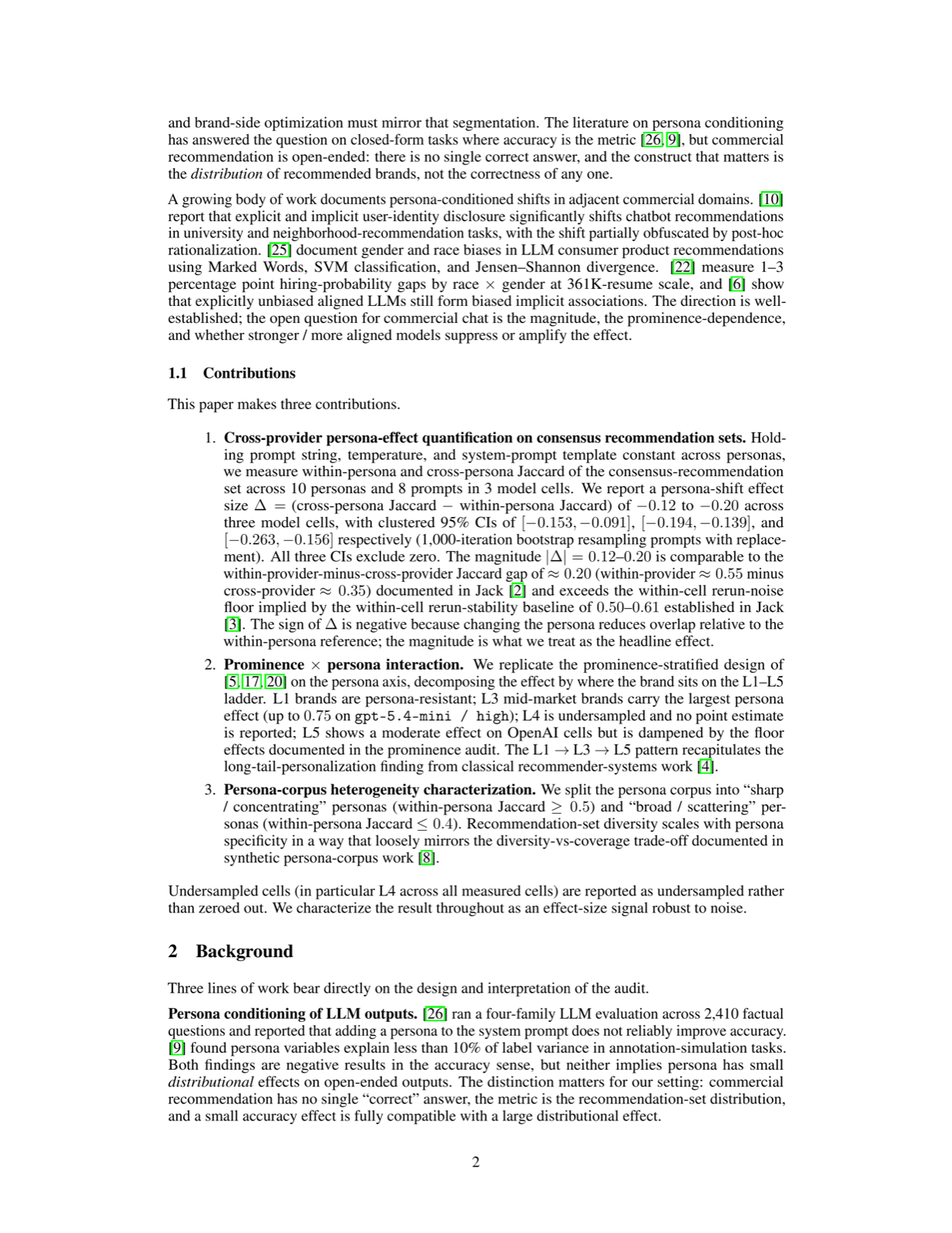
This audit provides crucial insights into how retrieval-augmented systems respond to different user contexts, revealing that the same prompt can generate dramatically different recommendation sets depending on the perceived persona of the user. The finding that category leaders maintain ~80% brand consistency across personas while mid-market brands can swap up to 75% of recommendations demonstrates the nuanced nature of AI brand perception and the importance of contextual understanding in commercial applications.
The study's methodology, involving a comprehensive audit of 2,000 runs across multiple personas, prompts, and model configurations, establishes a robust framework for evaluating AI systems' responsiveness to user context. The observation that Anthropic models show larger effects than OpenAI configurations suggests that different architectural approaches to retrieval attribution may have varying degrees of persona sensitivity, which has implications for agent design and user experience optimization.
These findings are particularly relevant for multi-agent systems where different agents might be specialized for different persona types or contexts. The research underscores the need for measurement protocols that condition on user personas rather than aggregating across them, as the latter systematically obscures important variations in AI behavior. This has implications for both the design of recommendation systems and the evaluation of AI agents in commercial settings.
Key insight: Contextual persona conditioning significantly impacts brand recommendations in retrieval-augmented chat systems, with mid-market brands showing the most variation across personas while category leaders remain relatively stable.
Double-Edged Sword or Sharp Tool? Designing and Evaluating Triadic LLM-Teacher Collaboration for K-12 Writing at Scale
arXiv: 2605.30200

The triadic collaboration framework proposed in this work addresses a critical challenge in educational AI: how to balance automation with pedagogical oversight. By positioning LLMs as generative engines to reduce teacher burnout while maintaining teachers as gatekeepers of feedback quality, the system creates a more sustainable approach to educational support. This division of labor reflects a growing understanding of how AI agents should complement rather than replace human expertise in educational settings.
The discovery of a ceiling effect where excessive linguistic expansion yields diminishing marginal utility suggests that adaptive collaboration mechanisms are essential. As student proficiency increases, the system should dynamically adjust the balance between LLM assistance and teacher intervention, which aligns with the broader goal of creating responsive AI agents that can adapt their behavior based on user needs and capabilities.
This research contributes to agent architectures by demonstrating how modular design can be applied to educational contexts. The emphasis on systematic evaluation using multidimensional frameworks and Systemic Functional Linguistics provides a methodological foundation for assessing AI educational agents that goes beyond simple performance metrics to consider the quality and appropriateness of the learning experience.
Key insight: Effective triadic collaboration between LLMs, teachers, and students in K-12 writing requires strategic labor division, with LLMs serving as generative engines and teachers acting as pedagogical gatekeepers, but with diminishing returns as student proficiency increases.
Modularizing Educational LLM-Agency for Fostering Responsible Learning Assistance
arXiv: 2605.30187
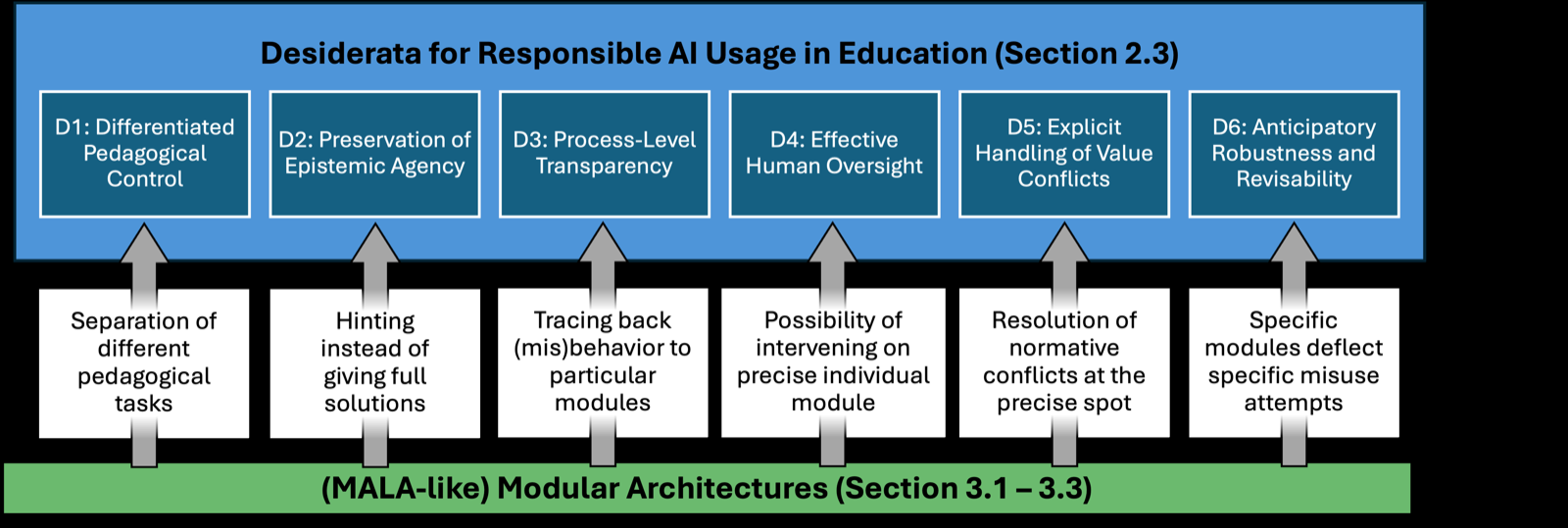
The modular approach to educational AI agents addresses a fundamental concern in AI deployment: the need for responsible and pedagogically sound systems. By breaking down the agent architecture into distinct modules for different stages of exercise solving, the system can incorporate specific pedagogical guidance while maintaining transparency and control over the learning process. This modularization is particularly important for educational applications where the stakes are high and the need for oversight is paramount.
The paper's identification of structural shortcomings in monolithic solutions highlights a key challenge in AI agent development: how to balance functionality with responsibility. The proposed modular architecture allows for targeted interventions at specific points in the learning process, which can help prevent negative effects such as loss of transfer capabilities, critical thinking, or creativity that might occur with less controlled approaches.
This work contributes to the broader field of agent architectures by providing a concrete example of how modular design can be applied to educational contexts. The emphasis on controllability, transparency, and overseeability aligns with emerging requirements for responsible AI systems and suggests a path forward for developing AI agents that can be trusted in sensitive domains like education.
Key insight: Modularizing agentic AI architectures for educational applications enables more responsible deployment by incorporating targeted pedagogical advice and maintaining transparency in the learning process.
LLMSurgeon: Diagnosing Data Mixture of Large Language Models
arXiv: 2605.30348
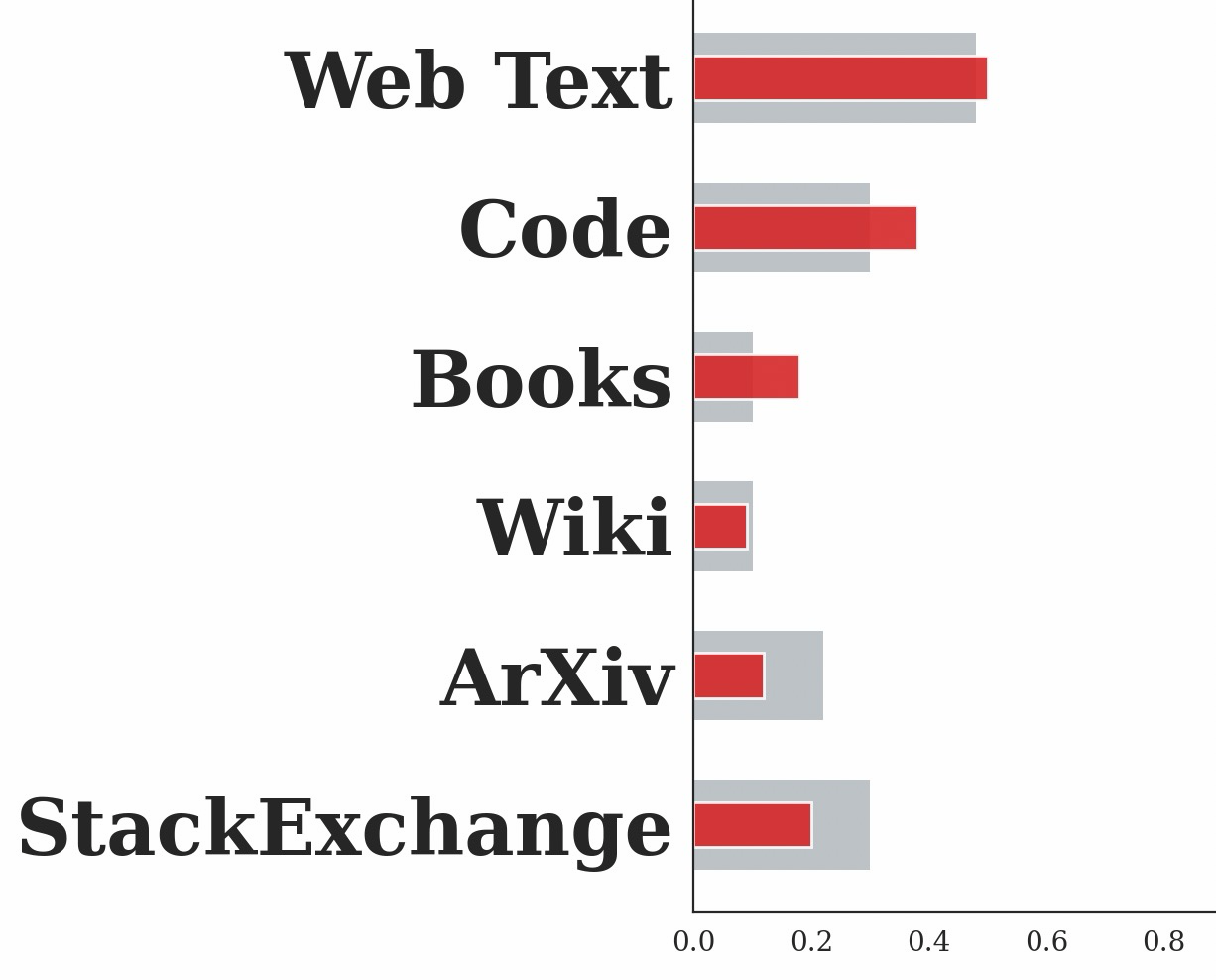
LLMSurgeon represents a significant advancement in model auditing and transparency, addressing a critical gap in understanding how LLMs are trained and how their behaviors are shaped by their pretraining data. By casting the problem of data mixture diagnosis as an inverse problem under label-shift assumptions, the framework provides a principled approach to estimating domain-level distributions of pretraining corpora, which is essential for understanding model capabilities and limitations.
The ability to recover domain mixtures with high fidelity without access to training data has profound implications for AI safety and accountability. This approach enables researchers and practitioners to audit models' digital DNA, which is crucial for identifying potential biases, understanding failure modes, and ensuring responsible deployment. The framework's evaluation using LLMScan demonstrates its practical utility in real-world scenarios.
This work contributes to memory and tool use in AI agents by providing a diagnostic tool that can be integrated into agent development pipelines. Understanding the data mixture allows for better model selection, fine-tuning, and deployment strategies, particularly in applications where transparency and explainability are required. It also supports reasoning and planning by providing insights into how models might behave in different contexts based on their training data composition.
Key insight: LLMSurgeon enables post-hoc auditing of LLM data mixtures through inverse problem solving, providing a practical approach to understanding model behavior without access to training data.
CommunityFact: A Dynamic, Multilingual, Multi-domain Benchmark for Misinformation Detection in the Wild
arXiv: 2605.30241
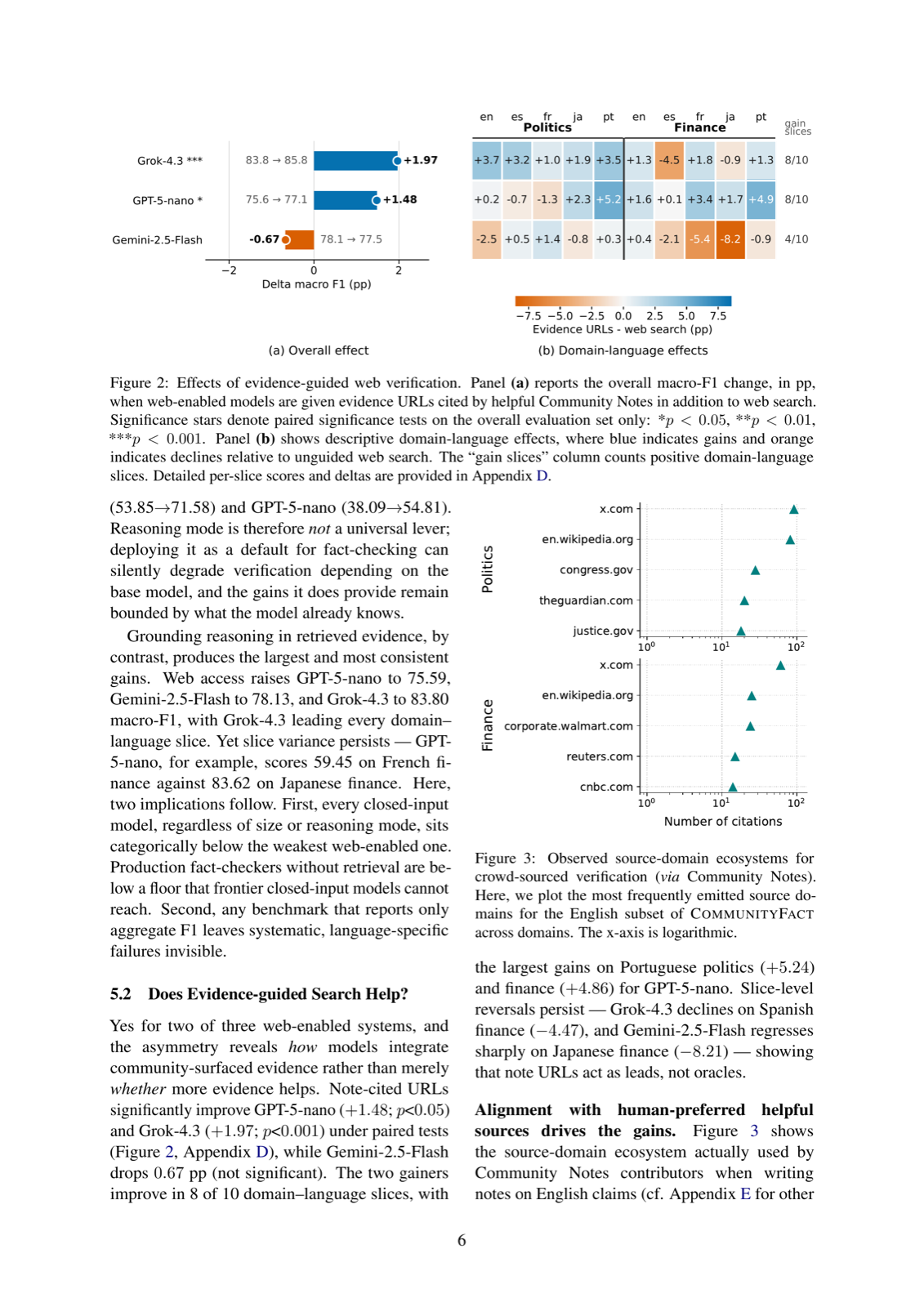
CommunityFact addresses a critical gap in misinformation detection benchmarks by providing a dynamic, multilingual, multi-domain dataset that reflects real-world conditions. The finding that web access yields the largest gains in detection accuracy underscores the importance of retrieval-augmented generation in AI agent systems, particularly for tasks requiring up-to-date information and cross-referencing.
The systematic misalignment between LLM source-selection policies and human Community Notes raters reveals a fundamental challenge in designing AI agents for information verification. This gap suggests that while LLMs can access more information, they may not be selecting the most relevant or trustworthy sources, which has implications for agent architectures that rely on automated information gathering and evaluation.
This research contributes to multi-agent systems by highlighting the importance of coordination between different information sources and human expertise. The findings suggest that effective misinformation detection requires not just access to information but also understanding of human judgment patterns and source credibility assessment, which could inform the design of hybrid human-AI systems for fact verification.
Key insight: CommunityFact demonstrates that web access provides the largest gains in misinformation detection, but web-enabled LLMs' source-selection policies are systematically misaligned with human raters' preferences.
In-Context Reward Adaptation for Robust Preference Modeling
arXiv: 2605.30323

In-Context Reward Adaptation addresses a fundamental challenge in preference modeling: the need for robustness across diverse and unseen preference domains. By incorporating human response time as an auxiliary input signal, the framework demonstrates how transformers can adapt to heterogeneous reward structures without costly retraining, which is crucial for developing flexible AI agents that can align with diverse user preferences.
The approach's ability to handle preference distribution shifts represents a significant step forward in human-AI alignment, particularly for agents that must operate in dynamic environments where user preferences may change over time. The finding that standard transformer architectures are insufficient without this adaptation mechanism highlights the importance of designing specialized architectures for preference modeling tasks.
This work contributes to agent architectures by showing how in-context learning capabilities can be leveraged for dynamic preference adaptation. The framework's scalability and ability to represent heterogeneous rewards make it particularly relevant for multi-agent systems where agents must coordinate their behavior based on diverse user preferences, potentially enabling more adaptive and responsive AI systems.
Key insight: In-Context Reward Adaptation enables transformers to model diverse and unseen human preferences on the fly by leveraging auxiliary signals like human response time, providing a scalable path toward flexible human-AI alignment.
Statistical Embeddings for Similarity, Retrieval, and Interpretable Alignment of Numeric Tabular Datasets
arXiv: 2605.30289
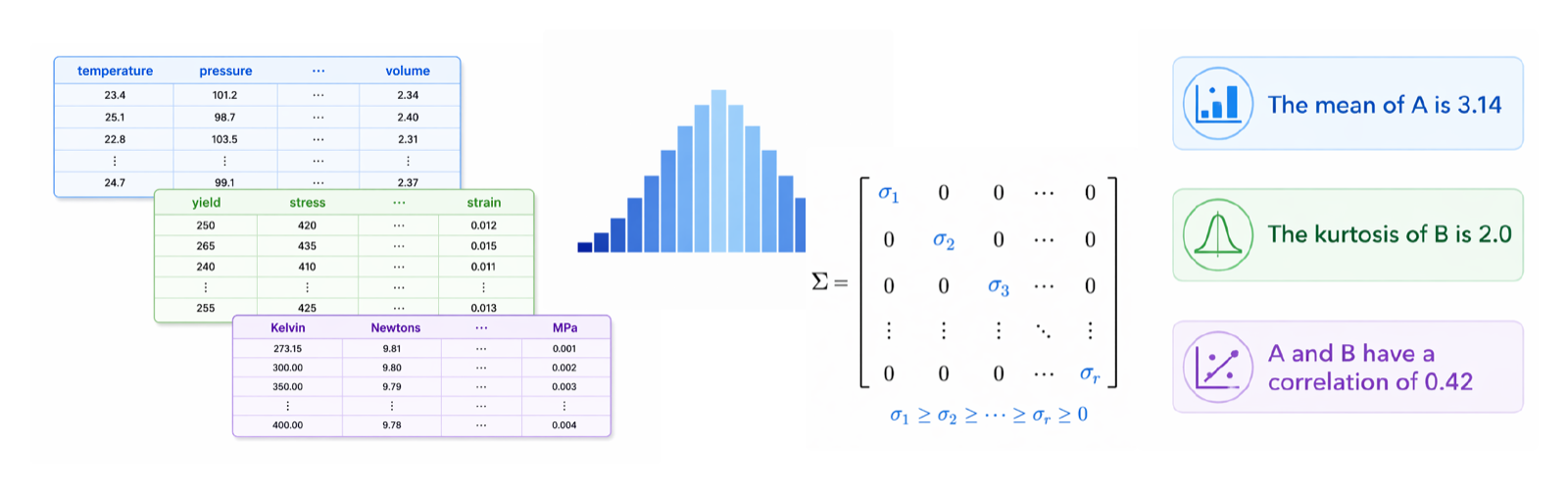
The statistical embeddings approach provides a principled pathway for integrating heterogeneous numeric data into AI systems, addressing a key limitation in current LLMs that lack native mechanisms for representing numeric datasets meaningfully. By characterizing datasets through structured exploratory data analysis descriptors and embedding them into a shared vector space, the framework enables cross-dataset similarity measurement and retrieval without requiring shared variable names or feature conventions.
The penalized CCA formulation that recovers sparse, interpretable variable-level correspondences is particularly valuable for understanding how different datasets align and what statistical descriptors drive cross-dataset relationships. This interpretability is crucial for AI agents that need to make decisions based on data integration, as it provides insights into why certain datasets are considered similar or related.
This work contributes to memory and tool use in AI agents by providing a mechanism for representing and reasoning over numeric data in a way that preserves statistical context. The framework's applicability to retrieval-augmented generation pipelines suggests it could be integrated into agents that need to access and reason over diverse numeric datasets, supporting both reasoning and planning capabilities in data-driven applications.
Key insight: Statistical embeddings using canonical correlation analysis enable interpretable alignment of numeric tabular datasets, supporting retrieval-augmented generation pipelines while preserving statistical context.