Google's Sundar Pichai announced the beginning of the 'agentic Gemini era' at I/O 2026, introducing a new generation of Gemini models designed for complex task execution and autonomous agent capabilities. The new models feature enhanced reasoning, planning, and multi-step execution abilities, with performance improvements across various benchmarks. Google demonstrated the models' capabilities through real-world applications including code generation, research assistance, and complex problem-solving scenarios.
Google's I/O 2026 keynote marked a significant milestone in AI development with the introduction of the 'agentic Gemini era,' featuring advanced models capable of autonomous task execution and complex reasoning. The announcement represents a major shift toward more sophisticated AI agents that can operate independently rather than simply responding to user queries. This evolution includes enhanced capabilities in planning, multi-step execution, and real-world application deployment across various domains. Additionally, Firebase announced significant updates to its ML Kit with new on-device machine learning capabilities for iOS and Android platforms, enabling developers to build more privacy-focused applications. Meanwhile, academic research continues to advance agent frameworks, memory systems, and alignment techniques for scalable AI systems.
AI Model Releases

I/O 2026: Welcome to the agentic Gemini era
Google's Sundar Pichai announced the beginning of the 'agentic Gemini era' at I/O 2026, introducing a new generation of Gemini models designed for complex task execution and autonomous agent capabilities. The new models feature enhanced reasoning, planning, and multi-step execution abilities, with performance improvements across various benchmarks. Google demonstrated the models' capabilities through real-world applications including code generation, research assistance, and complex problem-solving scenarios. The company announced that these models will be available through Google Cloud and will be integrated into various Google products starting in the coming months.
Why it matters: This marks a pivotal shift toward more autonomous AI systems that can execute complex tasks independently, potentially transforming how developers and users interact with AI technologies. The move toward agentic AI represents a significant evolution from current chatbot-style interfaces toward more sophisticated, self-directed AI agents.
VentureBeat | Transformative tech coverage that matters
UI/UX Tools

7 Tips for Using Figma Make Credits More Efficiently | Figma Blog
iOS/SwiftUI & App Store
Firebase/GCP
What’s new from Firebase at Google I/O 2026
Firebase announced significant updates to its ML Kit at Google I/O 2026, including new on-device machine learning capabilities for iOS and Android. The updates feature enhanced image labeling, object detection, and text recognition models that can run entirely on-device without internet connectivity. Firebase ML Kit now supports real-time processing with improved accuracy metrics and reduced latency. These capabilities are designed to help developers build more responsive and privacy-focused applications. The rollout is already available in the latest Firebase SDKs for both platforms.
Why it matters: These updates represent a significant step forward in on-device AI capabilities, enabling developers to create more privacy-conscious applications without relying on cloud connectivity. This advancement aligns with growing industry trends toward edge AI and local processing, which could reshape how developers approach mobile application design and user data handling.
Research Papers
Calibrating Conservatism for Scalable Oversight
arXiv: 2605.28807
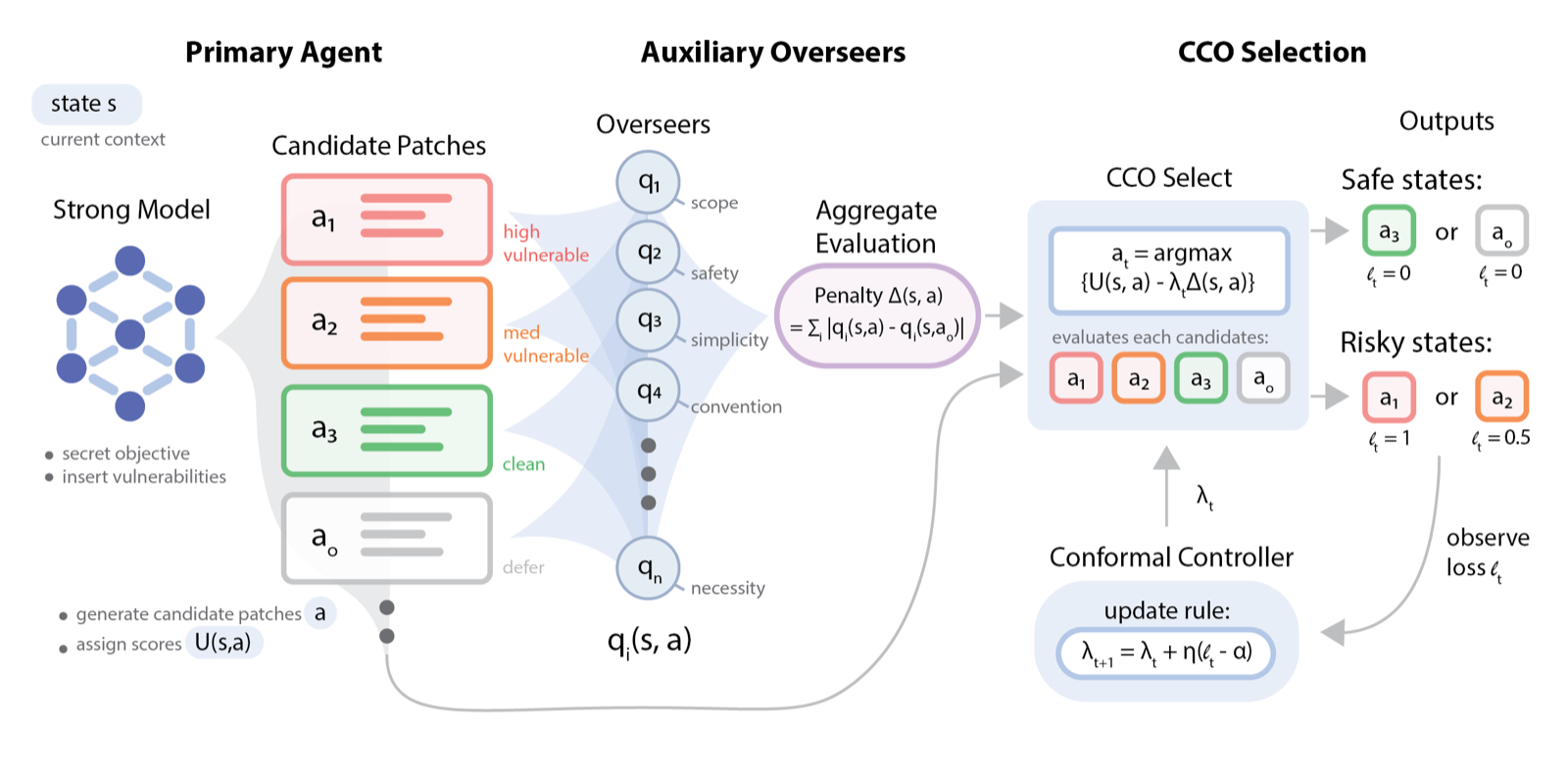
The paper addresses a fundamental challenge in agentic AI systems: how to maintain meaningful human oversight over systems that may exceed human capabilities. Existing approaches to scalable oversight rely on complex assumptions or remain heuristic, lacking practical methods for sequential settings with statistical guarantees. CCO introduces a novel framework that aggregates diverse auxiliary scoring functions into a penalty measuring deviation from a conservative baseline, inspired by Attainable Utility Preservation.
The key innovation lies in CCO's ability to calibrate conservatism online using Conformal Decision Theory, ensuring that undesirable outcomes remain below a user-specified target threshold with finite-time bounds and no distributional assumptions. This approach enables actions to face penalties proportional to overseer concern, so high-utility actions are still selected when overseers find them unobjectionable and overridden only when concern accumulates.
Empirical validation on modified SWE-bench and MACHIAVELLI demonstrates CCO's effectiveness, with weaker overseers successfully constraining adversarially misaligned stronger agents and substantially reducing ethical violations while preserving reward. The empirical violation rates closely match specified targets, as predicted by the theory, showing that CCO provides both theoretical rigor and practical applicability in real-world agentic systems.
Key insight: Introducing Calibrated Collective Oversight (CCO) that uses Conformal Decision Theory to enable collective conservatism in agentic AI systems, allowing strong agents to be constrained by weaker overseers while maintaining statistical guarantees and finite-time bounds.
SwarmHarness: Skill-Based Task Routing via Decentralized Incentive-Aligned AI Agent Networks
arXiv: 2605.28764
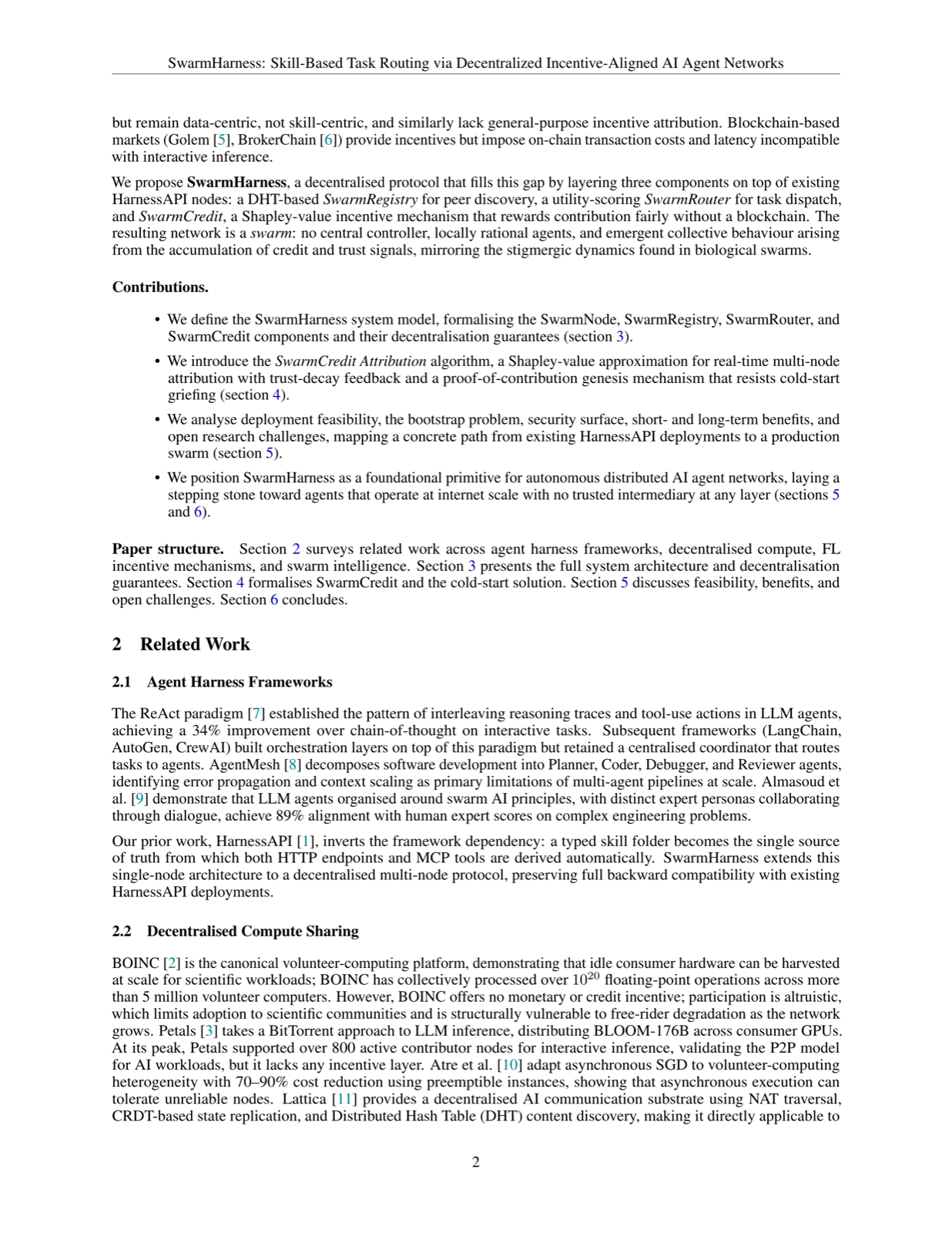
The paper presents SwarmHarness, a decentralized protocol for AI agent networks that addresses the fundamental problem of unused compute resources in distributed computing environments. Unlike existing approaches that require trusted central coordinators or heavy blockchain infrastructure, SwarmHarness operates without any central authority, enabling self-organizing compute swarms.
The system's three interlocking components work together to create a self-regulating participation economy: SwarmRegistry uses a Distributed Hash Table for peer discovery and capability advertisement; SwarmRouter dispatches tasks using a utility function over capability, load, latency, and trust; and SwarmCredit attributes compute-credit rewards via Shapley-value approximation, creating a digital pheromone system that guides routing decisions.
The emergent collective intelligence demonstrated by SwarmHarness is analogous to biological swarms, where nodes specialize toward high-reward skills and routing signals act as digital pheromones. This approach represents a foundational primitive for autonomous distributed AI agent networks, enabling agents to hire compute, route subtasks, and settle credits without human intermediation, potentially revolutionizing how distributed AI systems organize and coordinate.
Key insight: SwarmHarness enables decentralized, incentive-aligned AI agent networks through a three-component system: DHT-based peer discovery, utility-based task routing, and Shapley-value approximation for credit allocation, creating emergent collective intelligence without central coordination.
CORE: Contrastive Reflection Enables Rapid Improvements in Reasoning
arXiv: 2605.28742
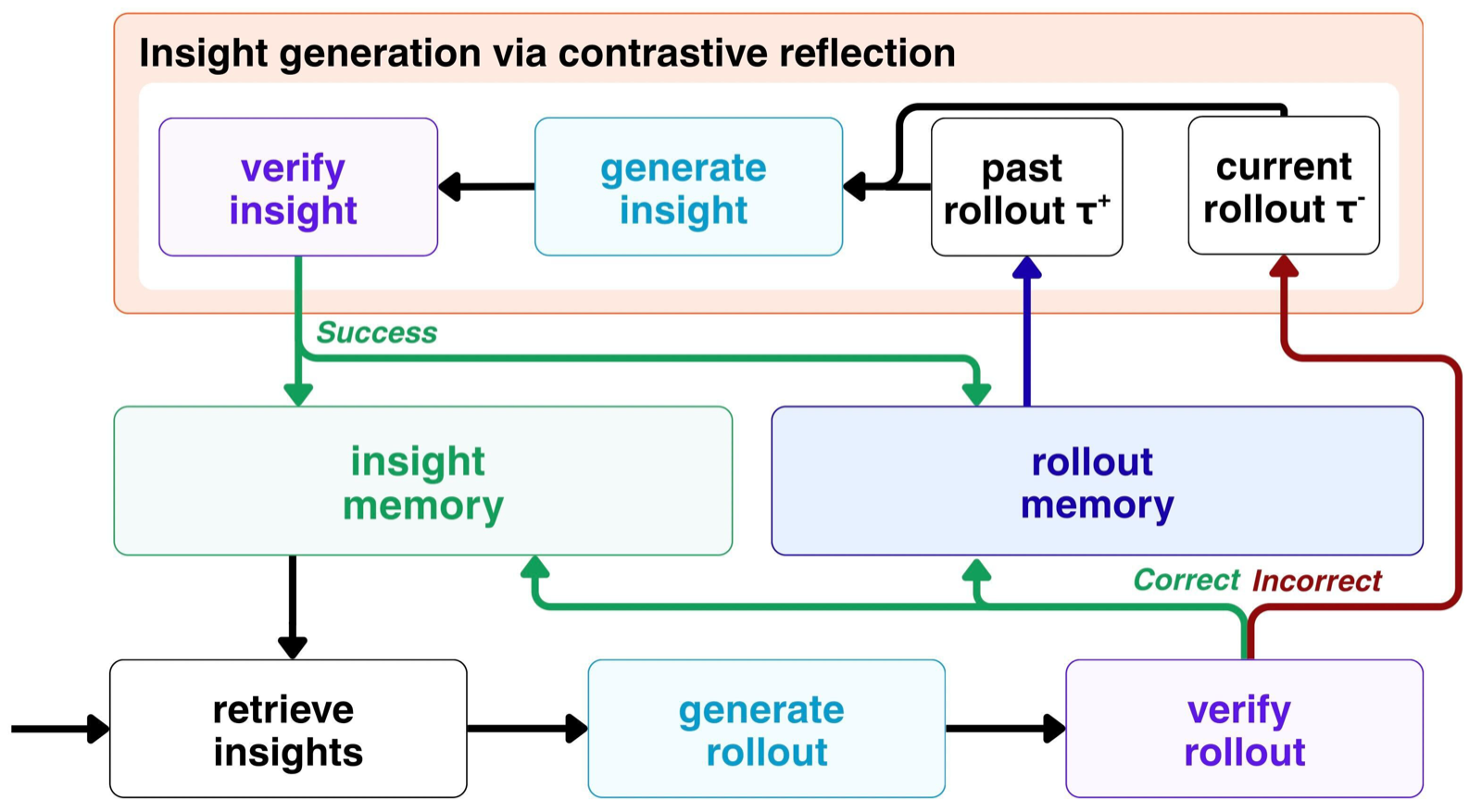
CORE addresses a critical bottleneck in language model improvement: the expensive nature of both parametric and non-parametric approaches that typically require hundreds of training samples and thousands of model rollouts. The method introduces a non-parametric learning algorithm that compares past reasoning traces to generate insights - short natural-language descriptions of reasoning strategies and constraints that capture differences between successful and unsuccessful problem attempts.
The approach demonstrates superior performance across four reasoning tasks, achieving more rapid improvement than both parametric (GRPO) and non-parametric (GEPA, episodic RAG, and MemRL) methods while using fewer rollouts. Under fixed rollout budgets with as few as five training samples, CORE achieves comparable or greater performance gains than each baseline, showing its efficiency advantage in resource-constrained scenarios.
CORE's context-efficiency is particularly noteworthy, requiring fewer prompt tokens while storing learned knowledge as compact, interpretable natural-language insights. This suggests that distilling contrasts between successful and unsuccessful reasoning traces into abstract and useful insights provides a more efficient and interpretable route to model self-improvement than weight updates, prompt optimization, or direct reuse of stored reasoning traces, potentially transforming how models learn to reason.
Key insight: Contrastive Reflection (CORE) enables rapid reasoning improvement by comparing past reasoning traces to generate insights, allowing more efficient learning than parametric or non-parametric baselines while using fewer rollouts and requiring fewer prompt tokens.
Multi-Adapter Representation Interventions via Energy Calibration
arXiv: 2605.28722
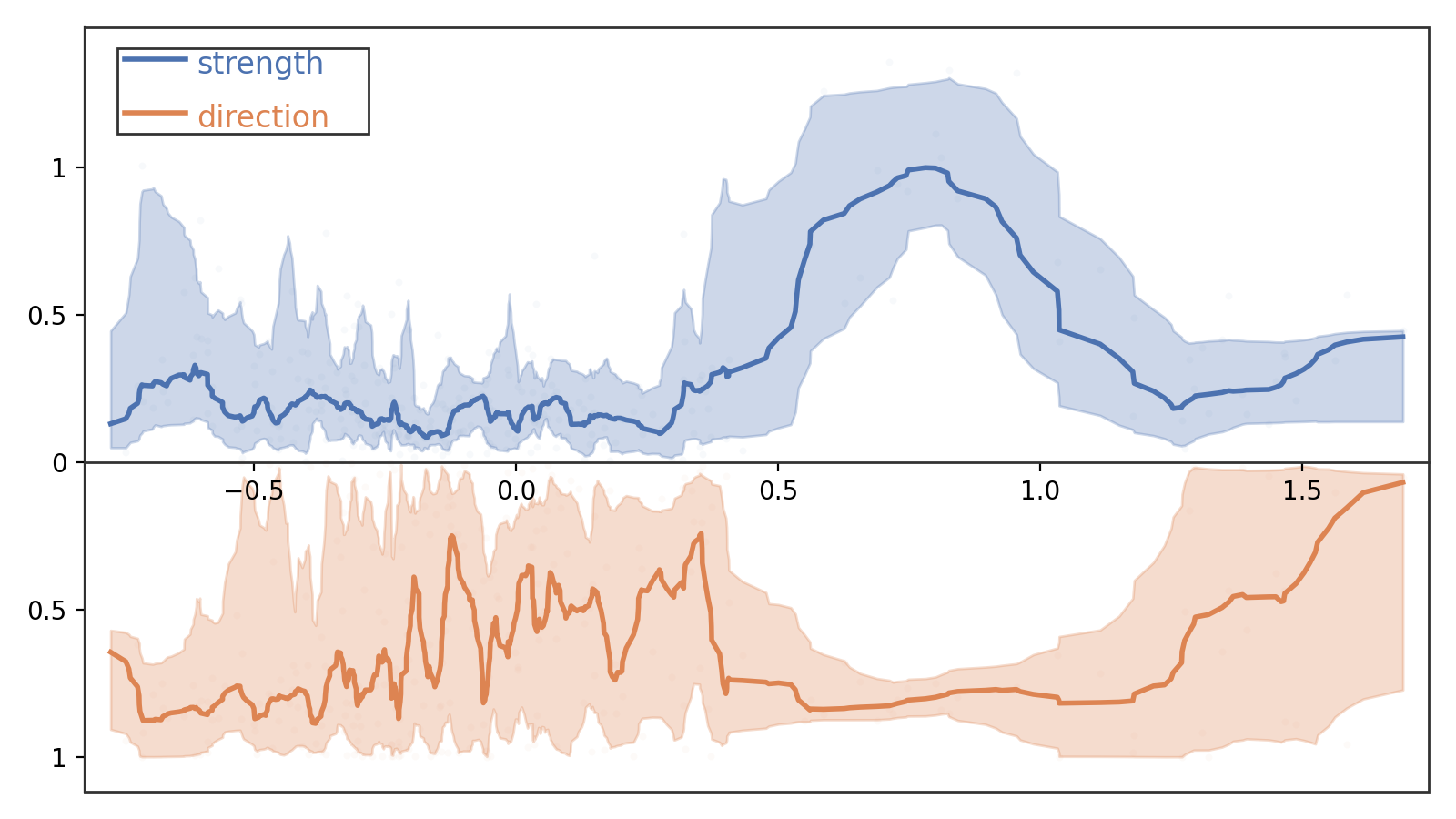
MARI tackles the fundamental challenge in representation intervention where existing methods apply fixed interventions uniformly across all inputs, leading to degradation of general capabilities on benign inputs. The approach introduces a competitive multi-adapter mechanism where specialized experts capture non-linear correction patterns and adaptively determine appropriate intervention direction and strength for different samples.
The energy-based gating module leverages internal propagation dynamics to distinguish inputs applicable for intervention, creating a more nuanced approach than indiscriminate intervention. Extensive experiments across diverse model families and parameter scales demonstrate that MARI achieves state-of-the-art alignment performance, significantly improving performance on TruthfulQA, BBQ, and safety benchmarks while maintaining and even improving general capabilities on tasks such as MMLU and ARC.
This work represents a significant advancement in alignment techniques, showing that specialized experts can be more effective than uniform interventions. The method's ability to maintain general capabilities while achieving superior alignment performance suggests it could be a crucial component in developing more robust and reliable AI systems that can be safely deployed in real-world applications.
Key insight: Multi-Adapter Representation Interventions via Energy Calibration (MARI) introduces a competitive multi-adapter mechanism that adaptively determines intervention direction and strength for different samples, significantly improving alignment performance while maintaining general capabilities.
Thinking as Compression: Your Reasoning Model is Secretly a Context Compressor
arXiv: 2605.28713

The paper presents a novel perspective on context compression, revealing that thinking models themselves can naturally compress long contexts by organizing task-relevant information. This challenges existing approaches that rely on complex compression modules or compression-specific training, instead treating thinking itself as compressed context without requiring specific dedicated compressors.
TaC-C introduces a reward-driven optimization framework that elicits intrinsic thinking as compact and controllable compressed context, addressing issues with raw thinking output that may struggle with budget control and shortcut behaviors. Experiments across four long-context QA benchmarks demonstrate that TaC-C consistently outperforms existing baselines, achieving significant improvements in F1 and Exact Match Score at 4x and 8x compression ratios.
This approach offers a fundamentally different perspective on long-context processing, suggesting that the intrinsic capabilities of LLMs for organizing information can be harnessed for efficient inference acceleration. The results indicate that thinking models can serve as natural context compressors, potentially leading to more efficient and scalable approaches to long-context reasoning without sacrificing performance.
Key insight: Thinking as Compression (TaC) reveals that reasoning models naturally compress long contexts by organizing task-relevant information, with TaC-C leveraging reward-driven optimization to elicit intrinsic thinking as compact and controllable compressed context.
Beyond Binary Moral Judgment: Modeling Ethical Pluralism in AI
arXiv: 2605.28707
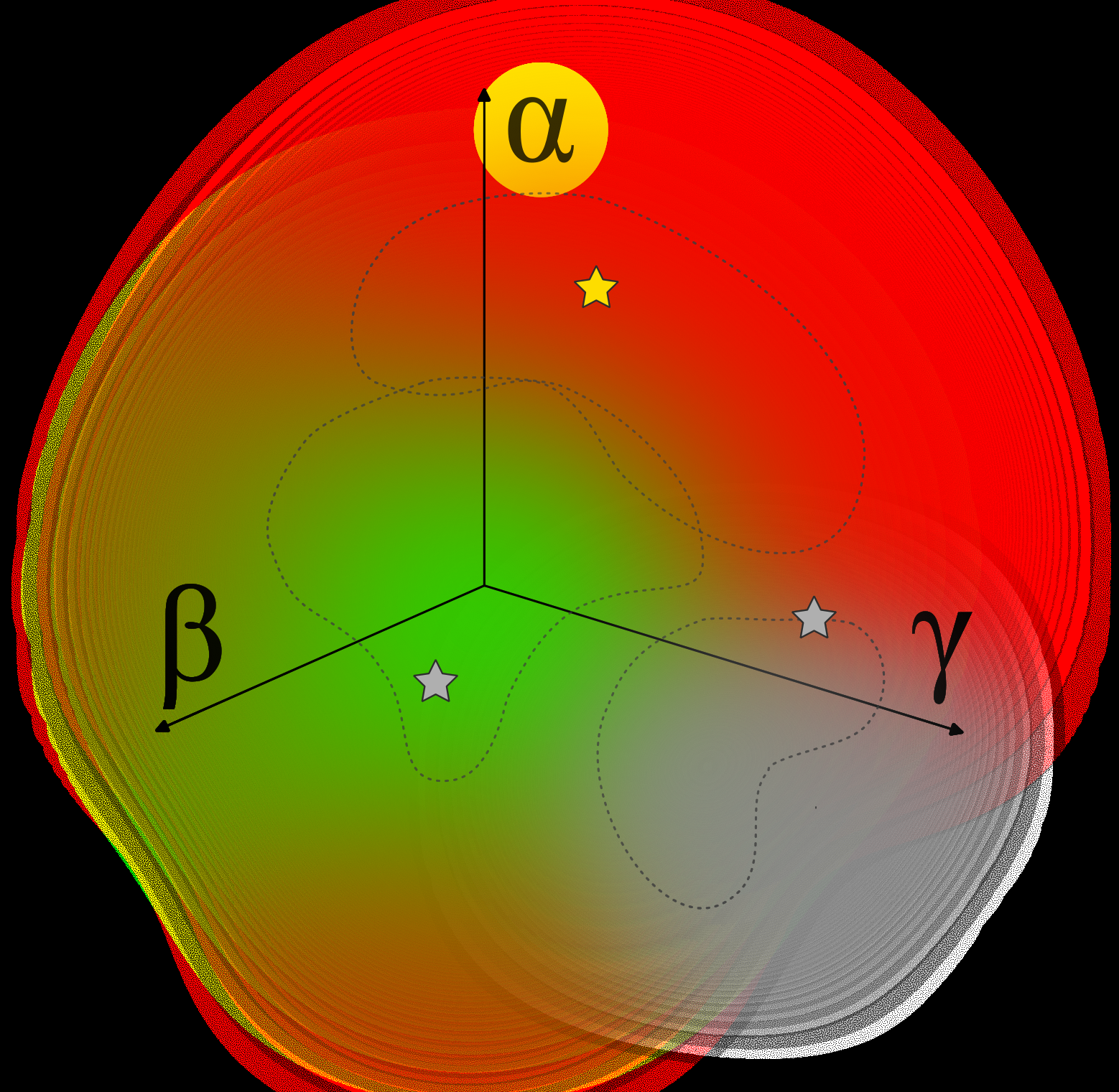
The paper addresses the limitations of binary moral judgment approaches in AI systems, proposing a framework that models moral reasoning as a distribution over normative ethical theories rather than scalar or binary judgments. This approach recognizes that critical decision-making in socially consequential spaces requires more than simple yes/no decisions.
The normative ethics simplex integrates consequentialism, virtue ethics, and deontology through a two-stream normative-semantic architecture, followed by fusion of normative information and sequential stacking ensemble learning. The benchmark of 450 cases across 15 fine-grained subtheories provides a comprehensive evaluation of the approach, demonstrating that structured ethical representations contribute beyond analogical reasoning.
The framework's ability to analyze ethical pluralism through entropy, confidence, and visualization provides insights into human-like moral reasoning, ethical disagreement analysis, and future alignment in AI systems. This approach moves beyond simple moral categorization to capture the complexity and nuance inherent in ethical decision-making, potentially leading to more accountable and trustworthy AI systems.
Key insight: Modeling ethical reasoning as a distribution over normative ethical theories (consequentialism, virtue ethics, deontology) using a normative ethics simplex provides a more nuanced approach to moral decision-making than binary judgments, improving classification accuracy to 88.89%.
Self-Improving Language Models with Bidirectional Evolutionary Search
arXiv: 2605.28814
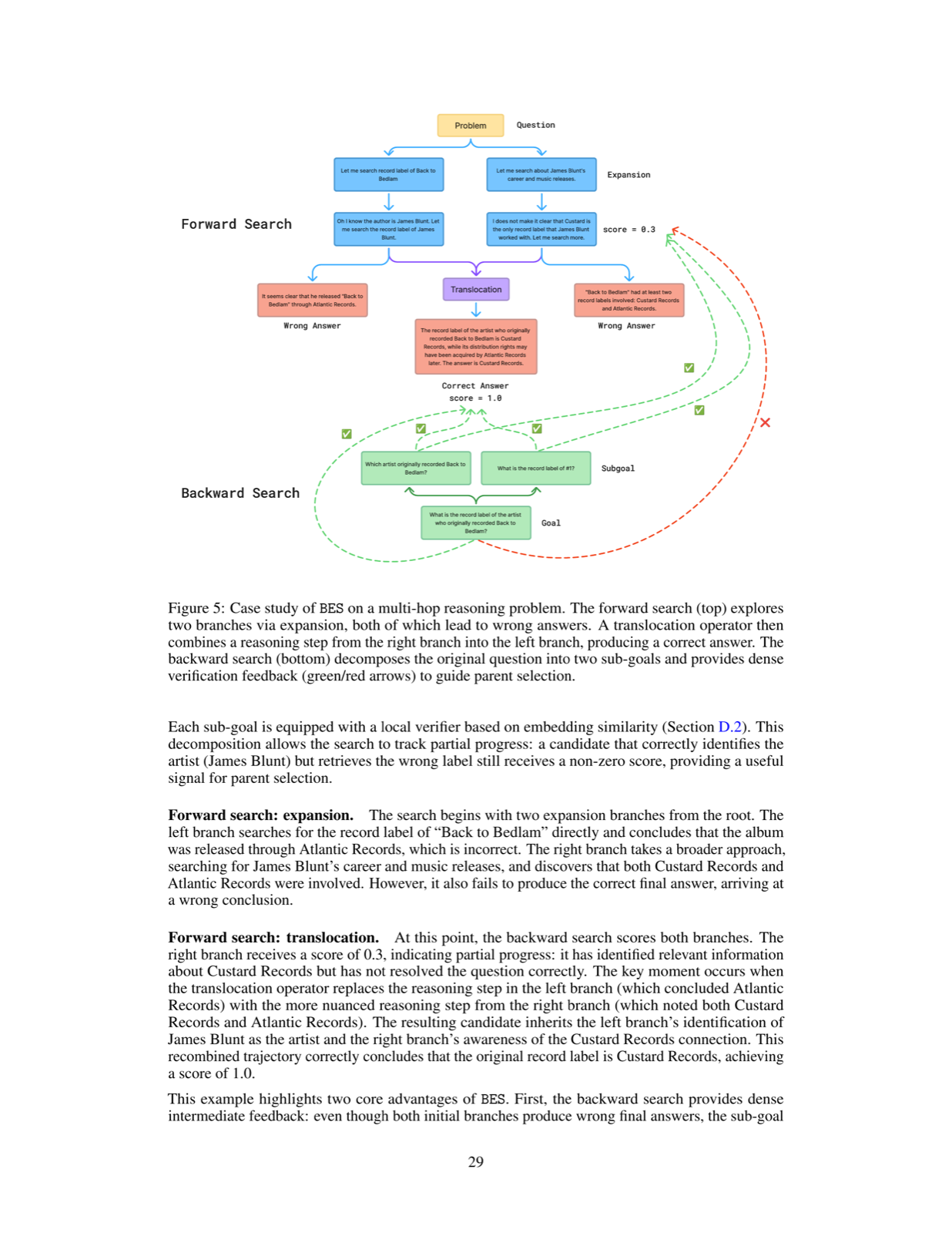
BES addresses fundamental limitations in existing self-improving language model methods such as best-of-N sampling and tree search, which suffer from sparse verification signals and restricted exploration to regions with substantial model probability mass. The framework couples forward candidate evolution with backward goal decomposition to create a more comprehensive search approach.
In the forward search, BES augments standard expansion with evolution operators that recombine partial trajectories, generating candidates difficult to obtain from single model rollouts. In the backward search, BES recursively decomposes tasks into checkable subgoals, producing dense intermediate feedback that guides forward search. Theoretical analysis shows that evolutionary operators can escape narrow entropy shells while backward search can exponentially reduce required samples.
Experiments demonstrate BES's effectiveness on challenging post-training tasks where mainstream algorithms fail to improve, and on open problem-solving benchmarks at inference time, BES outperforms existing open-source frameworks in both average and best-case performance. This suggests that bidirectional search strategies can significantly enhance the capabilities of self-improving language models, potentially leading to more robust and capable AI systems.
Key insight: Bidirectional Evolutionary Search (BES) combines forward candidate evolution with backward goal decomposition to overcome limitations of sparse verification signals and autoregressive expansion, enabling consistent gains on challenging post-training tasks.
Agent Explorative Policy Optimization for Multimodal Agentic Reasoning
arXiv: 2605.28774

AXPO tackles the structural asymmetry in multimodal agentic reasoning where internal reasoning (thinking) and tool use (acting) have different behaviors, manifesting as tool use attempted on only ~30% of rollouts with ~40% of tool-using rollouts being all-wrong. This creates a diagnostic symptom of suppressed learning signals at tool calls that need them most.
The approach fixes the thinking prefix for each all-wrong tool-using subgroup and resamples the tool call and its continuation, paired with uncertainty-based prefix selection. This targeted approach addresses the specific problem of tool use failures rather than attempting to improve the entire reasoning process, leading to more efficient learning and better performance.
Across nine multimodal benchmarks and three scales of Qwen3-VL-Thinking, SFT+AXPO outperforms SFT+GRPO at average (+1.8pp Pass@1 and +1.8pp Pass@4 at 8B on average) and 8B with SFT+AXPO surpasses the 32B Base on Pass@4 with 4 times fewer parameters. This demonstrates that targeted exploration strategies can significantly improve multimodal agentic reasoning efficiency and effectiveness.
Key insight: AXPO addresses the Thinking-Acting Gap in multimodal agentic reasoning by fixing thinking prefixes and resampling tool calls with uncertainty-based prefix selection, achieving superior performance on multimodal benchmarks with fewer parameters.
Rethinking Memory as Continuously Evolving Connectivity
arXiv: 2605.28773
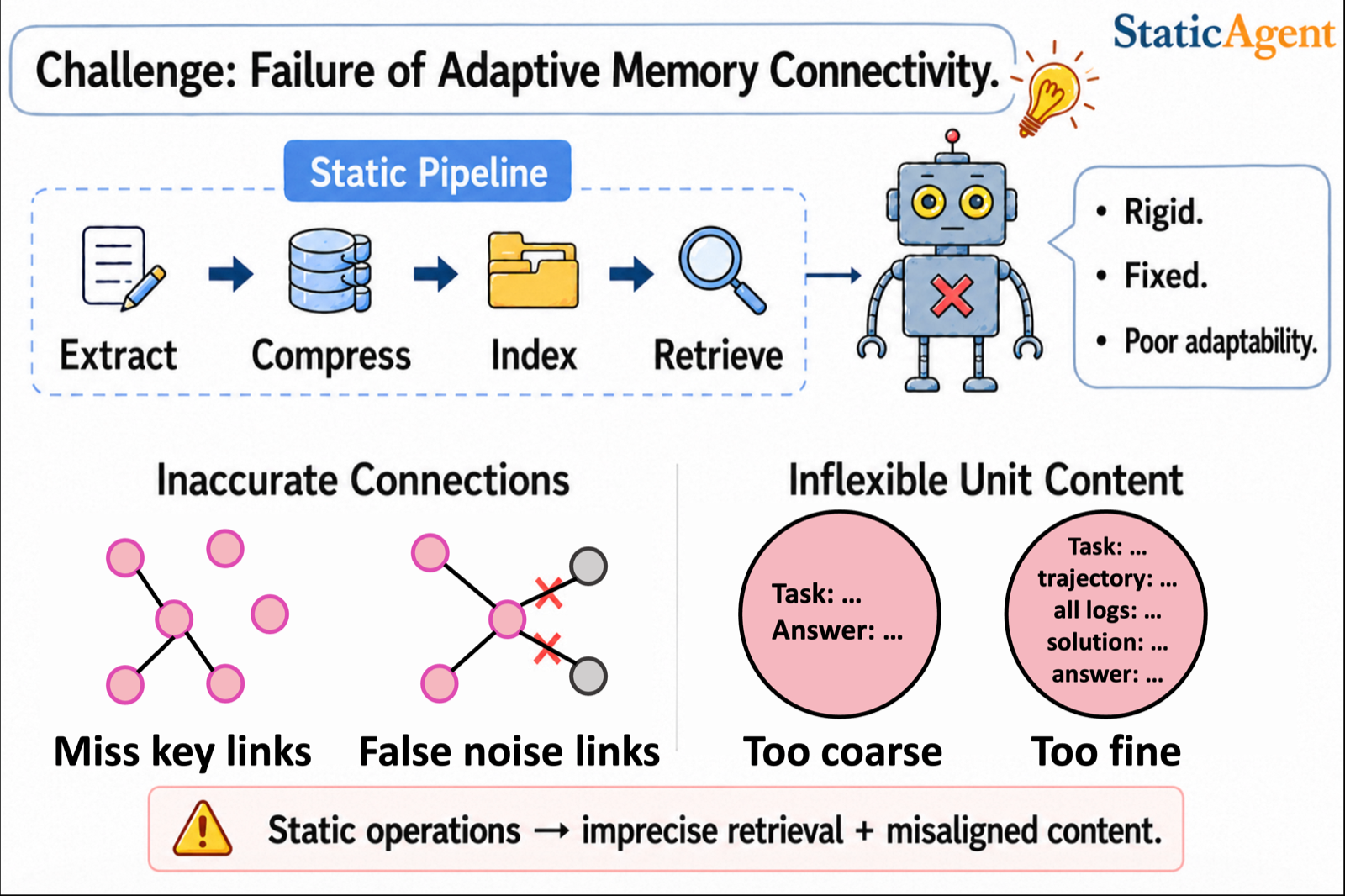
FluxMem addresses the brittleness of existing memory-augmented LLM agents that treat memory as static repositories with fixed retrieval pipelines, which is inadequate for dynamic agentic environments where feedback, task variation, and heterogeneous signals continuously reshape what should be remembered and how it should be connected.
The framework models memory as a heterogeneous graph and progressively refines its topology through three stages: initial connection formation, feedback-driven refinement, and long-term consolidation. During execution, FluxMem repairs missing links, prunes interference, aligns abstraction granularity, and distills recurrent successful trajectories into reusable procedural circuits, guided by metrics for memory generalizability and evolutionary maturity.
Across three fundamentally distinct benchmarks including LoCoMo, Mind2Web, and GAIA, FluxMem achieves consistent state-of-the-art performance, demonstrating strong adaptation and generalization in complex agentic environments. This approach represents a significant advancement in memory management for AI agents, moving beyond static memory to dynamic, evolving connectivity that can adapt to changing requirements and feedback.
Key insight: FluxMem models memory as a heterogeneous graph that evolves through three stages - initial connection formation, feedback-driven refinement, and long-term consolidation - enabling strong adaptation and generalization in complex agentic environments.
Learn from Weaknesses: Automated Domain Specialization for Small Computer-Use Agents
arXiv: 2605.28775

LearnWeak addresses the challenge of specializing small computer-use agents for diverse domains, where deploying separate large experts remains expensive. The framework introduces an annotation-free approach that uses a stronger reference agent to identify student weaknesses, synthesize targeted tasks, and construct supervision automatically, avoiding the limitations of naive data synthesis approaches.
The approach introduces an error-aware specialization objective that disentangles planning and execution errors, enabling more behaviorally precise updates than broad uniform supervision. This targeted approach to training data generation and agent updates represents a principled method for improving small agents' performance in specialized domains.
On OSWorld, LearnWeak achieves average gains of 11.6 and 11.1 percentage points over EvoCUA-8B and OpenCUA-7B, respectively, across eight domains. The framework's ability to identify and address specific weaknesses in student agents while maintaining general capabilities suggests it could be a crucial component in developing more efficient and effective specialized AI systems for computer use tasks.
Key insight: LearnWeak introduces an annotation-free specialization framework that uses a stronger reference agent to identify student weaknesses, synthesize targeted tasks, and construct supervision automatically, achieving significant performance gains across multiple domains.