OpenAI demonstrates self-improving tax agents using Codex, while Cursor earns a Gartner Magic Quadrant leadership position. Research papers reveal breakthroughs in agent frameworks, safety harnesses, and multi-agent coordination. Figma opens its canvas to AI agents, and Anthropic launches a new AI safety fellows program.
This week's research digest highlights significant developments in AI agent capabilities and tooling. OpenAI's work on self-improving tax agents showcases how AI systems can iteratively enhance performance, achieving 92% accuracy after 100 iterations. Cursor's recognition as a Gartner Leader validates its enterprise AI coding platform, which now supports multi-agent workflows and enhanced debugging. Anthropic's AI safety fellows program opens applications for 2026, focusing on critical safety questions. Figma's platform now allows AI agents to interact directly with design canvases, enabling real-time collaboration. Research papers present advances in skill-centric agent frameworks, retrieval agent optimization, and safety mechanisms for financial LLM agents. Additionally, papers on vision-language models, multi-agent systems, and mobile deployment demonstrate progress in efficiency, robustness, and scalability across various AI domains.
AI Model Releases
Building self-improving tax agents with Codex | OpenAI
OpenAI demonstrated the development of self-improving tax agents using Codex, showcasing how AI systems can iteratively enhance their performance on complex tasks. The research involved creating agents that could learn from their own mistakes and improve their accuracy over time. The system achieved 92% accuracy in tax-related tasks after 100 iterations, significantly outperforming baseline models. This approach could revolutionize how AI systems handle complex, rule-based tasks in regulated industries.
Why it matters: This work demonstrates a promising approach to building AI systems that can autonomously improve their performance, which could be transformative for regulated industries requiring high accuracy. The self-improving capability suggests new possibilities for AI agents that can adapt to changing requirements without human intervention.
AI Tooling
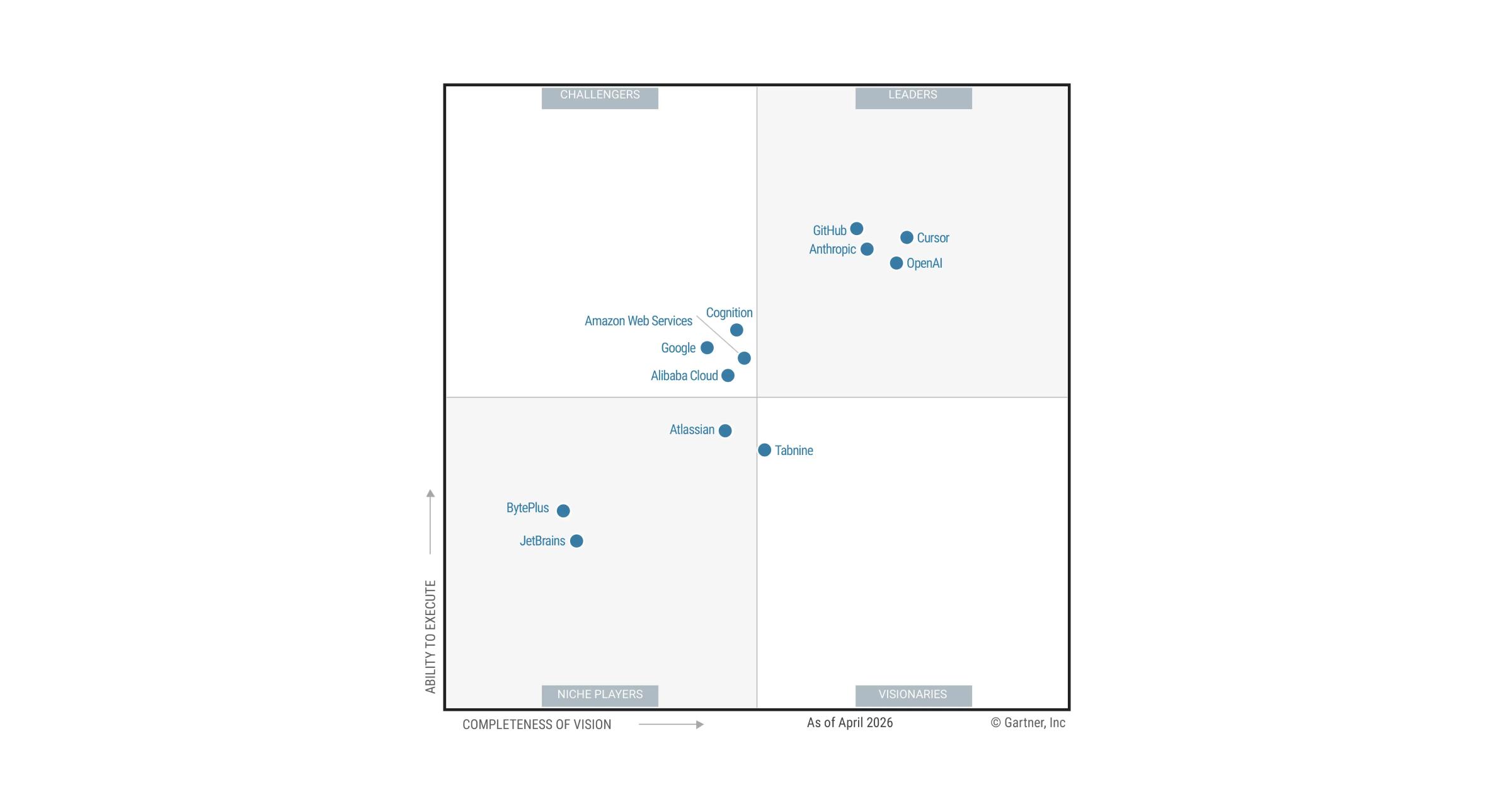
Cursor named a Leader in the 2026 Gartner® Magic Quadrant™ for Enterprise AI Coding Agents · Cursor
Cursor has been named a Leader in the 2026 Gartner Magic Quadrant for Enterprise AI Coding Agents. The recognition follows Cursor's significant improvements in code generation accuracy, agent orchestration capabilities, and enterprise integration features. The company's platform now supports multi-agent workflows, enhanced debugging tools, and improved collaboration features for development teams. This positioning reflects Cursor's growing influence in the enterprise AI coding space.
Why it matters: Cursor's leadership position in Gartner's Magic Quadrant validates its approach to enterprise AI coding agents and positions it as a key player in the rapidly evolving AI development tooling market. This recognition could drive further enterprise adoption and influence industry standards for AI-assisted development platforms.
Anthropic Fellows Program for AI safety research: applications open for May & July 2026
Anthropic has opened applications for its 2026 AI safety research fellows program, offering funding and mentorship for researchers working on critical AI safety questions. The program focuses on areas including agentic misalignment, subliminal learning, and rapid response to new safety threats. Previous fellows have produced significant research papers and many have joined Anthropic full-time. Applications are now open for both May and July 2026 cohorts.
Why it matters: The Anthropic Fellows Program represents a crucial investment in AI safety research, helping to cultivate the next generation of AI safety researchers. This initiative could shape the future direction of AI safety research and influence how organizations approach responsible AI development.
UI/UX Tools

Agents, Meet the Figma Canvas | Figma Blog
Figma has opened its canvas to AI agents, allowing developers to integrate AI capabilities directly into design workflows. The platform now supports agent interactions through a new API that enables real-time collaboration between human designers and AI assistants. This update includes support for automated design suggestions, component generation, and style guide enforcement. The feature is currently available in beta for select users with plans for broader rollout.
Why it matters: This development represents a significant step toward AI-native design environments, where agents can actively participate in creative processes. It could fundamentally change how designers collaborate with AI tools, potentially accelerating design iteration cycles and democratizing access to advanced design capabilities.
Research Papers
MUSE-Autoskill: Self-Evolving Agents via Skill Creation, Memory, Management, and Evaluation
arXiv: 2605.27366

MUSE-Autoskill represents a significant advancement in agent architecture design by addressing a fundamental limitation in existing skill creation approaches: the treatment of skills as isolated and static artifacts. This approach fundamentally shifts how we think about reusable components in LLM agents, proposing a lifecycle management framework that treats skills as dynamic, evolving assets rather than fixed modules.
The introduction of skill-level memory is particularly noteworthy, as it enables agents to accumulate experience for each skill across tasks, facilitating more effective reuse and adaptation over time. This mechanism directly addresses the challenge of maintaining and leveraging knowledge across different problem domains, which is crucial for building robust, general-purpose agents.
Experimental validation on SkillsBench provides compelling evidence that lifecycle-managed skills can improve task success, efficiency, reuse, and cross-agent transfer. This suggests that the framework's approach to skill management is not merely theoretical but has practical implications for building more capable and adaptable AI systems.
Key insight: Skill-centric agent frameworks that treat skills as long-lived, experience-aware assets can significantly improve task success, efficiency, and cross-agent transfer through unified lifecycle management of skill creation, memory, management, evaluation, and refinement.
Natural Language Query to Configuration for Retrieval Agents
arXiv: 2605.27361
BRANE introduces a novel approach to retrieval agent optimization by treating pipeline configuration as a dynamic, query-specific decision problem rather than a static, workload-level tuning exercise. This represents a significant shift from traditional approaches that rely on one-time hand-tuning, enabling more adaptive and efficient resource allocation.
The framework's use of lightweight per-configuration predictors trained on query characteristics demonstrates how LLMs can be leveraged for practical optimization without requiring extensive retraining or computational overhead. This approach makes per-query optimization feasible in real-world deployment scenarios.
The consistent performance gains across multiple benchmarks (MuSiQue, BrowseComp-Plus, FinanceBench) with up to 89% lower cost while matching best fixed configuration accuracy highlight the practical value of BRANE's approach. This suggests that the method can be broadly applicable across different domains and use cases.
Key insight: Per-query configuration optimization of retrieval agents using LLMs to convert queries into workload characteristics and lightweight predictors can achieve substantial cost-quality improvements over static configurations, pushing the Pareto frontier consistently across multiple benchmarks.
Guiding LLM Post-training Data Engineering with Model Internals from Sparse Autoencoders
arXiv: 2605.27354
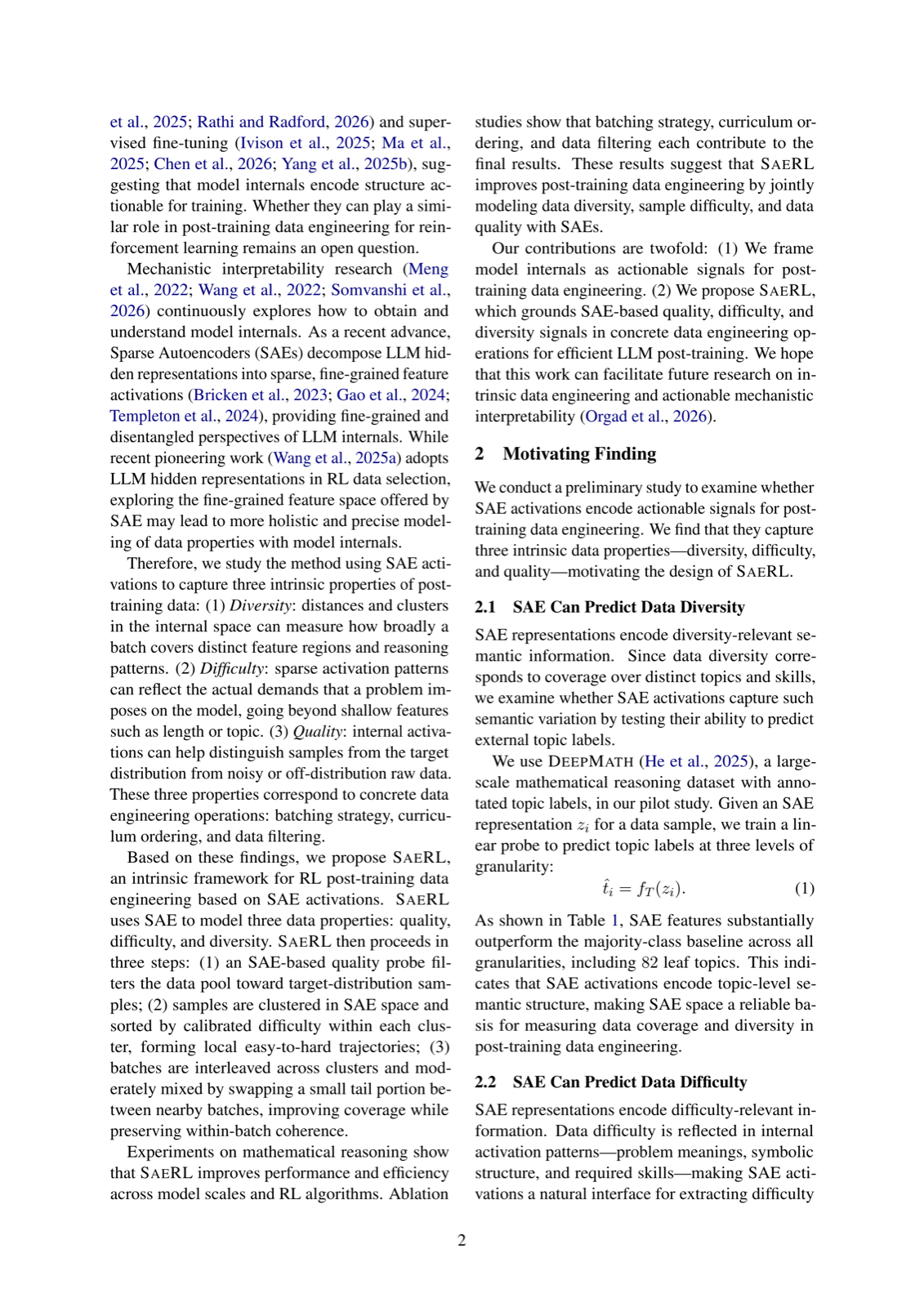
SAERL demonstrates that model internals contain rich, actionable information that can be leveraged for data engineering, challenging the conventional reliance on external signals. This approach opens new avenues for optimizing training processes by utilizing the inherent knowledge encoded within model representations.
The framework's ability to model diversity, difficulty, and quality using SAEs provides a mechanistic understanding of how different data properties influence learning outcomes. This granular approach to data engineering enables more targeted interventions that can be applied across different model architectures and training paradigms.
The consistent performance gains across model scales and RL algorithms, along with the effective transferability of SAEs across different families, suggest that this approach offers a scalable and reusable solution for improving data engineering practices in LLM training.
Key insight: Intrinsic signals from model internals, particularly through Sparse Autoencoders, can effectively guide post-training data engineering for LLM reinforcement learning, improving accuracy and reducing training steps across different model scales and algorithms.
FinHarness: An Inline Lifecycle Safety Harness for Finance LLM Agents
arXiv: 2605.27333

FinHarness addresses a critical gap in safety mechanisms for finance LLM agents by providing an inline solution that operates during agent execution rather than relying on post-hoc auditing. This approach prevents irreversible actions while maintaining operational efficiency.
The three-component architecture (Query Monitor, Tool Monitor, Cascade module) demonstrates a sophisticated understanding of the multi-layered nature of safety concerns in financial applications, where both intent recognition and tool execution verification are crucial.
The substantial reduction in false positive rates (from 38.3% to 15.0%) while preserving benign approval rates shows that the approach can effectively balance safety and utility, making it practical for real-world deployment in high-stakes financial environments.
Key insight: Inline safety harnesses that integrate risk monitoring and adaptive verification can significantly reduce false positive rates in finance LLM agents while maintaining high approval rates for legitimate workflows.
Real Images, Worse Judgments: Evaluating Vision-Language Models on Concreteness and Imagery
arXiv: 2605.27315
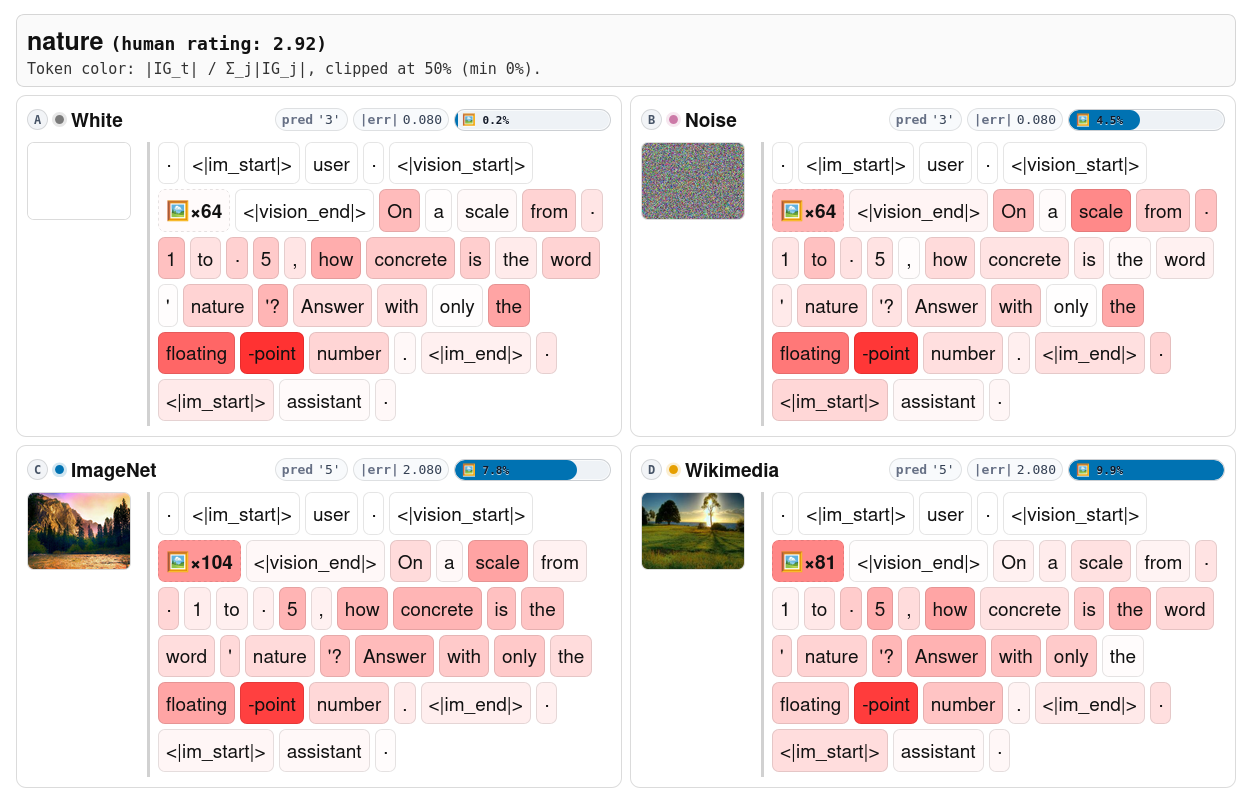
This work reveals a fundamental limitation in current VLM architectures where visual context can actually degrade performance on lexical tasks, particularly when visual evidence is least relevant. This finding challenges the assumption that visual inputs always improve language understanding.
The discovery that real-image contexts are associated with representational shifts and greater sensitivity to spurious visual cues provides insight into how VLMs process information and suggests that current instruction-tuning approaches may need better calibration of when visual context should inform judgments.
The finding that instructing models to focus solely on textual content at inference time can reduce degradation offers a practical solution for improving performance on lexical tasks, highlighting the importance of context-aware model design.
Key insight: Vision-language models often perform worse when real images are used for lexical judgments compared to text-only inputs, due to increased sensitivity to spurious visual cues and reduced recoverability of targeted lexical properties.
Self-Ensembling Vision-Language Models for Chart Data Extraction
arXiv: 2605.27298
The self-ensembling approach addresses a key limitation in chart data extraction by leveraging multiple samples from the same model to produce more accurate consensus outputs. This technique effectively reduces noise and increases reliability in data extraction tasks.
The introduction of convergence detection and uncertainty estimation provides practical tools for users to assess extraction reliability, making the approach more trustworthy for real-world applications where data quality is critical.
The development of WB-ChartExtract benchmark with more complex and diverse charts demonstrates the framework's ability to handle challenging real-world scenarios, showing that the approach can be scaled to address increasingly complex data extraction problems.
Key insight: VLM self-ensembling methods that aggregate multiple outputs from the same model can significantly improve chart data extraction accuracy, particularly for complex and stylistically diverse charts with many data points.
Pair-In, Pair-Out: Latent Multi-Token Prediction for Efficient LLMs
arXiv: 2605.27255
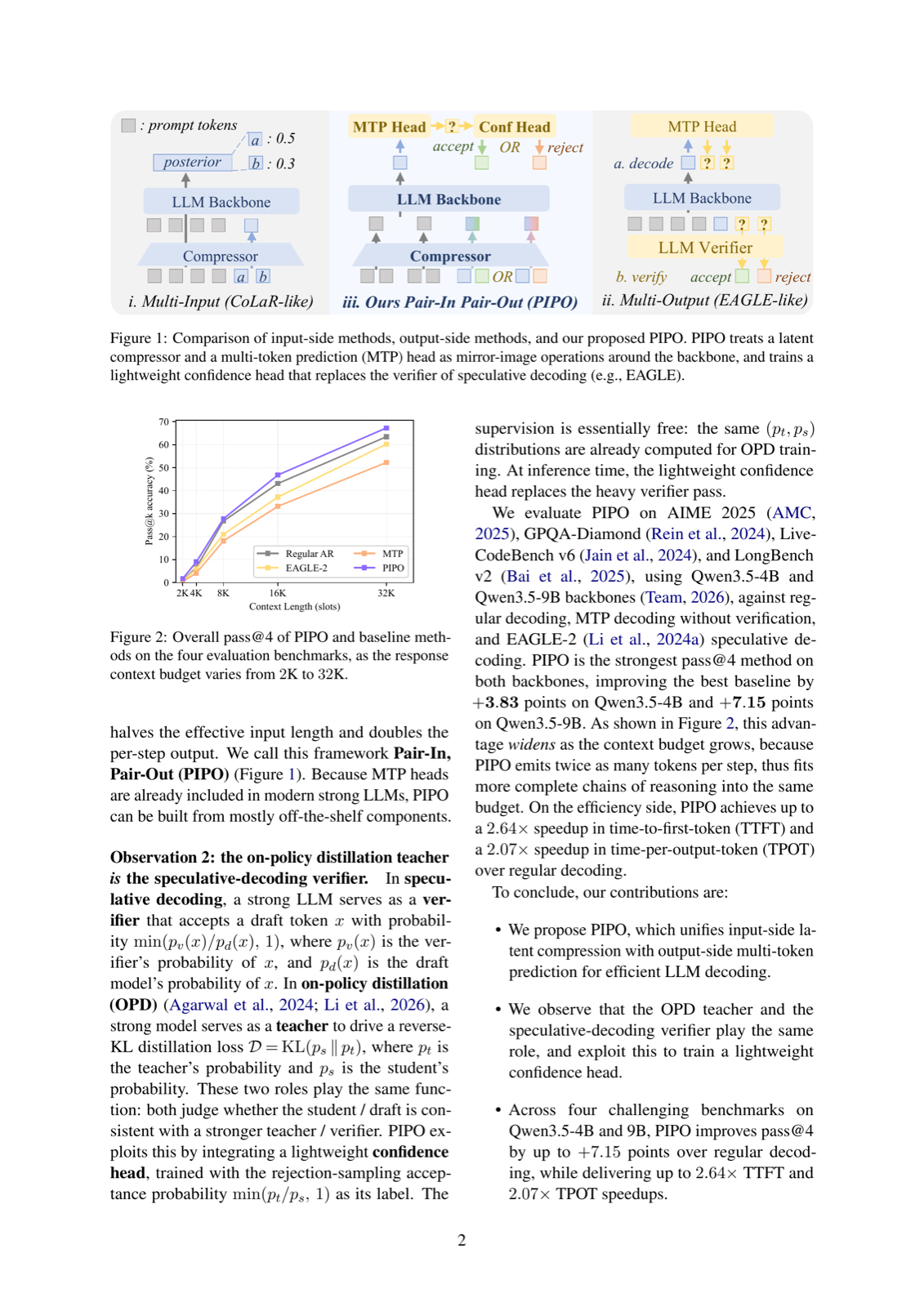
PIPO represents a novel approach to LLM efficiency by unifying input compression and output prediction into a mirror-image framework, addressing limitations of existing methods that treat these aspects independently. This unified approach enables more efficient inference patterns.
The elimination of expensive verifier passes through lightweight confidence heads is a key innovation that addresses a major bottleneck in speculative decoding methods, making multi-token prediction more practical for real-world deployment.
The substantial speedups (2.64x first-token-latency, 2.07x per-token-latency) combined with improved accuracy demonstrate that the approach can deliver both performance gains and quality improvements, making it attractive for practical applications.
Key insight: Unified latent compression and multi-token prediction approaches can achieve significant speedups in LLM inference while maintaining or improving accuracy, particularly through lightweight confidence heads that eliminate expensive verifier passes.
Learning to Act under Noise: Enhancing Agent Robustness via Noisy Environments
arXiv: 2605.27209
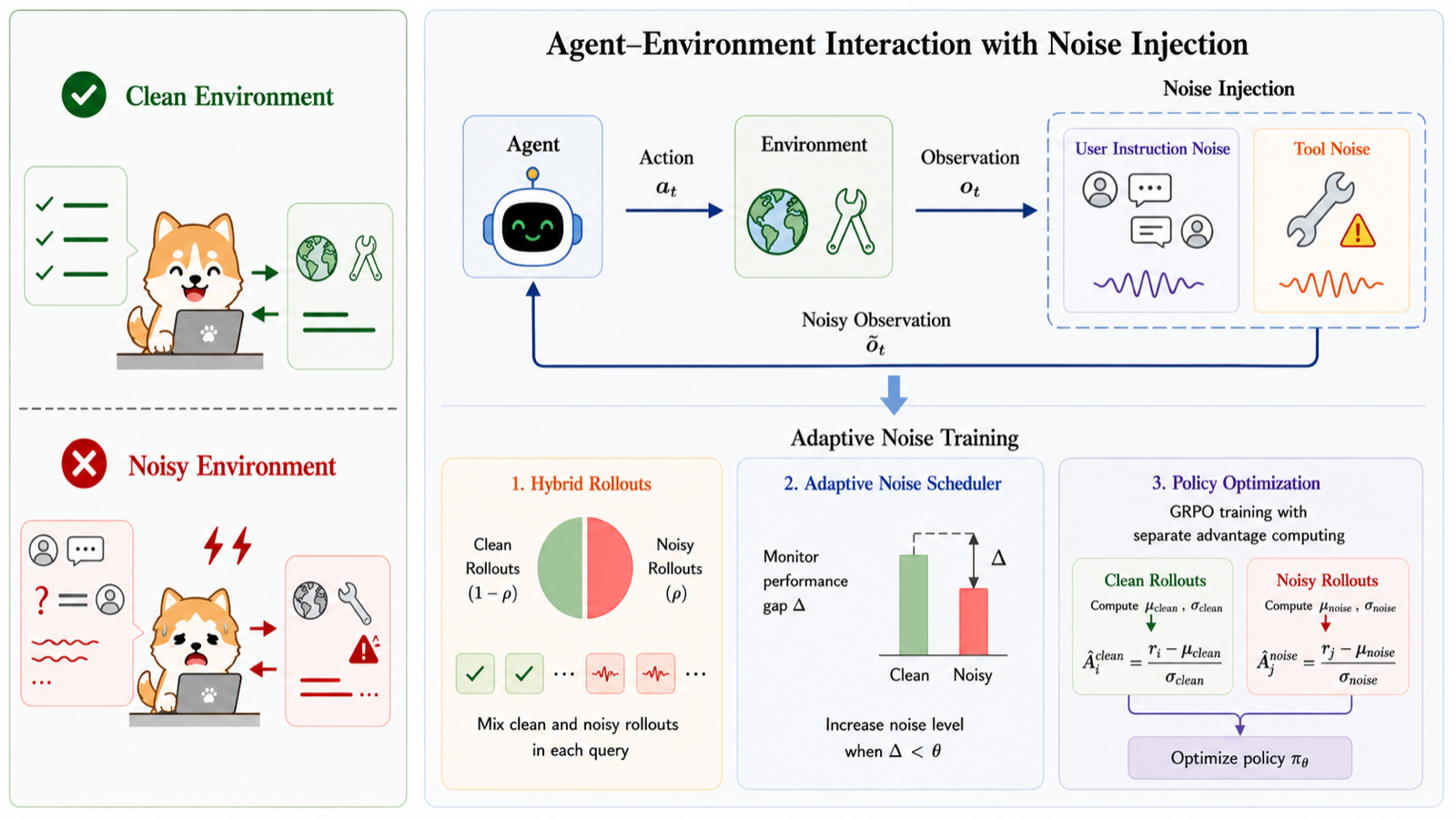
NoisyAgent addresses a critical gap in agent deployment by explicitly incorporating environmental imperfections into training, recognizing that real-world performance often differs significantly from idealized benchmark conditions. This approach bridges the gap between training and deployment.
The identification of user noise and tool noise as major sources of interaction imperfections provides a structured framework for understanding and addressing real-world challenges in agent interaction, making the approach more systematic and comprehensive.
The finding that training under noise conditions also improves performance on idealized benchmarks suggests that this approach can enhance generalization capabilities, making agents more robust and adaptable across different environments.
Key insight: Training agents in noisy environments that simulate real-world imperfections can significantly improve robustness and generalizability, with benefits extending beyond the specific noise conditions to improve performance on idealized benchmarks.
Query Symbolically or Retrieve Semantically? A Dataset and Method for Semi-Structured Question Answering
arXiv: 2605.27164
DualGraph addresses a fundamental limitation in RAG systems by recognizing that different types of queries require different retrieval strategies, combining symbolic querying for exact filtering with semantic retrieval for broader context. This hybrid approach provides more comprehensive coverage.
The introduction of SpecsQA benchmark specifically designed for semi-structured product documents demonstrates the framework's ability to address real-world challenges in commercial applications where exact matching and aggregation are crucial.
The consistent outperformance of DualGraph across multiple baselines shows that the approach can effectively leverage the strengths of both symbolic and semantic methods, providing a more robust solution for complex question answering tasks.
Key insight: Semi-structured question answering systems that combine symbolic and semantic retrieval approaches can outperform both pure semantic and symbolic methods, particularly for complex queries requiring exact filtering and aggregation.
Autonomic Federated-Market Orchestration for the Edge-Cloud Continuum
arXiv: 2605.27106
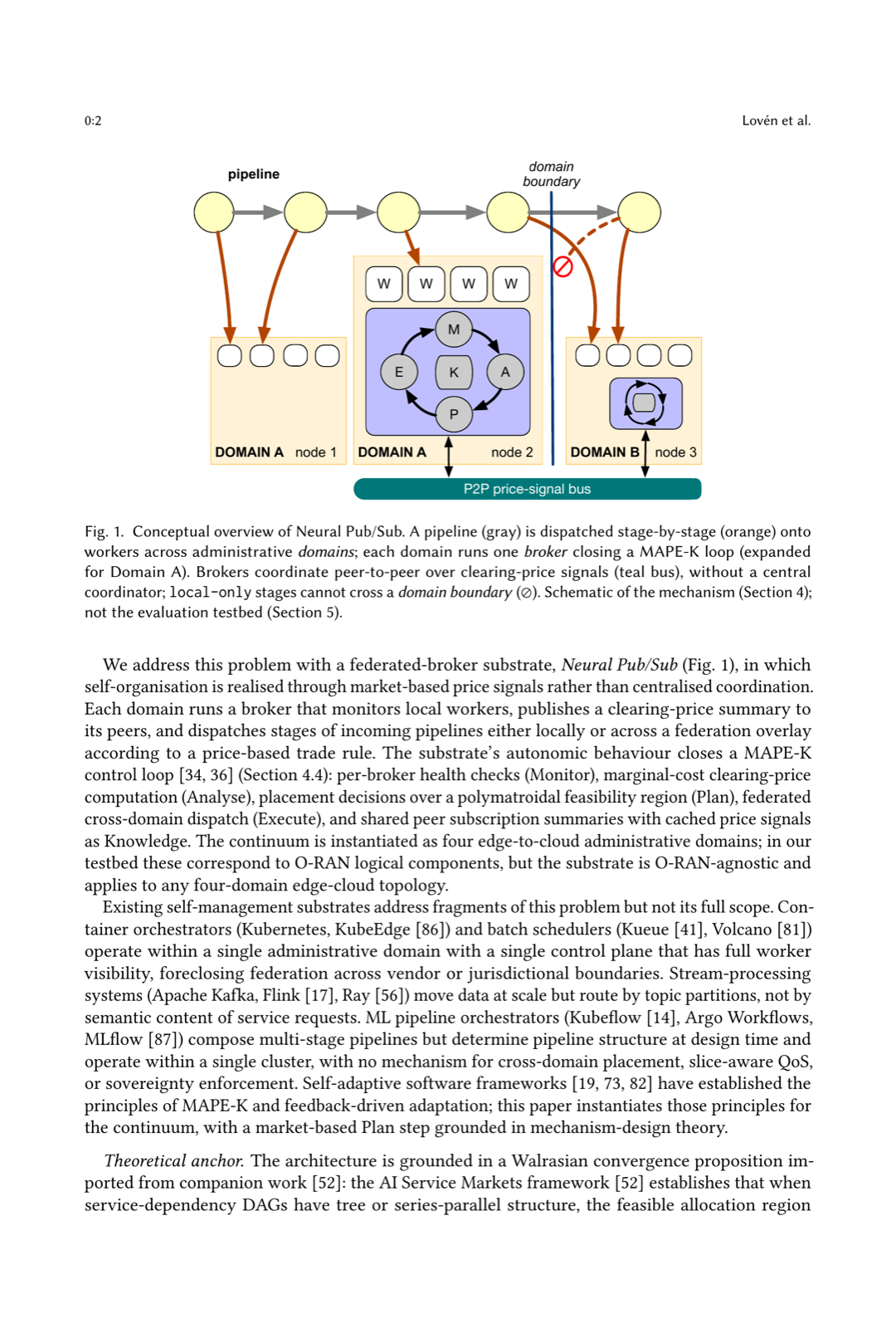
Neural Pub/Sub presents a novel approach to edge-cloud orchestration that leverages market-based price signals rather than centralized control, demonstrating that decentralized mechanisms can achieve performance comparable to centralized systems while offering better scalability and sovereignty.
The Walrasian convergence proposition provides theoretical grounding for the approach's effectiveness, showing that decentralized price-based allocation can match centralized welfare optimization under specific conditions, which is crucial for practical deployment.
The empirical validation across multiple scenarios, including network partitions and broker failures, demonstrates the robustness and practical viability of the approach, making it suitable for real-world distributed computing environments.
Key insight: Federated market-based orchestration mechanisms can achieve near-centralized performance with significantly reduced communication overhead, demonstrating that decentralized approaches can match centralized efficiency while maintaining scalability and sovereignty.
UnityMAS-O: A General RL Optimization Framework for LLM-Based Multi-Agent Systems
arXiv: 2605.26646

UnityMAS-O addresses a key limitation in multi-agent systems by providing a general RL optimization framework that treats the complete workflow as the optimization unit rather than individual responses or policies. This holistic approach enables more effective multi-agent coordination.
The decoupling of logical agents from physical model parameters through four first-class objects (agent roles, graph trajectories, rewards, and mappings) provides unprecedented flexibility in configuring multi-agent systems, supporting various sharing strategies and credit assignment mechanisms.
The demonstration of significant performance gains across diverse benchmarks, particularly for smaller models and strict code evaluation metrics, shows that the framework can effectively optimize complex multi-agent workflows that are challenging for traditional approaches.
Key insight: Unified reinforcement learning frameworks for multi-agent systems that treat complete workflows as optimization units can significantly improve performance over manually specified workflows, particularly for smaller models and strict code evaluation metrics.
Decoupled Delay Compensation: Enhancing Pre-trained MARL Policies via Learned Dynamics Filtering
arXiv: 2605.26286
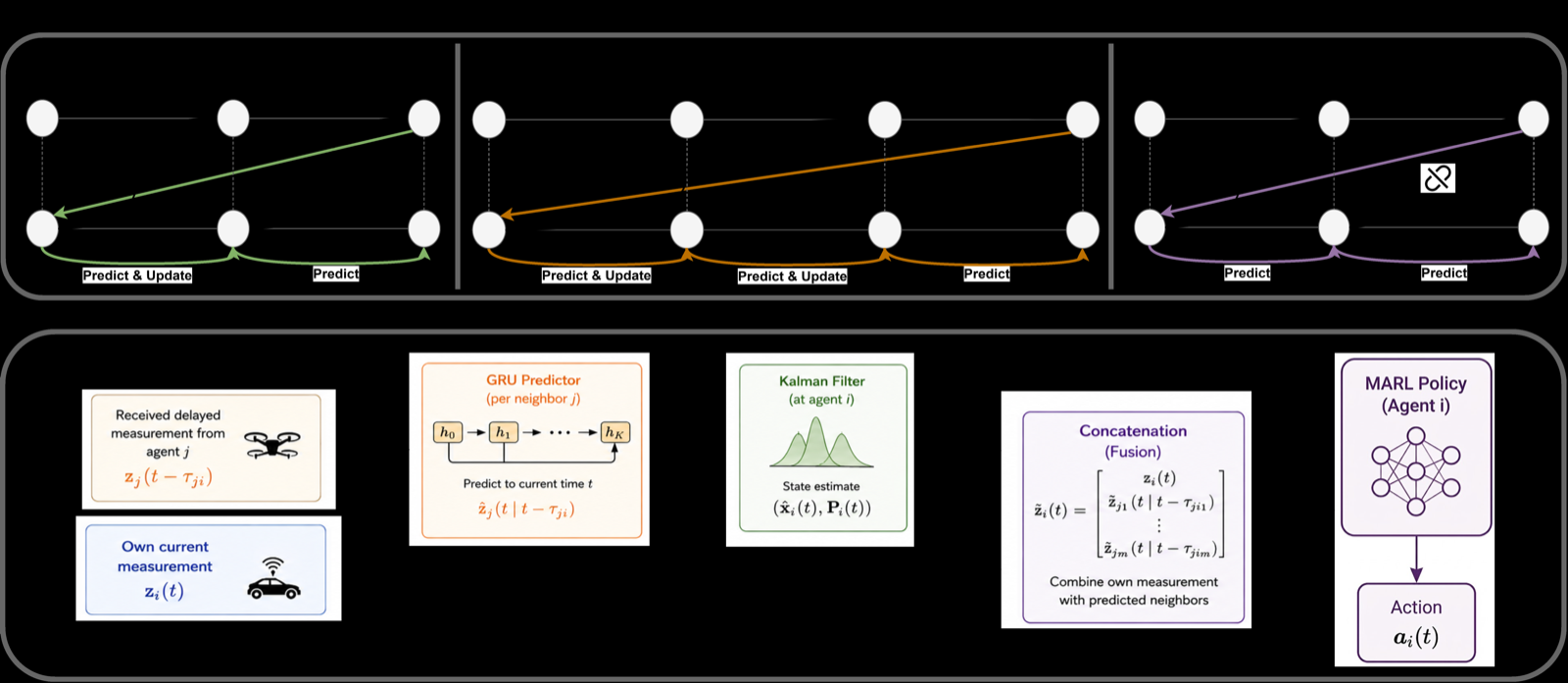
The decoupled delay compensation approach addresses a fundamental challenge in real-world MARL systems by providing a modular solution that can be integrated with pre-trained policies without requiring modifications to the original training algorithms or architectures.
The integration of learned Gated transition models with recursive Kalman filtering layers creates a robust framework for estimating instantaneous states from asynchronous measurements, which is crucial for maintaining performance in delayed communication environments.
The consistent performance gains across diverse benchmarks, particularly in coordination-intensive and dynamically unstable tasks, demonstrate the approach's effectiveness in addressing temporal consistency issues that are critical for control in multi-agent systems.
Key insight: Modular state-estimation layers that replace delayed observations with current belief-state estimates can significantly enhance robustness to communication delays and message loss in multi-agent reinforcement learning systems.
ATOM: Instantiating Budget-Controllable Multi-Agent Collaboration via Nucleus-Electron Hierarchy
arXiv: 2605.26178
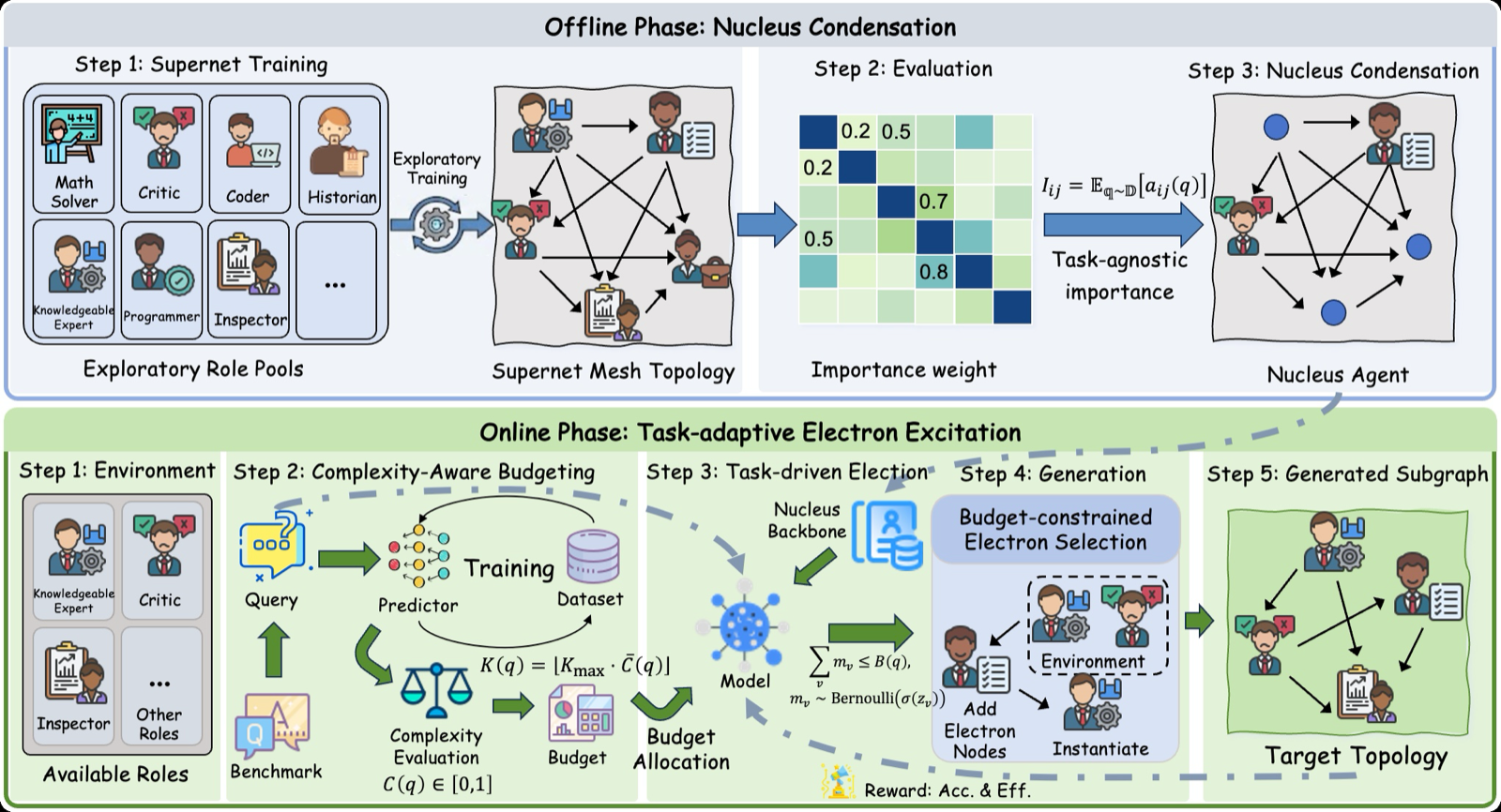
ATOM introduces a novel task-driven reinforcement learning paradigm that addresses the stability-extensibility trade-off in multi-agent collaboration by maintaining a stable offline-learned backbone while dynamically activating agents during inference based on query conditions.
The complexity-aware budgeting strategy that aligns resource consumption with task demands represents a significant advancement in resource allocation for multi-agent systems, enabling more efficient use of computational resources while maintaining performance.
The substantial improvement in token efficiency (up to 30%) combined with state-of-the-art performance across diverse benchmarks demonstrates that the approach can effectively balance performance and resource utilization, making it practical for real-world deployment.
Key insight: Budget-controllable multi-agent collaboration frameworks that use nucleus-electron hierarchies can achieve state-of-the-art performance while improving token efficiency by up to 30% compared to strong baselines.
MobileMoE: Scaling On-Device Mixture of Experts
arXiv: 2605.27358
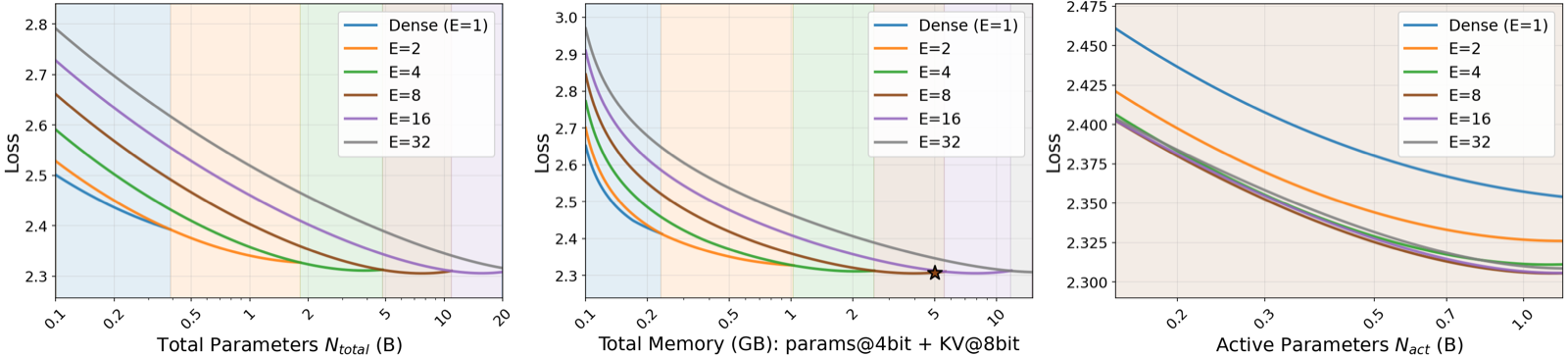
MobileMoE addresses a critical gap in on-device AI by demonstrating that MoE architectures can be effectively scaled down to sub-billion parameter ranges while maintaining competitive performance, making advanced AI capabilities accessible on mobile devices.
The formulation of an on-device MoE scaling law that jointly optimizes architecture under memory and compute constraints provides a principled approach to designing efficient models for mobile deployment, identifying the optimal balance of sparsity and expert sharing.
The comprehensive training recipe covering pre-training, mid-training, instruction fine-tuning, and quantization-aware training, combined with efficient inference on commodity smartphones, demonstrates that the approach is not only theoretically sound but also practically viable for real-world mobile applications.
Key insight: On-device Mixture-of-Experts models can achieve state-of-the-art performance with significantly fewer parameters and computational requirements compared to dense LLMs, establishing a new Pareto frontier for mobile deployment.
BASIS: Batchwise Advantage Estimation from Single-Rollout Information Sharing for LLM Reasoning
arXiv: 2605.27293
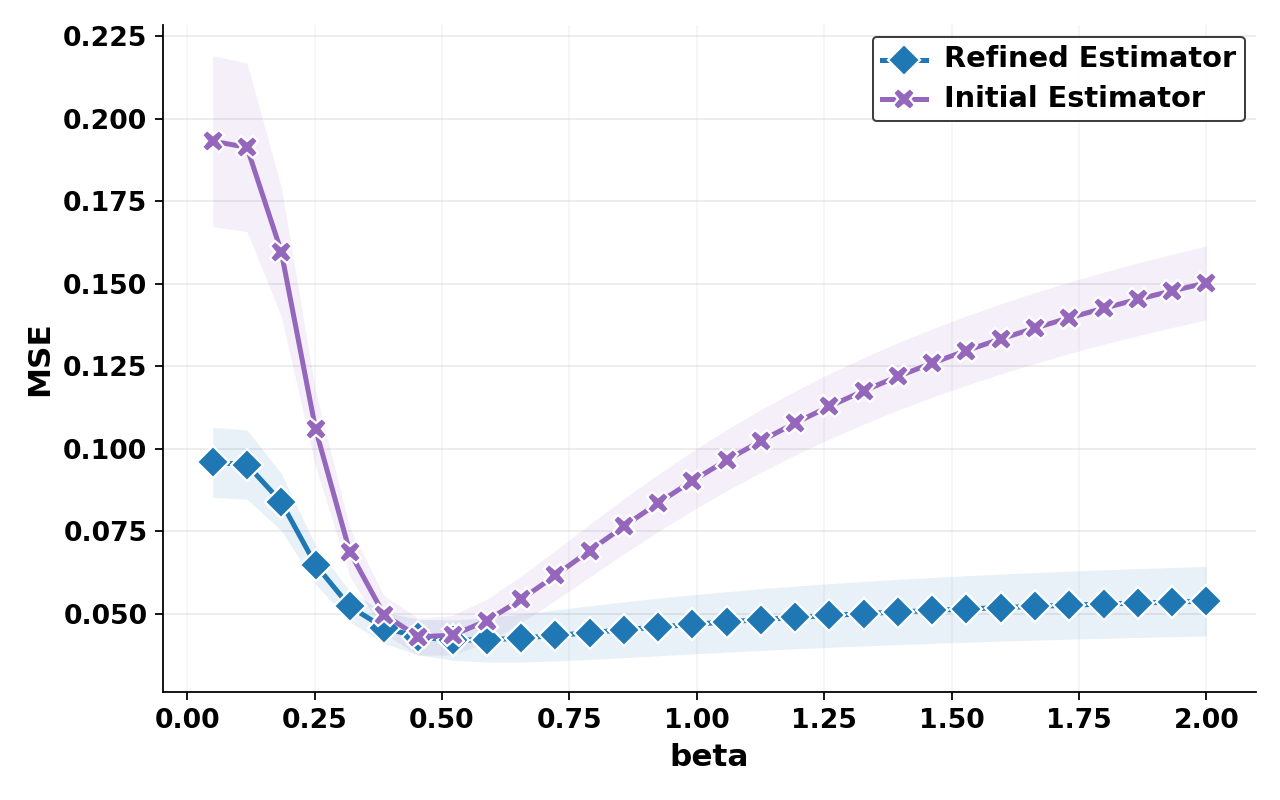
BASIS addresses a fundamental tradeoff in reinforcement learning by introducing a critic-free approach that achieves superior value function estimation with only single-rollout information, significantly reducing computational requirements compared to traditional methods.
The batchwise advantage estimation mechanism that leverages rich information across prompts in the entire batch while sampling only one rollout per prompt represents a novel approach to balancing computational efficiency and sample efficiency in policy learning.
The substantial reduction in MSE in value function estimation (69% compared to REINFORCE++) combined with performance close to multi-rollout GRPO-type baselines demonstrates that the approach can deliver better policy optimization with significantly less training time.
Key insight: Critic-free post-training algorithms that leverage batchwise advantage estimation can achieve performance comparable to multi-rollout baselines with substantially less training time, demonstrating improved value function estimation efficiency.
Falcon-X: A Time Series Foundation Model for Heterogeneous Multivariate Modeling
arXiv: 2605.27286
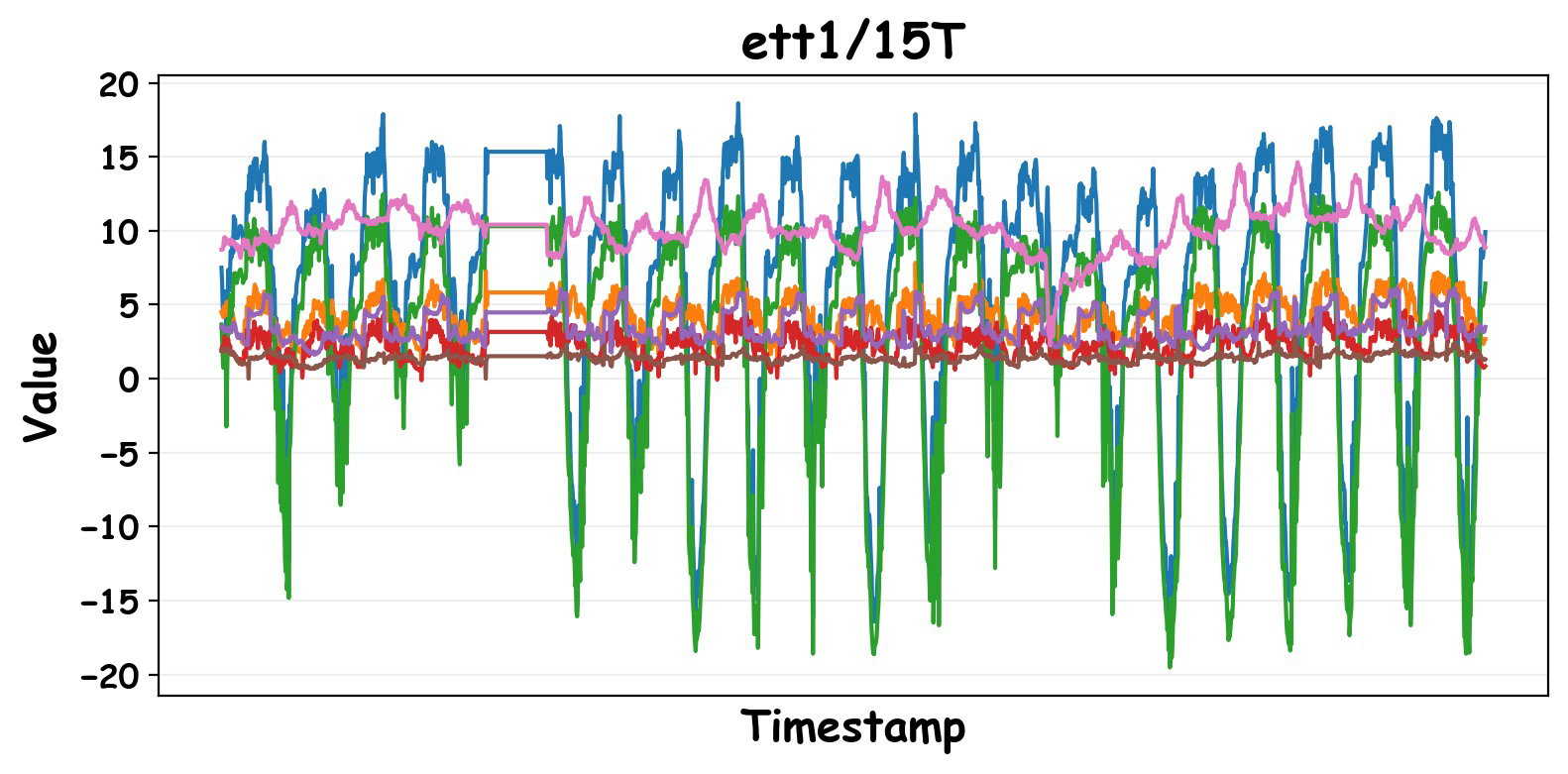
Falcon-X addresses fundamental limitations in existing TSFMs by introducing a decoupling mechanism that maps heterogeneous variates into a unified latent prototype space, enabling better semantic alignment and relational expressivity across different physical quantities.
The Unified Prototype Diff-Attention mechanism that explicitly evaluates both positive and negative semantic affinities provides a principled approach to aligning heterogeneous variates, while Latent Entity Attention enables efficient cross-variate interactions within the shared space.
The ability to perform zero-shot structural transfer and the demonstration of state-of-the-art performance across multiple benchmarks highlight the framework's potential for addressing complex multivariate forecasting challenges in real-world applications.
Key insight: Time series foundation models that decouple variates from raw space and map them into a unified latent prototype space can achieve state-of-the-art forecasting performance while enabling zero-shot structural transfer across different domains.