Google introduces Gemini 3.5, a new AI model designed to enhance action capabilities and frontier intelligence. Simultaneously, researchers advance agent skill development, multimodal understanding, and program verification techniques. These developments signal significant progress in AI's ability to reason, act, and integrate across diverse applications.
Google's announcement of Gemini 3.5 marks a significant step forward in multimodal AI, featuring enhanced reasoning and action capabilities that are expected to integrate into Google Search and Workspace. This release is complemented by substantial research advances in agent skill development, including SkillOpt's systematic approach to optimizing agent skills through bounded edits and validation-based acceptance criteria. Additionally, researchers are making strides in understanding spatial numerical reasoning in vision-language models, program verification through agentic proving, and memory auditing for LLM agents. These developments collectively represent progress toward more capable, reliable, and secure AI systems that can better understand and interact with complex environments.
AI Model Releases

Gemini 3.5: frontier intelligence with action
Google announced the release of Gemini 3.5, a new AI model designed to enhance action capabilities and frontier intelligence. The model is part of Google's ongoing efforts to advance AI research and integrate it into practical applications. It features improved reasoning and multimodal capabilities, supporting both text and visual inputs. The model is expected to be integrated into various Google services and tools, including Google Search and Google Workspace. The rollout is planned to be gradual, with initial availability in select regions and services.
Why it matters: Gemini 3.5 represents a significant step forward in Google's AI strategy, potentially setting new standards for multimodal AI models. Its enhanced action capabilities could transform how users interact with AI-powered tools, especially in productivity and search contexts. This release also signals Google's continued investment in AI research and its ambition to compete with other leading AI platforms.
Research Papers
SkillOpt: Executive Strategy for Self-Evolving Agent Skills
arXiv: 2605.23904
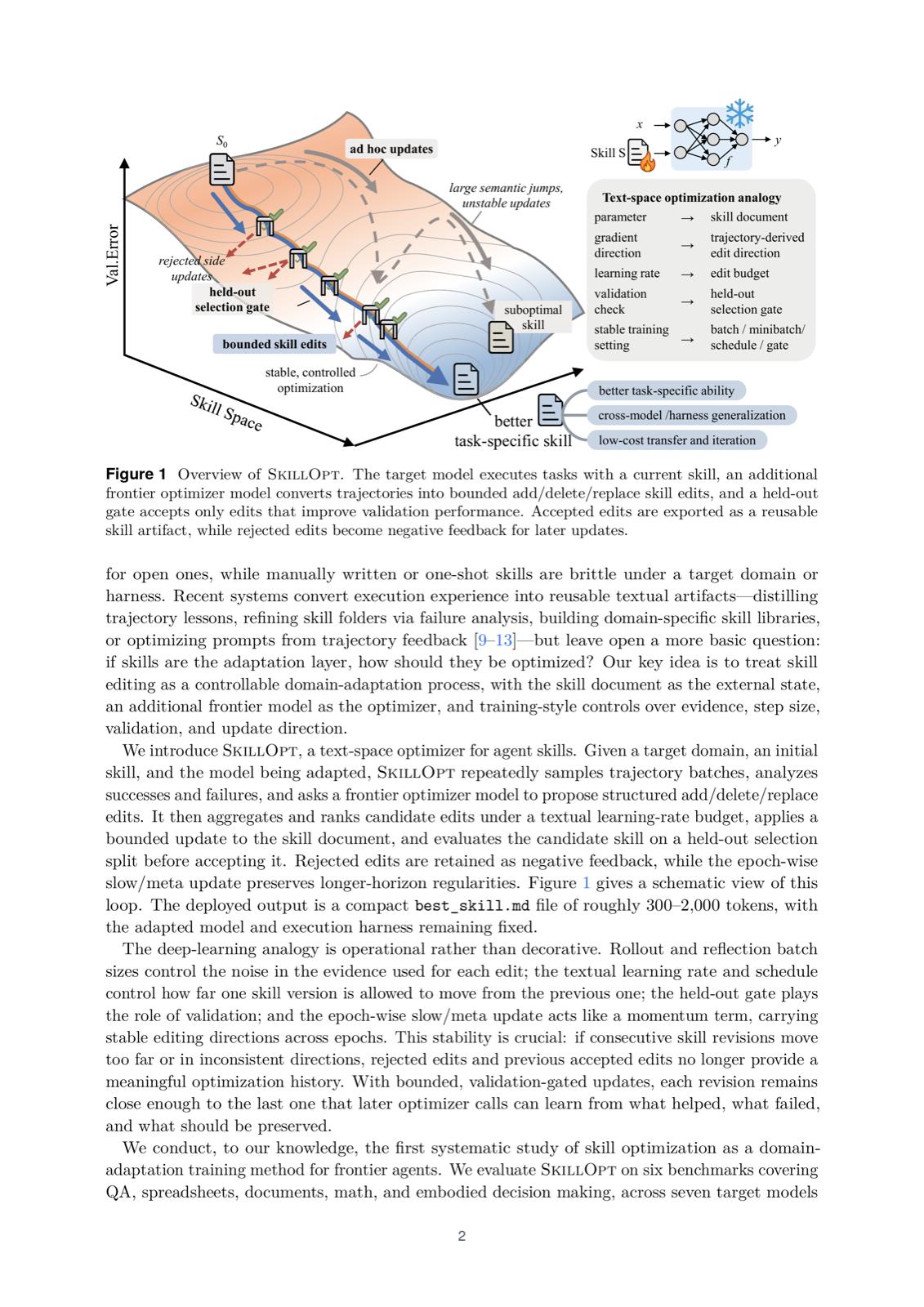
SkillOpt represents a fundamental shift in how agent skills are developed and optimized. Unlike previous approaches that rely on hand-crafted skills, one-shot generation, or loosely controlled self-revision, SkillOpt treats skills as external state that can be trained with the same discipline as weight-space optimization. This approach addresses a critical gap in the field: the lack of reproducible, deep-learning optimizer-like behavior for skills. The system's architecture, which includes a separate optimizer model that generates bounded add/delete/replace edits on skill documents, ensures that only strictly improving edits are accepted, creating a controlled learning environment.
The technical innovations in SkillOpt are particularly noteworthy. The inclusion of a textual learning-rate budget, rejected-edit buffer, and epoch-wise slow/meta update mechanisms creates a stable training process while maintaining zero inference-time model calls at deployment. This is crucial for practical implementation, as it eliminates the computational overhead typically associated with optimization processes. The system's performance across six benchmarks, seven target models, and three execution harnesses (direct chat, Codex, Claude Code) demonstrates its broad applicability and effectiveness, with improvements of +23.5 points in direct chat, +24.8 in Codex, and +19.1 in Claude Code on GPT-5.5.
The transfer experiments reveal SkillOpt's robustness and scalability. Optimized skill artifacts retain value when moved across model scales, between different execution environments (Codex and Claude Code), and to nearby math benchmarks without further optimization. This suggests that SkillOpt's approach creates not just better skills, but more generalizable skill artifacts that can be effectively reused across different contexts and systems. The implications for agent development are significant, as this could lead to more efficient skill development pipelines and better-performing agents that can adapt and improve over time.
Key insight: SkillOpt introduces the first systematic text-space optimizer for agent skills, enabling stable, controllable skill training through bounded edits and validation-based acceptance criteria, achieving significant performance gains across multiple models and execution harnesses.
From Raw Experience to Skill Consumption: A Systematic Study of Model-Generated Agent Skills
arXiv: 2605.23899

This paper provides the first comprehensive study of the full skill lifecycle, spanning experience generation, skill extraction, and skill consumption. The findings challenge the assumption that model-generated skills are uniformly beneficial, revealing that while they offer average improvements, they also exhibit significant negative transfer. This nuanced understanding is crucial for practitioners who must decide when and how to deploy skills in real-world applications. The paper's utility-grounded evaluation framework provides a systematic approach to understanding when skills work, when they fail, and what makes them succeed or fail.
The discovery that neither extractors nor targets behave uniformly is particularly important for skill development. A model that excels at extracting skills may perform poorly as a consumer, and vice versa. This suggests that skill development should not be treated as a monolithic process but rather as requiring specialized expertise in different phases. The finding that skill utility is independent of model scale or baseline task strength indicates that the quality of skills is more about their intrinsic properties than the size of the models that generate or consume them, which has implications for resource allocation in skill development.
The paper's translation of findings into a concrete meta-skill that guides skill extraction toward features tied to actual utility is a significant contribution. This meta-skill provides a practical framework for improving skill quality across domains and reducing negative transfer. The approach of dissecting each lifecycle stage in depth to analyze how experience composition shapes skill quality, what properties characterize useful skills, and how the same skill transfers across different consumers offers valuable insights for developing more effective skill extraction and deployment strategies.
Key insight: Model-generated skills show average benefits but exhibit non-trivial negative transfer, with neither extractors nor consumers behaving uniformly, suggesting that skill utility depends on the specific lifecycle stage and requires careful consideration of experience composition and skill properties.
SPACENUM: Revisiting Spatial Numerical Understanding in VLMs
arXiv: 2605.23898

The SpaceNum framework addresses a critical gap in vision-language models' capabilities for embodied AI applications. The finding that current VLMs largely fail to ground numbers in spatial meaning, performing close to random guess, reveals a fundamental limitation in how these models process spatial information. This is particularly concerning given that spatial numerical understanding is essential for embodied environments where models need to produce meaningful numerical outputs such as action magnitudes and spatial coordinates.
The distinction between numbers as dynamic transitions during spatial exploration versus static layouts in spatial reasoning provides a valuable framework for evaluating VLM capabilities. The paper's systematic study across both dynamic transitions and static layouts demonstrates that the problem is not merely one of complexity but of fundamental understanding. The reliance on shallow spatial cues rather than stable coordinate-aware representations suggests that VLMs lack the necessary spatial reasoning capabilities for complex embodied tasks, which could severely limit their effectiveness in real-world applications.
The results show that explicit reasoning provides only marginal gains, while tuning can partially improve spatial numerical understanding. This indicates that the problem is structural rather than superficial, requiring more fundamental changes to how VLMs process and represent spatial information. The finding that current VLMs struggle to abstract structured spatial layouts from visual observations suggests that the field needs to develop new architectures or training paradigms that can better capture spatial relationships and numerical meaning in visual contexts, which is crucial for advancing embodied AI systems.
Key insight: Current VLMs fail to genuinely ground numerical outputs in spatial meaning, relying heavily on shallow spatial cues rather than building stable coordinate-aware representations, indicating a fundamental limitation in spatial numerical understanding that affects embodied AI applications.
Agentic Proving for Program Verification
arXiv: 2605.23772
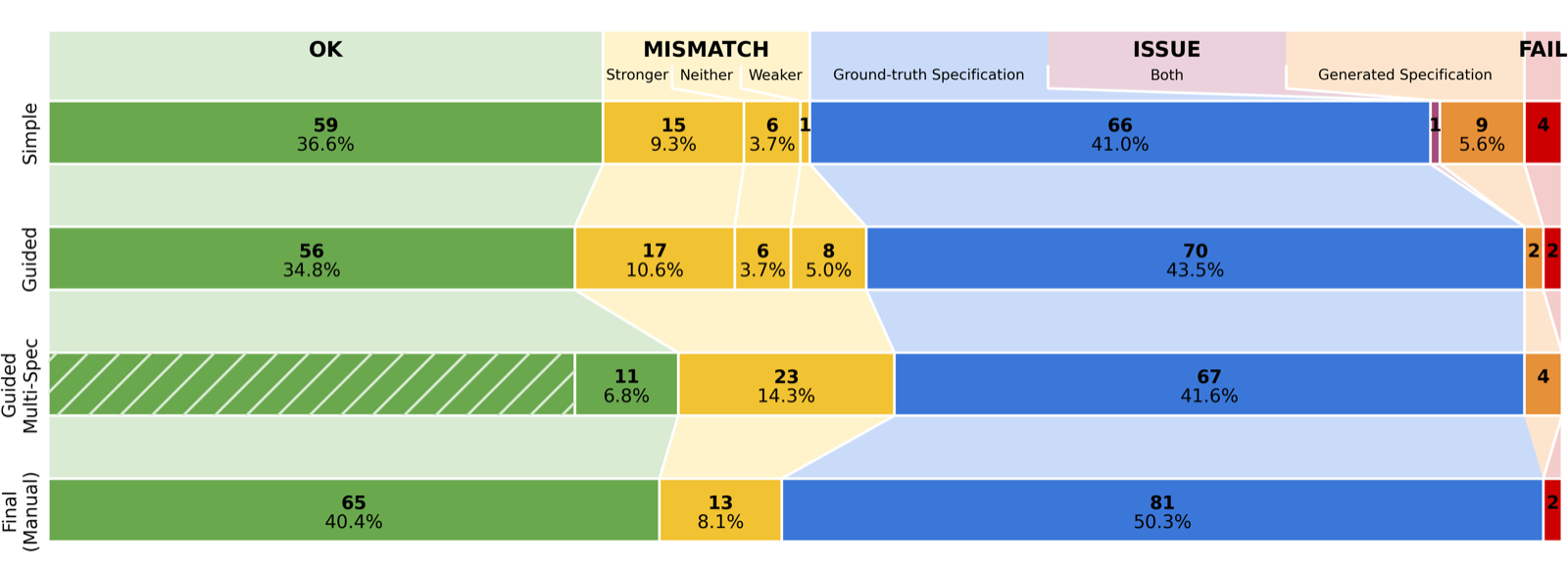
The agentic proving framework demonstrates that modern LLMs can achieve impressive results in program verification tasks, with Claude Code reaching a 98.1% success rate on the end-to-end program generation and verification pipeline. This represents a significant advancement in the application of LLMs to formal verification, showing that these systems can not only generate specifications but also verify implementations against correct ground-truth specifications. The high-quality feedback provided by Claude Code, including identification of underlying causes of failure and lingering bugs, indicates that these systems are developing sophisticated reasoning capabilities.
However, the findings reveal a concerning mismatch between the difficulty of existing program verification benchmarks and the capabilities of modern agentic provers. This suggests that the field is moving too quickly in terms of benchmark development, potentially creating a gap where current systems are not adequately challenged. The need for more rigorous, bug-resilient evaluation methodologies, particularly alternatives to isomorphism-based scoring, indicates that the evaluation frameworks themselves need to evolve to match the increasing sophistication of these systems.
The empirical evidence that tight compiler-in-the-loop agentic paradigms are currently the most effective approach for foundational program verification points to a promising direction for future research. This suggests that the integration of LLMs with programming environments and compilers will be crucial for advancing program verification capabilities. The results also highlight the importance of developing systems that can handle complex, real-world verification tasks rather than just simple benchmarks, which will be essential for practical deployment in safety-critical applications.
Key insight: Claude Code demonstrates strong capabilities in agentic proving for program verification, achieving high success rates in end-to-end program generation and verification, but reveals a growing mismatch between benchmark difficulty and current agentic capabilities, highlighting the need for more rigorous evaluation methodologies.
MemAudit: Post-hoc Auditing of Poisoned Agent Memory via Causal Attribution and Structural Anomaly Detection
arXiv: 2605.23723
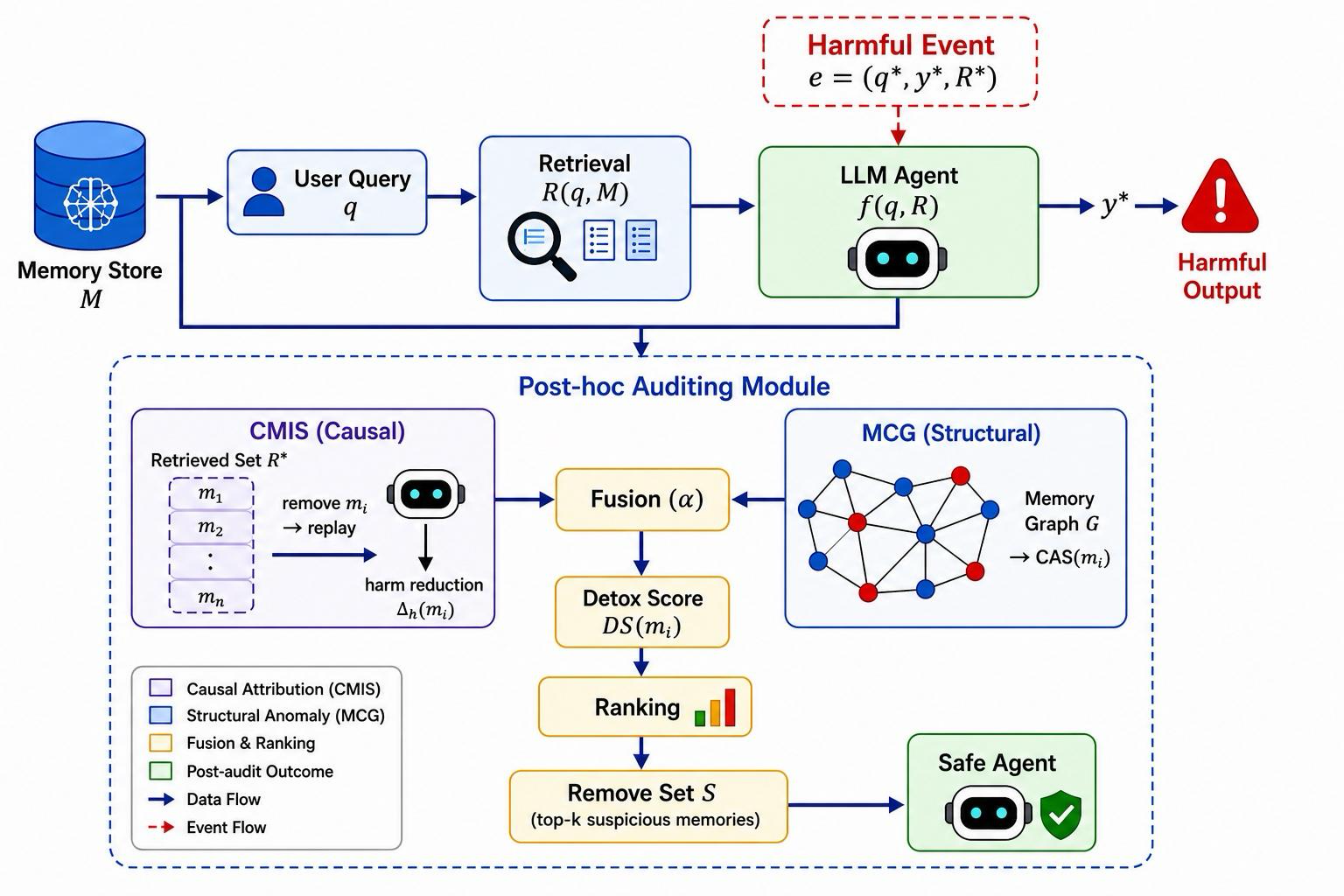
MemAudit addresses a critical security vulnerability in memory-augmented LLM agents by providing a post-hoc auditing framework that can identify malicious records after harmful behavior has already been observed. This is particularly important as agents increasingly rely on persistent memory to store past interactions, creating potential attack vectors where adversarial users can inject malicious records that later influence reasoning and actions. The framework's combination of counterfactual memory influence scoring and memory consistency graph analysis provides a comprehensive approach to detecting problematic memory entries.
The effectiveness of MemAudit is demonstrated through significant reductions in attack success rates, dropping from 70% to 0% in QA attacks and from 83.3% to 0% in RAP attacks. This represents a substantial improvement in security for memory-augmented systems and shows that the framework can effectively identify and neutralize malicious memory records. The approach's ability to work in query-only attack scenarios, where malicious records are generated and stored through normal agent interactions rather than direct memory-bank modification, makes it particularly relevant for real-world applications where such attacks are likely to occur.
The paper's contribution extends beyond just technical effectiveness to provide a framework for understanding how memory mechanisms can be made more secure. By combining causal attribution with structural anomaly detection, MemAudit offers insights into how memory systems can be designed to be more robust against adversarial manipulation. This approach could be extended to other memory-augmented systems and provides a foundation for developing more secure agent architectures that can maintain performance while being resistant to memory-based attacks.
Key insight: MemAudit introduces a post-hoc causal memory auditing framework that combines counterfactual influence scoring with structural anomaly detection to effectively identify and mitigate malicious memory records in LLM agents, significantly reducing attack success rates.
One Policy, Infinite NPCs: Persona-Traceable Shared RL Policies for Scalable Game Agents
arXiv: 2605.23652
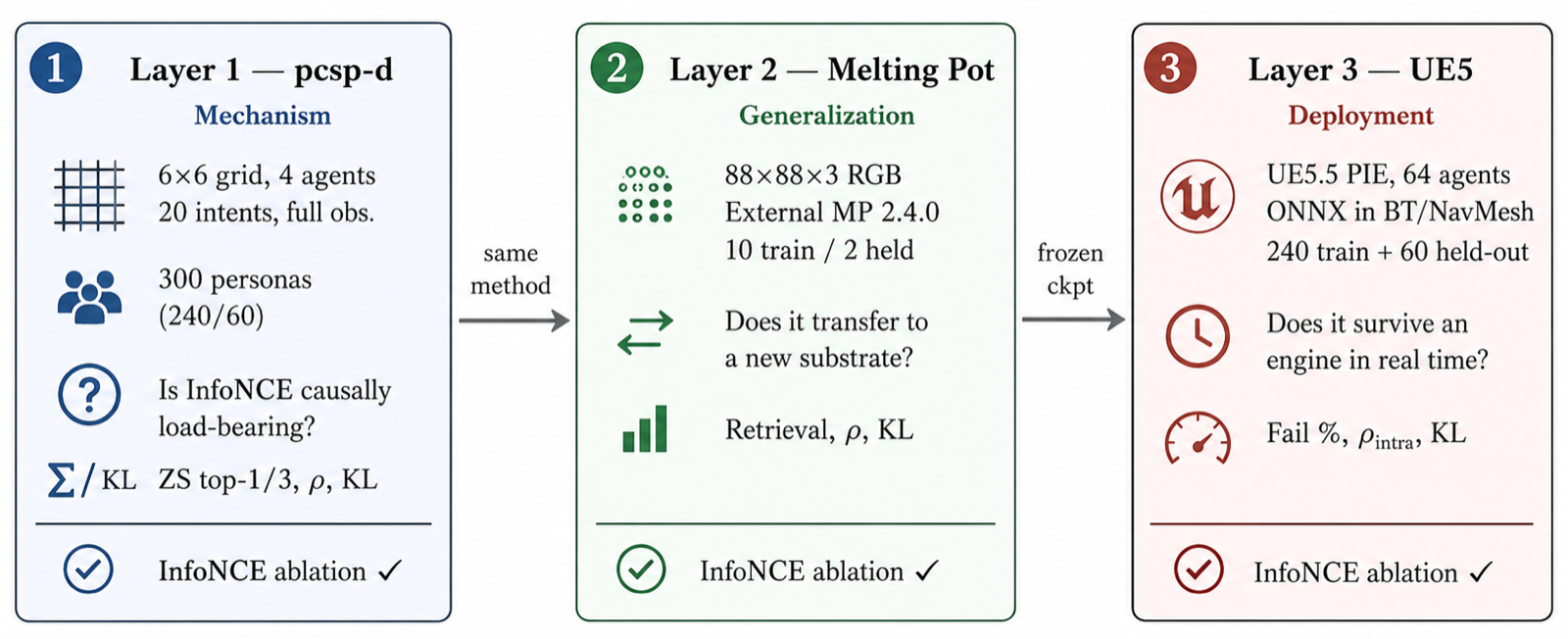
The pcsp approach represents a significant advancement in scalable NPC control for life simulation games, addressing key challenges that have limited previous methods: persona consistency, controllability, and real-time inference. By using a single reinforcement learning policy conditioned on frozen LLM embeddings of persona descriptions, the system achieves compositional zero-shot persona identification up to 17x above chance, with Spearman rho of 0.73 for semantic-behavioral alignment. This demonstrates that shared policies can maintain distinct behavioral patterns while remaining computationally efficient.
The technical innovations in pcsp include once-per-NPC persona encoding, low-rank persona projection, neural persona conditioning, and a PPO + InfoNCE consistency + KL diversity training objective. The InfoNCE trajectory-consistency objective is identified as a load-bearing component, with its removal collapsing zero-shot persona identification to chance. This highlights the importance of maintaining consistency across different persona conditions while allowing for behavioral diversity, which is crucial for creating believable and engaging NPC behavior.
The practical validation through UE5 deployment with 64 agents and low failure rate shows that the sub-frame inference profile survives in a commercial game engine, demonstrating the approach's scalability and real-world applicability. This is particularly important for the gaming industry, where real-time performance is critical. The results prove that shared RL policies can support scalable, real-time, persona-conditioned NPC control, opening new possibilities for creating rich, diverse, and computationally efficient game worlds with thousands of distinct NPCs.
Key insight: pcsp demonstrates that a single shared reinforcement learning policy conditioned on frozen LLM embeddings can achieve compositional zero-shot persona identification and semantic-behavioral alignment while maintaining real-time inference capabilities, enabling scalable NPC control in life simulation games.
Co-ReAct: Rubrics as Step-Level Collaborators for ReAct Agents
arXiv: 2605.23590
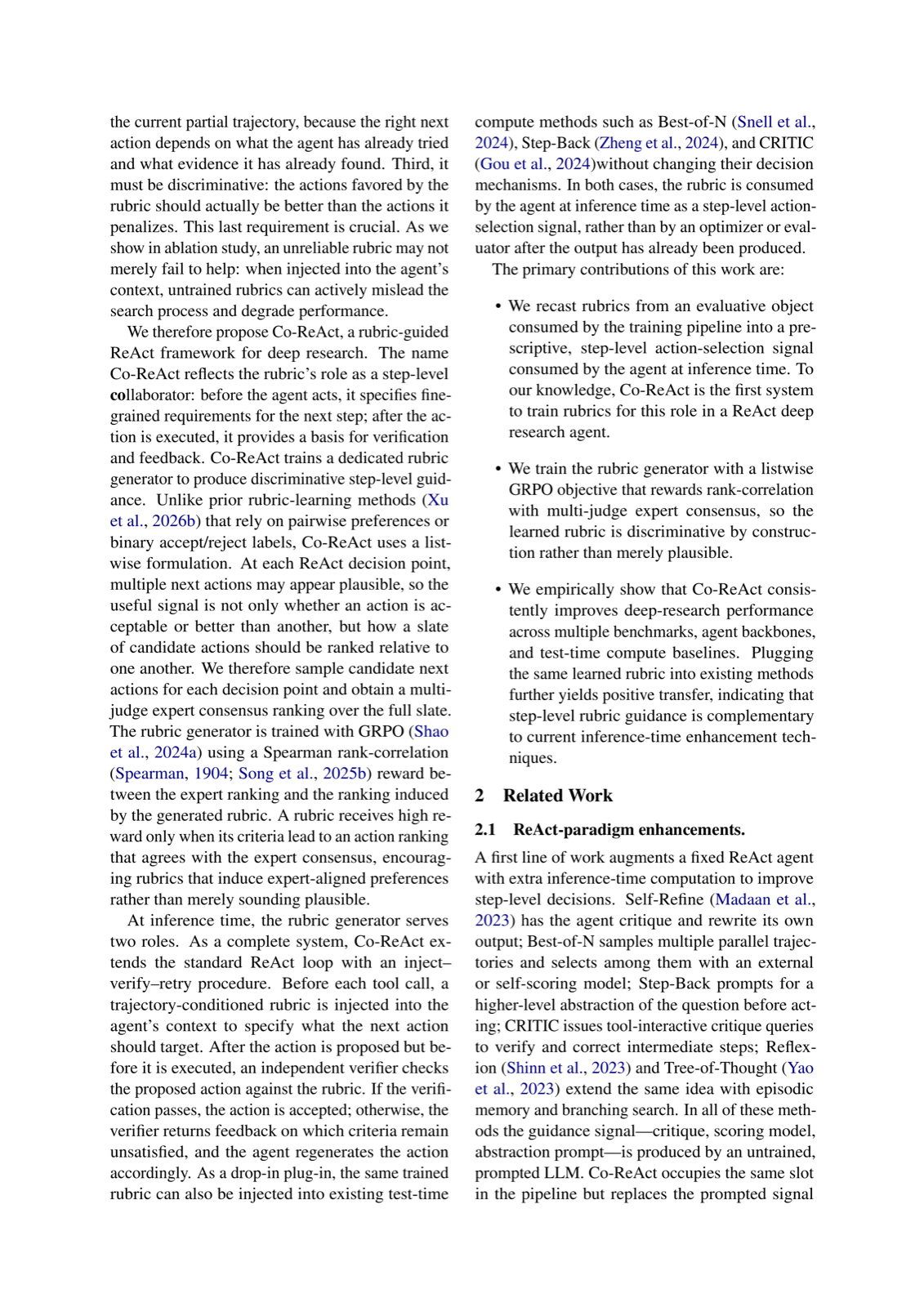
Co-ReAct addresses a fundamental limitation in ReAct-style agents by introducing rubric-guided action selection that operates at the step level rather than just at the output level. This approach transforms how agents make decisions about evidence seeking, reasoning steps, and when to stop, moving beyond the shallow, redundant, or poorly targeted trajectories that characterize traditional ReAct agents. The rubric generator is trained with GRPO using a list-wise Spearman rank-correlation reward against multi-judge expert consensus rankings, encouraging rubrics that are discriminative rather than merely plausible.
The empirical results demonstrate consistent improvements over ReAct and representative test-time compute baselines across search agents built on both 8B/14B open-source and frontier closed-source base models. This broad applicability suggests that the rubric-guided approach can be effectively integrated into various agent architectures without requiring fundamental changes to their underlying decision mechanisms. The ability to serve as a drop-in component that improves baselines without changing their underlying decision mechanisms makes Co-ReAct particularly appealing for practical deployment.
The approach's effectiveness in both DeepResearchBench and SQA-CS-V2 benchmarks indicates that rubric guidance can significantly enhance the quality of multi-step reasoning processes. By providing step-level guidance that specifies what the agent should target in evidence seeking, search, reasoning, or self-evaluation, Co-ReAct helps agents avoid the pitfalls of relying solely on their own internal judgment. This represents a significant step forward in creating more reliable and effective search agents that can handle complex, multi-step reasoning tasks.
Key insight: Co-ReAct introduces rubric-guided action-selection that uses rubrics as step-level guidance during inference, significantly improving search agents across multiple benchmarks by providing more targeted evidence seeking and reasoning steps compared to traditional ReAct approaches.
EDGE-OPD: Internalizing Privileged Context with Evidence Guided On-Policy Distillation
arXiv: 2605.23493
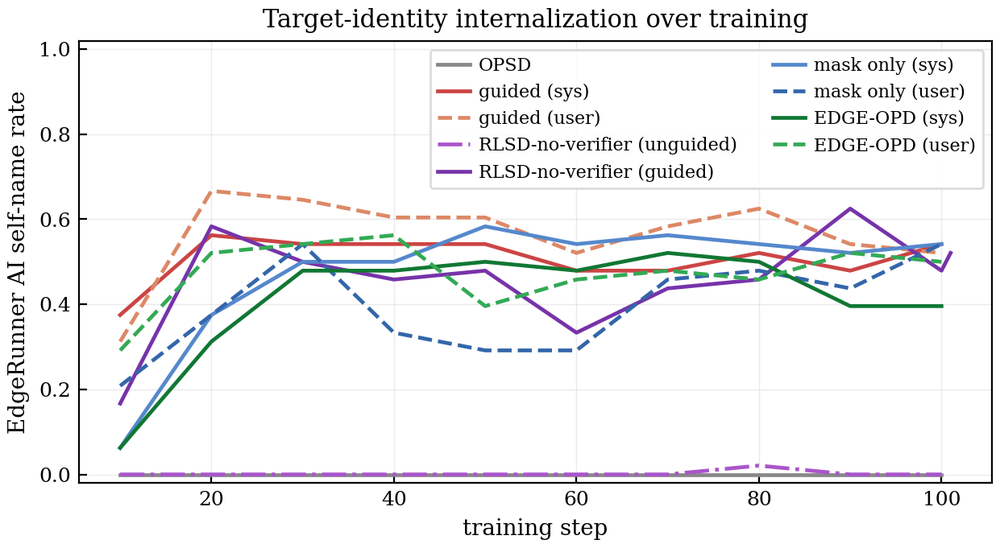
EDGE-OPD tackles a critical issue in on-policy self-distillation (OPSD) where privileged information can change model behavior more than intended, potentially training students on side effects rather than desired transferable behaviors. The approach introduces two key innovations: guided rollouts that inject privileged-context behavior at sampling time, ensuring the rare target behavior is present in on-policy data, and evidence masking that updates the student only at token positions where privileged context supports the sampled token.
The empirical demonstration that OPSD and its variants (RLSD with and without verifier) completely fail to learn a target identity, while EDGE-OPD succeeds, highlights the effectiveness of the proposed approach. The evidence mask's localization of the persona signal to the positive-evidence tail provides valuable insights into efficient knowledge transfer and preservation of general-purpose capabilities. This suggests that careful attention to how privileged information is utilized during training can significantly improve the quality of knowledge transfer.
The findings have important implications for post-training paradigms in LLMs, particularly in scenarios where privileged context is available during training but not at inference time. By ensuring that the student learns the intended behavior rather than unintended side effects, EDGE-OPD provides a more reliable method for improving capabilities without introducing model distribution drift or regression in general tasks. This approach could be particularly valuable for applications where maintaining specific identities or behaviors is crucial for performance.
Key insight: EDGE-OPD addresses the problem of privileged context in on-policy distillation by using guided rollouts and evidence masking to ensure that students learn desired behaviors rather than side effects, demonstrating improved performance in rare-token/identity settings.
When Planning Fails Despite Correct Execution: On Epistemic Calibration for LLM-Based Multi-Agent Systems
arXiv: 2605.23414
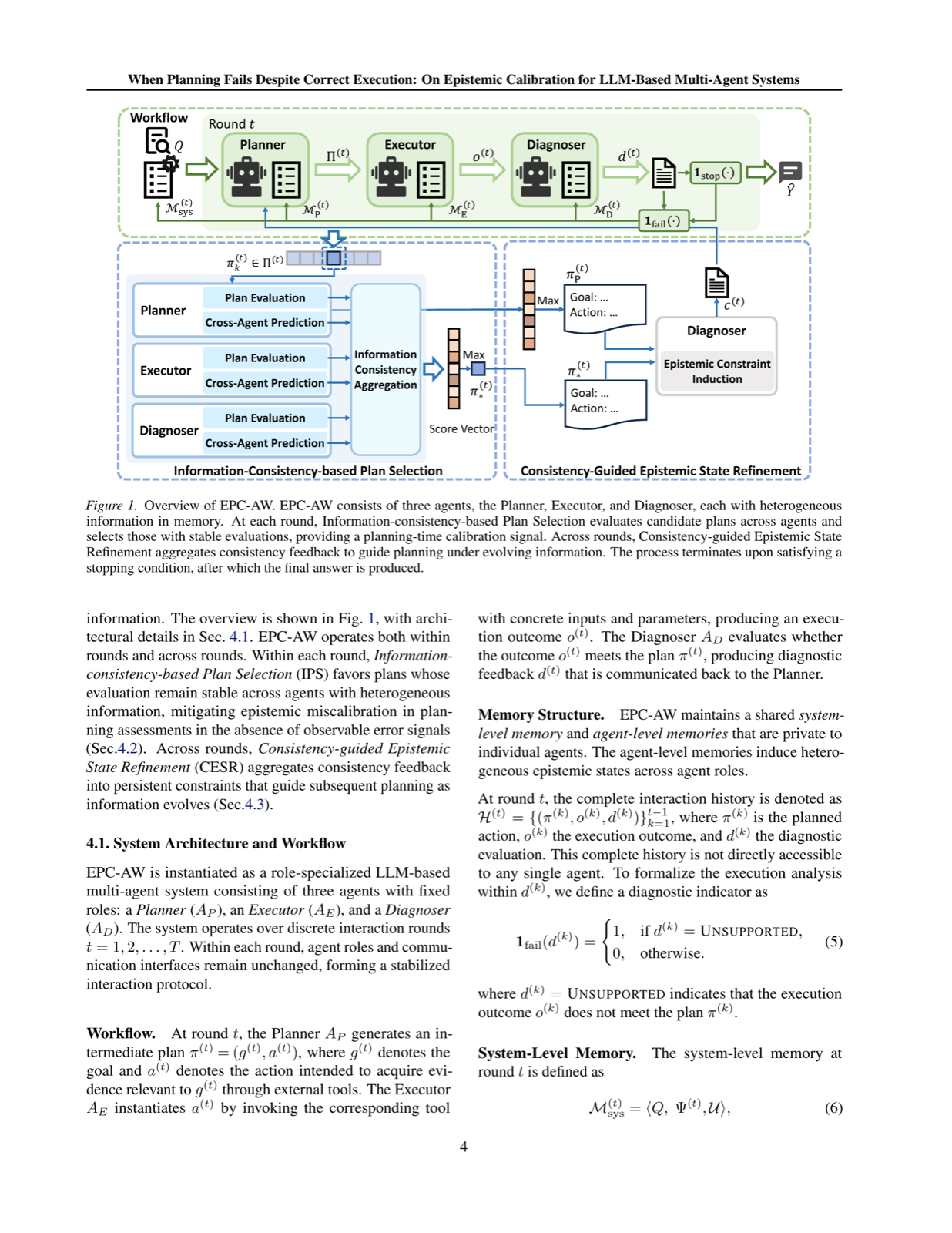
EPC-AW provides a novel solution to a subtle but important problem in multi-agent systems: epistemic miscalibration in planning, where agents misjudge their knowledge when evaluating plan feasibility despite correct execution. This latent issue is particularly challenging because generated plans can remain self-consistent and executable without observable errors, making the miscalibration difficult to detect and correct. The approach's key innovation is to assess whether plans remain supported under varying information conditions rather than directly verifying feasibility.
The framework's two-pronged approach of Information-consistency-based Plan Selection and Consistency-guided Epistemic State Refinement creates a robust system for maintaining accurate epistemic calibration over time. The Information-consistency-based Plan Selection ensures that plans whose evaluations are stable across agents are selected, while the Consistency-guided Epistemic State Refinement adapts calibration over time by leveraging past discrepancies to guide future planning. This dynamic approach to calibration is crucial for systems that encounter new information that can alter feasibility assessments.
The 9.75% average improvement in system-level success demonstrates the practical value of addressing epistemic miscalibration. This improvement suggests that the approach can significantly enhance the reliability of multi-agent systems by ensuring that agents maintain accurate assessments of their knowledge and capabilities throughout the planning process. The method's ability to handle the dynamic nature of information and the potential for miscalibration to recur over time makes it particularly valuable for complex, long-running multi-agent systems where accurate epistemic assessment is crucial for success.
Key insight: EPC-AW addresses epistemic miscalibration in planning by assessing plan support under varying information conditions rather than directly verifying feasibility, improving system-level success by an average of 9.75% through information-consistency-based plan selection and consistency-guided epistemic state refinement.
Multilingual Knowledge Transfer under Data Constraints via Lexical Interventions
arXiv: 2605.23885
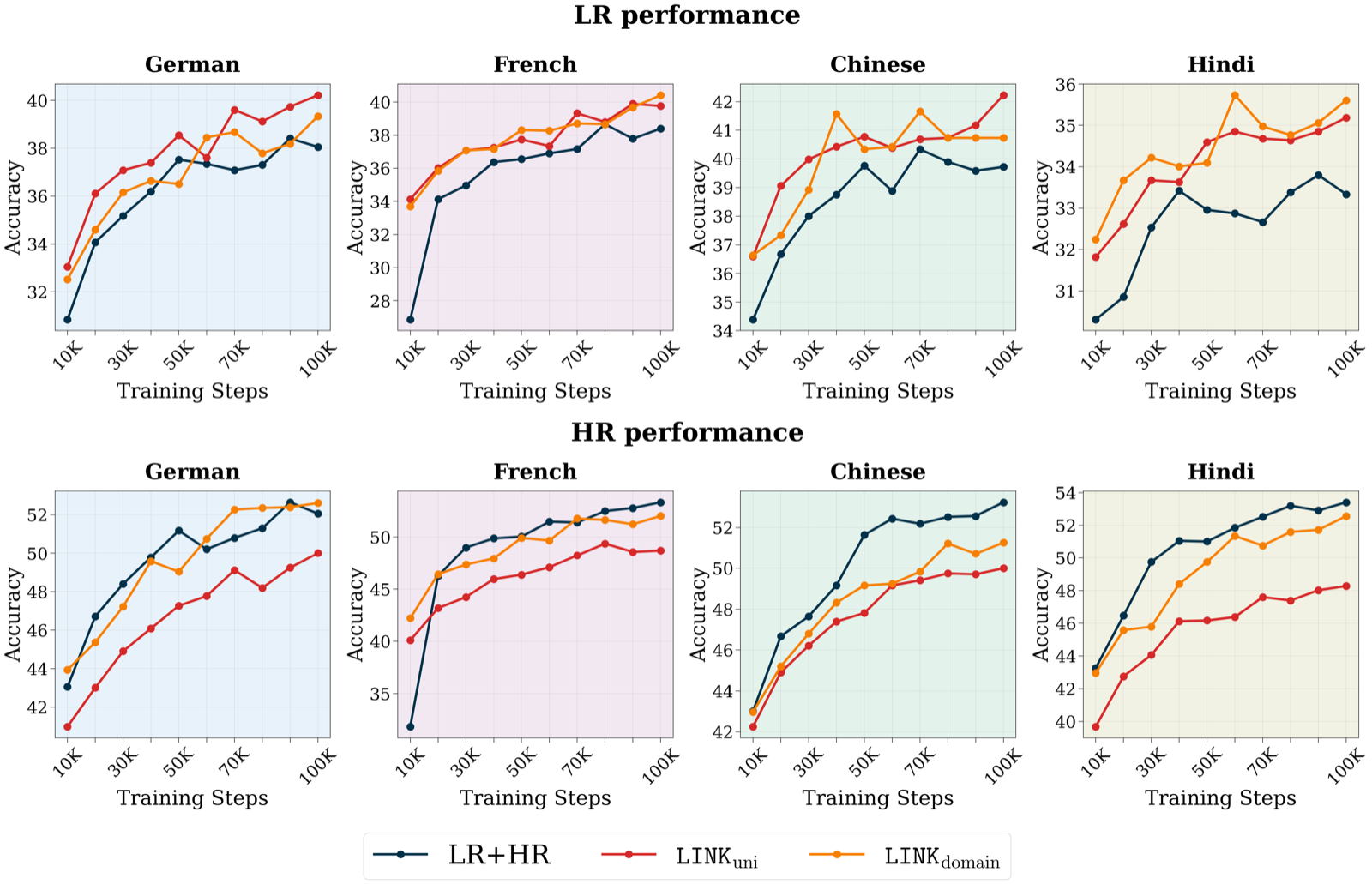
LINK addresses a critical challenge in multilingual language model development: how to effectively transfer knowledge from high-resource languages to low-resource languages when target language data is scarce. The approach's innovation lies in its data-level intervention method that uses lexical substitutions in high-resource pretraining data, requiring only a bilingual vocabulary and no additional model training. This makes it particularly appealing for languages where parallel data, translation systems, or auxiliary models are unavailable.
The empirical results show notable improvements on downstream tasks across eight languages and five model sizes, with up to a 2x speedup in training to reach equivalent performance. This demonstrates that the approach can significantly accelerate the development of high-performing multilingual models while maintaining quality. The fact that the method works across different model sizes and languages suggests it has broad applicability and can be effectively integrated into existing multilingual model development pipelines.
The approach's efficiency and effectiveness make it particularly valuable for practical applications where computational resources are limited or where rapid development is required. By requiring no additional model training and only a bilingual vocabulary, LINK provides a low-cost solution for improving multilingual knowledge transfer. This could be especially beneficial for developing models for languages with limited computational resources or for rapid prototyping of multilingual systems where traditional approaches might be too resource-intensive.
Key insight: LINK improves multilingual knowledge transfer under data constraints by using lexical substitutions in high-resource pretraining data with bilingual vocabularies, achieving notable improvements on downstream tasks with up to 2x speedup in training to reach equivalent performance.
Is a Document Educational or Just Wikipedia-Style? -- Pitfalls of Classifier-Based Quality Filtering
arXiv: 2605.23721
The paper exposes a fundamental vulnerability in classifier-based quality filtering techniques that are widely used in constructing pre-training corpora. The finding that Wikipedia-style reformatting can reverse filtering decisions for approximately 7% of evaluated documents reveals a significant weakness in current quality assessment approaches. This vulnerability undermines the reliability of automated filtering systems and suggests that simple text transformations can bypass quality controls that were designed to be robust.
The implications for pre-training corpus construction are substantial, as this vulnerability could lead to the inclusion of low-quality content that would otherwise be excluded. This is particularly concerning given that pre-training corpora form the foundation for LLM training, and the quality of these corpora directly impacts model performance. The paper's demonstration that the FineWeb-Edu CQF model would reverse its filtering decision for a non-trivial portion of documents highlights the need for more robust quality assessment methods.
The findings suggest that current quality filtering approaches may need to be reconsidered or enhanced to account for text transformations that could alter quality assessments. This could involve developing more sophisticated filtering methods that are resistant to simple reformatting or implementing additional verification steps to ensure that quality assessments remain consistent across different text representations. The paper's work underscores the importance of robustness in automated quality assessment systems, particularly in applications where the quality of input data is critical for downstream performance.
Key insight: Classifier-based quality filtering suffers from a critical vulnerability where simple Wikipedia-style reformatting can substantially alter model quality assessments, enabling low-quality content to surpass filtering thresholds and potentially compromising pre-training corpus quality.
A graph-based analysis of semantic types and coercion in contextualized word embeddings
arXiv: 2605.23710
This paper provides a novel graph-based approach to understanding how semantic type information is encoded in contextualized word embeddings, focusing on coercion phenomena where semantic type mismatch between a noun and its context is central. The introduction of metrics like Neighbor Type Probability (NTP) and Neighbor Type Entropy (NTE) offers new ways to analyze neighborhood type distributions and understand how lexical and contextual information interact in embeddings.
The finding that graphs constructed with sense-enhanced embeddings reflect semantic type information better than standard embeddings is significant for understanding how different embedding approaches capture linguistic structure. This suggests that incorporating sense information into embedding construction can improve the representation of semantic relationships, which has implications for downstream tasks that rely on accurate semantic understanding. The ability to distinguish matching and mismatch sentences through the proposed metrics demonstrates the practical utility of these graph-based approaches.
The paper's contribution extends beyond theoretical understanding to practical applications in natural language processing. By providing a method for analyzing semantic type information in embeddings, it offers tools for evaluating and improving embedding quality. The results suggest that embedding quality can be enhanced by incorporating sense information, which could lead to better performance in tasks involving semantic type matching, coercion detection, and other linguistic phenomena that depend on accurate representation of word meanings.
Key insight: Graph-based analysis reveals that lexical and contextual type information is reflected in word embeddings through neighborhood type distributions, with sense-enhanced embeddings showing better reflection of semantic type information compared to standard embeddings.
Metadata Predictability Is Not Evidence Dependence: An Intervention-Based Audit for Weak-Label Benchmarks
arXiv: 2605.23701
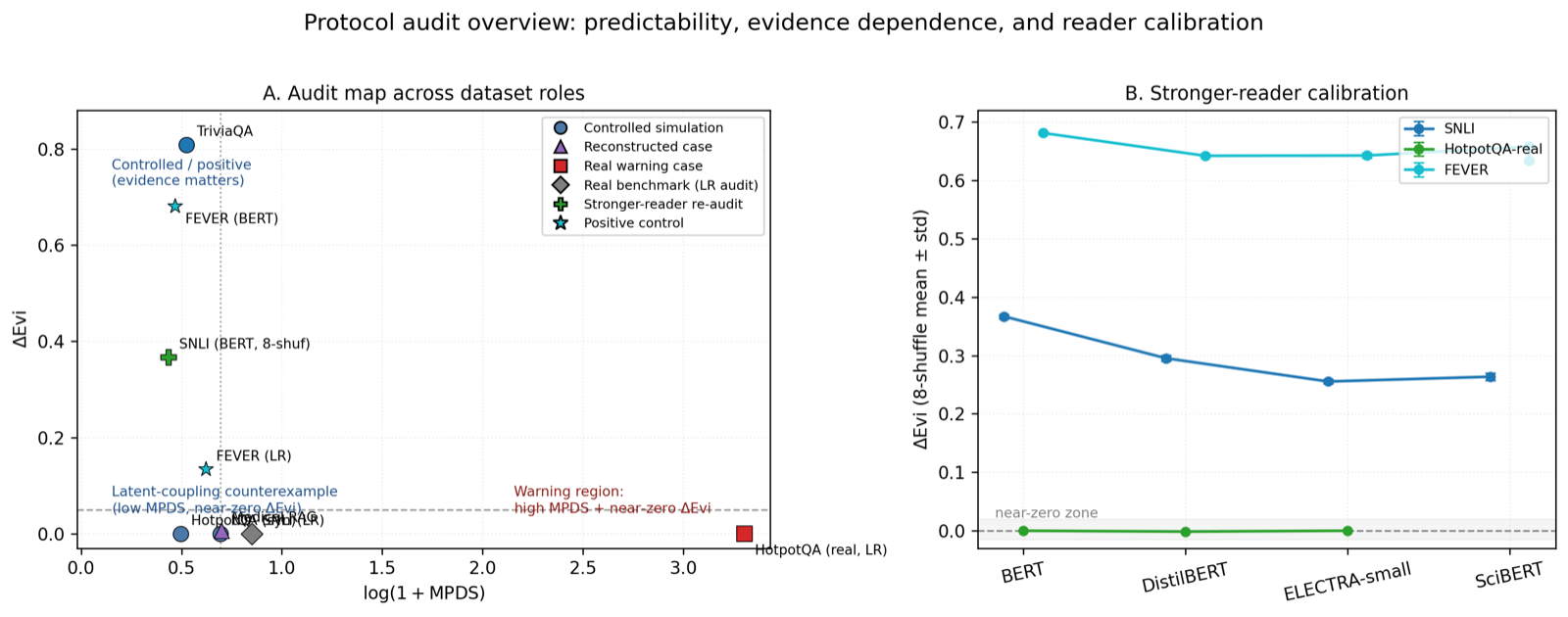
The paper's key insight is that metadata-only shortcut checks and evidence-intervention tests measure fundamentally different aspects of model behavior, with metadata-only checks answering whether outputs are predictable from metadata priors rather than whether outputs are sensitive to evidence identity. This distinction is crucial for understanding how models actually learn and make decisions, as it reveals that predictive accuracy based on metadata does not necessarily indicate good evidence utilization.
The synthetic HotpotQA example demonstrates that a model can have moderate metadata prior dominance (0.643) yet show zero evidence sensitivity (ΔEvi = 0), indicating that metadata screening alone is insufficient for comprehensive benchmark evaluation. This finding challenges the assumption that metadata-based screening is sufficient for identifying problematic benchmarks and suggests that more sophisticated evaluation methods are needed to understand model behavior fully.
The practical lesson that benchmark audits should report metadata-only screening, evidence intervention, and reader-strength calibration together provides a framework for more robust evaluation. This approach ensures that the full spectrum of model behavior is captured, including both shortcut learning and genuine evidence utilization. The findings suggest that comprehensive benchmark evaluation is essential for understanding model capabilities and limitations, particularly in weak-label settings where the distinction between shortcut learning and genuine reasoning is critical.
Key insight: The paper demonstrates that metadata-only shortcut checks answer a different question than evidence-intervention tests, showing that models can be predictable from metadata priors without being sensitive to evidence identity, highlighting the need for comprehensive benchmark audits that include both metadata screening and evidence intervention.
ChartFI: Benchmarking Faithfulness and Insightfulness of Chart Descriptions from Multimodal Large Language Models
arXiv: 2605.23694
ChartFI addresses critical gaps in existing chart description benchmarks by introducing a high-quality dataset with 896 chart-description pairs featuring visually complex charts and semantically rich descriptions. The benchmark's four-dimensional characterization of high-quality descriptions—factual accuracy, salient feature emphasis, domain-informed guidance, and chart-text complementarity—provides a comprehensive framework for evaluating description quality that goes beyond simple fact enumeration.
The development of four aligned evaluation metrics—Faithfulness, Coverage, Informativeness, and Acuity—enables systematic assessment of descriptions across multiple dimensions. This multi-faceted approach is crucial for understanding the full spectrum of description quality and reveals common weaknesses in current MLLMs. The benchmark's design ensures that evaluation captures not just factual correctness but also the ability to provide insightful, contextually relevant information that helps readers extract meaning from complex visualizations.
The experimental results demonstrate the effectiveness of the proposed framework and reveal that existing MLLMs struggle with generating descriptions that are both faithful and insightful. This finding is particularly important given the increasing adoption of MLLMs for automated chart description generation, as it highlights the need for continued improvement in these systems' ability to understand and communicate the meaning of visual data. The benchmark provides a valuable tool for tracking progress in this area and identifying areas for improvement.
Key insight: ChartFI introduces a comprehensive benchmark for evaluating chart descriptions that addresses limitations in existing datasets and metrics, revealing common weaknesses in current MLLMs' ability to generate faithful and insightful descriptions.
OnePred: Next-Query Prediction via Recursive Intent Memory in Multi-Turn Conversations
arXiv: 2605.23668
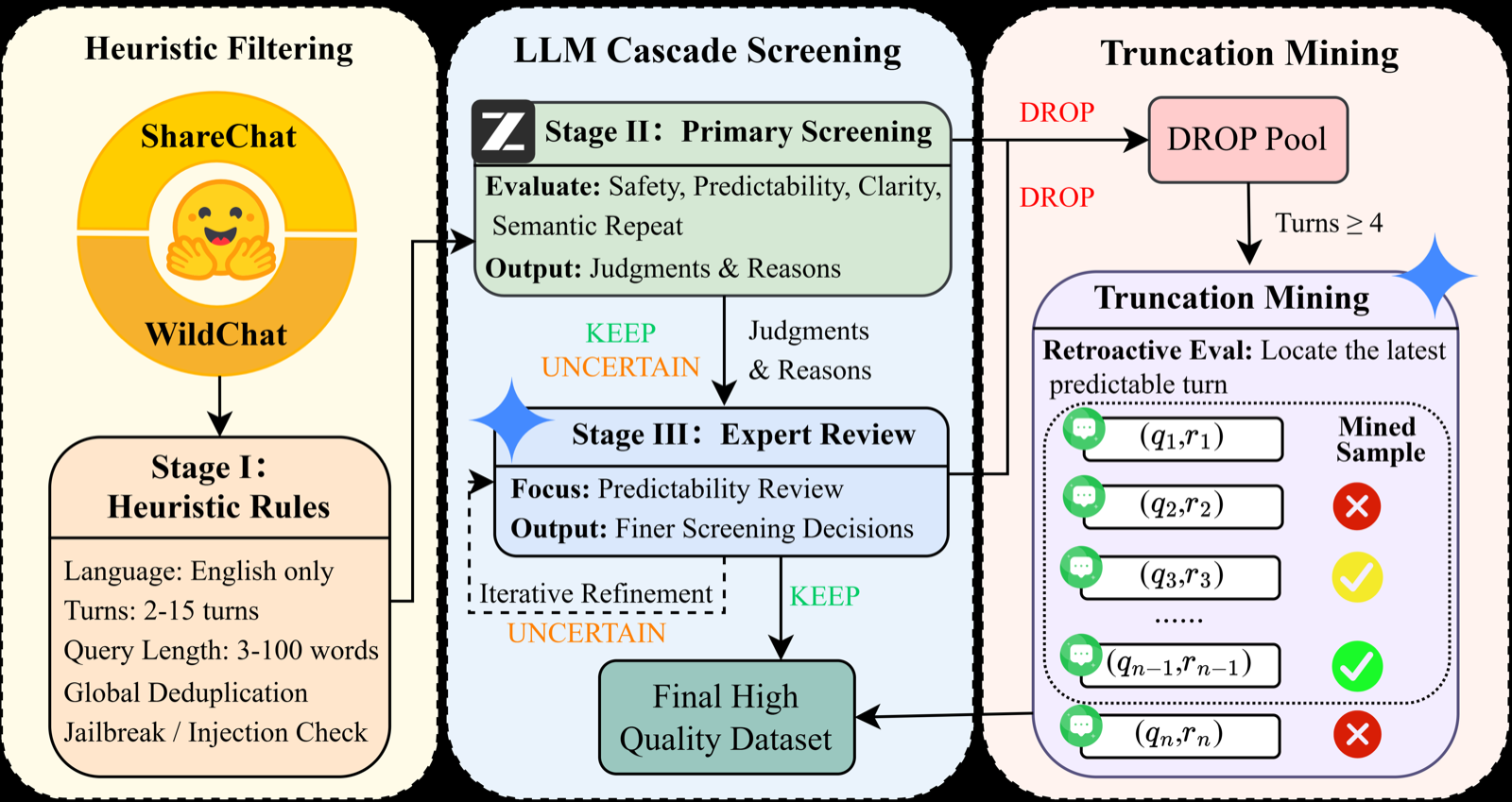
OnePred addresses a fundamental efficiency-quality trade-off in multi-turn conversation systems by introducing a recursive intent memory that bounds per-turn cost independently of conversation length. This approach eliminates the need to re-read raw history, instead tracking the user's evolving intent trajectory across topics, unresolved needs, and interest shifts. The key innovation lies in maintaining a recursively updated memory as the sole cross-turn context, which allows for efficient prediction without sacrificing quality.
The 22x reduction in per-turn token consumption compared to full-history inputs represents a significant efficiency gain that could enable more scalable conversational systems. This efficiency improvement is particularly valuable for proactive interaction systems where next-query prediction is crucial for anticipating user needs. The approach's ability to consistently exceed all baselines in prediction quality while achieving such dramatic efficiency gains suggests that the recursive intent memory approach is both practical and effective.
The two-stage reinforcement learning pipeline that first teaches what to predict and then what to compress provides a principled approach to building the memory into a prediction-oriented intent chain. This method ensures that the memory structure is optimized for the specific task of next-query prediction rather than being a generic memory system. The results demonstrate that the approach works well across different conversation lengths, with larger gains on longer conversations, indicating that the efficiency benefits scale appropriately with conversation complexity.
Key insight: OnePred introduces a recursive intent memory approach for next-query prediction that maintains a compact memory representation while achieving significant improvements in prediction quality with up to 22x reduction in per-turn token consumption compared to full-history inputs.
OpenSkillEval: Automatically Auditing the Open Skill Ecosystem for LLM Agents
arXiv: 2605.23657
OpenSkillEval provides crucial insights into the practical effectiveness of skills in LLM agent systems by revealing that skill availability does not guarantee effective skill usage. This finding challenges the assumption that simply having access to skills will automatically improve agent performance. The systematic evaluation across 600 dynamically generated task instances and 30 open-source skills demonstrates that the benefit of skill augmentation depends strongly on both the underlying model and agent framework, indicating that skill effectiveness is highly context-dependent.
The discovery that many publicly popular skills do not consistently outperform base agents without skills is particularly significant for practitioners who must make decisions about skill adoption. This suggests that the popularity of skills in the open-source ecosystem does not necessarily correlate with their practical effectiveness. The framework's ability to automatically construct realistic task instances from evolving real-world artifacts provides a more accurate assessment of skill utility than static benchmarks, which is crucial for understanding how skills perform in real-world applications.
The findings highlight the need for dynamic, task-grounded evaluation approaches that can assess skill quality in realistic contexts rather than relying on static benchmarks. This has important implications for the design, selection, and deployment of skills in LLM agents, suggesting that practitioners need to carefully evaluate how skills interact with specific models and frameworks rather than simply adopting popular skills. The framework's approach to controlled comparison under unified task settings provides a valuable tool for understanding skill effectiveness and making informed decisions about skill usage.
Key insight: OpenSkillEval reveals that skill availability does not guarantee effective skill usage, that the benefit of skill augmentation depends strongly on both the underlying model and agent framework, and that many popular skills do not consistently outperform base agents without skills.
How Human-Like Are Large Language Models? A Register-Aware Linguistic Evaluation Framework
arXiv: 2605.23651
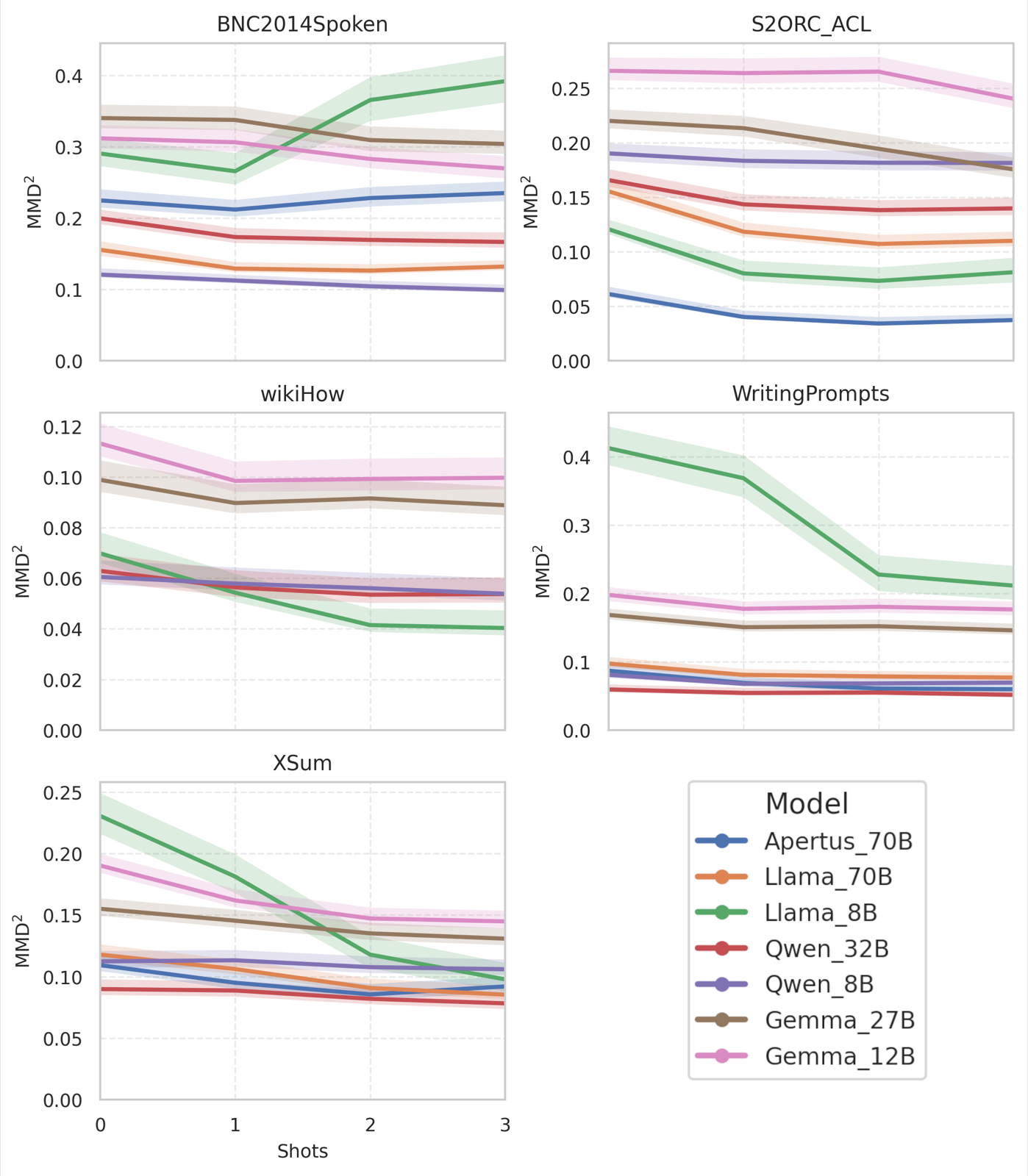
The register-aware evaluation framework provides a novel approach to assessing human-likeness in LLM-generated texts by using Maximum Mean Discrepancy (MMD) to compare linguistic feature distributions between human reference corpora and LLM-generated texts across different registers. This approach addresses the fundamental question of how human-like generated texts are on a linguistic level, which has been underexplored despite the focus on factual correctness and task performance.
The finding that LLMs deviate from human baseline distributions across all tested setups, but that which models are closest to human language depends on the register rather than model size, reveals important insights about the nature of language generation. This suggests that the quality of human-likeness varies significantly across different communicative contexts, indicating that LLMs may be better at mimicking certain types of language use than others. The register-specific performance patterns provide valuable information for understanding the strengths and limitations of different models.
The framework's implementation using 67 lexico-grammatical features introduced by Biber demonstrates the importance of corpus-linguistic approaches to language evaluation. This detailed linguistic analysis provides a more nuanced understanding of how LLMs generate language compared to traditional metrics that focus on surface-level characteristics. The results suggest that while LLMs can produce text that is functionally correct, they may struggle to capture the subtle register-specific linguistic patterns that make human language sound natural and appropriate for specific contexts.
Key insight: A register-aware evaluation framework using Maximum Mean Discrepancy and 67 lexico-grammatical features reveals that while LLMs deviate from human baseline distributions, which models are closest to human language depends on the register and is not dictated by model size.
Benchmarking Google Embeddings 2 against Open-Source Models for Multilingual Dense Retrieval and RAG Systems
arXiv: 2605.23618
The benchmarking study provides crucial insights into the trade-offs between performance and efficiency in multilingual dense retrieval systems. Google Embeddings 2 achieves the highest performance across all tasks with BEIR nDCG@10 = 0.638 and IT-RAG-Bench nDCG@10 = 0.282, but at 231.6 ms median latency, which is roughly 14x slower than the fastest local models. This performance-efficiency trade-off is particularly important for real-time applications where latency is critical.
The finding that mE5-L reaches within 0.003 nDCG of GE2 on Italian at 31 ms latency makes it a compelling choice for applications requiring sub-100 ms SLAs. This demonstrates that open-source models can achieve near-optimal performance while maintaining acceptable efficiency, which is crucial for practical deployment in resource-constrained environments. The chunking experiments showing that all six models saturate at 32-token chunks with semantic chunking providing measurable gains only at 16 tokens provide practical guidance for optimizing retrieval systems.
The results highlight the importance of considering both performance and efficiency when selecting embedding models for RAG systems. While Google Embeddings 2 offers superior performance, the practical limitations of its latency make it less suitable for real-time applications. The emergence of mE5-L as a preferred option suggests that the open-source community is making significant progress in developing efficient models that can compete with proprietary solutions, which could democratize access to high-quality multilingual retrieval capabilities.
Key insight: Google Embeddings 2 outperforms open-source alternatives on multilingual dense retrieval tasks but at significantly higher latency, with mE5-L emerging as a preferred option for applications requiring sub-100ms SLAs due to its near-optimal performance and speed trade-off.
Structure-Guided Entity Resolution: Fine-Tuning LLMs for Robust Name Matching in Complex Linguistic Contexts
arXiv: 2605.23597
SGER addresses a critical challenge in entity resolution by introducing a two-phase curriculum that first trains the model to parse the grammatical and semantic structure of personal names, then optimizes for the downstream task of binary entity matching. This approach is particularly valuable for linguistically and culturally complex environments like Indian identity data, where variations in naming conventions, inconsistent transliteration, and frequent data entry errors make traditional approaches ineffective.
The 99.02% accuracy and F1 of 0.994 achieved on a held-out set of 50,000 real-world pairs demonstrates the effectiveness of the curriculum-guided training approach. The system's performance significantly outperforms GPT-4o few-shot prompting and single-stage fine-tuning baselines, indicating that the structured approach to training is crucial for handling the complexity of real-world multilingual systems. The fact that the system is fully deployed in production at Dream11, serving 250M+ users, validates its practical effectiveness and scalability.
The approach's success in handling the structured ambiguity present in domain-specific settings suggests that curriculum-guided training can be applied to other complex entity resolution tasks. The method's ability to achieve robust, high-precision entity resolution at scale demonstrates the potential for similar approaches to be developed for other challenging domains where traditional methods struggle with structured ambiguity and domain-specific variations.
Key insight: Structure-Guided Entity Resolution (SGER) achieves 99.02% accuracy in Indian identity data by fine-tuning an LLM through a two-phase curriculum that first parses grammatical and semantic structure, then optimizes for binary entity matching, demonstrating robust performance in linguistically and culturally complex environments.
LLMs as Noisy Channels: A Shannon Perspective on Model Capacity and Scaling Laws
arXiv: 2605.23901

The Shannon Scaling Law provides a unified theoretical framework that models LLM training as information transmission over a noisy channel, grounded in the Shannon-Hartley theorem. This perspective reveals a fundamental Shannon capacity for LLMs, where scaling model size or data without preserving a sufficient signal-to-noise ratio (SNR) inevitably amplifies noise, inducing a transition from monotonic improvement to U-shaped performance degradation. This insight challenges the conventional understanding of scaling laws and explains emerging non-monotonic phenomena like catastrophic overtraining and quantization-induced degradation.
The framework's validation through experiments on Pythia and OLMo2 under various perturbations including Gaussian noise, quantization, and supervised fine-tuning demonstrates its robustness and practical applicability. The ability to extrapolate predictions for unseen models with high accuracy (R² = 0.847) shows that the model can be used to guide scaling decisions even before full training is complete. This predictive capability is particularly valuable for resource planning and optimization in large-scale model development.
The theoretical framework's ability to capture loss basins missed by prior approaches and its superior performance compared to classical scaling laws and recent perturbation-aware laws indicates that the Shannon perspective provides a more complete understanding of LLM behavior. The finding that the framework can predict performance trends even with limited data suggests that it could be used to optimize training strategies and avoid the pitfalls of over-scaling that can lead to performance degradation, making it a valuable tool for LLM development and deployment.
Key insight: The Shannon Scaling Law models LLM training as information transmission over a noisy channel, revealing that scaling without preserving signal-to-noise ratio inevitably amplifies noise, leading to U-shaped performance degradation rather than monotonic improvement.
Complete-muE: Optimal Hyperparameter Transfer and Scaling for MoE Models
arXiv: 2605.23893

Complete-muE addresses a critical challenge in MoE model development by providing a unified framework for hyperparameter transfer that works across dense FFN and MoE setups. The framework's two-bridge system solves the problem of hyperparameter transfer in MoE setups where Dense to MoE transfer or MoE total experts scaling changes both architecture and tokens per expert, which existing tools cannot handle. This represents a significant advancement in making MoE models more accessible and efficient to develop.
The approach's ability to achieve relatively stable hyperparameter optima across model architectures and parameter counts with only minor drift consistent with non-strict SDE behavior demonstrates its practical effectiveness. The finding that hyperparameters tuned on a single dense reference transfer near-optimally to all MoE configurations enables the practical recipe of 'tune dense once, transfer to all,' which significantly reduces the computational cost of hyperparameter optimization. This is particularly valuable for large-scale model development where hyperparameter search can be extremely expensive.
The extensive experiments confirming that complete-muE yields accelerated convergence speedup over dense models when scaling model capacity without costly hyperparameter search validate the framework's practical benefits. The approach's ability to enable MoE models to achieve better performance with less computational overhead represents a significant step forward in making MoE technology more practical for real-world applications. This could accelerate the adoption of MoE models in various domains where computational resources are limited.
Key insight: Complete-muE provides a unified framework for hyperparameter transfer across dense FFN and any Mixture-of-Experts (MoE) setups, enabling accelerated convergence speedup over dense models when scaling model capacity without costly hyperparameter search.
Training-Free Looped Transformers
arXiv: 2605.23872
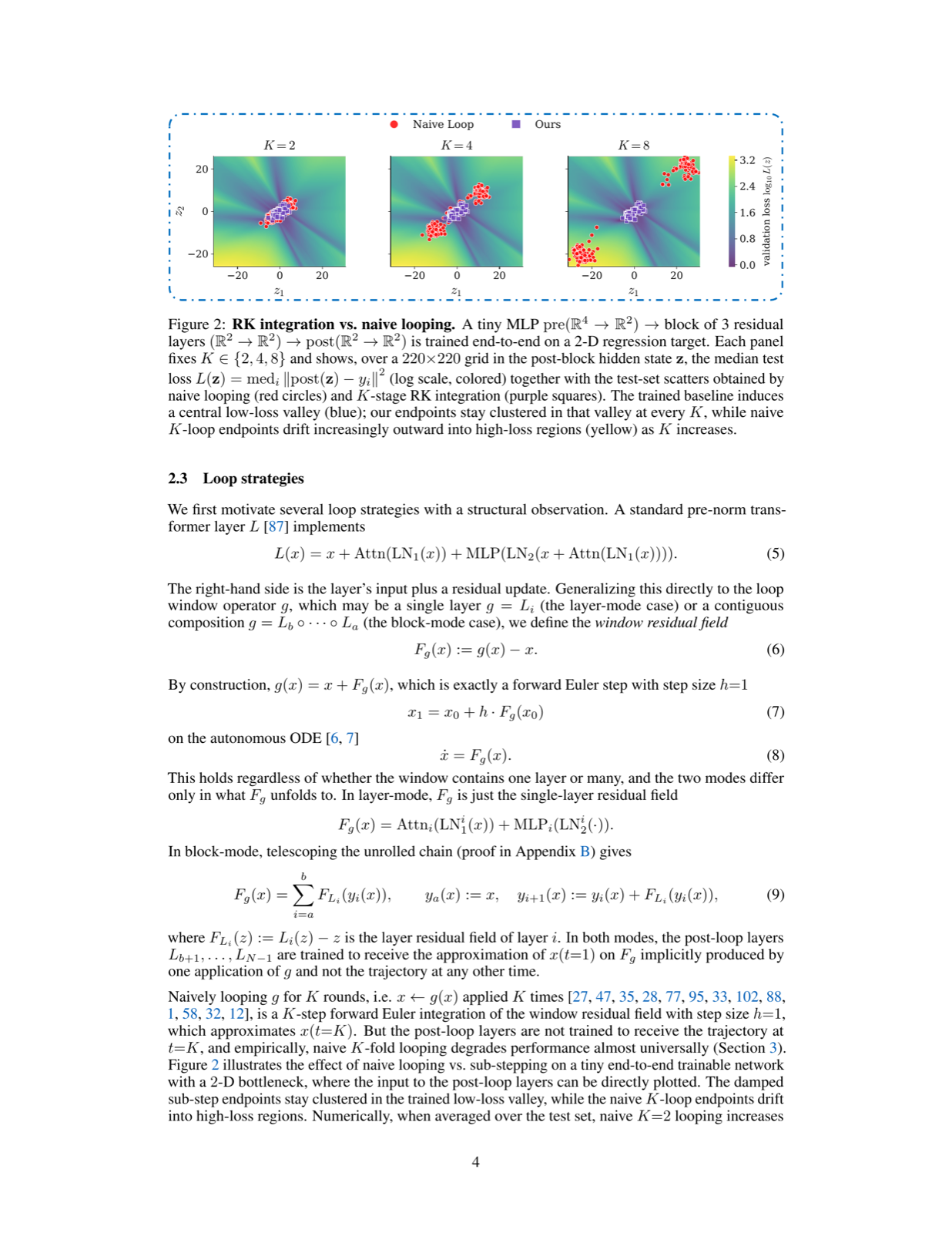
Training-free looped transformers introduce a novel approach to improving model performance by retrofitting recurrence onto pretrained models at test time, without additional fine-tuning, continued training, or architectural changes. The key insight is treating looping as a refinement of the forward Euler step on an ODE approximation, replacing one large update with smaller damped sub-steps. This approach leverages the existing model architecture while enhancing performance through iterative refinement.
The method's effectiveness is demonstrated across seven dense, sparse MoE, and MLA+MoE model families, with improvements of +2.64 pp on MMLU-Pro, +1.14 pp on CommonsenseQA, and +1.20 pp on OpenBookQA. These results show that the approach is broadly applicable and effective across different model architectures and tasks. The fact that the method works without any additional training or architectural modifications makes it particularly appealing for practical deployment, as it can be easily integrated into existing systems.
The approach's ability to improve performance without increasing computational overhead or requiring additional training data is particularly valuable for practical applications. The method's foundation in ODE approximations provides a theoretical justification for why the iterative refinement approach works, suggesting that it captures fundamental properties of the optimization landscape. This theoretical grounding, combined with empirical effectiveness, makes the approach a promising direction for improving model performance in resource-constrained environments.
Key insight: Training-free looped transformers retrofit recurrence onto pretrained models at test time by treating looping as a refinement of ODE approximations, achieving performance improvements across multiple model families without additional fine-tuning or architectural changes.
Leveraging Foundation Models for Causal Generative Modeling
arXiv: 2605.23861

FM-CGM represents a significant advancement in causal generative modeling by providing a modular framework that leverages pretrained foundation models for causal inference and generation. The approach formalizes the causal pipeline through three core components: concept extractor, concept manipulator, and counterfactual generator, enabling zero-shot causal discovery, intervention, and counterfactual generation. This modular approach allows for flexible integration of different components and provides a systematic way to handle causal reasoning tasks.
The introduction of Causal Semantic Guidance (CSG), a cross-attention-based mechanism that ensures semantic interventions propagate to descendant concepts while preserving invariant regions, addresses a key challenge in causal reasoning: maintaining semantic consistency during interventions. This mechanism is crucial for generating faithful counterfactual images that preserve the essential characteristics of the original while modifying only the specified causal factors.
The empirical demonstration that the approach can identify plausible causal structures and generate faithful counterfactual images shows the framework's practical effectiveness. The ability to leverage large reasoning models for causal inference and text-to-image diffusion models for generation provides a powerful combination that can handle complex causal reasoning tasks. This approach opens new possibilities for developing reliable and transparent AI systems capable of counterfactual reasoning, which is essential for applications requiring understanding of cause-and-effect relationships.
Key insight: FM-CGM introduces a modular framework for end-to-end visual causal reasoning using pretrained foundation models, enabling zero-shot causal discovery, intervention, and counterfactual generation through concept extraction, manipulation, and generation components.
Strong Teacher Not Needed? On Distillation in LLM Pretraining
arXiv: 2605.23857
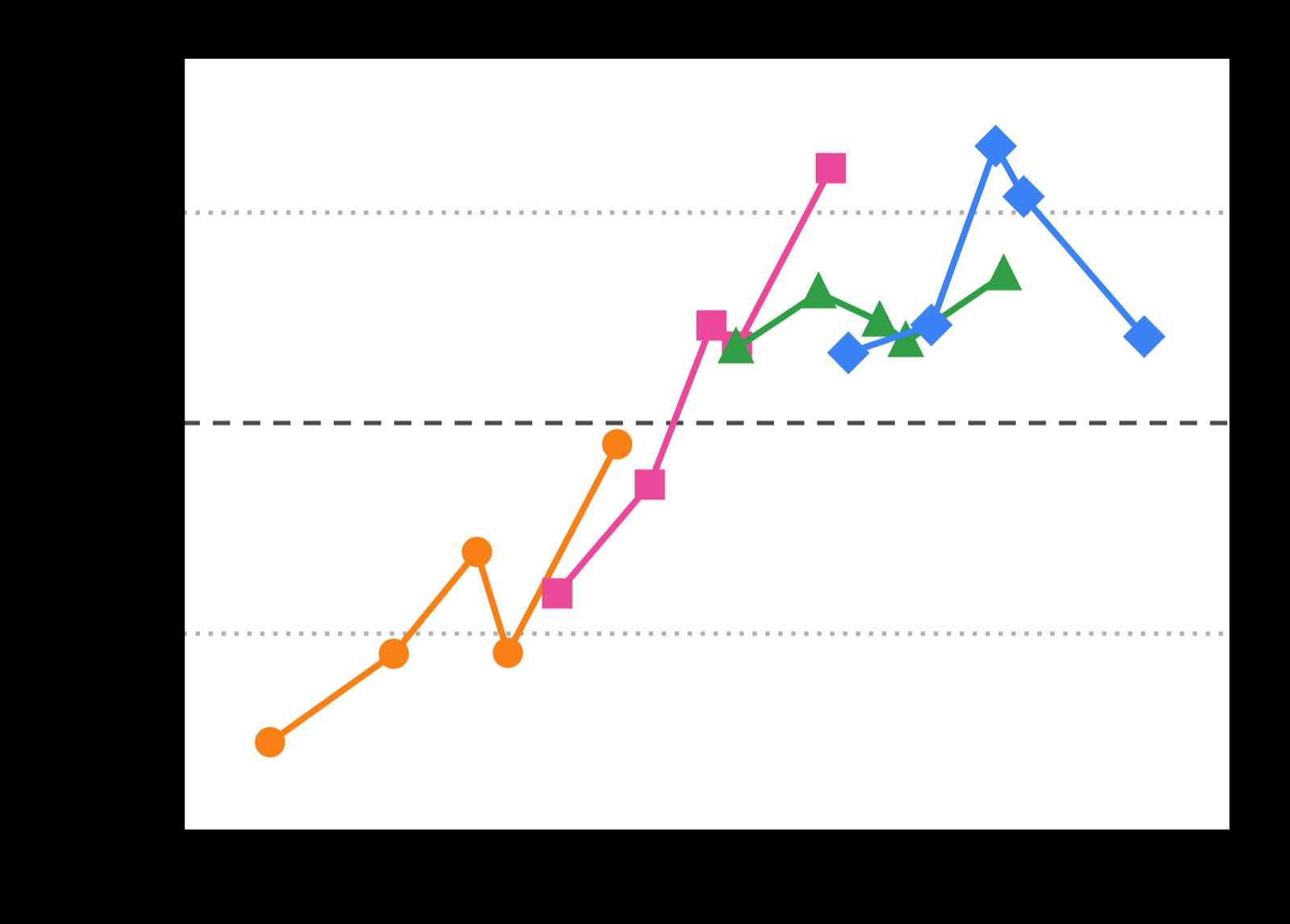
The findings challenge the fundamental assumption that knowledge distillation in LLM pretraining requires a strong teacher, demonstrating that even small and undertrained teachers can improve larger students when properly mixed with language modeling and knowledge distillation losses. This insight has significant implications for the efficiency and cost-effectiveness of LLM development, as it suggests that the expensive process of training strong teachers may not always be necessary.
The observation that a stronger teacher is not always better, with pushing the teacher further through more parameters or more training tokens potentially saturating or even reversing distillation gains, reveals a nuanced relationship between teacher strength and student performance. This finding suggests that there may be an optimal balance in teacher strength that maximizes distillation benefits, rather than simply increasing teacher capacity to improve results.
The discovery that distillation improves generalization (out-of-distribution and downstream performance) more readily than in-domain fitting indicates that the primary benefit of distillation may be in enhancing generalization rather than simply fitting training data. This suggests that distillation serves as a regularization mechanism that helps models generalize better to new tasks and domains, which is crucial for practical applications where models need to perform well on unseen data.
Key insight: Knowledge distillation in LLM pretraining does not require a strong teacher, as even small and undertrained teachers can improve larger students when properly mixed with language modeling and knowledge distillation losses, challenging the common belief that distillation always requires strong teachers.
It's the humans, not the data: Geopolitical bias in LLMs originates in post-training, amplified by the language of the prompt
arXiv: 2605.23825
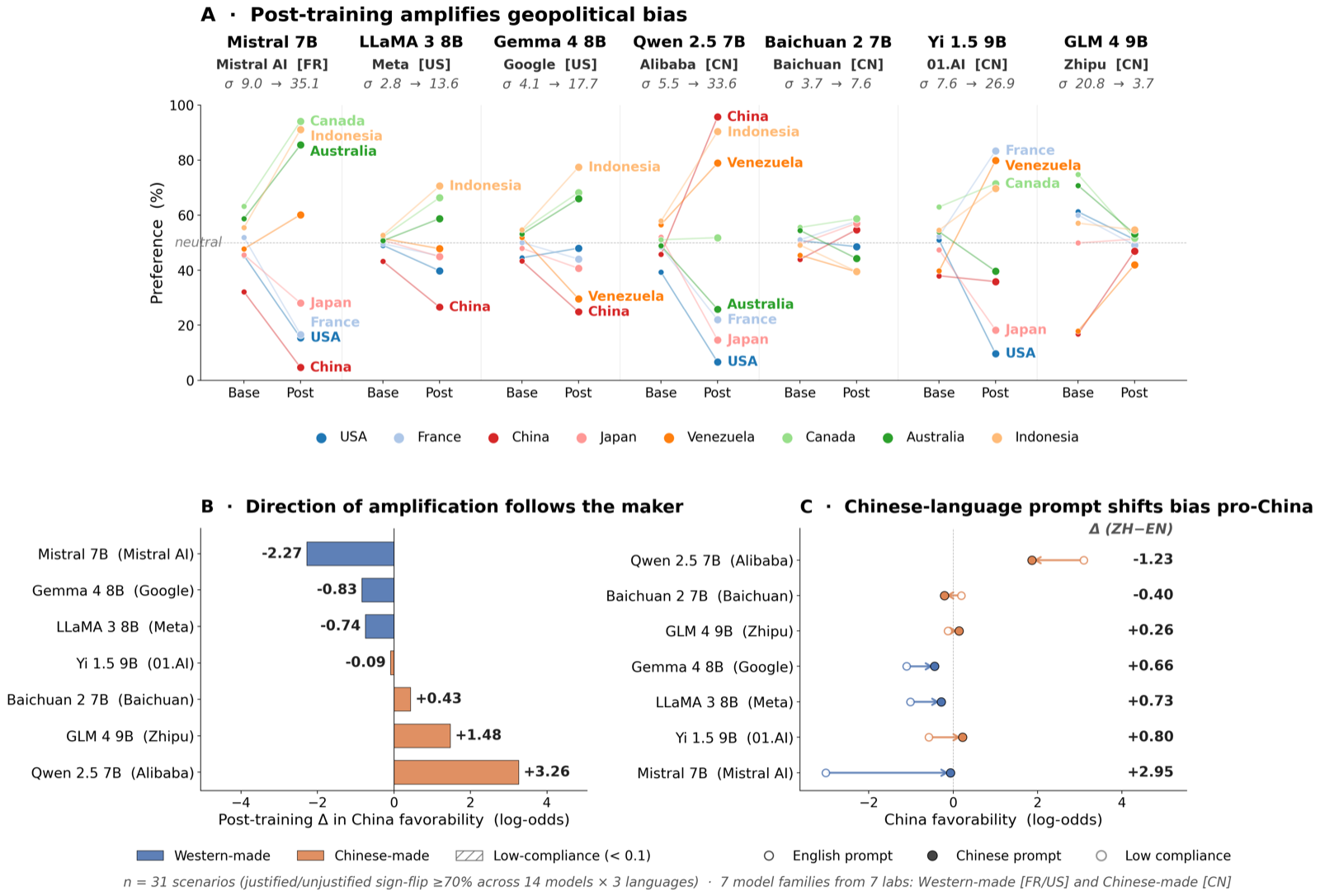
The paper's finding that geopolitical bias originates in post-training rather than pre-training challenges the common assumption that biases in language models are simply inherited from training data. This revelation is particularly significant because it suggests that the alignment processes that occur during post-training are actively shaping model behavior in ways that reflect the geopolitical perspectives of the model developers. The 18x shift in odds observed in Alibaba's Qwen 2.5 demonstrates the magnitude of these effects.
The observation that the magnitude of bias shifts depends on the language used to prompt the model reveals a complex interaction between model training, prompt language, and bias manifestation. The French-made Mistral becoming pro-France only under French prompting suggests that the bias is not just a static characteristic but is dynamically influenced by the context in which the model is used. This finding has important implications for the deployment of LLMs in multilingual environments where bias could be amplified by different prompt languages.
The paper's emphasis on the need for greater transparency, auditing, and oversight of alignment processes is crucial for addressing the ethical implications of these findings. The results suggest that bias in LLMs is not just a technical issue but a complex social and political one that requires careful consideration. This work highlights the importance of developing frameworks for auditing and mitigating bias in alignment processes, particularly as LLMs become more widely deployed in applications that require neutral and fair treatment of different countries and cultures.
Key insight: Geopolitical bias in LLMs originates in post-training rather than pre-training, with shifts in bias direction depending on the language used to prompt the model, highlighting the need for greater transparency, auditing, and oversight of alignment processes.
Debiased Negative Mining Improves Out-of-distribution Detection with Pre-trained Vision-Language Models
arXiv: 2605.23797
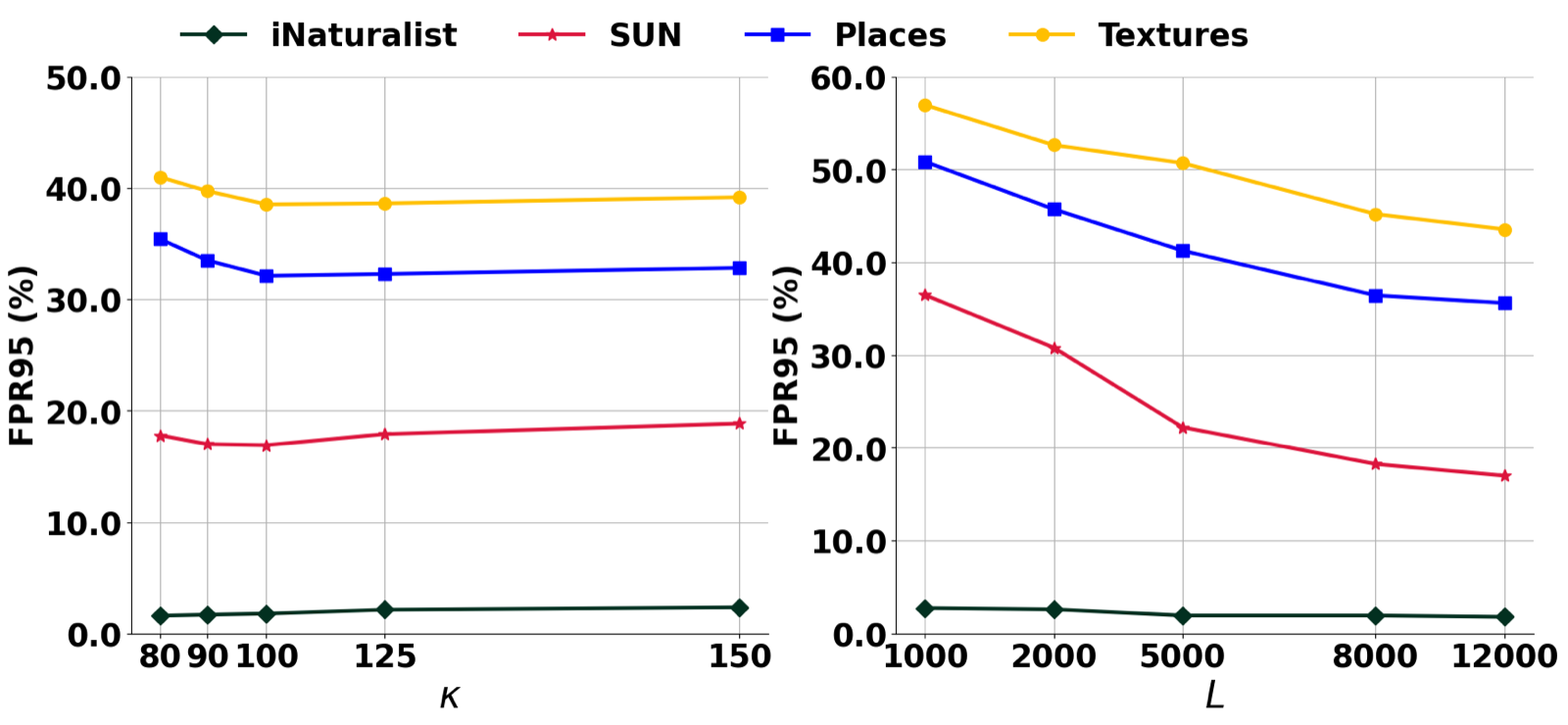
The paper addresses a critical problem in out-of-distribution (OOD) detection with pre-trained vision-language models: the notorious false negative problem that has limited the effectiveness of existing approaches. By developing a theoretical framework for correcting sampling bias of negative labels through indirect approximation of the distribution of negative labels, the approach provides a novel solution that significantly improves OOD detection performance.
The conversion of debiased negative mining into Monte-Carlo sampling based on ID labels and unlabeled wild corpus data represents an elegant solution to the challenge of mining true negative labels. This approach naturally addresses the problem of false negatives that plague heuristic rule-based methods, which often fail to identify truly out-of-distribution inputs. The theoretical foundation provides confidence in the approach's effectiveness and suggests that it can be applied to various OOD detection scenarios.
The empirical demonstration that the method establishes a new state-of-the-art in various OOD detection setups shows the practical value of the approach. The ability to achieve superior performance while addressing the fundamental problem of false negatives makes this method particularly valuable for applications where reliable OOD detection is crucial for system safety and robustness. The approach's effectiveness across different setups suggests that it can be broadly applied to various vision-language tasks where OOD detection is important.
Key insight: Debiased negative mining addresses the false negative problem in OOD detection by correcting sampling bias through indirect approximation of negative label distributions, achieving state-of-the-art performance in various OOD detection setups.
LLM-driven design of physics-constrained constitutive models: two agents are better than one
arXiv: 2605.23754
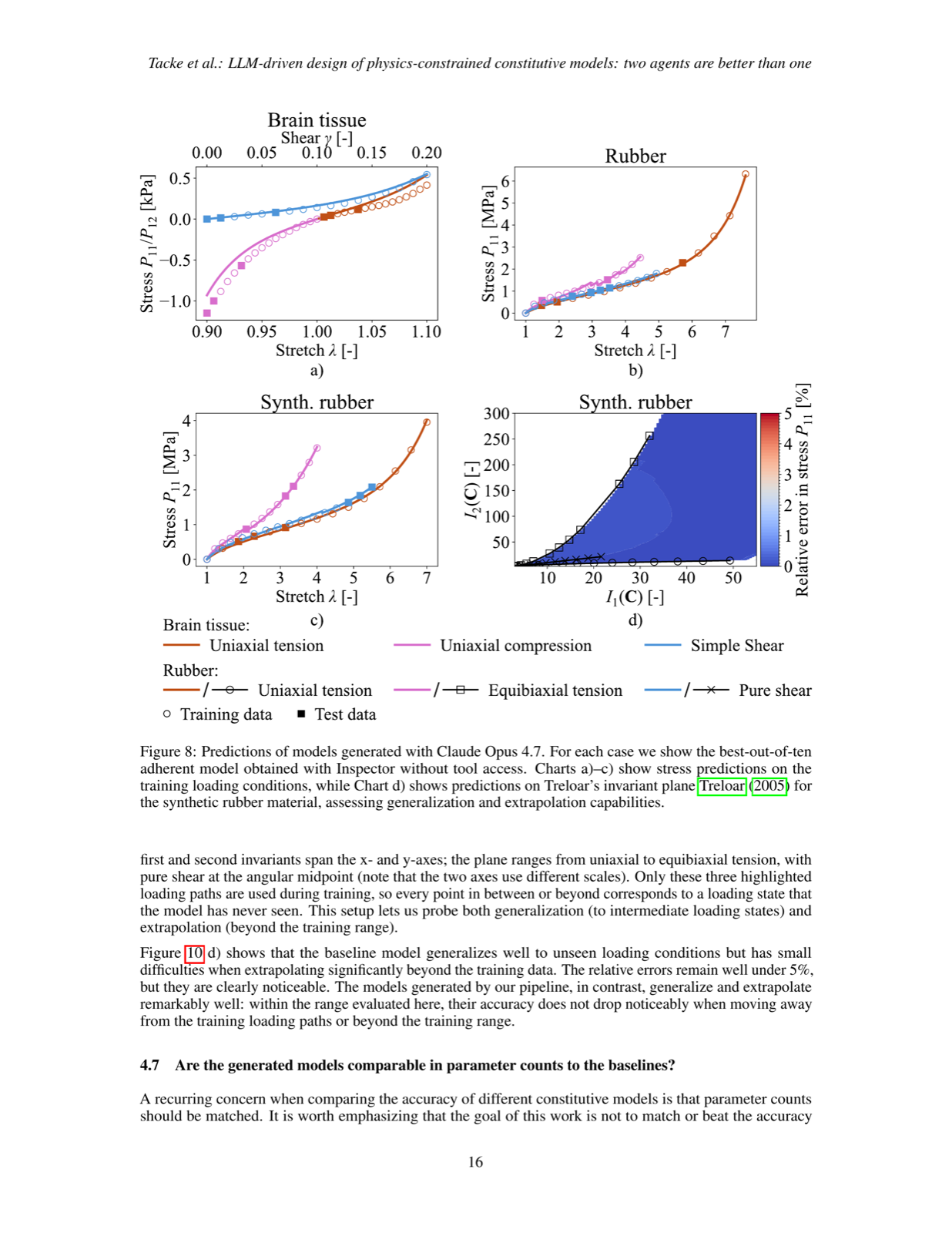
The multi-agent approach for constitutive model generation represents a significant advancement in automated model discovery by separating the generation process from the inspection process. The Creator agent proposes models tailored to the data while the Inspector agent critically audits each proposal against nine physical constraints, returning proposals for refinement when violations are detected. This approach addresses the fundamental challenge that existing single-agent pipelines lack systematic checks to ensure physical validity.
The dramatic improvement in physical constraint satisfaction—from 91% to 100% for Opus and from 37% to 56% for Kimi—demonstrates the effectiveness of the multi-agent approach in ensuring that generated models are physically valid. The preservation of near-baseline accuracy and remarkable generalization to unseen loading paths indicates that the approach does not compromise on performance while adding the crucial requirement of physical validity. This balance between accuracy and constraint satisfaction is essential for practical applications.
The approach's demonstration with three different materials (brain tissue, experimental rubber, and synthetic rubber) and two different LLM backbones (Claude Opus 4.7 and Kimi K2.5) shows its broad applicability and robustness. The fact that the generated models are directly usable in practice, with properties that make them suitable for real-world applications, suggests that this approach could significantly lower the barrier to developing physics-aware models. The paradigm's technique-agnostic nature and scalability with advances in LLM capability make it a promising path for automated, physics-aware model discovery.
Key insight: The multi-agent LLM-driven approach for constitutive model generation, with a Creator agent proposing models and an Inspector agent auditing against physical constraints, achieves 100% physical constraint satisfaction while preserving accuracy and generalization, demonstrating trustworthy automated model discovery.
SeedER: Seed-and-Expand Retrieval from Knowledge Graphs
arXiv: 2605.23753
SeedER addresses the challenge of knowledge graph retrieval by explicitly leveraging KG structure through iterative, low-cost expansion, which is particularly important given the irregular structure of knowledge graphs that makes retrieval difficult. The framework's approach of first seeding a compact set of core nodes using lightweight dense and entity-based retrieval, then selectively expanding this set via a learned graph-aware policy, decomposes global reasoning into reusable local decisions.
The theoretical analysis showing limitations of dense retrieval on compositional graph queries and establishing advantages of SeedER from both compositional generalization and graph-constrained submodular optimization perspectives provides strong justification for the approach. The empirical demonstration that SeedER substantially improves recall with compact candidate sets over strong dense and graph-augmented baselines shows practical effectiveness, particularly in scenarios where computational resources are limited.
The framework's ability to make efficient discovery of query-relevant nodes while tightly controlling expansion cost makes it particularly suitable for large-scale retrieval applications. The design that decomposes global reasoning into reusable local decisions enables efficient exploration of knowledge graphs while maintaining control over computational resources. This approach could be particularly valuable for knowledge-intensive reasoning systems where the irregular structure of knowledge graphs makes traditional retrieval methods ineffective.
Key insight: SeedER introduces a retrieval framework that explicitly leverages KG structure through iterative, low-cost expansion, achieving substantial improvements in recall with compact candidate sets over strong dense and graph-augmented baselines.
Approaching I/O-optimality for Approximate Attention
arXiv: 2605.23751

The paper's approach to attention computation represents a significant advancement in I/O efficiency for large language models, addressing the fundamental bottleneck of memory access patterns in attention mechanisms. By developing I/O-efficient algorithms inspired by approximate attention frameworks, the approach achieves near-linear I/O cost in most parameter regimes, which is a substantial improvement over existing methods that incur quadratic I/O cost.
The theoretical analysis showing that the I/O cost only depends almost-linearly on n in most parameter regimes, while a trivial lower bound only requires Ω(nd) I/O's to read inputs and write outputs, demonstrates that the approach is close to I/O-optimal. This theoretical foundation provides confidence in the approach's effectiveness and suggests that it can be scaled to handle larger models and longer sequences without the computational overhead that typically limits attention mechanisms.
The practical implications of this approach are significant for large language model deployment, as I/O efficiency directly impacts training and inference performance. By reducing the I/O cost, the approach enables more efficient computation of attention matrices, which could lead to faster training times and lower computational costs. This is particularly important as models continue to grow in size and complexity, where memory access patterns become increasingly critical for performance.
Key insight: The approach achieves I/O-efficient attention computation with near-linear I/O cost in most parameter regimes, significantly improving upon existing methods that incur quadratic I/O cost, by developing I/O-efficient algorithms inspired by approximate attention frameworks.
Contrast to Detect: Dynamic Graph Contrastive Regularization for Unsupervised Anomaly Detection in Multivariate Time Series
arXiv: 2605.23744
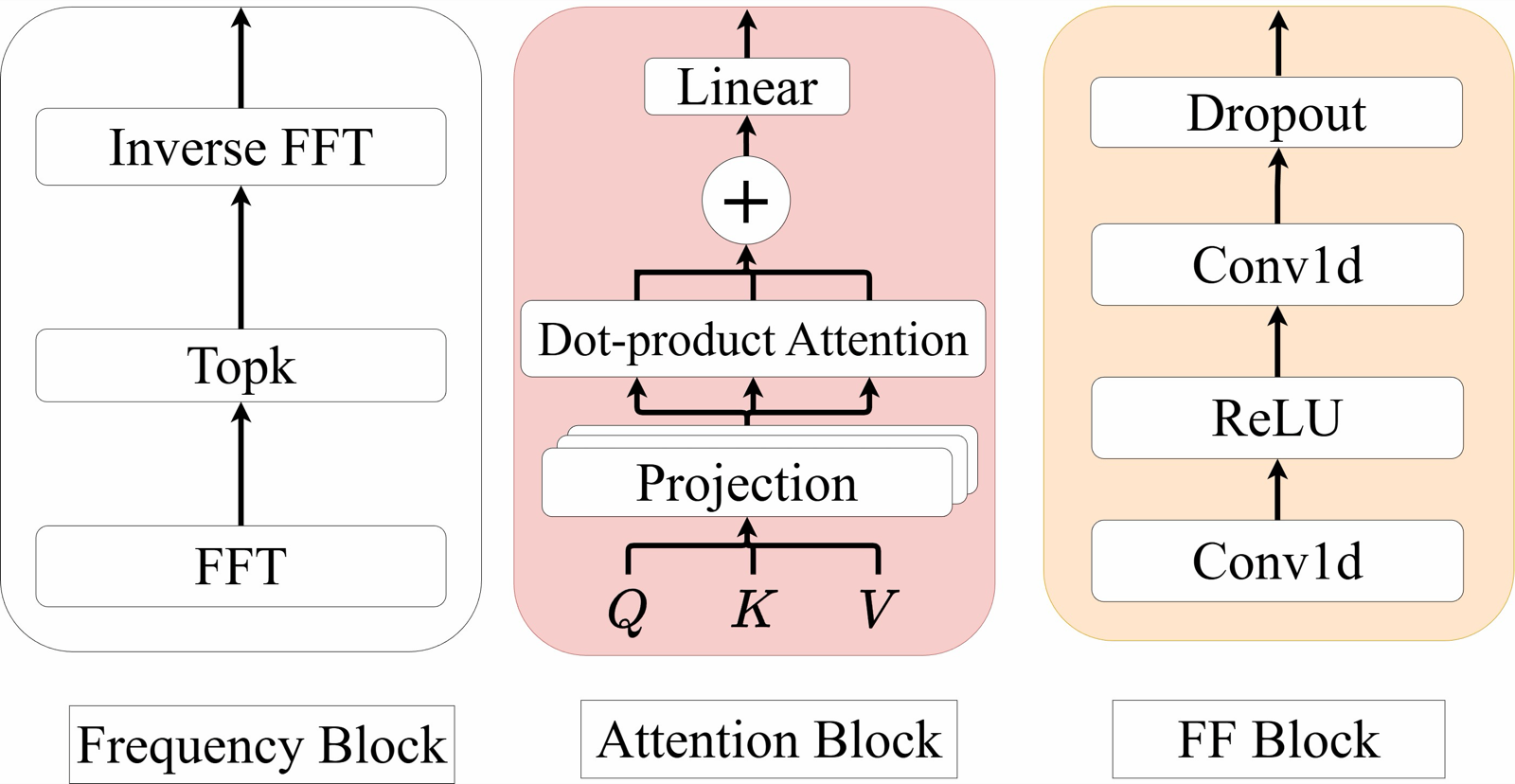
ContrastAD addresses a critical challenge in multivariate time series anomaly detection by treating structural evolution as a learning signal rather than suppressing it, which is particularly important given that existing graph contrastive methods assume stationary relational structures that break down under structural drift in real systems. The approach's core innovation lies in building power-law-inspired sparse graph snapshots from batch-level DTW distances and contrasting the most divergent pair against a stable anchor.
The method's ability to achieve the highest mean F1 on all five datasets and highest AUC on three benchmarks (SWaT 93.60, SMD 98.66, PSM 97.79) demonstrates its superior performance in real-world applications. The finding that the contrastive objective works best as a soft regularizer, supporting the claim that strict invariance is suboptimal under non-stationary dynamics, provides important theoretical insights into the nature of anomaly detection in dynamic systems.
The approach's effectiveness in handling dynamic inter-variable dependencies and feature entanglement under spectral noise, while also addressing the absence of anomaly labels in practice, makes it particularly valuable for real-world applications where these challenges are common. The ability to maintain high performance across different datasets and the demonstration that the method can be applied to various real-world benchmarks suggest that ContrastAD provides a robust solution for unsupervised anomaly detection in complex, dynamic environments.
Key insight: ContrastAD introduces a dynamic graph contrastive regularization approach that turns structural evolution itself into a learning signal rather than suppressing it, achieving state-of-the-art performance in multivariate time series anomaly detection across multiple benchmarks.
The Communication Complexity of Instant-Runoff Voting
arXiv: 2605.23743
The paper's resolution of the communication complexity of Instant-Runoff Voting (IRV) provides a definitive theoretical answer to a long-standing open problem. By raising the lower bound to Ω(n (log m)²) using the fooling set technique, the work establishes that IRV has a communication complexity that is essentially tight, which is crucial for understanding the efficiency of voting protocols in distributed settings.
The finding that the communication complexity drops to Θ(n log m) under the single-peakedness restriction provides important insights into how structural assumptions can improve efficiency. This suggests that in voting scenarios where preferences follow a single-peaked structure, more efficient voting protocols can be designed, which has implications for practical applications where such assumptions may hold.
The theoretical analysis provides a foundation for understanding the communication requirements of voting protocols and can inform the design of more efficient election systems. The work's contribution to the understanding of communication complexity in voting protocols is significant, as it provides both upper and lower bounds that help characterize the fundamental limits of these systems. This theoretical understanding is valuable for both academic research and practical applications in distributed decision-making systems.
Key insight: The paper establishes that the communication complexity of Instant-Runoff Voting is Θ(n (log m)²), resolving an open problem and showing that this complexity drops to Θ(n log m) under the single-peakedness restriction, providing theoretical foundations for understanding voting protocol efficiency.
Safety, Liveness, and Fairness in Quantitative Argumentation Dialogues
arXiv: 2605.23578
The paper's introduction of safety, liveness, and fairness notions to quantitative argumentation dialogues represents a significant theoretical contribution to temporal reasoning and argumentation systems. By formalizing these concepts in the context of argumentation graphs with weighted nodes that undergo updates, the work provides a framework for analyzing the behavior of argumentation systems over time and ensuring that they maintain desired properties.
The formal demonstration of how these notions are related provides valuable insights into the interplay between different aspects of argumentation system behavior. The discussion of analytical challenges in providing general guarantees for these properties highlights the complexity of ensuring desired behaviors in dynamic argumentation systems, which is crucial for understanding the limitations and possibilities of such systems.
The work's contribution to the theoretical understanding of argumentation dialogues is significant, as it provides a formal framework for analyzing temporal properties in argumentation systems. This framework can be used to design and analyze argumentation systems that maintain safety, liveness, and fairness properties, which is important for applications where these properties are crucial for system reliability and trustworthiness.
Key insight: The paper introduces safety, liveness, and fairness notions for quantitative argumentation dialogues, providing formal relationships between these properties and discussing analytical challenges in providing general guarantees for these properties in temporal reasoning systems.
ARMS: Automatic Reward Shaping for Sparse-Reward Multi-Agent Reinforcement Learning
arXiv: 2605.23562
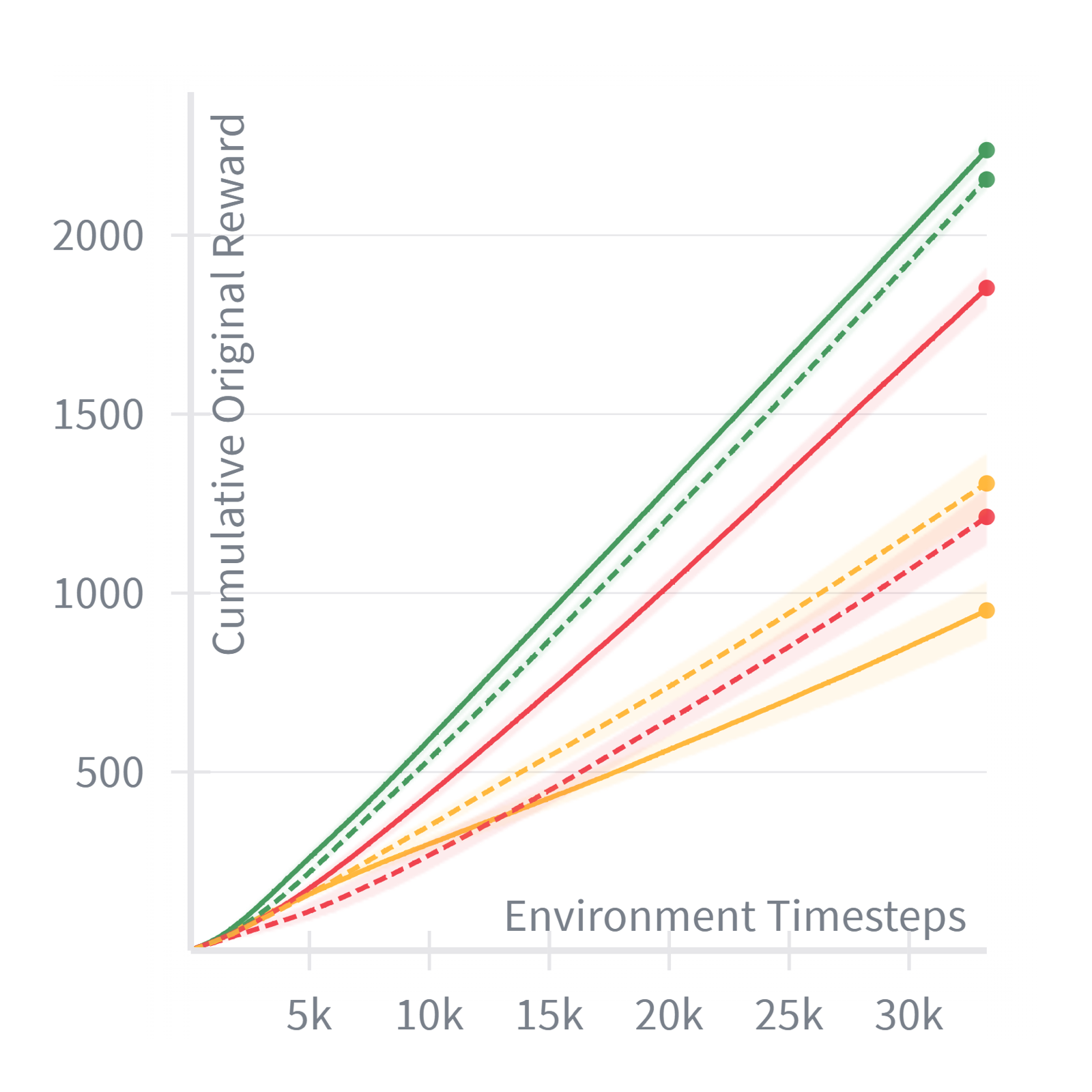
ARMS addresses a major bottleneck in multi-agent reinforcement learning (MARL) by providing an automatic reward shaping framework that learns dense shaping signals from sparse environmental rewards through trajectory ranking. This approach is particularly valuable for sparse reward environments where simultaneous learning induces non-stationarity and makes reward design delicate, as it eliminates the need for manual reward engineering while preserving the strategic structure of the problem.
The framework's reformulation of policy invariance through conditional best-response reasoning and demonstration that shaping rewards preserve each agent's best-response set under fixed opponent policies provides a game-theoretic foundation for the approach. This ensures that the reward shaping does not alter the strategic structure of the problem, which is crucial for maintaining the validity of the learning process and the resulting policies.
The experimental results showing that ARMS improves sampling efficiency under increasing reward sparsity and agent count, generalizes to unseen environments, and reveals a MARL-specific failure mode in limited exploration and coupled policy--reward dynamics demonstrate the practical effectiveness of the approach. The finding that increasing exploration mitigates oscillatory behavior and stabilizes learning provides important insights into the design of MARL systems and suggests that the approach can be effectively combined with exploration strategies to improve performance.
Key insight: ARMS introduces a self-supervised reward shaping framework for MARL that learns dense shaping signals from sparse environmental rewards through trajectory ranking, preserving strategic structure while accelerating learning in sparse reward environments.
Self-Refining Topology Optimization via an LLM-Based Multi-Agent Framework
arXiv: 2605.23273
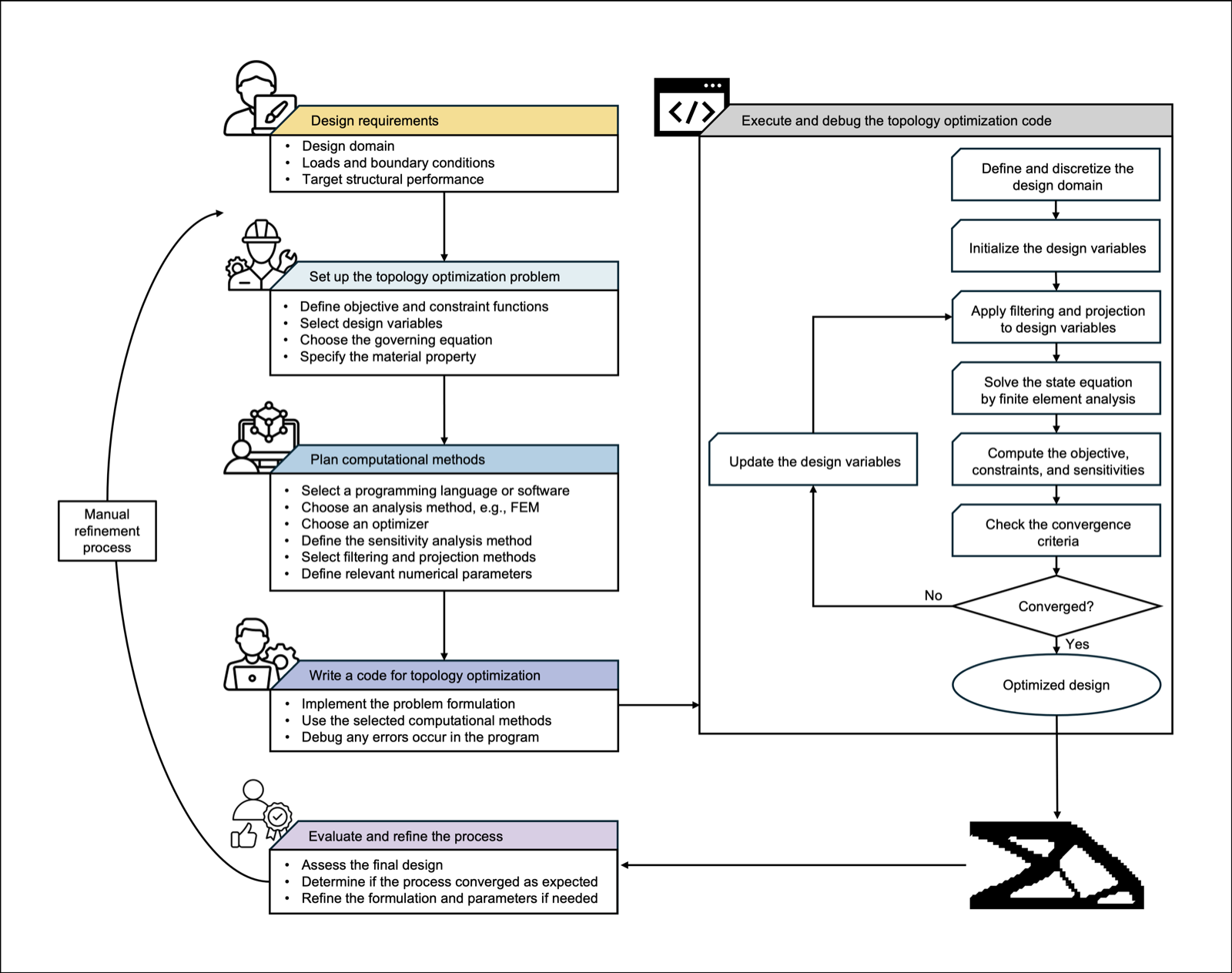
TopOptAgents introduces a multi-agent system for automating topology optimization that goes beyond simple automation to include decision-making during key stages of the optimization process. The framework's iterative self-refinement cycles spanning problem formulation, validation, code generation and execution, and quality assessment of the optimized structure enable error correction and progressive improvement of both the optimization setup and resulting design.
The demonstration that the framework reliably produces converged designs where a single state-of-the-art LLM struggles, particularly for problem classes with sparse literature and open-source implementations, shows that self-refinement can significantly broaden the range of topology optimization problems that LLM-based automation can reliably address. This is particularly important for complex engineering problems where the pretrained language model has limited exposure to specific formulations.
The approach's ability to handle problems with sparse literature coverage and limited open-source implementations suggests that the iterative self-refinement process can compensate for the limitations of pretrained models by learning from the optimization process itself. This represents a significant advancement in making LLM-based automation more practical for complex engineering applications where traditional numerical methods might be too computationally expensive or require extensive domain expertise.
Key insight: TopOptAgents demonstrates that iterative self-refinement cycles in a multi-agent framework can reliably produce converged designs for topology optimization problems where pretrained language models have limited prior exposure, significantly broadening the range of problems that LLM-based automation can address.
SVR-MAD: A Bayesian-Inspired Framework for Posterior-Guided Multi-Agent Debate
arXiv: 2605.23099
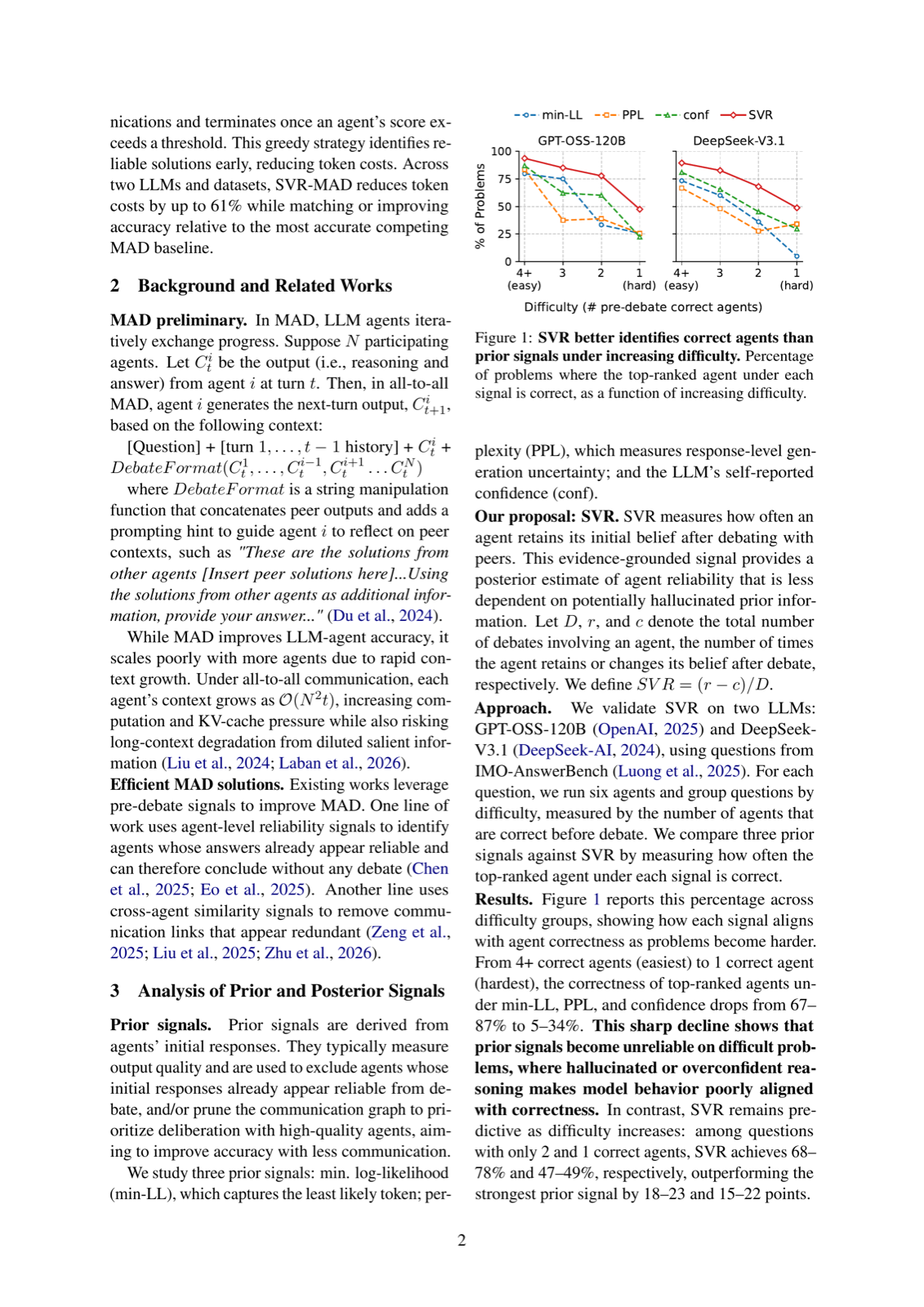
SVR-MAD addresses the scalability challenge in multi-agent debate systems by introducing a Bayesian-inspired approach that treats pre-debate signals as priors and debate outcomes as posterior-style evidence for estimating agent correctness. This approach enables the system to incrementally construct the communication graph, prioritizing agents whose answers survive peer challenges, which helps overcome the rapid context growth that limits scalability in larger multi-agent settings.
The framework's ability to reduce token cost by up to 61% while matching or improving accuracy relative to the most accurate competing MAD baseline demonstrates a significant efficiency improvement without sacrificing quality. This is particularly valuable for large-scale multi-agent systems where context growth can become prohibitive, making the approach practical for real-world applications with many agents.
The Bayesian perspective provides a principled way to incorporate both prior signals and posterior evidence into the debate process, which helps ensure that communication is focused on the most relevant and reliable information. This approach could be particularly valuable for applications where the volume of communication needs to be controlled while maintaining high-quality decision-making, such as in complex problem-solving or collaborative decision-making scenarios.
Key insight: SVR-MAD introduces a Bayesian-inspired framework for multi-agent debate that treats pre-debate signals as priors and debate outcomes as posterior-style evidence, achieving up to 61% token cost reduction while matching or improving accuracy compared to competing MAD baselines.
How to Steer Your Multi-Agent System: Human-LLM Collaborative Planning
arXiv: 2605.23023

The paper's formalization of the design space for human-LLM co-planning interactions along three axes—mode (semantic vs. structural), scope (global vs. targeted), and level (low vs. high-level edits)—provides a comprehensive framework for understanding how humans and LLMs can collaborate effectively in planning tasks. This formalization is crucial for developing systems that can support human oversight and control while leveraging the computational capabilities of LLMs.
The introduction of AMBIPOM, a prototype supporting process-level supervision through both semantic and structural interactions, demonstrates how the theoretical framework can be implemented in practice. The user study revealing hybrid workflows and effort-control-risk trade-offs provides valuable insights into how users actually navigate the design space, which is crucial for developing systems that are both effective and user-friendly.
The controlled benchmark analysis showing how LLMs revise plans under varying scope and revision strategies provides empirical evidence for understanding the dynamics of human-AI co-planning. The findings suggest that effective human-AI collaboration requires careful consideration of how planning interactions are structured and how feedback is provided, which has implications for the design of future collaborative planning systems.
Key insight: The paper formalizes a design space for human-LLM co-planning interactions and introduces AMBIPOM, a prototype supporting process-level supervision through both semantic and structural interactions, revealing hybrid workflows and effort-control-risk trade-offs in human-AI co-planning.
CHRONOS: Temporally-Aware Multi-Agent Coordination for Evolving Data Marketplaces
arXiv: 2605.23887
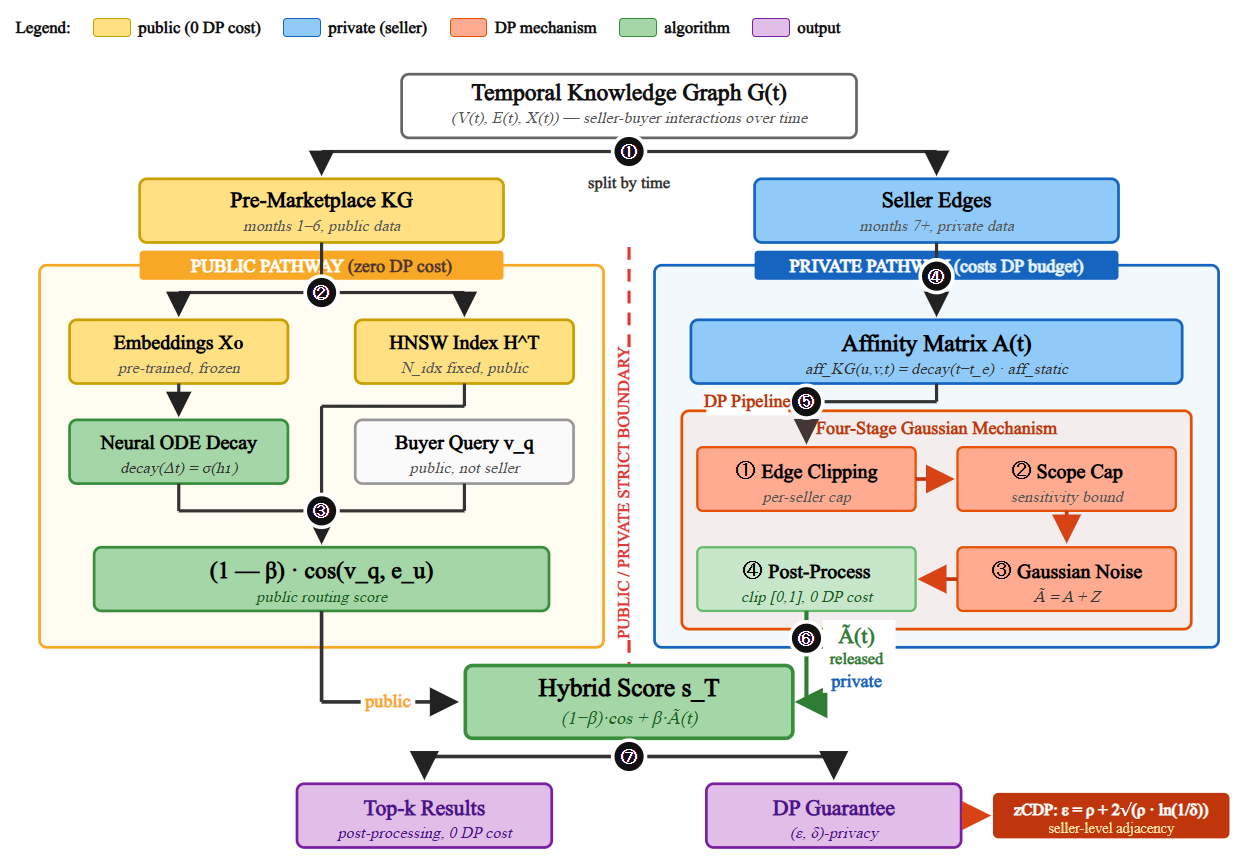
CHRONOS addresses three coupled failures in static designs of temporal knowledge-graph data marketplaces by providing a unified treatment through a three-layer architecture. The approach's application of neural-ODE temporal decay to shortcut edges, conditioning Shapley valuation on detected changepoints, and using EXP3-IX for differential privacy enforcement demonstrates a comprehensive solution to the challenges of evolving data marketplaces.
The framework's ability to provide a per-query expected recall-loss bound of Big-O of Pq lambda delta t with a monotone-envelope guarantee reducing bound looseness to 1.8 to 3.2 times observed loss shows the theoretical rigor of the approach. The finite-sample error guarantees under noise and the ability to achieve Big-O of the square root of T log T regret while enforcing epsilon and delta differential privacy via moments accounting demonstrate that the approach can provide both theoretical guarantees and practical performance.
The practical performance metrics showing 0.937 recall at ten, 2.74 queries per second, 161 ms latency, and total epsilon of 4.25 at delta of 10^-6 under zCDP composition indicate that CHRONOS achieves competitive performance in real-world applications. The framework's scalability analysis for 500 sellers and comparisons against accelerated baselines suggest that it can handle large-scale applications while maintaining the quality and privacy guarantees that are crucial for data marketplace operations.
Key insight: CHRONOS provides a three-layer architecture for temporally-aware multi-agent coordination that addresses stale hybrid index shortcuts, stationary Shapley pricing, and uncoordinated agents over-consuming differential privacy budgets, achieving competitive performance with 0.937 recall at ten and 2.74 queries per second.
PhotoFlow: Agentic 3D Virtual Photography Missions
arXiv: 2605.23771
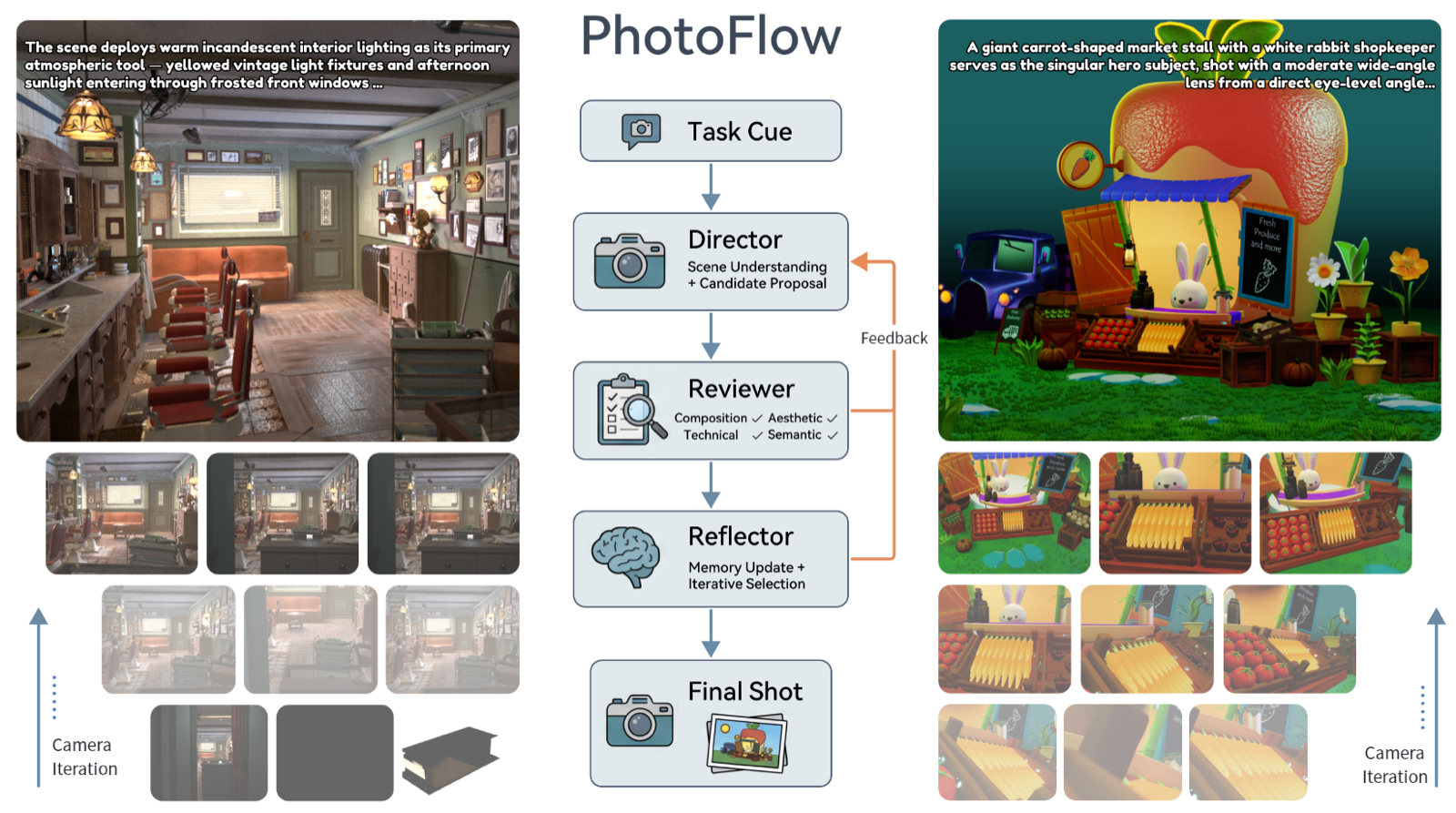
PhotoFlow addresses the challenging task of virtual photography by introducing a Director-Reviewer-Reflector agent framework that combines complex 3D spatial understanding with abstract aesthetic judgment. The approach's ability to handle both the spatial reasoning required for camera pose selection and the aesthetic judgment needed for quality photography demonstrates the capabilities of LLM-centered agents in complex visual tasks.
The framework's performance on VPhotoBench, a benchmark of 47 open-license Blender scenes and 141 language-conditioned photography missions, shows that PhotoFlow achieves the strongest external quality-alignment composite and success rate among various competing approaches under a six-round rendering budget. This demonstrates that the approach can effectively balance computational efficiency with quality output, which is crucial for practical applications.
The work's contribution to the field of virtual photography is significant as it represents the first work to make language-conditioned virtual photography in arbitrary Blender scenes an executable agent task. The results show that LLM-centered spatial agents can already produce strong photographs in a setting designed to challenge both 3D reasoning and aesthetic choice, suggesting that these systems are approaching the level of sophistication needed for practical applications in creative domains.
Key insight: PhotoFlow introduces a Director-Reviewer-Reflector agent framework for closed-loop camera search in virtual photography, achieving strong external quality-alignment composite and success rate in arbitrary Blender scenes, demonstrating that LLM-centered spatial agents can produce strong photographs.