Google has unveiled Agent Executor, a distributed runtime for AI agents that supports multi-agent coordination and task execution across heterogeneous computing resources. Simultaneously, new research benchmarks like DeepWeb-Bench are pushing the boundaries of what LLMs can achieve in complex reasoning tasks, while other papers explore critical areas like energy-efficient LLM serving, agent governance, and human-AI collaboration.
Google's Agent Executor represents a significant advancement in distributed AI agent infrastructure, enabling scalable coordination across heterogeneous computing resources with support for both synchronous and asynchronous interactions. This distributed runtime positions Google at the forefront of agent-based AI development. Meanwhile, DeepWeb-Bench introduces a challenging benchmark demanding massive cross-source evidence collection and long-horizon derivation, revealing that derivation and calibration failures account for over 70% of errors rather than retrieval issues. Additional research addresses energy efficiency in LLM serving through PALS, governance frameworks for generalist agents, and novel approaches to human-AI collaboration that provide deeper insights into how AI systems contribute to complex tasks. These developments collectively shape the future of autonomous AI systems, emphasizing both technical capabilities and responsible deployment practices.
Agent Frameworks & SDKs

Agent Executor, Google’s distributed Agent Runtime
Google has unveiled Agent Executor, a distributed runtime environment for AI agents that supports multi-agent coordination and task execution across heterogeneous computing resources. The system is built to handle complex workflows and integrates with Google Cloud's broader AI infrastructure. It supports both synchronous and asynchronous agent interactions, with scalability features designed for large-scale deployments. Agent Executor is currently in beta and is intended for developers building autonomous systems.
Why it matters: Agent Executor represents a significant step forward in enabling scalable, distributed AI agent systems, which are increasingly critical for complex automation and decision-making tasks. It positions Google at the forefront of agent-based AI infrastructure development.
Research Papers
DeepWeb-Bench: A Deep Research Benchmark Demanding Massive Cross-Source Evidence and Long-Horizon Derivation
arXiv: 2605.21482
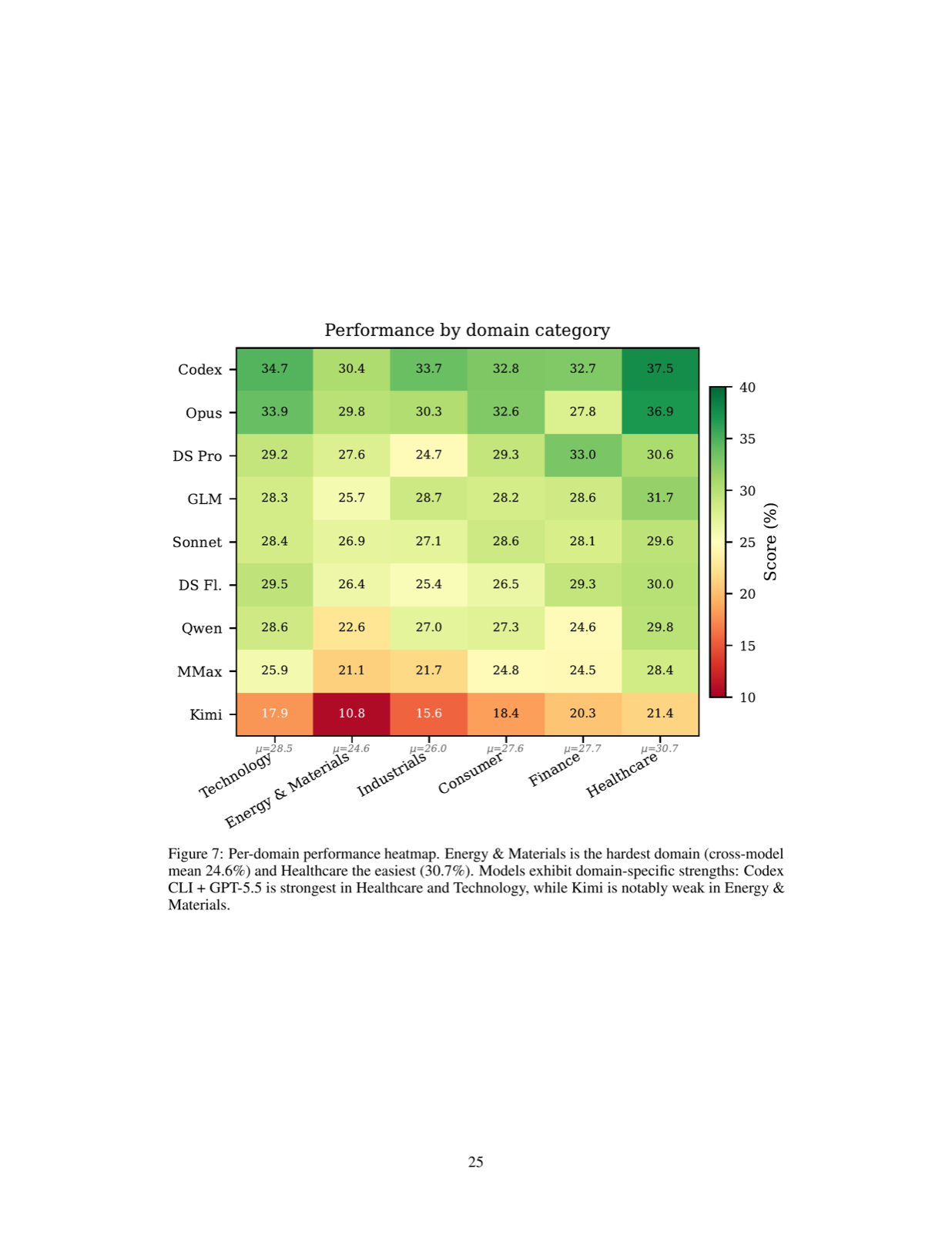
DeepWeb-Bench represents a significant advancement in evaluating LLM capabilities for deep research tasks, which involve searching the open web, collecting evidence, and deriving answers through extended reasoning. The benchmark's design addresses a critical gap in existing evaluation methods, where frontier models often score high on current benchmarks but fail to demonstrate true capability in complex, real-world scenarios. The authors identify three core sources of difficulty: massive evidence collection, cross-source reconciliation, and long-horizon multi-step derivation, which they map to four capability families: Retrieval, Derivation, Reasoning, and Calibration.
The findings reveal that retrieval is not the bottleneck in deep research, with retrieval failures accounting for only 12-14% of errors, while derivation and calibration failures dominate. This suggests that current models struggle with complex reasoning and evidence synthesis rather than basic information retrieval. The qualitative differences in error patterns between strong and weak models further highlight that advanced models fail in more sophisticated ways, indicating genuine specialization across domains with cross-model agreement of only rho = 0.61, showing that models don't generalize uniformly across different domains.
The benchmark's approach to auditing through source-provenance records with four disclosure levels and cross-source checks provides a transparent framework for evaluating model outputs. This is particularly important for understanding how models process information and where they might fail. The public release of the benchmark, including data, rubrics, and evaluation code, enables further research and development in deep research systems, potentially leading to more robust and reliable AI agents for complex knowledge work.
Key insight: Deep research tasks demand massive cross-source evidence collection, cross-source reconciliation, and long-horizon multi-step derivation, with derivation and calibration failures accounting for over 70% of errors, not retrieval.
AiraXiv: An AI-Driven Open-Access Platform for Human and AI Scientists
arXiv: 2605.21481

AiraXiv introduces a transformative approach to academic publishing by integrating AI scientists as active participants in the research process. This platform represents a significant shift from traditional conference- and journal-centered paradigms, addressing the scalability challenges posed by increasing submission volumes and reviewer workload. The system's design acknowledges that both human and AI scientists can contribute meaningfully to research, creating a more inclusive and efficient research infrastructure.
The platform's support for both human scientists through interactive UI and AI scientists through Model Context Protocol (MCP)-based interactions demonstrates a sophisticated understanding of different user needs. The validation through real-world deployments, including serving as the submission platform for ICAIS 2025, provides concrete evidence of its practical viability. This approach could fundamentally change how research is conducted and shared, potentially accelerating scientific discovery by enabling continuous, feedback-driven iteration of papers.
The implications of AiraXiv extend beyond simple publication to encompass the entire research lifecycle. By allowing papers to evolve through continuous feedback, the platform promotes a more dynamic and responsive research culture. This approach could lead to more robust and reliable scientific findings, as the iterative process helps identify and correct errors early in the research process. The platform's open-access nature also democratizes research participation, potentially increasing the diversity of contributors and perspectives in scientific discourse.
Key insight: AI-era publishing paradigm requires both human and AI scientists to participate as authors and readers, with papers evolving through continuous, feedback-driven iteration.
PALS: Power-Aware LLM Serving for Mixture-of-Experts Models
arXiv: 2605.21427
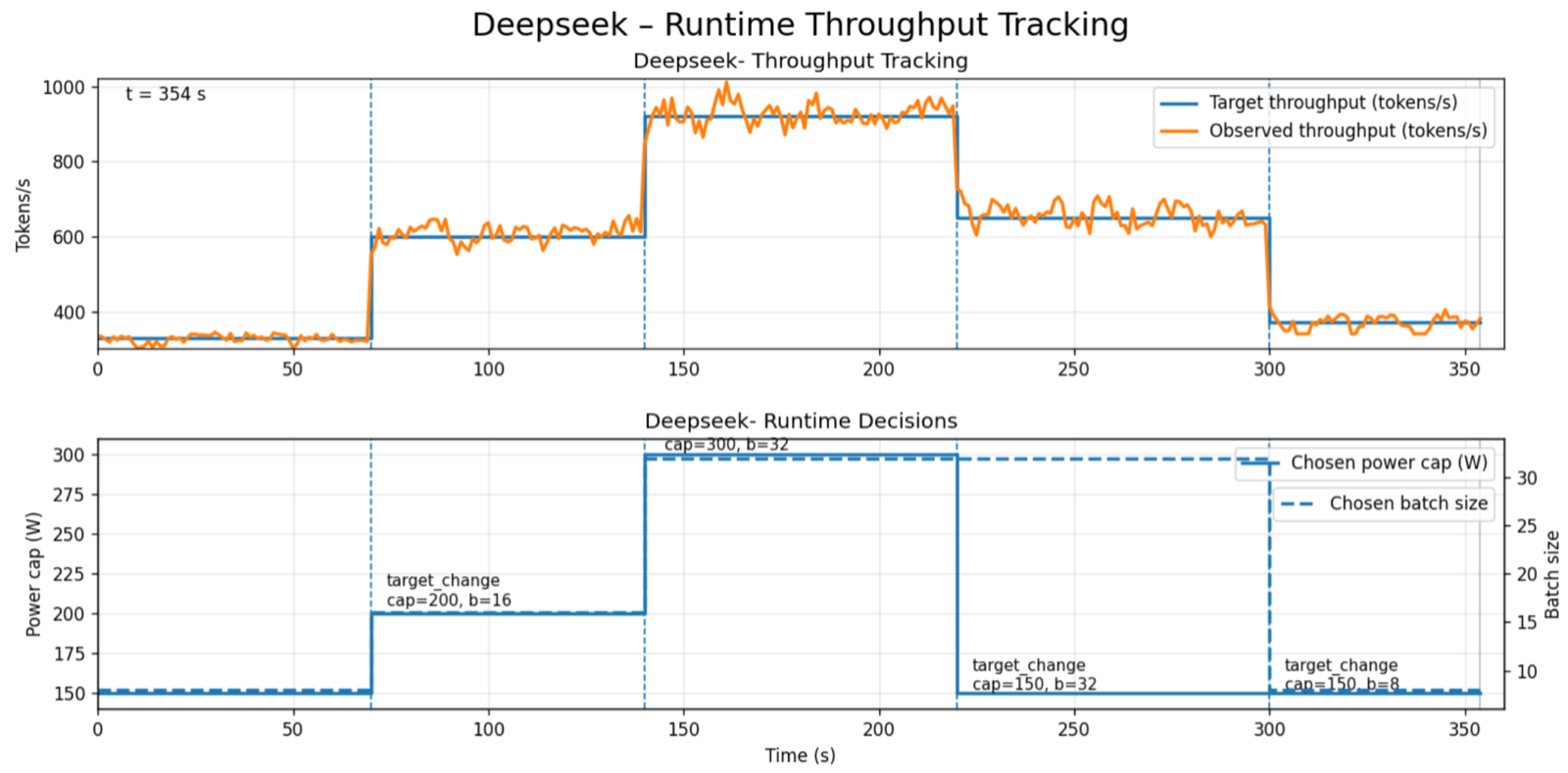
PALS addresses a critical but often overlooked aspect of LLM inference: energy consumption. As large language models become more prevalent in data centers, their significant GPU utilization and energy consumption pose both economic and environmental challenges. The system's innovative approach of treating GPU power caps as a first-class control knob represents a paradigm shift from static power management to dynamic, adaptive control that can significantly improve energy efficiency.
The integration of lightweight offline power-performance models with a feedback-driven controller allows PALS to make real-time decisions about configuration parameters that balance energy efficiency with performance requirements. This approach is particularly valuable in multi-GPU systems where power constraints can vary significantly. The demonstration that PALS improves energy efficiency by up to 26.3% while reducing QoS violations by 4x to 7x under power constraints shows practical benefits that could be transformative for data center operations.
The implementation within existing LLM serving frameworks like vLLM without requiring model retraining or API changes makes PALS highly accessible and practical for deployment. This compatibility with existing infrastructure means organizations can immediately benefit from improved energy efficiency without major architectural overhauls. The system's ability to track dynamic power budgets and adapt to changing conditions further enhances its utility in real-world scenarios where power availability and demand can fluctuate significantly.
Key insight: Power-aware runtime for LLM serving treats GPU power caps as a first-class control knob, jointly optimizing them with software parameters to maximize energy efficiency while satisfying throughput targets.
Teaching AI Through Benchmark Construction: QuestBench as a Course-Based Practice for Accountable Knowledge Work
arXiv: 2605.21413
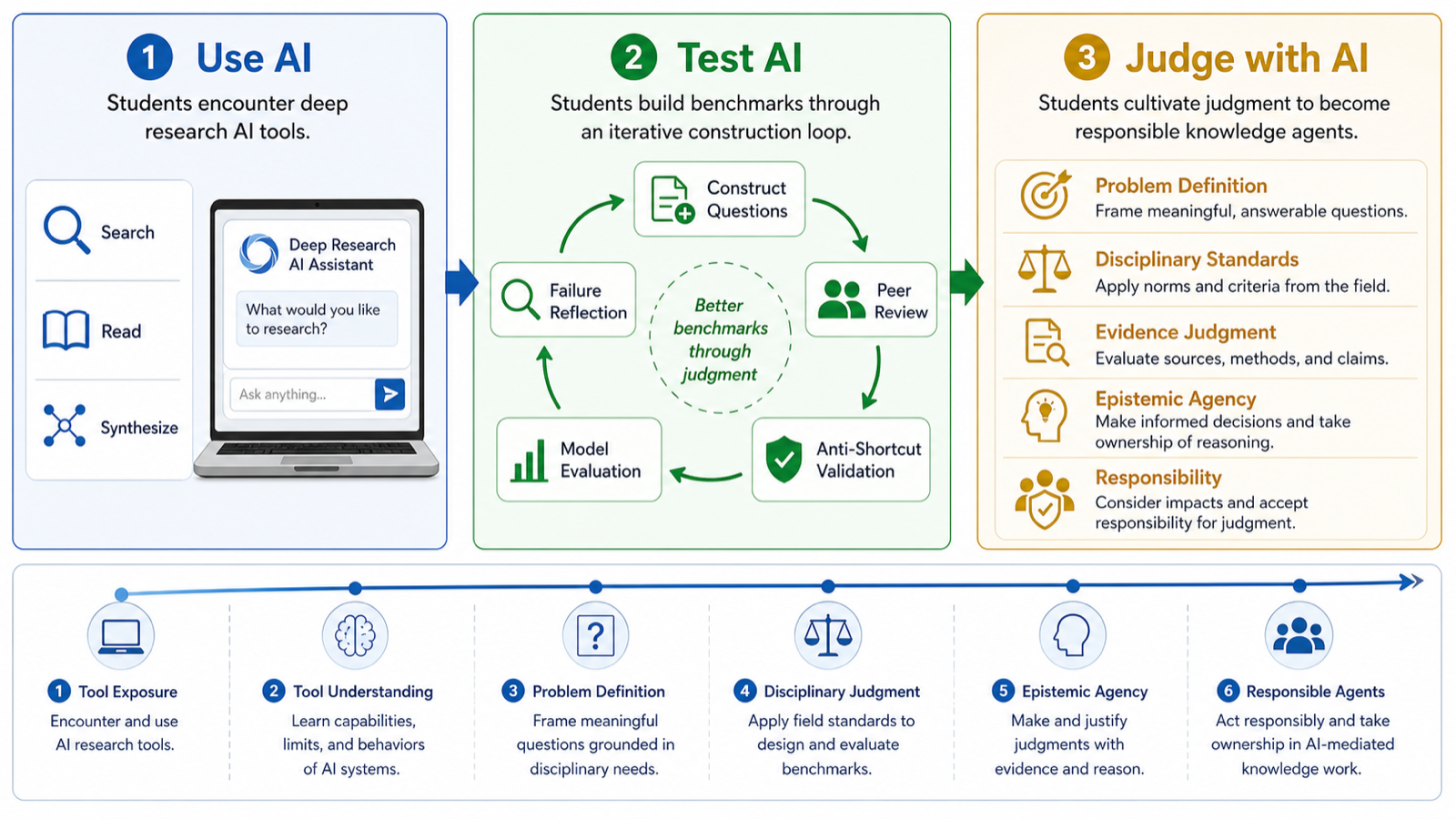
QuestBench represents a novel educational approach that turns AI benchmark construction into a learning activity, teaching students to think critically about AI systems rather than simply using them as productivity tools. This approach addresses the growing need for AI literacy by giving students direct exposure to the challenges and limitations of AI systems, particularly in deep research contexts where the quality of outputs can be difficult to assess.
The educational framework's emphasis on students creating verifiable expert-level questions and reviewing each other's designs for ambiguity and shortcuts provides a hands-on approach to understanding AI evaluation. The revelation that student-designed tasks reveal hidden failures in current deep research systems - with mean question-level pass rates of only 16.85% across thirteen evaluated systems - demonstrates the value of this approach in exposing weaknesses that might otherwise go unnoticed.
The impact of this educational approach extends beyond the classroom, as students develop a deeper understanding of what constitutes trustworthy AI outputs. The fact that students' reflections suggest they see professional knowledge not only as content AI may retrieve but as the basis for judging AI outputs indicates a fundamental shift in how they approach AI interaction. This approach could lead to more responsible AI usage and development in future professionals.
Key insight: Benchmark construction as a pedagogical tool teaches students to test AI and understand their role in judging machine-produced knowledge, revealing hidden failures in current deep research systems.
Towards Resilient and Autonomous Networks: A BlueSky Vision on AI-Native 6G
arXiv: 2605.21395
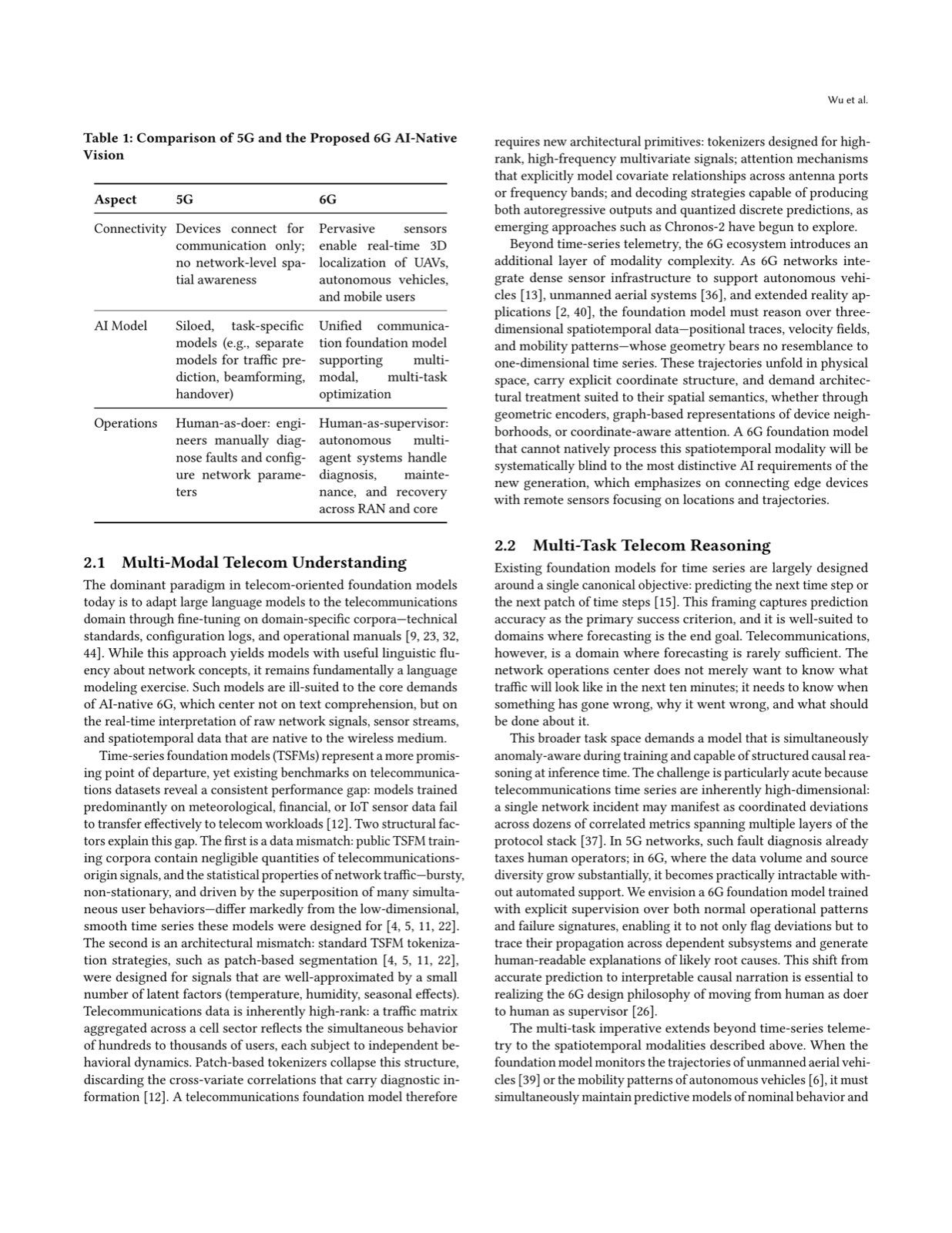
The BlueSky vision for AI-native 6G networks represents a fundamental shift from the current paradigm where AI is used to support network operations to a future where AI is the foundation of network architecture itself. This approach moves beyond scattered, ad-hoc models trained for single tasks to a unified foundation model that can be adapted for diverse edge deployments, potentially revolutionizing how networks are designed and managed.
The emphasis on collaborative multi-agent systems for autonomous network diagnosis, maintenance, and recovery addresses a critical need for resilient and autonomous networks in the face of increasingly complex applications like autonomous driving and immersive experiences. This approach frames network management as a unified optimization problem that can leverage multi-modal and multi-task capabilities, potentially leading to more efficient and adaptive network operations.
The proposed roadmap for 6G evolution into an intelligent, self-sustaining communication infrastructure suggests that AI will not just enhance network capabilities but fundamentally transform their operational principles. The integration of foundation models with edge deployments and the use of collaborative multi-agent systems could lead to networks that are not only faster but also more resilient, autonomous, and capable of self-optimization, potentially reducing the need for human intervention in routine network management tasks.
Key insight: AI-native 6G networks will be anchored by foundation models and orchestrated via collaborative multi-agent systems, framing network management as a unified, multi-modal, multi-task optimization problem.
Insights Generator: Systematic Corpus-Level Trace Diagnostics for LLM Agents
arXiv: 2605.21347
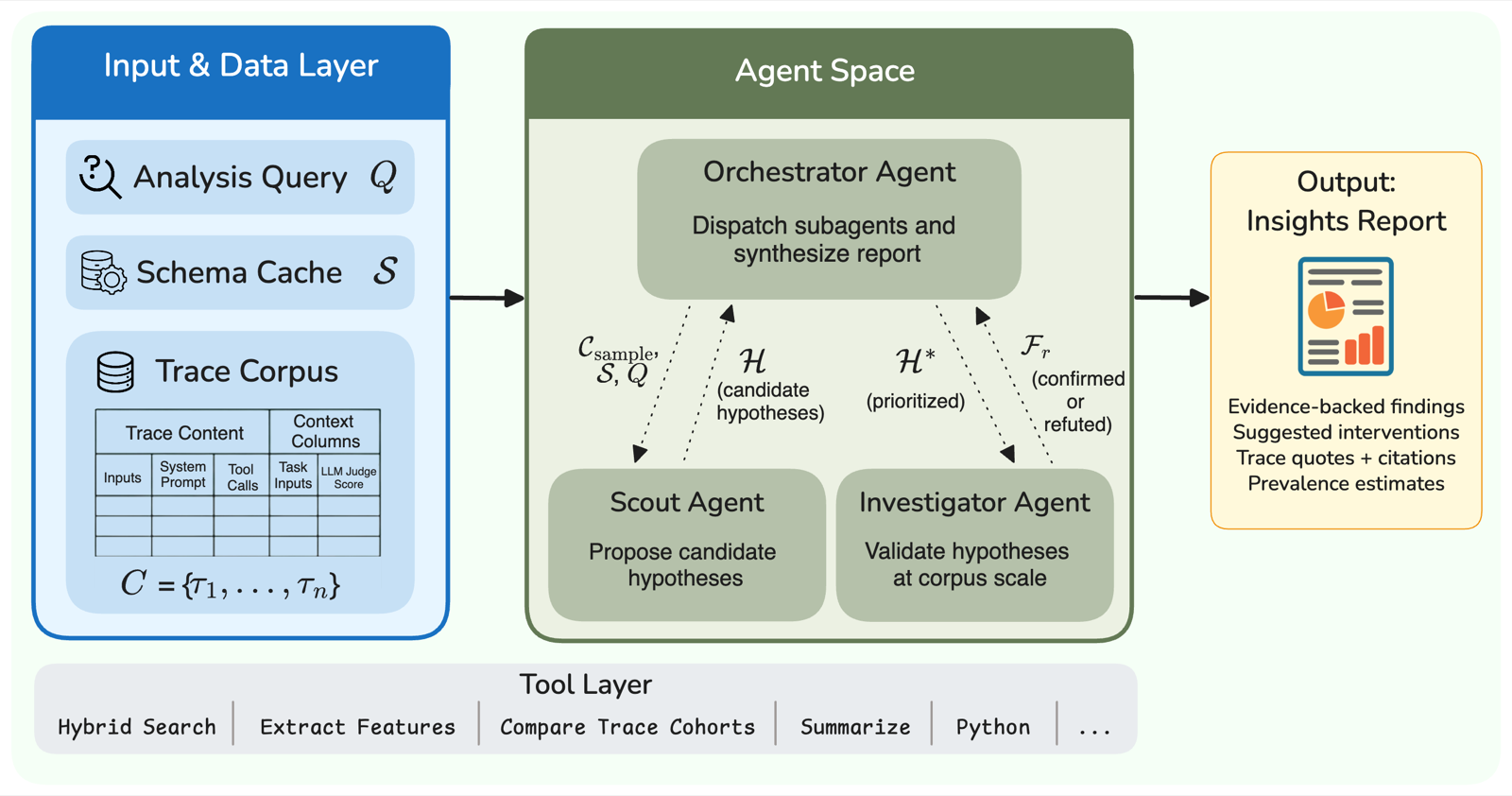
Insights Generator addresses a critical gap in diagnosing failures in LLM agents by moving beyond manual inspection to systematic corpus-level analysis. The system's ability to answer diagnostic questions by proposing and testing hypotheses across trace populations represents a significant advancement in understanding systematic behavioral patterns that might be missed in individual trace analysis.
The scout-investigator architecture that produces findings comparable in detection coverage to competing approaches while achieving superior depth and evidence quality demonstrates the effectiveness of this multi-agent approach. The fact that human experts using IG reports improve scaffold performance by 30.4pp over the unmodified baseline scaffold shows practical benefits that extend beyond theoretical improvements to real-world performance gains.
The system's ability to scale to production corpora where individual traces span tens of thousands of tokens addresses a major limitation of existing diagnostic approaches. By formalizing corpus-level trace diagnostics, Insights Generator enables practitioners to identify patterns that emerge across populations rather than relying on ad-hoc hypothesis formation from small subsets of execution traces, potentially leading to more robust and reliable LLM agents.
Key insight: Insights Generator uses a multi-agent system to produce grounded natural-language insights that characterize systematic behavioral patterns across trace groups, linked to supporting evidence.
AutoRPA: Efficient GUI Automation through LLM-Driven Code Synthesis from Interactions
arXiv: 2605.21082

AutoRPA tackles the efficiency challenge of LLM-based GUI automation by introducing a framework that automatically converts ReAct-style agent decision logic into robust RPA functions. This approach addresses the inefficiency of repeated LLM reasoning calls for repetitive tasks, which is a significant bottleneck in practical applications where efficiency and reusability are crucial.
The translator-builder pipeline that converts hard-coded ReAct actions into soft-coded procedures and synthesizes robust RPA functions via retrieval-augmented generation over multiple trajectories represents a sophisticated approach to automating the transition from agent-based to RPA-based execution. The hybrid repair strategy combining RPA execution with ReAct-based fallback for iterative refinement ensures robustness while maintaining the benefits of automated code generation.
The substantial reduction in token usage (82% to 96%) demonstrates the practical impact of this approach, particularly in environments where token costs are significant. The improved runtime efficiency and reusability suggest that AutoRPA could significantly reduce the computational overhead of GUI automation tasks, making LLM-based automation more practical for real-world applications where efficiency is paramount.
Key insight: AutoRPA automatically distills ReAct-style agent decision logic into robust RPA functions, reducing token usage by 82% to 96% while improving runtime efficiency and reusability.
Playing Devil's Advocate: Off-the-Shelf Persona Vectors Rival Targeted Steering for Sycophancy
arXiv: 2605.21006
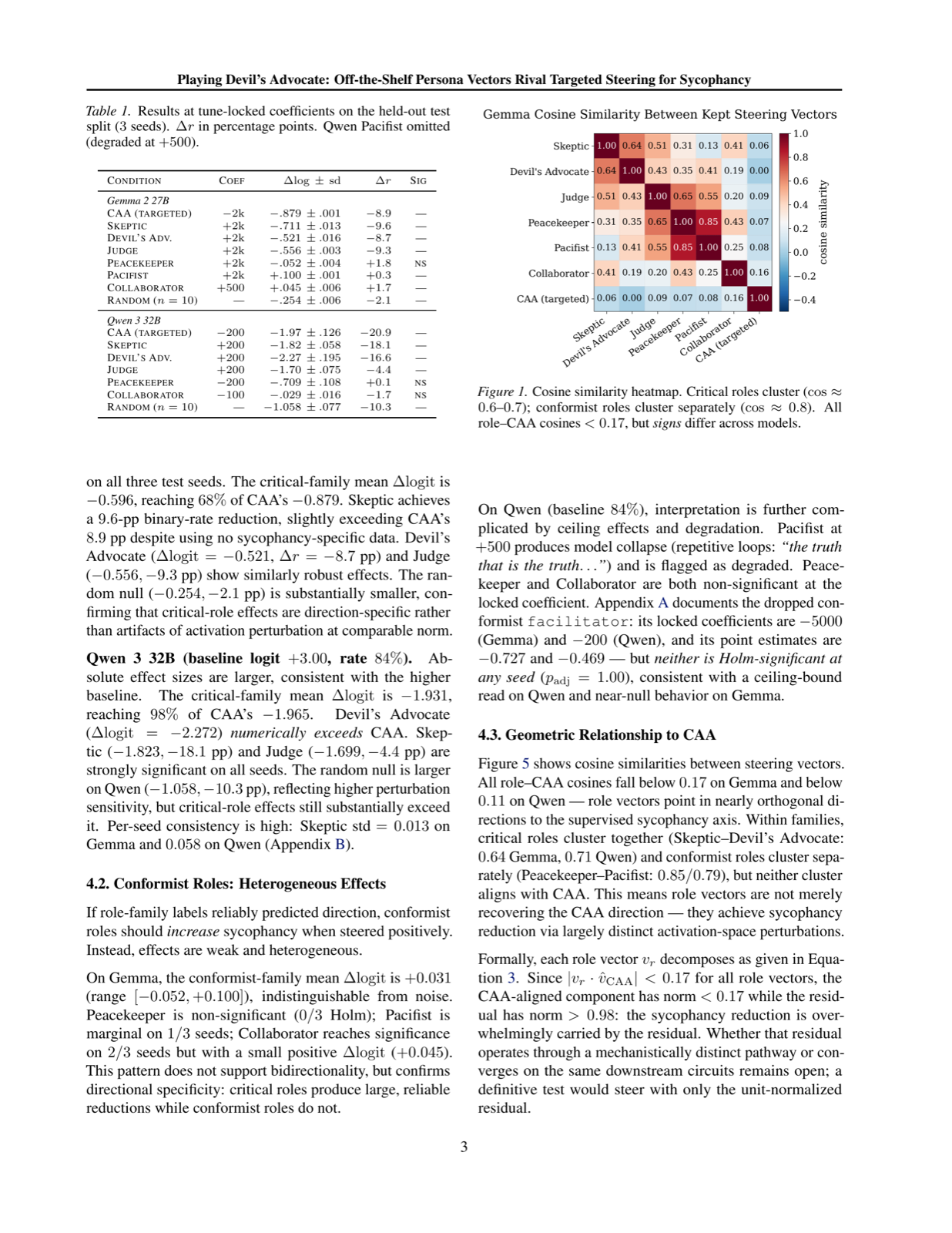
The study reveals that sycophancy - a model's agreement with users even when incorrect - can be effectively mitigated using off-the-shelf persona vectors rather than specialized targeted steering methods. This finding challenges the assumption that sycophancy requires specific, task-trained steering directions and suggests that persona-level properties may be more fundamental to this behavior.
The demonstration that steering toward personas characterized by doubt or scrutiny reduces sycophancy to approximately 68% and 98% of CAA's effect shows that existing persona vectors can be repurposed for sycophancy mitigation without requiring new training or specialized techniques. The key advantage is that these approaches maintain accuracy when users are correct, unlike CAA which may compromise accuracy in legitimate cases.
The geometric independence of persona vectors from sycophancy directions in activation space suggests that sycophancy is better understood as a persona-level property rather than a single steerable direction. This insight has implications for how we think about model alignment and safety, potentially leading to more robust approaches that consider persona characteristics as part of the alignment framework rather than relying on specific steering techniques.
Key insight: Off-the-shelf persona vectors can rival targeted steering for sycophancy mitigation, with doubt or scrutiny personas reducing sycophancy to approximately 68% and 98% of CAA's effect while maintaining accuracy.
Governance by Construction for Generalist Agents
arXiv: 2605.20874
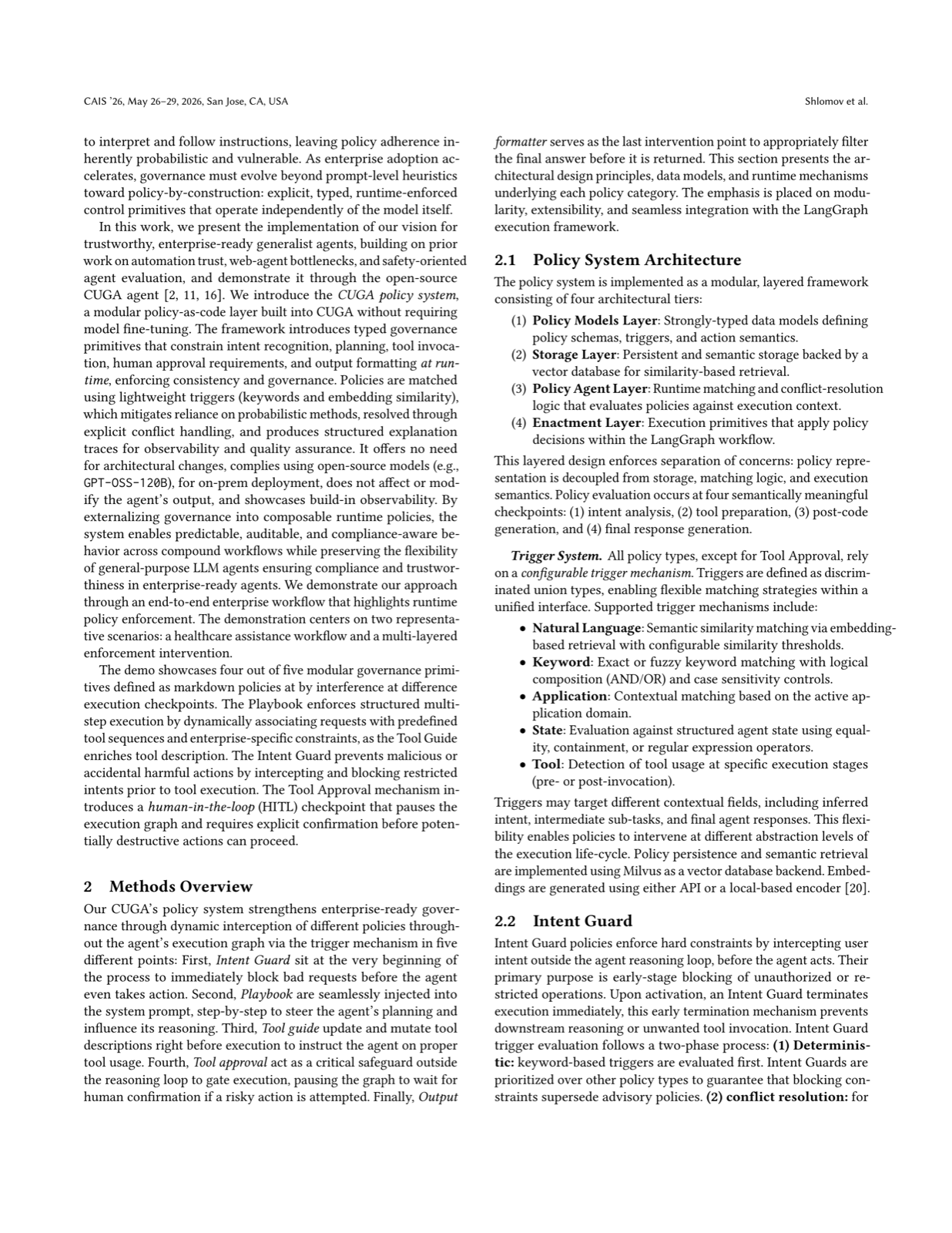
CUGA's policy system represents a significant advancement in enterprise agent governance by introducing a modular policy-as-code layer that can be composed with generalist LLM agents without requiring model fine-tuning. This approach addresses the challenge of deploying autonomous agents across multiple tools and interfaces while maintaining necessary governance controls and compliance awareness.
The five structural checkpoints - Intent Guard, Playbook, Tool Guide, Tool Approvals, and Output Formatter - create a comprehensive governance architecture that enforces policy interventions at critical stages of execution. This continuous embedding of governance rather than treating it as an afterthought ensures that agents operate predictably and audibly across compound workflows, which is essential for enterprise deployments where compliance and accountability are paramount.
The demonstration of dynamic playbook injection, intent guards that block malicious or accidental harmful requests, and human-in-the-loop tool approval checkpoints shows how typed governance primitives can enable faster, safer deployment of enterprise agentic systems. This approach not only improves policy adherence and execution consistency but also provides a framework for managing the complexity of multi-agent systems in enterprise environments.
Key insight: Governance by construction uses a modular policy-as-code layer that composes with generalist LLM agents to deliver predictable, auditable, and compliance-aware behavior without model fine-tuning.
Mem-$\pi$: Adaptive Memory through Learning When and What to Generate
arXiv: 2605.21463

Mem-π introduces a novel approach to adaptive memory in LLM agents by using a dedicated guidance model that generates context-specific guidance on demand rather than relying on static retrieval from external memory stores. This approach addresses the limitations of similarity-based retrieval methods that often return static entries misaligned with current context.
The decision-content decoupled reinforcement learning objective enables Mem-π to abstain when generation would not help and otherwise produce concise, useful guidance. This capability is particularly valuable for complex tasks where the timing and content of guidance can significantly impact performance, as demonstrated by the over 30% relative improvement on web navigation tasks compared to retrieval-based and prior RL-optimized memory baselines.
The framework's ability to jointly decide when to produce guidance and what guidance to produce represents a significant advancement in memory management for LLM agents. By conditioning guidance generation on the current agent context, Mem-π ensures that the generated guidance is relevant and useful, potentially leading to more efficient and effective agent performance across diverse agentic benchmarks.
Key insight: Mem-π uses a dedicated language or vision-language model to generate context-specific guidance for complex tasks, enabling agents to decide when and what guidance to produce rather than relying on static retrieval.
Quantifying the cross-linguistic effects of syncretism on agreement attraction
arXiv: 2605.21403
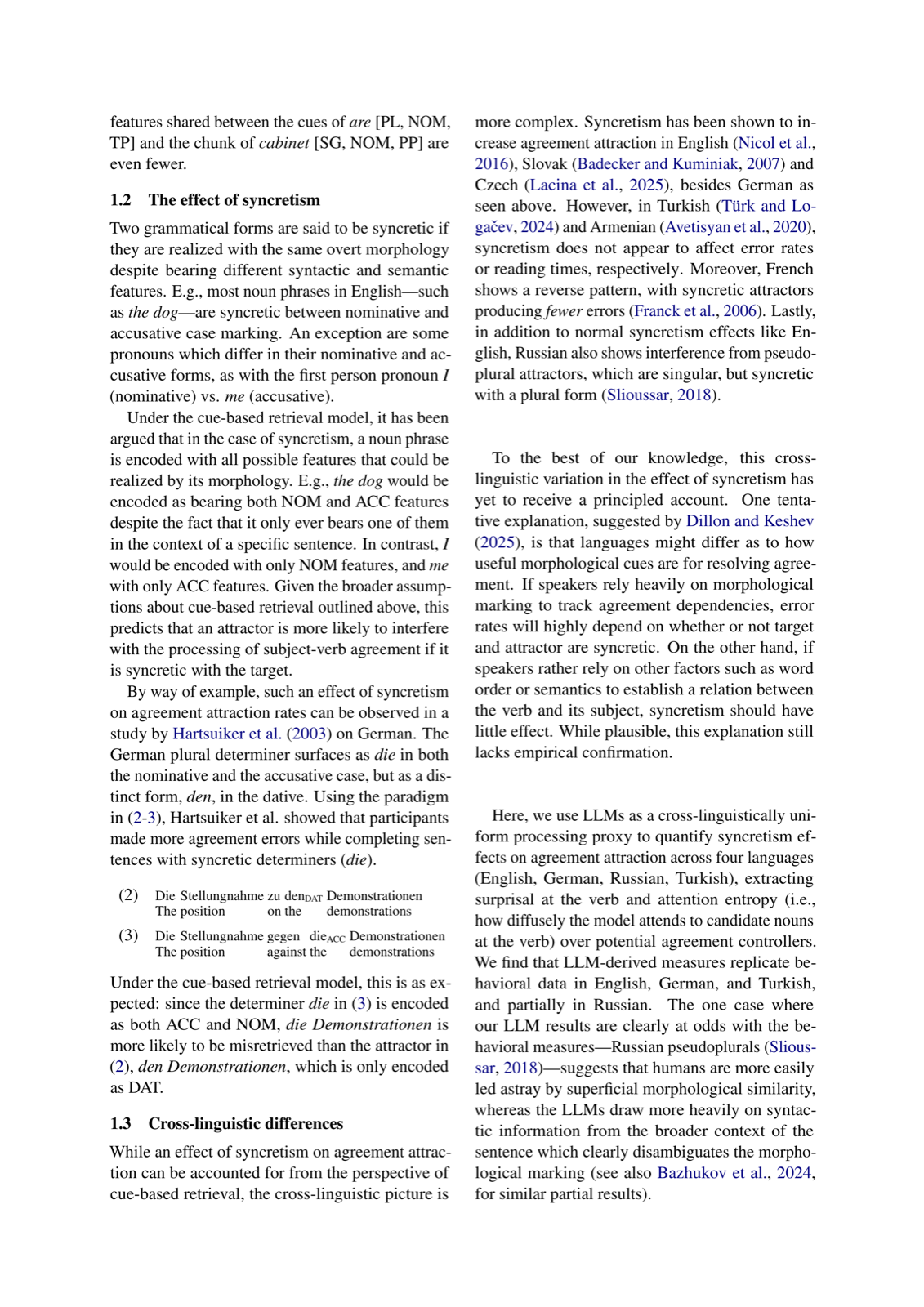
This study provides valuable insights into how morphological syncretism affects agreement attraction across different languages, using LLM-derived measures as processing proxies. The findings reveal that while syncretism modulates attraction in some languages (English, German) but not others (Turkish, Armenian), this variation lacks a principled account in existing theories.
The use of surprisal and attention entropy from large language models to investigate cross-linguistic patterns demonstrates the potential of LLMs as tools for understanding human language processing. The replication of behavioral findings in English and German, alignment with Turkish null results, and partial capture of Russian patterns show that LLMs can capture some aspects of human linguistic processing, though not all.
The study's implications extend beyond linguistic theory to AI development, as understanding how different languages process agreement attraction can inform the design of multilingual LLMs and cross-linguistic NLP systems. The identification of language-specific patterns suggests that LLMs may need to be adapted or trained differently for different linguistic contexts to accurately model human-like processing.
Key insight: Syncretism affects agreement attraction differently across languages, with LLM-derived measures replicating behavioral findings in English and German but not in Turkish or Armenian.
"I didn't Make the Micro Decisions": Measuring, Inducing, and Exposing Goal-Level AI Contributions in Collaboration
arXiv: 2605.21363
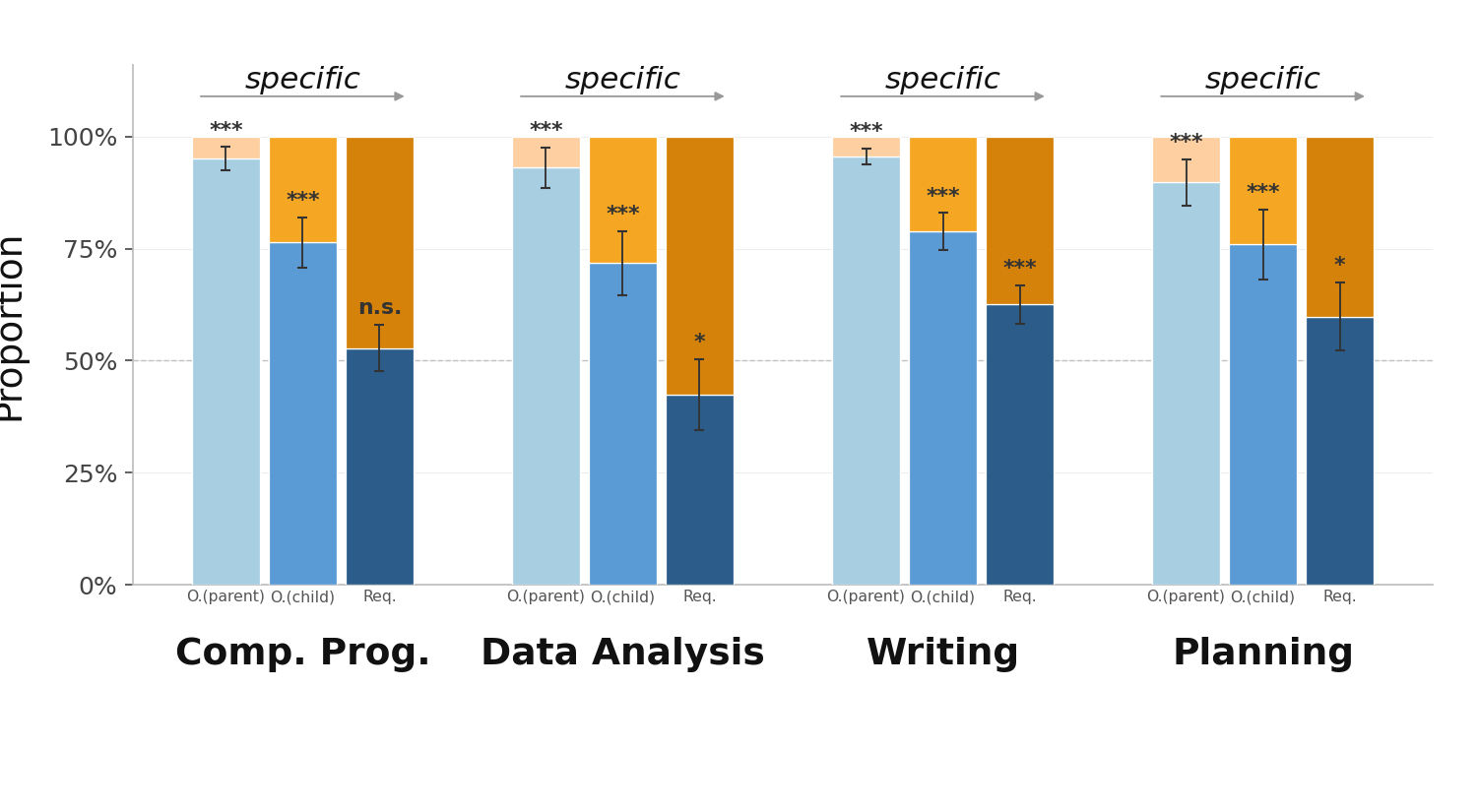
CoTrace introduces a novel goal-level attribution framework that addresses a critical gap in understanding human-AI collaboration by decomposing explicit goals into verifiable requirements and tracing both direct and indirect influences across dialogue turns. This approach moves beyond focusing on final artifacts to understanding the process through which goals themselves are jointly shaped.
The finding that while models account for only 11-26% of goal-shaping contribution, they contribute substantially more on introducing lower-level concrete requirements, and make various kinds of indirect contributions, provides important insights into how AI systems actually participate in collaborative work. This suggests that AI's role in collaboration is more nuanced than simple task completion, involving significant input into the refinement and extension of goals.
The controlled simulations showing that interaction design choices significantly affect model goal-shaping behavior, and the user study revealing systematic miscalibration in how users understand their own AI-assisted work, highlight the importance of designing AI systems that support transparent and accurate attribution of contributions. These findings suggest that AI systems should be designed to make their contributions more visible and understandable to users to support better calibration of reliance and more effective collaboration.
Key insight: CoTrace framework decomposes explicit goals into verifiable requirements and traces both direct contributions and indirect influences across dialogue turns, revealing that models contribute substantially more on introducing lower-level concrete requirements.
Text Analytics Evaluation Framework: A Case Study on LLMs and Social Media
arXiv: 2605.21338
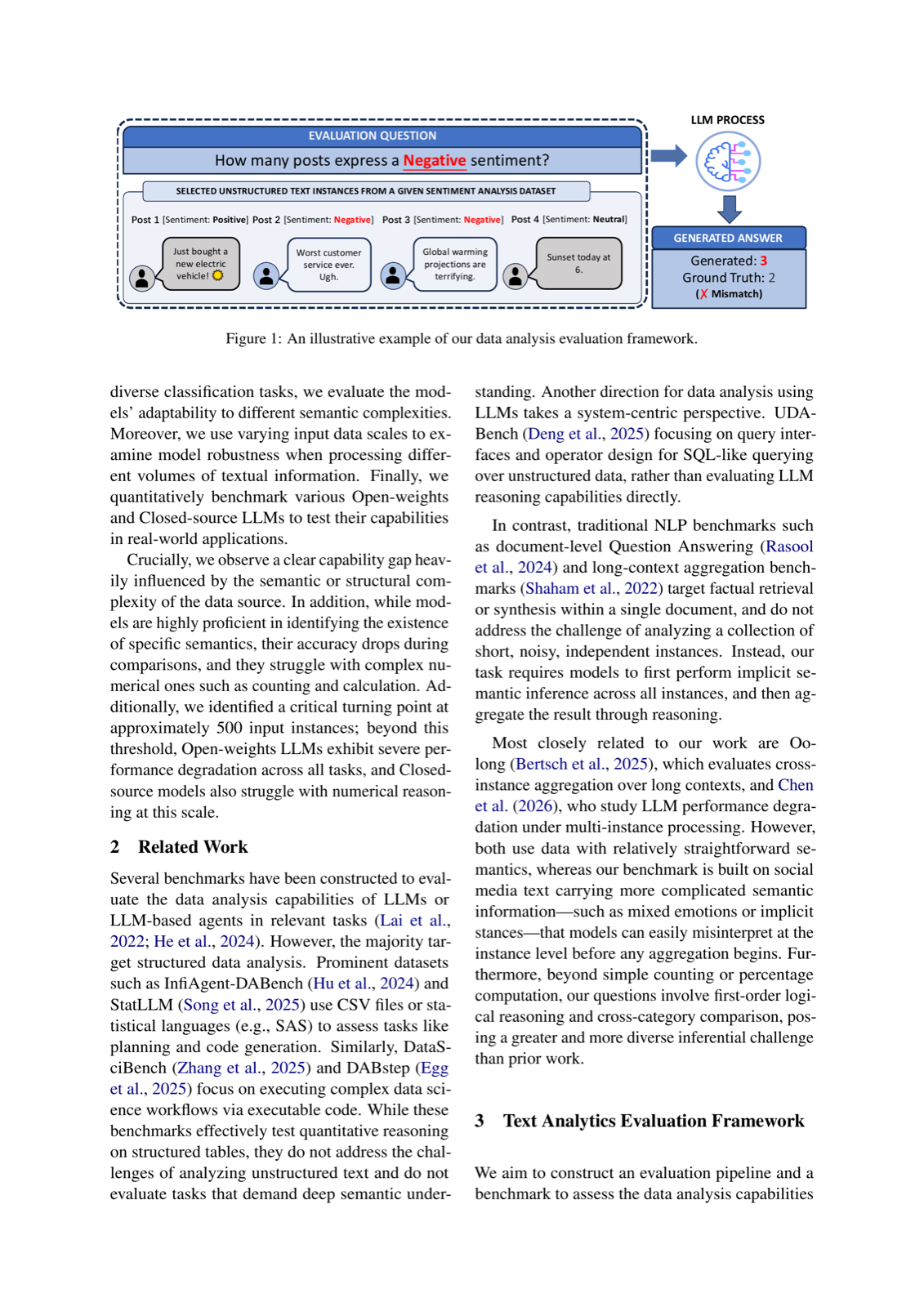
The Text Analytics Evaluation Framework reveals critical architectural bottlenecks in current LLMs for performing rigorous quantitative analysis over large text collections. The finding that performance declines noticeably in multi-label or target-dependent scenarios and drops progressively from basic semantic existence identification to more demanding operations like comparison, counting, and calculation demonstrates the limitations of current architectures when handling complex reasoning tasks.
The substantial degradation in performance for numerical tasks beyond 500 instances, particularly in Open-weights models, suggests that current LLM architectures struggle with long-range dependencies and complex reasoning over extended text sequences. This finding is particularly significant for practical applications where LLMs are required to process long sequences of unstructured documents, such as news feeds or social media posts.
The evaluation framework's 470 manually curated questions designed to assess LLMs' semantic understanding and reasoning abilities provides a robust benchmark for measuring performance across different complexity levels. The results highlight the need for architectural improvements that can handle longer sequences and more complex reasoning tasks, potentially leading to new approaches in model design and training that address these fundamental limitations.
Key insight: LLMs show declining performance on complex tasks as input scale increases, with substantial degradation in numerical tasks beyond 500 instances, highlighting critical architectural bottlenecks.
SymbolicLight V1: Spike-Gated Dual-Path Language Modeling with High Activation Sparsity and Sub-Billion-Scale Pre-Training Evidence
arXiv: 2605.21333
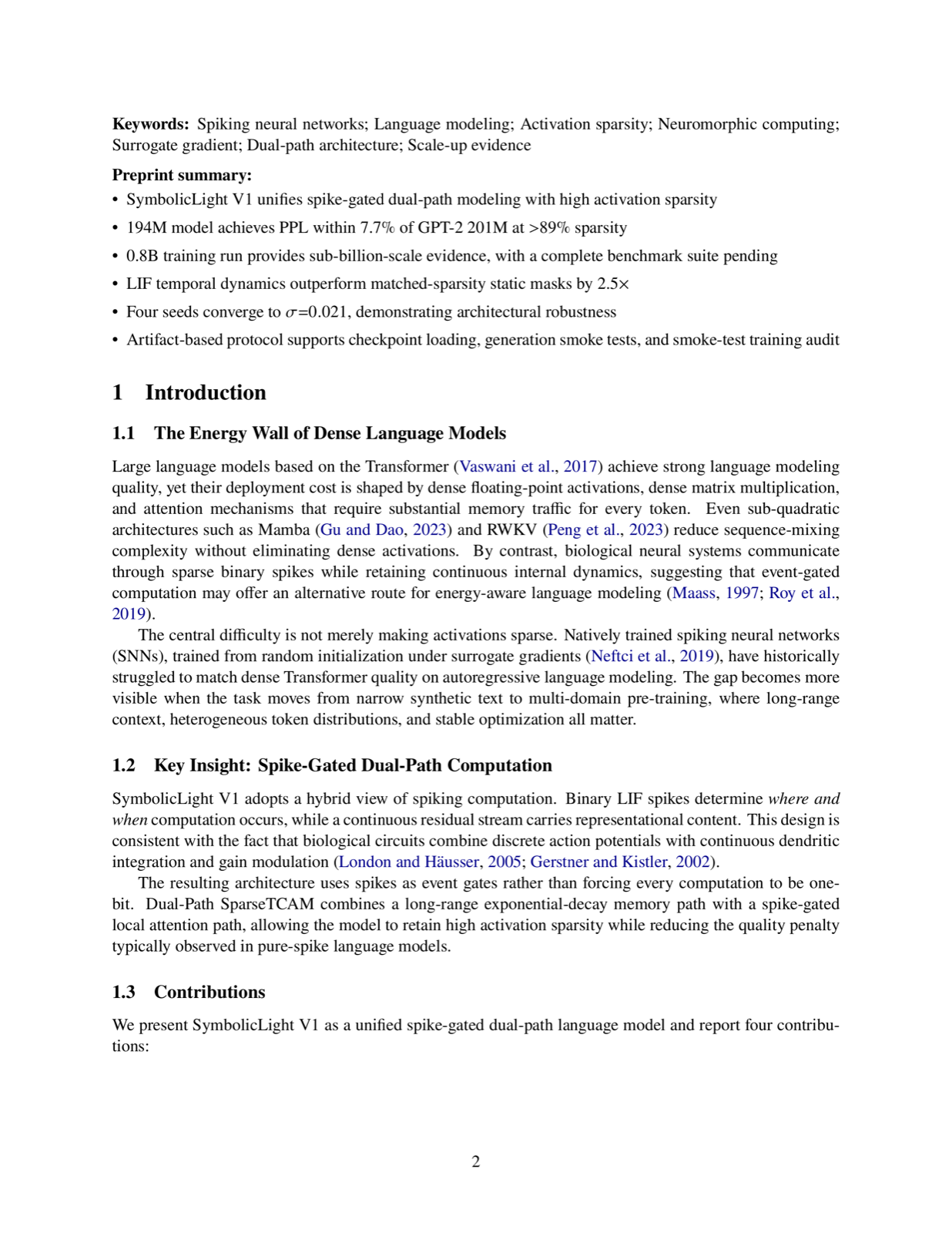
SymbolicLight V1 represents a significant advancement in spiking language models by combining binary Leaky Integrate-and-Fire spike dynamics with continuous residual stream, achieving high activation sparsity (89% per-element) while maintaining language quality. This approach addresses the challenge of combining Transformer-like language quality, stable multi-domain pre-training, and high activation sparsity that has historically been difficult for natively trained spiking models.
The Dual-Path SparseTCAM module that replaces dense self-attention with an exponential-decay aggregation path for long-range memory and a spike-gated local attention path for short-range precision demonstrates a sophisticated approach to balancing memory and precision requirements. The 194M-parameter model trained on a 3B-token Chinese-English corpus reaching held-out validation PPL 8.88-8.93 shows that the approach can maintain competitive performance while achieving high sparsity.
The component ablations showing that the spike-gated local attention path is the largest contributor to performance and that replacing LIF dynamics with a deterministic top-k mask causes larger degradation indicate that temporal integration rather than sparsity alone drives performance. This finding suggests that the temporal dynamics of spiking models are crucial for their effectiveness, potentially opening new research directions in understanding how temporal integration contributes to language processing.
Key insight: SymbolicLight V1 combines binary Leaky Integrate-and-Fire spike dynamics with continuous residual stream, achieving 89% per-element activation sparsity while maintaining language quality.
TextReg: Mitigating Prompt Distributional Overfitting via Regularized Text-Space Optimization
arXiv: 2605.21318
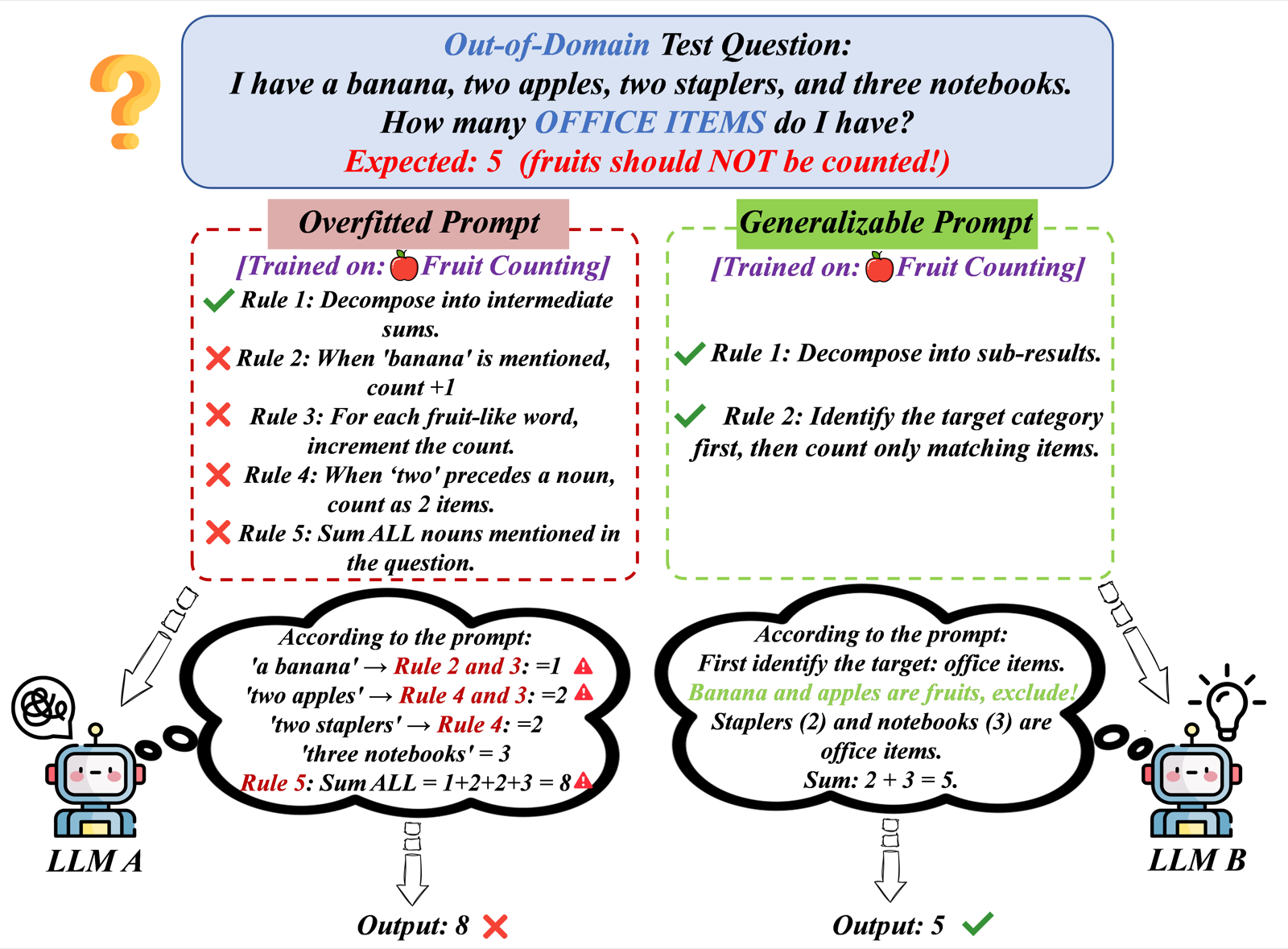
TextReg tackles the problem of prompt distributional overfitting by introducing a regularization framework that realizes a soft-penalty objective through regularized textual gradients, combining Dual-Evidence Gradient Purification, Semantic Edit Regularization, and Regularization-Guided Prompt Update. This approach addresses the failure mode where iterative prompt optimization leads to longer, narrow sample-specific rules that generalize poorly beyond the training distribution.
The formalization of prompt inefficiency through representational inefficiency, a dual-factor measure that decomposes prompt inefficiency into capacity cost and scope narrowness, provides a principled understanding of why distributional prompt overfitting occurs. The finding that the coupled growth of these factors during optimization leads to overfitting offers insights into how to control this process through regularization.
The substantial improvement in out-of-distribution generalization, with accuracy gains of up to +11.8% over TextGrad and +16.5% over REVOLVE, demonstrates the practical effectiveness of TextReg's approach. This improvement suggests that regularization techniques can significantly enhance the robustness of prompt optimization methods, potentially leading to more reliable and generalizable prompt engineering approaches.
Key insight: TextReg addresses prompt distributional overfitting through regularized text-space optimization, improving out-of-distribution generalization by up to +16.5% over REVOLVE.
Tracing the ongoing emergence of human-like reasoning in Large Language Models
arXiv: 2605.21299
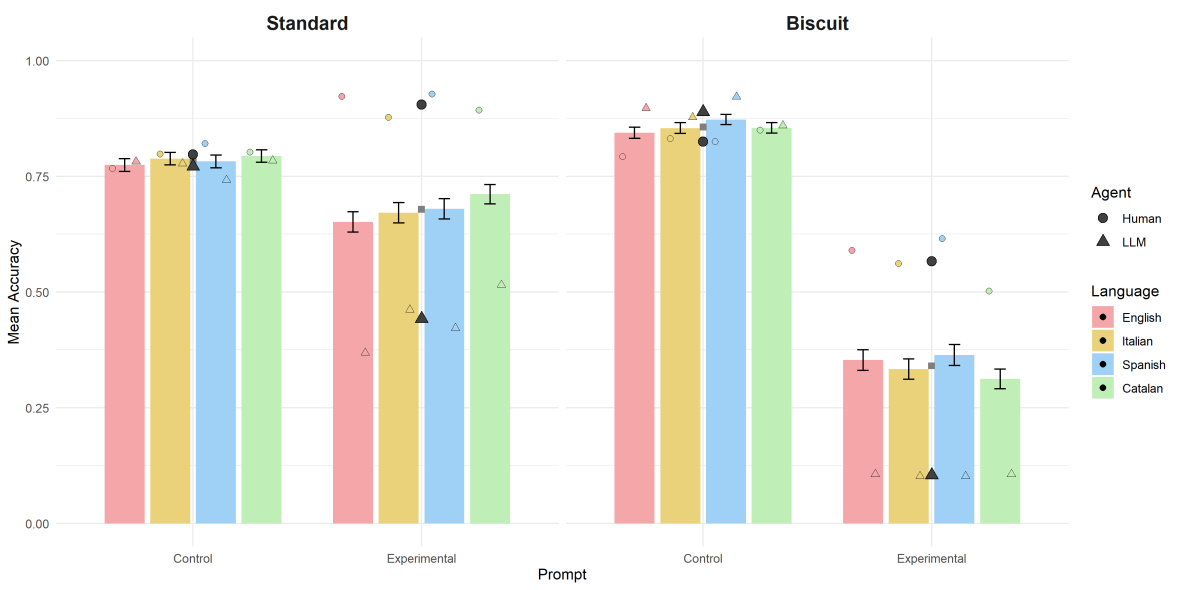
The study reveals that while LLMs demonstrate human-like performance on many tasks, they fail to capture the pragmatic enrichments characteristic of human reasoning, particularly in conditional inferences. This finding suggests that current LLMs are accurate semantic operators but lack the sophisticated pragmatic reasoning abilities that distinguish human cognition.
The population-matching experiment comparing 25 LLMs with 25 humans across four languages shows that some LLMs perfectly follow the truth-table of conditionals but ignore pragmatic inferences, while others deviate from the truth-table, adhering to a single interpretation across the board. This variability indicates that pragmatic reasoning is still an emerging ability in artificial systems, suggesting that current models may not fully capture the complexity of human reasoning.
The finding that LLM accuracy is neither predicted nor boosted by open vs. closed status, training orientation, or architecture type is particularly significant, as it suggests that pragmatic reasoning is not simply a matter of model architecture or training approach. This implies that developing models with human-like reasoning capabilities will require new approaches that go beyond current architectural and training paradigms, potentially involving more sophisticated cognitive modeling or new training methodologies.
Key insight: LLMs show human-like performance on many tasks but fail to capture pragmatic enrichments characteristic of human reasoning, with accuracy not predicted by open vs. closed status, training orientation, or architecture type.
Variance Reduction for Expectations with Diffusion Teachers
arXiv: 2605.21489
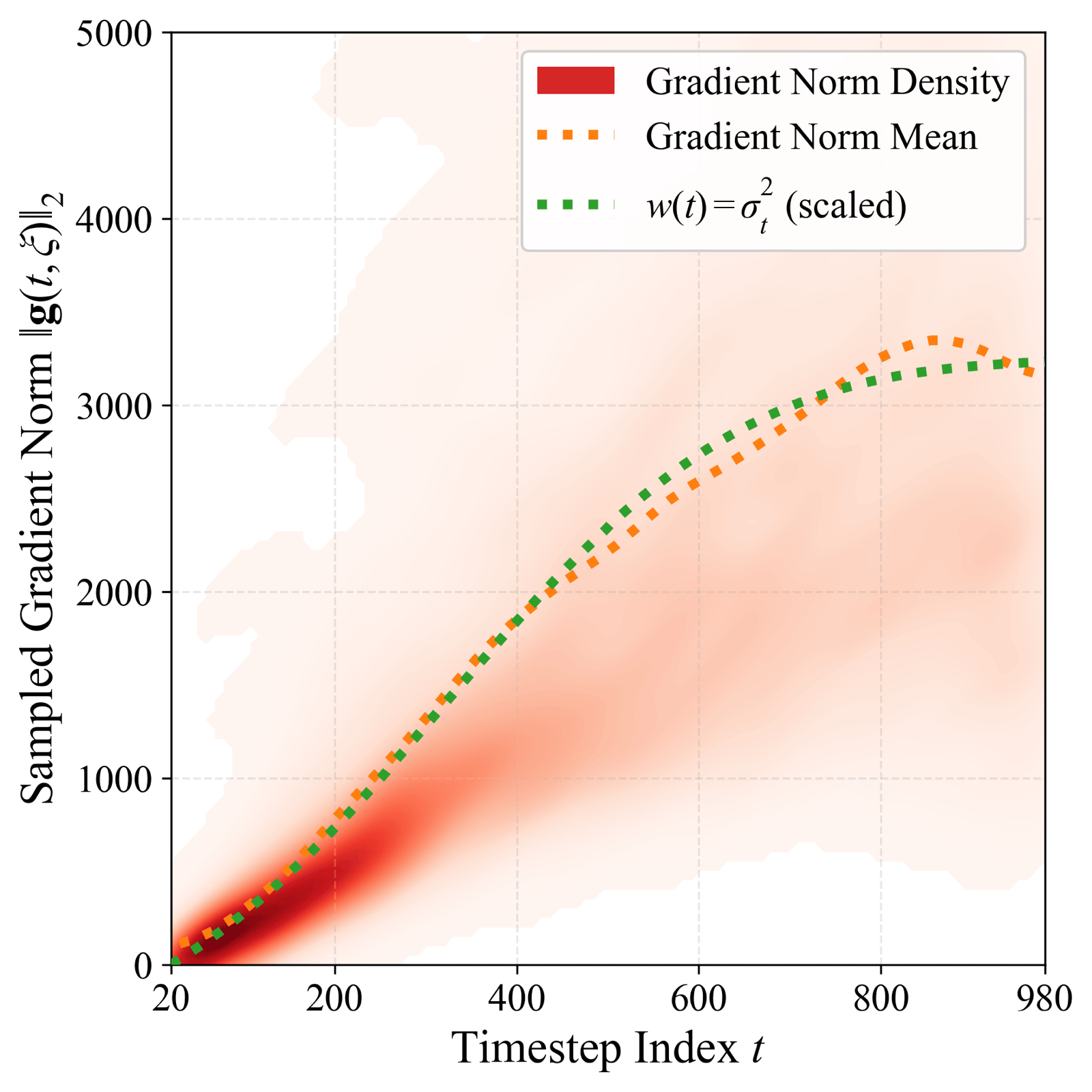
CARV addresses the computational bottleneck in diffusion model applications by introducing a compute-aware variance-accounting framework that reduces gradient variance through hierarchical Monte Carlo estimation. This approach amortizes expensive upstream computation over cheap diffusion-noise resamples, sharpened by timestep importance sampling and stratified-inverse-CDF construction, effectively reducing the computational cost of gradient estimation.
The framework's demonstration of 2-3x effective compute multipliers in text-to-3D distillation and attribution experiments shows significant computational benefits without changing the objective function. The ~25% additional gain from importance sampling and stratification techniques indicates that careful attention to sampling strategies can substantially improve computational efficiency in diffusion-based applications.
While the techniques cut gradient variance by an order of magnitude in single-step distillation, they do not improve downstream FID, suggesting that MC variance is no longer the bottleneck in that regime. This finding highlights the importance of understanding when different optimization techniques are most effective and suggests that future work should focus on identifying the appropriate bottlenecks for different applications and developing targeted solutions.
Key insight: CARV framework reduces gradient variance in diffusion teachers through hierarchical MC estimator with amortized upstream computation, achieving 2-3x effective compute multipliers.
Equilibrium Reasoners: Learning Attractors Enables Scalable Reasoning
arXiv: 2605.21488
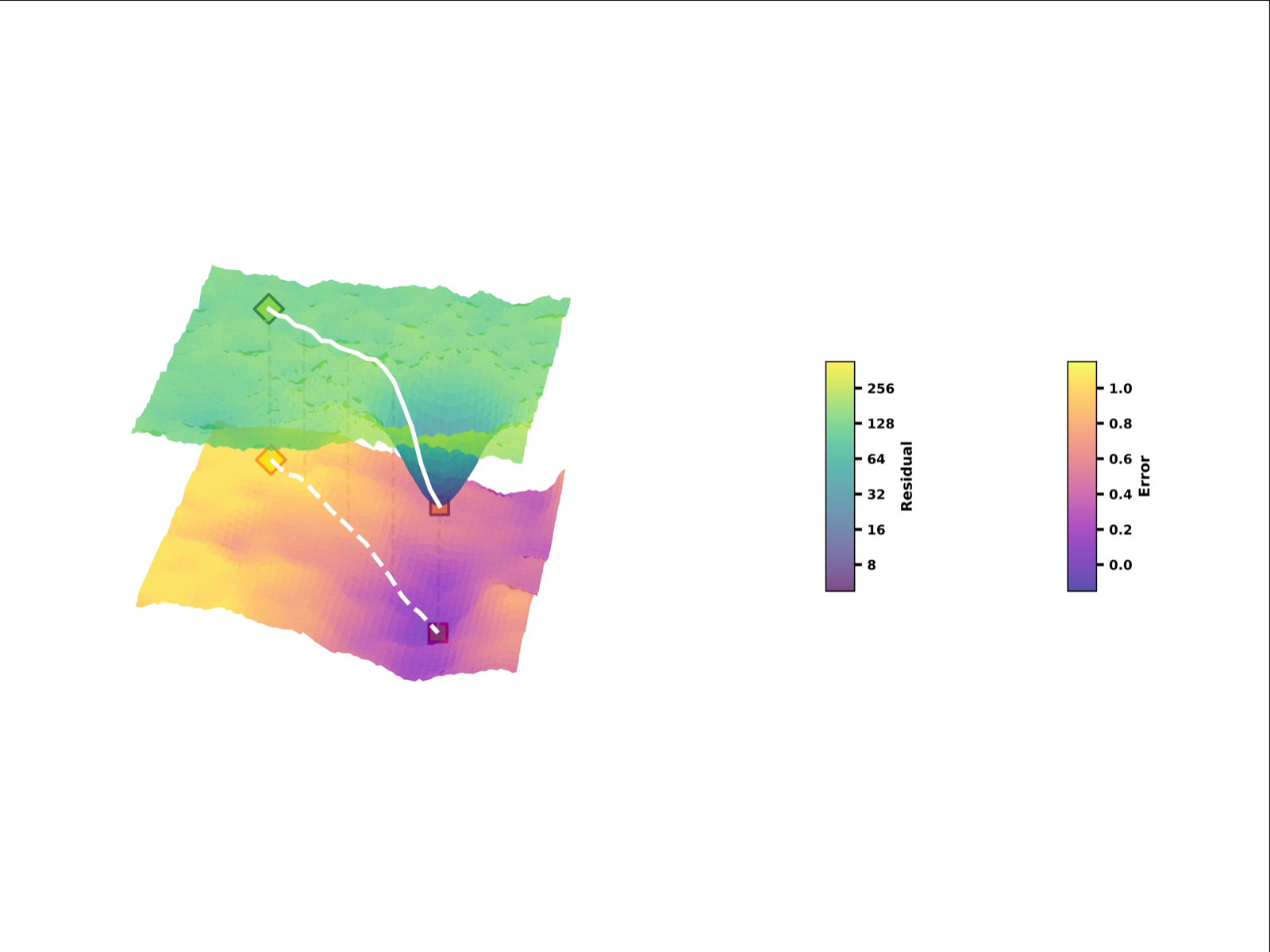
Equilibrium Reasoners introduce a novel perspective on scalable reasoning by formalizing it through the concept of learning task-conditioned attractors, where stable fixed points correspond to valid solutions. This approach enables test-time scaling without external verifiers or task-specific priors, representing a significant advancement in how iterative models can generalize beyond memorized patterns.
The empirical demonstration that gains from test-time scaling are tightly coupled with stronger convergence toward solution-aligned attractors shows that the attractor perspective provides a mechanistic understanding of how iterative latent models achieve scalable reasoning. The ability to adaptively allocate test-time compute based on task difficulty, with simple cases converging within 1-5 iteration steps and harder cases benefiting from massive test-time scaling, suggests a flexible approach to reasoning that can be tailored to problem complexity.
The remarkable performance boost from 2.6% for feedforward models to over 99% on Sudoku-Extreme by unrolling up to 40,000 layers demonstrates the power of learned attractor landscapes for scalable reasoning. This approach not only achieves state-of-the-art results but also provides insights into how neural networks can be designed to learn and exploit attractor dynamics for complex reasoning tasks, potentially leading to more efficient and effective reasoning systems.
Key insight: Equilibrium Reasoners learn task-conditioned attractors whose stable fixed points correspond to valid solutions, enabling scalable reasoning through test-time scaling without external verifiers.
Quantifying Hyperparameter Transfer and the Importance of Embedding Layer Learning Rate
arXiv: 2605.21486

The study reveals that the overwhelming benefit of Maximal Update (μP) parameterization relative to standard parameterization (SP) when training with AdamW arises simply from maximizing the learning rate of the embedding layer. This finding provides a clear explanation for why μP appears to offer high-quality learning rate transfer, addressing gaps in existing theory that was inadequate for explaining this phenomenon.
The demonstration that increasing the embedding layer learning rate by a factor of width to match μP dramatically smooths out training while improving hyperparameter transfer shows that the key to μP's effectiveness lies in addressing a specific bottleneck in standard parameterization. This insight suggests that the choice of learning rate for different components of a model can have a significant impact on training stability and transferability.
The finding that weight decay improves scaling law fits while, in the fixed token-per-parameter setting, it hurts the robustness of extrapolation provides important guidance for hyperparameter selection in LLM training. This nuanced understanding of how different hyperparameters interact suggests that careful consideration of their combined effects is crucial for achieving optimal training outcomes and effective scaling across different model sizes.
Key insight: Maximal Update parameterization (μP) offers high-quality learning rate transfer due to maximizing embedding layer learning rate, which smooths training and improves hyperparameter transfer.
EvoStruct: Bridging Evolutionary and Structural Priors for Antibody CDR Design via Protein Language Model Adaptation
arXiv: 2605.21485
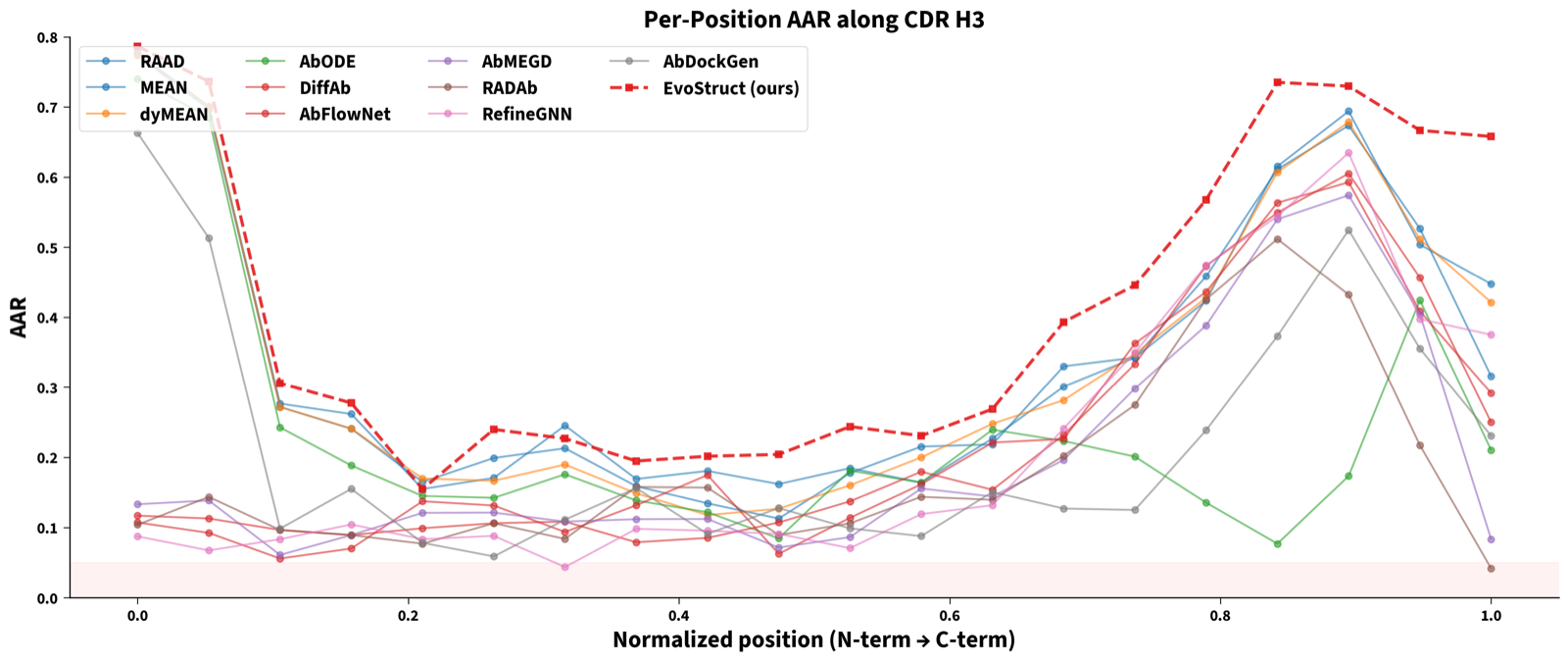
EvoStruct addresses the vocabulary collapse problem in antibody CDR design by bridging frozen protein language models with 3D structural context through a cross-attention adapter. This approach overcomes the limitation of GNN encoders learning amino acid distributions de novo from limited structural data, which discards substitution patterns encoded in evolutionary databases.
The progressive PLM unfreezing and R-Drop consistency regularization techniques used in EvoStruct demonstrate sophisticated approaches to balancing the benefits of pre-trained language models with the need for structural context in protein design. The significant improvements achieved - 16% higher amino acid recovery and 43% lower perplexity compared to best GNN baselines - show that integrating evolutionary priors with structural information can substantially improve design quality.
The method's ability to recover 2.3x greater amino acid diversity while achieving the highest binding-pair correlation with ground truth suggests that EvoStruct successfully addresses the core problem of vocabulary collapse in CDR design. This approach could have broader implications for protein design tasks where evolutionary information is crucial but limited by structural data availability.
Key insight: EvoStruct bridges frozen protein language models with 3D structural context through cross-attention adapter, achieving 16% higher amino acid recovery and 43% lower perplexity than best GNN baselines.
Is Fixing Schema Graphs Necessary? Full-Resolution Graph Structure Learning for Relational Deep Learning
arXiv: 2605.21475
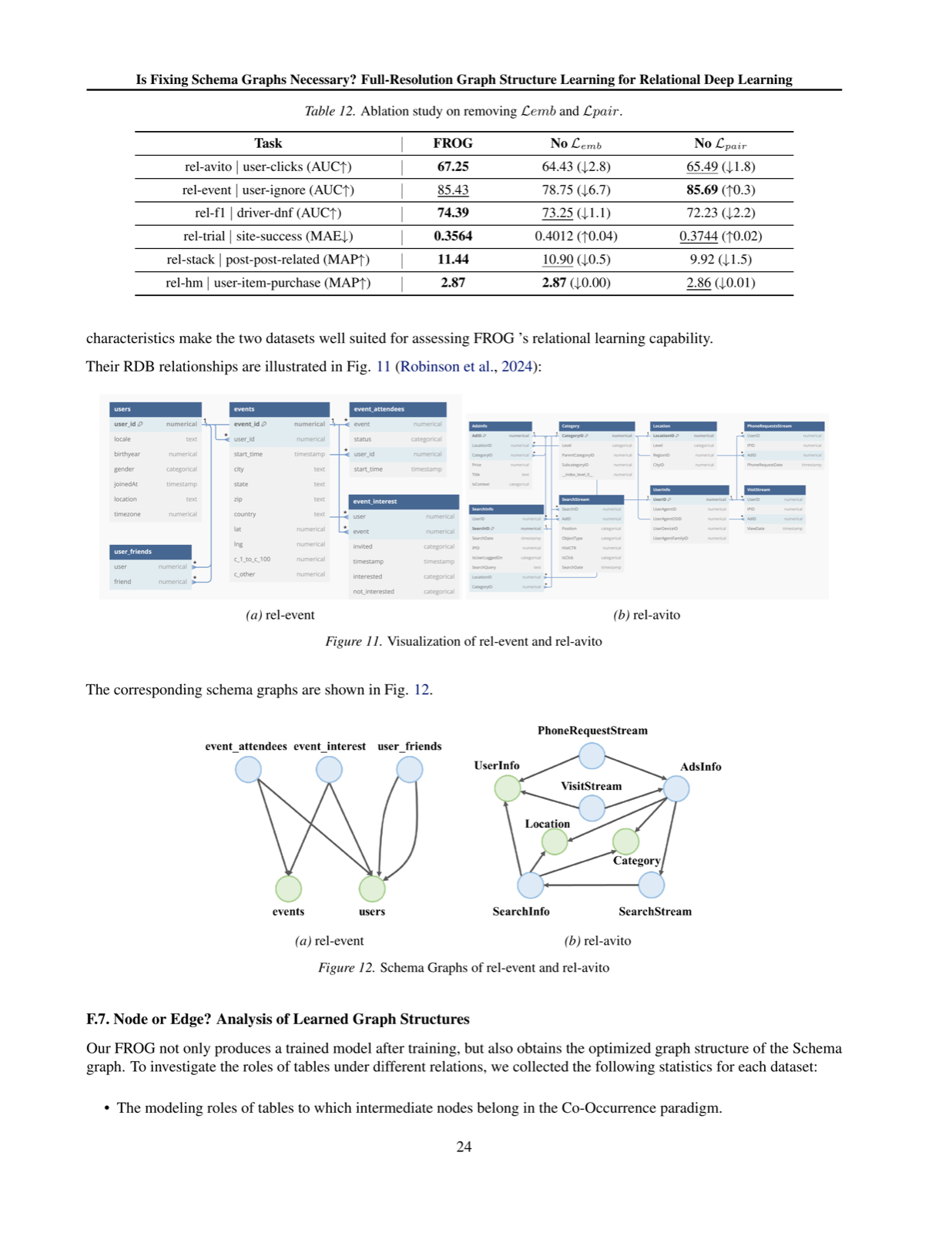
FROG introduces a novel approach to relational deep learning by formulating graph structure learning as a learnable table role modeling problem, which allows tables to contribute as nodes and edges in message passing. This approach moves beyond fixed graph structures to enable joint optimization of graph structure and GNN representations, potentially leading to more effective relational learning.
The role-driven message passing mechanisms designed to capture relational semantics and the functional dependency constraints that regularize representations across table and entity levels provide a sophisticated framework for ensuring semantic consistency in graph construction. These innovations address the challenge of maintaining relational semantics while allowing for learnable graph structures.
The extensive experiments demonstrating that FROG outperforms existing approaches and reveals how table roles impact downstream tasks offer valuable insights into graph construction for relational deep learning. The findings suggest that understanding and leveraging table roles can significantly improve performance in relational prediction tasks, potentially leading to more effective approaches for modeling complex relational data in various applications.
Key insight: FROG formulates relational structure learning as a learnable table role modeling problem, enabling joint optimization of graph structure and GNN representations through role-driven message passing mechanisms.
Agent JIT Compilation for Latency-Optimizing Web Agent Planning and Scheduling
arXiv: 2605.21470
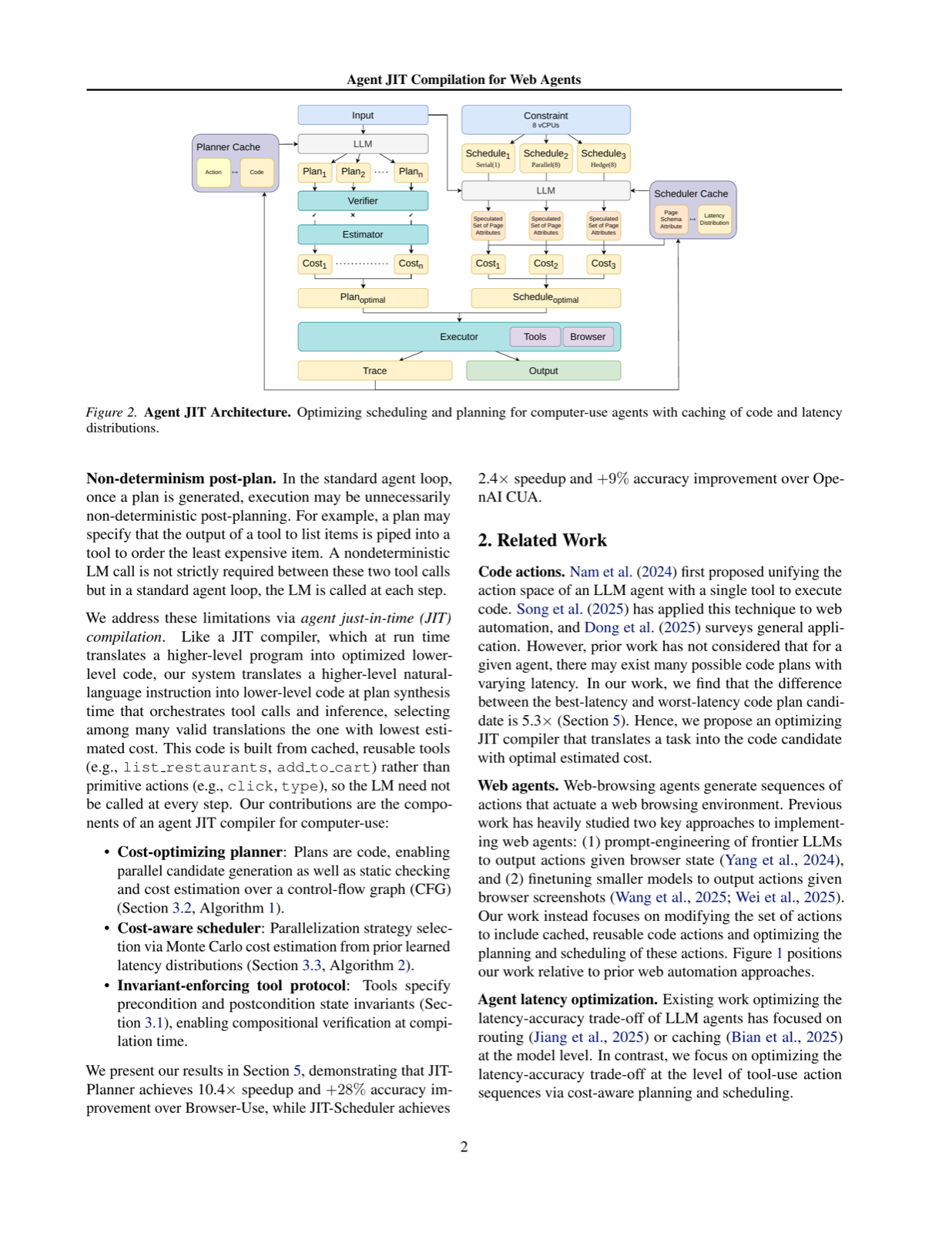
Agent JIT compilation represents a significant departure from traditional sequential fetch-screenshot-execute loops by compiling task descriptions directly into executable code that can include LLM calls, tool calls, and parallelization. This approach addresses the high latency and frequent errors associated with repeated LLM calls in current implementations.
The three-component approach of JIT-Planner, JIT-Scheduler, and invariant-enforcing tool protocol creates a comprehensive framework for optimizing web agent planning and scheduling. The JIT-Planner's ability to generate multiple code plans, validate against tool specifications, and select minimum-cost candidates demonstrates sophisticated optimization capabilities, while the JIT-Scheduler's Monte Carlo cost estimation via learned latency distributions enables effective parallelization strategies.
The substantial performance improvements achieved - 10.4x speedup and 28% accuracy improvement over Browser-Use, with JIT-Scheduler achieving 2.4x speedup and 9% accuracy improvement - demonstrate the practical benefits of this approach. These results suggest that JIT compilation can significantly enhance the efficiency and effectiveness of web agents, making them more practical for real-world applications where speed and accuracy are critical.
Key insight: Agent JIT compilation compiles task descriptions directly into executable code, achieving 10.4x speedup and 28% accuracy improvement over Browser-Use, with JIT-Scheduler achieving 2.4x speedup and 9% accuracy improvement.
You Only Need Minimal RLVR Training: Extrapolating LLMs via Rank-1 Trajectories
arXiv: 2605.21468

RELEX demonstrates that RLVR weight trajectories are extremely low-rank and highly predictable, with the majority of downstream performance gains captured by a rank-1 approximation of parameter deltas. This finding reveals the underlying geometry of RLVR parameter trajectories and provides a foundation for computationally efficient extrapolation methods.
The approach's ability to estimate the rank-1 subspace from a short observation window and extrapolate future checkpoints via linear regression without learned models shows that simple, compute-efficient methods can achieve performance comparable to full RLVR training. The demonstration that RELEX requires as few as 15% steps of full RLVR training to match or exceed performance on benchmarks highlights its potential for significant computational savings.
The remarkable capability to extrapolate far beyond the observation window at no training cost, predicting checkpoints up to 10-20x beyond the observed prefix with continued improvement, suggests that RELEX can be used to accelerate the training process while maintaining or improving performance. The denoising effect of projecting updates onto the rank-1 subspace, which discards stochastic optimization noise, provides insights into how this approach improves performance during extrapolation.
Key insight: RLVR weight trajectories are extremely low-rank and highly predictable, with rank-1 approximation capturing most downstream performance gains, enabling RELEX to extrapolate checkpoints with minimal training cost.
DelTA: Discriminative Token Credit Assignment for Reinforcement Learning from Verifiable Rewards
arXiv: 2605.21467
DelTA introduces a discriminative token credit assignment method that estimates token coefficients to amplify side-specific token-gradient directions and downweight shared or weakly discriminative ones, providing a novel approach to improving RLVR update directions. This method addresses the limitation of standard sequence-level RLVR where centroid construction can be dominated by shared high-frequency patterns.
The approach's ability to make effective side-wise centroids more contrastive by reweighting a self-normalized RLVR surrogate reshapes the RLVR update direction, leading to improved performance on mathematical benchmarks. The 3.26 and 2.62 average points improvement on Qwen3-8B-Base and Qwen3-14B-Base respectively demonstrates the practical effectiveness of this approach.
The generalization ability of DelTA demonstrated through additional results on code generation, different backbones, and out-of-domain evaluations suggests that the method's principles can be applied across different domains and model architectures. This versatility indicates that discriminative token credit assignment could become a standard technique for improving RLVR performance in various applications.
Key insight: DelTA uses discriminative token credit assignment to amplify side-specific token-gradient directions and downweight shared or weakly discriminative ones, reshaping RLVR update direction for better performance.
Mitigating Label Bias with Interpretable Rubric Embeddings
arXiv: 2605.21455
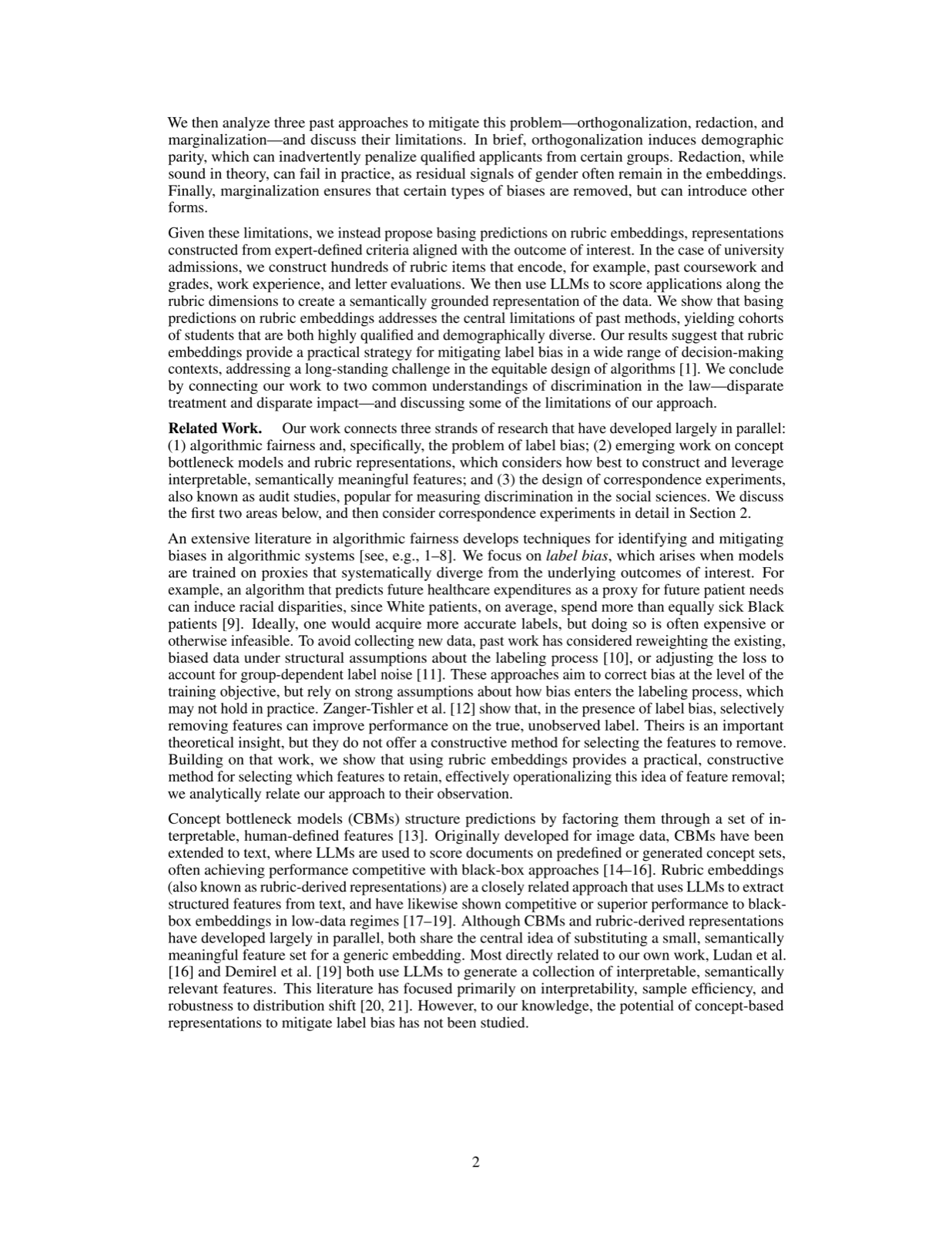
Rubric embeddings provide a principled approach to mitigating label bias by replacing standard black-box embeddings with features derived from expert-defined criteria that align with the underlying construct of interest. This approach addresses the problem of models inheriting biases from historical human evaluations that may unjustly favor certain groups.
The theoretical and empirical evidence that rubric embeddings mitigate label bias under plausible conditions, combined with the practical demonstration that models trained on rubric embeddings reduce group disparities while improving measures of cohort quality, shows the effectiveness of this approach in real-world applications. The novel dataset of applications to a large master's program provides concrete evidence of the method's practical benefits.
The finding that basing predictions on interpretable, domain-grounded representations offers a practical approach to learning in the presence of biased labels suggests that rubric embeddings can be a valuable tool for addressing bias in various domains where ground-truth labels are hard to obtain. This approach provides a balance between the need for interpretability and the ability to learn from potentially biased data.
Key insight: Rubric embeddings replace standard black-box embeddings with features derived from expert-defined criteria, guarding against biased proxy signals and reducing group disparities while improving cohort quality.
Approximation Theory for Neural Networks: Old and New
arXiv: 2605.21451
The survey on approximation theory for neural networks provides a comprehensive overview of how the field has evolved from classical density results for single-hidden-layer networks to a rich quantitative theory that addresses approximation rates, parameter efficiency, and the role of architectural features such as depth and width. This evolution reflects the growing sophistication in understanding neural network expressivity.
The emphasis on depth-width trade-offs and results demonstrating that deeper architectures can achieve superior parameter efficiency for structured function classes highlights the importance of architectural design in neural network performance. These findings suggest that the choice of network architecture can significantly impact both the efficiency and effectiveness of neural networks for specific tasks.
The inclusion of recent developments on Kolmogorov-Arnold Networks (KANs) and their approximation-theoretic properties shows that the field is actively exploring alternative architectural paradigms that may offer new advantages in terms of approximation capabilities. This ongoing research suggests that the theoretical foundations of neural networks continue to evolve, potentially leading to new approaches that can address current limitations in model design and training.
Key insight: Approximation theory for neural networks has evolved from qualitative universality results to a rich quantitative theory addressing approximation rates, parameter efficiency, and architectural features like depth and width.
torchtune: PyTorch native post-training library
arXiv: 2605.21442

torchtune represents a significant contribution to the post-training ecosystem by providing a PyTorch-native library designed to streamline the post-training lifecycle of LLMs. The emphasis on modularity, hackability, and direct access to underlying PyTorch components distinguishes it from other frameworks that may optimize for ease of use, specialized recipes, or hardware efficiency at the cost of transparency and extensibility.
The library's design principles reflected in its model builders, training recipes, and distributed training stack demonstrate a commitment to providing researchers with direct access to the underlying components while maintaining strong performance and memory efficiency. The comparison against popular fine-tuning frameworks like Axolotl and Unsloth shows that torchtune provides competitive performance while maintaining flexibility for rapid research iteration.
The positioning of torchtune as a practical foundation for reproducible LLMs post-training research suggests that it addresses a critical need in the research community for tools that support both performance and reproducibility. The library's ability to provide strong performance and memory efficiency across many settings while remaining flexible enough for rapid research iteration positions it as a valuable resource for researchers working on post-training methods for LLMs.
Key insight: torchtune emphasizes modularity, hackability, and direct access to underlying PyTorch components, providing strong performance and memory efficiency while remaining flexible for rapid research iteration.
Decoupling Communication from Policy: Robust MARL under Bandwidth Constraints
arXiv: 2605.21085
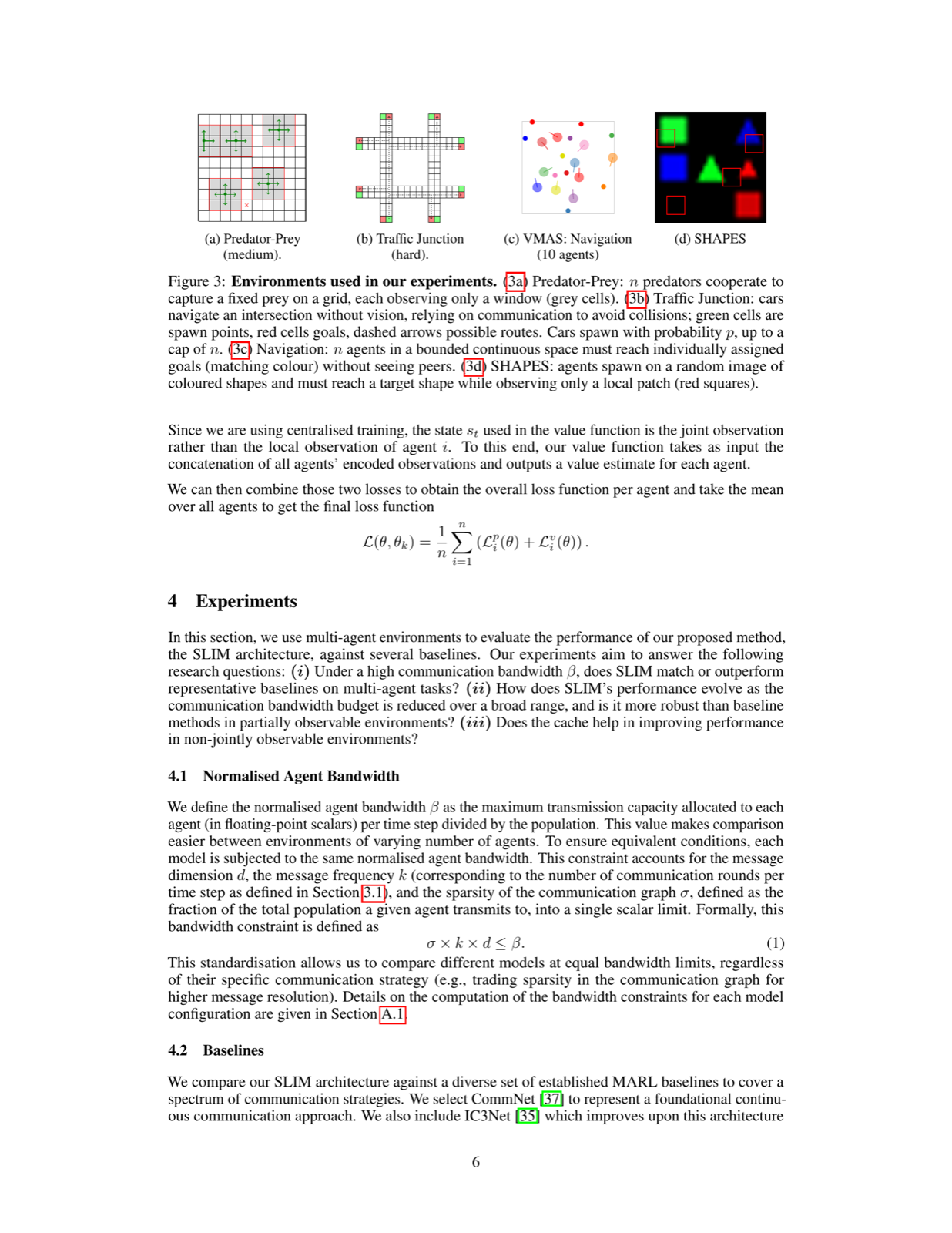
SLIM addresses the challenge of communication in multi-agent reinforcement learning (MARL) by introducing a minimal architecture that decouples the communication pathway from the policy's latent representation. This approach resolves the coupled bottleneck where reducing message size directly limits the policy's latent space, often leading to significant performance degradation.
The introduction of β, a normalised per-agent bandwidth budget that unifies sparsity, rounds, and message dimension into a single comparable constraint, provides a unified framework for understanding and managing communication constraints in MARL. This normalization allows for more consistent comparison across different communication architectures and constraints.
The evaluation on several partially-observable MARL benchmarks demonstrates that SLIM achieves state-of-the-art performance and exhibits scalability and robustness under limited communication, with only marginal degradation as bandwidth is reduced. This suggests that decoupling communication from policy can enable more efficient use of communication resources while maintaining performance, potentially leading to more scalable multi-agent systems.
Key insight: SLIM decouples communication pathway from policy's latent representation, allowing bandwidth reduction without performance degradation by isolating the effect of bandwidth from policy capacity.
ProCrit: Self-Elicited Multi-Perspective Reasoning with Critic-Guided Revision for Multimodal Sarcasm Detection
arXiv: 2605.20867

ProCrit introduces a novel approach to multimodal sarcasm detection by implementing a Proposal-Critic two-agent framework that enables self-elicited multi-perspective reasoning. This approach moves beyond fixed, predefined perspectives to allow models to autonomously generate the perspectives needed for each sample and progressively integrate them into a coherent analysis.
The dynamic-role agentic rollout that synthesizes process-level reasoning annotations through a strong vision-language model spawning analytical roles within a shared context provides a sophisticated method for generating training data for multimodal sarcasm detection. The flattening of multi-role trajectories into sequences that preserve cross-perspective dependencies while enabling efficient autoregressive generation addresses the challenge of capturing complex reasoning processes.
The mutual-refinement training framework that jointly optimizes proposal drafting and feedback-guided revision via dual-stage reinforcement learning, while refining the critic agent according to the actual effectiveness of its feedback, demonstrates a sophisticated approach to training multi-agent systems for complex reasoning tasks. The approach's effectiveness on three widely used benchmarks suggests that this framework can be applied to other multimodal reasoning tasks.
Key insight: ProCrit uses a Proposal-Critic two-agent framework with a proposal agent for multi-perspective reasoning and a critic agent for external evaluation and targeted revision guidance.
Multi-agent Collaboration with State Management
arXiv: 2605.20563

STORM addresses the challenge of multi-agent collaboration in shared codebases by implementing state-oriented management that mediates agent interactions with the shared workspace. This approach ensures that each agent operates on a consistent view of the codebase and that conflicting edits are detected and resolved at write time rather than deferring to a post-hoc merge step.
The evaluation on Commit0 and PaperBench across multiple LLMs demonstrates that STORM outperforms the git-worktree-based multi-agent baseline by +18.7 on Commit0-Lite and +1.4 on PaperBench, while achieving comparable or better cost efficiency. The highest scores of 87.6 and 78.2 on the two benchmarks respectively suggest that explicit state management is a more effective foundation for multi-agent collaboration than workspace isolation.
The seamless integration of STORM into any multi-agent system without requiring major architectural changes makes it highly practical for adoption. The demonstration that STORM can be plugged into existing systems while providing superior performance and cost efficiency suggests that it could become a standard approach for managing multi-agent collaboration in software development environments.
Key insight: STORM manages agent states by mediating interactions with shared workspace, ensuring consistent views and detecting/resolving conflicts at write time rather than post-hoc merge.
What Do Agents Communicate? Characterizing Information Exchange in Multi-Agent Systems
arXiv: 2605.20548

The systematic analysis of inter-agent communication reveals that the absence of reasoning and verification in communication significantly degrades performance in multi-agent systems. This finding highlights the critical role of information quality in effective multi-agent collaboration, suggesting that communication protocols must explicitly support reasoning and verification to be effective.
The proposed Category-Aware Recovery Augmentation technique that enforces the presence of critical information during communication demonstrates a practical approach to addressing the identified performance issues. The recovery of up to 86.2% of failed cases shows that this approach can significantly improve the robustness of multi-agent systems by ensuring that essential information is communicated.
The insights from this analysis suggest that future multi-agent systems should be designed with communication protocols that explicitly support reasoning and verification, rather than relying on implicit information exchange. This approach could lead to more reliable and effective multi-agent systems that can handle complex tasks through better coordination and information sharing.
Key insight: Inter-agent communication quality significantly impacts MA performance, with the absence of reasoning and verification in communication degrading performance, leading to Category-Aware Recovery Augmentation.
Transforming Privacy Artifacts into Accessible Reports for Non-Technical Stakeholders
arXiv: 2605.21269
The conceptual framework for transforming privacy artifacts into accessible reports addresses a critical gap in privacy communication for non-technical stakeholders in Industry 5.0 environments. This approach enables early stakeholder involvement, establishes trust, and supports informed decision-making by making privacy threats and mitigations understandable to individual workers or their representative unions.
The use of Large Language Models to transform technical artifacts into accessible privacy reports demonstrates the potential of AI to bridge the gap between technical complexity and stakeholder understanding. The initial insights from two industry use cases and evaluation of generated report quality show that this approach can be effective in practice.
The framework's potential to integrate privacy transparency into Requirements Engineering processes for human-centric industrial systems suggests that it could become a standard practice for managing privacy concerns in collaborative environments. This approach could lead to more inclusive and transparent privacy practices that involve all stakeholders in the design and implementation of privacy measures.
Key insight: Large Language Models transform technical privacy artifacts into accessible reports for non-technical stakeholders, enabling early stakeholder involvement and informed decision-making.
Heartbeat-Bound Hierarchical Credentials: Cryptographic Revocation for AI Agent Swarms
arXiv: 2605.20704
Heartbeat-Bound Hierarchical Credentials (HBHC) address a critical safety gap in autonomous AI agent swarms by providing cryptographic revocation that does not require network connectivity to a central authority. This approach eliminates the 'zombie agent' problem where agents continue executing privileged operations for minutes to hours after operator shutdown.
The protocol's ability to enforce freshness using only a cached public key and local clock, without requiring network round-trips, demonstrates a significant advancement in credential management for distributed systems. The deterministic bounded window for credential expiration (Wz ≤ Wmax + Δh + ε) provides clear guarantees about when credentials become unusable, which is crucial for safety-critical applications.
The evaluation showing a 90x reduction in the zombie window over OAuth2.0, 0.26ms full authentication in Rust, 18,000+ verifications per second under concurrent HTTP load, and stable per-verification latency from 10 to 10,000 agents demonstrates the practical effectiveness of HBHC. The real-agent experiments showing zero post-revocation tool calls under prompt injection that bypasses application-layer guardrails highlight the protocol's robustness in security-critical scenarios.
Key insight: Heartbeat-Bound Hierarchical Credentials (HBHC) bind credential validity to periodic parent liveness proofs, enabling cryptographic revocation without network connectivity.
CandorMD: An AI-Assisted Audio Simulation and Feedback System for Training Clinicians for Medical Error Disclosure
arXiv: 2605.20701
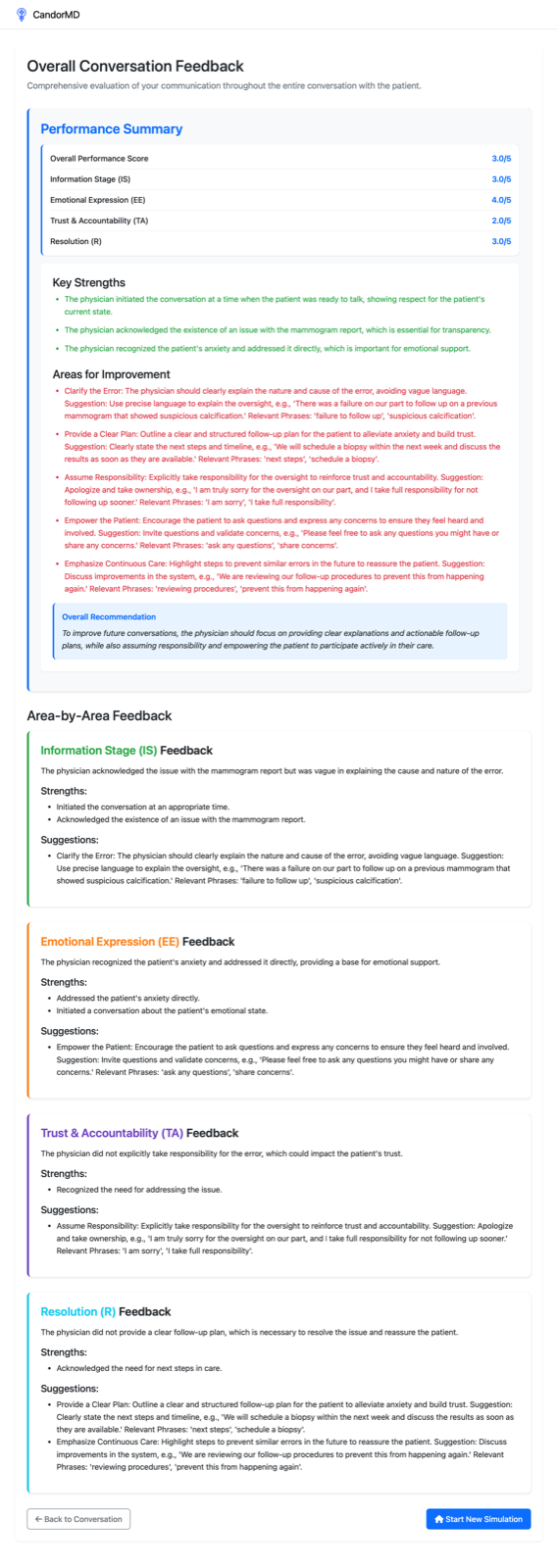
CandorMD addresses critical gaps in medical error disclosure training by providing an AI-assisted simulation system that offers real-time practice, actionable feedback, and diverse practice environments tailored to individual learning needs. This approach overcomes the limitations of traditional lecture and observation methods, as well as static video tools that lack adaptability.
The system's design to provide real-time practice and actionable feedback addresses the emotional complexity and limited training opportunities that make medical error disclosure challenging for clinicians. The ability to tailor practice environments to individual learning needs suggests that the system can be adapted to different specialties and skill levels.
The semi-structured interviews with physicians, risk managers, patient advocates, and communication experts provide valuable insights into current practices, gaps, and feedback on the system. The findings and design recommendations for AI-supported medical communication training suggest that this approach could significantly improve the quality of medical error disclosure training and ultimately patient care.
Key insight: CandorMD provides real-time practice, actionable feedback, and diverse practice environments for training clinicians in medical error disclosure, addressing gaps in current training methods.
Time-To-Reach Separation and Safety Filtering for Safe, Fair, and Efficient Multi-Agent Coordination
arXiv: 2605.20625
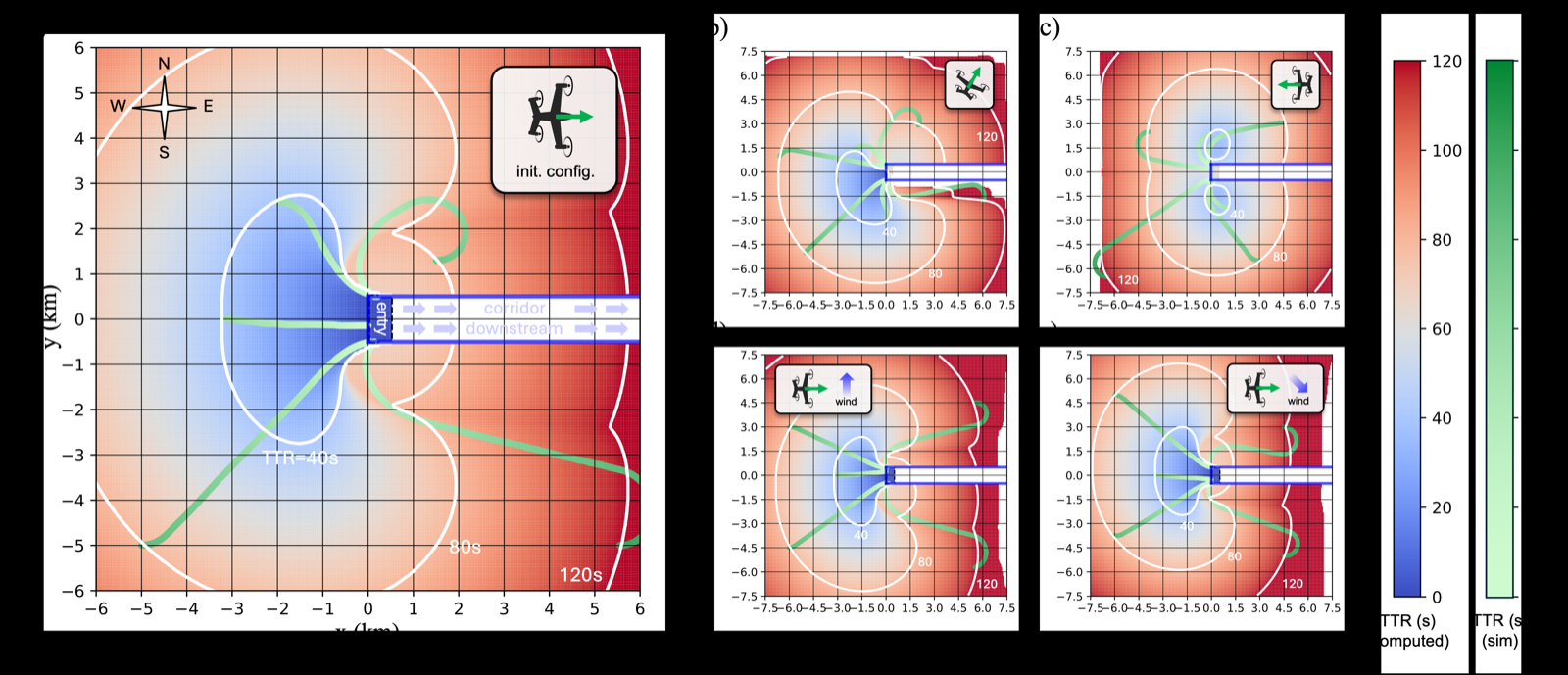
The multi-agent coordination framework for advanced air mobility operations represents a sophisticated approach to managing aerial traffic in highly congested urban airspace. By using minimum time-to-reach (TTR) as a unifying metric for priority assignment, temporal separation, and safety filtering, the approach provides a coherent framework for coordinating multiple aerial vehicles.
The focus on arrival-consistent priority assignment based on TTR and target TTR values for enforcing temporal spacing that induces spatial separation demonstrates a practical approach to managing complex multi-agent coordination problems. The priority-consistent safety filtering layer based on Hamilton-Jacobi reachability value functions ensures collision avoidance while minimally modifying reference guidance.
The simulation results showing improvements in safety, fairness, and efficiency compared to time-optimal guidance and priority-agnostic safety filtering suggest that this approach can effectively address the challenges of dense aerial operations. The framework's ability to handle the complexity of urban airspace coordination while maintaining safety and efficiency makes it a promising solution for future air mobility systems.
Key insight: Multi-agent coordination framework uses minimum time-to-reach (TTR) as unifying metric for priority assignment, temporal separation, and safety filtering in advanced air mobility operations.
Intent-First Aerial V2V for Tactical Coordination and Separation: Protocol and Performance Under Density and Disturbance
arXiv: 2605.20595

The intent-first aerial V2V tactical neighborhood exchange stack represents a significant advancement in dense Unmanned Aircraft System Traffic Management (UTM) operations by providing a deployable communication mechanism that offers fresh, trusted information for local coordination. This approach moves beyond awareness-only broadcast to include cooperative perception and degraded-mode assessment.
The combination of refreshed state and intent beacons for local awareness, cooperative perception, and degraded-mode assessment with event-triggered messages for yielding, sequencing, release, and contingency coordination creates a comprehensive communication framework for tactical separation. The use of sidelink-class C-V2X modules with authenticated freshness checks ensures the reliability and security of the communication.
The evaluation using a scenario-driven, high-volume stress campaign supported by real-time, field-anchored infrastructure demonstrates that V2V reduces stale-belief divergence, preserves observability through cooperative perception, rejects invalid tactical messages, suppresses false local inference, and structures shared-resource coordination. The findings position intent-first aerial V2V as a bounded enabler for scaling tactical coordination in disturbance-driven urban airspace.
Key insight: Intent-first V2V tactical neighborhood exchange stack combines refreshed state and intent beacons with event-triggered messages for local awareness, cooperative perception, and coordination.
Agentic Agile-V: From Vibe Coding to Verified Engineering in Software and Hardware Development
arXiv: 2605.20456
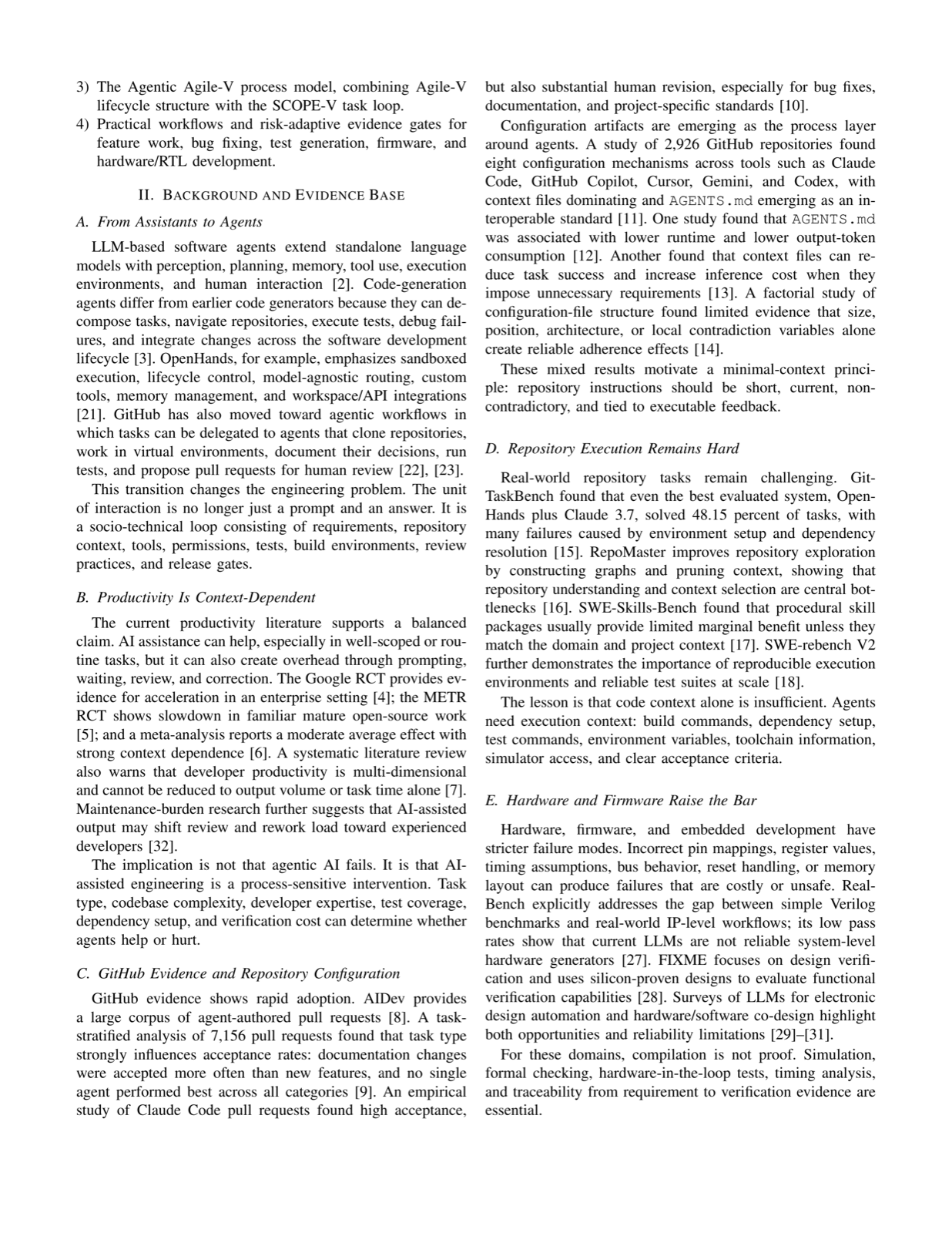
Agentic Agile-V addresses the central problem in agentic AI coding systems by proposing a process framework that uses Agile-V as the lifecycle backbone and a task-level SCOPE-V loop - Specify, Constrain, Orchestrate, Prove, Evolve, and Verify - to convert conversational intent into structured engineering artifacts and acceptance evidence. This approach recognizes that the central problem is no longer prompt engineering but engineering process control.
The framework's contribution of a taxonomy of minimum input artifacts for agentic software, firmware, and hardware work, a conversation-to-contract gate that separates exploratory dialogue from implementation, risk-adaptive workflows, and an evidence-bundle acceptance model for agent-generated artifacts provides a comprehensive approach to managing agentic AI development. These contributions address the persistent failures in repository setup, dependency handling, permission gating, and hardware verification that have limited the effectiveness of current agentic systems.
The conclusion that agentic AI does not eliminate engineering discipline but increases the value of requirements, constraints, traceability, independent verification, and human approval suggests that the integration of AI into engineering processes requires careful attention to established engineering principles. This perspective ensures that AI augmentation enhances rather than replaces the rigor and discipline that are essential for successful engineering outcomes.
Key insight: Agentic Agile-V framework uses Agile-V lifecycle backbone with task-level SCOPE-V loop to convert conversational intent into structured engineering artifacts and acceptance evidence.
Pramana: A Protocol-Layer Treatment of Claim Verification in Autonomous Agent Networks
arXiv: 2605.20312
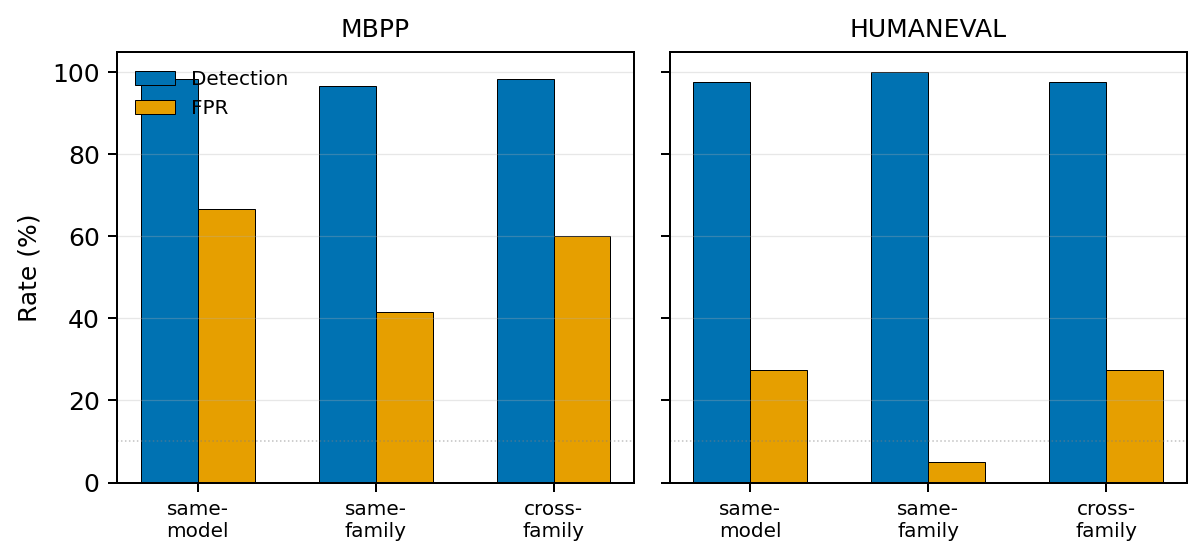
Pramana addresses a critical gap in autonomous agent networks by defining a missing wire format for claim verification that ensures every consequential agent output is wrapped in a typed ClaimAttestation with one of four variants (measurement, inference, analogy, citation), each paired with a verify() operation against the recorded source. This approach provides a standardized framework for producing verification artifacts that auditors can re-execute offline.
The four-way typology derived from classical Indian epistemology (pramana, valid means of knowledge) provides a philosophical foundation for the framework's approach to claim verification. The deterministic nature of verify() for MeasurementClaim and CitationClaim, with conditional determinism for InferenceClaim and AnalogyClaim, ensures that verification can be performed consistently across different types of claims.
The formal verification under TLC across three symmetry-reduced models with zero invariant violations and the Python reference implementation passing 84 tests demonstrate the robustness and practicality of the framework. The three deployment-grade invariants - reachability, SLA bound, and offline re-verifiability - ensure that the framework can be reliably implemented in real-world systems, making it a practical solution for ensuring accountability in autonomous agent networks.
Key insight: Pramana defines missing wire format for claim verification in autonomous agent networks, with typed ClaimAttestation and verify() operation against recorded source for re-execution by auditors.