Google announced significant updates to AI Studio at I/O 2026, including enhanced model training capabilities and improved prompt engineering tools. Hugging Face launched the Open Agent Leaderboard to standardize agent evaluation metrics. Anthropic acquired Stainless to extend agent reach and interoperability. Research papers presented novel methodologies for agent architecture, reward systems, and reasoning frameworks.
Google's AI Studio received major updates at I/O 2026 with enhanced model training capabilities, improved prompt engineering tools, and better integration with Google Cloud services. Hugging Face introduced the Open Agent Leaderboard to provide standardized evaluation methods for open-source AI agents, addressing the growing need for transparency in the rapidly evolving agent landscape. Anthropic's acquisition of Stainless aims to extend AI agent capabilities beyond model interactions to include broader system integration, positioning the company to better support developers building autonomous agents. Meanwhile, research papers presented breakthrough methodologies including stochastic-deterministic boundaries for production LLM agents, policy-aware rubric rewards for reinforcement learning, and self-play frameworks for geospatial reasoning that achieve performance comparable to conventional baselines without requiring large-scale human annotation.
AI Model Releases

Bring any idea to life: Google AI Studio at I/O 2026
Google announced significant updates to AI Studio at I/O 2026, including new AI-powered features for developers. The platform now offers enhanced model training capabilities, improved prompt engineering tools, and better integration with Google Cloud services. New features include AI-powered code generation, automated testing capabilities, and advanced debugging tools. The updates aim to make AI development more accessible to both beginners and experienced developers.
Why it matters: Google's AI Studio updates position the platform as a comprehensive development environment for AI applications, potentially competing more directly with other AI development platforms. These enhancements could significantly lower the barrier to entry for AI development.
Hugging Face has launched the Open Agent Leaderboard, a platform for evaluating and comparing open-source AI agents. The leaderboard focuses on agent performance across various benchmarks and use cases, providing transparency in the rapidly evolving agent landscape. IBM Research contributed to the development of this platform, which aims to standardize agent evaluation metrics. The leaderboard includes agents from multiple open-source projects and provides detailed performance data across different domains such as reasoning, planning, and tool usage.
Why it matters: The Open Agent Leaderboard addresses the growing need for standardized evaluation methods in the AI agent space, helping researchers and developers make informed decisions about agent capabilities and performance. This platform promotes accountability and progress in open-source agent development.
Agent Frameworks & SDKs

Anthropic has acquired Stainless, a company specializing in SDKs and MCP server tooling, to enhance the capabilities of AI agents. Stainless has been instrumental in powering Anthropic's official SDKs since their early days. The acquisition aims to extend the reach of AI agents beyond just model interactions to include broader system integration. This move positions Anthropic to better support developers building autonomous agents that can interact with diverse tools and platforms. Stainless' technology will be integrated into Anthropic's ecosystem to improve agent interoperability and functionality.
Why it matters: This acquisition signals Anthropic's strategic commitment to building a robust agent infrastructure that can operate across multiple platforms and tools. It represents a significant step toward creating more capable and versatile AI agents that can function as true autonomous actors rather than simple response generators.
AI Tooling

Cursor has announced integration with Jira, enabling developers to use AI agents directly within their issue tracking workflow. The integration allows developers to create, modify, and resolve issues using natural language commands through Cursor's AI capabilities. This enhancement streamlines the development process by reducing context switching between tools. The feature supports both code generation and task management within Jira, making it easier for teams to incorporate AI assistance into their existing development practices.
Why it matters: This integration represents a significant step toward embedding AI agents directly into developer workflows, moving beyond simple code assistants to full-fledged task management tools. It demonstrates how AI platforms are evolving to work seamlessly with existing enterprise tools.
Firebase/GCP

Data Agent Kit brings data skills and tools to your IDE or CLI | Google Cloud Blog
Google has released the Data Agent Kit, which brings data analytics capabilities directly into developers' IDEs and CLIs. The kit enables developers to perform data analysis, create visualizations, and build data pipelines using AI-powered tools without leaving their development environment. It supports multiple data sources and integrates with popular data processing frameworks. The kit is designed to help developers with varying levels of data expertise to incorporate data skills into their development workflows.
Why it matters: This tool democratizes data analytics by bringing powerful data capabilities directly into development environments, potentially transforming how developers approach data-intensive applications. It bridges the gap between development and data science workflows.
Research Papers
A Methodology for Selecting and Composing Runtime Architecture Patterns for Production LLM Agents
arXiv: 2605.20173
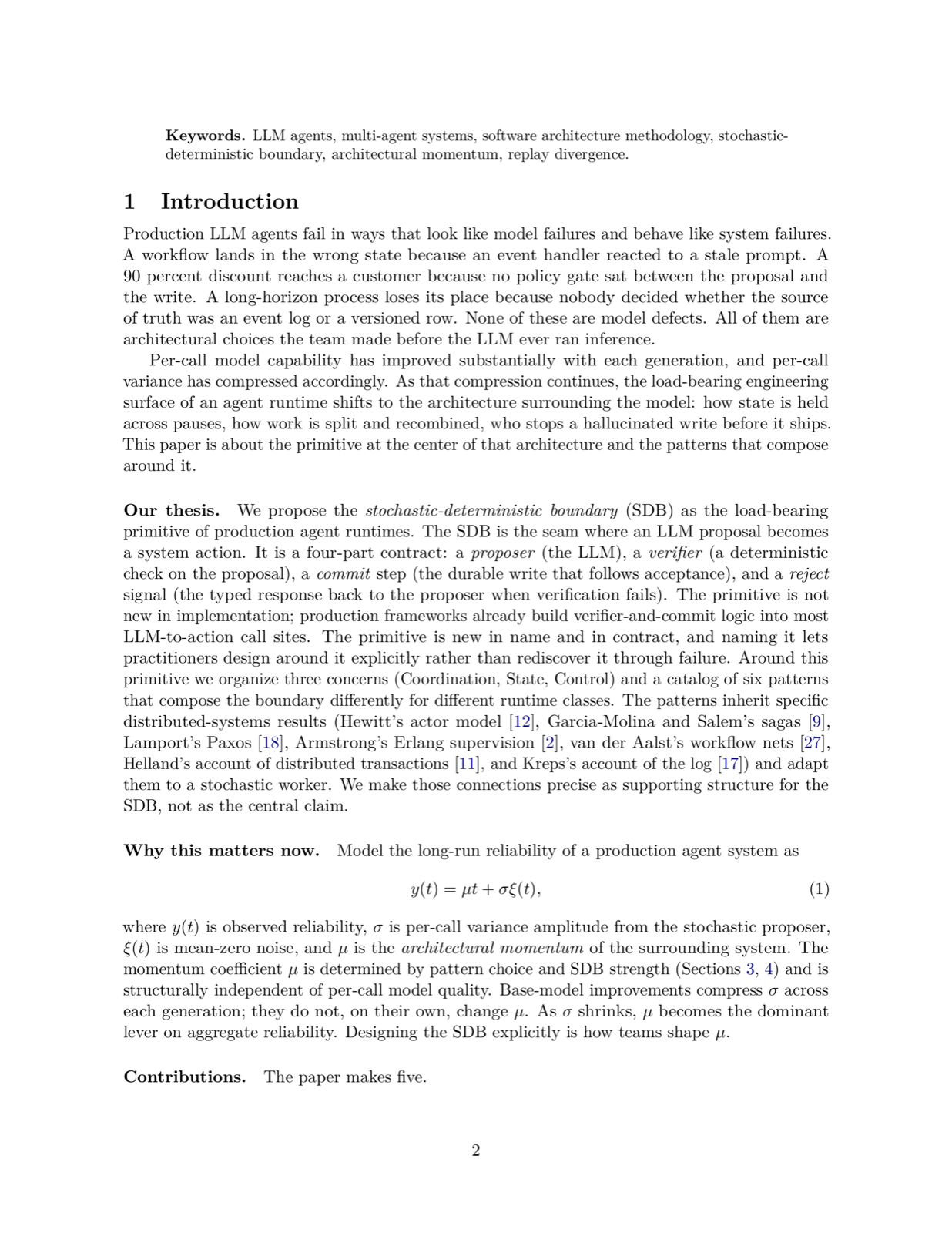
This paper introduces the stochastic-deterministic boundary (SDB) as a critical architectural primitive for production LLM agents, fundamentally reorganizing how we think about agent runtime design. The SDB is defined as a four-part contract involving proposer, verifier, commit step, and reject signal, specifying how LLM outputs become system actions. This approach treats the boundary between stochastic model outputs and deterministic software systems as a first-class architectural object rather than an afterthought, which is a significant shift from current practices.
The authors organize agent runtime design around three concerns: Coordination, State, and Control, and present six runtime patterns that compose the SDB differently across various agent types. These patterns include hierarchical delegation, scatter-gather plus saga, event-driven sequencing, shared state machine, supervisor plus gate, and human in the loop. The paper's methodology for selecting runtime patterns is particularly valuable, providing a five-step process that includes diagnostic procedures mapping production failures to pattern weaknesses and identifying replay divergence as a critical failure mode.
The work's contribution to reliability engineering is substantial, demonstrating that as model variance decreases, pattern choice and SDB strength become increasingly important levers for long-run reliability. The paper's application to five workloads and provision of a runnable reference implementation for a 90-day contract-renewal agent shows practical applicability. This represents a significant advancement in agent architecture design, moving from ad-hoc approaches to systematic methodologies for handling the complex interaction between stochastic LLM outputs and deterministic system behavior.
Key insight: Production LLM agents require a stochastic-deterministic boundary (SDB) as a fundamental architectural primitive, with runtime patterns that compose this boundary differently across conversational, autonomous, and long-horizon agents
Not Every Rubric Teaches Equally: Policy-Aware Rubric Rewards for RLVR
arXiv: 2605.20164

The paper addresses a critical gap in reinforcement learning with verifiable rewards (RLVR) where standard static aggregations conflate human-assigned importance with current usefulness as an optimization signal. This is particularly problematic in rubric-based settings where many important criteria are already saturated or unreachable, while criteria that distinguish rollouts may not have the largest human weights. The introduction of POW3R represents a sophisticated approach to policy-aware rubric rewards that preserves human weights and category balance while adapting criterion-level reward weights during training.
POW3R's use of rollout-level contrast to emphasize criteria that currently separate the policy's outputs makes the GRPO reward more informative without changing the underlying evaluation target. This approach is particularly valuable because it addresses the fundamental tension between what should matter in the final answer versus what can teach the current policy. The empirical results showing that POW3R wins 24 of 30 base-policy/metric comparisons, improving both mean rubric reward and strict completion, while reaching the same plateau in 2.5-4x fewer training steps, demonstrate clear practical advantages.
The paper's contribution extends beyond just the technical innovation to provide a conceptual framework for understanding when rubric rewards should distinguish between importance and teachability. This insight is crucial for developing more effective reward systems in complex multi-criteria environments where traditional approaches may fail to optimize for the right signals. The finding that rubric rewards should distinguish what should matter in the final answer from what can teach the current policy represents a fundamental shift in how we approach reward design in RLVR settings.
Key insight: Rubric-based rewards in RLVR should distinguish between human-assigned importance and current optimization signal usefulness, with policy-aware frameworks like POW3R adapting criterion weights during training
AutoResearchClaw: Self-Reinforcing Autonomous Research with Human-AI Collaboration
arXiv: 2605.20025
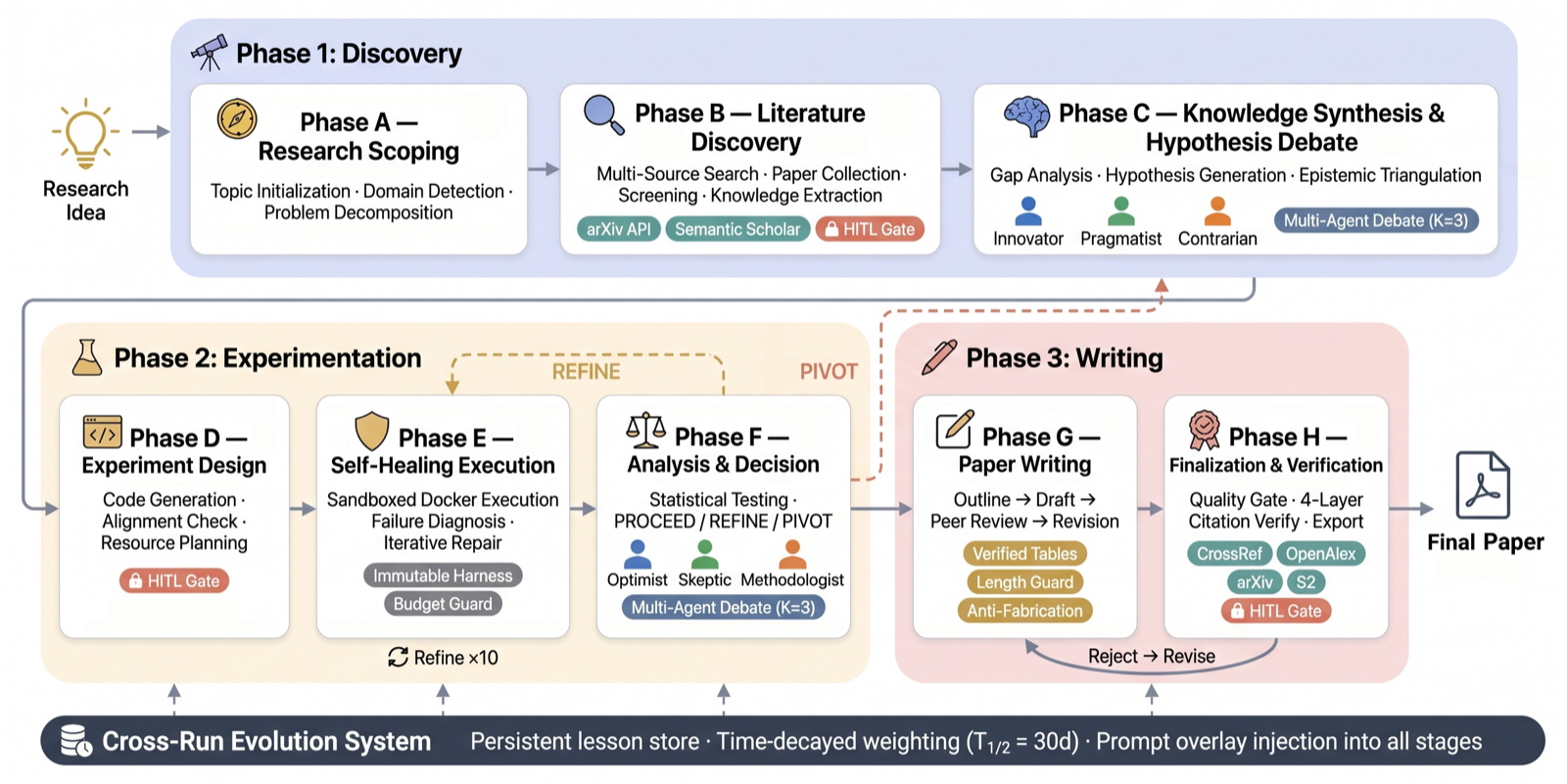
AutoResearchClaw represents a sophisticated multi-agent system designed for autonomous scientific research that goes beyond simple pipeline approaches to model iterative scientific discovery. The system's five key mechanisms - structured multi-agent debate, self-healing executor with Pivot/Refine decision loop, verifiable result reporting, human-in-the-loop collaboration, and cross-run evolution - create a comprehensive framework for handling the iterative nature of scientific work where hypotheses are challenged, experiments fail and inform next attempts, and lessons accumulate across cycles.
The paper's demonstration that AutoResearchClaw outperforms AI Scientist v2 by 54.7% on ARC-Bench, combined with the human-in-the-loop ablation showing that precise, targeted collaboration at high-leverage decision points consistently outperforms both full autonomy and exhaustive oversight, provides compelling evidence for the value of human-AI collaboration in complex research domains. This finding is particularly significant as it suggests that the most effective approach isn't either complete autonomy or complete oversight, but rather strategic intervention at key decision points.
The positioning of AutoResearchClaw as a research amplifier that augments rather than replaces human scientific judgment is a crucial insight for the future of AI in scientific domains. The system's ability to convert past mistakes into future safeguards through cross-run evolution represents a significant advancement in building systems that learn from their own experience, moving toward more robust and adaptive research automation that can handle the complexity and unpredictability inherent in scientific discovery.
Key insight: Multi-agent autonomous research systems require structured debate, self-healing executors, verifiable reporting, human-in-the-loop collaboration, and cross-run evolution to achieve iterative scientific discovery
When Skills Don't Help: A Negative Result on Procedural Knowledge for Tool-Grounded Agents in Offensive Cybersecurity
arXiv: 2605.20023
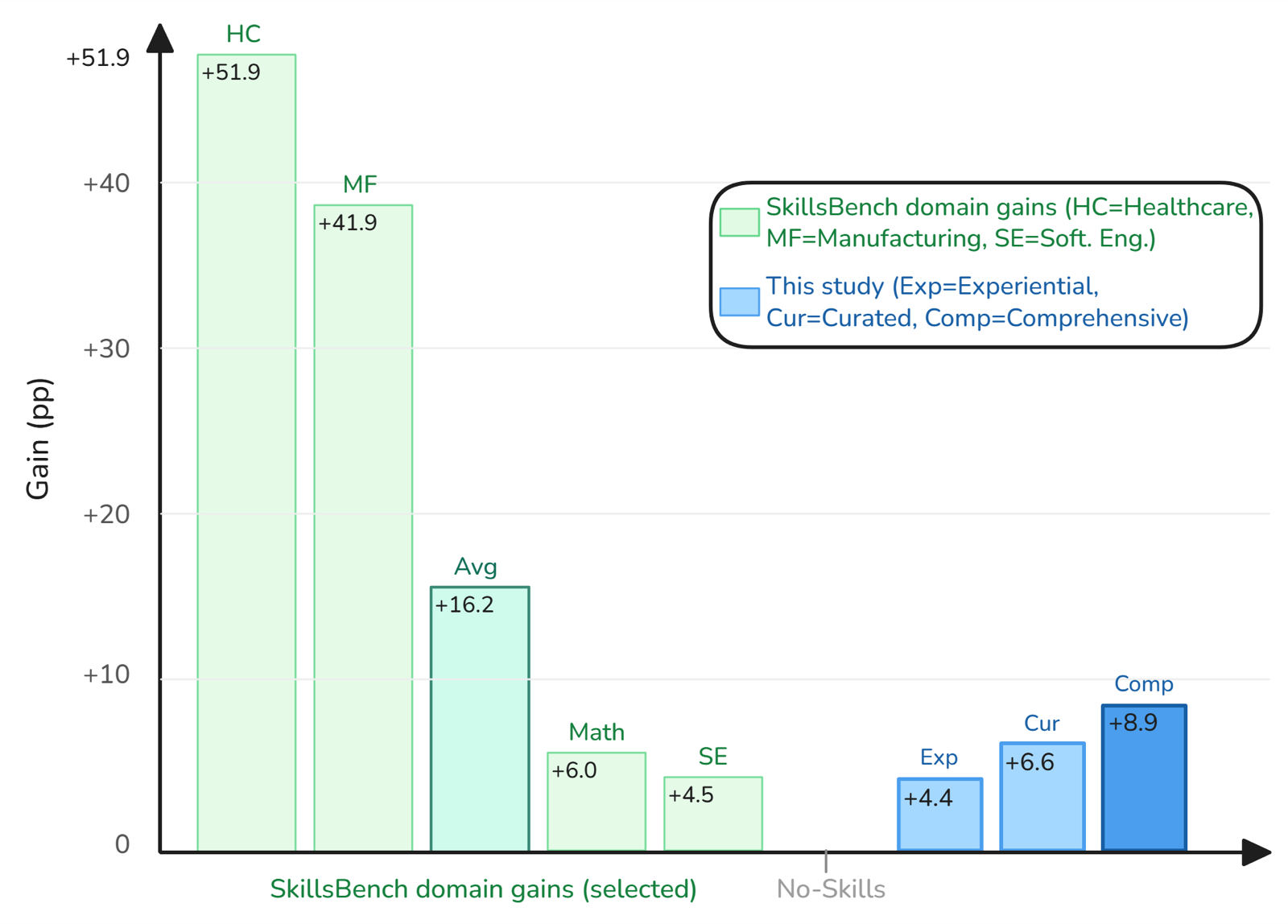
This paper presents a counterintuitive but important finding about agent skills in tool-grounded agents: in domains like offensive cybersecurity where environment feedback is strict, schema-validated, and low-latency, the marginal benefit of curated Skills collapses. This challenges the widespread assumption that Skills universally improve performance across all domains and tasks. The authors identify 'environment-feedback bandwidth' as the missing variable that determines when Skills help versus when they are redundant overhead.
The re-analysis of a controlled study with four documentation conditions (55, 1,478, 1,976, and 4,147 lines) provides strong empirical evidence for this phenomenon, showing that the spread between no-Skills and full-Skills conditions is only 8.9 percentage points with non-significant p-values, indicating that Skills provide minimal benefit in high-feedback environments. This finding has profound implications for agent design, suggesting that in domains with rich environmental feedback, the focus should be on optimizing the interaction between agents and their environment rather than on pre-loaded procedural knowledge.
The paper's articulation of a falsifiable hypothesis about when Skills help versus when they hurt opens up new research directions for compound AI systems. The insight that 'when an agent's tool layer returns strict, schema-validated, low-latency observations, the environment itself supplies the procedural correction signal that Skills are normally needed to provide' suggests that future agent architectures should be designed to leverage environmental feedback more effectively rather than relying on pre-loaded skills, potentially leading to more efficient and robust systems.
Key insight: In offensive cybersecurity, the marginal benefit of curated Skills diminishes substantially when environment-feedback bandwidth is high, as the environment itself supplies procedural correction signals that Skills normally provide
GeoX: Mastering Geospatial Reasoning Through Self-Play and Verifiable Rewards
arXiv: 2605.20006
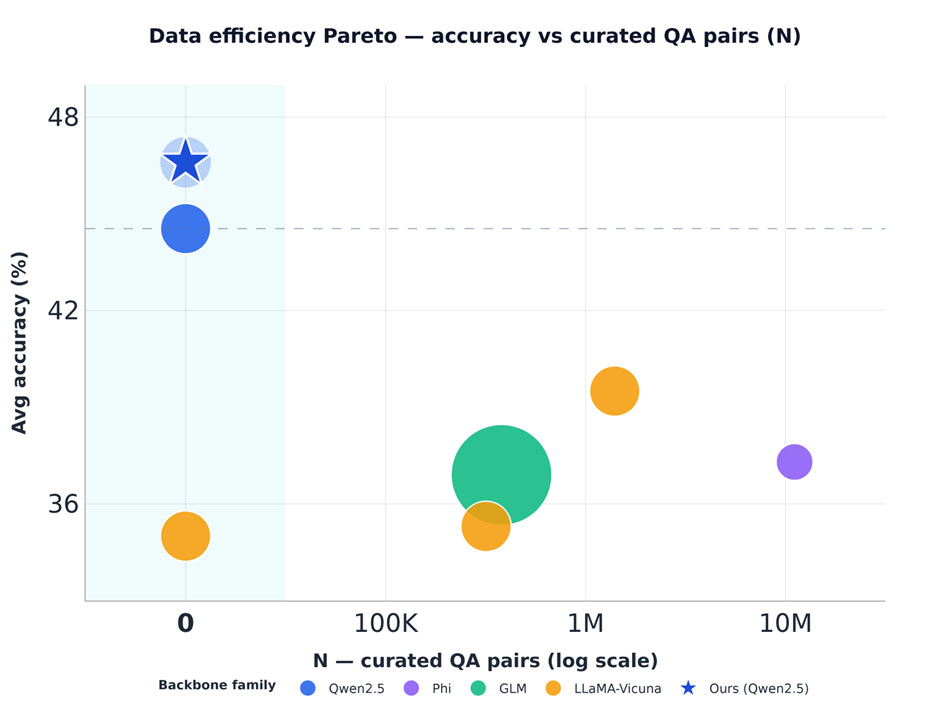
GeoX introduces a novel self-play framework for geospatial reasoning that addresses the fundamental challenge of expensive human annotation in developing spatial reasoning capabilities. By employing a single multimodal policy that proposes spatial problems as executable programs and solves them through abduction, deduction, and induction over spatial primitives, the framework creates a closed-loop system where a verifier executes each program to provide reward signals that jointly optimize both roles via reinforcement learning.
The key innovation lies in the use of executable programs that yield verifiable rewards, eliminating the need for large-scale human-curated data. This approach allows GeoX to consistently improve base VLMs by up to 5.5 points on average, matching or exceeding conventional baselines trained on millions of curated data. The framework's ability to acquire spatial logic through executable programs represents a significant advancement in developing reasoning capabilities for complex spatial structures without the traditional data annotation bottleneck.
The release of a benchmark for geospatial understanding accumulated through self-play further demonstrates the framework's practical value. This self-play approach not only reduces the dependency on expensive human annotation but also creates a more scalable path for developing geospatial reasoning capabilities. The results show that GeoX can achieve performance comparable to conventional baselines while using significantly less data, suggesting that self-play mechanisms could be a general solution for developing reasoning capabilities in domains where data annotation is costly or difficult.
Key insight: GeoX's self-play framework enables geospatial reasoning through executable programs that yield verifiable rewards, achieving performance comparable to conventional baselines trained on millions of curated data without requiring large-scale human annotation
Probabilistic Tiny Recursive Model
arXiv: 2605.19943
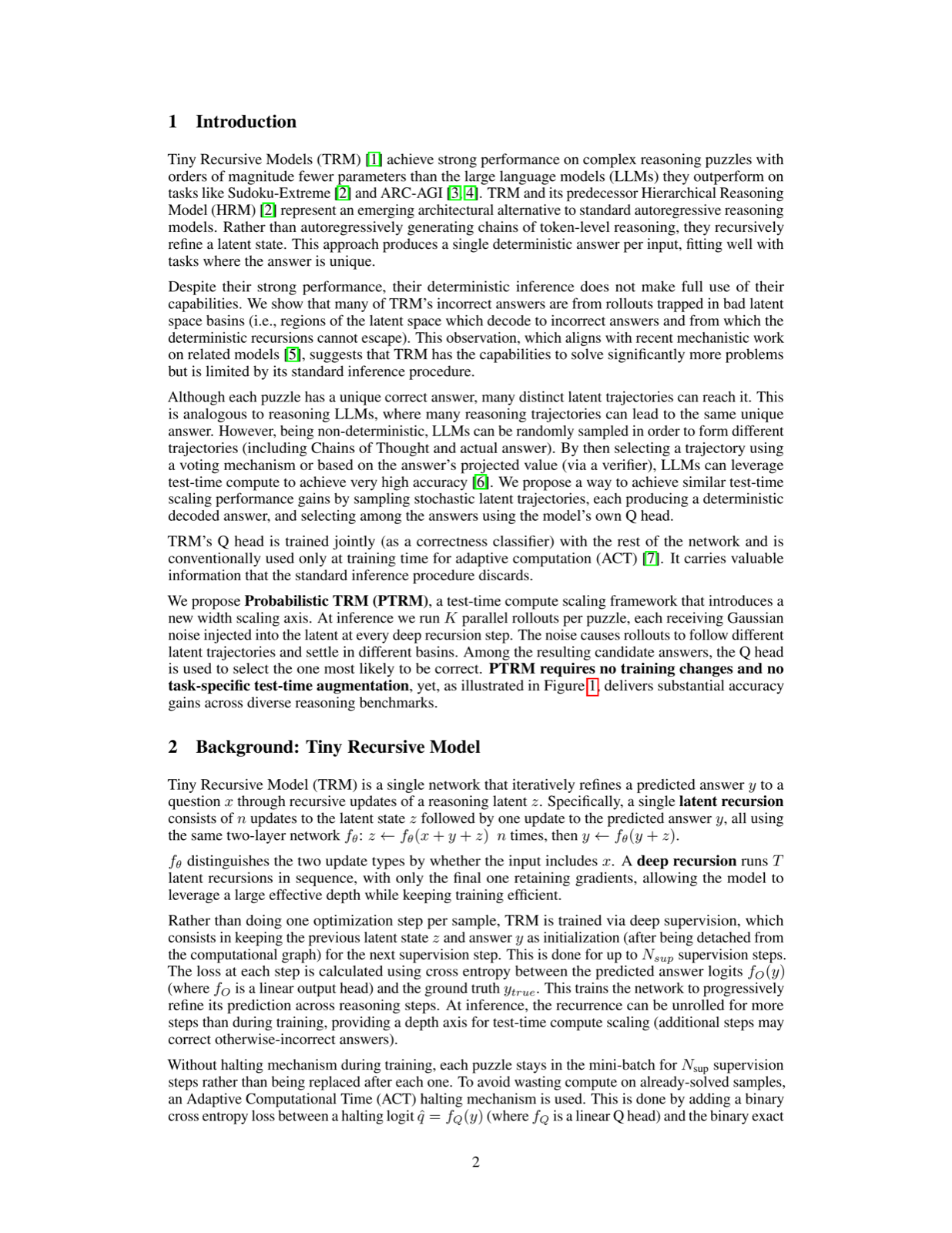
PTRM represents a significant advancement in Tiny Recursive Models (TRM) by addressing the fundamental limitation of deterministic recursion that can lead to convergence at suboptimal solutions. The introduction of stochastic exploration through Gaussian noise injection at each deep recursion step enables parallel trajectories to explore diverse solution basins, fundamentally changing how recursive reasoning approaches problems. This approach provides an escape mechanism from local optima that deterministic methods cannot overcome.
The framework's task-agnostic nature is particularly valuable, as it enables substantial accuracy gains across benchmarks without requiring retraining or task-specific augmentations. The results showing improvements from 87.4% to 98.75% on Sudoku-Extreme and 62.6% to 91.2% on Pencil Puzzle Bench demonstrate the effectiveness of this approach across different problem domains. Most notably, PTRM achieves nearly double the accuracy of frontier LLMs (91.2% vs. 55.1%) at less than 0.0001x the cost using only 7M parameters, highlighting the efficiency gains of this probabilistic approach.
The practical implications of PTRM are substantial, as it provides a method for test-time compute scaling that can be applied to any TRM-based system without additional training. This makes it particularly valuable for resource-constrained environments where compute efficiency is crucial. The approach also demonstrates that stochastic exploration can be an effective mechanism for improving deterministic systems, suggesting broader applications beyond the specific domains tested in this work.
Key insight: Probabilistic Tiny Recursive Models (PTRM) address deterministic recursion limitations by injecting Gaussian noise at each deep recursion step, enabling parallel trajectories to explore diverse solution basins
PEEK: Context Map as an Orientation Cache for Long-Context LLM Agents
arXiv: 2605.19932
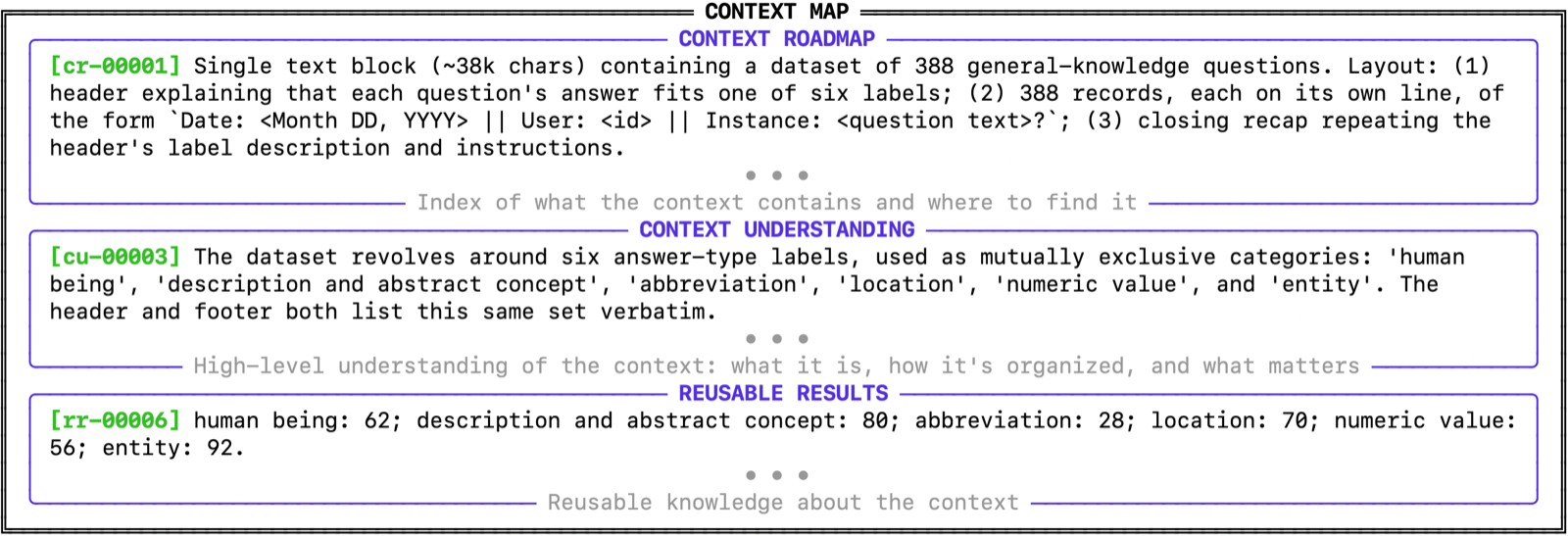
PEEK introduces a novel approach to handling long-context LLM agents by focusing on reusable orientation knowledge rather than just preserving agent trajectories or passive access to raw material. The system's context map serves as a small, constant-sized artifact that gives agents a persistent peek into external contexts, caching what the context contains, how it is organized, and which entities have historically been useful. This represents a fundamental shift from existing approaches that treat context as static or ephemeral.
The three-module cache policy (Distiller, Cartographer, and Evictor) provides a systematic way to maintain this orientation knowledge while respecting token budgets. The Distiller extracts transferable knowledge from inference-time signals, the Cartographer translates it into structured edits, and the Evictor enforces a fixed token budget through priority-based eviction. This approach demonstrates how sophisticated caching mechanisms can improve long-context reasoning and information aggregation, showing improvements of 6.3-34.0% over strong baselines while using significantly fewer iterations and lower costs.
The generalizability of PEEK across different LMs and agent architectures, including OpenAI Codex and production-grade coding agents, suggests that this approach has broad applicability. The results show that a context map helps long-context LLM agents interact with recurring external contexts more accurately and efficiently, which is particularly valuable for real-world applications where agents repeatedly work with the same document corpora or code repositories. This approach addresses a critical gap in current long-context handling methods and provides a scalable solution for maintaining orientation knowledge.
Key insight: PEEK's context map approach caches reusable orientation knowledge about recurring external contexts, enabling long-context LLM agents to interact more accurately and efficiently than existing approaches
From Seeing to Thinking: Decoupling Perception and Reasoning Improves Post-Training of Vision-Language Models
arXiv: 2605.20177

This paper presents a systematic approach to improving vision-language models through staged training that decomposes capabilities into three distinct training stages: visual perception, visual reasoning, and textual reasoning. The authors demonstrate that visual perception requires targeted optimization with specialized data, serves as a fundamental scaffold that should be solidified before refining visual reasoning, and is more effectively learned via reinforcement learning than caption-based supervised fine-tuning. This approach challenges the conventional wisdom that all aspects of VLMs should be trained simultaneously.
The staged training approach yields significant improvements across multiple benchmarks, with models achieving 1.5% higher reasoning accuracy with 20.8% shorter reasoning traces, suggesting that superior perception reduces the need for excessive reasoning. The finding that this capability-based staging represents a new curriculum dimension orthogonal to traditional difficulty-based curricula and that combining both yields further additive gains provides a compelling framework for future VLM development. The results show that staged training establishes advanced results on visual math and perception tasks compared to base counterparts.
The practical implications of this work are substantial, as it provides a concrete methodology for improving VLMs that can be applied across different architectures and datasets. The demonstration that staged training consistently improves performance over merged training, even when using the same underlying model architecture, suggests that this approach could be a general solution for improving VLMs in various domains. The finding that superior visual perception reduces the need for excessive reasoning also has implications for computational efficiency and model design.
Key insight: Staged training of vision-language models, decomposing capabilities into visual perception, visual reasoning, and textual reasoning stages, significantly improves both visual perception and reasoning performance over merged training
ClinSeekAgent: Automating Multimodal Evidence Seeking for Agentic Clinical Reasoning
arXiv: 2605.20176
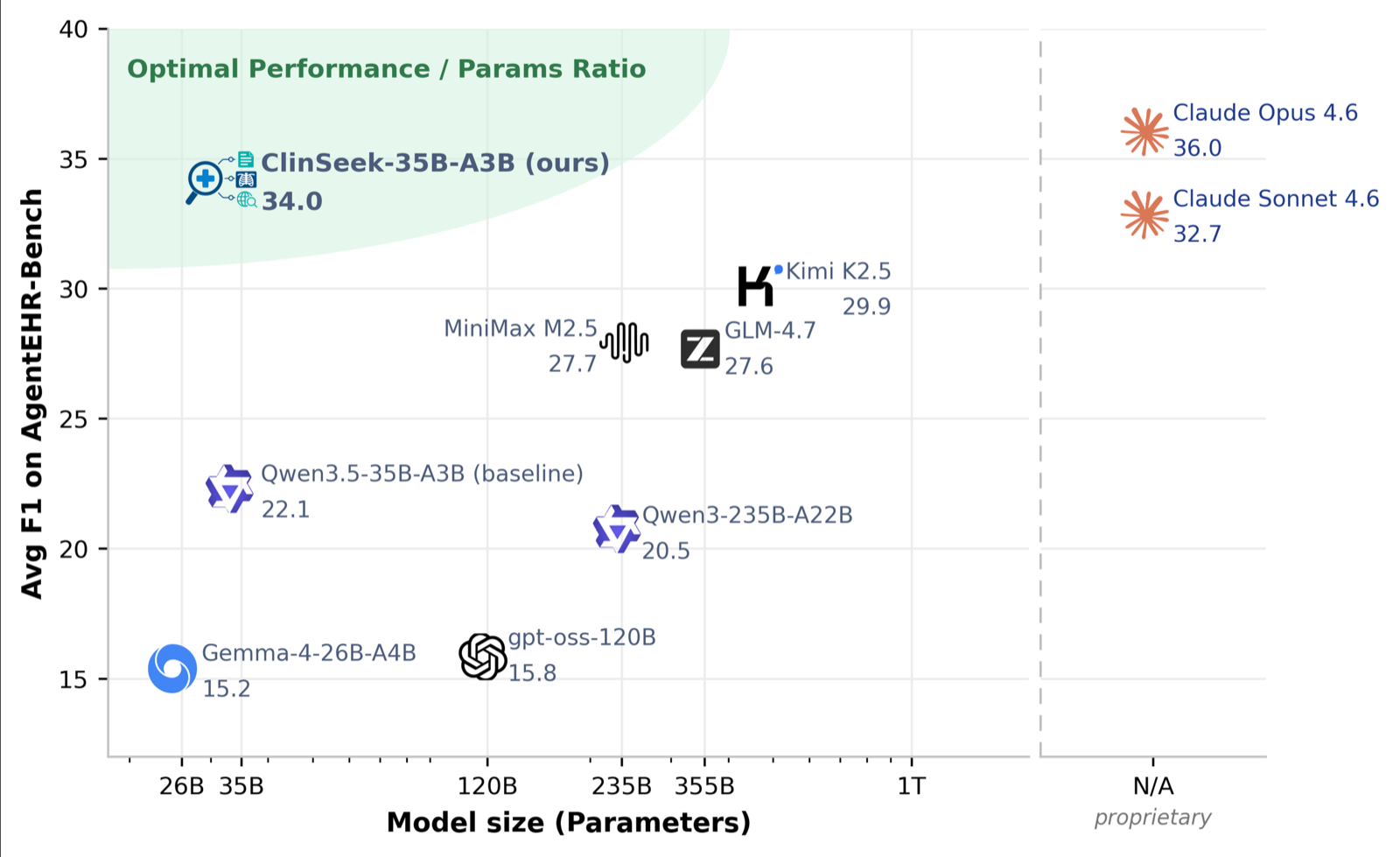
ClinSeekAgent represents a significant advancement in clinical decision support by introducing an automated agentic framework for dynamic multimodal evidence seeking that fundamentally shifts the paradigm from passive evidence consumption to active evidence acquisition. The system's ability to gather evidence by querying medical knowledge bases, navigating raw EHRs, and invoking medical imaging tools while refining hypotheses as new information emerges demonstrates a sophisticated approach to real-world clinical workflows.
The framework's dual role as both inference-time agent for frontier LLMs and training-time pipeline for distilling high-quality agent trajectories into compact open-source models provides a comprehensive solution for clinical reasoning. The distillation approach that creates ClinSeek-35B-A3B, which achieves 34.0 average F1 on existing AgentEHR-Bench, improving over its Qwen3.5-35B-A3B baseline by +11.9 points and approaching Claude Opus 4.6, shows the practical value of this approach. The system's performance improvements across both text-only EHR tasks and multimodal tasks, including significant gains on CXR-related tasks, demonstrate its broad applicability.
The paper's validation of ClinSeekAgent as a training pipeline through distillation into compact models represents an important contribution to making advanced clinical reasoning capabilities accessible to smaller models. The approach's ability to achieve competitive performance with frontier models while using significantly fewer parameters suggests that this methodology could democratize access to sophisticated clinical reasoning capabilities, making them available in resource-constrained environments where large models are not feasible.
Key insight: ClinSeekAgent automates dynamic multimodal evidence seeking in clinical reasoning, shifting from passive evidence consumption to active evidence acquisition and achieving state-of-the-art results on clinical benchmarks
KoRe: Compact Knowledge Representations for Large Language Models
arXiv: 2605.20170
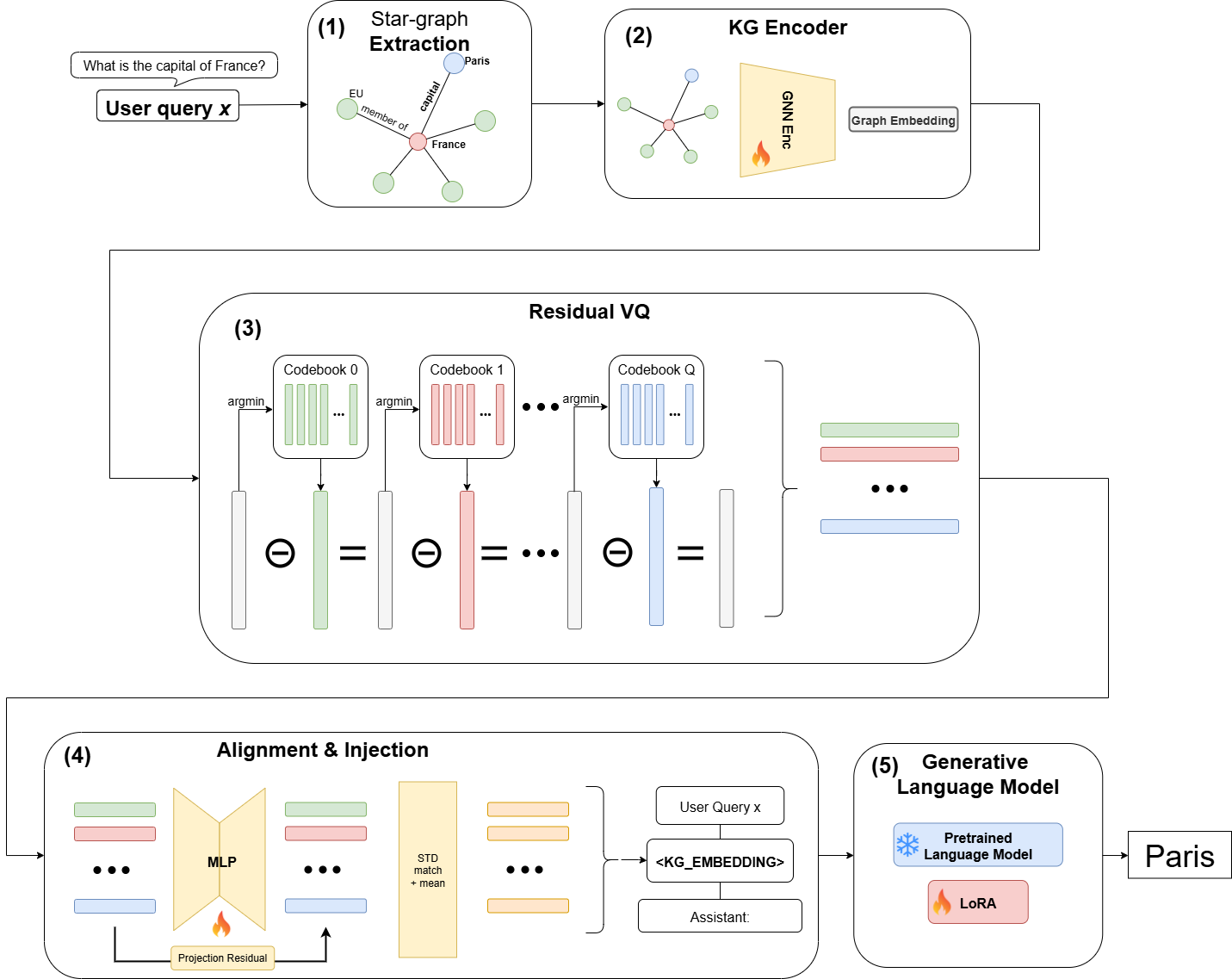
KoRe introduces a novel methodology for integrating knowledge graphs with LLMs by encoding 1-hop sub-graphs into compact discrete knowledge tokens and injecting them into LLM backbones. This approach addresses fundamental limitations of existing integration techniques that require extensive retraining or fine-tuning, providing a more efficient and practical solution for grounding modern LLMs with structured knowledge. The methodology's ability to achieve competitive performances while reducing token usage by up to 10x represents a significant advancement in knowledge representation for LLMs.
The paper's demonstration that compact discrete KG representations can efficiently and effectively be used to ground modern LLMs shows that the approach is not just theoretically sound but practically valuable. The significant reduction in token usage while maintaining competitive performance suggests that KoRe could be particularly valuable for applications where computational resources are constrained or where the overhead of traditional knowledge graph integration is prohibitive. This approach also addresses the inherent opacity of LLM knowledge encoding by providing human-readable and easily editable knowledge representations.
The methodology's potential for broader applications extends beyond the three established benchmarks tested, as the compact nature of the representations suggests scalability to larger knowledge bases. The approach's ability to provide human-readable and easily editable world knowledge representations while maintaining competitive performance indicates that it could be a valuable tool for building more transparent and interpretable LLM systems, particularly in domains where knowledge accuracy and explainability are crucial.
Key insight: KoRe encodes 1-hop sub-graphs into compact discrete knowledge tokens and injects them into LLM backbones, achieving competitive performances with significant reduction in token usage compared to traditional knowledge graph integration techniques
BalanceRAG: Joint Risk Calibration for Cascaded Retrieval-Augmented Generation
arXiv: 2605.20084
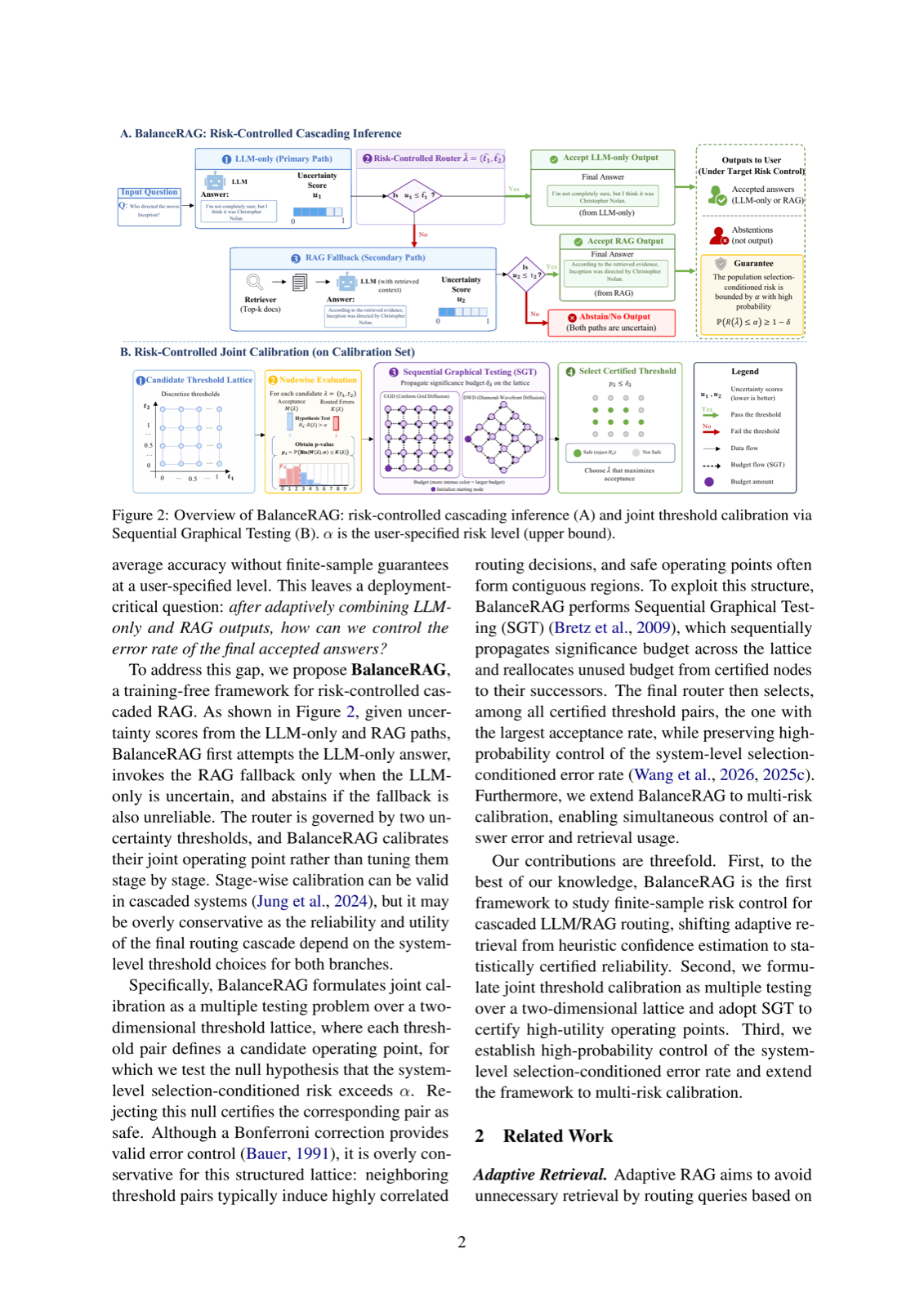
BalanceRAG addresses a critical challenge in retrieval-augmented generation (RAG) by developing a framework that certifies threshold pairs at target risk levels for cascaded RAG systems. This approach is particularly valuable because it recognizes that calibrating cascades stage by stage may be conservative, since final utility depends on joint uncertainty thresholding of LLM-only and RAG branches. The framework's use of sequential graphical testing to identify safe operating points on a two-dimensional lattice enables risk-adaptive threshold calibration that controls system-level error rates while retaining more examples.
The paper's contribution to risk management in LLM systems is significant, as it provides a method for controlling error rates at the system level rather than just at individual stages. The ability to extend the approach to multi-risk calibration, allowing retrieval usage to be bounded together with selection-conditioned risk, demonstrates the framework's flexibility and practical applicability. The experiments showing that BalanceRAG meets prescribed risk levels, preserves higher coverage and more accepted correct examples, and reduces unnecessary retrieval calls compared with always-on RAG provide strong empirical validation of the approach.
The practical implications of BalanceRAG are substantial for real-world deployment of LLM systems where resource efficiency and risk control are crucial. By enabling risk-adaptive threshold calibration that reduces unnecessary retrieval calls while maintaining quality, the framework provides a more efficient and controlled approach to RAG deployment. This is particularly valuable for applications where retrieval costs are high or where the system needs to maintain strict risk budgets while maximizing utility.
Key insight: BalanceRAG enables risk-adaptive threshold calibration for cascaded retrieval-augmented generation by certifying threshold pairs at target risk levels, controlling system-level error rates while retaining more examples
CopT: Contrastive On-Policy Thinking with Continuous Spaces for General and Agentic Reasoning
arXiv: 2605.20075

CopT introduces a fundamentally different approach to chain-of-thought reasoning by reversing the usual order of thinking and answering. Instead of thinking before answering, CopT first elicits a draft answer and then invokes subsequent on-policy thinking conditioned on its own draft answer for reflection and correction. This approach addresses the problem of performative reasoning where models might identify answers before extended thinking, incurring unnecessary token costs. The framework's use of contrastive verifiers that recast continuous embeddings as inference-time contrastive verifiers represents a sophisticated method for assessing answer reliability.
The paper's theoretical analysis showing that the expected estimate equals the mutual information between the unresolved latent state and the emitted answer token provides a strong foundation for understanding why the contrastive approach captures answer-relevant uncertainty rather than arbitrary uncertainty. This insight explains why the method is particularly effective at identifying when a draft answer should be trusted versus when further thinking is needed. The dynamic control of draft-answer visibility through a second KL estimator preserves useful partial information while reducing the risk of being misled by unreliable content.
The empirical results showing that CopT improves peak accuracy by up to 23% and reduces token usage by up to 57% at comparable or higher accuracy without any additional training demonstrate the practical effectiveness of this approach. The framework's ability to achieve these improvements while being training-free and lossless makes it particularly valuable for practical deployment. The approach's success across mathematics, coding, and agentic reasoning tasks suggests that this method for reformulating reasoning pipelines has broad applicability and could become a standard approach for improving reasoning efficiency in LLM systems.
Key insight: CopT reverses the typical order of thinking and answering by first eliciting a draft answer and then invoking on-policy thinking conditioned on that draft for reflection and correction, using contrastive verifiers to assess answer reliability
Rewarding Beliefs, Not Actions: Consistency-Guided Credit Assignment for Long-Horizon Agents
arXiv: 2605.20061
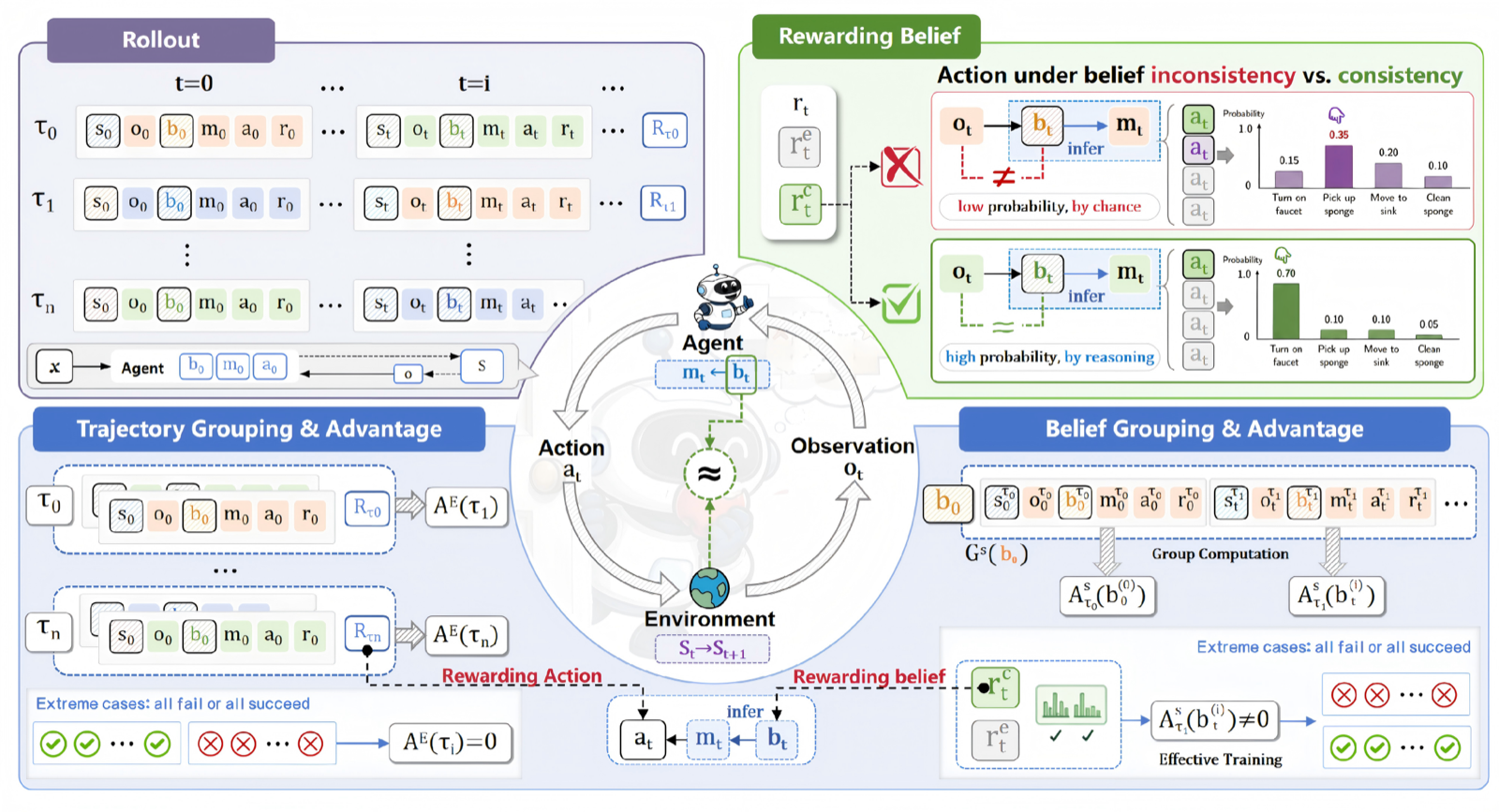
ReBel represents a significant advancement in reinforcement learning from verifiable rewards (RLVR) by explicitly modeling structured belief states to summarize interaction history and guide subsequent policy learning. This approach directly addresses the challenges of partial observability where incomplete observations cause agent beliefs to drift over time, while delayed rewards obscure the causal impact of intermediate decisions. The framework's introduction of belief-consistency supervision converts discrepancies between predicted beliefs and observed feedback into dense self-supervised signals without requiring external step-wise annotations or verifiers.
The paper's use of belief-aware grouping to compare trajectories under similar belief states yields more robust and lower-variance advantage estimates, which is crucial for reliable long-horizon decision-making under partial observability. The empirical evaluation on challenging long-horizon benchmarks including ALFWorld and WebShop shows that ReBel improves task success by up to 20.4 percentage points over the episode-level baseline GRPO and increases sample efficiency by 2.1x. These results suggest that belief-aware self-supervision is a promising direction for reliable long-horizon decision-making, particularly in complex environments where partial observability is a significant challenge.
The framework's contribution to the broader field of reinforcement learning is substantial, as it provides a method for handling the complex interaction between belief states and decision-making in partially observable environments. The approach's ability to work without external verifiers or annotations makes it particularly valuable for real-world applications where such supervision may be difficult or expensive to obtain. The demonstration that ReBel can significantly improve performance on long-horizon tasks while increasing sample efficiency suggests that this approach could become a standard technique for building robust agents in complex, partially observable domains.
Key insight: ReBel addresses temporal credit assignment challenges in partially observable environments by explicitly modeling structured belief states to summarize interaction history and guide policy learning
When Does Model Collapse Occur in Structured Interactive Learning?
arXiv: 2605.20151
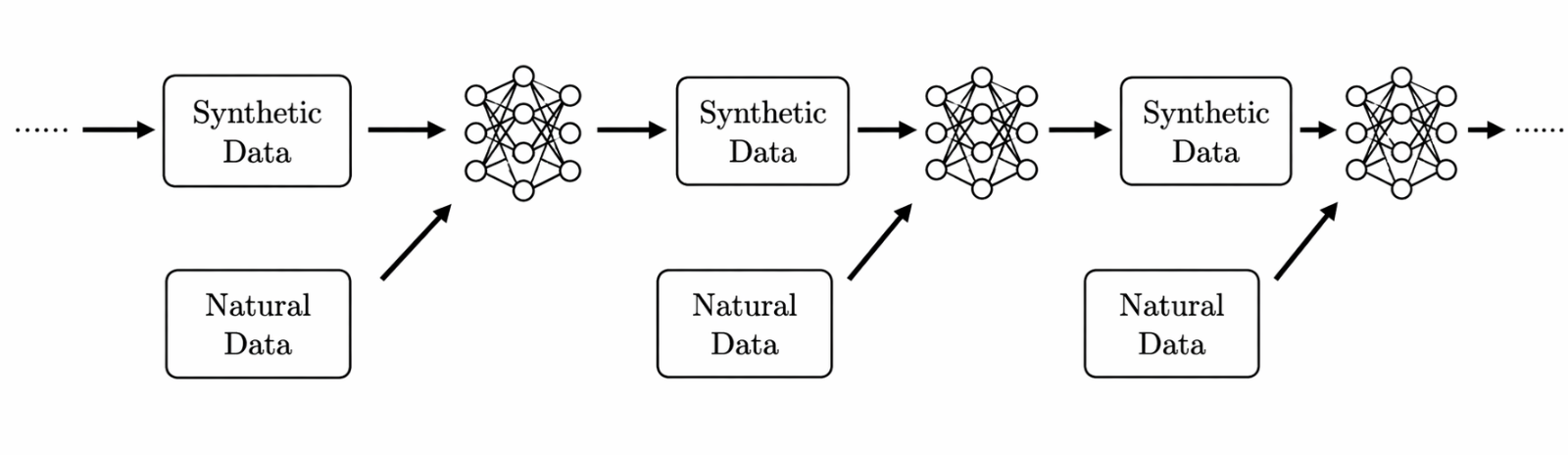
This paper makes a crucial contribution to understanding model collapse in structured interactive learning by formalizing model interactions using directed graphs and showing that the occurrence of model collapse depends critically on the topology of the interaction graph. This represents a significant advancement over prior work that primarily focused on single models trained on their own output, failing to capture performance in multi-model interactive settings. The paper's formalization provides a clear framework for understanding how interaction patterns influence model performance.
The derivation of explicit necessary and sufficient conditions characterizing when model collapse occurs, along with finite-sample results for linear regression and asymptotic guarantees for general M-estimators, provides a rigorous mathematical foundation for understanding model collapse in interactive learning environments. These theoretical results are particularly valuable because they offer concrete criteria for when collapse is likely to occur, enabling practitioners to design systems that avoid these problematic patterns. The paper's support through extensive numerical experiments validates the theoretical findings and demonstrates their practical relevance.
The implications of this work extend beyond theoretical understanding to practical system design, as it provides clear guidance on how to structure interactions between models to avoid collapse. The finding that model collapse depends on interaction graph topology suggests that careful consideration of how models interact is crucial for building robust systems. This insight is particularly important for the growing field of generative AI where models increasingly interact with each other through repeated exposure to synthetic outputs, making the understanding of interaction patterns and their effects on model performance essential for system reliability.
Key insight: Model collapse in structured interactive learning depends critically on the topology of the interaction graph, with explicit necessary and sufficient conditions characterizing when collapse occurs
Draft Less, Retrieve More: Hybrid Tree Construction for Speculative Decoding
arXiv: 2605.20104

Graft introduces a novel compensation framework for speculative decoding that addresses the fundamental tradeoff between dense and pruned drafting by coupling pruning and retrieval as mutually reinforcing operations. The 'prune-then-graft' mechanism is particularly innovative because it recognizes that the transition from dense to pruned drafting frees up significant computational budget that can be used for retrieval, rather than treating these as competing operations. This approach eliminates the Pareto tradeoff that has historically limited the effectiveness of dynamic-depth pruning.
The framework's ability to attach highly predictive retrieved tokens into positions opened by pruning fills topological gaps with near-zero overhead, demonstrating a sophisticated understanding of resource allocation in speculative decoding. The fact that Graft is entirely training-free and lossless makes it particularly valuable for practical deployment, as it provides performance improvements without additional training costs or risk of performance degradation. The comprehensive evaluations showing up to 5.41x speedup and improved average speedup over EAGLE-3 on large-scale models demonstrate the practical effectiveness of this approach.
The paper's exploration of applying Graft to DFlash-style block drafting paradigm provides valuable insights for extending the approach beyond autoregressive draft trees. This suggests that the fundamental principles of Graft could be applied to a broader range of speculative decoding approaches, potentially making it a general framework for improving decoding efficiency. The approach's ability to maintain performance while reducing computational overhead represents a significant advancement in making large language model inference more efficient, particularly important for deployment in resource-constrained environments.
Key insight: Graft's 'prune-then-graft' mechanism couples pruning and retrieval as mutually reinforcing operations, compensating for pruning-induced coverage loss while filling topological gaps with near-zero overhead