This week's research highlights advance agent architectures with improved memory systems, tool integration, and preference learning. Key papers introduce actionable world representations, skill generation benchmarks, and efficient inference methods. Tooling updates include Cursor's Jira integration and Google's Data Agent Kit for developers.
Researchers are making significant strides in agent architectures, with new approaches to memory systems, tool use, and preference learning. The Actionable World Representation paper introduces WorldString, a neural architecture that models objects as dynamic, actionable entities from point clouds or RGB-D streams, enabling integration with policy learning. SkillGenBench establishes a controlled benchmark for evaluating skill generation pipelines, revealing substantial performance variation across methods. Additionally, Cursor integrates with Jira to bring AI coding assistance directly into project management workflows, while Google's Data Agent Kit brings data analytics capabilities into developers' IDEs or CLIs. Other notable advances include Latent Action Reparameterization for efficient agent inference, EnvFactory's scalable tool-use agent framework, and COOPO's cyclic offline-online policy optimization that eliminates forgetting while maximizing dataset reuse.
AI Model Releases

AI Tooling

Cursor has announced integration with Jira, enabling developers to use AI-powered coding assistance directly within their Jira workflows. The integration allows users to generate code, debug issues, and automate tasks using Cursor's AI capabilities while staying within the Jira interface. This move aims to streamline the development process by reducing context switching between tools. The feature is now available to all Cursor users and supports both Jira Cloud and Jira Server instances.
Why it matters: This integration represents a significant step toward AI tooling that operates seamlessly within existing developer workflows, potentially increasing adoption by reducing friction. It also signals Cursor's strategy to expand beyond its core code editor functionality into broader project management ecosystems.
Firebase/GCP

Data Agent Kit brings data skills and tools to your IDE or CLI | Google Cloud Blog
Google Cloud has released the Data Agent Kit, a new tool that brings data analytics capabilities directly into developers' IDEs or CLIs. The kit enables developers to perform data analysis, create visualizations, and build data pipelines without leaving their development environment. It supports multiple data sources including BigQuery, Cloud Storage, and various databases. The tool is designed to accelerate data science workflows and democratize access to data analytics for software developers.
Why it matters: This tool represents Google's effort to bridge the gap between software development and data science, potentially making data analytics more accessible to developers who previously lacked the specialized tools or skills. It could significantly impact how data-driven applications are built and maintained.
Research Papers
Actionable World Representation
arXiv: 2605.18743
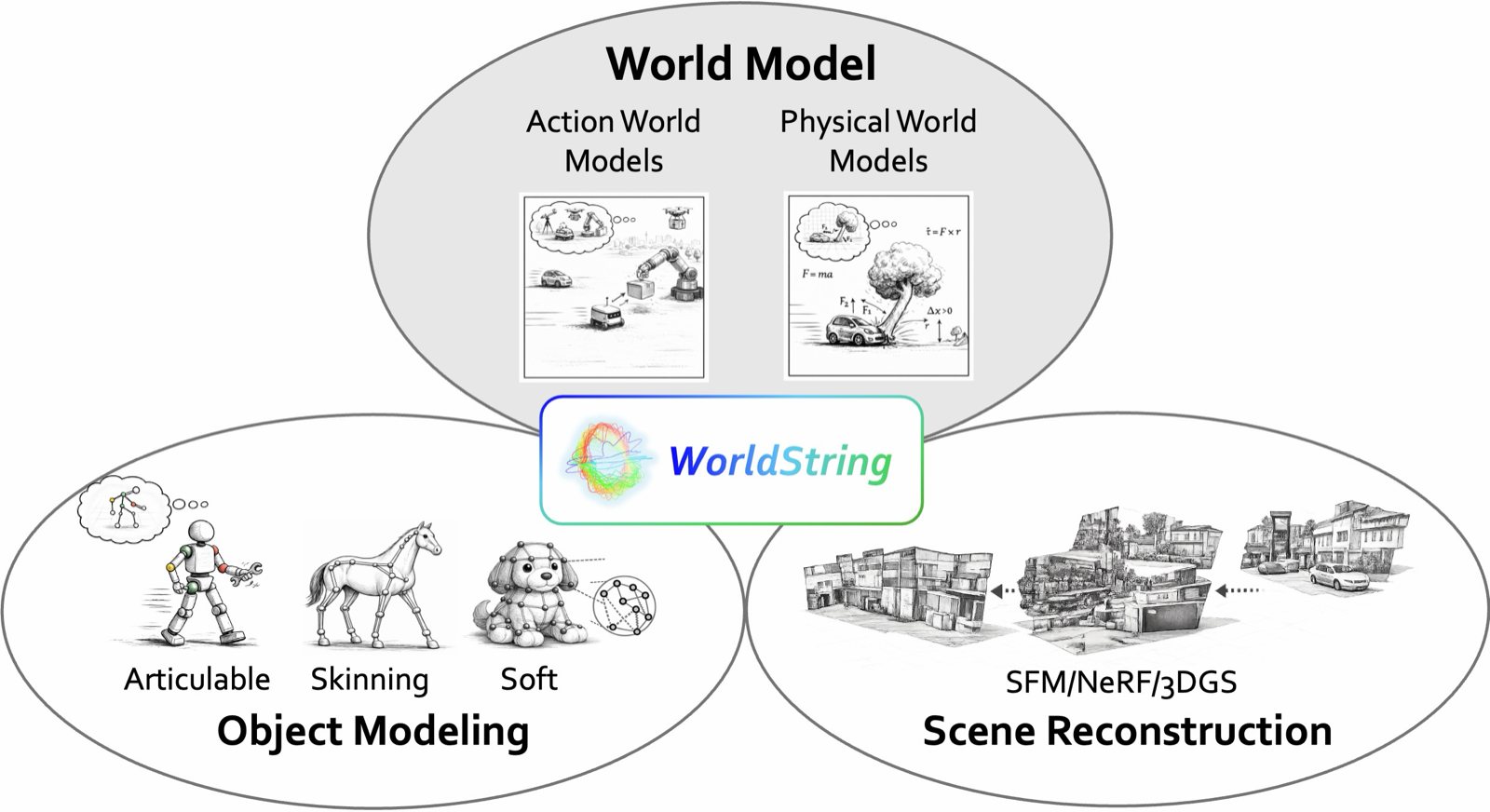
The emergence of actionable world representations marks a significant advancement in physical world modeling, addressing a critical gap in how objects are modeled as dynamic, actionable entities rather than static primitives. WorldString's neural architecture represents a breakthrough by learning directly from point clouds or RGB-D video streams to model the state manifold of real-world objects, effectively creating digital twins that can be integrated with policy learning and neural dynamics.
This approach fundamentally shifts how we think about object modeling in AI systems, moving beyond traditional video generation or dynamic scene reconstruction methods. The fully differentiable structure of WorldString enables seamless integration with existing policy learning frameworks, opening new pathways for developing agents that can reason about and interact with physical environments in more sophisticated ways.
The implications extend beyond simple object representation to broader applications in robotics, simulation, and embodied AI. By providing a principled foundation for physical world models, WorldString addresses core challenges in creating agents that can understand and manipulate real-world objects, potentially enabling more robust and generalizable AI systems that can operate effectively in complex physical environments.
Key insight: WorldString enables unified, principled modeling of actionable object representations from point clouds or RGB-D streams, serving as a foundational building block for physical world models with fully differentiable structure enabling integration with policy learning.
SkillGenBench: Benchmarking Skill Generation Pipelines for LLM Agents
arXiv: 2605.18693
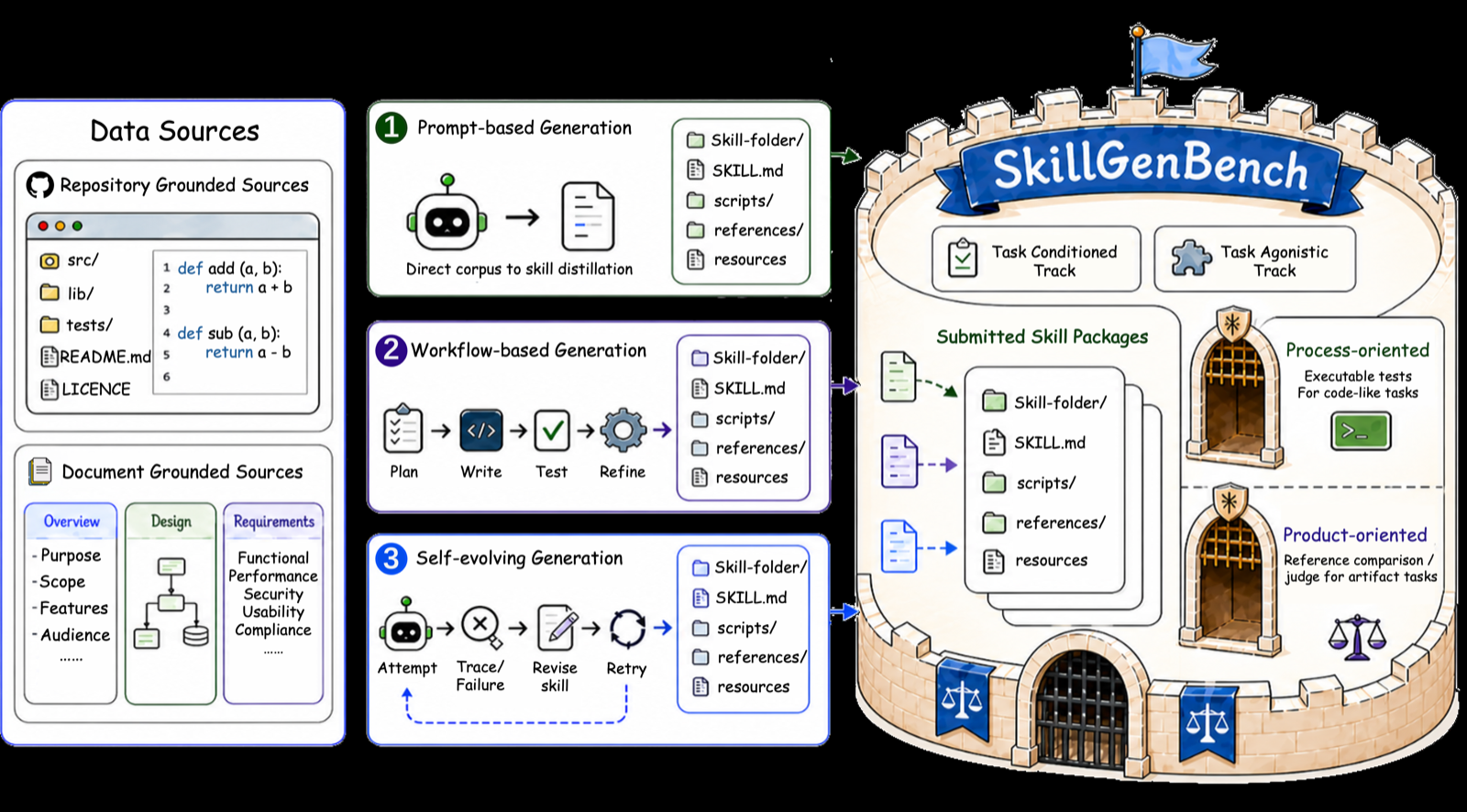
SkillGenBench represents a crucial development in agent architectures, specifically addressing the challenge of skill generation as a distinct research problem rather than merely evaluating skill usage. The benchmark's controlled protocol and standardized evaluation procedures provide a reproducible testbed that isolates skill generation as an independent research problem, which is essential for advancing agent systems that rely on reusable skills.
The distinction between task-conditioned and task-agnostic generation regimes reveals fundamental challenges in creating generalizable skill libraries. The finding that performance varies substantially across different generation methods highlights the complexity of skill distillation, particularly when dealing with software repositories versus long-form documents, suggesting that different approaches may be required for different types of procedural knowledge sources.
This work directly impacts multi-agent systems development by establishing clear evaluation criteria for skill generation capabilities. As LLM agents increasingly rely on reusable skills, benchmarks like SkillGenBench become essential for measuring progress and identifying areas where current approaches fall short, ultimately driving improvements in agent autonomy and adaptability across diverse domains.
Key insight: SkillGenBench establishes a controlled benchmark for evaluating skill generation pipelines, demonstrating substantial performance variation across methods and revealing distinct failure modes in generating skills from software repositories versus long-form documents.
Democratizing Large-Scale Re-Optimization with LLM-Guided Model Patches
arXiv: 2605.18692
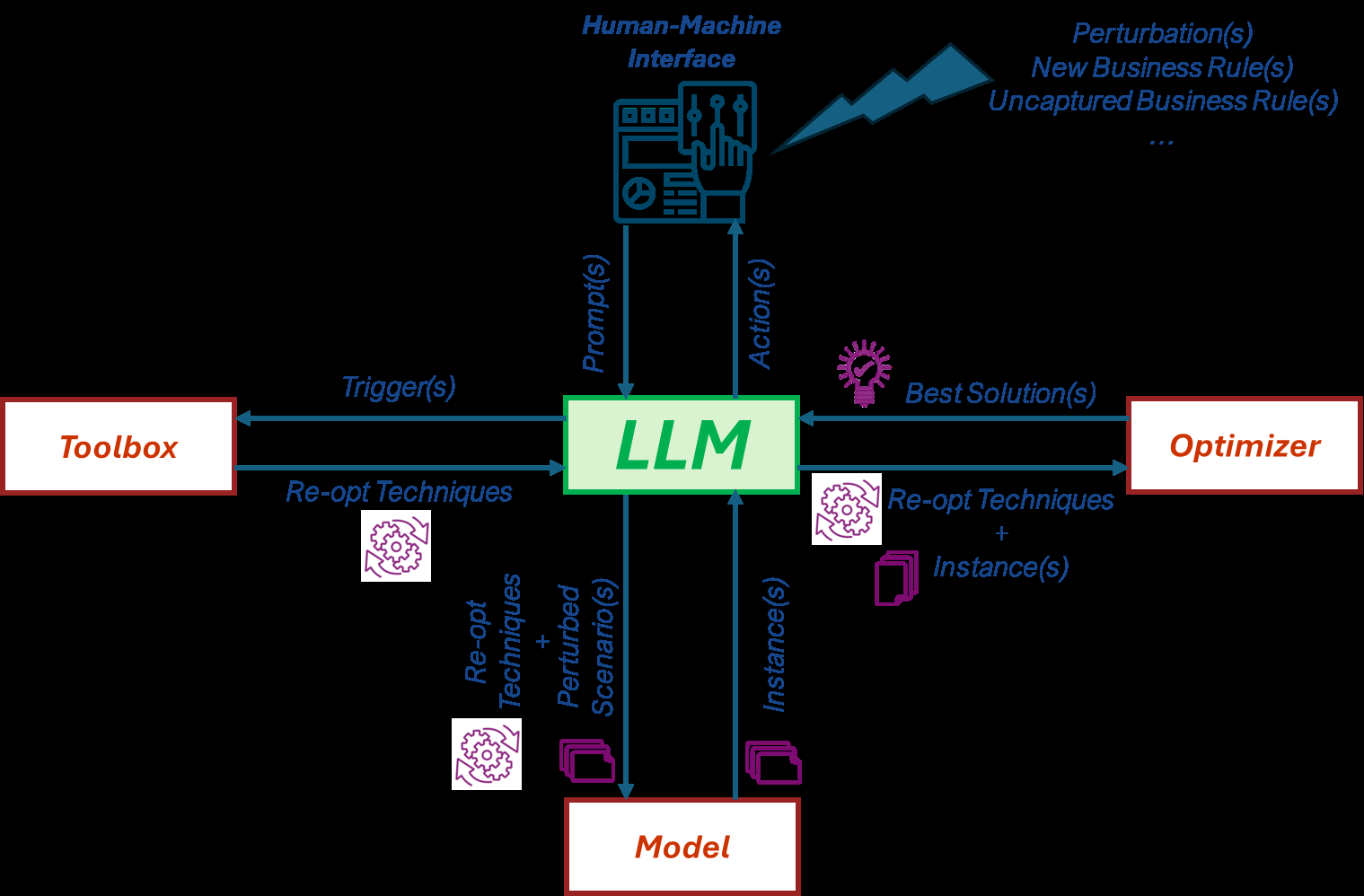
The democratization of large-scale re-optimization through LLM-guided model patches addresses a critical gap in industrial deployment of optimization models, where dynamic business environments require rapid adaptation without expert intervention. This framework transforms how end users interact with optimization systems, making complex re-optimization processes accessible through natural language while maintaining technical rigor.
The integration of primal information from historical solutions, valid inequalities, and solver configurations represents a sophisticated approach to maintaining solution quality during re-optimization. This toolbox-driven architecture demonstrates how modern optimization techniques can be leveraged to improve computational efficiency while preserving the essential characteristics of optimal solutions, particularly important for real-world applications with tight constraints.
This work has significant implications for multi-agent systems and agent architectures, as it demonstrates how LLMs can serve as expert advisors in complex decision-making environments. The framework's ability to handle both online supply chain re-optimization and offline university exam scheduling shows its versatility across different domains, suggesting potential applications in various agent-based systems that require adaptive decision-making capabilities.
Key insight: LLM-guided re-optimization framework enables interactive adaptation of deployed optimization models through natural-language interaction, reducing dependence on OR experts while maintaining solution quality through primal information utilization.
Efficient Lookahead Encoding and Abstracted Width for Learning General Policies in Classical Planning
arXiv: 2605.18674
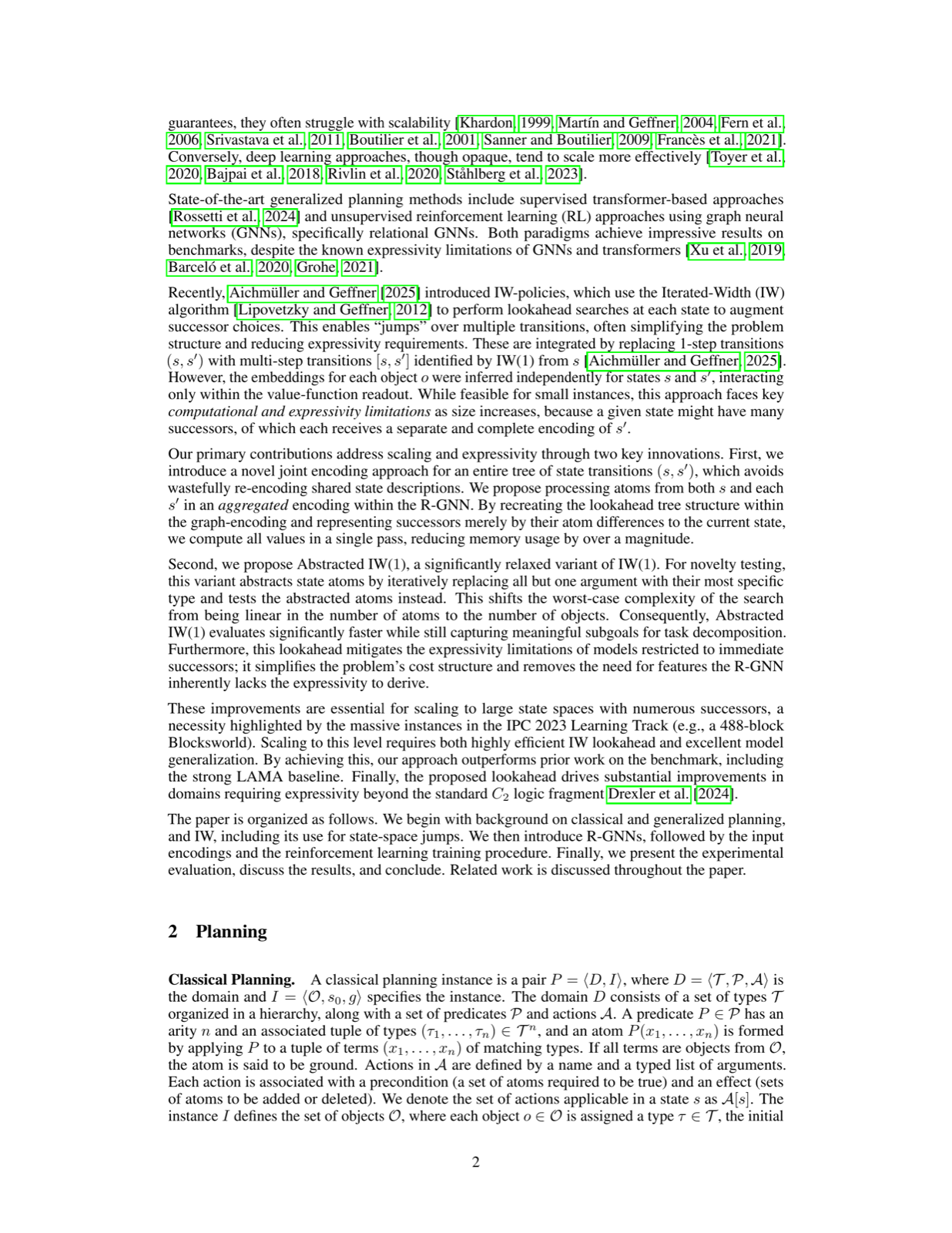
The improvement of Iterated Width (IW) policies through efficient holistic encoding and Abstracted IW(1) represents a significant advancement in generalized planning, addressing scalability issues that have limited the practical application of GNN approaches in large-scale domains. The joint representation of IW(1)-reachable states through relational differences enables more efficient computation while maintaining the essential structure of planning problems.
This work's approach to structural compression through relational abstraction demonstrates how theoretical insights can be translated into practical improvements in planning efficiency. By replacing individual atom testing with abstracted forms, the method achieves better scaling properties while preserving the meaningful subgoal structure necessary for effective planning, which is crucial for maintaining the quality of learned policies.
The performance gains demonstrated on IPC 2023 benchmark and diverse domains suggest that this approach can significantly advance the state of the art in classical planning, particularly for problems with thousands of objects where traditional IW(1) approaches become inefficient. This advancement has implications for agent architectures that rely on planning components, potentially enabling more sophisticated and scalable planning capabilities in AI systems.
Key insight: Abstracted IW(1) approach improves scaling in classical planning through relational abstraction during novelty checks, shifting novelty search scaling from atoms to objects while preserving meaningful subgoal structure.
GIM: Evaluating models via tasks that integrate multiple cognitive domains
arXiv: 2605.18663
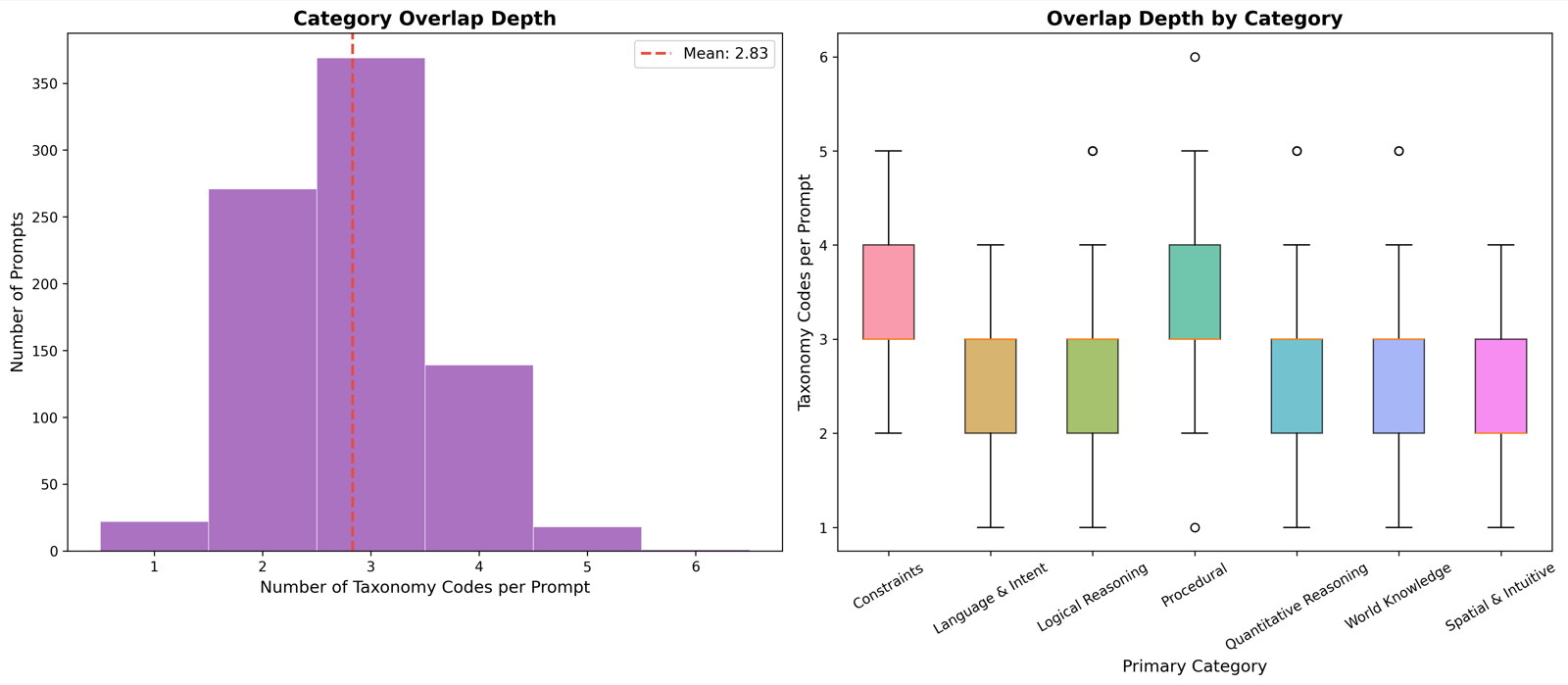
The Grounded Integration Measure (GIM) benchmark addresses a critical gap in LLM evaluation by creating tasks that require coordination of multiple cognitive operations rather than conflating memorization with capability or divorcing reasoning from practical contexts. This approach provides a more comprehensive assessment of model capabilities by requiring integration of constraint satisfaction, state tracking, and epistemic vigilance in realistic scenarios.
The use of 2-parameter logistic IRT model for ability estimation represents a sophisticated statistical approach to benchmark evaluation, addressing common challenges in benchmark reporting such as errors and missing data that can distort raw accuracy measures. This method provides robust ability estimates that correctly order test configurations, offering a more reliable basis for comparing model performance across different settings.
The comprehensive leaderboard spanning 22 models and 47 test-configurations, along with extensive analysis of test-time compute trades, provides valuable insights into how different configuration choices affect model capability. This work's findings that within-family configuration choices matter as much as model selection suggest that optimization efforts should consider both model architecture and operational parameters for maximum effectiveness.
Key insight: GIM benchmark integrates multiple cognitive operations in grounded tasks, providing robust ability estimates through continuous response 2-parameter logistic IRT model that correctly orders test-configurations even when raw accuracy is distorted.
SCICONVBENCH: Benchmarking LLMs on Multi-Turn Clarification for Task Formulation in Computational Science
arXiv: 2605.18630
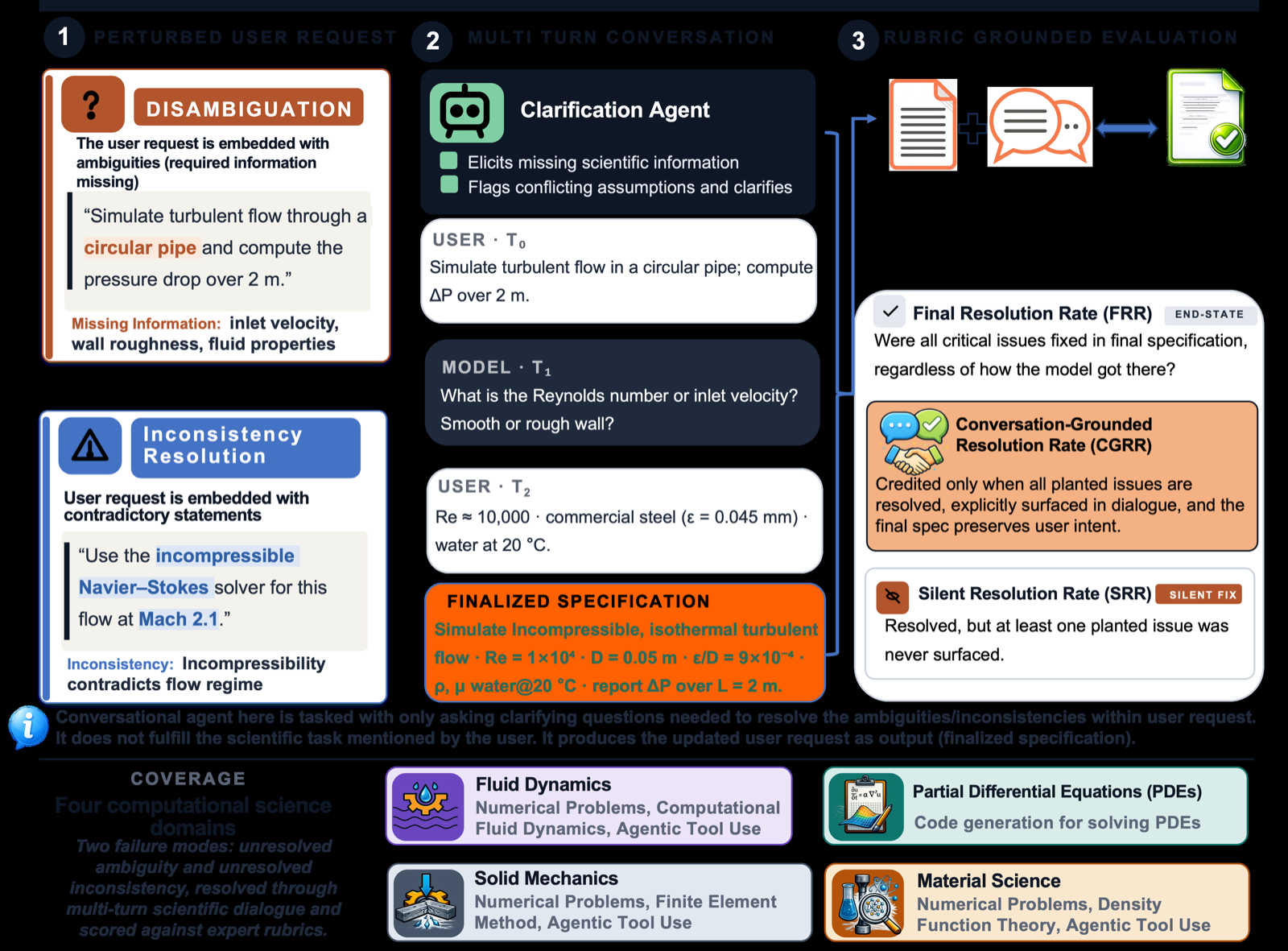
SCICONVBENCH tackles a fundamental gap in scientific AI assistance by focusing on the upstream conversational reasoning that precedes computational work, recognizing that practical scientific assistance often begins with ill-posed user requests requiring refinement through dialogue. This benchmark addresses the critical need for LLMs to handle the initial stages of scientific problem formulation rather than assuming well-posed problems.
The finding that frontier models perform relatively well on inconsistency resolution but struggle with disambiguation cases highlights the complexity of conversational reasoning in scientific domains. The revelation that models frequently make silent assumptions and perform implicit specification repairs that are not grounded in conversation demonstrates the need for more robust conversational frameworks that ensure alignment between user intent and system interpretation.
This work has significant implications for multi-agent systems and agent architectures, particularly in scientific domains where human-AI collaboration is essential. The benchmark's focus on clarification behavior, conversational grounding, and final-specification fidelity provides a comprehensive framework for evaluating the conversational capabilities necessary for reliable computational science assistants, potentially guiding the development of more sophisticated agent interaction protocols.
Key insight: SCICONVBENCH addresses upstream conversational reasoning requirements for computational science assistants by evaluating multi-turn clarification capabilities in scientific task formulation, revealing that even best models resolve only 52.7% of disambiguation cases.
Latent Action Reparameterization for Efficient Agent Inference
arXiv: 2605.18597
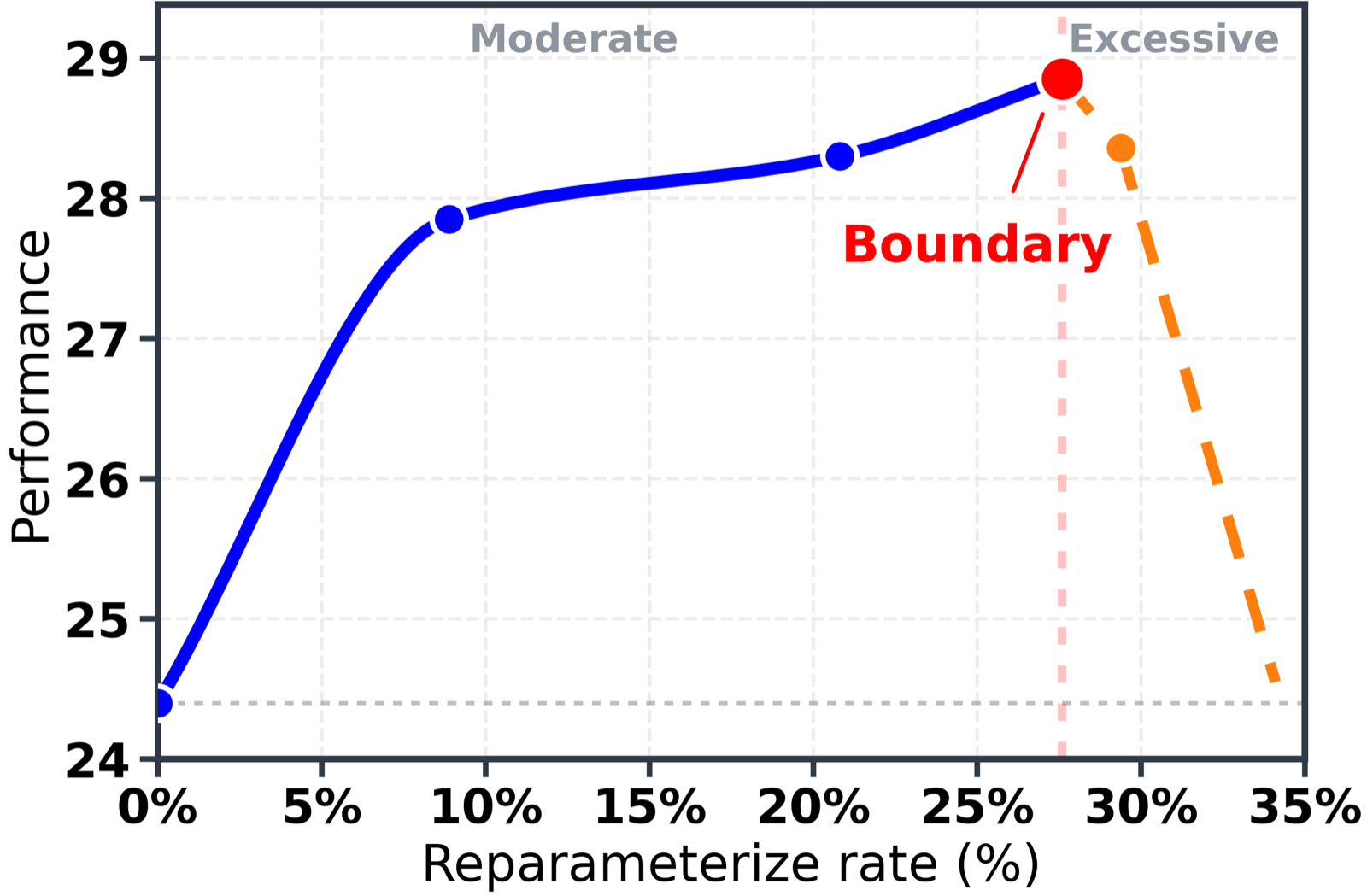
Latent Action Reparameterization (LAR) addresses a critical bottleneck in LLM agent inference by focusing on action representation learning rather than system-level optimizations or prompt engineering. This approach recognizes that the representation of action space itself is a key factor in scaling efficient LLM agent inference, offering a complementary solution to advances in model architecture and hardware.
The ability to learn latent actions from agent trajectories and integrate them directly into the model represents a significant advancement in agent architectures, enabling both planning and execution to operate over abstract action representations. This approach achieves substantial reductions in effective action horizon and inference costs while maintaining or improving task success rates, demonstrating the potential for more efficient agent systems.
LAR's impact extends beyond simple efficiency gains to fundamental improvements in agent scalability, particularly important as LLM agents are increasingly deployed in complex, long-horizon tasks. The framework's demonstration across various LLM-based agent benchmarks suggests it can be broadly applied to improve inference efficiency in diverse agent systems, potentially enabling more sophisticated and capable agents without proportional increases in computational costs.
Key insight: Latent Action Reparameterization (LAR) learns compact latent action spaces that enable decision making over shorter effective horizons while preserving expressiveness, achieving substantial reductions in action tokens and wall-clock inference time.
Code as Agent Harness
arXiv: 2605.18747

The concept of code as agent harness represents a fundamental shift in how we think about agent infrastructure, moving beyond code as merely a target output to code as the operational substrate for agent reasoning, action, and environment modeling. This unified view provides a comprehensive framework for understanding how code enables various agent capabilities across different domains.
The three-layer organization of harness interface, mechanisms, and scaling offers a systematic approach to studying agent systems, with each layer addressing different aspects of agent functionality. This framework enables researchers to better understand how code-based agent systems can be designed for long-horizon execution, feedback-driven control, and multi-agent coordination, providing a roadmap for building more sophisticated and reliable agents.
The survey's comprehensive coverage of applications across coding assistants, GUI/OS automation, embodied agents, scientific discovery, and enterprise workflows demonstrates the broad applicability of the code-as-harness perspective. This approach has significant implications for multi-agent systems, as shared code artifacts can support coordination, review, and verification across multiple agents, potentially enabling more sophisticated collaborative agent architectures.
Key insight: Code as agent harness provides a unified view of code as operational substrate for agent reasoning, action, environment modeling, and execution-based verification, organizing the field around three connected layers of harness interface, mechanisms, and scaling.
EnvFactory: Scaling Tool-Use Agents via Executable Environments Synthesis and Robust RL
arXiv: 2605.18703

EnvFactory tackles two fundamental challenges in agentic reinforcement learning: scalable, robust execution environments and realistic training data capturing implicit human reasoning. By autonomously exploring and verifying stateful, executable tool environments from authentic resources, the framework provides a solution that overcomes the limitations of costly real-world APIs, hallucination-prone simulators, and synthetic environments.
The approach's ability to generate natural multi-turn trajectories through topology-aware sampling and calibrated refinement addresses the issue of over-specified synthetic trajectories that resemble instruction sequences rather than natural human intents. This capability is crucial for effective RL training, as it produces grounded queries with implicit intents that better reflect real-world usage patterns.
The significant performance improvements achieved by EnvFactory, including up to +15% improvements on BFCLv3 and +8.6% on MCP-Atlas, demonstrate the practical value of this approach. The framework's ability to generate 2,575 SFT and RL trajectories using only 85 verified environments, compared to prior work that required 5 times more environments, shows substantial efficiency gains that could enable broader adoption of agentic RL approaches.
Key insight: EnvFactory addresses scalability challenges in tool-use agents by autonomously exploring and verifying executable environments, synthesizing natural multi-turn trajectories through topology-aware sampling and calibrated refinement.
LongMINT: Evaluating Memory under Multi-Target Interference in Long-Horizon Agent Systems
arXiv: 2605.18565
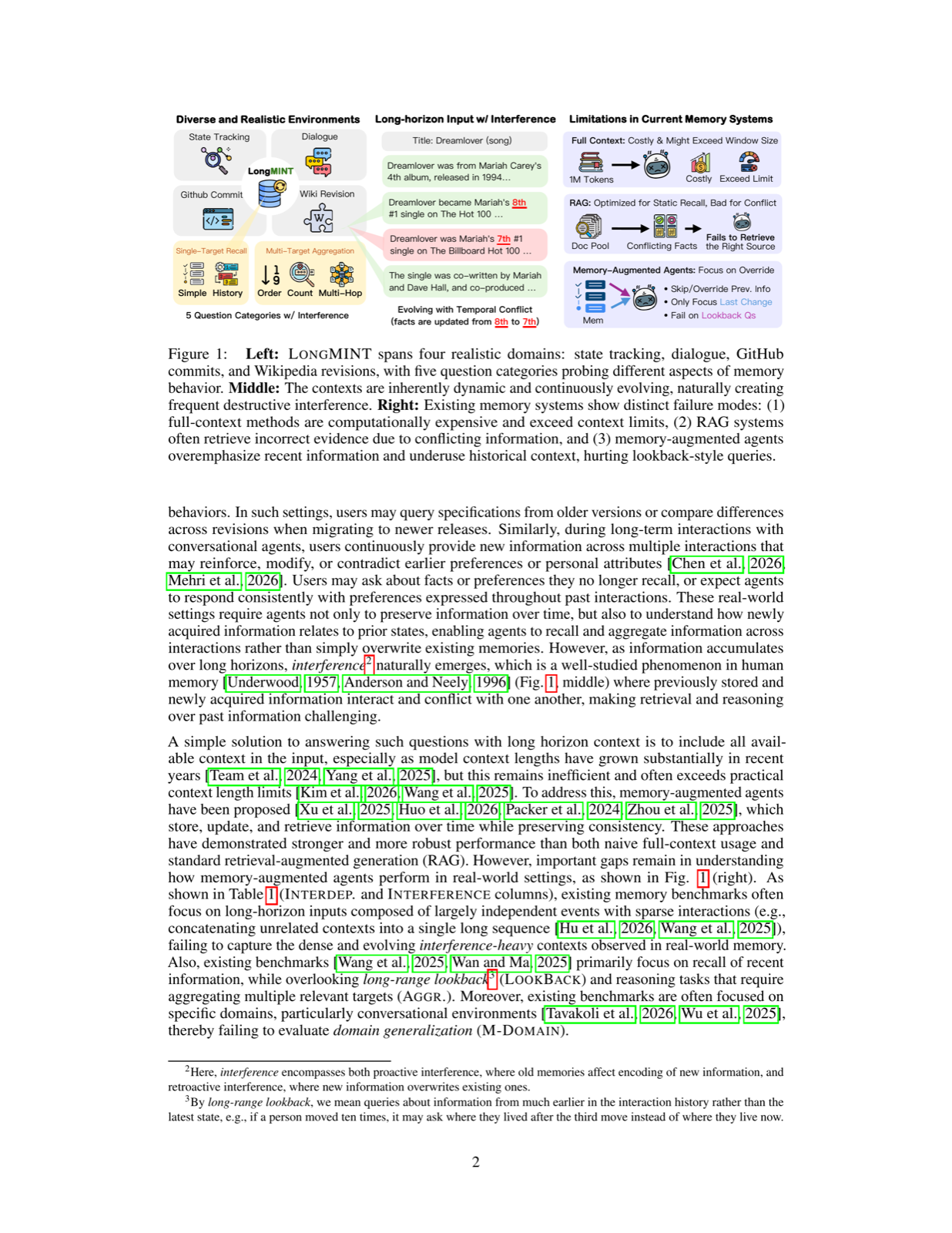
LongMINT addresses a critical gap in memory evaluation by focusing on realistic, interference-heavy, long-horizon settings that reflect real-world agent operation. The benchmark's emphasis on diverse domains and question types that assess robustness to interference provides a comprehensive evaluation of memory systems' capabilities in complex, evolving environments.
The finding that performance is primarily limited by retrieval and memory construction, rather than by the fundamental architecture of memory systems, suggests that improvements in these specific areas could yield significant gains in overall agent performance. The observation that performance degrades as the number of intervening updates increases highlights the importance of developing more robust memory systems that can handle dynamic information environments.
This work's implications for agent architectures are profound, as it demonstrates that current memory-augmented systems struggle with the dynamic, evolving nature of real-world tasks. The benchmark's focus on multi-target aggregation tasks reveals that agents must be able to reason over multiple relevant pieces of information simultaneously, which is essential for complex decision-making scenarios where information is repeatedly updated and may interfere across memories.
Key insight: LongMINT benchmark reveals that current memory-augmented agents struggle with interference-heavy, long-horizon settings, showing consistently low performance (avg. 27.9% accuracy) especially on questions requiring aggregated reasoning over multiple pieces of evidence.
General Preference Reinforcement Learning
arXiv: 2605.18721
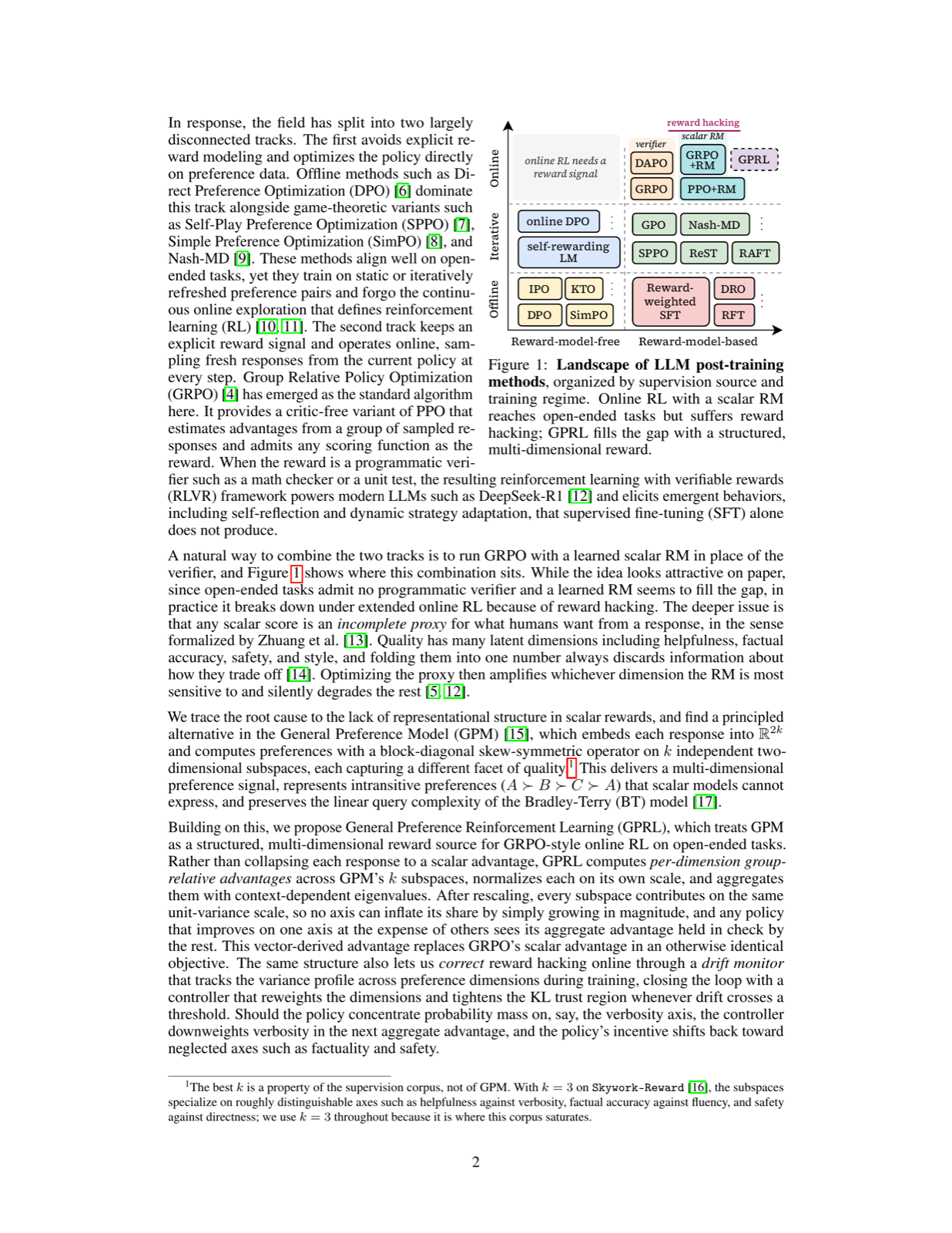
GPRL represents a significant advancement in alignment methods by addressing the fundamental tension between online reinforcement learning with verifiable rewards and preference optimization. The approach's use of General Preference Models that embed responses into k skew-symmetric subspaces provides a structured, intransitivity-aware comparison that avoids the scalar reward model limitations that can lead to reward hacking.
The method's ability to compute per-dimension group-relative advantages and normalize each on its own scale prevents any single axis from dominating the policy update, which is crucial for maintaining balanced learning across multiple dimensions of quality. The closed-loop drift monitor that detects single-axis exploitation and corrects it on the fly provides a robust mechanism for preventing reward hacking during extended training runs.
The demonstration that GPRL achieves a length-controlled win rate of 56.51% on AlpacaEval 2.0 while outperforming SimPO and SPPO on multiple benchmarks shows the practical effectiveness of this approach. This advancement has important implications for multi-agent systems and agent architectures, as it provides a more robust framework for alignment that can handle open-ended generation while maintaining the continuous exploration benefits of online RL.
Key insight: General Preference Reinforcement Learning (GPRL) addresses the gap between online RL with verifiable rewards and preference optimization by using General Preference Models that embed responses into k skew-symmetric subspaces, normalizing each dimension on its own scale.
COOPO: Cyclic Offline-Online Policy Optimization Algorithm
arXiv: 2605.18675

COOPO addresses fundamental limitations in hybrid offline-to-online reinforcement learning by introducing a cyclic framework that repeatedly cycles between constrained offline training and online fine-tuning. This approach eliminates catastrophic forgetting and distribution drift while maximizing dataset reuse, representing a significant advancement in adaptive reinforcement learning.
The theoretical guarantee of monotonic improvement under standard coverage assumptions, combined with practical demonstrations of reduced online interactions and improved final returns, shows that COOPO achieves better online sample efficiency than pure online RL. This makes it particularly valuable for applications where environment interactions are expensive or constrained.
The framework's ability to maintain robustness across diverse offline algorithms and online optimizers suggests it can be effectively integrated into existing RL pipelines, potentially setting new standards for efficiency and performance in adaptive reinforcement learning. This advancement has implications for multi-agent systems where agents need to adapt to changing environments while maintaining learned knowledge.
Key insight: COOPO framework repeatedly cycles between constrained offline training and online fine-tuning, eliminating forgetting and drift while maximizing dataset reuse and reducing online environment interactions.